Raising Chickens in Wyoming: 2026 Laws & Best Breeds
Raising chickens in Wyoming: laws for Cheyenne, Casper, Laramie, plus cold-hardy breeds and Wyoming's Food Freedom Act for selling eggs.
Researched from university extension, USDA, and veterinary sources. How we research.
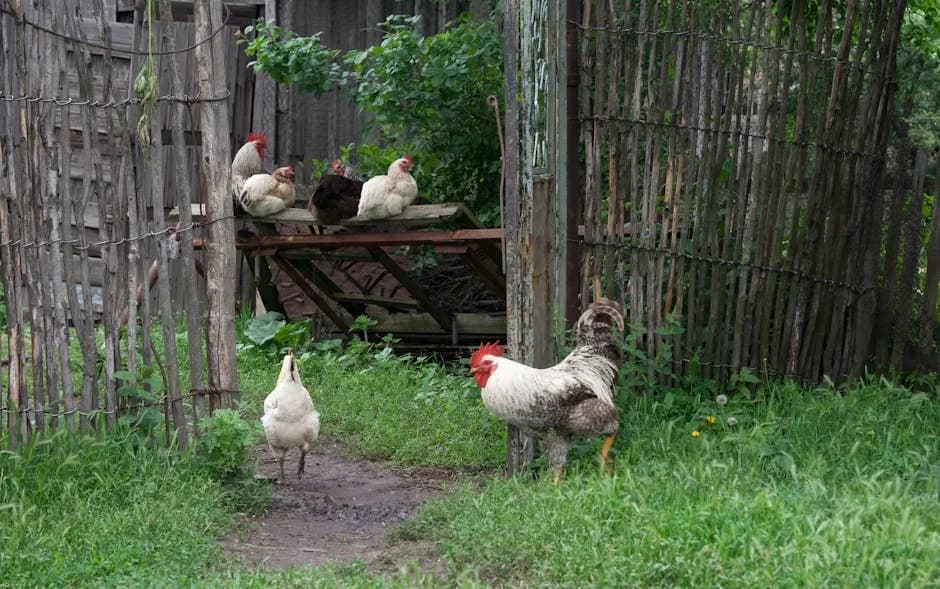
Wyoming has no statewide ban or permit system for backyard chickens. Regulations are set at the city and county level, so your rules depend entirely on where you live. Most of Wyoming's larger cities now allow backyard hens, though flock sizes, permit requirements, and rooster rules vary. Rural areas and unincorporated land generally have few or no restrictions, which fits a state where agriculture is woven into daily life.
Wyoming's climate is one of the most demanding in the country for keeping poultry. Most of the state sits above 6,000 feet, which means intense sun and big day-to-night temperature swings. Winters are long and bitter, with January lows in the single digits or below zero across much of the state. The bigger story is wind. Wyoming is the windiest state in the lower 48, with average wind speeds of 12 to 15 mph statewide and gusts that regularly top 60 mph along the I-80 corridor. Your coop placement, breed choice, and predator protection all need to account for wind, cold, and a low-humidity, high-UV environment.
What You'll Learn
- •Are Backyard Chickens Legal in Wyoming?
- •Wyoming Chicken Laws by City
- •Can You Sell Eggs in Wyoming?
- •Best Chicken Breeds for Wyoming's Climate
- •Summer Care in Wyoming
- •Winter Care in Wyoming
- •Common Predators in Wyoming
- •FAQ
Are Backyard Chickens Legal in Wyoming?
Yes, in most cities. Cheyenne, Casper, Laramie, Gillette, Rock Springs, and Sheridan all allow backyard hens under varying rules. Most cap residential flocks at 4 to 6 hens and prohibit roosters in residential zones. A few require an annual permit or license, and Gillette ties the license to a coop inspection before approval. Green River has historically restricted backyard chickens and is the strictest of Wyoming's larger municipalities.
Before buying chicks, check three things: your city's municipal code for poultry, any HOA covenants on your property, and your specific zoning district. Wyoming has plenty of subdivisions with HOA rules that override permissive city ordinances and ban poultry outright.
If you live on unincorporated county land or on acreage zoned for agriculture, you'll generally face no restrictions on flock size or roosters. Wyoming's agricultural heritage means county governments rarely regulate small-scale poultry keeping outside city limits.
Wyoming Chicken Laws by City
Important: City and county ordinances change frequently. The information below was researched in May 2026 but may not reflect the latest rules. Always verify with your local zoning or code enforcement office before starting a flock. Links to official sources are provided where available.
Cheyenne
Cheyenne passed its backyard chicken ordinance in 2016 after a multi-year community effort, and the rules have stayed fairly stable since. The ordinance lives in Title 6 of the Cheyenne Municipal Code.
- •Hens: Up to 6 hens on any lot containing no more than one detached single-family residential dwelling.
- •Roosters: Not permitted. Ducks, geese, turkeys, and guinea fowl are also prohibited.
- •Permit: No city permit required, but written consent from adjoining neighbors is part of the ordinance.
- •HOA: Hens may not be kept in violation of any homeowner association or neighborhood covenant.
- •Coop: Must be in the rear yard, predator-resistant, and ventilated. Minimum 3 square feet of coop space per hen.
- •Confinement: Chickens must be inside the coop from sundown to sunrise.
Casper
Casper amended its animal code to allow backyard hens as an accessory use to a single-family dwelling. The current rules are in Casper Municipal Code Title 6. The city council has continued to revisit and refine the ordinance, including a 2026 discussion about expanding allowed "domesticated fowl" species.
- •Hens: Up to 6 hens per single-family residence.
- •Roosters: Not permitted in residential zones. Allowed only in the Urban Agriculture (AG) zoning district or with an approved Conditional Use Permit.
- •Permit: Contact Casper Code Enforcement before setting up a coop to confirm current permit and inspection requirements.
- •Setbacks: Coops must be at least 6 feet from property lines.
- •Coop: Maximum coop size 60 square feet and no taller than 7 feet. Coops must be in the rear yard and kept in sanitary condition.
Laramie
Laramie is the most permissive of Wyoming's larger cities. The municipal code allows poultry without a permit and counts chickens together with rabbits toward a combined animal limit.
- •Hens: Up to 12 birds total, with chickens and rabbits counted together.
- •Roosters: Allowed as part of the 12-bird limit, subject to general nuisance and noise rules.
- •Permit: No city permit required.
- •Coop: Must comply with zoning district setbacks and be sized appropriately for the flock.
- •Note: Even though roosters are permitted, a neighbor noise complaint can still trigger nuisance enforcement. Confirm details with Laramie Animal Control before adding a rooster.
Gillette
Gillette legalized urban chickens in 2021 after several years of debate. The rules are in Gillette City Code Chapter 4 (Animals and Fowl), and they're some of the most detailed in the state.
- •Hens: Up to 5 chickens.
- •Roosters: Not permitted.
- •License: Urban chicken license required. Application includes a coop inspection that must pass before the license is approved.
- •Setbacks: Coops must be at least 6 feet from side and rear property lines.
- •Coop: Minimum 4 square feet per bird. Coop may not exceed 60 square feet total or 7 feet in height.
- •Location: Coop must be in the rear yard. Chickens must be confined to the coop, pen, or run during the day and inside the coop at night.
- •Sanitation: Fecal material must be removed regularly to prevent odor or health hazards extending beyond the property.
- •Penalty: Violations are a misdemeanor punishable by up to 6 months in jail and a $750 fine.
Rock Springs
Rock Springs legalized backyard hens in 2025 after a multi-year push by residents. The new ordinance is administered by Rock Springs Animal Control.
- •Hens: Up to 6 hens.
- •Roosters: Not permitted.
- •Permit: Annual permit required through Rock Springs Animal Control. $25 annual fee.
- •Coop: Chickens must be kept in a secure, covered enclosure or coop at all times.
- •Sanitation: Owners must keep the enclosure clean to prevent odor and predator or pest attraction.
Sheridan
Sheridan allows backyard chickens with a permit, with flock size tied to lot area.
- •Hens: 4 to 6 hens on smaller residential lots. Properties of 1 acre or more may keep up to 10 chickens per acre.
- •Roosters: Not permitted.
- •Permit: Required. Contact the City of Sheridan before starting a flock.
- •Location: Coops must be in the rear yard only.
- •Note: If your lot is under 1 acre, contact Sheridan's planning or code enforcement office to confirm the current flock cap and setback distances before buying chicks.
Green River
Green River is the strictest of Wyoming's larger municipalities. Chickens have historically been prohibited within city limits, though the city has issued permits on a case-by-case basis and revisited the ordinance several times in recent years.
- •Hens: Generally not allowed without a special permit. Contact the city for current status.
- •Roosters: Not generally permitted.
- •Permit: May be available on a case-by-case basis through the city. Contact Green River planning or code enforcement.
- •Note: Green River's code is in Chapter 6 (Animals and Fowl) of the Green River Code of Ordinances. Council has continued to discuss revising the chicken ordinance, so verify current rules before assuming hens are banned outright.
Can You Sell Eggs in Wyoming?
Yes, and Wyoming has one of the most permissive cottage food laws in the country. The Wyoming Food Freedom Act (Wyo. Stat. 11-49-103), originally passed in 2015 and expanded several times since, lets small producers sell most homemade and home-raised food products directly to consumers without licensing, inspection, or permits.
For backyard egg sellers, the practical rules are:
- •You qualify as a "producer" if you raise the food on your own or leased property, produce fewer than 250,000 individual products per year, and earn less than $250,000 in gross revenue from those products.
- •Direct sales to consumers (farm stands, farmers markets, home pickup, delivery to the buyer) are covered with no license required.
- •Eggs must be clean and refrigerated.
- •Cartons must be labeled with the producer's name and address, the packaging date, and the word "ungraded." Reused cartons are allowed if old labeling is marked out.
- •You must inform the end consumer that the product is not licensed, inspected, or regulated.
- •Sales must occur within Wyoming, and the buyer must be the end consumer (no reselling).
If you want to sell to restaurants, grocery stores, or across state lines, the Food Freedom Act does not cover those transactions. You'd need to follow the federal rules for egg producers with fewer than 3,000 hens, which let you skip federal inspection and grading for direct retail sales but still require proper labeling and refrigeration. For larger commercial sales, contact the Wyoming Department of Agriculture Consumer Health Services.
Best Chicken Breeds for Wyoming's Climate
Wyoming's climate is unforgiving. January lows across much of the state run from 5F to 15F, with subzero stretches common from December through February. Elevation matters too. Higher-elevation towns like Laramie (7,165 feet) and Pinedale see colder nights and more severe wind chills than lower spots like Casper. Wind is the wildcard. Wyoming averages some of the highest sustained wind speeds in the country, and combs and wattles take the brunt of frostbite damage when wind chills drop below -20F.
Breed selection should prioritize three traits: cold hardiness, small or tight combs (rose or pea combs resist frostbite), and dense plumage to insulate against wind.
Best cold-hardy breeds for Wyoming:
- •Wyandotte: Rose comb sits close to the head and resists frostbite better than tall single combs. Dense plumage insulates against wind. One of the top picks for high-elevation Wyoming towns. Lays 200 to 250 eggs per year.
- •Buff Orpington: Heavy, fluffy feathering is built for cold. Docile and family-friendly. Single comb means you'll want to protect it on the coldest nights. Lays 200 to 280 eggs per year.
- •Plymouth Rock: Reliable, hardy, and friendly. Handles Wyoming's full temperature range. A good all-around starter breed. Lays 250 to 280 eggs per year.
- •Brahma: Large, heavy birds with feathered feet and a pea comb. Excellent cold tolerance and one of the best breeds for the coldest, windiest Wyoming locations. The pea comb is a real advantage when wind chills crash.
- •Australorp: Outstanding layer (the breed holds the world record at 364 eggs in 365 days). Cold-hardy with dense black plumage that absorbs warmth on sunny winter days.
- •Rhode Island Red: Tough and adaptable. One of the best all-around breeds for cold climates. Single comb needs protection in subzero stretches. Lays 250 to 300 eggs per year.
- •Sussex: Cold-hardy, calm, and a good forager. Handles Wyoming winters well and lays a steady 240 to 260 eggs per year.
Breeds to be cautious with:
- •Breeds with large single combs (like Leghorns) are highly prone to frostbite when Wyoming temperatures and wind chills drop below zero. You'll need to apply petroleum jelly to combs and wattles on every cold night.
- •Mediterranean and tropical breeds (Andalusian, Sicilian Buttercup, Egyptian Fayoumi) often struggle with Wyoming's long winters and high winds. Skip them unless you have a heavily insulated, well-ventilated coop.
- •Frizzles and silkies do not handle wet snow or driving wind well. Their feathering doesn't insulate the way standard feathering does.
Summer Care in Wyoming
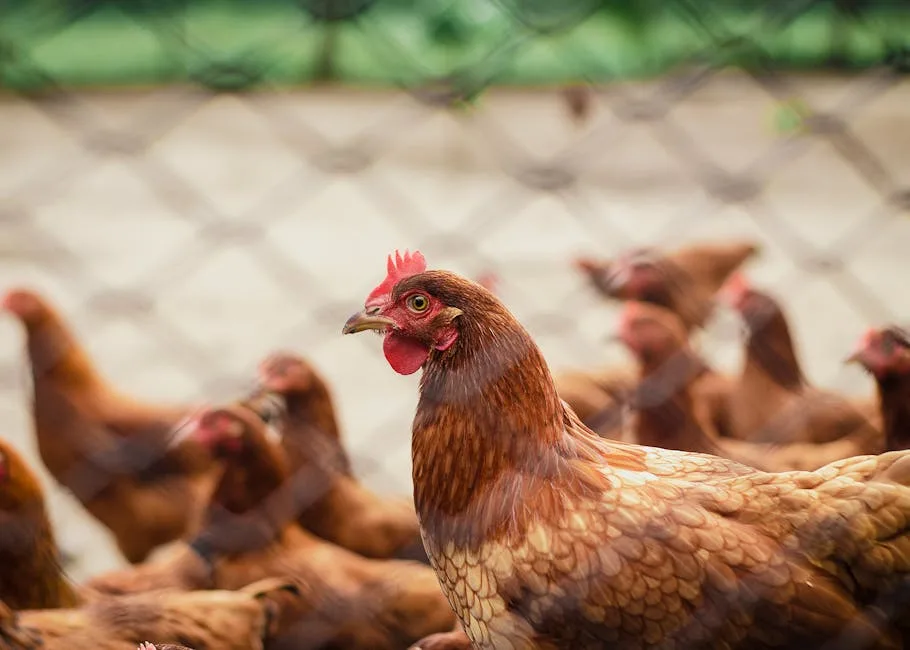
Wyoming summers feel mild on paper. Most of the state sees July highs in the 80s, with the western mountains rarely cracking the 90s. But two factors make summer care harder than the temperatures suggest: extreme sun intensity at elevation, and wildfire smoke that can sit over the state for weeks.
Keeping your flock comfortable in Wyoming summer:
- •Shade is non-negotiable. UV at 6,000 to 7,000 feet is significantly stronger than at sea level. A run without shade cloth or tree cover bakes birds even on a "mild" 85F day.
- •Cold water, twice a day. Wyoming's low humidity means water evaporates fast. Refill twice a day, add ice during heat waves, and keep waterers in deep shade.
- •Ventilate the coop. Open every window and vent. A closed coop in afternoon sun can hit dangerous temperatures fast.
- •Watch for heat stress above 90F. Panting, wings held away from the body, and lethargy mean trouble. Move stressed birds to shade and offer cool water immediately.
- •Wildfire smoke matters. Wyoming sees regular smoke events from regional wildfires, especially August and September. When air quality drops, keep birds in the run and consider closing the coop to outside air.
- •Dust baths are critical. Wyoming's dry summer is perfect for mite control through dust bathing. Provide a dust bath area with dry dirt, wood ash, and food-grade diatomaceous earth.
See our summer chicken care guide for the full heat-management playbook.
Winter Care in Wyoming
Wyoming winters are the test that decides whether a backyard flock thrives or struggles. Subzero temperatures, persistent wind, and 60-mph gusts are normal across much of the state from November through March. Cody, Casper, and the I-80 corridor frequently see wind events that ground commercial trucks. Your coop has to survive that.
Winter coop tips for Wyoming:
- •Block the wind first. Coop placement matters more than insulation. Site the coop with the run on the downwind side and the prevailing wind hitting a solid wall. Northwest is the prevailing winter wind direction in most of Wyoming.
- •Ventilation over insulation. A dry, well-ventilated coop is warmer than a sealed, humid one. Moisture from breath and droppings causes frostbite faster than dry cold air. Keep vents open at the roofline year-round.
- •Wind baffles for vents. High vents prevent moisture buildup, but Wyoming wind will scour the inside of the coop if vents aren't baffled. Use vent covers that block direct wind but allow air movement.
- •Deep litter method. Start with 4 to 6 inches of pine shavings in fall and add fresh shavings on top through winter. Composting action generates warmth and keeps the coop drier.
- •Heated waterers are essential. Water freezes within minutes at Wyoming's coldest temperatures. Have a backup plan for power outages, which happen during winter wind events.
- •Skip heat lamps. They're the leading cause of coop fires and unnecessary for cold-hardy breeds. For extended subzero stretches, use a flat-panel radiant heater designed for poultry.
- •Petroleum jelly on combs. Apply to large combs and wattles before cold nights to prevent frostbite. Critical for single-comb breeds.
- •Collect eggs frequently. Eggs freeze and crack within an hour or two at subzero temperatures. Check nest boxes two to three times a day in winter.
- •Wind protection for the run. A windbreak of plywood or hay bales on the upwind side of the run lets birds use outdoor space on bitter days. Without it, birds refuse to leave the coop.
- •Prepare for blizzards. Stock extra feed, shavings, and backup water solutions before storms. Wyoming blizzards regularly close I-80 for days and knock out power across rural areas.
Our winter chicken care guide covers cold-weather coop setup, frostbite prevention, and what to do when temperatures plunge.
Common Predators in Wyoming
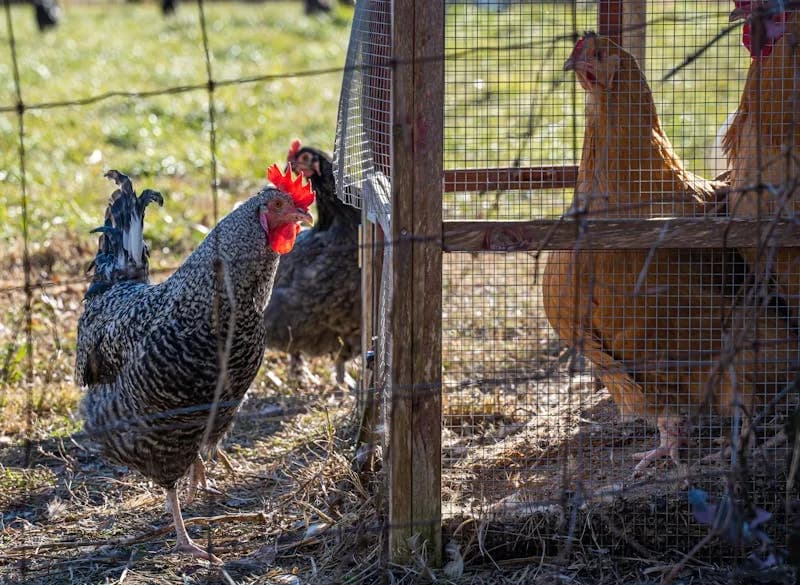
Wyoming has the largest predator load of any state on this list. Sparse human population, vast public lands, and intact wildlife corridors mean a backyard flock can attract anything from a great horned owl to a black bear, depending on where you live.
Common predators across most of Wyoming:
- •Coyotes: Found in every county and the most common chicken predator statewide. They dig under fences and operate in daylight when food is scarce. Bury hardware cloth 12 inches deep or run a wire apron flat on the ground.
- •Red foxes: Smart, persistent, most active at dawn and dusk. Lock the coop every evening without exception.
- •Raccoons: Common in cities and rural areas. They open simple latches and reach through chicken wire. Use hardware cloth (1/2-inch) on all openings and secure latches with carabiner clips.
- •Hawks: Red-tailed, Cooper's, ferruginous, and Swainson's hawks are all common. Wyoming's open landscapes give aerial predators clear sightlines. A covered run is the best protection.
- •Great horned owls: Active at night statewide. A secure, fully enclosed coop is the only reliable defense.
- •Bald and golden eagles: Both common in Wyoming, especially in the western half and along river corridors. Eagles take adult hens, not just chicks.
Predators specific to rural and western Wyoming:
- •Mountain lions: Present throughout the foothills and mountains of western and central Wyoming. A solidly built coop with a hardware-cloth-covered run is necessary in mountain lion country.
- •Black bears: Common in western Wyoming and along the eastern slope of the Bighorns. Bears go for feed first. Store feed in a sealed bear-resistant container indoors. An electric fence around the coop is the most effective deterrent.
- •Grizzly bears: Active in northwestern Wyoming around Yellowstone, Grand Teton, and the upper Wind River and Absaroka ranges. An electric fence around the coop and run is not optional in grizzly country.
- •Gray wolves: Present in northwest Wyoming, mostly in and around Yellowstone. Rare backyard threat but capable of taking poultry.
- •Mink and weasels: Small enough to squeeze through 1-inch gaps and capable of killing an entire flock in one visit. Hardware cloth with 1/2-inch openings is the only reliable defense.
- •Bobcats: Found across Wyoming's foothills and brushy country. Less common than coyotes but capable of killing multiple birds.
- •Skunks and opossums: Target eggs and young chicks. Seal any gaps larger than 3 inches.
General predator-proofing tips for Wyoming:
- •Lock the coop every night, no exceptions
- •Use hardware cloth on all openings, not chicken wire
- •Install an automatic coop door if you're not always home at dusk
- •Store feed in sealed metal containers (bear-resistant in bear country)
- •Consider an electric fence in mountain lion or bear country
FAQ
Do I need a permit to keep chickens in Wyoming?
It depends on your city. Casper, Gillette, Rock Springs, and Sheridan all require some form of permit or license. Cheyenne and Laramie do not require a city permit (though Cheyenne requires neighbor consent). Rural areas and unincorporated county land typically have no permit requirements. Check your municipal code before getting chickens.
How many chickens can I have in Wyoming?
It varies by city. Laramie allows up to 12 birds (chickens and rabbits combined). Cheyenne, Casper, Rock Springs, and Green River cap residential flocks at 6 hens. Gillette allows 5. Sheridan allows 4 to 6 on smaller lots and up to 10 per acre on larger properties. Rural properties generally have no limits.
Are roosters allowed in Wyoming cities?
Most Wyoming cities ban roosters in residential zones. Cheyenne, Casper, Gillette, Rock Springs, Sheridan, and Green River all prohibit them. Laramie is the exception and allows roosters as part of its 12-bird limit. Casper allows roosters only in the Urban Agriculture zoning district or with a Conditional Use Permit. Rural areas with agricultural zoning generally have no rooster restrictions.
What's the best chicken breed for Wyoming?
Wyandottes and Brahmas are the top picks for Wyoming. Both have rose or pea combs that resist frostbite, dense plumage that insulates against wind, and proven cold tolerance for subzero winters. Plymouth Rocks and Buff Orpingtons are excellent all-around alternatives. For maximum eggs, Australorps and Rhode Island Reds are reliable cold-hardy layers.
Can I sell eggs from my backyard flock in Wyoming?
Yes, and Wyoming has one of the most permissive laws in the country. The Wyoming Food Freedom Act lets producers sell eggs directly to consumers without a license, permit, or inspection. You must keep eggs refrigerated, label cartons with your name, address, the packaging date, and the word "ungraded," and inform buyers that the product is not regulated or inspected. Sales must happen within Wyoming and the buyer must be the end consumer.
How do I protect my chickens from Wyoming wind?
Site the coop with a solid wall facing the prevailing northwest wind. Add a windbreak (plywood, hay bales, or solar panels) on the upwind side of the run. Use baffled high vents so the coop ventilates without scouring inside. Anchor lightweight coops and runs against gusts that regularly top 60 mph in southeast Wyoming.
Do I need bear-proof chicken setup in Wyoming?
If you live in western Wyoming (Jackson, Cody, Pinedale, Lander, Dubois, the Bighorn front), yes. Black bears and grizzlies will hit a backyard flock for the feed first and the birds second. Store feed in a sealed bear-resistant container indoors, and install an electric fence around the coop and run. Contact Wyoming Game and Fish for region-specific guidance.
Your first step to keeping chickens in Wyoming is checking your city's ordinance. With most major cities allowing backyard hens, the legal side is usually straightforward. The harder challenge is building a coop and run that handles the wind, the cold, and the predator load. Pick cold-hardy breeds with rose or pea combs, ventilate the coop properly, and plan your wind protection before the first storm rolls through. Our beginner's guide to raising backyard chickens walks through the full setup.
Picking a coop for Wyoming? The breed you choose matters, but so does the coop. Our best chicken coops on Amazon roundup covers picks across flock sizes and price ranges, with notes on which models hold up best in cold, windy climates like Wyoming's.
Raising Chickens in Other States
If you're moving, considering a different state, or just curious how the rules compare, browse our other state guides:
Northeast: Connecticut, Delaware, Maine, Maryland, Massachusetts, New Hampshire, New Jersey, New York, Pennsylvania, Rhode Island, Vermont
Southeast: Alabama, Florida, Georgia, Kentucky, Louisiana, Mississippi, North Carolina, South Carolina, Tennessee, Virginia, West Virginia
Midwest: Illinois, Indiana, Iowa, Kansas, Michigan, Minnesota, Missouri, Nebraska, North Dakota, Ohio, South Dakota, Wisconsin
South & Southwest: Arizona, Arkansas, New Mexico, Oklahoma, Texas
Mountain & West: Alaska, California, Colorado, Hawaii, Idaho, Montana, Nevada, Oregon, Utah, Washington
Related Guides
Raising Chickens in Alaska: 2026 Laws & Best Breeds
Raising chickens in Alaska: laws for Anchorage, Fairbanks, Juneau, plus extreme cold-hardy breeds and sub-arctic care tips.
State GuidesRaising Chickens in Delaware: 2026 Laws & Best Breeds
Raising chickens in Delaware: laws for Wilmington, Dover, Newark, plus best breeds and tips for the First State's climate.
State GuidesRaising Chickens in Idaho: 2026 Laws & Best Breeds
Raising chickens in Idaho: laws for Boise, Meridian, Nampa, plus cold-hardy breeds and tips for the state's varied climate.
State GuidesRaising Chickens in Kansas: 2026 Laws & Best Breeds
Raising chickens in Kansas: laws for Wichita, Overland Park, Topeka, plus hardy breeds and storm-ready coop tips for the Sunflower State.