Brahma Chicken Breed Guide: Size, Eggs, Temperament
Everything you need to know about Brahma chickens. Size, egg production (150-200/yr), temperament, 3 varieties, and care tips for these gentle giants.
Researched from university extension, USDA, and veterinary sources. How we research.
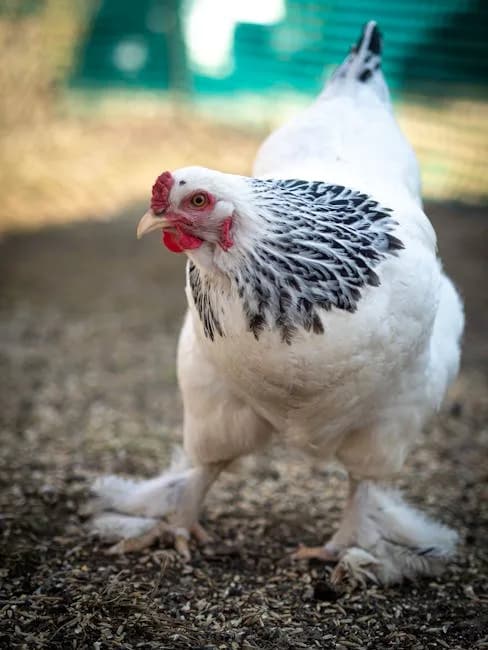
Brahma chickens are one of the largest chicken breeds you'll ever see, with roosters tipping the scales at 12 pounds or more. They're calm, cold-hardy, and surprisingly gentle for their size. If you've been eyeing these "gentle giants" for your backyard flock, here's everything you need to know before bringing them home.
What You'll Learn
- •Brahma Chicken Overview
- •History and Origin
- •What Do Brahma Chickens Look Like?
- •Brahma Chicken Varieties
- •How Big Do Brahma Chickens Get?
- •Brahma Chicken Temperament
- •How Many Eggs Do Brahma Chickens Lay?
- •Are Brahma Chickens Good for Beginners?
- •Housing and Space Requirements
- •Feeding Your Brahma Chickens
- •Health Issues to Watch For
- •Brahma Chickens in Cold Weather
- •Frequently Asked Questions
Brahma Chicken Overview
| Trait | Details |
|---|---|
| Size | Roosters: 10-12 lbs, Hens: 8-10 lbs |
| Eggs | 150-200 per year, medium-brown, large |
| Temperament | Calm, docile, friendly |
| Cold Hardy | Excellent |
| Heat Tolerant | Poor to moderate |
| Broody | Moderately broody |
| Beginner Friendly | Yes (with adequate space) |
| Lifespan | 5-8 years |
Brahmas aren't the most prolific layers, but they make up for it with personality, winter hardiness, and sheer impressiveness. They're a heritage breed that's been around since the 1800s, and they've earned their place in backyard flocks across the country.
History and Origin
The Brahma's history is a bit murky, but most poultry historians agree it was developed in the United States from large fowl imported from China in the 1840s. These birds, called "Shanghai" chickens, were crossed with Chittagong breeds from present-day Bangladesh to create what we now call the Brahma.
The breed dominated American poultry from the 1850s through the 1930s. Before industrial farming took over, Brahmas were the primary meat bird in the US. They were so popular that when the first Brahmas were shipped to England's Queen Victoria in 1852, it helped spark "hen fever," a nationwide craze for poultry keeping.
The American Poultry Association recognized three Brahma varieties: Light (1874), Dark (1874), and Buff (1924). Today, they're classified as a "recovering" breed by The Livestock Conservancy, meaning their numbers are growing after years of decline.
What Do Brahma Chickens Look Like?
You won't mistake a Brahma for any other breed. They've got a few unmistakable features:
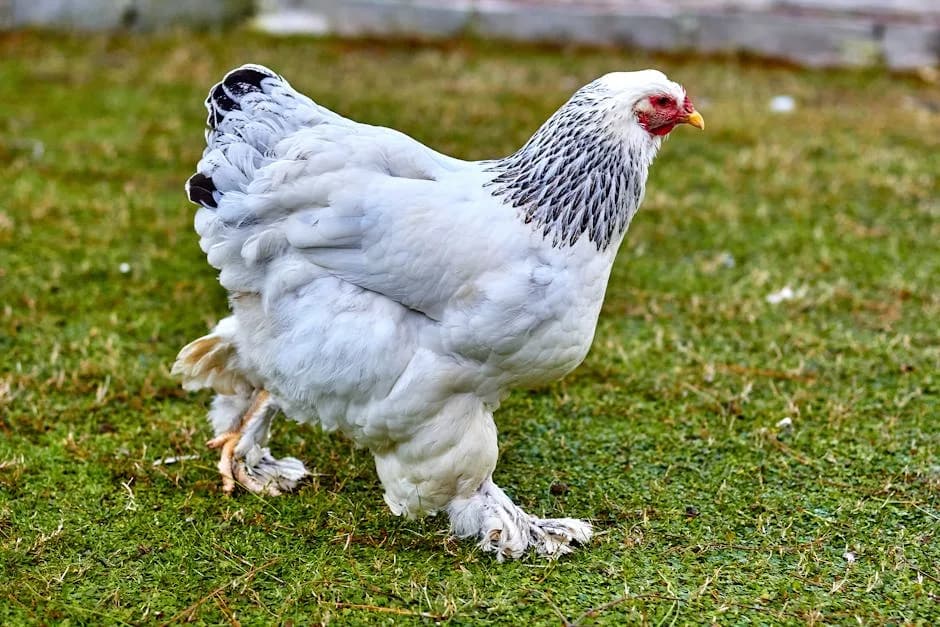
- •Feathered feet and legs. Dense feathering runs all the way down their shanks and covers their toes. It looks striking but does require some extra attention in wet or muddy conditions.
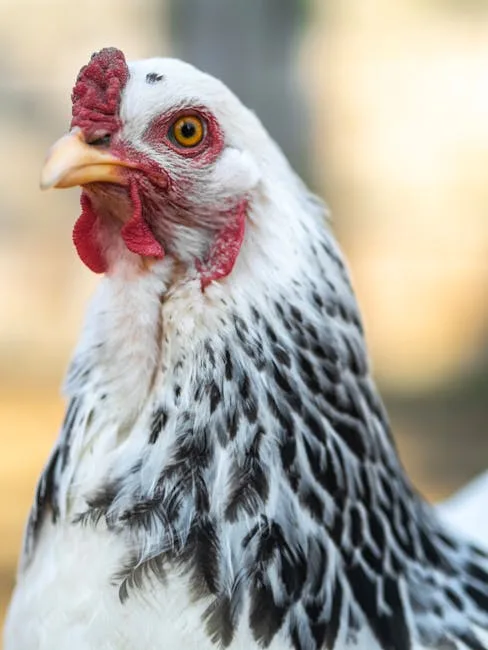
- •Pea comb. That small, close-fitting comb sits tight against their head. It's one reason they handle cold so well, since there's less exposed tissue to get frostbitten.
- •Broad, deep body. Brahmas are wide and muscular with a distinctive upright stance. They carry themselves like they know they're the biggest bird in the yard.
- •Beetle brow. Their skull projects slightly over their eyes, giving them a serious, almost regal expression.
Their overall look is powerful but not aggressive. Most people who see Brahmas for the first time can't believe how big and fluffy they are.
Brahma Chicken Varieties
The APA recognizes three standard varieties:
Light Brahma
The most popular variety. Light Brahmas have a white body with black hackle feathers (neck) and a black tail. The contrast is striking and makes them a favorite for backyard flocks. Hens have the same pattern but with more subtle black lacing on the hackles.
Dark Brahma
Dark Brahmas show dramatic sexual dimorphism, meaning roosters and hens look very different. Roosters have silver hackles with black striping, a black body, and a black tail. Hens are mostly penciled with detailed gray and black patterns across their feathers. They're gorgeous birds.
Buff Brahma
Buff Brahmas have a warm golden-buff body with black hackles and tail, similar to the Light variety's pattern but in buff instead of white. They were recognized by the APA in 1924, about 50 years after the other two varieties.
You'll also find non-standard colors from breeders, including Blue, Partridge, and White varieties. These aren't recognized for showing but make perfectly fine backyard birds.
How Big Do Brahma Chickens Get?
Brahmas are genuinely massive. Here are the standard weights according to the APA:
- •Roosters: 12 lbs (standard), though some reach 13-14 lbs
- •Hens: 9.5 lbs (standard), with many reaching 10 lbs
- •Cockerels: 10 lbs
- •Pullets: 8 lbs
- •Bantam roosters: 38 oz
- •Bantam hens: 34 oz
For perspective, an average Rhode Island Red hen weighs about 6.5 lbs. A Brahma hen can be nearly 50% heavier.
One thing to keep in mind: Brahmas are slow growers. They won't reach full size until they're about 18-24 months old, which is significantly slower than most breeds. Don't worry if your Brahma chicks seem to take forever to fill out. That's completely normal.
Brahma Chicken Temperament
This is where Brahmas really shine. Despite their intimidating size, they're some of the calmest, most docile chickens you'll find. Here's what to expect:
- •Gentle and easygoing. They rarely pick fights and tend to be low in the pecking order despite their size. Smaller, more aggressive breeds often boss them around.
- •Friendly toward people. Most Brahmas tolerate handling well and some genuinely enjoy human interaction. They won't usually run from you like flightier breeds.
- •Good with kids. Their calm disposition and slow movements make them a solid choice for families.
- •Quiet. They're not as vocal as some breeds, which is a bonus if you've got close neighbors.
One common question on Reddit: "Why aren't my Brahma chicks friendly?" The answer is patience. Brahmas are often shy as chicks but warm up with consistent, gentle handling. Spend time with them daily, offer treats from your hand, and they'll come around.
They do tend to be at the bottom of the pecking order when mixed with other breeds, so keep an eye on that. Their gentle nature means they won't fight back against bullies.
How Many Eggs Do Brahma Chickens Lay?
Brahmas are moderate layers. You can expect:
- •150-200 eggs per year (roughly 3-4 eggs per week)
- •Large, medium-brown eggs
- •Better winter laying than most breeds
- •Start laying at 6-9 months (later than many breeds due to slow maturity)
They won't compete with a Leghorn or Australorp for sheer egg numbers, but their winter laying ability is a real advantage. While many breeds slow down or stop laying entirely in winter, Brahmas keep producing. For cold-climate flocks, that's a big deal.
Brahma hens can go broody, and when they do, they're excellent mothers. Just be aware that a 10-pound hen sitting on eggs can accidentally crush them, so some keepers prefer to use an incubator instead. If you're interested in hatching, check out our incubation guide.
Are Brahma Chickens Good for Beginners?
Yes, with one important caveat: space. Brahmas need more room than average chickens, and their feathered feet require a bit of extra attention. But in terms of temperament and hardiness, they're excellent beginner birds.
Pros for beginners:
- •Calm and easy to handle
- •Very cold hardy
- •Don't fly (too heavy), so fencing is easy
- •Friendly and not aggressive
- •Decent egg production year-round
Challenges for beginners:
- •Need more coop space (at least 6-8 sq ft per bird inside)
- •Feathered feet can get muddy, wet, or frostbitten if not managed
- •Slow to mature
- •Don't handle heat well
- •Can be bullied by more assertive breeds
If you're just starting out, our beginner's guide covers everything you need to know, and our article on how many chickens to start with can help you plan your flock size.
Housing and Space Requirements
Because of their size, Brahmas need more space than standard breeds. Here's what to plan for:
Coop Space
- •Minimum 6-8 square feet per bird inside the coop (vs. 4 sq ft for standard breeds)
- •Roost bars should be sturdy and low. Brahmas are too heavy to jump up to high roosts. Keep them 12-18 inches off the ground to avoid leg injuries from jumping down.
- •Wide roost bars (at least 2 inches) so their feet can sit flat. Their feathered feet need good support.
Run Space
- •At least 12-15 square feet per bird in the outdoor run
- •They're not great flyers, so a 3-4 foot fence is usually plenty
Bedding
Dry bedding is critical for Brahmas. Their feathered feet trap moisture, which can lead to frostbite in winter or bumblefoot infections. Pine shavings are a great choice because they absorb moisture well. Avoid muddy runs whenever possible.
For coop building tips, check out our guide on how to build a chicken coop.
Feeding Your Brahma Chickens
Brahmas eat more than standard breeds simply because they're bigger. Plan on about 25-30% more feed per bird compared to an average-sized hen.
- •Layer feed (16% protein) as the base diet once they're laying
- •Grower feed (18-20% protein) for chicks and pullets, which they'll need longer than most breeds due to slow growth
- •Oyster shell on the side for calcium to support strong eggshells
- •Grit if they don't have access to natural ground
Brahmas aren't picky eaters. They enjoy kitchen scraps, mealworms, and foraging just like any other chicken. For a complete breakdown of what to feed your flock, read our feeding guide.
One tip: watch their weight. Because they're already large birds, it's easy for Brahmas to become overweight, which can reduce egg production and cause health problems. Don't overdo the treats.

Health Issues to Watch For
Brahmas are generally healthy and hardy, but their unique features create a few specific concerns:
Feathered Feet Problems
Those gorgeous foot feathers are a magnet for moisture, mud, and parasites. Check their feet regularly for:
- •Mud balls that can form between their toes
- •Scaly leg mites, which hide under the feather scales
- •Frostbite in winter if feet stay wet
Keep their run dry and their coop clean to prevent most foot issues.
Bumblefoot
Brahmas are prone to bumblefoot (a staph infection on the foot pad) because of their weight. Low roosts help reduce the impact when they jump down. Watch for any swelling or dark scabs on their foot pads.
Heat Stress
This is the biggest concern for Brahma owners in warm climates. Their large body mass and dense feathering make it hard for them to cool down. Signs of heat stress include panting, holding wings away from the body, and lethargy.
During hot weather:
- •Provide shade and good ventilation
- •Keep fresh, cool water available at all times
- •Add electrolytes to water on very hot days
- •Consider frozen treats like watermelon
Parasites
Feathered feet make external parasites harder to spot. Do regular checks for mites and lice, and treat quickly if you find them.
For a deeper look at chicken health, check out our sick chicken symptoms guide.
Brahma Chickens in Cold Weather
If you live somewhere with harsh winters, Brahmas are one of the best breeds you can pick. Here's why:
- •Pea comb resists frostbite (unlike large single combs)
- •Dense feathering provides excellent insulation, including on their feet
- •Large body mass retains heat better than small breeds
- •Winter egg laying continues when other breeds quit
They'll handle temperatures well below freezing without supplemental heat in most cases, as long as their coop is dry, draft-free, and well-ventilated. Our winter care guide covers everything you need to know about keeping chickens comfortable in cold weather.
The one caveat: keep their feathered feet dry. Wet foot feathers in freezing temperatures can lead to frostbite fast. Make sure your coop bedding stays dry and your run doesn't turn into a mud pit.
Looking for the right coop? Whatever breed you settle on, the coop you put them in matters as much as the bird itself. Our best chicken coops on Amazon roundup covers current top picks across flock sizes and price ranges, from under-$100 starter coops to walk-in models for larger flocks.
Frequently Asked Questions
How long do Brahma chickens live?
Brahma chickens typically live 5 to 8 years with proper care. Some can live longer, but egg production drops significantly after year 3. Good nutrition, clean housing, and parasite prevention all contribute to a longer lifespan.
Can Brahma chickens fly?
No, Brahmas can't really fly. They're way too heavy. Most can barely get a few inches off the ground. A 3-4 foot fence will easily contain them, which makes them one of the easiest breeds to keep in a yard without a covered run.
Are Brahma chickens good for meat?
Yes, Brahmas were historically one of America's top meat birds. They produce a large carcass with plenty of breast meat. The trade-off is they grow slowly, taking 18-24 months to reach full size. Modern commercial meat breeds reach processing weight in 6-8 weeks, so Brahmas aren't efficient for large-scale production, but they're excellent for homesteaders who don't mind the wait.
Do Brahma chickens get along with other breeds?
Brahmas generally get along well with other breeds. They're so docile that they rarely start conflicts. The bigger concern is other breeds bullying them. If you're mixing breeds, watch for more aggressive birds picking on your Brahmas, especially at feeding time.
How much space does a Brahma chicken need?
Plan for 6-8 square feet per bird inside the coop and 12-15 square feet per bird in the run. That's roughly double what standard-sized breeds need. Crowding Brahmas leads to stress, feather picking, and health issues.
Brahmas aren't for everyone, but if you've got the space and you want a calm, cold-hardy breed that looks striking in your backyard, they're hard to beat. Start with 3-4 hens and you'll see why so many chicken keepers fall in love with these gentle giants.
Looking for more breed comparisons? Check out our best chicken breeds for beginners or browse our complete breed guides.
Sources:
- •Livestock Conservancy. Brahma breed page. https://livestockconservancy.org/heritage-breeds/heritage-breeds-list/brahma-chicken/
- •The American Poultry Association. Standard of Perfection (reference). http://www.amerpoultryassn.com/
- •University of Kentucky Cooperative Extension. Small Flock Poultry resources. https://poultry.extension.org/
- •The Livestock Conservancy. Heritage breed conservation. https://livestockconservancy.org/
Related Guides
Buckeye Chicken Breed Guide: Eggs, Size, Temperament
Buckeye chickens are a hardy, dual-purpose American breed with a pea comb. Learn their egg output, mahogany color, temperament, and cold-weather care.
BreedsBlack Sex Link Chicken: Eggs, Size, Temperament & Genetics
The Black Sex Link is a Barred Rock x Rhode Island Red cross you can sex at hatch. Eggs per year, adult weight, temperament, and how the color trick works.
BreedsDelaware Chicken Breed Guide: Eggs, Size, Care
Everything you need to know about Delaware chickens. Covers 200-280 eggs/year, dual-purpose traits, calm temperament, and heritage breed care tips.
BreedsJersey Giant Chicken Breed Guide: Size, Eggs, Care
Everything you need to know about Jersey Giant chickens. Size, egg production, temperament, and care tips for the world's largest purebred chicken breed.