Rhode Island Red Chicken: Eggs, Temperament, Care & Facts
Rhode Island Red breed guide: 200 to 300 brown eggs a year, 6.5 lb hens, cold and heat hardy, broody or not depending on strain. Sourced from the Conservancy.
Researched from university extension, USDA, and veterinary sources. How we research.
The Rhode Island Red is the chicken most Americans picture when they hear the word "hen," and it earned that place honestly. The Livestock Conservancy calls it the most successful dual-purpose breed ever developed: a bird that lays 200 to 300 brown eggs a year, dresses out at a useful size, and keeps laying on rough feed and in rough housing where fussier breeds quit. It is the official state bird of Rhode Island, it is in every hatchery catalog and every feed store in spring, and it is one of the best first chickens a beginner can buy.
It is also a breed with two versions. The production Rhode Island Red from a hatchery is lighter, lays more, and rarely goes broody. The old-type or heritage Red is bigger, darker, sits on eggs, and is the bird the standard describes. This guide covers both, with the numbers from the breed's own registries rather than from memory: history, what they look like, how many eggs to expect and when, temperament for hens and roosters, cold and heat, broodiness, housing, feeding, health, how they compare with the other backyard standards, and where to buy them.
Rhode Island Red at a Glance
| Origin | Massachusetts and Rhode Island, 1880s and 1890s |
| Ancestry | Malay, Shanghai (Cochin type), Java, Brown Leghorn |
| APA recognition | Single comb 1904; rose comb a year or two later (sources give 1905 and 1906) |
| APA standard weights | Cock 8.5 lb, hen 6.5 lb, cockerel 7.5 lb, pullet 5.5 lb |
| Eggs | 200 to 300 a year, large, brown; production strains at the top of the range |
| First egg | Often around 6 months, some pullets earlier |
| Comb | Single (nearly all hatchery birds) or rose |
| Skin and shanks | Yellow |
| Temperament | Calm to active hens; some roosters aggressive |
| Broodiness | Common in old-type birds; largely bred out of production strains |
| Climate | Hardy in cold and heat; single comb can frostbite |
| Conservancy status | Graduated from the priority list in 2023 |
| State bird | Rhode Island, since May 3, 1954 |
Breed History and Origin
The Rhode Island Red was put together by New England farmers in the 1880s and 1890s, in the towns along the Massachusetts and Rhode Island line. The Conservancy lists its ancestors as Malay, Shanghai, Java, and Brown Leghorn. Oklahoma State University's breed reference credits the Malay with the deep color, the strong constitution, and the hard, tight feathering, and the black-red Java with the rose comb that showed up in early flocks alongside the single comb. The goal, in the Conservancy's words, was a bird that could lay a good number of eggs and still dress out nicely as a table bird, and the breed spread fast because it did both.
The American Poultry Association admitted the single-comb Rhode Island Red to its Standard of Perfection in 1904. The rose-comb variety followed shortly after; the Conservancy dates it to 1905 and Oklahoma State to 1906. Rhode Island made the breed its official state bird on May 3, 1954, after a public vote in which it beat the osprey and the ruby-throated hummingbird.
Production Reds and old-type Reds
The split that matters to a buyer happened after the 1940s. The Conservancy notes that from then on the Rhode Island Red was selectively bred for more efficient egg production and became smaller, lighter in color, and less broody as a result. Those are the birds nearly every hatchery sells today; Murray McMurray, for example, describes its flock as a production strain bred for efficient laying and less broodiness. The old-type Reds, larger, darker, and more broody, are the ones the Conservancy watched for years. The breed graduated off the Conservancy's priority list in 2023, which means the population is now considered secure, though the old-type birds are still the minority.
Which one you have changes what to expect on almost every line below.
What Rhode Island Reds Look Like
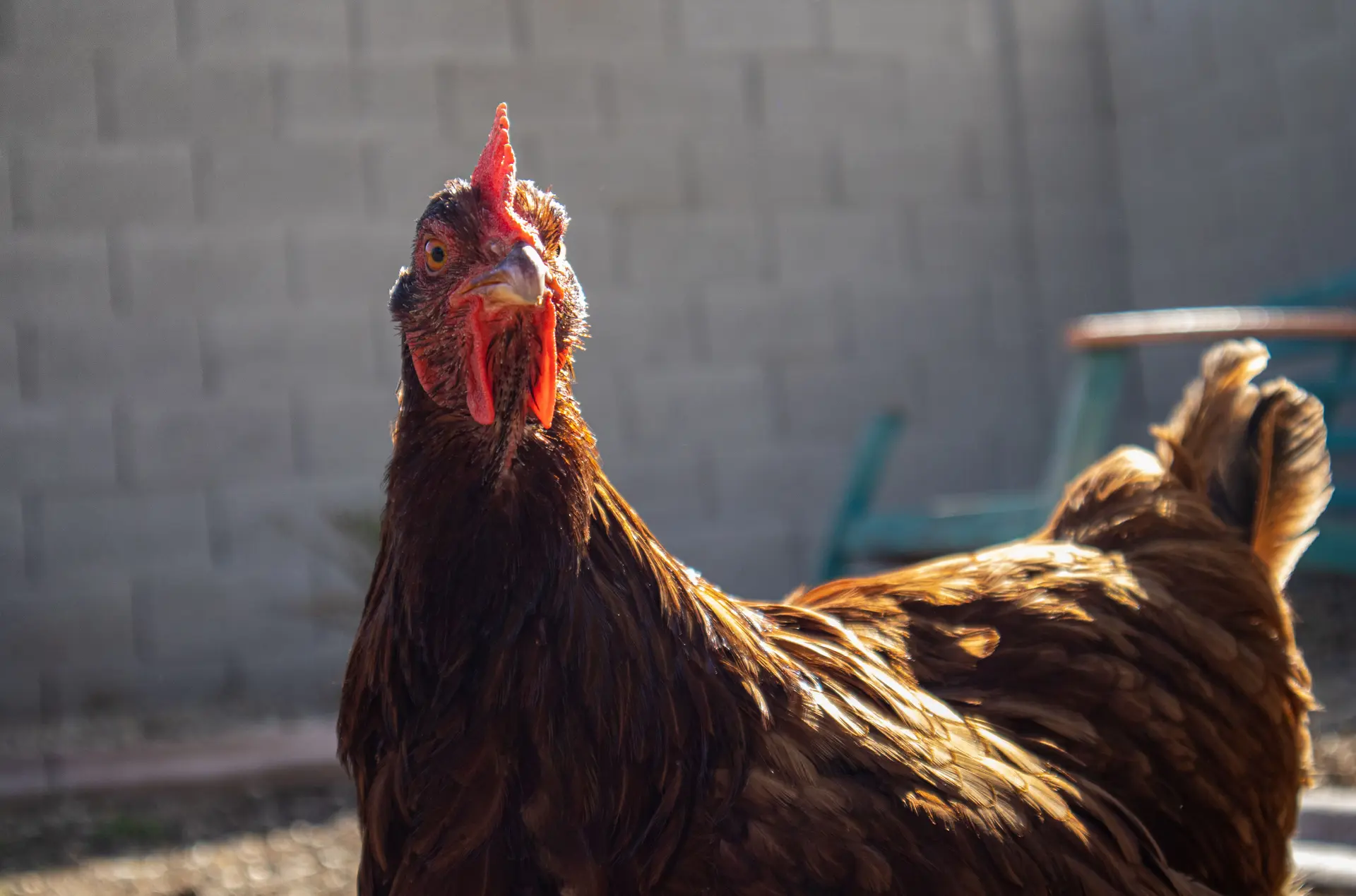
The color is the giveaway: a deep, glossy red that Oklahoma State describes as dark red on a rectangular, relatively long body, with black in the main tail and wing feathers as normal. Production birds run lighter, toward a rusty orange, and the Conservancy notes the breed has lightened as it was bred for eggs. Sun fades the red on any of them over a season.
Hens weigh about 6.5 pounds at the APA standard, with pullets at 5.5. They have a single comb (or a rose comb in the rarer variety), red wattles and earlobes, yellow shanks and feet, and yellow skin, which matters if you ever dress one.
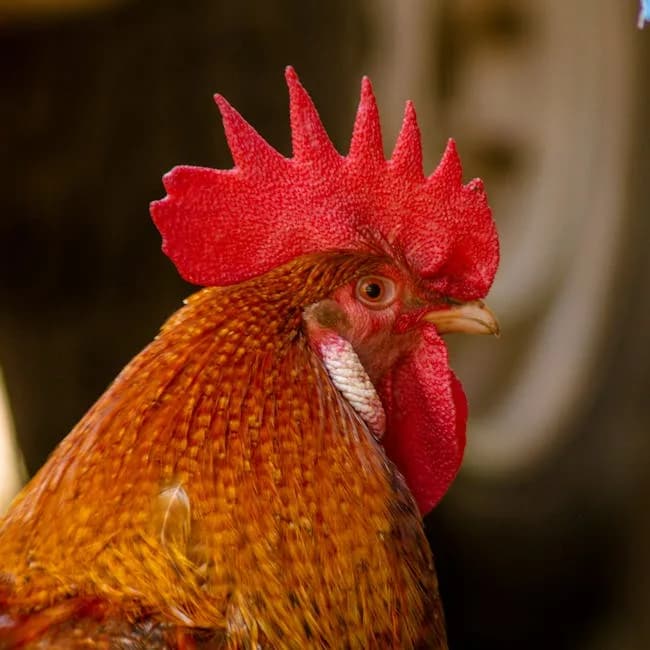
Roosters weigh about 8.5 pounds, cockerels 7.5, with the same colors in a bigger, glossier package and a green-black sheen on the tail.
Rose comb vs single comb. Same breed, two comb types. Oklahoma State notes the rose-comb variety tends to run smaller but is supposed to match the single comb in size. The rose comb sits flat and is far less prone to frostbite, which is its one practical advantage. Hatchery birds are almost always single comb.
If you are breeding toward the standard, Oklahoma State's advice is to avoid medium or brick-red females, since that color is not in keeping with the breed.
How Many Eggs Do Rhode Island Reds Lay?
This is the reason to keep them. The Conservancy puts Rhode Island Reds at 200 to 300 brown eggs a year, starting as early as six months of age, and calls them perhaps the best layers of all the dual-purpose breeds. Where a particular hen lands in that range depends on her strain:
- •Production strains from the big hatcheries sit at the top of the range. A first-year production Red laying five or six eggs a week through spring and summer is normal.
- •Exhibition and old-type strains lay less. Cackle Hatchery lists its exhibition-type Reds at 200 to 250 a year, and Oklahoma State's reference, written around show-quality birds, gives 150 to 200.
The eggs are large and brown, usually a medium tan to warm brown, and the shade lightens a little as a hen ages and over the course of a laying year. See how many eggs a chicken lays a day for what an annual figure means week to week, and when chickens start laying for the signs the first egg is close.
Two things keep a Red laying: light and feed. Hens lay best on 14 to 16 hours of light, so a bulb on a timer in the coop keeps production up through winter if you want it to. Layer feed from about 18 weeks does the rest.
Are Rhode Island Reds Broody?
It depends entirely on the strain, and this is the question that trips people up. Oklahoma State's reference states that most Reds show broodiness but that the trait has been partially eliminated in the best egg-production strains. The Conservancy says the same: most hens can become broody except within strains heavily selected for egg production.
In practice:
- •A hatchery production Red rarely goes broody. Cackle lists broodiness as "variable" for its exhibition strain and McMurray advertises "less broodiness" for its production flock. If you want to hatch chicks under a hen, keep a Silkie, a Cochin, or an Orpington for the job, or use an incubator; see our hatching guide.
- •An old-type or breeder-sourced Red goes broody about as readily as any heritage dual-purpose hen, and makes a good mother when she does. Our broody hen guide covers managing one either way.
Rhode Island Red Temperament
Hens. The Conservancy lists the temperament as calm and notes that most hens are peaceful. In a backyard, that reads as confident rather than cuddly: Reds are curious, active foragers who walk up to see what you are doing and are easy to handle if raised with people, but they are not lap birds the way an Orpington is. Cackle describes its strain as active, which is fair. In a mixed flock they land near the top of the pecking order and can bully very timid breeds, so pair them with birds that hold their own, like Plymouth Rocks, Australorps, and Wyandottes, rather than Silkies or Polish. Our guide to mixing chicken breeds covers the combinations that work.
Roosters. Both the Conservancy and Oklahoma State say it directly: some Rhode Island Red roosters may be quite aggressive. Not all of them, and handling from chick stage helps, but the breed produces more flogging cockerels than most. If you are keeping chickens with small children and do not need to hatch chicks, a hen-only Red flock is the easier choice. If you keep a rooster, read how to care for a rooster before he decides the pecking order includes you.
Are they friendly? Toward people, usually yes, in the way of a bird that is bold and food-motivated rather than affectionate. Handle chicks daily, feed treats by hand, and most Reds will follow you around the yard. The friendliest individuals are usually production hens; old-type birds are a touch more reserved.
Are Rhode Island Reds Cold Hardy?
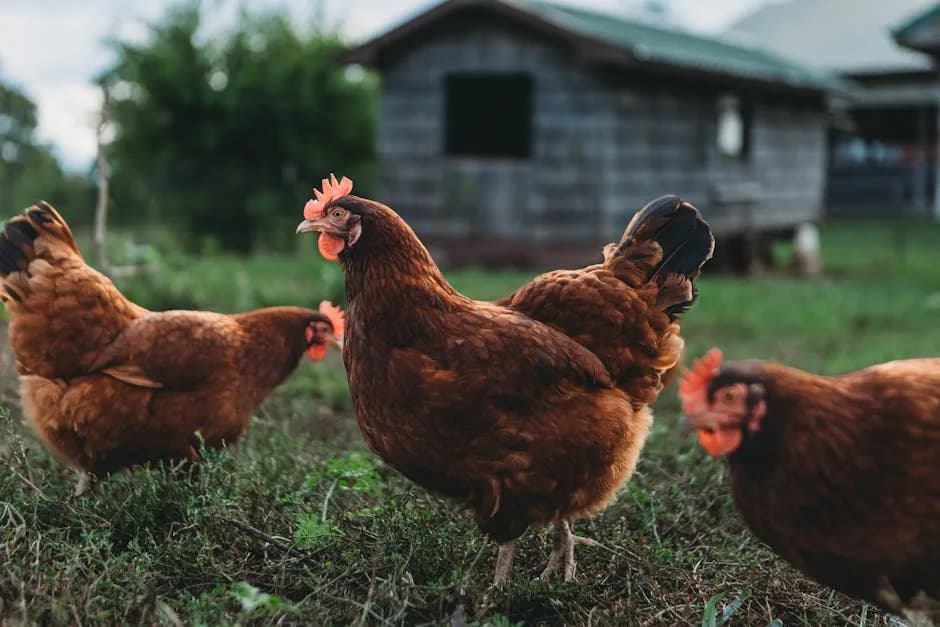
Yes, and it is one of the breed's defining traits. The Conservancy describes the Rhode Island Red as known for hardiness and for handling marginal conditions while still producing eggs. Oklahoma State goes further: Reds handle marginal diets and poor housing better than other breeds and keep laying. A dry, draft-free, well-ventilated coop is all they need in a northern winter, with no heat. The weak spot is the single comb, whose points can frostbite in hard freezes with wind or damp; the rose-comb variety avoids that. Our guide to keeping chickens warm in winter covers ventilation, roosts, and the frostbite question.
Are Rhode Island Reds Heat Tolerant?
Better than most heavy breeds. The Malay ancestry that gave the Red its hard feathering and tough constitution came from a hot-climate bird, and Reds are a standard choice across the southern states. They still need what every chicken needs above 90°F: shade, cool water, and a run with airflow. Dark feathers absorb sun, so a Red flock in an open run with no shade will pant by early afternoon. See our summer chicken care guide.
Are Rhode Island Reds Good for Beginners?
Yes, and they are on nearly every list of best chicken breeds for beginners for the same four reasons:
- •They forgive mistakes. A breed that lays through marginal feed and poor housing, in the words of a university breed reference, will survive a beginner's first winter.
- •They lay. Five or six eggs a week from a production hen in her first year, with no special management.
- •They are cheap and everywhere. Every hatchery and feed store carries them, and they are among the least expensive chicks sold.
- •They need nothing special. Standard coop, standard feed, standard care.
The two caveats are the rooster temperament above and the fact that a Red is a bird with opinions. If you want a hen that sits in a child's lap, buy an Orpington. If you want eggs, buy a Red.
Housing and Space
Reds are active and do best with room. The numbers extension services recommend for standard hens apply:
- •Coop floor: 3 to 4 square feet per bird, more if they will be shut in for long winter stretches
- •Run: 8 to 10 square feet per bird
- •Roost: 8 to 10 inches of bar per bird, 2 feet or so off the floor
- •Nest boxes: one per 4 to 5 hens
A cramped Red flock is where feather-pecking starts, so if the run is small, add a dust bath, a hanging cabbage, and something to climb. They free-range well and cover ground; the Conservancy notes the breed likes to range. Any solid coop works, from plans you build to the prefab coops we have checked, as long as it is predator-proof. See how to predator-proof a coop and our notes on bedding.
Feeding Rhode Island Reds
Nothing breed-specific. A Red eats the same program as every layer:
- •Chick starter, 20 to 24 percent protein, hatch to about 6 weeks
- •Grower, 16 to 20 percent, 6 to 18 weeks
- •Layer feed, 14 to 16 percent protein with 3.5 to 4 percent calcium, from about 18 weeks
- •Oyster shell in a separate dish for the layers, grit if they do not range on bare ground, and clean water always
An adult Red eats roughly a quarter pound of feed a day, a little more in winter and a little less when ranging. Treats stay small: scraps and scratch together should be no more than the flock finishes in about 20 minutes, and never anything on the never-feed list. The full breakdown is in our feeding guide, and the cost side is in how much it costs to raise chickens.
Reds are good foragers and will add bugs, seeds, and greens on their own if let out. That improves yolk color; it does not replace layer feed.
Health and Lifespan
Reds are among the hardiest chickens you can keep, and their health problems are the ordinary ones:
- •Mites and lice. Check under the wings and around the vent every few weeks; a dust bath is the main prevention. See best chicken mite treatment.
- •Frostbite on the comb in single-comb birds. Ventilation and dry bedding matter more than heat.
- •Bumblefoot from high roosts and hard landings. Keep roosts a couple of feet up with soft ground below.
- •Reproductive problems in high-production hens after year three or four. Heavy layers of any breed are prone to them, and production Reds are heavy layers.
- •Respiratory trouble from ammonia in a damp coop. Clean bedding and a vent under the eaves prevent most of it.
A backyard Red typically lives 5 to 8 years. Laying peaks in the first two years and tapers after, which is the pattern for all layers; see how long chickens live.
Rhode Island Red vs Other Backyard Breeds
| Rhode Island Red | Compared with | |
|---|---|---|
| Buff Orpington | More eggs, hardier, more assertive | Orpington is gentler, broodier, better with kids, 200 to 280 eggs |
| Plymouth Rock | Slight edge on eggs | Rock is a touch calmer; the two mix well |
| Australorp | Similar eggs, more heat tolerant | Australorp is quieter and holds the laying record |
| Leghorn | Calmer, heavier, brown eggs | Leghorn lays more white eggs, flighty, not a table bird |
| Buckeye | More eggs | Buckeye is darker, pea-combed, frostbite-proof, forages harder |
| New Hampshire | Darker, slightly better layer | New Hampshire was bred from the Red for faster growth and meat |
| ISA Brown | Purebred, longer laying life | ISA Brown is a hybrid that out-lays a Red for two years then fades |
If egg count is the goal, a Red is the best purebred choice in this list. If you want the most eggs in the shortest time regardless of longevity, the hybrids win. If you want a pet, look at the Orpington.
Where to Buy Rhode Island Reds
- •Hatcheries. Murray McMurray, Cackle, Meyer, Hoover's, and every regional hatchery carry them, nearly all as production strains. Cackle also sells an exhibition-type strain if you want the darker, heavier bird. Sexed pullets are the standard order.
- •Feed stores. Reds are in every spring chick order. Cheapest option, least information about strain.
- •Breeders. For old-type Reds bred to the standard, find a breeder through the American Poultry Association or a state poultry club. Expect to pay more and wait for hatching season.
- •Started pullets. Reds are one of the easiest breeds to find at 15 to 22 weeks if you want to skip the brooder; see what is a pullet.
Decide first whether you want eggs or a heritage bird, because the hatchery will not ask. For flock size, see how many chickens to start with; three to six Red hens is plenty for a family. Our where to buy chickens guide compares the sources.
Frequently Asked Questions
How many eggs does a Rhode Island Red lay?
The Livestock Conservancy puts the breed at 200 to 300 brown eggs a year. Hatchery production strains sit at the top of that range; exhibition and old-type strains lay 150 to 250.
What color eggs do Rhode Island Reds lay?
Brown, usually medium tan to warm brown, large in size.
Are Rhode Island Reds broody?
Old-type Reds often are; production Reds from hatcheries rarely are, because broodiness has been bred down in strains selected for eggs. Ask which strain you are buying.
Are Rhode Island Reds cold hardy?
Yes. The breed is known for laying through marginal conditions and needs no coop heat in northern winters, only dry, draft-free ventilation. Single combs can frostbite at the tips.
Are Rhode Island Reds heat tolerant?
Yes, better than most heavy breeds, thanks in part to Malay ancestry. They still need shade and cool water above 90°F.
Are Rhode Island Red roosters aggressive?
Some are. Both the Conservancy and Oklahoma State note that Red males may be quite aggressive. Handling helps, but if you do not need a rooster, keep hens only.
Are Rhode Island Reds friendly?
Confident and easy to handle if raised with people, but independent rather than cuddly. Production hens tend to be the friendliest.
How big do Rhode Island Reds get?
APA standard weights are 8.5 pounds for a cock and 6.5 for a hen. Production birds often run a little lighter.
How long do Rhode Island Reds live?
Typically 5 to 8 years, with laying tapering after the first two or three.
Bottom Line
The Rhode Island Red is the default backyard chicken for good reason: 200 to 300 brown eggs a year, tough in cold and heat, cheap, and available everywhere. Buy a production strain if you want eggs and no broodiness, buy old-type birds from a breeder if you want the heavier, darker bird that sits on a clutch, and skip the rooster unless you need one. Either way, start with our beginner's guide to raising chickens.
Sources:
- •The Livestock Conservancy. Rhode Island Red Chicken (origin, ancestry, 200 to 300 eggs, weights, temperament, production vs old-type, APA 1904/1905, status Graduated 2023). https://livestockconservancy.org/rhode-island-red-chicken/
- •Oklahoma State University, Breeds of Livestock. Rhode Island Red Chickens (APA standard weights, comb varieties, Malay and Java influence, broodiness in production strains, hardiness, aggression in some males, 1904/1906). https://breeds.okstate.edu/poultry/chickens/rhode-island-red-chickens
- •State of Rhode Island. Facts and Figures: State Bird (adopted May 3, 1954). https://www.ri.gov/facts/factsfigures.php
- •Cackle Hatchery. Rhode Island Red Chicken, exhibition type (weights, 200 to 250 eggs, broodiness variable). https://www.cacklehatchery.com/product/rhode-island-red-chicken/
- •Murray McMurray Hatchery. Rhode Island Reds (production strain bred for efficient laying and less broodiness). https://www.mcmurrayhatchery.com/rhode_island_reds.html
- •University of Florida IFAS Extension. Raising Backyard Chickens for Eggs, AN239 (feed stages). https://ask.ifas.ufl.edu/publication/AN239
Related Guides
New Hampshire Red Breed Guide: Eggs, Size, Care
Complete New Hampshire Red chicken guide. Covers 200-280 eggs/year, dual-purpose traits, how they differ from Rhode Island Reds, and care tips.
BreedsAustralorp: Complete Breed Guide (Eggs, Temperament, Care)
Australorps lay 250+ light brown eggs per year and thrive in backyard flocks. Get the full breed profile with care tips, history, and real pros and cons.
BreedsBuff Orpington Breed Guide: Eggs, Care, Temperament
Buff Orpingtons lay 200-280 brown eggs yearly and make the friendliest backyard chickens. Get the full breed profile with care tips, pros, and cons.
BreedsLeghorn Chicken Breed Guide: Eggs, Care, Temperament
Leghorn chickens explained: up to 320 white eggs a year, White vs Brown, temperament, frostbite risk, buying pullets, and how they compare with other layers.