Best Egg Laying Chickens: 11 Breeds Ranked by Eggs Per Year
The best egg laying chickens ranked by yearly output from registry and hatchery figures: ISA Brown, Leghorn, sex links, Rhode Island Red, Australorp, and more.
Researched from university extension, USDA, and veterinary sources. How we research.
The best egg laying chickens for a backyard are not a mystery, but the numbers people quote for them often are. A hatchery catalog will promise 300 eggs a year from a breed whose registry entry says 200, and both can be right, because a production strain and a heritage strain of the same breed lay very differently. This list ranks eleven breeds by the figures their breed registry or the hatcheries that sell them actually publish, names the source for each, and tells you which end of the range to expect from the bird you are likely to buy.
The short version: the hybrids (ISA Brown, Golden Comet, and the sex links) lay the most in their first two years, the Leghorn is the purebred that keeps up with them, and the Rhode Island Red and Australorp are the dual-purpose breeds that come closest while living and laying longer.
What You'll Learn
- •The 11 best egg laying breeds, ranked
- •What the numbers mean
- •Production hybrids vs heritage breeds
- •How to get the most eggs from any breed
- •Egg color by breed
- •Frequently asked questions
The Rankings at a Glance
| Rank | Breed | Eggs per year (source) | Egg color | Hen weight | Type |
|---|---|---|---|---|---|
| 1 | ISA Brown | About 300 a year over the first two seasons; its breeder reports flocks reaching 500 eggs per hen by 100 weeks of age (Hendrix Genetics) | Brown | About 4.5 to 5.5 lb | Hybrid |
| 2 | White Leghorn | 150 to 320, commercial strains at the top (Livestock Conservancy) | White | 4.5 lb | Purebred |
| 3 | Golden Comet | 250 to 320 (Cackle Hatchery) | Brown | 5 to 7 lb | Hybrid |
| 4 | Rhode Island Red | 200 to 300 (Livestock Conservancy) | Brown | 6.5 lb | Purebred, dual-purpose |
| 5 | Black Sex Link | 200 to 280 (Cackle); 280 to 300 (Myers Poultry) | Brown | 5 to 7 lb | Hybrid |
| 6 | Australorp | 250 or more (Livestock Conservancy) | Tinted to light brown | 6.5 lb | Purebred, dual-purpose |
| 7 | Easter Egger | 200 to 280 (Cackle); about 240 (Hoover's) | Blue, green, sometimes pink or brown | 4 to 6 lb | Hybrid |
| 8 | Plymouth Rock | About 200 (Livestock Conservancy); 220 to 280 (McMurray) | Brown | 7.5 lb | Purebred, dual-purpose |
| 9 | Sussex | 200 to 250 (Livestock Conservancy) | Tan to brown | 7 lb | Purebred, dual-purpose |
| 10 | Wyandotte | 180 to 260 (Cackle); 220 to 280 (McMurray) | Brown | 6.5 lb | Purebred, dual-purpose |
| 11 | Buff Orpington | 150 to 280 (Cackle) | Light brown | 8 lb | Purebred, dual-purpose |
The 11 Best Egg Laying Breeds, Ranked
1. ISA Brown
The ISA Brown is a commercial laying hybrid developed by Hendrix Genetics, and it is the reason a modern egg farm gets an egg from nearly every hen nearly every day. Hendrix reports that egg producers around the world are now reaching 500 eggs per hen housed by 100 weeks of age with its layer lines, a figure it has bred toward since it extended its testing to 100 weeks in 2008. Strip out the 18 or so weeks before the first egg and that is roughly 300 eggs a year across the first two laying seasons, with the peak in the first.
In a backyard the ISA Brown is friendly, calm, small, and starts laying as early as 16 weeks. The trade is longevity: a bird bred to lay this hard slows sharply after two or three years and is prone to reproductive problems after that. Our ISA Brown guide covers the details, and the same hybrid is sold under several other names.
Best for: the most eggs from the fewest birds, right now.
2. White Leghorn
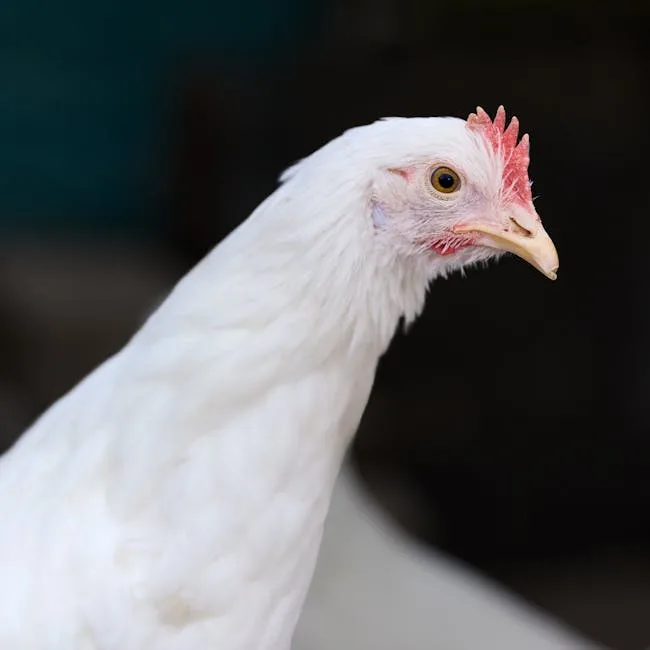
The Leghorn is the purebred behind the commercial white-egg industry, and The Livestock Conservancy puts its range at 150 to 320 large to extra-large white eggs a year, with the commercial strains at the top and heritage show strains at the bottom. A hatchery White Leghorn is a production strain and will sit near 280 or better in her first year. She is also the most feed-efficient bird on this list at 4.5 pounds.
The Conservancy describes the breed as very active, and some strains as flighty and easily startled, which is the honest description of a Leghorn: an egg machine that would rather not be picked up. See the Leghorn guide.
Best for: maximum eggs from a purebred, small spaces, hot climates.
3. Golden Comet
The Golden Comet is a red sex-link hybrid, which means the chicks can be sorted by sex at hatch by color. Cackle Hatchery lists its Golden Comets at 250 to 320 brown eggs a year, hens at 5 to 7 pounds, and temperament as active. Cackle's cross uses a Cherry Egger male over a Rhode Island White female; other hatcheries build the same bird from a Rhode Island Red rooster and a Rhode Island White hen and sell it as Cinnamon Queen, Red Star, or Gold Sex Link.
Like the ISA Brown, it starts early, around 16 weeks, and fades after two or three seasons. The Cinnamon Queen guide covers the red sex-link family.
Best for: first-time keepers who want sexed chicks and a fast start.
4. Rhode Island Red
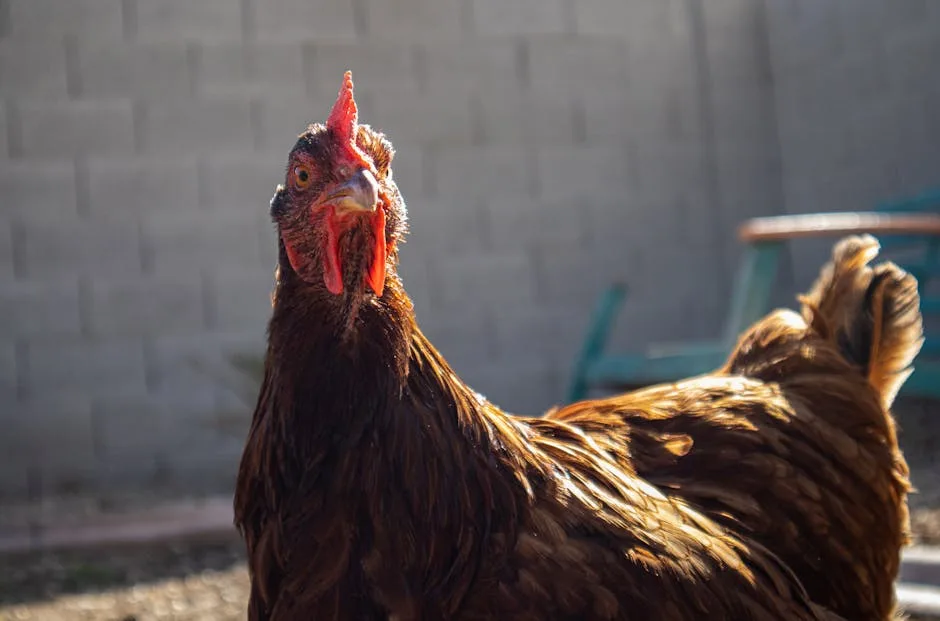
The best-known dual-purpose breed in America, and the Conservancy calls it perhaps the best layer of all the dual-purpose breeds at 200 to 300 brown eggs a year, starting as early as six months. Hatchery production strains sit at the top of that range; exhibition and old-type birds sit lower. Hens run about 6.5 pounds at the standard, and the breed is famous for laying through cold, heat, and marginal feed.
Reds are confident, sometimes bossy in a mixed flock, and some roosters are aggressive. The full picture, including the production-versus-heritage split, is in our Rhode Island Red guide.
Best for: a purebred that lays like a hybrid and lasts longer.
5. Black Sex Link
A Rhode Island Red rooster over a Barred Plymouth Rock hen, sexable at hatch: pullets are black, cockerels have a white head spot. Cackle lists hens at 6 to 7 pounds laying 200 to 280 eggs a year; Myers Poultry lists 280 to 300 from a lighter 5-pound hen. Either way it is a big brown egg from a calm, heavy, hawk-colored bird. Our Black Sex Link guide explains the genetics and why the cross does not breed true. For a sex link with a longer laying life and blue-grey feathers, see the Sapphire Gem.
Best for: a calm, cold-hardy hybrid that is easy to sex and easy to find.
6. Australorp
The Australorp is an Australian refinement of the Black Orpington, selected for eggs rather than meat, and it holds the most famous laying record in the breed books: the Conservancy's page recounts a hen of the Burns bloodline laying 354 eggs in twelve months and another laying 364 eggs in 365 days. The Conservancy lists the breed at 250 or more tinted to light brown eggs a year, hens at 6.5 pounds, and temperament as active yet gentle.
A backyard Australorp will not lay 364, but a good one lays five a week through her first two years and keeps going. Dense black feathering makes her cold-hardy; shade matters in summer. See the Australorp guide.
Best for: steady production from a quiet, cold-hardy purebred.
7. Easter Egger
Not a breed but a hatchery cross carrying the blue-egg gene, and the reason a carton from a backyard flock has blue and green in it. Cackle lists its Easter Eggers at 200 to 280 medium to large eggs a year; Hoover's says about 240; Meyer says four to six a week. Hens run 4 to 6 pounds. Egg color varies bird to bird, from turquoise to olive to the occasional pink, and each hen lays one color for life.
They are friendly, cold-tolerant, and small enough to fit anywhere. Our Easter Egger guide explains the difference from an Ameraucana.
Best for: color in the basket without giving up much output.
8. Plymouth Rock
The Barred Rock is the classic American farm hen, accepted into the APA standard in 1874, and the Conservancy lists it at around 200 large brown eggs a year from a 7.5-pound hen, calm and docile. Hatchery production strains lay more: McMurray gives 220 to 280 and Hoover's about 250. The gap is the production-versus-heritage split again, and a feed-store Barred Rock is a production strain.
Rocks are cold-hardy, friendly with people, and easy in a mixed flock. See the Plymouth Rock guide.
Best for: families, cold climates, a gentle bird that still lays well.
9. Sussex
A dual-purpose English breed the Conservancy lists at 200 to 250 large tan to brown eggs a year, hens at 7 pounds, temperament calm and curious, status Recovering. The Speckled Sussex and Light Sussex are the common varieties, and both are excellent foragers that follow people around the yard.
Best for: free-range flocks and keepers who want a friendly bird with a few more eggs than an Orpington.
10. Wyandotte
The laced Wyandotte is the show-stopper of the group, and its rose comb makes it one of the best cold-climate layers because there is almost nothing to frostbite. Hatchery figures spread widely: Cackle lists 180 to 260 large brown eggs, McMurray 220 to 280, Hoover's about 245, and Meyer 160, which tells you how much strain matters. The Conservancy lists hens at 6.5 pounds and temperament as calm.
Best for: cold climates and keepers who want a beautiful bird that lays through winter.
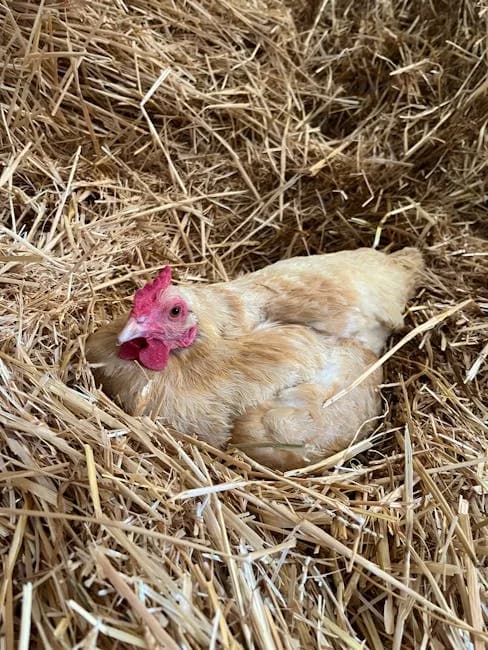
11. Buff Orpington
The gentlest bird on the list and the lowest layer. Cackle lists Buff Orpingtons at 150 to 280 light brown eggs a year, hens at 8 pounds, temperament docile, and broodiness as "setter," which is why Orpingtons are the hens people keep for hatching chicks. The Conservancy lists the breed at 10 and 8 pounds for cock and hen and calm and friendly.
An Orpington earns her place by being the hen a child can carry, not by egg count. See the Buff Orpington guide.
Best for: families with kids, cold climates, and natural hatching.
What the Numbers Mean
Every figure above is a first-year, well-managed number, and a few things move it:
- •Strain beats breed. A production-strain Barred Rock from a hatchery and an exhibition Barred Rock from a breeder are the same breed and can differ by 80 eggs a year. When a range is wide, the hatchery bird is at the top of it.
- •Year one is the peak. The University of Wisconsin's extension notes that egg number, size, and shell quality decline each year, and that most backyard flocks are productive for three to four years.
- •Light sets the pace. Hens lay best on 14 to 16 hours of light. Without a coop light, every breed here slows in late fall and picks up in late winter.
- •Molt stops everything. A fall molt pauses laying for weeks in any breed.
- •The daily ceiling is one. No hen lays two eggs a day; see how many eggs a chicken lays a day for how the annual figures translate week to week.
Production Hybrids vs Heritage Breeds
The list mixes two kinds of bird, and the choice between them matters more than the choice between ranks 4 and 5.
Production hybrids (ISA Brown, Golden Comet, Black Sex Link, Easter Egger) are first-generation crosses bred for early, heavy laying. They start at 16 to 18 weeks, lay the most in years one and two, and then decline fast, often with reproductive problems by year three or four. They do not breed true, so you buy replacements rather than hatch them.
Purebreds (Leghorn, Rhode Island Red, Australorp, Plymouth Rock, Sussex, Wyandotte, Orpington) start a little later, lay a little less in year one, and hold steadier through years three and four. The Conservancy's pages for the dual-purpose breeds describe hens that go broody and raise their own chicks, which the hybrids rarely do.
Most backyard flocks do well with both: a couple of hybrids for the egg basket in year one and a few purebreds for the years after. Our guide to how many chickens to start with helps size the flock, and dual-purpose breeds covers the meat side.
How to Get the Most Eggs From Any Breed
- •Feed a layer ration at 14 to 16 percent protein with 3.5 to 4 percent calcium from about 18 weeks, per the University of Florida's extension, with oyster shell in a separate dish. Our feeding guide covers the rest.
- •Keep treats small, because a hen full of scratch is not eating the feed that makes eggs; see what can chickens eat.
- •Add light in winter on a timer to hold 14 to 16 hours if you want winter eggs; our winter care guide covers the setup.
- •Give them room and quiet. Crowding, predators at night, and constant flock changes all cut production. See predator-proofing the coop.
- •Keep water in front of them. A hen short on water stops laying before she looks thirsty; see the best waterers.
- •Check for mites and worms when a flock slows for no reason. Our mite treatment guide is the place to start.
What About Egg Color?
Egg color is set by breed and does not change taste or nutrition. Among the breeds above: Leghorns lay white; Rhode Island Reds, Rocks, Australorps, Sussex, Wyandottes, Orpingtons, and the hybrids lay brown or tinted; Easter Eggers lay blue, green, and sometimes pink. For dark brown eggs, add a Marans, Welsummer, or Barnevelder; they lay fewer eggs than anything on this list, which is why they are not on it.
Frequently Asked Questions
What chicken breed lays the most eggs per year?
The ISA Brown, a commercial hybrid whose breeder reports flocks reaching 500 eggs per hen by 100 weeks of age, about 300 a year over the first two seasons. Among purebreds the commercial White Leghorn is close, with the Conservancy's range topping out at 320.
What is the best egg laying chicken for a backyard?
For most families, a Rhode Island Red or a Black Sex Link: big brown eggs at 200 to 300 a year, cold-hardy, calm in a run, and cheap. Add an Easter Egger or two for color.
How many eggs does a chicken lay per day?
One at most. Top breeds lay five or six a week in peak season, and no breed lays every single day for long.
Do egg laying chickens need a rooster?
No. Hens lay without one. A rooster is only needed for fertile eggs to hatch.
At what age do chickens start laying eggs?
Hybrids can start at 16 to 18 weeks, most purebreds at 18 to 22, and heavy breeds like Orpingtons and Wyandottes closer to 24. Our guide on when chickens start laying covers the signs.
How long do chickens lay eggs?
Production declines every year after the first. The University of Wisconsin's extension puts most backyard flocks at three to four productive years, with hens living six to eight. Hybrids drop off sooner than purebreds.
Pick the breed that matches your climate and your patience, then read our guide to the best chicken breeds for beginners to narrow it down.
Sources:
- •The Livestock Conservancy. Breed profiles for the Leghorn (150 to 320 eggs), Rhode Island Red (200 to 300), Australorp (250 or more; 364-egg record), Plymouth Rock (around 200), Sussex (200 to 250), Wyandotte, and Orpington, with standard weights and temperaments. https://livestockconservancy.org/leghorn-chicken/, https://livestockconservancy.org/rhode-island-red-chicken/, https://livestockconservancy.org/australorp-chicken/, https://livestockconservancy.org/plymouth-rock-chicken/, https://livestockconservancy.org/sussex-chicken/, https://livestockconservancy.org/wyandotte-chicken/, https://livestockconservancy.org/orpington-chicken/
- •Hendrix Genetics Laying Hens. Quantity and Quality: 500 eggs per hen housed in 100 weeks. https://layinghens.hendrix-genetics.com/en/about-us/proven-product-performance/quantity-quality/
- •Cackle Hatchery. Golden Comet (250 to 320 eggs), Easter Egger (200 to 280), Buff Orpington (150 to 280), Black Laced Silver Wyandotte (180 to 260), and the sex-link hybrids article (Black Sex Link 200 to 280). https://www.cacklehatchery.com/product/golden-comet/, https://www.cacklehatchery.com/product/easter-egger/, https://www.cacklehatchery.com/product/buff-orpington/, https://www.cacklehatchery.com/4-outstanding-dual-purpose-sex-link-hybrid-chickens/
- •Murray McMurray Hatchery. Barred Plymouth Rock (220 to 280 eggs) and Silver Laced Wyandottes (220 to 280). https://www.mcmurrayhatchery.com/barred_rocks.html, https://www.mcmurrayhatchery.com/silver_laced_wyandottes.html
- •Hoover's Hatchery. Barred Plymouth Rock (about 250), Easter Egger (about 240), Silver Laced Wyandotte (about 245). https://www.hoovershatchery.com/barred-plymouth-rock
- •Myers Poultry. Black Sex Link (280 to 300 eggs). https://www.myerspoultry.com/product-black-sex-link
- •University of Wisconsin Extension. Life Cycle of a Laying Hen (14 to 16 hours of light, 3 to 4 productive years, yearly decline). https://livestock.extension.wisc.edu/articles/life-cycle-of-a-laying-hen/
- •University of Florida IFAS Extension. Raising Backyard Chickens for Eggs, AN239 (layer feed protein and calcium). https://ask.ifas.ufl.edu/publication/AN239
Related Guides
Dual-Purpose Chicken Breeds: 10 Best for Eggs & Meat
Dual-purpose chicken breeds give you steady eggs and a meaty carcass from one flock. Compare the 10 best breeds by egg count, weight, and temperament.
BreedsBantam Chickens: Breeds, Care, and Egg Facts
Bantam chickens are mini breeds for small yards. Learn the popular types, how they differ from standard hens, egg laying, and care basics.
BreedsAraucana Chicken Breed Guide: Blue Eggs, Tufts, Care
Araucana chicken breed guide: rumpless bodies, ear tufts, true blue eggs, the lethal tuft gene, care, and how they differ from Ameraucanas.
BreedsCrested Chicken Breeds: Types, Care, and Crest Facts
Crested chicken breeds like Polish and Silkie wear feathery pom-poms. Learn the types, why they grow crests, and how to keep them healthy.