Raising Chickens in Rhode Island: 2026 Laws & Best Breeds
Raising chickens in Rhode Island: laws for Providence, Cranston, Warwick, plus the state's namesake Rhode Island Red and other tough breeds.
Researched from university extension, USDA, and veterinary sources. How we research.
Rhode Island has no statewide ban on backyard chickens. Like every state in New England, regulations are set at the city and town level, so your rules depend entirely on which corner of the state you call home. The smallest state in the country packs a lot of variety into its 1,200 square miles. Providence and Newport allow small flocks under tight zoning. Cranston is one of the more flexible cities. Warwick, Pawtucket, and East Providence still make it hard or impossible to keep hens in most residential zones.
Rhode Island's climate is shaped by the ocean. Summers are humid with July highs in the low to mid 80s, and the coast rarely sees the extreme heat that hits inland New England. Winters bring nor'easters, ice storms, and snow loads that can flatten a poorly built coop. January lows average in the high teens to low 20s, but wind chill off Narragansett Bay can drop the felt temperature well below zero during a storm. Your breed choices and coop design need to handle constant humidity, salt air near the coast, and serious winter weather.
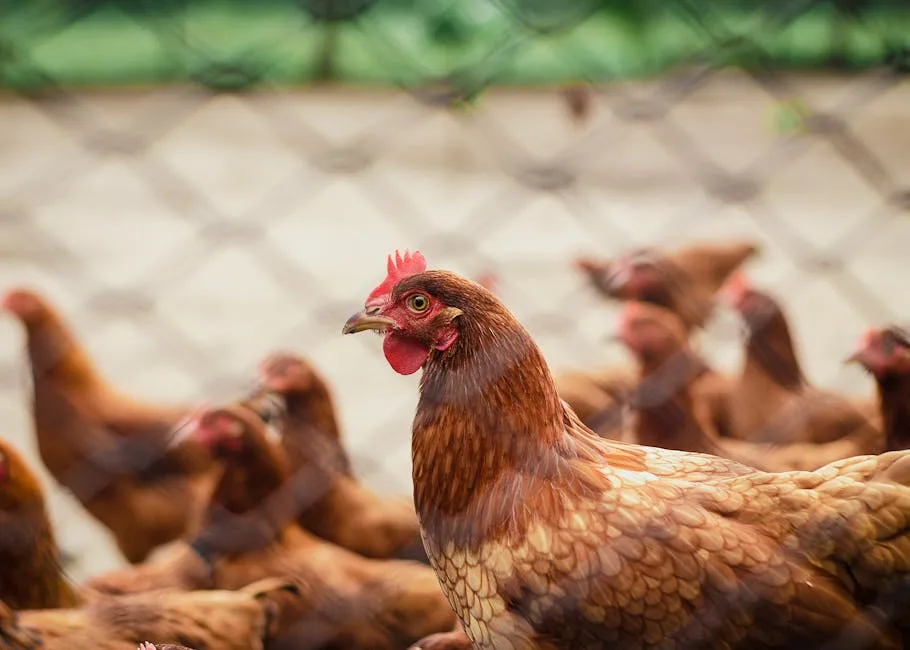
There is one more thing worth knowing before you start. The Rhode Island Red, the most famous backyard chicken breed in America, was developed right here. The state legislature made it the official state bird in 1954, and a granite monument in Adamsville (Little Compton) still marks the spot where the breed was first bred in 1854. If you raise chickens in Rhode Island, you are working in the breed's hometown.
What You'll Learn
- •Are Backyard Chickens Legal in Rhode Island?
- •Rhode Island Chicken Laws by City
- •Can You Sell Eggs in Rhode Island?
- •Best Chicken Breeds for Rhode Island's Climate
- •Summer Care in Rhode Island
- •Winter Care in Rhode Island
- •Common Predators in Rhode Island
- •FAQ
Are Backyard Chickens Legal in Rhode Island?
Yes, in many cities and towns, though Rhode Island is one of the more restrictive states in New England. Providence, Cranston, Newport, and Woonsocket all allow backyard hens under specific zoning rules. Warwick and East Providence are still very restrictive in most residential zones. Pawtucket has gone back and forth on the issue.
Before buying chicks, check three things: your city or town's municipal code for poultry, any HOA or condo restrictions on your property, and your specific zoning district. Even in chicken-friendly cities, an HOA can override municipal rules. In small towns outside the urban core, you have a much easier time. Towns like Little Compton, Tiverton, Foster, and Glocester have far fewer restrictions on small flocks.
The Rhode Island Department of Environmental Management (RI DEM) handles state-level livestock welfare rules (250-RICR-40-05-5), but day-to-day chicken keeping is governed by your municipal code, not the state.
Rhode Island Chicken Laws by City
Important: City and town ordinances change frequently. The information below was researched in May 2026 but may not reflect the latest rules. Always verify with your local zoning or code enforcement office before starting a flock. Links to official sources are provided where available.
Providence
Providence Code of Ordinances, Chapter 4 (Animals and Fowl)
Providence allows backyard hens under its livestock zoning rules. The city is friendlier to chickens than people often assume.
- •Hens: One hen per 800 square feet of lot area, up to a maximum of 6 hens.
- •Roosters: Not permitted within city limits.
- •Setbacks: Hen house must be at least 20 feet from any dwelling. Outdoor fenced enclosure must be at least 20 feet from any property line.
- •Housing: Coop must be covered, well-ventilated, and provide a minimum of 2 square feet per bird. Manure must be composted in enclosed bins. Coop should sit on a permeable surface.
- •Verify: Permit specifics can shift. Contact Providence Inspection and Standards before building a coop.
Cranston
Cranston Code of Ordinances, Title 6 (Animals) | Cranston backyard chicken ordinance PDF
Cranston is one of the more chicken-friendly cities in the state and is one of the few that allows roosters under specific setback conditions.
- •Hens: One hen per 800 square feet of open lot area, capped at 10 chickens.
- •Roosters: Permitted, but must be at least 150 feet from any dwelling other than the owner's.
- •Zoning: Allowed on residential lots or properties grandfathered as residential.
- •Setbacks: Coops typically placed in side or rear yard, 15 to 20 feet from dwellings and property lines.
- •Verify: Specific setbacks and permit fees should be confirmed with Cranston's building official or zoning office.
Warwick
Warwick Code of Ordinances, Chapter 4 (Animals and Fowl)
Warwick treats backyard chickens as livestock and does not allow them in most residential zones without zoning relief. This is the most restrictive of Rhode Island's three largest cities.
- •Hens: Not permitted in standard residential zones without a special use permit from the Zoning Board of Review. Raising livestock is regulated under Section 204 of Use Table 1 of the city zoning ordinance.
- •Roosters: Not permitted in residential zones.
- •Permit: A special use permit, granted by the Warwick Zoning Board of Review, is the only path for most homeowners.
- •Alternative: Lots zoned for agricultural use or large parcels in farm districts may be able to keep hens without going through the special use process.
- •Verify: Contact the Warwick Building Official or Zoning Board before buying chicks. The application process can take several months.
Pawtucket
Pawtucket does not have a clear backyard chicken ordinance, and keeping hens generally requires approval from the city's Animal Control Officer. Several recent efforts to pass a formal hen ordinance modeled on neighboring cities have stalled.
- •Hens: Not generally permitted in residential zones without case-by-case approval.
- •Roosters: Not permitted.
- •Verify: Contact Pawtucket Animal Control or the city's zoning office for the current status before starting a flock.
East Providence
East Providence Code of Ordinances, Chapter 3 (Animals)
East Providence is currently one of the strictest Rhode Island cities for backyard chickens. Article I, Section 3-2 of the city code states no owner or occupant of any dwelling can keep "sheep, hogs, goats, cattle, horses, fowl, geese or ducks in any dwelling house, cellar or garage."
- •Hens: Not permitted under the current ordinance.
- •Roosters: Not permitted.
- •Recent history: A proposed amendment that would have allowed up to 6 hens (one hen per 1,000 square feet of lot area, no roosters, with a permit) was voted down by the City Council, the second such attempt in three years to fail.
- •Verify: Contact East Providence Animal Control or the City Clerk's office for any updates if you are buying property there with chickens in mind.
Woonsocket
Woonsocket allows a small number of hens in residential zones with a special use permit.
- •Hens: One hen per 800 square feet of total lot area, up to a maximum of 5 hens.
- •Roosters: Not permitted.
- •Permit: Special use permit required from the Zoning Board.
- •Housing: Coop must be covered, predator-resistant, well-ventilated, with a minimum of 2 square feet per hen, kept clean and dry.
- •Verify: Check with the Woonsocket Zoning Division for current application fees and process.
Newport
Newport City Code Section 17.100.120
The Newport City Council unanimously approved chicken keeping in August 2013 after years of lobbying. The city's tight lots mean the rules are conservative.
- •Hens: One hen per 800 square feet of total lot area, up to a maximum of 6 hens.
- •Roosters: Not permitted.
- •Confinement: Hens must be confined inside the hen house between 9 PM and 7 AM.
- •Housing: Hens must be kept in a hen house with a fenced outdoor enclosure. Predator-resistant construction required.
- •Permit: Subject to a special use permit through the Newport Zoning Board.
- •Verify: Newport's small historic lots mean setbacks vary by property. Confirm with the city's Zoning Office before building.
Can You Sell Eggs in Rhode Island?
Yes, with relatively simple requirements for small producers. Rhode Island exempts producers selling only fresh fruits, vegetables, eggs, honey, or non-food items from needing a Rhode Island Department of Health license to operate at farmers' markets, farm stands, or direct to consumers.
Your eggs still need to meet labeling and grading rules under the RI Rules and Regulations Relating to Shell Eggs (250-RICR-40-20-7). The basics:
- •Eggs sold at retail must be marked with the proper grade and size
- •Grade and size markings must be in clearly legible block type
- •Eggs should be kept refrigerated at 45F or below from collection through sale
- •Cartons should include producer name and contact info
If you want to sell at a farmers' market regulated by the RI DEM Division of Agriculture, you also have to demonstrate compliance with RI Department of Health rules and register with the market manager. Selling to restaurants, bakeries, or grocery stores triggers additional commercial egg handling rules, and producers with flocks over 3,000 hens also need to register with the FDA.
For most backyard keepers with 5 to 10 hens selling a dozen eggs at a time at the end of the driveway, none of this is a heavy burden. Use clean cartons, label with grade and date, and keep them cold.
Best Chicken Breeds for Rhode Island's Climate
Rhode Island's climate is humid year-round. Coastal towns rarely see brutal heat, but inland communities like Woonsocket and Cranston can hit the low 90s. Winters bring sustained cold, wind off the bay, and ice storms. The good news is that the most famous backyard chicken breed in America was developed for exactly this climate.
Best breeds for Rhode Island:
- •Rhode Island Red: Start here. The state bird was developed in Little Compton in 1854 and is purpose-bred for this exact climate. Tough, cold-hardy, heat-tolerant, and lays 250 to 300 brown eggs per year. Single comb means you should watch for frostbite during deep cold, but the breed has been thriving in Rhode Island for 170 years for good reason.
- •Plymouth Rock: Another New England classic, bred in Massachusetts. Cold-hardy with dense feathering, friendly, and lays 250 to 280 eggs per year. Handles humidity well.
- •Buff Orpington: Heavy, fluffy feathering makes them excellent for Rhode Island winters. Docile and great for families with kids. Lays 200 to 280 eggs per year.
- •Australorp: Heavy black plumage absorbs winter sun. World record egg layer (364 eggs in 365 days). Cold-hardy and handles humid summers.
- •Wyandotte: Rose comb resists frostbite, which matters when nor'easters drop wind chills well below zero. Dense plumage insulates against coastal wind. Lays 200 to 250 eggs per year.
- •Sussex: Cold-hardy, good foragers, and tolerant of confinement during snowstorms. Dual-purpose breed that handles New England weather without issue.
Breeds to think twice about:
- •Leghorns and other Mediterranean breeds have large single combs that are prone to frostbite when Rhode Island sees single-digit lows with strong wind off the bay. They lay well but need extra care during cold snaps.
- •Lightly feathered breeds (Sebrights, Old English Game) struggle with sustained New England winters and aren't a great fit for first-time keepers in Rhode Island.
Summer Care in Rhode Island
Rhode Island summers are humid more than they are hot. July highs along the coast typically sit in the low 80s, with inland cities like Cranston pushing into the upper 80s during heat waves. The bigger issue is humidity, which can climb above 80 percent for days at a time. Chickens can't sweat. They cool down by panting, and high humidity makes panting much less effective.
Keeping your flock comfortable:
- •Ventilation is everything. A stuffy, humid coop is dangerous. Open all coop windows and vents. Cross-ventilation along the ridgeline at night helps clear humidity buildup.
- •Shade in the run. If your run lacks tree cover, install shade cloth on the south and west sides. Direct sun plus 80 percent humidity is the worst combination.
- •Cool water all day. Check waterers twice a day in July and August. Add ice during heat waves. Keep waterers in shade.
- •Watch for heat stress. Signs include panting, holding wings away from the body, pale combs, and lethargy. Move stressed birds to shade and offer cool water immediately. Heat stress can kill chickens fast.
- •Freeze treats. Frozen watermelon halves or ice blocks with mealworms frozen inside cool birds down on the worst days.
- •Manage parasites. Warm, humid conditions are mite and lice heaven. Provide a dust bath area with fine dirt and wood ash. Check vents and under wings weekly during summer.
- •Coastal salt air. If you keep chickens within a mile of the ocean (Newport, Narragansett, Westerly), salt accelerates rust on coop hardware and metal feeders. Use galvanized or stainless steel parts and check hardware twice a year.
See our summer chicken care guide for more.
Winter Care in Rhode Island
Rhode Island winters are not the brutal cold of Maine or Vermont, but they are wet, windy, and unpredictable. January lows average in the high teens to low 20s along the coast and a few degrees colder inland. Nor'easters can dump 12 to 24 inches of snow in a single storm, and ice storms knock out power for days at a time.
Winter coop tips:
- •Ventilation over insulation. A dry, well-ventilated coop is warmer than a sealed, humid one. Moisture from breath and droppings causes frostbite faster than cold air alone. Keep vents open at the roofline year-round.
- •Deep litter method. Start with 4 to 6 inches of pine shavings in fall. Add fresh shavings on top through winter. The composting action generates warmth and keeps the coop drier.
- •Heated waterers. Water freezes overnight in Rhode Island from December through February. A heated base or heated waterer keeps water available. Have a backup plan for power outages, which are common during nor'easters.
- •Skip heat lamps. They are the leading cause of coop fires. Cold-hardy breeds handle Rhode Island winters without supplemental heat. For extended deep cold, use a flat-panel radiant heater designed for poultry.
- •Plan for power outages. A nor'easter can knock out power for several days. Stock extra feed, shavings, and bottled water before storms hit. Know how you will keep the flock watered if the heated base stops working.
- •Snow load. Wet New England snow is heavy. Build or buy a coop with a steep roof pitch, and brush off accumulation after big storms before it refreezes overnight.
- •Wind protection. Coastal communities get steady wind off Narragansett Bay all winter. Set the coop with its solid wall facing the prevailing northwest wind. A windbreak of hay bales or plywood on the windward side of the run helps.
- •Petroleum jelly on combs. Apply to large combs and wattles before single-digit nights to prevent frostbite. Or choose breeds with rose or pea combs.
- •Collect eggs often. Eggs freeze and crack in a few hours when temperatures sit in the teens. Check nest boxes two to three times a day.
- •Shorter days. Rhode Island gets about 9 hours of daylight in late December. Egg production drops. Some keepers add a timer-controlled light to extend "daylight" to 14 hours. This is optional.
See our winter chicken care guide for more.
Common Predators in Rhode Island
Rhode Island's mix of dense suburbs, woodlots, and farmland means predators are a real concern even in the most built-up neighborhoods. The state is small, but no part of it (except Block Island) is free of coyotes.
Suburban and urban predators:
- •Raccoons: The most common chicken predator in Providence, Cranston, and other built-up areas. They open simple latches and reach through chicken wire. Use hardware cloth (1/2-inch openings) on all openings, and secure latches with carabiner clips.
- •Hawks: Red-tailed and Cooper's hawks are common across Rhode Island. A covered run is the best protection. Strung fishing line across an open-top run can deter aerial attacks.
- •Opossums: They target eggs and young chicks. Seal any gaps larger than 3 inches.
- •Domestic dogs: A leading cause of chicken losses in suburban Rhode Island. A solid run fence and a locked coop solve this.
Suburban-fringe and rural predators:
- •Coyotes: Per the Rhode Island DEM, eastern coyotes are present in every Rhode Island town except Block Island and have become routine in suburban neighborhoods. They will dig under fences. Bury hardware cloth 12 inches deep around your run or lay a wire apron flat on the ground extending out 18 inches.
- •Foxes: Red foxes are found throughout Rhode Island, including in suburban areas. Smart and persistent. Lock the coop every evening without exception.
- •Fishers: Fishers (RI DEM fact sheet) recolonized Rhode Island over the past two decades and are now widespread in wooded areas. They are excellent climbers and will scale a fence to reach an open run. A fully covered run with hardware cloth top is the best defense.
- •Mink and weasels: Small enough to squeeze through 1-inch gaps. They kill multiple birds in a single attack. Hardware cloth with 1/2-inch openings is the only reliable defense.
- •Owls: Great horned owls are active at night across the state. A covered run and a coop with no gaps protect against owl attacks.
- •Bobcats: Present in Rhode Island's wooded areas, especially in the northwest and southern parts of the state. Less common than coyotes but capable of killing several birds in a single visit.
General predator-proofing tips:
- •Lock the coop every night, no exceptions
- •Use hardware cloth on all openings, never chicken wire
- •Install an automatic coop door if you are not always home at dusk
- •Keep feed in sealed metal containers to avoid attracting wildlife
- •Set up motion-activated lights around the coop perimeter
FAQ
Why is the Rhode Island Red named after Rhode Island?
The breed was developed starting in 1854 by William Tripp, a farmer in Little Compton, Rhode Island. Tripp crossbred local hens with exotic Asiatic fowl brought home on New Bedford whaling ships. By the 1870s, the Rhode Island Red was one of the most popular breeds in the country. In 1925, the Rhode Island Red Club erected a granite monument near Tripp's farm in Adamsville, and in 1954 the Rhode Island legislature named the breed the official state bird, beating out the osprey and ruby-throated hummingbird. The Rhode Island Red Monument was added to the National Register of Historic Places in 2001.
Do I need a permit to keep chickens in Rhode Island?
It depends on your city or town. Providence allows hens with limits on flock size and setbacks. Newport and Woonsocket require special use permits. Cranston is one of the more flexible cities. Warwick, East Providence, and Pawtucket require zoning relief or do not allow hens in most residential areas. Always check with your local zoning or code enforcement office before buying chicks.
How many chickens can I have in Rhode Island?
It varies by city. Providence and Newport cap residents at 6 hens (one hen per 800 square feet). Cranston allows up to 10. Woonsocket allows up to 5. Warwick and East Providence generally do not allow hens in residential zones without a special use permit. Rural towns like Foster, Glocester, and Little Compton have far fewer restrictions.
Are roosters allowed anywhere in Rhode Island?
Most Rhode Island cities ban roosters in residential zones. Providence, Newport, Woonsocket, and Pawtucket all prohibit them. Cranston is the notable exception, allowing roosters if they are kept at least 150 feet from any dwelling other than the owner's. Rural agricultural land generally has no rooster restrictions.
What's the best chicken breed for Rhode Island?
The Rhode Island Red is the obvious starting point. It was developed in this state for this climate and still ranks among the best dual-purpose backyard breeds in America. For families wanting docile birds, the Buff Orpington is a strong second choice. Wyandottes and Plymouth Rocks round out a great cold-hardy mixed flock.
Can I sell eggs from my backyard flock in Rhode Island?
Yes. Producers selling only fresh eggs (along with fruits, vegetables, and honey) are exempt from Rhode Island Department of Health licensing for direct-to-consumer sales. You still need to follow the state's shell egg grading and labeling rules (250-RICR-40-20-7), keep eggs at 45F or below, and label cartons with grade, size, producer info, and date. Farmers' market sales also require registration with the market and RI DEM Division of Agriculture.
Your first step to keeping chickens in Rhode Island is checking your city or town's ordinances. Most of the state's larger cities allow at least small flocks under specific rules, and the small-town side of Rhode Island is very chicken-friendly. Once you know the rules, invest in a well-built coop ready for nor'easters and humid summers, and pick cold-hardy breeds starting with the state bird itself. Check out our beginner's guide to raising backyard chickens for a complete walkthrough of getting started.
Picking a coop for Rhode Island? New England weather is hard on cheap coops. Our best chicken coops on Amazon roundup covers picks across flock sizes and price ranges, with notes on which models hold up best in different climates.
Raising Chickens in Other States
If you're moving, considering a different state, or just curious how the rules compare, browse our other state guides:
Northeast: Connecticut, Delaware, Maine, Maryland, Massachusetts, New Hampshire, New Jersey, New York, Pennsylvania, Vermont
Southeast: Alabama, Florida, Georgia, Kentucky, Louisiana, Mississippi, North Carolina, South Carolina, Tennessee, Virginia, West Virginia
Midwest: Illinois, Indiana, Iowa, Kansas, Michigan, Minnesota, Missouri, Nebraska, North Dakota, Ohio, South Dakota, Wisconsin
South & Southwest: Arizona, Arkansas, New Mexico, Oklahoma, Texas
Mountain & West: Alaska, California, Colorado, Hawaii, Idaho, Montana, Nevada, Oregon, Utah, Washington, Wyoming
Related Guides
Raising Chickens in Alaska: 2026 Laws & Best Breeds
Raising chickens in Alaska: laws for Anchorage, Fairbanks, Juneau, plus extreme cold-hardy breeds and sub-arctic care tips.
State GuidesRaising Chickens in Delaware: 2026 Laws & Best Breeds
Raising chickens in Delaware: laws for Wilmington, Dover, Newark, plus best breeds and tips for the First State's climate.
State GuidesRaising Chickens in Idaho: 2026 Laws & Best Breeds
Raising chickens in Idaho: laws for Boise, Meridian, Nampa, plus cold-hardy breeds and tips for the state's varied climate.
State GuidesRaising Chickens in Kansas: 2026 Laws & Best Breeds
Raising chickens in Kansas: laws for Wichita, Overland Park, Topeka, plus hardy breeds and storm-ready coop tips for the Sunflower State.