Sussex Chicken: Complete Breed Guide (Eggs, Size, Care)
Complete Sussex chicken breed guide. Covers 200-250 eggs/year, 3 popular varieties, calm temperament, dual-purpose traits, and care tips for beginners.
Researched from university extension, USDA, and veterinary sources. How we research.
Sussex chickens are one of the oldest and most well-rounded chicken breeds you can keep. They lay 200-250 large, light brown eggs per year, they're big enough for the table at 7-9 lbs, and they've got a calm, curious personality that makes them a joy to have in the backyard. If you want one breed that does everything well, the Sussex is hard to beat.
What You'll Learn
- •Sussex Chicken Overview
- •History and Origin
- •Sussex Chicken Varieties
- •How Big Do Sussex Chickens Get?
- •Sussex Chicken Temperament
- •How Many Eggs Do Sussex Chickens Lay?
- •Are Sussex Chickens Good for Beginners?
- •Sussex Chickens as Dual-Purpose Birds
- •Housing and Care Requirements
- •Health Issues to Watch For
- •Sussex vs Other Popular Breeds
- •Frequently Asked Questions
Sussex Chicken Overview
| Trait | Details |
|---|---|
| Size | Roosters: 9 lbs, Hens: 7 lbs |
| Eggs | 200-250 per year, large, light brown/tinted |
| Temperament | Calm, curious, friendly |
| Cold Hardy | Very good |
| Heat Tolerant | Moderate |
| Broody | Moderately broody (especially Speckled) |
| Beginner Friendly | Excellent |
| Lifespan | 6-8 years |
The Sussex checks every box most backyard chicken keepers care about: good egg production, decent meat, friendly personality, and cold hardiness. They're the classic "do everything" heritage breed.
History and Origin
The Sussex is one of the oldest chicken breeds in England, with roots going back to at least 43 A.D. when Romans first invaded Britain. Historical records suggest that chickens resembling the Sussex were raised in the county of Sussex (southern England) for centuries as a primary table bird.
The breed was formally developed in the 1800s and quickly became England's favorite meat bird. Before industrial farming took over, Sussex chickens were the backbone of Britain's poultry industry. The Light Sussex variety was especially prized for producing plump, white-skinned carcasses that consumers preferred.
The breed was recognized by the Poultry Club of Great Britain in 1903 and later by the American Poultry Association. While the Light Sussex dominated commercially, the Speckled Sussex has become the backyard favorite thanks to its stunning plumage and excellent all-around performance.
Today, the Sussex is classified as "recovering" by The Livestock Conservancy. Numbers have grown significantly thanks to the backyard chicken movement, but some varieties remain rare.
Sussex Chicken Varieties
The three most common varieties you'll find in the US are:
Speckled Sussex
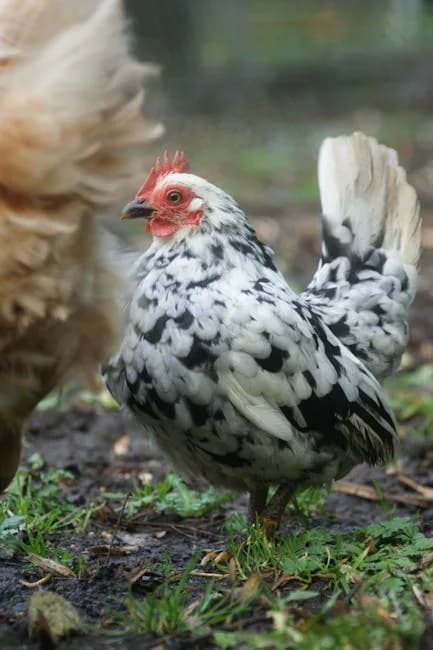
The showstopper of the Sussex family. Each feather has a rich mahogany base with a black bar and a white tip, creating a stunning speckled pattern. Here's the coolest part: Speckled Sussex chickens get more white speckles with each molt. They literally get more beautiful as they age, gaining more white tips on their feathers every year.
The Speckled Sussex is the most popular variety among backyard keepers and the one you'll most easily find from hatcheries. For a full rundown of its temperament, egg color, and care, see our Speckled Sussex breed guide.
Light Sussex
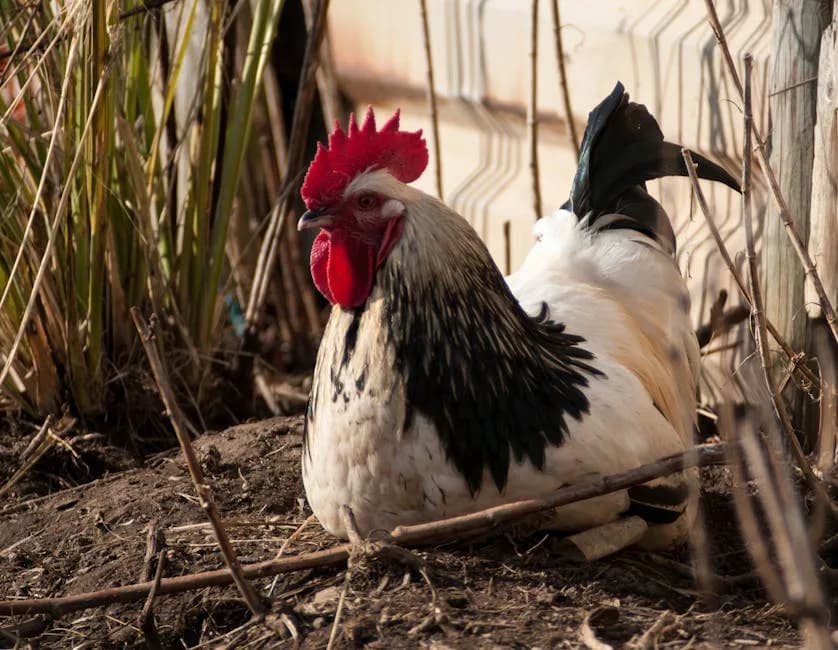
White body with a black tail and black hackle feathers (neck). This is the variety that dominated England's poultry industry for decades. They're striking birds with clean, sharp color contrast. The Light Sussex is also the variety most commonly selected for high egg production, with some strains pushing 250+ eggs per year. For a full breakdown of its eggs, history, and the sex-linking trick it's famous for, see our Light Sussex breed guide.
Red Sussex
A rich, even mahogany-red across the body with some black in the tail. Less common than Speckled or Light, but available from specialty breeders. It's a beautiful bird that looks somewhat similar to a Rhode Island Red at first glance, though the body shape is different.
Other recognized varieties include Buff, Brown, Coronation, and Silver, but these are much harder to find in the US. The Coronation Sussex (white with lavender hackles and tail) is particularly gorgeous but quite rare.
How Big Do Sussex Chickens Get?
Sussex chickens are solidly in the "large" category:
- •Roosters: 9 lbs
- •Hens: 7 lbs
- •Cockerels: 7.5 lbs
- •Pullets: 6 lbs
- •Bantam roosters: 36 oz
- •Bantam hens: 32 oz
They're comparable in size to Buff Orpingtons and slightly smaller than Brahmas or Cochins. Their body is broad, deep, and rectangular, with a flat back and a full breast. They carry themselves upright with a confident posture.
Sussex chickens mature at a moderate pace, typically reaching full size by about 20 weeks. That's noticeably faster than Brahmas or Cochins, which take 18-24 months.
Sussex Chicken Temperament
Sussex chickens are famous for being curious, almost comically so. They'll follow you around the yard, inspect anything new, and stick their heads into whatever you're doing. Here's what to expect:
- •Curious and adventurous. Sussex chickens are the explorers of the flock. They'll be the first to investigate a new corner of the yard, a pile of leaves, or your gardening tools.
- •Calm and friendly. They tolerate handling well and many enjoy human interaction. They're not skittish or flighty.
- •Active foragers. Unlike Cochins that prefer to sit around, Sussex chickens are constantly scratching, pecking, and hunting for bugs. They'll earn their keep in pest control.
- •Good with kids. Their calm disposition and curiosity make them fun for children to interact with.
- •Confident in mixed flocks. Sussex chickens hold their own socially without being aggressive. They won't bully other birds, but they won't get pushed around either. This makes them ideal for mixed-breed flocks.
One thing to note: Sussex roosters are generally well-mannered compared to more aggressive breeds. They're protective without being mean to people, which is a real plus if you want a rooster in your flock. For more on the rooster question, check our dedicated guide.
How Many Eggs Do Sussex Chickens Lay?
This is one of the Sussex's strongest selling points:
- •200-250 eggs per year (roughly 4-5 per week)
- •Large, light brown to tinted eggs (sometimes called "cream" colored)
- •Start laying at 16-20 weeks (relatively early)
- •Good winter layers that keep producing when daylight drops
- •Moderately broody (Speckled Sussex go broody more often than Light Sussex)
Those numbers put the Sussex in the top tier for dual-purpose breeds. They won't quite match a Leghorn's 280+ eggs per year, but they're right up there with Australorps and Rhode Island Reds as some of the best layers among heritage breeds.
The Light Sussex variety, particularly production strains from commercial breeders, tends to lay on the higher end (230-250). Speckled Sussex typically lay on the lower end (180-220) and are more likely to go broody.
For tips on maximizing egg production, check out our best egg laying breeds guide and our egg problems troubleshooting article.
Are Sussex Chickens Good for Beginners?
Sussex chickens are one of the best breeds for first-time chicken keepers. Here's why:
Pros:
- •Excellent egg production without needing special care
- •Calm, friendly, and easy to handle
- •Hardy in cold and moderate climates
- •Active foragers that find much of their own food
- •Not prone to unusual health issues
- •Available from most hatcheries and at reasonable prices
- •Beautiful birds that are fun to watch
Challenges:
- •Their curiosity can lead them into trouble (they'll explore gardens, flower beds, and anywhere they shouldn't be)
- •Moderate broodiness in Speckled varieties can reduce egg count
- •Active foraging means they'll scratch up landscaping if given the chance
- •Not the best for very hot climates (they do fine in moderate heat, but struggle above 95°F)
If you're building your first flock, our beginner's guide covers everything from choosing how many chickens to start with to setting up your coop.
Sussex Chickens as Dual-Purpose Birds
The Sussex is one of the best true dual-purpose breeds, meaning they're legitimately good for both eggs and meat:
Eggs: 200-250 per year puts them near the top of heritage breed layers. You're getting reliable daily eggs from each hen for most of the year.
Meat: At 7-9 lbs, they produce a substantial carcass with a broad breast and good flavor. The Sussex was England's #1 table bird for a reason. Their meat is described as fine-grained and flavorful, better than most commercial Cornish Cross birds.
The trade-off: They don't lay as many eggs as a production Leghorn, and they don't grow as fast as a meat-specific breed. But if you want one breed that does both reasonably well, the Sussex (along with the Plymouth Rock and Orpington) sits at the top of the dual-purpose list.
For keepers interested in raising meat birds, Sussex are an excellent heritage option. They take longer to reach processing weight (about 20 weeks vs 6-8 weeks for commercial meat birds), but the flavor and the fact that they also lay eggs makes them a practical homestead choice.
Housing and Care Requirements
Sussex chickens are low-maintenance birds that don't need anything unusual:
Space
- •4-5 square feet per bird inside the coop (standard, since they don't have feathered feet or oversized bodies)
- •10 square feet per bird in the run, though more is always better
- •They're active birds that benefit from free-ranging if you can manage it
Fencing
Sussex can fly short distances. A 4-5 foot fence will contain most of them, but some lighter hens might hop over a 4-foot fence. If you're worried about it, clip one wing or go with a 6-foot fence.
Feeding
Standard layer feed (16% protein) is all they need once they're laying. They're excellent foragers who'll supplement their diet with bugs, seeds, and greens if given access to a yard. That active foraging means slightly lower feed costs compared to less active breeds like Cochins or Brahmas.
See our feeding guide for complete nutrition details.
Climate
Sussex chickens handle cold weather well thanks to their dense feathering and relatively small single comb. They're not the most heat-tolerant breed, but they manage fine in moderate climates. In very hot areas (regularly above 95°F), you'll need shade and cooling measures from our summer care guide.
Bedding
No special requirements. Pine shavings, straw, or sand all work fine. Since Sussex don't have feathered feet, you don't need to worry about moisture getting trapped in leg feathers like you would with Brahmas or Cochins.
Health Issues to Watch For
Sussex chickens are generally sturdy and healthy. They don't have the breed-specific vulnerabilities that come with extreme features (like feathered feet or very large combs). Still, watch for:
Standard poultry health issues: Mites, lice, worms, and respiratory infections can affect any chicken. Regular health checks catch problems early. Our sick chicken symptoms guide covers what to look for.
Broodiness (Speckled variety): Speckled Sussex hens go broody more than Light Sussex. If you don't want to hatch eggs, you'll need to break the broodiness. It's not a health problem per se, but it does stop egg production and the hen can lose weight sitting on the nest.
Obesity risk in confined birds: Sussex chickens are natural foragers. If they're kept in a small run without much space to roam, they can gain excess weight. Make sure they have enough room to stay active.
Frostbite on combs: Their single comb is more susceptible to frostbite than pea combs. In extreme cold, apply petroleum jelly to combs and wattles. For full winter prep, check our winter care guide and fall preparation checklist.
Sussex vs Other Popular Breeds
Here's how the Sussex stacks up against other breeds beginners commonly consider:
| Breed | Eggs/Year | Weight (hen) | Temperament | Best For |
|---|---|---|---|---|
| Sussex | 200-250 | 7 lbs | Calm, curious | All-around best |
| Rhode Island Red | 250-300 | 6.5 lbs | Assertive | Maximum eggs |
| Buff Orpington | 200-280 | 8 lbs | Very docile | Gentle family bird |
| Plymouth Rock | 200-250 | 7.5 lbs | Friendly | Dual-purpose |
| Australorp | 250-300 | 7 lbs | Calm | High egg production |
| Wyandotte | 200-240 | 6.5 lbs | Calm | Cold climates |
The Sussex competes most directly with the Buff Orpington and Plymouth Rock. All three are excellent dual-purpose birds with friendly personalities. The Sussex edges ahead with slightly better foraging instincts and the uniquely beautiful Speckled variety.
Looking for the right coop? Whatever breed you settle on, the coop you put them in matters as much as the bird itself. Our best chicken coops on Amazon roundup covers current top picks across flock sizes and price ranges, from under-$100 starter coops to walk-in models for larger flocks.
Frequently Asked Questions
How many eggs does a Speckled Sussex lay per year?
A Speckled Sussex hen typically lays 180-220 large, light brown eggs per year. Production strains of the Light Sussex variety can lay up to 250. Egg count drops during molting season and shorter winter days, but Sussex are good winter layers overall. Broodiness can also temporarily halt production.
Are Sussex chickens cold hardy?
Yes, Sussex chickens handle cold weather very well. Their dense feathering provides good insulation, and they're an active breed that generates body heat through foraging. The main concern is their single comb, which can be susceptible to frostbite in extreme cold. Applying petroleum jelly helps protect it during the coldest weeks.
What's the difference between Speckled Sussex and Light Sussex?
The main difference is plumage color. Speckled Sussex have mahogany feathers with black bars and white tips, while Light Sussex are white with black hackles and tail. Behaviorally, Speckled Sussex tend to go broody more often and lay slightly fewer eggs (180-220 vs 230-250). Light Sussex are more commonly used in production settings.
Are Sussex chickens noisy?
Sussex chickens are moderate in noise level. They're not as quiet as Brahmas or Cochins, but they're not particularly loud either. They do "talk" a lot because they're curious birds, and hens will announce egg-laying with the typical "egg song." If noise is a major concern for your neighbors, they're a reasonable choice but not the quietest option.
Do Speckled Sussex chickens really get more beautiful with age?
Yes, it's true. Each time a Speckled Sussex molts and regrows feathers, the new feathers tend to have larger white tips (spangles). So older hens develop more white speckling over time, making their plumage increasingly eye-catching. By year 3-4, they're noticeably more "speckled" than when they started laying. It's one of the most unique traits of any chicken breed.
The Sussex is one of those breeds that doesn't get enough credit. It's quietly excellent at everything, from eggs to meat to personality to looks (especially the Speckled variety). If you can only keep one breed, the Sussex should be on your shortlist.
Browse all our breed guides or check out the best breeds for beginners to find your perfect match.
Sources:
- •Livestock Conservancy. Sussex breed page. https://livestockconservancy.org/heritage-breeds/heritage-breeds-list/sussex-chicken/
- •The American Poultry Association. Standard of Perfection (reference). http://www.amerpoultryassn.com/
- •University of Kentucky Cooperative Extension. Small Flock Poultry resources. https://poultry.extension.org/
- •The Livestock Conservancy. Heritage breed conservation. https://livestockconservancy.org/
Related Guides
Light Sussex Chicken: Eggs, Color, Size, Care
Light Sussex chickens are white birds with a black necklace that lay 230-250 brown eggs a year. Full guide to looks, history, sex-linking, size, and care.
BreedsDelaware Chicken Breed Guide: Eggs, Size, Care
Everything you need to know about Delaware chickens. Covers 200-280 eggs/year, dual-purpose traits, calm temperament, and heritage breed care tips.
BreedsJersey Giant Chicken Breed Guide: Size, Eggs, Care
Everything you need to know about Jersey Giant chickens. Size, egg production, temperament, and care tips for the world's largest purebred chicken breed.
BreedsCochin Chicken Breed Guide: Eggs, Size, Care
Complete Cochin chicken breed guide covering egg production (150-180/yr), size, temperament, color varieties, and care tips for these fluffy giants.