Wyandotte Chicken: Complete Breed Guide (Colors, Eggs, Care)
Your complete guide to Wyandotte chickens. Covers 9 color varieties, egg production, temperament, care tips, and why they're a top backyard breed.
Researched from university extension, USDA, and veterinary sources. How we research.
Wyandotte chickens are one of America's most beautiful dual-purpose breeds, and they've been a backyard favorite since the 1880s. With their stunning laced feather patterns, reliable egg production, and cold-hardy build, they check nearly every box a chicken keeper could want. Here's your complete guide to raising Wyandottes.
What You'll Learn
- •Wyandotte Chicken History and Origins
- •What Do Wyandotte Chickens Look Like?
- •Wyandotte Color Varieties
- •Wyandotte Chicken Temperament
- •How Many Eggs Do Wyandottes Lay?
- •Are Wyandottes Good for Beginners?
- •How to Care for Wyandotte Chickens
- •Wyandottes vs Other Popular Breeds
- •Common Health Issues
- •Frequently Asked Questions
Wyandotte Chicken History and Origins
The Wyandotte breed was developed in the United States in the 1870s, with the Silver Laced variety being the first recognized by the American Poultry Association in 1883. The breed is named after the Wendat (Wyandot) Indigenous people of North America.
While exact breeding records don't exist, the Silver Laced Wyandotte is believed to have been developed from crosses involving Dark Brahmas and Silver Spangled Hamburgs. Breeders wanted a chicken that could handle harsh American winters while still producing plenty of eggs and enough meat for the dinner table.
After the Silver Laced variety took off, breeders developed additional color patterns throughout the late 1800s and early 1900s. The breed quickly became one of the most popular chickens in America, and it's held that status ever since.
What Do Wyandotte Chickens Look Like?
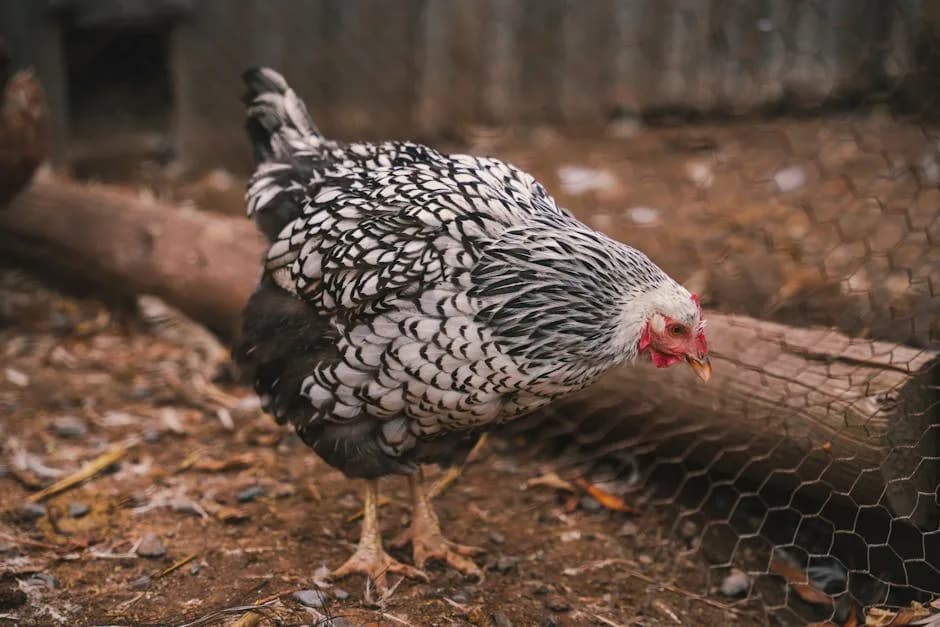
Wyandottes have a distinctive, rounded body shape that sets them apart from leaner breeds. They're broad-chested and heavy, giving them a sturdy, compact appearance.
Size: Hens weigh 6 to 7 pounds, roosters 8 to 9 pounds. There's also a bantam variety that runs about 2 to 3 pounds.
Comb: Wyandottes have a rose comb, which sits flat and close to the head. This is one of their best cold-weather features because rose combs are far less prone to frostbite than the tall single combs you'll see on breeds like Rhode Island Reds.
Legs: Clean, yellow legs with no feathering. Four toes per foot.
Build: Wide back, deep breast, and a nicely curved tail. They look like a solid, well-built chicken from every angle. Their fluffy, dense plumage makes them appear even larger than they are.
Wyandotte Color Varieties
This is where Wyandottes really shine. The American Poultry Association recognizes nine color varieties:
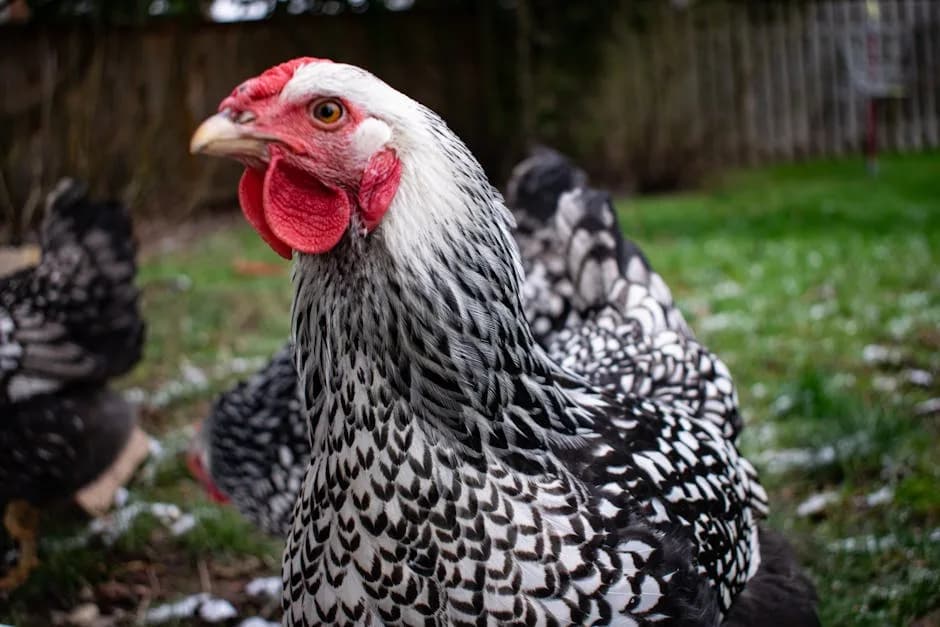
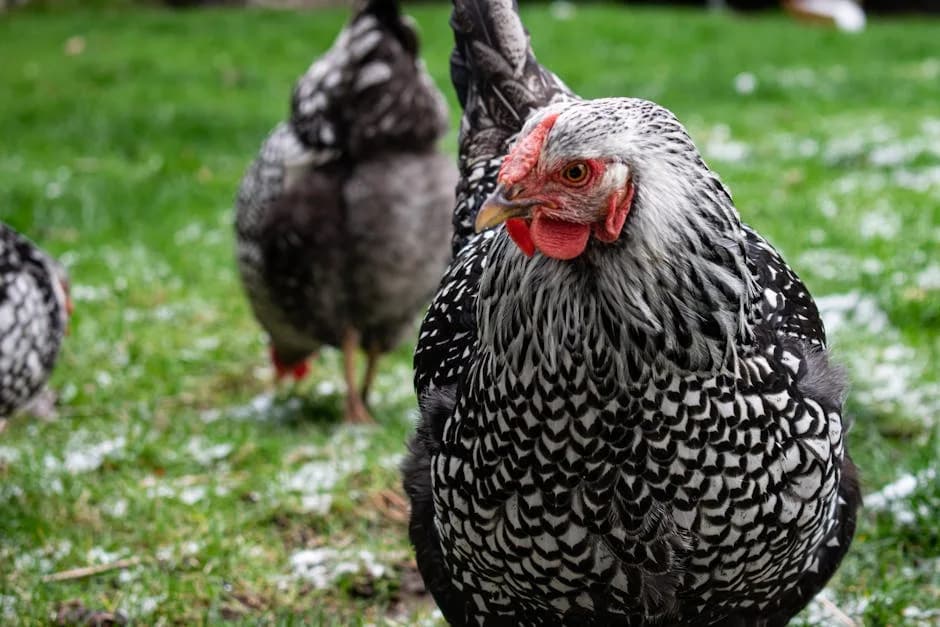
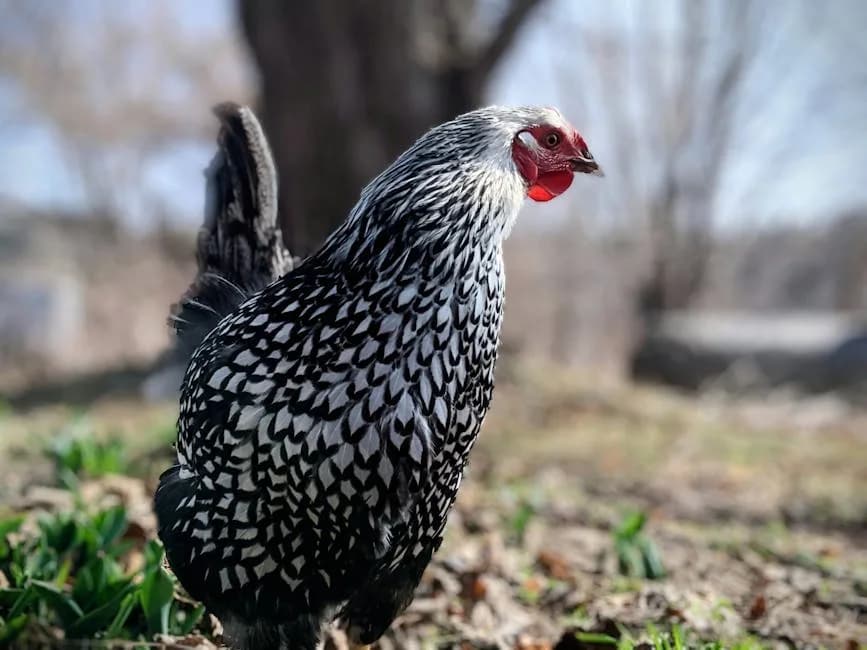
Silver Laced - The original and most iconic variety. Each feather has a white center with a crisp black border, creating a stunning lace-like pattern across the entire body. It's the variety most people picture when they think "Wyandotte." We cover it in depth in our Silver Laced Wyandotte breed guide.
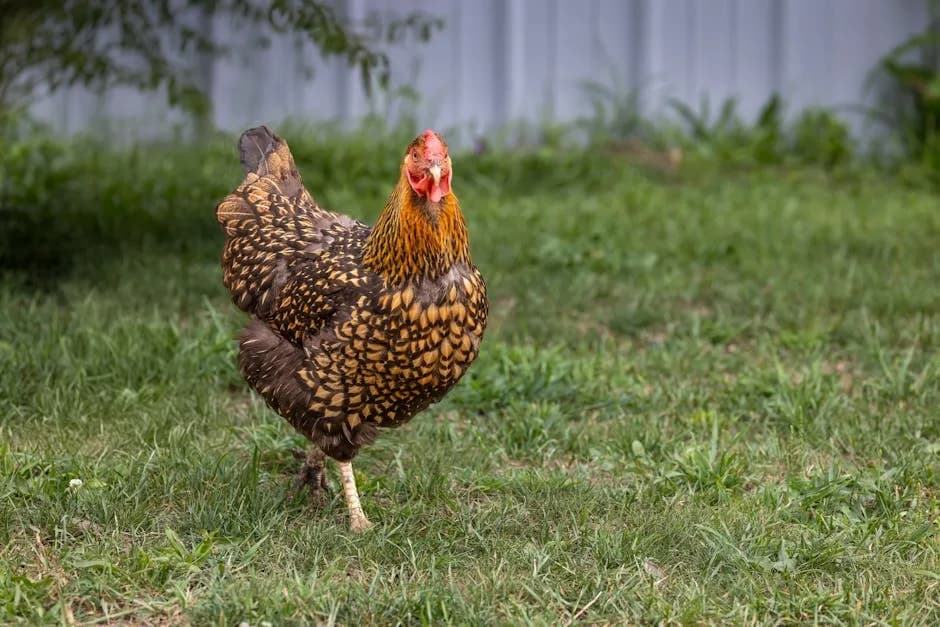
Golden Laced - Same lacing pattern as the Silver, but with rich golden-brown centers instead of white. Recognized in 1888, it's arguably even more striking than the Silver. Our Golden Laced Wyandotte breed guide covers eggs, temperament, genetics, and chick care in depth.
Blue - A solid slate blue-gray color. Like all blue poultry, they don't breed true, so breeding two blues produces roughly 50% blue, 25% black, and 25% splash chicks.
Buff - A warm, even buff color across the entire body. Clean and simple compared to the laced varieties.
Black - Solid black with a greenish sheen in sunlight. Sleek and elegant.
White - Pure white feathering. Popular for show and a clean, classic look.
Columbian - White body with black hackles (neck feathers) and black tail feathers. The same pattern you'll see on Light Brahmas.
Partridge - Hens have a beautiful penciled pattern in reddish-brown, while roosters have the classic red and black game-bird coloring.
Silver Penciled - Similar to Partridge but with silver-white replacing the reddish tones.
Beyond the APA-recognized varieties, breeders have developed Blue Laced Red (popular right now), Chocolate, and Lavender varieties. These can't be shown competitively but they're gorgeous backyard birds. If you want to hatch your own, our guide to breeding Wyandotte chickens walks through choosing stock, lacing genetics, and setting up a breeding pen. Ready to buy instead of breed? Our guide to finding Wyandotte breeders covers where to look and what quality birds cost.
Wyandotte Chicken Temperament
Wyandottes are calm, confident birds that tend to mind their own business. They're not as cuddly as Silkies or as attention-seeking as Buff Orpingtons, but they're reliable, low-drama flock members.
Here's what to expect personality-wise:
Docile but independent. Wyandottes won't run from you, and most will tolerate handling, but they're not typically lap chickens. They'd rather forage around the yard than sit in your arms. Some individual birds are friendlier, especially if handled regularly from chick age.
Not easily bullied. Unlike gentler breeds that end up at the bottom of the pecking order, Wyandottes tend to hold their own in a mixed flock. They're assertive enough to stand up for themselves without being aggressive toward other birds.
Quiet. They're not big talkers. You'll hear the standard egg song and occasional alarm calls, but they're much quieter than breeds like Leghorns or Polish. This makes them a solid choice for suburban flocks where noise matters.
Good foragers. Give them space to free-range and they'll happily spend the day hunting bugs, scratching through leaves, and exploring. They're active without being flighty.
Moderately broody. Wyandotte hens will go broody, but not as obsessively as Silkies or Cochins. Some hens go broody once or twice a year, others rarely bother. When they do sit, they're attentive mothers.
How Many Eggs Do Wyandottes Lay?
Wyandottes are solid egg producers, laying around 200 to 220 large brown eggs per year. That works out to about 4 eggs per week, which puts them in the "good but not exceptional" category.
They won't match the 280+ eggs you'll get from production breeds like Australorps or Leghorns, but they're consistent layers that keep going through winter when other breeds slow down or stop entirely. That cold-hardy rose comb and dense feathering means they don't stress as easily in freezing temperatures.
Wyandottes typically start laying around 5 to 6 months of age. Their eggs are medium to large and range from light brown to a rich pinkish-brown depending on the individual hen.
One thing that sets Wyandottes apart: their laying longevity. Many keepers report their Wyandottes maintaining decent production for 3 to 4 years before tapering off, which is longer than some high-production breeds that burn out after 2 years.
Are Wyandottes Good for Beginners?
Yes. Wyandottes are one of the best all-around breeds for first-time chicken keepers, and here's why:
They're low maintenance. Hardy in both cold and moderate heat, they don't need special accommodations. Their rose combs resist frostbite, their dense feathers provide natural insulation, and they're not prone to many breed-specific health issues.
They're dual-purpose. At 6 to 9 pounds, Wyandottes produce a respectable amount of meat alongside their eggs. You don't have to raise them for meat, but it's nice knowing you have a well-rounded bird.
They're adaptable. Wyandottes do well in both free-range and confined setups. They won't destroy your garden as aggressively as some breeds, and they handle confinement without becoming neurotic.
They play well with others. Their balanced temperament means they fit into mixed flocks without causing problems. They won't bully gentler breeds, and they won't let pushy breeds walk all over them.
If you're not sure where to start, check out our full list of the best chicken breeds for beginners. Wyandottes consistently make the cut.
How to Care for Wyandotte Chickens
Housing and Space
Wyandottes need standard coop space: about 4 square feet per bird inside the coop and 8 to 10 square feet per bird in the run. Since they're heavier birds, make sure roosts are sturdy and wide (2x4 lumber with the wide side up works great).
Good coop design matters for any breed, but Wyandottes are particularly forgiving. They handle confinement well and don't try to escape like flightier breeds. A standard 4-foot fence is usually enough to keep them contained.
Feeding
Wyandottes eat the same standard layer feed as other breeds. Expect each hen to eat about 1/4 to 1/3 pound of feed per day. Supplement with oyster shell for strong eggshells and grit if they don't free-range on natural soil.
Since they're heavier birds, watch for weight gain if they're confined without much exercise. Overweight hens lay fewer eggs and can develop leg problems. Keep treats to about 10% of their total diet.
Seasonal Care
Winter: This is where Wyandottes excel. Their dense plumage and rose combs make them one of the best cold-weather breeds available. They'll keep laying through winter better than most breeds. Just make sure the coop stays dry and well-ventilated.
Summer: Wyandottes handle moderate heat fine, but that thick feathering can cause issues above 90°F. Provide shade, plenty of fresh water, and good ventilation during hot spells. Frozen treats like watermelon can help them cool down.
Bedding
Any standard coop bedding works well for Wyandottes. Pine shavings are the most popular choice. Since Wyandottes are clean birds that don't make an excessive mess, a deep litter method works particularly well with this breed.
Wyandottes vs Other Popular Breeds
Wondering how Wyandottes stack up? Here's a quick comparison with other popular backyard breeds:
Wyandotte vs Buff Orpington: Both are friendly dual-purpose breeds, but Orpingtons are cuddlier and go broody more often. Wyandottes are slightly better layers and more independent. If you want a lap chicken, go Orpington. If you want a reliable, low-fuss bird, go Wyandotte.
Wyandotte vs Plymouth Rock: Very similar breeds in terms of size and production. Plymouth Rocks tend to be slightly friendlier, while Wyandottes have more color variety and better cold tolerance thanks to their rose combs.
Wyandotte vs Rhode Island Red: Rhode Island Reds lay more eggs (250-300/year), but they can be assertive and bossy. Wyandottes are calmer, prettier, and better for mixed flocks. Rhode Island Reds are the better choice for maximum egg production.
Wyandotte vs Easter Egger: Easter Eggers win on egg color variety (blue and green eggs), while Wyandottes win on feather patterns and cold hardiness. Both are great beginner breeds.
Common Health Issues
Wyandottes are a healthy, sturdy breed without many breed-specific problems. Still, there are a few things to watch for:
Obesity. Their broad build and good appetite mean they can pack on weight, especially in confined setups. An overweight hen lays fewer eggs and is more prone to reproductive issues. Monitor body condition and limit treats.
Bumblefoot. Heavy breeds are slightly more prone to bumblefoot (a bacterial infection on the foot pad) because of the extra weight on their feet. Keep the coop clean, avoid sharp roost edges, and check feet regularly.
External parasites. That dense plumage can harbor mites and lice. Regular dust bathing areas and periodic checks under the feathers will keep infestations at bay. Look around the vent and under the wings where parasites like to hide.
Frostbite on wattles. While their rose combs resist frostbite, their wattles can still be vulnerable in extreme cold. A thin layer of petroleum jelly on wattles during deep freezes helps protect them.
For general flock health, make sure you know how to protect your chickens from predators and keep your coop properly maintained.
Looking for the right coop? Whatever breed you settle on, the coop you put them in matters as much as the bird itself. Our best chicken coops on Amazon roundup covers current top picks across flock sizes and price ranges, from under-$100 starter coops to walk-in models for larger flocks.
Frequently Asked Questions
Are Wyandotte chickens friendly?
Wyandottes are calm and docile but tend to be more independent than lap-chicken breeds like Orpingtons or Silkies. They'll tolerate handling and won't run from you, but most prefer foraging over cuddles. Handling them regularly from chick age helps build trust.
What color eggs do Wyandotte chickens lay?
Wyandottes lay light to medium brown eggs, sometimes with a pinkish tint. Egg color can vary slightly between individual hens. They're large eggs, typically 4 per week, totaling around 200 to 220 per year.
Can Wyandotte chickens handle cold weather?
Yes, Wyandottes are one of the best cold-weather chicken breeds. Their dense, fluffy plumage provides excellent insulation, and their rose combs sit close to the head, making them highly resistant to frostbite. They'll keep laying through winter when other breeds slow down.
How long do Wyandotte chickens live?
Wyandottes typically live 6 to 12 years, with most falling in the 7 to 9 year range with proper care. They're a hardy breed with good longevity. Good nutrition, clean housing, and protection from predators are the biggest factors in lifespan.
What's the difference between Silver Laced and Golden Laced Wyandottes?
The only difference is feather color. Silver Laced Wyandottes have white feather centers with black edges, while Golden Laced have golden-brown centers with black edges. Size, temperament, egg production, and care requirements are identical between the two varieties.
Wyandottes are the kind of breed that makes you wonder why everyone doesn't have a few in their flock. Beautiful, productive, cold-hardy, and easy to manage. If you're ready to get started, check out our guide on how many chickens a beginner should start with and plan your flock.
Sources:
- •Livestock Conservancy. Wyandotte breed page. https://livestockconservancy.org/heritage-breeds/heritage-breeds-list/wyandotte-chicken/
- •Wyandotte Breeders of America. https://www.wyandottebreedersofamerica.com/
- •The American Poultry Association. Standard of Perfection (reference). http://www.amerpoultryassn.com/
- •University of Kentucky Cooperative Extension. Small Flock Poultry resources. https://poultry.extension.org/
- •The Livestock Conservancy. Heritage breed conservation. https://livestockconservancy.org/
Related Guides
Easter Egger Breed Guide: Eggs, Colors, Care
Easter Eggers lay blue, green, and pink eggs with friendly personalities. Get the full breed profile with egg production, care tips, and 5 common questions.
BreedsAraucana Chicken Breed Guide: Blue Eggs, Tufts, Care
Araucana chicken breed guide: rumpless bodies, ear tufts, true blue eggs, the lethal tuft gene, care, and how they differ from Ameraucanas.
BreedsChocolate Orpington Breed Guide: Genetics, Eggs, Care
Chocolate Orpingtons explained: the sex-linked chocolate gene, why hens show it and roosters carry it, 120 to 150 tinted eggs a year, care, and where to buy.
BreedsLavender Orpington Breed Guide: Eggs, Color, Care
Lavender Orpingtons are calm, cold-hardy hens that breed true to color and lay 150-250 brown eggs a year. Full guide to looks, eggs, care, and cost.