Raising Chickens in Washington: 2026 Laws & Best Breeds
Raising chickens in Washington state: laws for Seattle, Tacoma, Spokane, plus the best breeds and seasonal care tips.
Researched from university extension, USDA, and veterinary sources. How we research.
Washington state has no statewide ban on backyard chickens. Each city and county sets its own rules, and they range from generous (Seattle allows up to 8 domestic fowl on any lot) to density-based formulas (Spokane ties your chicken count to lot size). Your local zoning code is the final word, so check it before you order your first chicks.
What You'll Learn
- •Are Backyard Chickens Legal in Washington?
- •Washington Chicken Laws by Major City
- •Best Chicken Breeds for Washington's Climate
- •Winter Care Tips for Washington Chickens
- •Summer Care for Washington Flocks
- •Common Predators in Washington
- •Can You Sell Eggs in Washington?
- •FAQ
Are Backyard Chickens Legal in Washington?
It depends on where you live. Washington doesn't have a single state law that permits or prohibits backyard flocks. The Washington Administrative Code (WAC Title 16) handles poultry health, disease control, and import requirements at the state level, but flock limits, permits, and setbacks are all set locally.
Most Washington cities allow small hen flocks. Seattle is famously chicken-friendly, and the urban farming movement has pushed many cities across the state to adopt reasonable backyard poultry ordinances. Rural counties tend to have few or no restrictions.
Before buying chicks, check three things: your municipal zoning code or animal control ordinance, any HOA or deed restrictions on your property, and whether your locality requires a permit. HOA rules can prohibit chickens even where the city allows them.
Washington Chicken Laws by Major City
Important: City and county ordinances change frequently. The information below was researched in March 2026 but may not reflect the latest rules. Always verify with your local zoning or code enforcement office before starting a flock. Links to official sources are provided where available.
Seattle
Seattle Municipal Code 23.42.052: Keeping of Animals | Seattle SDCI Animal Codes
Seattle is one of the most chicken-friendly cities in the Pacific Northwest. The city has allowed backyard fowl for decades.
- •Domestic fowl: Up to 8 domestic fowl on any lot. Lots over 10,000 square feet may keep additional fowl (one extra for each 1,000 square feet over 10,000).
- •Roosters: Not permitted.
- •Permit: No specific poultry permit required.
- •Fines: First violation of the animal limit is $150. Subsequent violations are up to $500.
- •Notes: Seattle's code counts domestic fowl separately from small animals like dogs and cats. You can have 3 small animals plus 8 fowl on a standard lot. Beekeeping is also permitted.
Seattle's generous limit of 8 birds makes it one of the best major cities in the country for backyard chicken keeping.
Tacoma
Tacoma Municipal Code Chapter 5.30: Poultry and Pigeons | Tacoma Permits: Goats and Chickens
Tacoma allows backyard poultry in residential areas with clear rules.
- •Poultry: Up to 6 adult poultry per parcel. With written consent from all property owners within 50 feet, up to 10 adult poultry are allowed. One additional bird is allowed for each 5,000 square feet of lot area over 10,000 square feet.
- •Roosters: Prohibited.
- •Permit: No poultry permit required.
- •Setbacks: Coops must be at least 12 feet from the nearest portion of any residence, dwelling, hotel, apartment house, or rooming house. Coops must be located behind the front wall of the main building and outside the required side yard setback.
- •Coop size: Coops under 200 square feet are exempt from building permits.
- •Free-ranging: Chickens are not allowed to roam freely in streets, alleys, or public places.
Spokane
Spokane Municipal Code 17C.310.115: Keeping of Small Domestic Animals
Spokane passed its urban farming ordinance in 2014, tying chicken limits to lot size.
- •Hens: 1 chicken per 1,000 square feet of lot area. A typical 5,000 square foot lot allows 5 chickens. A 10,000 square foot lot allows 10.
- •Roosters: Only allowed in the RA (Residential Agricultural) zone. Prohibited in all other zones.
- •Permit: No specific poultry permit required, but the lot must contain a primary residential structure (or the owner must occupy an adjacent lot).
- •Enclosures: Must meet setback requirements for accessory structures. Animal enclosures are only allowed in zones that permit dwelling units (RA, R1, R2, RMF, RHD).
- •Training: Owners of small livestock (excluding chickens) must complete a Washington State University certification. Chickens are exempt from this training requirement.
Spokane's lot-based formula is fair and scales well for larger properties.
Vancouver (WA)
Vancouver Municipal Code 20.895.050: Domestic Animals and Livestock
Vancouver, Washington allows backyard chickens with no minimum lot size requirement.
- •Hens: Allowed with no required minimum lot size. The code permits keeping of chickens, ducks, geese, and similar animals.
- •Roosters: Prohibited in residential areas.
- •Permit: No poultry permit required.
- •Confinement: Chickens must be confined to your property by a backyard fence or run area.
- •Notes: Contact Vancouver's Community Development Department for clarification on maximum numbers, as the code focuses on nuisance standards rather than a hard count.
Bellevue
Bellevue Land Use Code 20.20.130: Animal Keeping and Services
Bellevue allows backyard chickens in residential zones.
- •Fowl: Up to 6 fowl on standard residential lots. Larger lots may be allowed more (see code for square footage thresholds).
- •Roosters: Not permitted in residential zones.
- •Permit: No specific poultry permit required.
- •Setbacks: No structure to house fowl may be within 15 feet of a property line.
- •Notes: Bellevue's code also addresses animal keeping in the broader context of BCC Title 8 (Animal Regulations). Contact the city's Development Services Department for questions.
Tacoma vs. Seattle: Which Is Better for Chickens?
Both cities are excellent for backyard flocks. Seattle wins on quantity (8 birds vs. 6 without neighbor consent), but Tacoma's consent provision lets you keep up to 10 if your neighbors agree. Tacoma's 12-foot setback from residences is more restrictive than Seattle, which doesn't specify a setback distance for coops.
Best Chicken Breeds for Washington's Climate
Washington spans USDA hardiness zones 4b through 9a, with a dramatic climate split at the Cascade Range. Western Washington is mild and wet, with winter lows rarely below 20°F but persistent rain and overcast skies. Eastern Washington is drier with colder winters (down to -10°F in some areas) and hotter summers.
Best Breeds for Western Washington (Zones 7b-9a)
The biggest challenge on the west side isn't cold. It's rain. You need breeds that tolerate wet conditions and shorter daylight hours without shutting down egg production.
Rhode Island Red thrives in the Pacific Northwest. These hardy birds handle rain and cool temperatures without issue and lay 250 to 300 brown eggs per year. They're the top all-around choice for western Washington.
Plymouth Rock does well in wet, mild climates. Barred Rocks are calm, cold-hardy, and consistent layers of around 250 eggs per year. Their tight feathering sheds rain better than fluffier breeds.
Australorp is a strong layer that handles Washington's overcast skies well. Expect 250 to 300 eggs annually. Their black plumage absorbs what little sun western Washington offers during winter months.
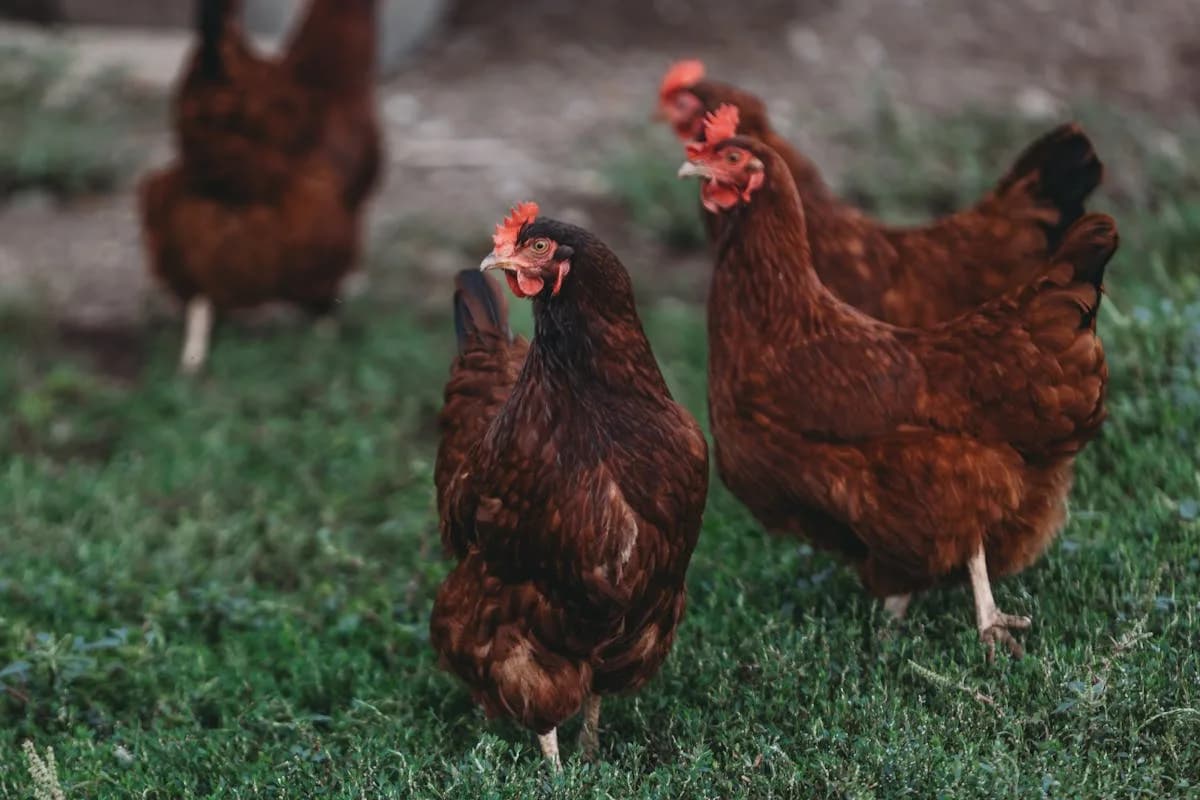
Sussex originated in the rainy English countryside and is perfectly suited to Puget Sound weather. Friendly, reliable, and productive at 250+ eggs per year.
Best Breeds for Eastern Washington (Zones 4b-7a)
Eastern Washington's continental climate brings cold, snowy winters and hot, dry summers. You need cold-hardy breeds with small combs that resist frostbite.
- •Wyandotte: Rose comb resists frostbite in Spokane's cold winters, excellent cold tolerance, 200+ eggs per year
- •Buff Orpington: Dense plumage insulates against cold, docile and family-friendly, 200 to 280 eggs annually
- •Brahma: Feathered legs and pea comb handle severe cold, good winter layer at 150+ eggs per year
- •Marans: Cold-hardy, lays beautiful dark brown eggs, handles dry climates well
Breeds to Avoid in Washington
Avoid Mediterranean breeds like Leghorns in eastern Washington unless you can provide heated shelter. Their large single combs are prone to frostbite in sub-zero temperatures. On the west side, avoid heavily feathered breeds like Cochins if your run doesn't have rain cover. Their foot feathering stays wet and can lead to bumblefoot or other infections.
Winter Care Tips for Washington Chickens
Western and eastern Washington have very different winters, and your care routine should reflect that.
Western Washington (Seattle, Tacoma, Vancouver)
Winters are mild (30s to 40s°F most days) but wet. Rain is your main enemy, not cold.
Keep your run dry. A covered run is practically mandatory in western Washington. You'll get rain from October through June, and chickens don't like standing in mud. Use a solid roof or heavy-duty tarp over your run area. Add sand or gravel to improve drainage.
Ventilation stays critical. The damp marine air means moisture builds up fast inside coops. Keep upper vents open year-round. You're fighting condensation and ammonia buildup more than cold.
Lighting for egg production. Seattle gets only about 8.5 hours of daylight in December. Hens need 14 to 16 hours of light to maintain laying. A timer-controlled light in the coop that turns on before dawn keeps production steady through winter.
Mud management. Deep mud is the western Washington chicken keeper's nemesis. Use a combination of covered runs, drainage gravel, and wood chips to keep your birds off bare mud. Rotate free-range areas if possible to prevent your yard from becoming a swamp.
For more tips, read our winter chicken care guide.
Eastern Washington (Spokane, Tri-Cities, Wenatchee)
Winters bring real cold with snow, ice, and temperatures that can drop below 0°F.
Insulate and ventilate. Your coop needs insulation on the walls, but keep ventilation openings at the top of the coop. Warm, moist air rises and escapes, while cold drafts are blocked at roost level.
Heated waterers are essential. Water freezes fast in Spokane winters. A heated waterer base or a heated poultry fountain prevents you from breaking ice multiple times daily.
Deep litter method. Start with 4 to 6 inches of pine shavings in fall and add fresh material on top throughout winter. The decomposing layer generates mild heat. Clean it all out in spring for excellent garden compost.
Frostbite prevention. Choose breeds with small combs (rose, pea, or walnut combs). Apply petroleum jelly to combs and wattles during extreme cold snaps.
Summer Care for Washington Flocks
Western Washington
Summers on the west side are mild by national standards. Temperatures typically stay between 70°F and 85°F, with the occasional heat wave pushing into the 90s. Most breeds handle this fine.
Shade and water. Provide shade in your run and keep waterers full. During the rare heat waves that push past 90°F, add electrolytes to the water and offer frozen fruit treats.
Enjoy the outdoors. Summer is prime free-ranging season in western Washington. Long daylight hours (up to 16 hours in June) mean peak egg production and happy, active birds.
Eastern Washington
Summers east of the Cascades are hot and dry, with temperatures regularly hitting 95°F to 105°F in July and August.
Shade is essential. Provide both natural shade (trees) and artificial shade (tarps, shade cloth) over your run. Afternoon sun from the west is the most intense.
Extra waterers. Double your water stations. Chickens drink significantly more when temperatures exceed 85°F. Place waterers in shaded areas to keep water cool.
Frozen treats. Freeze watermelon, berries, or corn on the cob and offer them during afternoon heat. It provides hydration and helps cool body temperature.
Watch for heat stress. Panting, holding wings out, lethargy, and pale combs are warning signs. If a hen shows severe heat stress, bring her to a cool area and provide cool (not cold) water. Heat kills chickens faster than cold.
Read our full summer chicken care guide for more tips.
Common Predators in Washington
Washington has a diverse predator population. What you'll face depends on your region.
- •Hawks and eagles: Red-tailed hawks and bald eagles are common statewide. Cooper's hawks are especially skilled at hunting in suburban yards. Covered runs or overhead netting are the only reliable defense.
- •Raccoons: Washington's most common chicken predator. They can reach through wire and open simple latches. Use hardware cloth (not chicken wire) and predator-proof locks on all coop doors.
- •Coyotes: Present in both urban and rural areas throughout Washington. They can dig under fences and are surprisingly bold in suburban settings. Bury hardware cloth 12 inches deep or use an apron that extends 18 inches outward.
- •Black bears: Present in the Cascades, Olympics, and northeastern Washington. Bears can destroy a lightweight coop. In bear country, use electric fencing around your run and bring feed inside at night.
- •Cougars and bobcats: More common in rural and foothill areas. Secure coops with solid construction and lock birds in before dusk.
- •Opossums, weasels, and mink: All present in Washington. Weasels and mink can squeeze through openings as small as 1 inch. Secure every gap in your coop with 1/2-inch hardware cloth.
- •Rats: A significant problem in urban areas, especially Seattle. Rats are attracted to chicken feed, not the chickens themselves. Store feed in metal containers, clean up spilled grain daily, and use rat-proof feeders.
For detailed predator-proofing strategies, read our chicken predator protection guide.
Can You Sell Eggs in Washington?
Washington state law is friendly to small egg producers. According to the Washington State Department of Agriculture, poultry or egg producers may sell eggs from their own flocks directly to the end consumer from the place of production without purchasing an Egg Handler/Dealer License or Egg Seals from WSDA.
If you want to sell at farmers markets, roadside stands, or other venues beyond your property, you'll need to follow additional WSDA requirements. Check the WSDA eggs page for current licensing thresholds and rules.
Shell eggs aren't covered under Washington's cottage food law (cottage food covers baked goods and similar processed items). Egg sales fall under separate agricultural regulations.
Label your eggs with your name and address when selling. Collect eggs daily, refrigerate them promptly, and discard cracked or dirty eggs. Keep your flock healthy and your coop clean, and you'll have no trouble selling quality eggs to neighbors and friends.
FAQ
Do I need a permit to keep chickens in Washington?
Most Washington cities don't require a specific poultry permit. Seattle, Tacoma, Spokane, Vancouver, and Bellevue all allow chickens without a permit. Some cities may require a building permit for the coop if it exceeds a certain size (200 square feet in Tacoma, for example). Always check your local code.
Are roosters allowed in Washington?
Most Washington cities prohibit roosters in residential zones. Seattle, Tacoma, Bellevue, and Vancouver all ban roosters. Spokane only allows roosters in the RA (Residential Agricultural) zone. Rural, unincorporated areas are generally more lenient.
How many chickens can I keep in Washington?
It varies by city. Seattle allows up to 8 fowl, Tacoma allows 6 (or 10 with neighbor consent), Bellevue allows 6, and Spokane allows 1 per 1,000 square feet of lot area. Rural counties often have no limit. Check your local ordinance for exact numbers.
What's the best time of year to start chickens in Washington?
Spring (April through May) is ideal, especially in western Washington when the rain starts easing up. Temperatures are mild, days are getting longer, and chicks started in spring will begin laying by early fall. You can start chicks indoors with a brooder as early as February or March.
Can I keep chickens in my HOA neighborhood in Washington?
Your HOA's covenants, conditions, and restrictions (CC&Rs) override local chicken-friendly ordinances. Even if your city allows hens, your HOA can prohibit them. Read your CC&Rs carefully and check with your HOA board before starting a flock. Washington state law does not override HOA restrictions for backyard poultry.
Picking a coop for Washington? The breed you choose matters, but so does the coop. Our best chicken coops on Amazon roundup covers picks across flock sizes and price ranges, with notes on which models hold up best in different climates.
Raising Chickens in Other States
If you're moving, considering a different state, or just curious how the rules compare, browse our other state guides:
Northeast: Connecticut, Delaware, Maine, Maryland, Massachusetts, New Hampshire, New Jersey, New York, Pennsylvania, Rhode Island, Vermont
Southeast: Alabama, Florida, Georgia, Kentucky, Louisiana, Mississippi, North Carolina, South Carolina, Tennessee, Virginia, West Virginia
Midwest: Illinois, Indiana, Iowa, Kansas, Michigan, Minnesota, Missouri, Nebraska, North Dakota, Ohio, South Dakota, Wisconsin
South & Southwest: Arizona, Arkansas, New Mexico, Oklahoma, Texas
Mountain & West: Alaska, California, Colorado, Hawaii, Idaho, Montana, Nevada, Oregon, Utah, Wyoming
Related Guides
Raising Chickens in Alaska: 2026 Laws & Best Breeds
Raising chickens in Alaska: laws for Anchorage, Fairbanks, Juneau, plus extreme cold-hardy breeds and sub-arctic care tips.
State GuidesRaising Chickens in Delaware: 2026 Laws & Best Breeds
Raising chickens in Delaware: laws for Wilmington, Dover, Newark, plus best breeds and tips for the First State's climate.
State GuidesRaising Chickens in Idaho: 2026 Laws & Best Breeds
Raising chickens in Idaho: laws for Boise, Meridian, Nampa, plus cold-hardy breeds and tips for the state's varied climate.
State GuidesRaising Chickens in Kansas: 2026 Laws & Best Breeds
Raising chickens in Kansas: laws for Wichita, Overland Park, Topeka, plus hardy breeds and storm-ready coop tips for the Sunflower State.