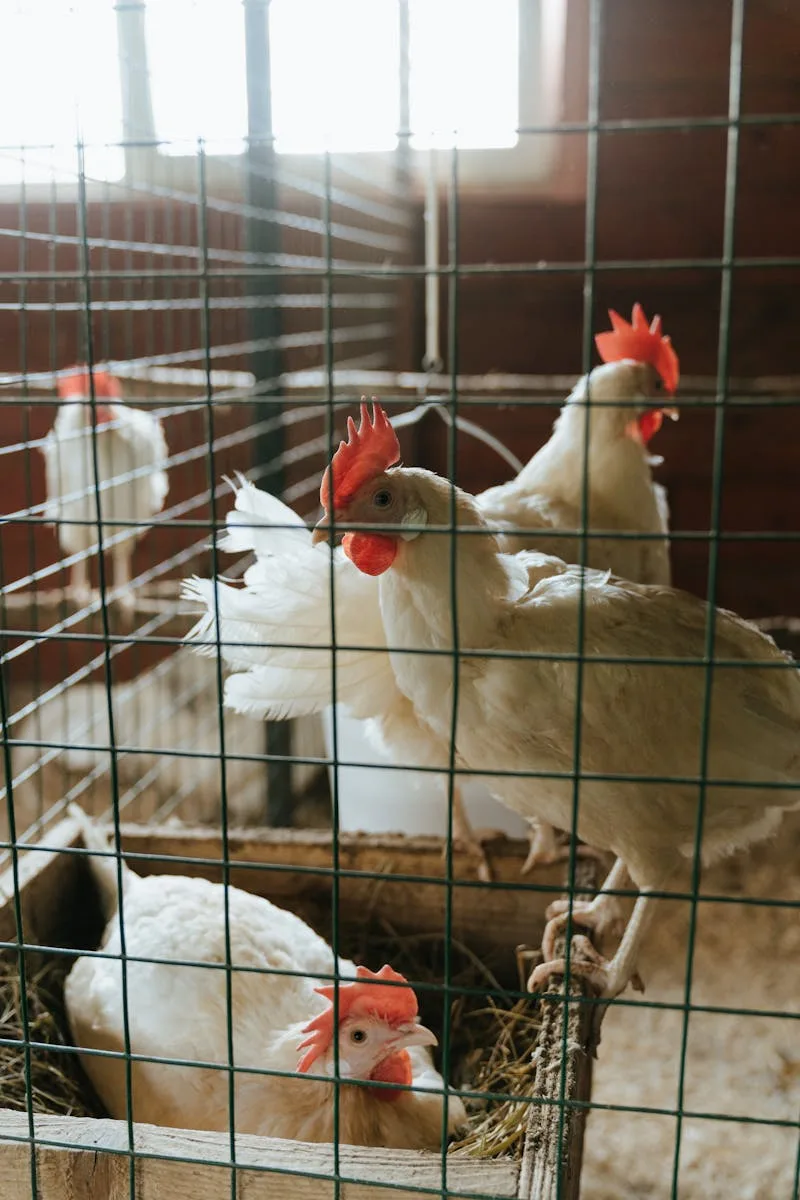
Best Automatic Chicken Coop Doors 2026: 7 Worth Buying
Automatic coop doors that close before predators come out. The 7 best in 2026 across price tiers, including the safety flaw each one has.
Researched from university extension, USDA, and veterinary sources. How we research.
Best Automatic Chicken Coop Doors 2026: 7 Worth Buying
Affiliate Disclosure: This article contains affiliate links to Amazon. If you buy something through these links, we earn a small commission at no extra cost to you. We only recommend products we genuinely think are worth your money. Full disclosure.
An automatic coop door is the single best predator upgrade most keepers can make, because it solves the exact moment your flock is most vulnerable: dawn and dusk. Your chickens put themselves to bed at sunset and want out at first light. If you are not there at both ends of the day, every single day, a hungry raccoon, fox, or weasel eventually is.
The catch is that this category is full of doors that freeze open in winter, drain batteries in a month, or worse, close on a bird because the safety sensor failed. After cross-checking manufacturer specs, independent reviews, and a lot of real owner reports, here are the seven automatic doors actually worth buying in 2026, with the genuine weakness each one carries so you go in clear-eyed. Prices rotate, so treat every figure as a starting point and confirm the current price before you buy.
What You'll Learn
- •Quick comparison: which door fits your setup
- •Why an automatic door is the best predator upgrade
- •What actually matters when buying
- •Best overall: Run-Chicken T50
- •Best opener-only: ChickenGuard Pro
- •Best predator-proof kit: ChickenGuard All-in-One
- •Best premium: Omlet Automatic Coop Door
- •Best solar: Run-Chicken Eternal
- •Best heavy-duty: Coop Tender
- •Best budget: VEVOR
- •The truth about safety sensors
- •Common mistakes and failure modes
- •What to budget
- •Frequently Asked Questions
Quick Comparison: Which Door Fits Your Setup
| Pick | Best for | Price (verify) | Trigger | Power | Safety stop |
|---|---|---|---|---|---|
| Run-Chicken T50 | Most keepers, easy install | ~$140 | Light + timer + app | Battery (2x AA) | Yes, reverses on resistance |
| ChickenGuard Pro | Keeping your existing door | ~$140 | Light + timer + dual | AA / mains / solar | Yes, auto-stop |
| ChickenGuard All-in-One | Best closed-door locking | ~$160-$200 | Light + timer + dual | AA / mains / solar | Yes, self-locking wings |
| Omlet Automatic Door | Maximum closed-door security | ~$180-$229 | Light + timer (app on Smart) | Battery (4x AA) | Close-and-reopen retry |
| Run-Chicken Eternal | No battery swaps | ~$150 | Light + timer + app | Solar | Yes, reverses on resistance |
| Coop Tender | Heavy-duty, cold-tolerant build | ~$300-$350 | Light + timer | Mains (solar option) | Weak, see caveats |
| VEVOR | Tight budget | ~$70-$100 | Light + timer + remote | Battery / DC | Unreliable, see caveats |
Short answer: most keepers should buy the Run-Chicken T50. It is all aluminum, installs in about ten minutes, and works on its defaults without fiddling with an app. Buy the ChickenGuard Pro instead if you already have a good pop-hole door and just want to automate it. Step up to the Omlet or a self-locking ChickenGuard if raccoons are a serious problem where you live. Only reach for the VEVOR if budget is the deciding factor, and read the safety note first.
Why an Automatic Door Is the Best Predator Upgrade
Chickens are creatures of light. They head into the coop and up to the roost as the sun goes down, and they do not move again until morning. That predictable rhythm is exactly what an automatic door is built around: it closes a safe interval after the flock has roosted and opens again at first light.
University extension programs are blunt about why this matters. The University of New Hampshire Extension puts it plainly: "Keeping chickens indoors at night is easily the most important and effective way of protecting free range birds." Most predator losses happen overnight or in the low light of dawn and dusk, when raccoons, foxes, owls, and weasels are active and your birds are settled and slow.
The problem is that a manual door only protects your flock if a human is physically present, twice a day, 365 days a year, in the dark, in the rain, on holidays. Miss one closing and that is the night something gets in. An automatic door removes the human from the equation, which is why it is the upgrade most experienced keepers wish they had bought first.
One honest caveat: the door is only as good as the rest of your coop, and our predator-proof coop checklist covers the rest of it. The University of Maryland Extension warns that "raccoons are very intelligent and can open simple latches," and a closed door means nothing if the predator can simply tear through chicken wire beside it. Pair any automatic door with hardware cloth, not chicken wire. See our run fencing and netting guide for the right mesh, and our electric fence guide if you have persistent ground predators.
What Actually Matters When Buying
Five things separate a door you forget about from a door you fight with.
1. The safety stop (and how it really works). A good door senses a bird or a hand in the way and stops or reverses. But these systems are not foolproof, and they vary a lot. Some doors reverse the instant they hit resistance, some fully close, contact the obstruction, then reopen and retry, and some budget doors have no working safety at all. We cover the real differences in the safety section below. This is the one spec worth slowing down on, because the failure mode is a dead bird.
2. Light sensor versus timer. A light sensor adjusts to the seasons automatically and matches natural behavior, but it can be fooled by a security light, car headlights, a bright moon, or snow glare. A timer is predictable and cheaper but has to be nudged through the year as daylight changes. The best doors offer both, plus a hybrid mode (open on light, close on timer) so a cloudy morning never leaves birds locked in.
3. Cold-weather and battery reliability. Cold murders cheap batteries and slows motors. In freezing climates, use lithium AA cells or a solar or mains door, and know that ice or water in the track is the single most common real-world jam across every brand. Solid screw-drive and worm-drive mechanisms tolerate cold better than cord-and-pulley designs.
4. Door size for your breed. Standard layers are fine with roughly a 10 by 10 inch opening. Large breeds like Orpingtons, Brahmas, or Jersey Giants want 12 by 12 inches or more. Size to your biggest bird, not your average one.
5. How the closed door resists a predator. A door that just rests in its track can be lifted by a determined raccoon. Look for self-locking wings, a non-back-drivable drive screw, a solid aluminum guillotine, or a horizontal slide that cannot be pried upward. This is where the premium picks earn their price.
Best Overall: Run-Chicken T50
For most backyard flocks, the Run-Chicken Door T50 is the one to buy. Around $140, it is the volume best-seller in this category for good reasons: it is a complete door and opener kit, the entire door and frame are powder-coated aluminum (no flimsy plastic panel for a predator to chew), and it installs with about six screws in ten minutes.
It triggers on a light sensor by default, using a sunrise and sunset calculation that ignores artificial light, and you can switch to a timer or fine-tune it in the app. Crucially, it works perfectly on its factory defaults if you never open the app at all. The safety system senses resistance on the way down, slows, and reverses if something is in the opening.
The honest weaknesses: newer units have gone app-only with no physical button or display, which some owners dislike. Status shows through a colored light. Like every door here, it can jam if water freezes in the track, so keep the track clear in winter. There are scattered reports of motor failures and a firmware update that caused trouble for some users. Run-Chicken also warns about counterfeit units on marketplaces, so buy from a seller you trust.
Best for: first-time buyers who want a complete, durable, low-fuss aluminum door.
Best Opener-Only: ChickenGuard Pro
If you already have a solid pop-hole door, you do not need to replace it. The ChickenGuard Pro is a motor unit only (around $140) that lifts your existing door by a cord. It is the most flexible opener on the market: it runs four modes (timer, light sensor, manual, and a DualSafe mode that triggers on whichever of time or daylight comes first) and powers from AA batteries, a mains adapter, or a separate solar version.
Owners consistently praise the LCD setup wizard as genuinely easy, and ChickenGuard backs it with a three-year warranty and customer service that earns strong reviews. It is rated to about minus 4 Fahrenheit with a dedicated Winter Mode.
The honest weaknesses: the LCD is hard to read in direct sun, the included alkaline batteries can drain in about three months (ChickenGuard itself recommends lithium AAs below roughly 41 Fahrenheit), and the lift cord is a known failure point, with several owners reporting broken strings over time. Keep a spare cord on hand.
Best for: keepers with a good existing door who want maximum mode flexibility and a long warranty.
Best Predator-Proof Kit: ChickenGuard All-in-One
If raccoons are your real enemy, the ChickenGuard All-in-One (roughly $160 to $200, with solar and color variants) is the complete kit to look at. Its standout feature is a self-locking door: small wings snap shut behind the closed door so a predator cannot simply lift it. That single mechanism defeats the most common raccoon trick.
It uses the same four trigger modes as the Pro, installs pre-assembled in about five minutes with no wiring, and offers a larger 10 by 12 inch opening that suits ducks and bigger breeds. The door is ABS plastic with a powder-coated aluminum frame.
The honest weaknesses: ChickenGuard itself recommends adding a strip of wood in front of the runners to fully defeat the most determined raccoons, so the locking wings are excellent but not magic. The vertical lift needs 10 inches or more of clearance above the opening, the LED is hard to read in sun, and the wall opening has to be framed cleanly or you get daylight gaps. Note that the ChickenGuard app only works on mains or DC power, not on batteries.
Best for: anyone in heavy-predator country who wants a closed door that locks itself.
Best Premium: Omlet Automatic Coop Door
The Omlet Automatic Coop Door (about $180, or roughly $229 for the Smart WiFi version) takes a different approach: it is a horizontal sliding door, not a guillotine. The door moves side to side on a direct metal gear drive with no cord or cable to fail, and once it is closed it cannot be pushed or lifted open, which makes it one of the most predator-resistant designs available.
It triggers on a light sensor that auto-adjusts to the seasons or on a timer, and the Smart version adds app scheduling. The kit includes its own frame, which is part of why it installs so cleanly on a wooden coop, and it is rated to about minus 4 Fahrenheit. The horizontal action also resists the ice and bedding jams that plague vertical doors.
The honest weaknesses: its safety system is a close-and-reopen retry, not a non-contact crush sensor. The door fully closes, contacts an obstruction, reopens, and tries again up to about four times, rather than stopping the instant it touches something. It is also the priciest mainstream pick, the AA batteries are not included, and there is an exterior control panel with visible wiring. If you put it on Omlet's own Eglu coops it may need extra paid attachment kits, though that is not an issue on a standard wooden coop.
Best for: keepers who want the most secure closed door and prefer a cord-free, jam-resistant mechanism.
Best Solar: Run-Chicken Eternal
If you hate changing batteries, the Run-Chicken Eternal (around $150) is the T50's solar sibling: same weatherproof aluminum guillotine, same light, timer, and app control, same resistance-reversing safety, but powered by an integrated solar panel with a rechargeable backup cell. Run-Chicken markets multi-year battery life and claims a week of sun covers a year of operation, which are vendor figures, not independently tested, but the practical win is real: no battery swaps to forget.
The honest weaknesses: it shares the T50's app-only control on current units, the independent review base specific to the Eternal is thinner, and you want to confirm you are getting the current integrated-panel version rather than older stock. Solar also assumes the panel gets real daylight, so a heavily shaded coop is not a good fit.
Best for: sunny setups where battery maintenance is the thing you most want to eliminate.
Best Heavy-Duty: Coop Tender
The Coop Tender (roughly $300 to $350, more for solar or WiFi bundles) is a USA-made, mains-powered door built around a 5/8 inch solid steel worm-drive screw. Because that drive cannot be back-driven, a predator cannot force the closed door, and the build quality is genuinely heavy duty. Some owners report many years of trouble-free service, one as long as eight years.
The honest weaknesses, and they are real: independent owner reports on the BackYard Chickens forum include cold-weather motor failures despite the cold rating, electronics issues that required reprogramming, customer-service complaints, and a fast close that has injured or killed birds. So do not rely on this door's crush protection. The glowing star rating you will see is self-reported on the manufacturer's own site, while the critical reports come from independent forums. It is a tank of a door with a soft spot, so buy it for the mechanical build, not for gentle safety.
Best for: keepers who want maximum mechanical predator resistance and a mains-powered build, and who will mind the safety limitation.
Best Budget: VEVOR
The VEVOR Automatic Coop Door is the one genuine budget pick, starting around $70 for the battery model (the AC guillotine variant runs closer to $100). For the money you get an aluminum gate on a solid actuator rod, an LCD screen, timer and light sensor and remote modes, and an easy install. The solid rod drive resists raccoon lifting better than a cord.
The honest weakness, and it is serious: the anti-pinch safety is not reliable. There is a documented owner report of the door killing two chickens after a few weeks when the safety failed to engage, and the motor struggles below about 5 Fahrenheit. The AC model has no battery backup, so a power outage resets the timer. Buy this only if budget is the deciding factor, run it where you can watch it for the first few weeks, and consider it on smaller, calmer flocks.
Best for: tight budgets, with eyes open about the safety tradeoff.
A few other value-tier names are worth knowing if the picks above are out of stock. Happy Henhouse (about $120 to $155, USA-made) has a strong self-locking mechanism and good support but no active safety stop. JVR (about $130 to $170) uses an industrial screw-rod actuator and has owners reporting five-plus years of service, though its WiFi model is flaky. The Aivituvin AIR101 (about $99) is cheap and triple-powered but has the weakest reviews of the group, with clock drift and winter complaints. Treat all three as backups, not first choices.
The Truth About Safety Sensors
This deserves its own section because it is where marketing and reality diverge most.
"Anti-crush" or "anti-pinch" sensors are real and worth having, but they work in different ways and none is perfect. The best implementations stop or reverse the moment the door meets resistance. Others, like the Omlet, fully close against the obstruction and then reopen to retry, which is a re-open safety rather than a true mid-travel stop. And coverage matters: a sensor that only reads the bottom few inches of a 12 inch door can miss a bird standing off-center.
Some doors have no working safety at all. Budget and value doors in particular (Happy Henhouse openly lacks an active stop, and VEVOR's has a documented fatal failure) should be treated as if they have none. The practical rules that prevent almost every injury:
- •Set the close time for well after your flock has roosted, so no bird is standing in the doorway when it moves. Watch your birds for a week to learn their bedtime.
- •Mount the door so the opening is above the bedding line, where birds are not loitering.
- •For the first two weeks, watch the first few closings to confirm the timing and the sensor behavior on your actual coop.
- •If you have a door without a reliable stop, timing is your safety system, so dial it in carefully.
A good automatic door prevents far more deaths than it causes, but only if you respect that the sensor is a backup, not a babysitter.
Common Mistakes and Failure Modes
These are the real-world problems owners report most often:
- •Freezing or jamming in winter. Ice or snow in the track is the top cause, and cord-and-pulley designs are the most vulnerable. Keep the track clear and dry. See our winter chicken care guide for cold-weather coop prep.
- •Dead batteries. A drained battery either leaves the coop open to predators or locks your birds out in the cold. Use lithium AAs or a solar or mains door, and check the battery seasonally.
- •Birds caught in the door. Almost always a door with no working safety, a sensor with poor coverage, or a close time set too early. Timing fixes most of it.
- •Tracks fouled by bedding, feathers, or dust. The motor runs but the door binds. Mount the unit raised off the litter line.
- •Light sensor triggering at the wrong time. Yard lights, headlights, the moon, or heavy overcast can fool it. A hybrid or timer mode avoids it.
- •A non-locking door defeated by a raccoon. If the closed door can be lifted, a raccoon eventually will. Choose a self-locking or non-back-drivable design in high-predator areas.
A camera in the coop makes it easy to confirm the door is behaving and that everyone made it in. See our coop camera guide if you want eyes on it.
What to Budget
The door itself is most of the cost, but budget for a little more:
| Item | Cost |
|---|---|
| The door or opener | $70 to $350 |
| Lithium AA batteries (cold climates) | $10 to $15 |
| Hardware cloth around the opening, if needed | $20 to $40 |
| A spare lift cord (cord-driven models) | $5 to $10 |
For most keepers, a complete aluminum door like the Run-Chicken T50 plus a set of lithium batteries lands around $150 to $160 all in, and it is the highest-value predator upgrade you can buy for that money. If raccoons are a known problem, spending up to a self-locking ChickenGuard or an Omlet is money well spent.
Frequently Asked Questions
Do automatic chicken coop doors really keep predators out? They dramatically reduce overnight losses, which is when most predation happens, by closing the coop after your flock roosts and opening it at dawn without needing a person there. But the door only works as part of a secure coop. Pair it with hardware cloth and check that the closed door cannot be lifted.
Will the door close on a chicken? Good doors sense resistance and stop or reverse, but no safety system is perfect, and some budget doors have none. The reliable fix is timing: set the close for well after your birds have roosted so the doorway is empty when it moves, and watch the first few closings.
Light sensor or timer, which is better? A light sensor adjusts to the seasons automatically but can be fooled by artificial light, the moon, or snow glare. A timer is predictable but needs adjusting through the year. The best doors offer both plus a hybrid mode, which is the setup most keepers settle on.
Do automatic doors work in freezing weather? The better ones are rated below freezing, but cold drains batteries fast and ice in the track is the most common jam. In cold climates use lithium AA batteries or a solar or mains door, keep the track clear, and favor a solid screw-drive mechanism over a cord.
Can I add an automatic opener to my existing coop door? Yes. An opener-only unit like the ChickenGuard Pro lifts your current pop-hole door by a cord, so you keep the door you have and just automate it. Complete kits replace the whole door and frame instead.
What size door do I need? Standard layers are comfortable with about a 10 by 10 inch opening. Large breeds like Orpingtons, Brahmas, and Jersey Giants want 12 by 12 inches or more. Size to your largest bird.
Are solar coop doors worth it? If your coop gets real daylight, a solar door like the Run-Chicken Eternal removes the one chore people forget, changing batteries. In a heavily shaded spot, a battery or mains door is more dependable.
How long do the batteries last? It varies widely, from a few months on included alkalines to a year or more on quality lithium cells, and cold shortens all of it. Many doors that ship with alkaline batteries do much better on lithium AAs, which is the cheap upgrade worth making.
Which automatic coop door is the most predator-proof? For the closed door specifically, designs that cannot be lifted win: the Omlet horizontal slide, a self-locking ChickenGuard, or the non-back-drivable Coop Tender worm drive. All still need a coop built with hardware cloth around them.
Do I still need to check on my flock? Yes. An automatic door removes the twice-daily door duty, but you should still confirm everyone made it in, watch for a stuck or jammed door, and check the battery seasonally. A coop camera makes this a glance instead of a trip.
Sources
- •University of New Hampshire Extension, "What are the best ways to protect my chickens from predators?" extension.unh.edu
- •University of Maryland Extension, "Identifying and Preventing Poultry Predators in the Mid-Atlantic Region." extension.umd.edu
- •Colorado State University Extension, "Chickens and Predators." extension.colostate.edu
- •University of Florida IFAS Extension, "Ruling the roost: Showing predators who is the boss of your backyard poultry colony." blogs.ifas.ufl.edu
Prices and availability change often. Confirm the current price and that you are buying the model and configuration described before you order.
Related Guides
Best Chicken Coop Bedding and Litter (2026 Reviews)
The best chicken coop bedding for 2026. Pine shavings, hemp, aspen, and odor-control litter compared, with pros, cons, and pricing for every flock and budget.
Gear ReviewsBest Chicken Coop Cameras 2026: Solar, Wired & Budget Picks
Five coop cameras for 2026: solar Reolink, wired Wyze, battery Blink, Ring, and the Coop Smart kit, with night vision and no-subscription local storage.
Gear ReviewsHow Big Should My Chicken Coop Be? (Sizing Guide)
A practical chicken coop sizing guide based on flock size, climate, and breed. Includes a sizing table, rules of thumb, and common mistakes to avoid.
Gear ReviewsAivituvin vs OverEZ: Which Chicken Coop Wins (2026)
Aivituvin's $200 starter coop against OverEZ's $1,700 Amish-built Medium: real dimensions, honest capacity math, actual warranty terms, and who each is for.