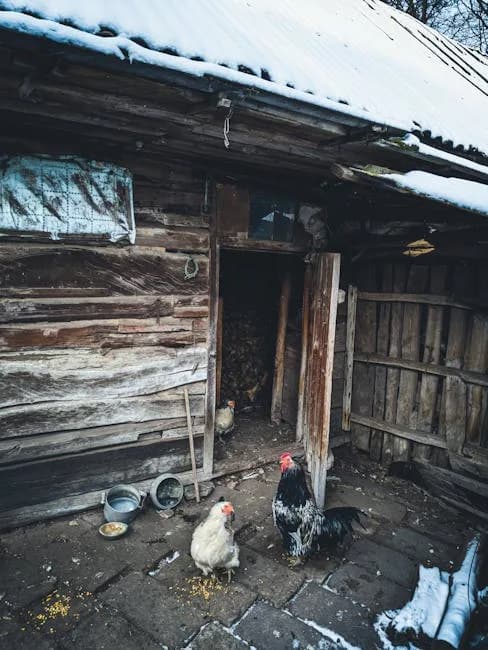
Best Heat Lamps and Coop Heaters for Chickens (2026)
The safest chicken coop heaters for 2026: radiant panels from $42, the USA-made Sweeter Heater, K&H heated pads and perches, and thermostat plugs.
Researched from university extension, USDA, and veterinary sources. How we research.
Affiliate Disclosure: This article contains affiliate links to Amazon. If you buy something through these links, we earn a small commission at no extra cost to you. We only recommend products we genuinely think are worth your money. Full disclosure.
Most chickens don't need supplemental heat. A dry, draft-free coop with vents above the roosts handles most winters, and a full roost of heavy birds keeps it well above the outside temperature on its own. But if you are brooding chicks, keeping Silkies or other small-bodied breeds, or the coop itself drops below 35°F on ordinary nights, a heater earns its place. The trick is picking one that will not burn the coop down.
The classic 250-watt red heat lamp runs hotter than 400°F at the bulb and hangs from a clamp that fails. There are better tools now: flat radiant panels that stay cool enough to touch, heated pads and perches that warm the bird instead of the air, and thermostat plugs that switch any of them on only when it is cold. Every product here was checked in stock on September 5, 2026, and the guidance on when to heat comes from the University of Minnesota Extension.
What You'll Learn
- •Quick answer: which heater for which coop
- •Do your chickens actually need a heater?
- •Types of chicken coop heaters
- •Best coop heaters for 2026
- •Thermostat plugs: the $17 upgrade every heater needs
- •Heat lamps: when they make sense (and when they don't)
- •Brooder heat plates for chicks
- •Coop heater safety tips
- •How to size a heater for your coop
- •What it costs to run
- •How we picked
- •Frequently asked questions
Quick Answer: Which Heater for Which Coop
| Situation | Pick | Price |
|---|---|---|
| Most coops, 4 to 10 hens | Cozy Products Cozy Coop | ~$55 |
| Same job on a budget, with a remote | TIMEBAL 200W radiant panel | ~$42 |
| Chicks now, hens later | Chickcozy Smart 200W | ~$60 |
| Overhead, USA-made, big coop | Sweeter Heater 11x40 | ~$161 |
| Warm the birds, not the air | K&H Thermo-Chicken heated pad | ~$66 |
| Frostbitten toes | K&H heated perch, 26 in | ~$52 |
| Cheapest heat, no light | 150W ceramic emitter | ~$16 |
| Switch any of them on at 35°F | Thermo Cube TC-3 | ~$17 |
Do Your Chickens Actually Need a Heater?
Healthy, fully feathered adult chickens handle temperatures well below freezing. A chicken's body runs at about 106°F, and heavy breeds like Plymouth Rocks, Wyandottes, Ameraucanas, and Orpingtons overwinter in single digits in a dry coop. The University of Minnesota Extension's threshold is the one to use: add supplemental heat when the coop itself falls below 35°F, measured at nest-box height and at the lowest roost, and put the heat source at that height.
That means the first purchase is an $18 thermometer, not a heater. Hang the sensor at roost height for a week of cold nights. An insulated coop full of birds often reads 15°F warmer than the yard.
Heat makes sense when:
- •Chicks are in a brooder and not fully feathered, under about 6 weeks old
- •The coop reads below 35°F on normal winter nights, not just during a cold snap
- •You keep cold-sensitive breeds: Silkies, Frizzles, small bantams, or birds with big single combs
- •A bird is sick or injured and cannot regulate its own temperature
- •The coop is thin and you cannot fix it this year
If your coop holds 35°F to 45°F with the birds inside, spend the money on insulation and draft-sealing and a heated waterer instead. Those two solve more winter problems than a heater does.
Types of Chicken Coop Heaters
Flat-Panel Radiant Heaters
A wall-mounted panel that radiates gentle heat toward whatever is in front of it. Surface temperatures run about 130°F on the Cozy Coop and up to 190°F on the adjustable imports, warm enough to take the edge off a roost but not enough to ignite shavings. 150 to 200 watts. This is the safest category and the right one for most coops.
Best for: Everyday winter heat in coops up to about 100 square feet.
Heated Pads and Perches
Instead of warming the air, a 40-watt pad or perch warms the bird that touches it. Chickens lose a lot of heat through their feet, so a heated perch prevents frostbitten toes on the coldest nights for a fraction of a panel's electricity. Pads mount on the wall or lie on the floor.
Best for: Small flocks, frostbite-prone birds, and coops where an air heater is overkill.
Ceramic Heat Emitters
A ceramic bulb that screws into a lamp socket and produces heat without light. 100 to 150 watts, and hot at the bulb, so it needs a porcelain socket and a guard. Light matters more than people think: a coop lit all night disrupts sleep and laying.
Best for: Targeted heat over one roost on a tight budget.
Infrared Heat Lamps
The red 250-watt bulb. It throws a lot of heat and a lot of light, the bulb surface exceeds 400°F, and the clamp fixtures it ships with fail. Extension services treat it as a last resort with strict rules, covered below.
Best for: Short-term emergencies only, in a caged, approved fixture.
Brooder Heat Plates
A low-voltage panel on legs that chicks walk under, like a hen. Twelve to 40 watts, the safest way to brood, and covered in our brooder heat plate guide.
Best for: Chicks from day one to about 6 weeks.
Oil-Filled Radiators
Some keepers use a small oil-filled space heater. The surface stays cooler than a lamp, but they draw 600 to 1,500 watts and are not built for dust and humidity. Minnesota's guidance is to use only heaters approved for use around livestock, and these are not.
Best for: Not recommended for coops.
Best Coop Heaters for 2026
Cozy Products Cozy Coop Heater: Best Overall
Check Price on Amazon: Cozy Coop Heater$54.69 as of Oct 2$130 for a two-pack.
The Cozy Coop is the chicken-specific radiant panel everyone else copies. It is ETL-listed and rated for zero clearance, so it mounts flat against a wooden wall, and it carries a built-in thermal protector that cuts power if the panel overheats. The 19 by 12 inch panel has a large on-off switch and an in-cord switch, and the cord is jacketed. Cozy's listing describes it as a 200-watt heater while the title says 150; either way it draws under a seventh of what a space heater does. The surface runs warm, not hot, which is exactly the point.
- •Wattage: 150 to 200W
- •Coverage: Coops up to about 100 sq ft
- •Mounting: Wall, with included brackets, or on a stand
- •Safety: ETL-listed, zero clearance, thermal protector
Pros: Purpose-built, certified, cool-touch surface, no bulbs, lasts for years. Cons: It takes 30 to 60 minutes to warm a space, it will not heat a large coop alone, and it has no thermostat of its own, so add a Thermo Cube.
TIMEBAL and HOPOCO 200W Radiant Panels: Best Value
Check Price on Amazon: TIMEBAL 200W$41.99 as of Oct 2, about $42, or the near-identical HOPOCO 200W, about $50.
These are the 2026 generation of import panels, and they are better than the price suggests. Both are UL-certified 200-watt panels, 16 by 12 inches, with an LED temperature display, a remote, a memory that restores the last setting after a power cut, and an anti-tilt cutoff that shuts the heater off if it falls. Both are built to work with an outlet timer or a thermostat plug. The HOPOCO lists an adjustable surface temperature from 122°F to 191°F, which is hotter at the top end than the Cozy Coop; keep it on the lower settings near bedding.
- •Wattage: 200W
- •Coverage: Coops up to about 100 sq ft
- •Mounting: Wall hook or free-standing
- •Safety: UL-certified, tilt cutoff, restarts after outages
Pros: Cheapest certified panel, remote and display, tilt cutoff, thermostat-plug friendly. Cons: Short brand history; the higher surface settings need clearance from shavings.
Chickcozy Smart 200W Heater: Best for Chicks and Hens Both
Check Price on Amazon: Chickcozy Smart Coop Heater$59.99 as of Oct 2
A 16 by 11 inch 200-watt panel with a built-in temperature sensor that raises and lowers output to hold a set point between 70°F and 190°F, and adjustable legs that let it lie flat over chicks like a brooder plate and then stand up or hang as the birds grow. It is compatible with timers and thermostat controllers, which are not included. If you brood a batch every spring and heat a coop every winter, this is one purchase instead of two.
- •Wattage: 200W, sensor-controlled
- •Coverage: A brooder, or a roost area in a small coop
- •Mounting: Legs, wall, or hanging
Pros: Sensor-controlled output, doubles as a brooder plate, adjustable height and angle. Cons: The 190°F top setting is a brooder setting, not a coop one; another young brand.
Sweeter Heater: Best Overhead and Made in the USA
Check Price on Amazon: Sweeter Heater 11x40, 150W$161.00 as of Oct 211x30 OH1130 is about $147, and smaller overhead, side-mount, and flush-mount versions run $113 to $147. Amazon stock on all of them is limited; the maker sells direct as well.
Sweeter Heater has built infrared panels in the USA since 1995 and backs them with a three-year warranty. The overhead models hang from the included chain and hooks above the roost and radiate down onto the birds, which keeps the heater away from bedding, water, and curious beaks. An internal thermostat shuts the unit down if heat cannot escape. It is the panel for a big coop, a barn, or anyone who wants the heater out of reach.
- •Wattage: 50W (11x16) to 150W (11x40)
- •Mounting: Overhead by chain, side-mount, or flush-mount depending on model
- •Safety: Internal shutoff, no hot spots, made in USA
Pros: Overhead mounting, USA build, three-year warranty, sizes for every coop. Cons: Two to three times the price of a wall panel, and often out of stock on Amazon.
K&H Thermo-Chicken Heated Pad: Best for Warming Birds, Not Air
Check Price on Amazon: K&H Thermo-Chicken Heated Pad$65.99 as of Oct 2
An 18.5 by 12.5 inch, 40-watt, thermostatically controlled pad in peck-resistant ABS with rounded edges and a steel-wrapped cord, made by the Colorado company that builds heated pet beds. It mounts vertically on a wall beside the roost or lies flat for chicks and ducks, and K&H safety-certifies the whole product rather than just its parts. It will not warm a coop. It gives every bird a warm surface to lean on, which on a 40-watt budget is a smarter way to spend electricity than heating air that leaves through the vents.
- •Wattage: 40W
- •Mounting: Wall or floor
- •Safety: Safety-listed, peck-resistant, steel-wrapped cord
Pros: Lowest power of any adult-bird heater, tough, certified. Cons: Warms the birds touching it, not the coop.
K&H Thermo-Chicken Heated Perch: Best for Frostbitten Toes
Check Price on Amazon: K&H Heated Perch, 26 inch$39.99 as of Oct 2
Chickens keep their feet warm by sitting on them, and toes are where frostbite starts on a roost. This is a 40-watt perch with dual internal thermostats and a flat top, shaped for birds that prefer a flat roost, that warms the whole bird through its feet. Six hens fit on the 26-inch bar. It replaces a roost rather than adding a heater, and it is the cheapest fix there is for a flock that comes in with grey toes.
- •Wattage: 40W
- •Mounting: Replaces a roost bar
- •Safety: Dual thermostats, K&H certified
Pros: Directly prevents the most common winter injury, tiny power draw. Cons: 26 inches is six birds; larger flocks need two.
Ceramic Heat Emitter: Budget Option
Check Price on Amazon: 150W Ceramic Heat Emitter$15.99 as of Oct 2
A ceramic bulb that makes heat and no light, rated for 10,000 hours, in a standard E26 base. It warms a 3 to 4 foot radius under it. The rules: use a porcelain socket rated for at least 150 watts, because it melts plastic ones; use a caged fixture; hang it by a chain, never the cord; and keep it 18 inches from anything. It is the cheapest heat here and the least safe of the non-lamp options.
- •Wattage: 150W
- •Coverage: One roost
- •Safety: Hot bulb; needs a porcelain socket, cage, and clearance
Pros: $16, no light, widely available. Cons: Hot to the touch, fixture not included, no certification of its own.
Thermostat Plugs: The $17 Upgrade Every Heater Needs
None of the wall panels above has a thermostat that watches the coop, so they run whenever they are plugged in. A thermostat plug fixes that, cuts the electric bill by half or more, and keeps the coop from getting so warm that the birds lose their cold tolerance.
- •Farm Innovators Thermo Cube TC-3, about $17: a double outlet that switches on at 35°F and off at 45°F. No settings. It is exactly the extension-service threshold, and it is what most keepers should buy.
- •Inkbird ITC-308, about $29: a digital controller with a probe you hang at roost height, a set point you choose, and a display. Buy this if you want to hold 38°F instead of a fixed 35 to 45 band, or want to see the number.
- •HEATIT ET-21, about $14: a single outlet that energizes below 38°F and shuts off near 50°F, the same idea as the Thermo Cube with slightly warmer points.
All three are rated 15 amps, far more than any heater here draws. Plug the heater into the controller and the controller into a GFCI outlet.
Heat Lamps: When They Make Sense (and When They Don't)
The chicken community is split on heat lamps. Some keepers have used a red 250-watt bulb for years. Others have lost coops and flocks to one. The facts are not in dispute: the bulb surface runs past 400°F, dust and feathers land on it, the clamp fixtures loosen, and a chicken that flies into one knocks it into the bedding.
The University of Minnesota Extension does not ban them; it sets conditions. Use an approved lamp with a heat bulb, always read the fire warning and follow the installation instructions, never hang a heat lamp by its cord, and use a lamp with a cage around the bulb. Keep all wiring away from birds, water, and litter.
When a heat lamp is acceptable:
- •Short-term emergency use in a cold snap when nothing else is available
- •Supervised brooding when you do not yet have a heat plate
- •In a fireproof setup: metal fixture, chain, cage, and nothing flammable within 18 inches
When to avoid it:
- •Any permanent, unattended overnight installation
- •Any coop with shavings or straw on the floor
- •Any coop where birds roost within reach of the lamp
If you must run one, secure it with a chain and a cage, plug it into a thermostat plug so it is off most of the night, and replace it with a radiant panel before next winter.
Brooder Heat Plates for Chicks
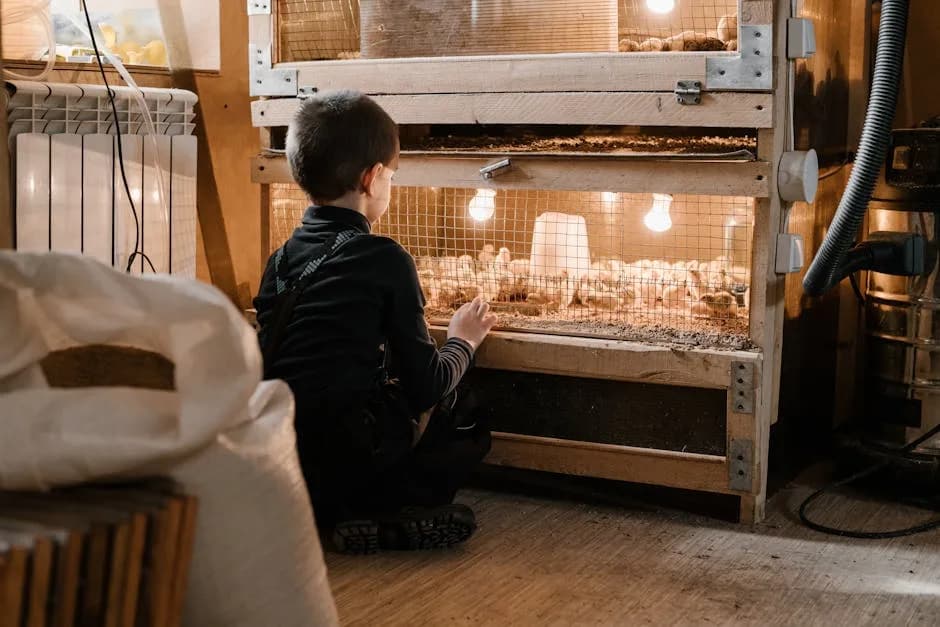
For chicks, the answer is a brooder plate, not a lamp. The plate sits on adjustable legs a few inches above the floor and chicks walk under it when cold and out when warm, the way they would with a hen. The Brinsea EcoGlow Safety 600, about $80, runs on 12 watts at low voltage, warms up to 20 newly hatched chicks, has an indicator light and a 10-foot cord, and carries a three-year warranty.
Why plates beat lamps for chicks:
- •A fraction of the fire risk and 80 to 90 percent less electricity
- •Chicks self-regulate instead of cooking under a fixed bulb
- •No constant light, so they learn day and night
- •Quieter, calmer chicks
Our best brooder heat plates guide compares plates and complete brooders across price tiers, and the raising chicks week by week guide covers the temperatures.
Coop Heater Safety Tips
- •Mount it. Wall panels get screwed to studs. Overhead heaters hang from chain on solid hooks. Nothing relies on a clamp.
- •Use a GFCI outlet. Coops are damp and dusty; a ground-fault outlet or cord trips before a short becomes a fire.
- •Treat extension cords as temporary. Minnesota's guidance is to use them only short term and to have an electrician run power to the coop. If you must bridge a few weeks, use a 12-gauge outdoor cord and keep the connection off the ground.
- •Check the wiring monthly. Rodents chew cords. Replace anything with a nick.
- •Don't chase 70°F. The goal is to hold the coop above 35°F at roost height, not to make it comfortable for you. A warm coop is a humid coop and a flock that cannot handle a power cut.
- •Keep bedding clear. Even a cool-touch panel gets a foot of clearance from piled shavings.
- •Hang a smoke detector in or next to the coop. Ten dollars.
- •Use approved products. Livestock-rated heaters and thermostats, not a bathroom space heater on a cinder block.
How to Size a Heater for Your Coop
| Coop size | Heater | Wattage |
|---|---|---|
| Small (up to 32 sq ft, 4 to 6 hens) | One panel, or a heated pad or perch | 40 to 200W |
| Medium (32 to 80 sq ft, 6 to 12 hens) | One or two panels | 150 to 400W |
| Large (80 to 150 sq ft, 12 to 20 hens) | Two panels or an overhead Sweeter Heater | 300 to 400W |
| Extra large (150 sq ft and up) | Multiple overhead panels; consider zoning the roost area | 400W and up |
The birds are heating the coop too. Six hens on a roost put out real warmth in a small insulated space; you are supplementing it. If the coop is losing that heat through gaps and a bare roof, fix that first; see chicken coop insulation and winterizing.
What It Costs to Run
At $0.16 per kilowatt-hour:
| Heater | Draw | Hours a day | Per day | Per month |
|---|---|---|---|---|
| Heated perch or pad | 40W | 24 | $0.15 | $5 |
| Ceramic emitter | 150W | 12 | $0.29 | $9 |
| Radiant panel on a Thermo Cube | 200W | 6 to 8 | $0.19 to $0.26 | $6 to $8 |
| Radiant panel, no thermostat | 200W | 24 | $0.77 | $23 |
| 250W heat lamp, no thermostat | 250W | 24 | $0.96 | $29 |
A $17 thermostat plug pays for itself in the first month on any 200-watt panel.
How We Picked
We checked price, stock, wattage, and the safety claims on each listing through Amazon's product data on September 5, 2026, and kept the heaters that are certified (ETL or UL) or come from makers with a long safety record (Sweeter Heater since 1995, K&H, Brinsea). The 2026 import panels are here because they are UL-listed and have a tilt cutoff, with the caveat that their brands are new. The when-to-heat guidance follows the University of Minnesota Extension. We dropped oil-filled radiators and uncaged lamps from the recommendations, and we did not include any heater whose listing would not state its wattage.
Frequently Asked Questions
Do chickens really need a heat lamp in winter?
Most adult chickens do not need any heater, and the ones that do are better served by a radiant panel or a heated perch than a heat lamp. Heat when the coop drops below 35°F at roost height, for chicks, for sick birds, or for cold-sensitive breeds.
What temperature is too cold for chickens?
Cold-hardy adults in a dry, draft-free coop handle 0°F. The number to watch is inside the coop: below 35°F at nest-box or roost height, the extension guidance is to add heat. Frostbite comes from moisture more than cold, so ventilation matters as much as the heater.
Are radiant panel heaters better than heat lamps?
Yes. Surface temperatures of 130°F to 190°F instead of 400°F, no bulb to break, certified fixtures that mount to the wall, less electricity, and no light at night. The only thing a heat lamp does better is heat a space fast, which is not what a coop needs.
How much does it cost to run a coop heater all winter?
A 200-watt panel on a thermostat plug costs $6 to $8 a month at typical rates. The same panel left on around the clock costs about $23. A 250-watt heat lamp on all night costs about $29 a month and lights the coop the whole time.
Can you use a space heater in a chicken coop?
Not a fan-forced one. They are not built for dust and humidity and are the wrong tool. An oil-filled radiator is safer but draws 600 watts or more and is not livestock-rated. A purpose-built panel does the job on 200 watts.
Do heated perches actually work?
Yes, for the injury they target. Chickens lose heat through their feet, and frostbitten toes are the common winter injury on a roost. A 40-watt heated perch warms the bird through its feet all night for about $5 a month. It does not warm the coop.
For most coops, the Cozy Coop on a Thermo Cube is the setup: certified, cool-touch, and switched on only when it matters. For a big coop, hang a Sweeter Heater overhead. For a small flock that mostly needs its toes kept warm, the K&H heated perch does more for less. And whatever you buy, get the heated waterer first; a frozen waterer hurts a flock faster than a cold night does.
Sources:
- •University of Minnesota Extension. Caring for chickens in cold weather. https://extension.umn.edu/agriculture/animals-and-livestock/poultry/caring-for-chickens-in-cold-weather
- •University of Arkansas Division of Agriculture. Backyard poultry coops prepped for cold still require good ventilation. https://www.uaex.uada.edu/media-resources/news/2024/january/1-11-2024-ark-cold-backyard-poultry.aspx
- •University of Kentucky Cooperative Extension. Small Flock Poultry. https://poultry.extension.org/
- •Penn State Extension. Poultry housing and equipment. https://extension.psu.edu/animals/poultry
- •Product wattages, certifications, and prices: Amazon product listings, checked September 5, 2026.
Product prices and availability are accurate as of the date shown and are subject to change. Any price and availability information displayed on Amazon at the time of purchase will apply to the purchase of this product.
Related Guides
Best Chicken Coop Bedding and Litter (2026 Reviews)
The best chicken coop bedding for 2026. Pine shavings, hemp, aspen, and odor-control litter compared, with pros, cons, and pricing for every flock and budget.
Gear ReviewsBest Chicken Coop Cameras 2026: Solar, Wired & Budget Picks
Five coop cameras for 2026: solar Reolink, wired Wyze, battery Blink, Ring, and the Coop Smart kit, with night vision and no-subscription local storage.
Gear ReviewsBest Automatic Chicken Coop Doors 2026: 7 Worth Buying
Automatic coop doors that close before predators come out. The 7 best in 2026 across price tiers, including the safety flaw each one has.
Gear ReviewsBest Brooder Heat Plates for Baby Chicks (2026)
Heat plates are the safe, low-cost alternative to fire-prone heat lamps. The best brooder plates and complete brooders for baby chicks in 2026.