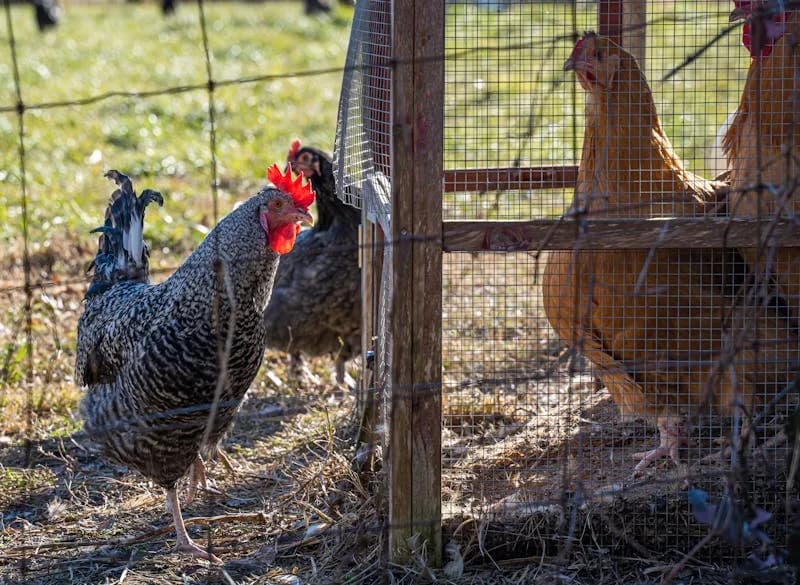
Raising Chickens in Idaho: 2026 Laws & Best Breeds
Raising chickens in Idaho: laws for Boise, Meridian, Nampa, plus cold-hardy breeds and tips for the state's varied climate.
Researched from university extension, USDA, and veterinary sources. How we research.
Idaho has no statewide ban or permit system for backyard chickens. Cities and counties set their own rules, so what you can keep depends on where you live. Most major Idaho cities allow hens with reasonable limits, though rooster bans are common in residential zones. Unincorporated land and rural acreage are generally wide open, reflecting Idaho's strong agricultural roots.
Idaho's climate is anything but uniform. The southern Snake River Plain (Boise, Nampa, Twin Falls) sees hot, dry summers with highs in the mid-90s and cold winters with single-digit lows. The Panhandle around Coeur d'Alene gets heavier snow and longer cool seasons. Eastern Idaho (Idaho Falls, Pocatello) sits at higher elevation with bitter winter cold, while mountainous central Idaho is colder still. Your coop setup and breed choices need to handle real cold across nearly the whole state, plus dry summer heat in the south.
What You'll Learn
- •Are Backyard Chickens Legal in Idaho?
- •Idaho Chicken Laws by City
- •Can You Sell Eggs in Idaho?
- •Best Chicken Breeds for Idaho's Climate
- •Summer Care in Idaho
- •Winter Care in Idaho
- •Common Predators in Idaho
- •FAQ
Are Backyard Chickens Legal in Idaho?
Yes, in most cities. Boise, Meridian, Nampa, Idaho Falls, Pocatello, Coeur d'Alene, and Twin Falls all permit backyard hens with varying limits and conditions. Flock caps typically run from 4 to 12 hens depending on the city and lot size, and most municipalities ban roosters in residential zones because of noise complaints.
Before getting chicks, check three things: your city's municipal code or zoning ordinance for poultry, your HOA's covenants if you have one, and your specific zoning district. HOAs can ban chickens even where the city allows them, and Idaho's state legislature has debated (but not yet passed) bills that would override HOA prohibitions.
If you live in rural Idaho or on unincorporated county land, restrictions are usually minimal. Agricultural zoning across most of the state allows poultry without permits or flock limits, subject only to general nuisance and sanitation rules.
Idaho Chicken Laws by City
Important: City and county ordinances change frequently. The information below was researched in May 2026 but may not reflect the latest rules. Always verify with your local zoning or code enforcement office before starting a flock. Links to official sources are provided where available.
Boise
Boise allows backyard hens for non-commercial use. The city's animal code was updated in 2021 and continues to be refined.
- •Hens: Up to 6 hens is the commonly cited limit. Verify the current cap with Boise Planning and Development Services before buying birds.
- •Roosters: Not permitted in residential zones.
- •Permit: Sources differ on whether a permit is required. Contact Boise Planning and Development Services for the current process.
- •Setbacks: Coop should be at least 10 feet from any neighboring residence and screened from view.
- •Commercial sales: Selling eggs or meat from city-permitted backyard flocks is generally not allowed.
- •Sanitation: Coop and run must be kept clean, predator-proof, and free of odors.
Meridian
Meridian City Code, Title 6 Chapter 2 (Animal Control)
Meridian's approach is relatively permissive, with no flat citywide hen cap published in the animal code. Coop placement and sanitation drive most enforcement.
- •Hens: No specific numerical cap published in the animal code. Conditions must remain sanitary, and zoning rules apply.
- •Roosters: Check current city regulations before adding any. Roosters can quickly trigger nuisance complaints under noise rules.
- •Permit: No permit required for backyard hens.
- •Setbacks: Coops should be at least 25 feet from any neighboring dwelling and at least 3 feet from property lines.
- •Space: Plan for at least 3 square feet of coop space and 10 square feet of run space per bird.
- •Slaughter: Slaughtering on residential property is prohibited within the city.
Nampa
City of Nampa: Can I Have Chickens?
Nampa is one of the more generous Treasure Valley cities for hen counts.
- •Hens: Up to 10 hens per property inside city limits.
- •Roosters: Not allowed.
- •Permit: No permit required for up to the 10-hen cap.
- •Setbacks: Coops should be at least 20 feet from neighboring residential dwellings and at least 3 feet from property lines.
- •Space: Minimum 3 square feet per bird in the coop and 10 square feet per bird in the run.
- •Reference: See Nampa Zoning Ordinance Chapter 21 for the full animal regulations and contact the Planning Department at 208-468-4430 to verify current rules.
Idaho Falls
Idaho Falls City Code, Title 5 (Animals)
Idaho Falls updated its rules in 2025 (Ordinance 1238) to make small backyard flocks easier to keep on standard residential lots.
- •Hens: Up to 6 hens on lots of at least 5,000 square feet. One additional hen per 1,250 square feet of lot above 5,000, capped at 12 hens total.
- •Roosters: Not permitted.
- •Permit: Special use permit no longer required for up to 6 hens after the 2025 amendment. Verify any application or registration steps with the Planning Division.
- •Setbacks: Coop must be at least 25 feet from any neighboring dwelling and at least 3 feet from property lines.
- •Location: Hens must be confined to the rear yard of single-family or duplex homes in residential zones.
- •Sanitation: Coops must be kept clean and well maintained.
Pocatello
Pocatello Municipal Code 6.04.200: Permits for Keeping of Small Livestock | City of Pocatello: Kennel and Livestock Licenses
Pocatello uses a permit-based system administered by the Animal Services director. Neighbor notification is part of the application.
- •Hens: Allowed with permit. The municipal code does not publish a flat numerical cap, so the director sets the approved number on a case-by-case basis.
- •Roosters: Not expressly forbidden in code but rarely approved in residential zones; written permission is required.
- •Permit: Required. Application is submitted in writing to the Animal Services director.
- •Neighbor consent: Applicants must give notice to owners and occupants of property within 100 feet of the perimeter and provide written consent from at least 75% of those adult owners and occupants (unless waived by the director).
- •Setbacks: Coops must be located in the rear yard, at least 3 feet from property lines and 25 feet from neighboring dwellings.
- •Space: Minimum 3 square feet per bird in the coop and 10 square feet per bird in the run.
Coeur d'Alene
Coeur d'Alene Municipal Code 6.15.010: Domestic Livestock and Fowl
Coeur d'Alene's code is one of the more clearly written in Idaho and allows generous hen numbers on standard lots.
- •Hens: Up to 12 chickens, excluding roosters, within city limits.
- •Other domestic fowl: Up to 4 other fowl (turkeys, geese, peafowl, pigeons, quail, pheasants, and guineafowl are excluded from this provision).
- •R-1 acreage: On property zoned R-1, up to 24 chickens and 12 other domestic fowl per full acre.
- •Young birds: Chicks under 12 weeks of age do not count against the limits.
- •Roosters: Not permitted.
- •Permit: No permit required for hens within the stated limits.
- •Setbacks: Coops should be at least 25 feet from neighboring dwellings and 3 feet from property lines.
Twin Falls
City of Twin Falls: Code Enforcement and Animal Control
Twin Falls amended its code in 2018 to drop the old 75% neighbor approval requirement and allow a small starter flock without a permit.
- •Hens: Up to 4 hens without a permit. Larger flocks require a permit application and fee.
- •Roosters: Not allowed within city limits.
- •Lot size: Property generally must be at least 5,000 square feet to keep small animals including poultry.
- •Setbacks: Coops must be at least 25 feet from any neighboring residential dwelling and at least 3 feet from property lines.
- •Space: Minimum 3 square feet per bird inside the coop and 10 square feet per bird in the run.
- •Slaughter: Chicken slaughter is prohibited on residential properties inside city limits.
Can You Sell Eggs in Idaho?
Yes, with minimal requirements for small producers. The Idaho State Department of Agriculture exempts producers with fewer than 300 birds from the licensing and grading rules that apply to commercial egg distributors.
For direct-to-consumer sales (farm stands, farmers' markets, neighbors, friends), small producers must:
- •Keep eggs clean
- •Refrigerate eggs and keep them cold through the point of sale
- •Use containers labeled with the producer's name, address, phone number, and the words "UNGRADED EGGS"
Ungraded eggs cannot be sold to food preparation businesses like restaurants, bakeries, or grocery stores. If you want to sell into those channels or your flock grows past 300 birds, you must comply with IDAPA 02.02.11 (Rules Governing Eggs and Egg Products) and Idaho Code Title 37, Chapter 15, which involves an annual egg distributor license through the Department of Agriculture's Dairy Bureau.
Farmers' market managers may have additional rules, so check with the market coordinator before your first sale day.
Best Chicken Breeds for Idaho's Climate
Idaho throws two challenges at a backyard flock: long, cold winters across nearly the entire state and hot, dry summer afternoons in the southern valleys. The Panhandle and eastern mountain regions get serious snow, while Boise, Nampa, and Twin Falls can run weeks of 95F+ days in July and August. The best breeds for Idaho handle both ends without much fuss.
Best cold-hardy breeds for Idaho winters:
- •Wyandotte: A rose comb sits close to the head and is far less prone to frostbite than a tall single comb. Dense plumage and a stocky build make Wyandottes a top pick for Idaho's cold nights. Lays 200-250 eggs per year.
- •Buff Orpington: Fluffy, dense feathering provides excellent insulation through subzero stretches. Calm temperament makes them a family favorite. Lays 200-280 eggs per year.
- •Plymouth Rock: Tough, friendly, and reliable across Idaho's full temperature range. A solid all-around choice for first-time keepers. Lays 250-280 eggs per year.
- •Australorp: Heavy bodied and famously productive, with the historic world record for eggs in 365 days. Black plumage soaks up winter sun on cold-but-clear days. Handles both heat and cold well.
- •Rhode Island Red: One of the most adaptable production breeds in North America. Hardy through cold winters and tolerant of summer heat. Lays 250-300 eggs per year.
- •Brahma: Large birds with a pea comb and feathered legs. Built for cold, with excellent tolerance for the heavy snow that hits the Panhandle and the Lost River country.
Dual-purpose options worth considering:
- •Sussex: Cold-hardy, good foragers, and steady layers. A practical homestead bird for rural Idaho.
Watch out for in Idaho:
- •Breeds with large single combs (like white Leghorns) are prone to frostbite when nights drop below zero. They lay well, but you'll need petroleum jelly on combs and wattles or a coop that stays above freezing.
- •Mediterranean breeds bred for hot, dry climates can struggle from November through March across most of Idaho.
- •Lightly feathered breeds are a poor match for the Panhandle and high-elevation areas around Stanley, McCall, and the Tetons where winter cold is extreme.
Summer Care in Idaho
Southern Idaho summers are hot and dry. Boise, Nampa, and Twin Falls regularly see July highs in the mid-90s, with heat waves pushing past 100F. The dry air is actually easier on chickens than humid heat (panting works better when air can absorb moisture), but the sun is intense at Idaho's elevation and shade matters more than you might think.
Keeping your flock comfortable:
- •Shade is non-negotiable. If your run lacks natural tree cover, install shade cloth. Direct sun at 95F is dangerous even with low humidity.
- •Fresh, cool water at all times. Check waterers at least twice a day in summer. Add ice during heat waves and keep waterers in shade.
- •Ventilate the coop. Open all windows and roof vents. A stuffy coop in Idaho's afternoon sun can hit 110F+ even when ambient temperatures are in the 90s.
- •Watch for heat stress. Signs include heavy panting, wings held away from the body, pale combs, and lethargy. Move stressed birds to shade and offer cool water immediately.
- •Frozen treats. Watermelon, berries, or frozen blocks of scratch grains and water cool birds during the worst stretches.
- •Dust bath access. Dry Idaho summers are prime mite and lice season. A dedicated dust bath area keeps parasites in check.
- •Mister or shallow pan. A misting line in the run drops temperatures several degrees. A shallow pan of cool water lets birds dip their feet, which is one of the most effective ways for a chicken to cool itself.
- •Adjust feed timing. Feed early morning and evening when birds are most active. Heavy meals during the hottest part of the day reduce intake.
See our full summer chicken care guide for more detail on heat management.
Winter Care in Idaho
Winter is where Idaho keepers earn their feed. Boise and the southern valleys average lows in the 20s with occasional dips into single digits. Eastern Idaho (Idaho Falls, Pocatello) regularly hits below zero. The Panhandle around Coeur d'Alene and Sandpoint sees heavy snow and weeks of cold. Mountain communities like McCall, Stanley, and Driggs are colder still.
Winter coop tips:
- •Ventilation over insulation. A dry, well-ventilated coop is warmer than a sealed humid one. Moisture from breath and droppings drives frostbite faster than cold air alone. Keep roofline vents open year-round.
- •Deep litter method. Start with 4-6 inches of pine shavings in fall. Add fresh shavings on top through winter. The composting action generates gentle warmth and absorbs moisture.
- •Heated waterers. Water freezes solid fast in Idaho. A heated base or a dedicated heated waterer is essential from November through March. Have a backup plan for power outages, which happen during winter storms in the Panhandle and mountain regions.
- •Skip heat lamps. They're the leading cause of coop fires, and cold-hardy breeds don't need them. For brutal cold snaps, use a flat-panel radiant heater rated for poultry.
- •Extra calories before roosting. A handful of cracked corn or whole oats at dusk fuels overnight body heat. This matters most when forecasts drop into single digits or below.
- •Petroleum jelly on combs and wattles. Apply on cold nights to prevent frostbite, especially on single-comb breeds. Or just stick with rose- and pea-comb breeds like Wyandottes and Brahmas.
- •Collect eggs frequently. Eggs freeze and crack within a few hours when temperatures hit the single digits. Check nest boxes 2-3 times a day.
- •Wind protection. Prevailing winter winds in southern Idaho come out of the northwest. Site your coop so it blocks those winds, or add a windbreak (hay bales, plywood, snow fencing) on the windward side of the run.
- •Snow load. Coop and run roofs in the Panhandle and high-elevation areas need to shed serious snow. Check after each storm and clear heavy buildup.
- •Shorter days, fewer eggs. Idaho gets about 9 hours of daylight in December. Production drops naturally. Some keepers add a timed light to extend "daylight" to 14 hours; this is optional and a personal preference.
See our winter chicken care guide for a deeper walkthrough.
Common Predators in Idaho
Idaho's mix of farmland, sagebrush, river bottom, and forest means predator pressure is real almost everywhere. The specific threats shift by region, but every part of the state has something that will take chickens.
Suburban and small-lot predators:
- •Raccoons: The most common chicken killer in Idaho's cities and towns. They can open simple latches and reach through chicken wire. Use hardware cloth (1/2-inch) on all openings and secure latches with carabiner clips or locking hardware.
- •Hawks: Red-tailed hawks, Cooper's hawks, and northern goshawks hunt across the state. A covered run is the best protection. Fishing line strung across an open-top run deters aerial attacks.
- •Skunks and opossums: Both will take eggs and chicks. Seal gaps larger than 3 inches.
- •Domestic dogs: A leading cause of chicken loss in residential neighborhoods. A solid fence and a secured coop handle this.
Rural and wildland predators:
- •Coyotes: Present across all of Idaho. They'll dig under fences. Bury hardware cloth 12 inches deep around your run or lay a wire apron flat along the ground.
- •Red foxes: Found throughout the state. Smart, patient, and persistent. Lock the coop every evening without exception.
- •Mink and weasels: Small enough to squeeze through 1-inch gaps and capable of killing an entire flock in one night. Hardware cloth with 1/2-inch openings is the only reliable defense.
- •Great horned owls: Active at night statewide. A covered run and a secure coop with no gaps prevent attacks.
- •Bobcats: Common in Idaho's wooded foothills and river canyons.
- •Mountain lions: Present in forested and mountainous country, especially central and northern Idaho. Less common around chickens than other predators, but secure fencing matters.
- •Black bears: A real concern for rural keepers near forest edges, particularly in the Panhandle, central Idaho, and the Yellowstone area. Bears will tear apart a coop for feed or chickens. Store feed in metal containers inside a locked outbuilding.
- •Gray wolves: Established in central and northern Idaho. Less commonly a chicken threat than a livestock threat, but worth considering on rural properties near the Salmon and Frank Church wilderness.
General predator-proofing tips:
- •Lock the coop every night, no exceptions
- •Use hardware cloth on all openings, not chicken wire (chicken wire keeps chickens in, not predators out)
- •Install an automatic coop door if you're not always home at dusk
- •Store feed in sealed metal containers inside a secure outbuilding (especially bear country)
- •Bury hardware cloth aprons around the run to stop diggers
- •Walk the perimeter weekly looking for fresh digging or gnaw marks
FAQ
Do I need a permit to keep chickens in Idaho?
It depends on your city. Pocatello and Twin Falls (for flocks over 4 hens) require permits. Boise's permit status varies by source, so contact Planning and Development Services directly. Meridian, Nampa, and Coeur d'Alene do not require permits for backyard hens within published limits. Rural and unincorporated areas typically have no permit requirements.
How many chickens can I have in Idaho?
It varies. Coeur d'Alene allows up to 12 hens. Nampa allows up to 10. Idaho Falls allows 6 on standard lots, scaling up to 12 with extra lot size. Boise commonly cites 6. Twin Falls allows 4 without a permit. Meridian publishes no flat cap. Rural properties generally have no flock limits.
Are roosters allowed in Idaho cities?
Most Idaho cities ban roosters in residential zones because of noise complaints. Boise, Nampa, Idaho Falls, Coeur d'Alene, and Twin Falls all prohibit them. Pocatello allows roosters only with written permission, which is rarely granted in dense residential areas. Rural and agricultural zones generally have no rooster restrictions.
What's the best chicken breed for Idaho?
Wyandottes and Plymouth Rocks are the strongest all-around picks for Idaho. Both handle Idaho's hard winters and dry summer heat. For maximum eggs from cold-hardy birds, Rhode Island Reds and Australorps are excellent. Brahmas are the best pick for the coldest regions like the Panhandle and high-elevation eastern Idaho.
Can I sell eggs from my backyard flock in Idaho?
Yes. Idaho exempts producers with fewer than 300 birds from egg distributor licensing. Eggs must be clean, refrigerated, and sold in containers labeled with your name, address, phone number, and the words "UNGRADED EGGS." Sales to restaurants, bakeries, or grocery stores require an Idaho State Department of Agriculture egg distributor license.
Do Idaho HOAs override city chicken rules?
Yes. HOAs can prohibit chickens even where the city allows them. Always check your covenants and restrictions before getting birds. The Idaho legislature has considered bills that would limit HOA bans on chicken keeping, but as of mid-2026 no statewide override has passed.
Idaho is a friendlier state for backyard chickens than most. Verify your city's rules and any HOA restrictions, build (or buy) a coop that can take a real winter, and pick breeds suited for cold weather. If you're brand new to this, our beginner's guide to raising backyard chickens walks through everything from choosing chicks to your first egg.
Picking a coop for Idaho? The breed you choose matters, but coop quality matters more once January hits. Our best chicken coops on Amazon roundup covers picks across flock sizes and price ranges, with notes on which models hold up in cold-climate states like Idaho.
Raising Chickens in Other States
If you're moving, considering a different state, or just curious how the rules compare, browse our other state guides:
Northeast: Connecticut, Delaware, Maine, Maryland, Massachusetts, New Hampshire, New Jersey, New York, Pennsylvania, Rhode Island, Vermont
Southeast: Alabama, Florida, Georgia, Kentucky, Louisiana, Mississippi, North Carolina, South Carolina, Tennessee, Virginia, West Virginia
Midwest: Illinois, Indiana, Iowa, Kansas, Michigan, Minnesota, Missouri, Nebraska, North Dakota, Ohio, South Dakota, Wisconsin
South & Southwest: Arizona, Arkansas, New Mexico, Oklahoma, Texas
Mountain & West: Alaska, California, Colorado, Hawaii, Montana, Nevada, Oregon, Utah, Washington, Wyoming
Related Guides
Raising Chickens in Alaska: 2026 Laws & Best Breeds
Raising chickens in Alaska: laws for Anchorage, Fairbanks, Juneau, plus extreme cold-hardy breeds and sub-arctic care tips.
State GuidesRaising Chickens in Delaware: 2026 Laws & Best Breeds
Raising chickens in Delaware: laws for Wilmington, Dover, Newark, plus best breeds and tips for the First State's climate.
State GuidesRaising Chickens in Kansas: 2026 Laws & Best Breeds
Raising chickens in Kansas: laws for Wichita, Overland Park, Topeka, plus hardy breeds and storm-ready coop tips for the Sunflower State.
State GuidesRaising Chickens in Maine: 2026 Laws & Best Breeds
Raising chickens in Maine: laws for Portland, Lewiston, Bangor, plus extreme cold-hardy breeds and fisher cat protection tips.