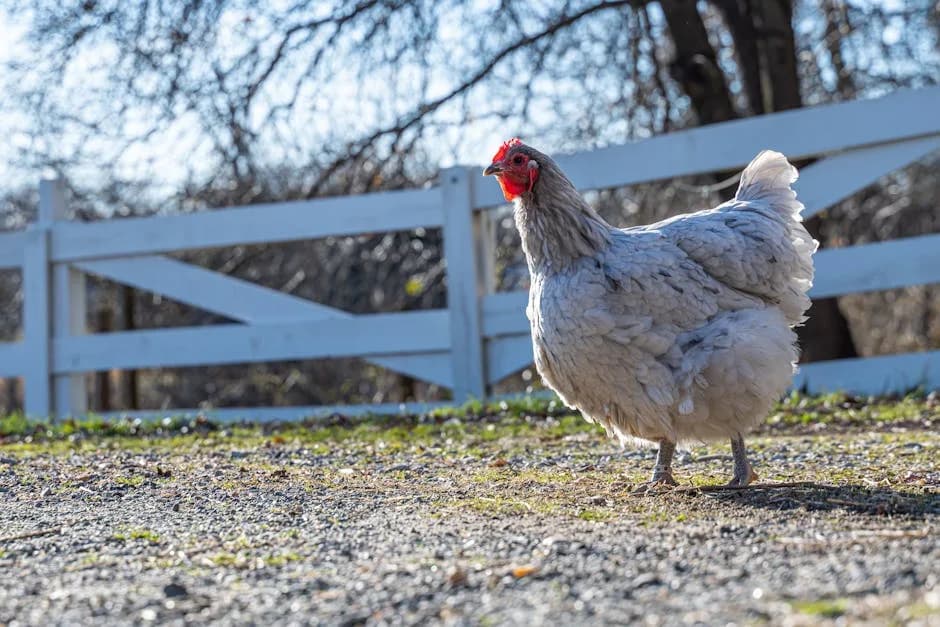
Raising Chickens in Michigan: 2026 Laws & Best Breeds
Michigan chicken laws for Detroit, Grand Rapids, Ann Arbor, and rural areas. Best cold-hardy breeds, winter care tips, and dealing with Michigan winters.
Researched from university extension, USDA, and veterinary sources. How we research.
Michigan has no statewide ban on backyard chickens. Regulation happens at the city and township level, and many of the state's largest municipalities now allow hens with permits, setback rules, and flock size limits. Rural and unincorporated areas are generally even more relaxed, with few restrictions on keeping poultry. Michigan's Right to Farm Act also provides some protections for agricultural operations that follow state guidelines.
What You'll Learn
- •Are Backyard Chickens Legal in Michigan?
- •Michigan Chicken Laws by Major City
- •Michigan's Right to Farm Act and GAAMPs
- •Best Chicken Breeds for Michigan's Climate
- •Winter Care Tips for Michigan Chickens
- •Summer Care for Michigan Flocks
- •Common Predators in Michigan
- •Can You Sell Eggs in Michigan?
- •FAQ
Are Backyard Chickens Legal in Michigan?
Michigan doesn't have a single statewide law that bans or permits backyard chickens. Each city, township, and county sets its own zoning rules for poultry. This means the regulations you'll follow depend entirely on where you live.
The state does have a unique tool called the Right to Farm Act (PA 93 of 1981) that provides nuisance protection for farming operations that follow Generally Accepted Agricultural and Management Practices (GAAMPs). In theory, this can protect chicken keepers even in urban areas, though it's been the subject of legal debate and doesn't automatically override local zoning in every case.
Before buying chicks, check three things: your municipal zoning code, any HOA or deed restrictions on your property, and whether your city requires a permit. HOA rules can prohibit chickens even where the city allows them.
Michigan Chicken Laws by Major City
Important: City and county ordinances change frequently. The information below was researched in March 2026 but may not reflect the latest rules. Always verify with your local zoning or code enforcement office before starting a flock. Links to official sources are provided where available.
Detroit
Detroit Animal-Keeping Ordinance (effective February 2025)
Detroit passed a new animal-keeping ordinance in November 2024, taking effect in February 2025. After nearly a decade of discussion, the city council voted 5-3 to allow residents to keep chickens, ducks, and honeybees.
- •Limit: Up to 8 chickens per residential property.
- •Roosters: Not permitted.
- •License: Required from Detroit Animal Care and Control. A $50 license fee applies. Applicants with outstanding animal-keeping violations are not eligible.
- •Setbacks: Chicken shelters must be at least 30 feet from neighboring homes and 5 feet from the property line (if no alley is present).
- •Coop requirements: Shelters must be enclosed on all sides, ventilated, and kept clean. Manure must be managed to mitigate pests.
- •Slaughter: Not permitted on residential properties. Animals may only be slaughtered at licensed facilities.
- •Additional rules: Chickens must be tagged, and food/compost storage is regulated. Water runoff from animal areas cannot flow onto adjacent properties or into storm drains.
Grand Rapids
Grand Rapids Backyard Chicken Permit (§9.219)
Grand Rapids allows backyard chickens with a permit through its Development Center.
- •Limit: Up to 4 chickens on lots under 5,000 square feet; up to 6 chickens on lots 5,000 square feet or larger.
- •Roosters: Not permitted.
- •Permit: Required. Adjacent neighbors are notified and can object, potentially causing the application to be denied.
- •Setbacks: Coop must be at least 10 feet from all property lines and located in the rear yard only.
- •Coop requirements: Maximum 8 feet tall. Must provide at least 6 square feet per chicken. Only one coop per property.
- •Slaughter: Not permitted.
Ann Arbor
Ann Arbor Code §9:42 (Keeping of Chickens)
Ann Arbor passed its chicken ordinance in 2008 and has been one of the more chicken-friendly cities in Michigan since.
- •Limit: Up to 4 chickens per property.
- •Roosters: Not permitted.
- •Permit: Required. $20 fee. All owners of residentially zoned adjacent properties must consent in writing before a permit is issued. Permits expire after 5 years and must be renewed.
- •Setbacks: Coop and enclosure must be at least 10 feet from property lines and 40 feet from residential structures on adjacent properties (the 40-foot rule can be waived with written neighbor consent).
- •Coop requirements: Chickens must be kept in a covered or fenced enclosure at all times in the backyard only. Enclosures must be built to prevent rodents from being harbored.
- •Slaughter: Not permitted.
- •Note: Private restrictions (HOA rules, deed covenants) take precedence over the city permit.

Lansing
Lansing Code of Ordinances, Chapter 610 (Animals)
Lansing, the state capital, allows backyard chickens with straightforward rules.
- •Hens: Up to 5 hens allowed.
- •Roosters: Not permitted.
- •Permit: Not required.
- •Coop requirements: Chickens must be kept on the owner's property. Coops cannot harbor rodents.
- •Note: While Lansing doesn't require a permit, standard nuisance ordinances apply. Keep coops clean and don't let them become a source of complaints.
Warren
Warren Chicken Permit Application (City of Warren)
Warren adopted a chicken ordinance in 2018, allowing hens in the city.
- •Limit: Up to 3 hens.
- •Roosters: Not permitted. No other fowl or poultry besides hens.
- •Permit: Required. $10 annual fee (expires December 31 each year).
- •Additional rules: Check the permit application for current coop placement and maintenance requirements.
Sterling Heights
Sterling Heights has restrictive rules on keeping chickens in residential areas.
- •Requirements: Lots must be at least 8 acres to keep chickens, which effectively prohibits them on typical residential lots. Properties that qualify have no specified limit on flock size, but a permit is required.
- •Contact: Sterling Heights code enforcement for current rules at sterlingheights.gov.
Kalamazoo
Kalamazoo Code of Ordinances, Chapter 7 (Animals and Fowl)
Kalamazoo allows backyard chickens under a nuisance-based framework rather than a specific chicken ordinance.
- •Hens: Allowed. No specific maximum is defined in the code; enforcement is complaint-driven through the nuisance ordinance.
- •Roosters: Not permitted.
- •Permit: Not required.
- •Note: Because Kalamazoo relies on general nuisance rules rather than a detailed chicken ordinance, keeping a small, well-maintained flock is key to avoiding issues. Contact Kalamazoo code enforcement for guidance.
Flint
The City of Flint does not allow backyard chickens on residential properties. Chickens are restricted to properties with appropriate agricultural or commercial zoning. Flint Township (a separate municipality) amended its ordinance in 2024 to allow chickens on properties of at least one acre, but the City of Flint itself remains restrictive. Contact Flint code enforcement for current details.
Michigan's Right to Farm Act and GAAMPs
Michigan's Right to Farm Act (PA 93 of 1981) is unique among state laws. It provides nuisance protection for farming operations that follow the state's Generally Accepted Agricultural and Management Practices (GAAMPs), which are updated annually by the Michigan Commission of Agriculture and Rural Development.
Under the RTFA, if you operate a commercial farm (there's no minimum sales requirement to qualify) and follow GAAMPs, you're protected from nuisance lawsuits. Some chicken keepers have used this as a defense even in urban areas, though courts have interpreted its scope differently over the years.

For most backyard flock owners with a handful of hens for personal eggs, the practical path is to follow your city's ordinance rather than relying on the RTFA. But if you live in an area with no chicken ordinance or restrictive rules, it's worth understanding how the Act might apply. The Michigan Department of Agriculture and Rural Development (MDARD) publishes the current GAAMPs on their website.
Best Chicken Breeds for Michigan's Climate
Michigan winters are no joke. Temperatures regularly drop below zero in the Upper Peninsula and northern Lower Peninsula, and even southern Michigan sees plenty of nights in the single digits. You need breeds that handle cold well, have small combs resistant to frostbite, and keep laying through shorter winter days.
Top Cold-Hardy Breeds for Michigan
Plymouth Rock is one of the best all-around choices for Michigan. These birds are cold-hardy, friendly, and lay about 250-280 brown eggs per year. Their medium-sized single comb is manageable in cold weather, and they're calm enough for families with kids.
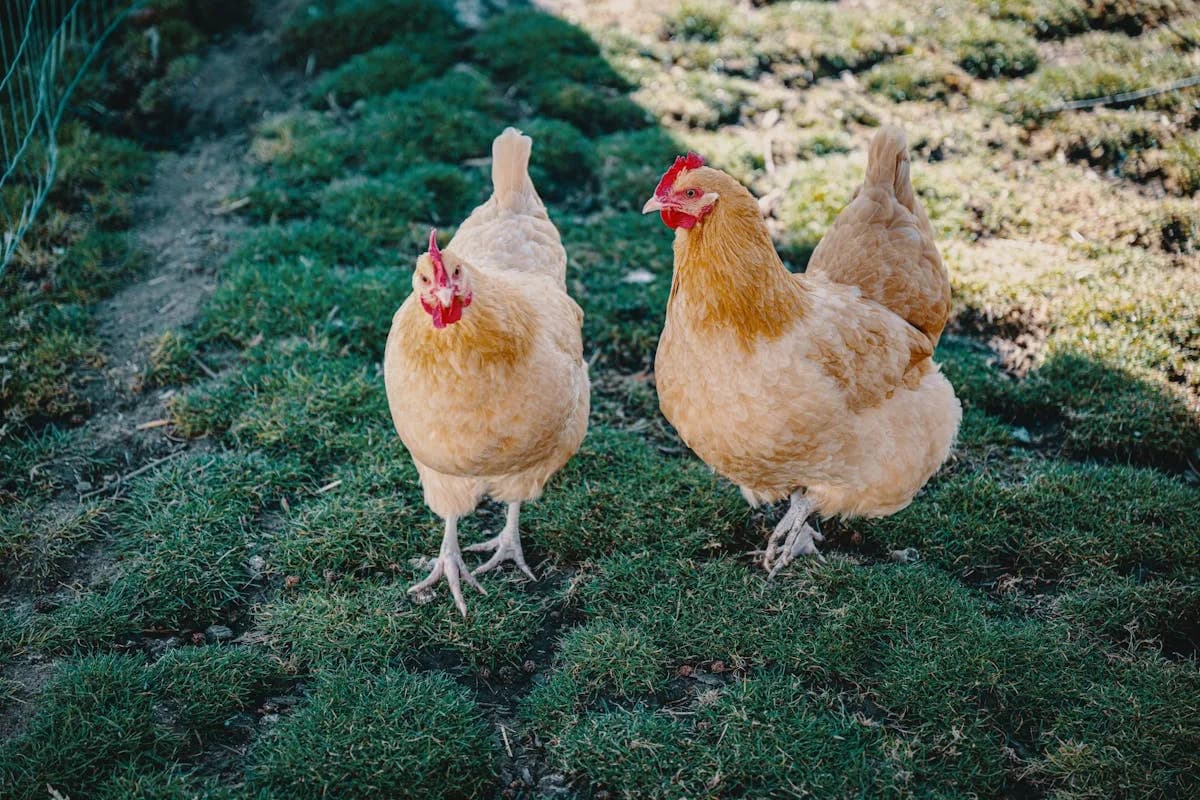
Buff Orpington handles Michigan winters beautifully thanks to dense, fluffy plumage. They're gentle, great layers at 200-280 eggs per year, and their heavy build helps them retain body heat. They do tend to go broody, which is a plus if you want to hatch chicks naturally.
Wyandotte is practically built for Michigan weather. Their rose comb is one of the most frostbite-resistant designs, and their dense feathering provides excellent insulation. Expect 200-240 eggs per year in shades of brown to cream.
Australorp holds the world record for egg production (364 eggs in 365 days) and is surprisingly cold-tolerant. Their black feathers absorb winter sunlight, helping them stay warm on sunny but frigid Michigan days. Plan for 250+ eggs per year from a healthy hen.
Brahma is the gentle giant of the chicken world and one of the best cold-weather breeds available. Their feathered feet, pea comb, and massive body make them well-suited to Michigan winters. They lay around 150-200 eggs per year and are exceptionally docile.
Sussex is another strong choice that handles cold well and keeps laying through winter better than most breeds. These birds are curious, active foragers and produce around 250 eggs per year.
Breeds to Avoid in Michigan
Skip breeds with large single combs and minimal feathering if you're in a cold part of the state. Leghorns are productive layers but their massive combs are frostbite magnets. Mediterranean breeds like Andalusians and Minorcas struggle in extended cold. If you're set on these breeds, you'll need a well-insulated coop and may want to apply petroleum jelly to combs on the coldest nights.
Winter Care Tips for Michigan Chickens
Michigan winters can be brutal, with temperatures well below zero and significant snowfall, especially in the northern parts of the state and the Upper Peninsula. Here's how to keep your flock healthy from November through March.
Insulate the Coop (But Keep Ventilation)
Your coop needs to block wind and retain some heat without trapping moisture. Moisture is actually more dangerous than cold for chickens because it causes frostbite. Keep vents or windows near the roofline open even in winter. Close wall-level openings to block drafts at roost height, but never seal the coop completely.
For detailed guidance, read our winter chicken care guide.
Use the Deep Litter Method
The deep litter method works perfectly for Michigan winters. Start with 4-6 inches of pine shavings in fall and keep adding fresh material on top throughout winter. The decomposing litter generates gentle heat and reduces the need for supplemental heating. By spring, you'll have excellent compost. Check our coop bedding guide for more details.
Prevent Water from Freezing
Frozen waterers are a daily reality in Michigan winters. A heated waterer base or heated poultry waterer is practically essential. Budget around $30-50 for a good heated base. Check water at least twice daily on the coldest days, and consider a backup waterer in case of equipment failure.
Watch for Frostbite
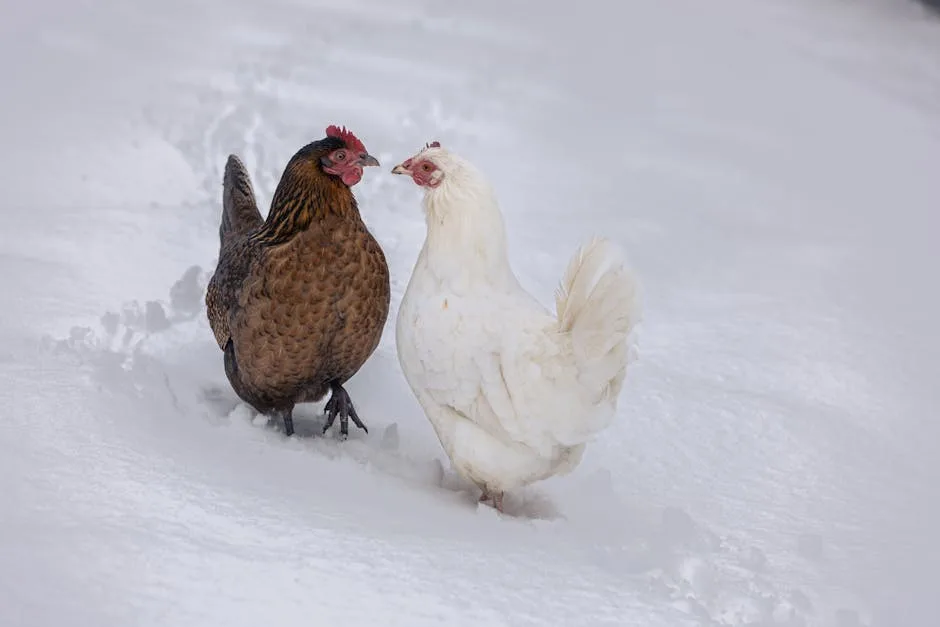
Even cold-hardy breeds can get frostbite on combs, wattles, and toes. Apply a thin layer of petroleum jelly to combs and wattles before extreme cold snaps. Make sure roost bars are wide enough (2-4 inches) so chickens can cover their toes with their bodies while sleeping. Flat roost bars work better than round ones for this purpose.
Lighting for Egg Production
Michigan gets as little as 9 hours of daylight in December. Hens need about 14-16 hours of light to lay consistently. If you want winter eggs, add a light on a timer in the coop that turns on in the early morning hours. A single 40-watt bulb or an LED equivalent is enough for most coops. Some keepers choose to let their hens take a natural winter break, which gives their bodies time to recover.
Summer Care for Michigan Flocks
Michigan summers are generally mild compared to southern states, but heat waves in July and August can push temperatures into the 90s. Chickens handle heat less efficiently than cold, so don't ignore summer care.
Provide plenty of shade, whether from trees, tarps, or the coop itself. Keep waterers full and add ice on the hottest days. Frozen fruit and vegetable treats help cool birds down. Make sure your coop has excellent ventilation, and consider opening extra windows or adding a fan for air circulation during heat waves.
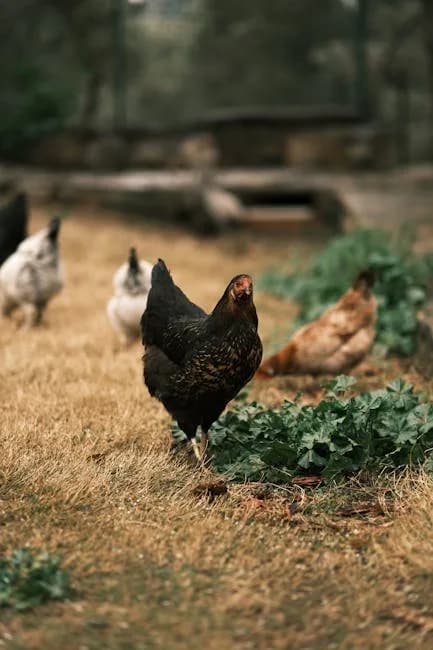
Lighter-colored breeds like Leghorns and Sussex handle heat better than dark-feathered breeds like Australorps and Brahmas. If you live in southern Michigan where summers get genuinely hot, factor this into your breed choices. For most of the state, the breeds listed above handle both seasons well.
For detailed summer tips, check our summer chicken care guide.
Common Predators in Michigan
Michigan has a full lineup of predators that target backyard flocks. Knowing what you're up against helps you build better defenses.
Raccoons are the number one threat across most of Michigan. They're smart, dexterous, and will figure out simple latches. Use raccoon-proof locks (carabiners or two-step latches) on all coop doors.
Hawks are a serious daytime threat, especially red-tailed hawks and Cooper's hawks. Covered runs or overhead netting are the best defense. If your chickens free-range, provide shrubs or structures they can duck under.
Foxes are common in both rural and suburban Michigan. They'll dig under fences, so bury hardware cloth at least 12 inches deep around your run perimeter, or install an apron that extends 18 inches outward.
Coyotes are expanding into suburban areas across the state. A coyote can easily jump a 4-foot fence, so runs should be at least 6 feet tall or fully covered.
Mink and weasels can squeeze through openings as small as one inch. Use 1/2-inch hardware cloth instead of chicken wire, which doesn't stop small predators.
Opossums and skunks will eat eggs and occasionally attack chickens at night. Secure all openings and collect eggs daily.
For a full predator-proofing strategy, read our chicken predator protection guide.
Can You Sell Eggs in Michigan?
Michigan is relatively friendly to small-flock egg sellers. Here's how the rules break down:
Direct-to-consumer sales: If you have fewer than 3,000 hens, you can sell eggs directly to consumers (at your home, at farmers markets, or through a farm stand) without a food processing license from MDARD. Eggs must be clean and sound, but you don't need to grade them for direct sales.
Farmers market sales: You can sell eggs at farmers markets under the same direct-to-consumer rules. Keep eggs clean, refrigerated when possible, and label with your farm name and address for best practices.
Cottage Food Law: Michigan's Cottage Food Law covers processed foods (baked goods, jams, etc.) but eggs are regulated separately under MDARD's food safety rules. Eggs are not a "cottage food" item.
Important: If you sell to stores, restaurants, or other food establishments, the eggs must meet MDARD grading requirements (Grade AA, A, or B) and you may need a food establishment license. For a backyard flock selling eggs to neighbors and at local markets, you're generally in the clear.
Always check with MDARD for the most current regulations, especially if your operation grows beyond a few dozen hens.
FAQ
How many chickens can I keep in Michigan?
There's no statewide limit. Each city and township sets its own rules. Most Michigan cities that allow backyard chickens permit between 3 and 8 hens. Detroit allows 8, Grand Rapids allows 4-6 depending on lot size, and Ann Arbor allows 4. Rural areas typically have no limits.
Do I need a permit to keep chickens in Michigan?
It depends on your city. Detroit, Grand Rapids, Ann Arbor, and Warren all require permits. Lansing and Kalamazoo do not. Check with your local code enforcement office to find out what your municipality requires.
Are roosters allowed in Michigan?
Most Michigan cities that allow backyard chickens specifically ban roosters due to noise concerns. Raleigh is the exception, not the rule. In rural areas, roosters are generally allowed. If you want fertilized eggs or natural flock protection, you'll likely need to live outside city limits.
What temperature is too cold for chickens in Michigan?
Most cold-hardy breeds handle temperatures down to 0°F without supplemental heat, provided their coop is dry, draft-free, and well-ventilated. Below -10°F (common in northern Michigan and the UP), monitor your flock closely for signs of frostbite and stress. Healthy chickens with proper shelter rarely need heat lamps, which are a fire hazard.
When should I start chicks in Michigan?
Order chicks in late March through April for spring delivery. This timing lets them grow strong before their first Michigan winter. Many Michigan feed stores stock chicks starting in late February, and online hatcheries ship to Michigan starting in March. Avoid starting chicks in late summer unless you have a heated brooder setup for fall.
Picking a coop for Michigan? The breed you choose matters, but so does the coop. Our best chicken coops on Amazon roundup covers picks across flock sizes and price ranges, with notes on which models hold up best in different climates.
Raising Chickens in Other States
If you're moving, considering a different state, or just curious how the rules compare, browse our other state guides:
Northeast: Connecticut, Delaware, Maine, Maryland, Massachusetts, New Hampshire, New Jersey, New York, Pennsylvania, Rhode Island, Vermont
Southeast: Alabama, Florida, Georgia, Kentucky, Louisiana, Mississippi, North Carolina, South Carolina, Tennessee, Virginia, West Virginia
Midwest: Illinois, Indiana, Iowa, Kansas, Minnesota, Missouri, Nebraska, North Dakota, Ohio, South Dakota, Wisconsin
South & Southwest: Arizona, Arkansas, New Mexico, Oklahoma, Texas
Mountain & West: Alaska, California, Colorado, Hawaii, Idaho, Montana, Nevada, Oregon, Utah, Washington, Wyoming
Related Guides
Raising Chickens in Alaska: 2026 Laws & Best Breeds
Raising chickens in Alaska: laws for Anchorage, Fairbanks, Juneau, plus extreme cold-hardy breeds and sub-arctic care tips.
State GuidesRaising Chickens in Delaware: 2026 Laws & Best Breeds
Raising chickens in Delaware: laws for Wilmington, Dover, Newark, plus best breeds and tips for the First State's climate.
State GuidesRaising Chickens in Idaho: 2026 Laws & Best Breeds
Raising chickens in Idaho: laws for Boise, Meridian, Nampa, plus cold-hardy breeds and tips for the state's varied climate.
State GuidesRaising Chickens in Kansas: 2026 Laws & Best Breeds
Raising chickens in Kansas: laws for Wichita, Overland Park, Topeka, plus hardy breeds and storm-ready coop tips for the Sunflower State.