Raising Chickens in New York: 2026 Laws & Best Breeds
Your complete guide to raising chickens in New York. Covers NYC and upstate laws, permits, 6 cold-hardy breeds, winter care tips, and egg-selling rules.
Researched from university extension, USDA, and veterinary sources. How we research.
New York's got everything from Manhattan rooftops to sprawling upstate farms, and chickens fit into more of those settings than you'd expect. Hens are legal in all five boroughs of New York City, and most upstate towns allow small backyard flocks with a permit or registration. The real challenge isn't legality; it's keeping your birds healthy through those brutal Northeast winters. Here's everything you need to know about raising chickens in New York.
What You'll Learn
- •Are Backyard Chickens Legal in New York?
- •New York Chicken Laws by Major City
- •Best Chicken Breeds for New York's Climate
- •Winter Care Tips for New York Flocks
- •Common Predators in New York
- •Can You Sell Eggs in New York?
- •Where to Buy Chicks in New York
- •FAQ
Are Backyard Chickens Legal in New York?
Yes, backyard chickens are legal across much of New York State, but the specific rules depend entirely on your municipality. There's no statewide ban or blanket permission. Each city, town, and village sets its own ordinances for keeping poultry in residential areas.
The good news: New York is generally chicken-friendly. The state has a strong agricultural heritage, and even New York City allows hens in all five boroughs under the NYC Health Code (Article 161.19). Roosters, however, are banned in most urban and suburban areas due to noise complaints.
Before you buy chicks, you'll want to check three things: your municipal zoning code, any HOA restrictions on your property, and whether your locality requires a permit or registration. Rural and agricultural-zoned properties typically have the fewest restrictions, while dense suburban areas may limit flock size to just a handful of hens.
New York's Agriculture and Markets Law also provides some protections for farming activities, but these mainly apply to commercial agricultural operations, not small backyard flocks in residential zones.
New York Chicken Laws by Major City
Important: Municipal codes change regularly. The information below was researched in March 2026. Always verify with your local zoning or code enforcement office before starting a flock.
New York City (all five boroughs), NYC Health Code §161.19
- •Hens are legal in all five boroughs with no permit required and no limit on the number of hens
- •Roosters, ducks, geese, and turkeys are prohibited under §161.19(a): "No person shall keep a live rooster, duck, goose or turkey in the City of New York" except in authorized slaughterhouses or educational/research facilities
- •Coops must be kept clean and sanitary; violations can result in fines from the Department of Health
- •No slaughtering is allowed on residential property
- •Landlord or building management approval is needed if you're renting
Buffalo, Property Maintenance Code §341-11.1 (amended 2009)
- •Up to 5 hens allowed per single-family or multifamily dwelling; roosters prohibited
- •License required from the city
- •Coop must be at least 20 feet from any door or window of a neighboring dwelling (not the applicant's)
- •Total coop area shall not exceed 32 square feet for up to 5 hens, with a 7-foot height limit
- •Coop must be in the rear yard with proper fencing
- •No hens in multifamily buildings without written consent of the owner and all other tenants
Rochester, Municipal Code Ch. 30, §19 (Permitted Animals)
- •Chickens allowed with a license from the Chief of Police (Rochester Police Department, 585-428-7033)
- •Each chicken must have at least 4 square feet of space; no more than 30 fowl in an open area of 240 square feet
- •All coops and runways must be at least 25 feet from any dwelling or building used for daily human occupation
- •Roosters are allowed (unlike most NY cities)
- •Coops and premises must be kept clean and sanitary at all times
Albany, Code §115-31 through §115-35 (Keeping of Hens)
- •Maximum of 6 hens allowed per dwelling
- •License required from the City Clerk (application form)
- •Owner or primary occupant of the dwelling must hold the license
- •Roosters are not permitted under the hen-keeping provisions
Syracuse, Code of Ordinances Ch. 16, Article 18, §16-62
- •Hens were legalized in March 2023 after previously being prohibited
- •Only hens (female chickens) are allowed; roosters prohibited under §16-62
- •Hens must be kept in a covered, predator-proof coop in the rear yard
- •Coop must be at least 25 feet from property lines and no larger than 120 square feet
- •Note: We were unable to verify the full ordinance text from primary sources (Municode). The details above are from multiple secondary sources referencing the 2023 amendment. Contact the Syracuse Department of Neighborhood and Business Development at (315) 448-8100 to confirm current requirements before starting a flock.
Other cities and suburbs: Yonkers, Long Island towns, and Westchester County communities all have their own individual ordinances. Some allow chickens freely; others ban them entirely. If you're in a suburban area, don't assume a nearby city's rules apply to you. Search for your municipality on the Municode Library or eCode360 to find your local ordinance, or call your town clerk's office.
Best Chicken Breeds for New York's Climate
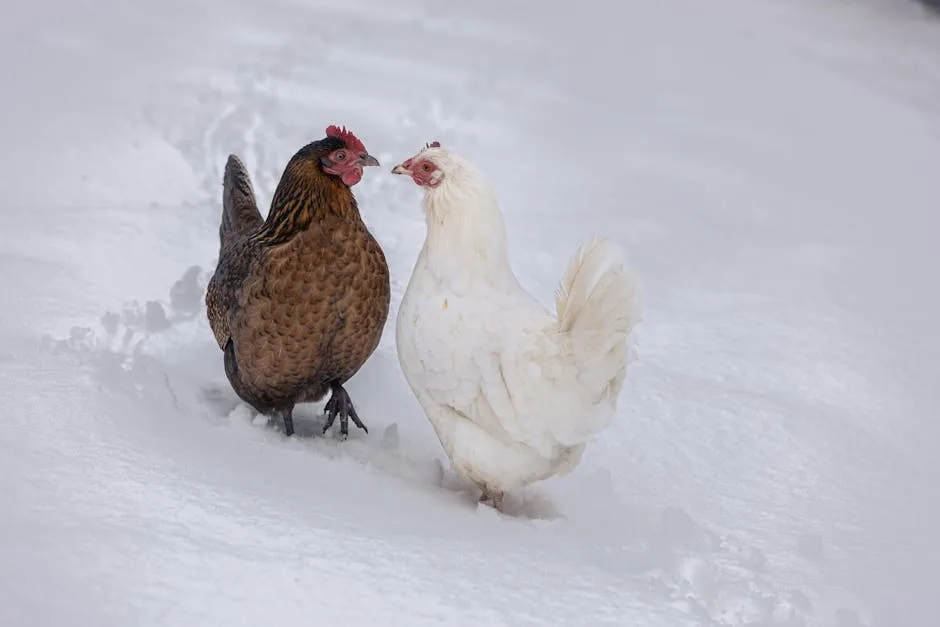
New York's climate is no joke. Upstate winters regularly hit single digits and below zero, and even Long Island and the city get their share of freezing temperatures, ice storms, and nor'easters. You need breeds that can handle the cold without sacrificing egg production.
Here are six breeds that thrive in New York's climate:
Rhode Island Red, The quintessential cold-hardy dual-purpose bird. They'll lay 250 to 300 brown eggs per year and barely slow down in winter. Their tight, dense plumage insulates well, and they've got the toughness to handle whatever a New York winter throws at them.
Wyandotte, Originally developed in New York State, so they're literally built for this climate. Their rose combs are less prone to frostbite than single combs, and they're reliable layers through the cold months. The Silver Laced variety is particularly striking.
Plymouth Rock, Another New England original that handles cold weather beautifully. Friendly, docile, and consistent layers of about 200 large brown eggs per year. They're a top pick for families with kids.
Buff Orpington, Their fluffy, dense feathering makes them walking insulation. They're calm, friendly, and great for beginners. Egg production drops a bit in the coldest months but stays respectable at around 200 to 280 eggs per year.
Brahma, Known as the "King of Chickens" for their massive size, Brahmas are one of the most cold-tolerant breeds you'll find. Their pea combs resist frostbite, and their feathered feet provide extra warmth. They continue laying through winter better than most breeds.
Australorp, World-record egg layers that don't quit when temperatures drop. They'll give you 250+ eggs per year in most climates and adapt well to confinement during harsh weather, which you'll need for those stretches when it's too cold or icy to let them free-range.
Breeds to avoid in New York: Breeds with large single combs (like Leghorns) are more susceptible to frostbite. Mediterranean breeds bred for hot climates may struggle with prolonged cold. If you do keep them, you'll need to apply petroleum jelly to their combs during cold snaps.
Winter Care Tips for New York Flocks
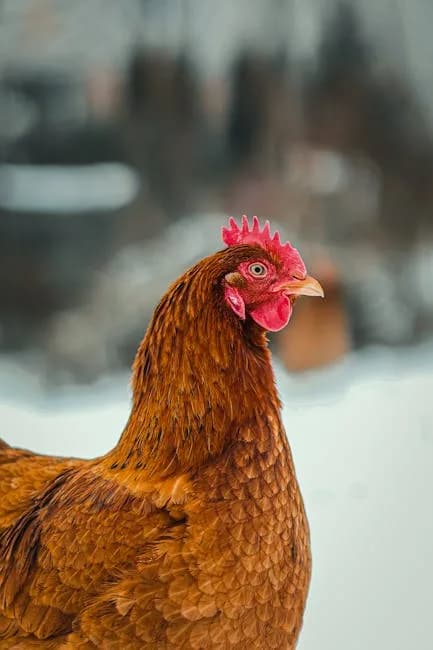
New York winters can last from November through March, and in upstate areas, temperatures regularly stay below freezing for weeks at a time. Here's how to keep your flock healthy through the cold season.
Insulate Without Sealing
Your coop needs to block wind and retain some warmth, but ventilation is critical. Moisture buildup from droppings and breathing causes frostbite faster than cold air alone. Add ventilation openings near the roofline where warm, moist air rises, but keep them above roost level so cold drafts don't hit your birds directly.
The deep litter method works especially well in New York winters. Layer pine shavings or straw 6 to 12 inches deep and let the composting action generate gentle heat from below. Turn it occasionally and add fresh material on top throughout the season.
Prevent Frozen Water
This is the number one daily hassle for New York chicken keepers. Heated waterers or heated bases for standard waterers are worth every penny. You can find solid options in our best chicken feeders and waterers guide. Without a heated waterer, you'll be swapping out frozen water multiple times per day.
Supplemental Lighting
New York gets as little as 9 hours of daylight in December, and chickens need about 14 to 16 hours of light to maintain consistent egg production. A simple timer-controlled LED bulb in the coop, set to turn on before dawn, can keep your hens laying through winter. Add light in the morning rather than the evening so hens can naturally roost at dusk.
Frostbite Prevention
Watch for pale, swollen, or blackened combs and wattles, especially on breeds with large single combs. Apply a thin layer of petroleum jelly to combs and wattles before extreme cold snaps. Wide, flat roosts (2x4 boards with the flat side up) let chickens cover their toes with their body feathers while sleeping, preventing frostbitten feet.
Keep Them Active
Bored, confined chickens peck each other. Hang a cabbage or lettuce head from a string, scatter scratch grains in the bedding, or provide a dust bath area inside the coop. These distractions reduce stress during the months when free-ranging isn't practical.
Common Predators in New York
New York has a full lineup of predators that target backyard chickens, and they don't care whether you're in the Adirondacks or Brooklyn.
Hawks and owls are the biggest aerial threats. Red-tailed hawks are common across the state and will pick off free-ranging chickens in broad daylight. Great horned owls hunt at dusk and dawn. Covered runs or overhead netting are the best protection. Check our chicken run fencing guide for recommendations.
Raccoons are everywhere in New York, including NYC. They're smart enough to open simple latches, so use carabiner clips or two-step latches on coop doors. They'll reach through chicken wire and grab birds, which is why hardware cloth (1/2 inch) is always the better choice.
Foxes are common in suburban and rural areas across the state. They dig under fences, so bury hardware cloth 12 inches deep around your run or lay an apron of wire mesh extending outward from the base.
Coyotes have expanded their range across New York, including Long Island and Westchester County. Secure fencing at least 6 feet tall is your best defense, and locking your birds up at night is non-negotiable.
Weasels and minks can squeeze through tiny gaps. If a space is bigger than 1 inch, a weasel can get through it. They'll kill multiple birds in a single night. Hardware cloth with 1/2-inch openings is essential.
For a deeper look at protection strategies, check out our complete guide to protecting your flock from predators.
Can You Sell Eggs in New York?
Yes, you can sell eggs in New York State, but there are specific regulations to follow.
Under federal law (Egg Products Inspection Act of 1970) and New York State Agriculture and Markets Law, eggs sold to consumers must meet these requirements:
- •Labeling: Eggs must be labeled with the grade (AA, A, or B), size classification (Jumbo, Extra Large, Large, Medium, Small, Peewee), quantity, and the producer's name and address
- •Refrigeration: All eggs must be stored at or below 45°F (7°C)
- •Small producer exemption: If you have fewer than 3,000 hens, you're exempt from federal egg grading requirements, but New York State still requires proper labeling
- •Direct sales: Selling directly to consumers at your farm, farmers' markets, or roadside stands is the simplest route. Selling to retail stores involves additional licensing
The Cornell Cooperative Extension is an excellent free resource for understanding New York's egg-selling regulations. They have offices in nearly every county across the state.
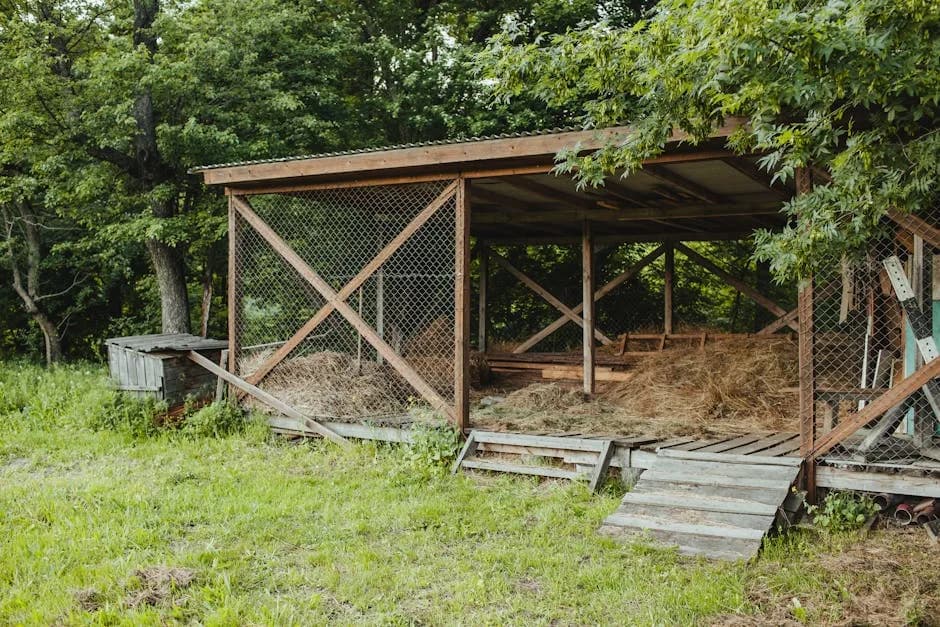
Where to Buy Chicks in New York
New York has plenty of options for sourcing your first flock:
Local feed stores, Tractor Supply, local farm supply stores, and independent feed shops across upstate New York carry chicks every spring, usually starting in March or April. This is the easiest way to buy small numbers of chicks and get advice from experienced staff.
Hatcheries, Meyer Hatchery, Cackle Hatchery, and Murray McMurray all ship day-old chicks to New York addresses. Most have minimum orders (often 3 to 6 chicks for small orders, or 15+ for free shipping). Order in late winter for spring delivery.
Local breeders, Check Craigslist, Facebook Marketplace, and local poultry swap groups. The Northeast Poultry Congress, held annually in New York, is one of the largest poultry shows in the region and a great place to connect with breeders.
Cornell Cooperative Extension, Many county extension offices host poultry workshops in spring, and some coordinate group chick orders at discounted prices.
If you're brand new to chickens, our raising chicks week-by-week guide walks you through everything from brooder setup to their first time outside.
FAQ
Can you have chickens in New York City?
Yes, hens are legal in all five boroughs of New York City with no permit required and no limit on the number of hens. Roosters, ducks, geese, and turkeys are prohibited under NYC Health Code Article 161.19. You'll need to keep the coop clean and sanitary, and landlord approval is required if you're renting.
How many chickens can you have in New York?
It depends on your municipality. New York City has no hen limit. Buffalo allows 5 hens (§341-11.1). Albany allows 6 hens (§115-31). Rochester allows chickens with a 4 square feet per bird space requirement (Ch. 30 §19). Other cities and towns set their own limits based on zoning, lot size, or permit conditions. Always check with your local zoning office for the specific number allowed at your address.
Do you need a permit to keep chickens in New York?
In New York City, no permit is needed for hens. However, Buffalo requires a license (§341-11.1), Rochester requires a license from the Chief of Police (Ch. 30 §19), and Albany requires a license from the City Clerk (§115-31). Requirements and fees vary by location, so contact your local town or city clerk's office.
What's the best breed for New York winters?
Wyandottes are arguably the best all-around choice for New York. They were originally developed in the state, have rose combs that resist frostbite, and lay consistently through cold weather. Rhode Island Reds, Brahmas, and Buff Orpingtons are also excellent cold-hardy options.
Can you sell backyard chicken eggs in New York?
Yes, but you must follow New York State labeling requirements. Eggs need to show the grade, size, quantity, and your name and address. They must be stored at or below 45°F. Small producers (under 3,000 hens) are exempt from federal grading requirements but still need to meet state labeling standards.
Picking a coop for New York? The breed you choose matters, but so does the coop. Our best chicken coops on Amazon roundup covers picks across flock sizes and price ranges, with notes on which models hold up best in different climates.
Raising Chickens in Other States
If you're moving, considering a different state, or just curious how the rules compare, browse our other state guides:
Northeast: Connecticut, Delaware, Maine, Maryland, Massachusetts, New Hampshire, New Jersey, Pennsylvania, Rhode Island, Vermont
Southeast: Alabama, Florida, Georgia, Kentucky, Louisiana, Mississippi, North Carolina, South Carolina, Tennessee, Virginia, West Virginia
Midwest: Illinois, Indiana, Iowa, Kansas, Michigan, Minnesota, Missouri, Nebraska, North Dakota, Ohio, South Dakota, Wisconsin
South & Southwest: Arizona, Arkansas, New Mexico, Oklahoma, Texas
Mountain & West: Alaska, California, Colorado, Hawaii, Idaho, Montana, Nevada, Oregon, Utah, Washington, Wyoming
Related Guides
Raising Chickens in New Hampshire: 2026 Laws & Best Breeds
Raising chickens in New Hampshire: laws for Manchester, Nashua, Concord, plus cold-hardy breeds including the state's namesake NH Red.
State GuidesRaising Chickens in New Jersey: 2026 Laws & Best Breeds
Raising chickens in New Jersey: laws for Newark, Jersey City, Princeton, plus the best breeds and seasonal care tips.
State GuidesRaising Chickens in Alaska: 2026 Laws & Best Breeds
Raising chickens in Alaska: laws for Anchorage, Fairbanks, Juneau, plus extreme cold-hardy breeds and sub-arctic care tips.
State GuidesRaising Chickens in Delaware: 2026 Laws & Best Breeds
Raising chickens in Delaware: laws for Wilmington, Dover, Newark, plus best breeds and tips for the First State's climate.