Raising Chickens in South Carolina: 2026 Laws & Best Breeds
Raising chickens in South Carolina: laws for Charleston, Columbia, Greenville, Spartanburg, plus heat-hardy breeds and care.
Researched from university extension, USDA, and veterinary sources. How we research.
South Carolina has no statewide ban on backyard chickens. The state leaves poultry regulation to cities and counties, and most of the larger municipalities allow hens with some combination of permits, flock limits, and coop requirements. The South Carolina Department of Agriculture handles poultry health, disease reporting, and the National Poultry Improvement Plan (NPIP), but they don't set local flock rules. That's all handled at the municipal level.
The real challenge in South Carolina isn't legality. It's heat. Summers regularly push past 95F with heavy humidity, especially in the Lowcountry and Midlands. You'll need shade, ventilation, and heat-tolerant breeds to keep your flock healthy from June through September. The flip side is that winters are mild. Most of the state rarely drops below 20F, so you won't need insulated coops or heat lamps like northern states do.
What You'll Learn
- •Are Backyard Chickens Legal in South Carolina?
- •South Carolina Chicken Laws by City
- •Can You Sell Eggs in South Carolina?
- •Best Chicken Breeds for South Carolina's Climate
- •Summer Care and Heat Management
- •Winter Care in South Carolina
- •Common Predators in South Carolina
- •FAQ
Are Backyard Chickens Legal in South Carolina?
Yes, in most areas. South Carolina doesn't have a statewide ordinance that bans or permits backyard chickens. Each city and county writes its own rules through zoning codes and animal control ordinances. Most of the state's largest cities, including Charleston, Columbia, Greenville, and Spartanburg, allow hens with permits and flock size caps. Roosters are banned in nearly every urban area.
Before buying chicks, check three things: your city or county's animal ordinance, any HOA covenants on your property, and your specific zoning classification. Even in chicken-friendly cities, an HOA can override municipal rules and prohibit poultry entirely.
Rural and unincorporated areas in South Carolina tend to be much more permissive. Many counties outside city limits have no specific chicken restrictions at all, though general nuisance and animal cruelty laws still apply.
South Carolina Chicken Laws by City
Important: City and county ordinances change frequently. The information below was researched in March 2026 but may not reflect the latest rules. Always verify with your local zoning or code enforcement office before starting a flock. Links to official sources are provided where available.
Charleston
Charleston Code of Ordinances, Chapter 5 - Animals
Charleston allows backyard chickens with restrictions. Multiple sources indicate the city permits up to 4 hens on residential properties. Roosters are not allowed.
- •Hens: Up to 4 hens reported as the standard residential limit.
- •Roosters: Not allowed.
- •Permit: A permit is required. Contact Charleston's Livability Department for current application details.
- •Coop requirements: Chickens must be confined to your property. Coops must comply with accessory structure setback requirements under the city's zoning code.
- •Other rules: The sale or gift of baby chickens, ducklings, or other fowl under 3 weeks of age is prohibited unless in proper facilities by hatcheries or stores.
Columbia
City of Columbia Code of Ordinances, Chapter 4 - Animals | Ordinance 2009-106 (PDF)
Columbia updated its chicken ordinance in 2009 to explicitly allow backyard hens on single-family residential lots.
- •Hens: Up to 4 hens on a single-family residential lot.
- •Roosters: Not allowed.
- •Permit: Required. Contact Columbia's animal control division.
- •Coop requirements: Hens must be confined in a coop. The ordinance specifies a minimum of 18 inches in height with a minimum square footage per bird (check the current code for exact dimensions).
- •Other rules: Chickens must be kept in a clean and sanitary manner. Slaughter of poultry within city limits is addressed separately under health codes.
Greenville
City of Greenville Code of Ordinances, Chapter 4 - Animals, Section 4-7
The City of Greenville takes a nuisance-based approach rather than setting a hard number cap on chickens.
- •Hens: No specific numerical limit in the city code. City officials have stated that chickens are allowed as long as they don't create a nuisance, which typically means fewer than 7 or 8 birds.
- •Roosters: Check the code. The nuisance standard may effectively prohibit roosters due to noise.
- •Coop requirements: Chickens must be confined to your property.
- •Greenville County: If you live in unincorporated Greenville County (outside city limits), the Unified Development Ordinance allows up to 8 female chickens per property. Roosters are prohibited. Chickens must be confined to the backyard in a coop or enclosed fence.
Spartanburg
City of Spartanburg - Keeping Chickens in the City
Spartanburg has allowed backyard hens since 2011. The city's website lays out clear rules.
- •Hens: Up to 6 female chickens per residence.
- •Roosters: Not allowed.
- •Permit: An annual permit is required. Apply online.
- •Neighbor consent: Written permission must be obtained from all abutting property owners before getting a permit.
- •Coop requirements: Chickens must be kept in a fully enclosed coop with a solid floor, made of suitable, washable material, placed in the backyard only.
- •Setbacks: Coops must be at least 50 feet from any neighboring residence.
- •Other rules: Coops must be properly ventilated, kept clean, dry, and odor-free.
Greer
Greer Code of Ordinances, Chapter 10, Article II - Livestock, Section 10-32
Greer allows backyard hens with specific requirements.
- •Hens: Up to 6 female chickens.
- •Roosters: Not allowed.
- •Permit: Required, along with written permission from adjoining neighbors.
- •Coop requirements: Chickens must be in a fully enclosed coop made of suitable, washable material.
- •Setbacks: Coops must be at least 50 feet from the nearest neighboring residence. No coops in front or side yards.
Myrtle Beach
Myrtle Beach Code of Ordinances, Chapter 4 - Animals
Backyard chickens may be allowed in Myrtle Beach with restrictions. Contact the city's code enforcement office for current rules, as the specifics of hen limits and permit requirements should be verified directly with the city.
Rock Hill, Mount Pleasant, and Other Cities
For cities not listed above, contact your local zoning or code enforcement office. Many smaller South Carolina cities and towns follow patterns similar to the larger municipalities: a handful of hens allowed, roosters banned, coop setbacks required. But the specifics vary, and some cities may not have addressed backyard chickens in their ordinances at all.
Can You Sell Eggs in South Carolina?
Yes. South Carolina is one of the more straightforward states for small-scale egg sales. According to the South Carolina Department of Agriculture and SC Code Title 39, Chapter 39, you can sell eggs from the farm or residence where they're gathered without a license or further regulation.
If you sell eggs beyond your own property, such as at a farmers market or to a retail store, additional rules apply. Eggs sold off-site must meet state grading, sizing, and refrigeration standards. Wholesalers, distributors, and dealers must obtain a license from the Commissioner of Agriculture (issued at no cost).
For backyard flock owners selling a few dozen eggs a week from their front porch or driveway, you're in the clear. Just keep eggs clean and cool.
Best Chicken Breeds for South Carolina's Climate
South Carolina's climate ranges from humid subtropical in the Lowcountry to slightly cooler conditions in the Upstate mountains. Summers are the main concern. You want breeds with large combs (for heat dissipation), lighter body weights, and a track record of handling humidity well.
Top Picks for South Carolina
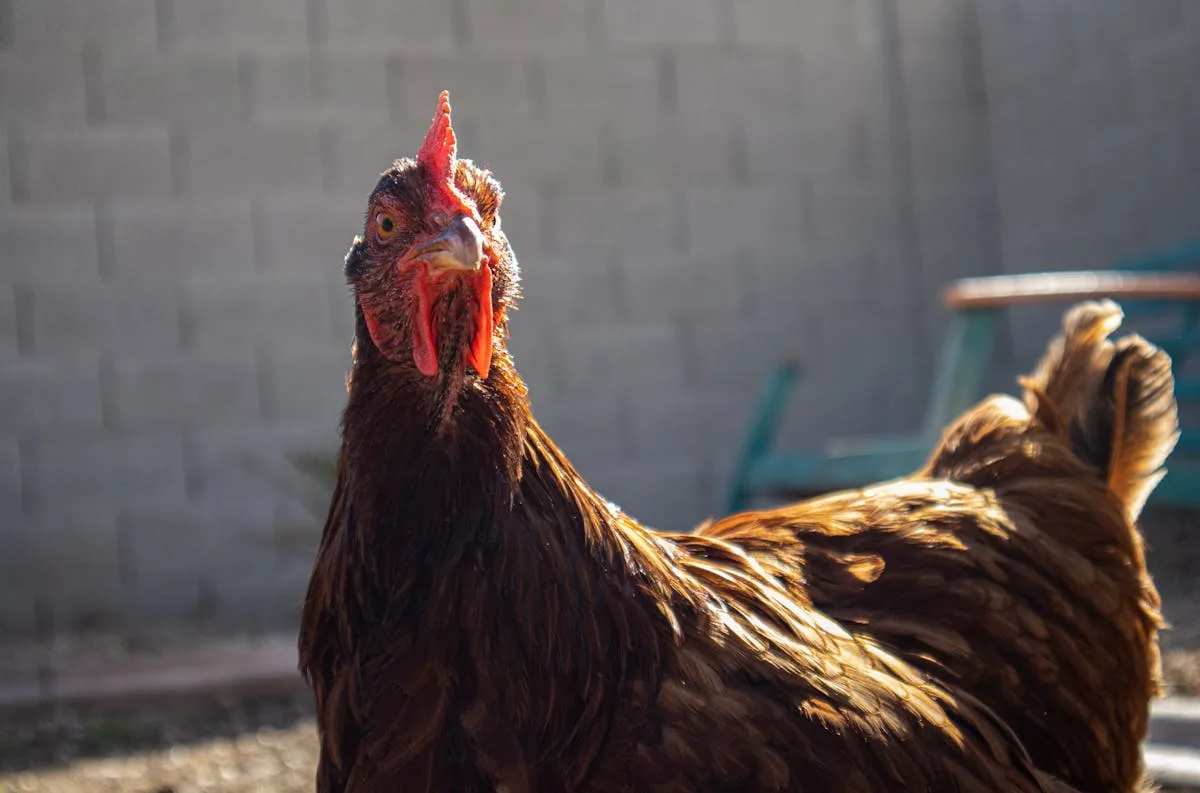
Rhode Island Red, The all-around workhorse. Heat-tolerant, lays 250 to 300 brown eggs per year, and handles South Carolina's humidity without issues. Hardy in winter too.
Leghorn, The top egg producer on this list, averaging 280 to 320 white eggs per year. Leghorns are lean, active birds that handle heat better than most heavy breeds. Their large single combs help them stay cool.
Easter Egger, Friendly, colorful eggs (blue, green, pink), and surprisingly heat-tolerant. They lay around 200 to 280 eggs per year and do well in the Southern climate.
Plymouth Rock, A dual-purpose breed that adapts well to heat and cold. Expect 200 to 280 brown eggs per year. Calm temperament makes them great for families.
Australorp, Originally bred in Australia's heat, Australorps are natural fits for South Carolina summers. They're excellent layers at 250 to 300 eggs per year and have docile personalities.
Sussex, Hardy in a wide range of climates. Sussex hens are good foragers and handle free-range setups well. They lay 200 to 250 light brown eggs per year.
Breeds to Avoid in South Carolina
Heavy, densely feathered breeds like Cochins, Brahmas, and Silkies struggle in South Carolina's summer heat. Their thick plumage traps heat and makes them prone to heat stress. If you love these breeds, you'll need extra shade, misters, and close monitoring during July and August.
Summer Care and Heat Management
Heat is the number one killer of backyard chickens in South Carolina. When temperatures climb above 90F with high humidity, chickens can't cool themselves efficiently. They don't sweat. They pant and hold their wings away from their bodies. If their core temperature rises too high, they can die within hours.
Keep Your Flock Cool
- •Shade is non-negotiable. Natural shade from trees is ideal. If your run is in full sun, add shade cloth or tarps. Every chicken needs access to shade all day.
- •Ventilation matters more than you think. Your coop needs cross-ventilation with open windows or vents on opposite sides. Hot, stagnant air inside a coop is more dangerous than direct sun outside.
- •Fresh, cool water all day. In summer, check waterers twice daily. Add ice blocks to waterers on days above 95F. Chickens will drink 2 to 3 times their normal amount in extreme heat.
- •Frozen treats help. Freeze watermelon, berries, or corn in water to create cooling snacks. Chickens love them and they help lower body temperature.
- •Misters work. A simple mister on a hose timer in the run area can drop ambient temperatures by 10 to 15 degrees.
- •Avoid handling chickens in peak heat. Don't chase or pick up birds between noon and 4 PM on hot days. The stress can push an overheated bird past the tipping point.
Signs of Heat Stress
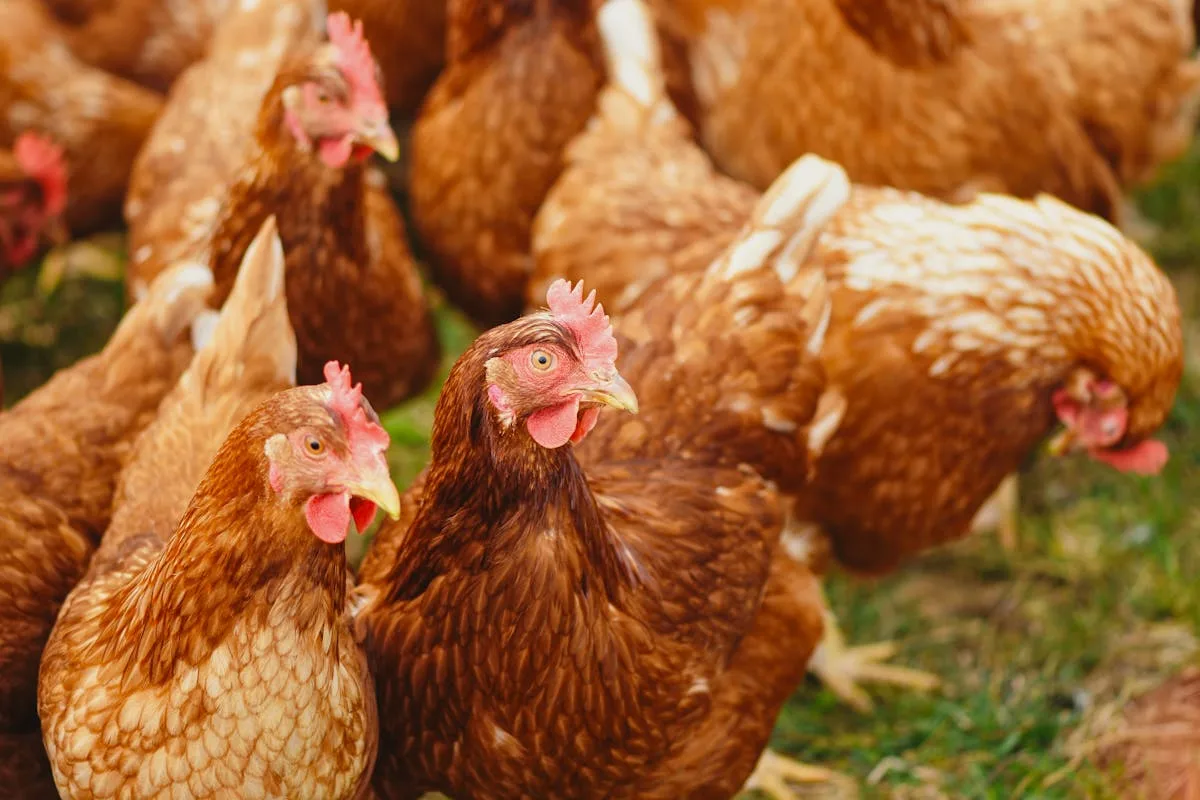
Watch for heavy panting, wings held far from the body, lethargy, pale combs, and decreased egg production. If a chicken is lying on its side and unresponsive, get it into cool (not cold) water immediately and move it to shade. Heat stroke can be fatal within minutes.
Winter Care in South Carolina
Winters in South Carolina are mild by national standards. Most of the state sits in USDA hardiness zones 7b through 9a. The Upstate around Greenville and Spartanburg gets occasional freezes and light snow, while the Lowcountry around Charleston rarely sees temperatures below 30F.
What You'll Need
- •A draft-free coop with good ventilation. Even in mild winters, drafts cause respiratory problems. Keep air moving above the birds, not at roost level.
- •No supplemental heat in most areas. Healthy, fully feathered chickens handle South Carolina winters without heat lamps. Heat lamps are a fire hazard and can make birds dependent on artificial warmth.
- •Check waterers for ice. On the handful of mornings that drop below freezing, break ice or swap in fresh water. A heated waterer base is a worthwhile investment in the Upstate.
- •Deep litter method works well. Layer pine shavings 4 to 6 inches deep and let the composting process generate gentle warmth. Turn the litter weekly and add fresh shavings on top.
Most South Carolina chickens barely notice winter. The bigger seasonal concern is the transition from summer to fall, when shortened daylight triggers molting and egg production drops. This is normal and temporary.
Common Predators in South Carolina
South Carolina's mild climate and diverse habitats support a wide range of chicken predators. You'll deal with more year-round predator pressure here than in northern states where deep snow limits some predators' activity.
Top Threats
- •Hawks and owls. Red-tailed hawks and great horned owls are the biggest aerial threats. Cover your run with hardware cloth or netting. Free-ranging flocks are most vulnerable.
- •Raccoons. Smart, strong, and persistent. They can open simple latches and reach through chicken wire. Use hardware cloth (not chicken wire) and secure latches with carabiners or padlocks.
- •Foxes. Common throughout South Carolina. They hunt at dawn and dusk. A secure coop that's locked at night handles most fox issues.
- •Snakes. Rat snakes and black snakes will eat eggs and small chicks. They can squeeze through surprisingly small gaps. Hardware cloth with 1/2-inch openings keeps them out.
- •Opossums. They'll eat eggs and occasionally kill smaller birds. Secure coops at night and collect eggs daily.
- •Dogs. Loose neighborhood dogs are one of the most common predators of backyard flocks. A solid fence around your property or run is essential.
- •Coyotes. Increasingly common even in suburban areas of South Carolina. They're bold enough to hunt during daylight. A 6-foot fence with an apron helps, though coyotes can climb.
Predator-Proofing Basics
Use 1/2-inch hardware cloth on all coop openings, not chicken wire. Bury the hardware cloth or create an L-shaped apron extending 12 inches outward around the coop and run perimeter. Lock your coop every night with a two-step latch that raccoons can't manipulate. Collect eggs daily to avoid attracting snakes and opossums.
FAQ
Do I need a permit to keep chickens in South Carolina?
It depends on where you live. Most cities, including Charleston, Columbia, and Spartanburg, require permits. Rural and unincorporated areas typically don't. Check with your city or county zoning office before getting chickens.
How many chickens can I have in South Carolina?
There's no statewide limit. Cities set their own caps. Charleston and Columbia allow up to 4 hens. Spartanburg and Greer allow 6. Greenville County allows up to 8. Rural areas often have no limit.
Are roosters allowed in South Carolina cities?
Almost never. Charleston, Columbia, Spartanburg, Greer, and Greenville County all ban roosters. Some rural areas allow them. If you want a rooster, check your specific local ordinance.
Can I sell eggs from my backyard in South Carolina?
Yes. You can sell eggs from the farm or residence where they're gathered without a license. If you sell off-site (farmers markets, stores), state grading and refrigeration rules apply.
What's the best chicken breed for South Carolina?
Rhode Island Reds, Leghorns, and Australorps top the list. They handle the heat and humidity well while maintaining strong egg production. Avoid heavily feathered breeds like Cochins and Brahmas unless you can provide extensive cooling.
South Carolina is one of the easier states for backyard chicken keeping. Mild winters, a straightforward egg sales policy, and chicken-friendly ordinances in most major cities make it a solid choice. Focus your energy on summer heat management and predator-proofing, and your flock will thrive year-round. For more on getting started, check out our complete beginner's guide to raising backyard chickens.
Picking a coop for South Carolina? The breed you choose matters, but so does the coop. Our best chicken coops on Amazon roundup covers picks across flock sizes and price ranges, with notes on which models hold up best in different climates.
Raising Chickens in Other States
If you're moving, considering a different state, or just curious how the rules compare, browse our other state guides:
Northeast: Connecticut, Delaware, Maine, Maryland, Massachusetts, New Hampshire, New Jersey, New York, Pennsylvania, Rhode Island, Vermont
Southeast: Alabama, Florida, Georgia, Kentucky, Louisiana, Mississippi, North Carolina, Tennessee, Virginia, West Virginia
Midwest: Illinois, Indiana, Iowa, Kansas, Michigan, Minnesota, Missouri, Nebraska, North Dakota, Ohio, South Dakota, Wisconsin
South & Southwest: Arizona, Arkansas, New Mexico, Oklahoma, Texas
Mountain & West: Alaska, California, Colorado, Hawaii, Idaho, Montana, Nevada, Oregon, Utah, Washington, Wyoming
Related Guides
Raising Chickens in South Dakota: 2026 Laws & Best Breeds
Raising chickens in South Dakota: laws for Sioux Falls, Rapid City, Aberdeen, plus cold-hardy breeds for the Great Plains.
State GuidesRaising Chickens in North Carolina: 2026 Laws & Best Breeds
Raising chickens in North Carolina: laws for Charlotte, Raleigh, Durham, plus heat-tolerant breeds and seasonal care.
State GuidesRaising Chickens in Alaska: 2026 Laws & Best Breeds
Raising chickens in Alaska: laws for Anchorage, Fairbanks, Juneau, plus extreme cold-hardy breeds and sub-arctic care tips.
State GuidesRaising Chickens in Delaware: 2026 Laws & Best Breeds
Raising chickens in Delaware: laws for Wilmington, Dover, Newark, plus best breeds and tips for the First State's climate.