Raising Chickens in Indiana: 2026 Laws & Best Breeds
Indiana backyard chicken laws for Indianapolis, Fort Wayne, Bloomington, and more. Plus cold-hardy breeds, winter coop tips, and local feed sources.
Researched from university extension, USDA, and veterinary sources. How we research.
Indiana is a solid state for backyard chicken keeping. There's no statewide ban on residential poultry, and several of Indiana's largest cities have adopted ordinances that welcome small hen flocks on residential lots. The Hoosier State's mix of urban centers and rural farmland means regulations vary widely from one municipality to the next. Whether you're in a suburban neighborhood in Bloomington or a city lot in South Bend, you'll want to check your local rules before bringing home your first chicks.
What You'll Learn
- •Are Backyard Chickens Legal in Indiana?
- •Indiana Chicken Laws by Major City
- •Best Chicken Breeds for Indiana Climate
- •Winter Care for Indiana Flocks
- •Summer Heat Management
- •Common Predators in Indiana
- •Can You Sell Eggs in Indiana?
- •FAQ
Are Backyard Chickens Legal in Indiana?
Yes, in many places. Indiana has no single statewide law that bans or permits backyard chickens. Instead, each city, town, and county controls poultry through its own zoning ordinances, health regulations, and animal control codes. Most of Indiana's larger cities allow small hen flocks with permits, though flock sizes, setback distances, and rooster policies vary significantly.
The Indiana State Board of Animal Health oversees general livestock health regulations statewide, but day-to-day chicken keeping rules are set at the local level. Before getting chickens, check three things: your city or town's zoning and animal control ordinances, any HOA or deed restrictions on your property, and whether your municipality requires a permit.
Indiana Chicken Laws by Major City
Important: City and county ordinances change frequently. The information below was researched in March 2026 but may not reflect the latest rules. Always verify with your local zoning or code enforcement office before starting a flock. Links to official sources are provided where available.
Indianapolis (Marion County)
Indianapolis Code of Ordinances, Chapter 531 - Animals
Indianapolis allows backyard poultry in residential areas under the consolidated city-county code.
- •Fowl: Up to 12 adult fowl (chickens, ducks, quail, and pigeons combined) are allowed per property, according to multiple sources citing the city's zoning and animal ordinances.
- •Roosters: Allowed, but limited to 1 rooster, which must be kept inside a coop from dusk to dawn to control noise.
- •Permit: No permit is specifically required for keeping chickens, though general building codes apply to coop construction.
- •Other rules: Coops must comply with standard building and zoning setback requirements. All poultry must be kept in sanitary conditions.
- •Note: Verify current limits directly with the Indianapolis Department of Metropolitan Development, as the code has been updated over time.
South Bend
South Bend Chicken Permit Information | Municipal Code Sec. 5-20
South Bend allows backyard chickens with a permit through its Animal Resource Center.
- •Hens: Up to 6 chickens per single-family dwelling.
- •Roosters: Not allowed within city limits.
- •Permit: Required. Apply through the South Bend Animal Resource Center. The city's municipal code sections 5-20 (Urban Chicken Regulations) and 21-02.11(a) (Additional Standards for Chicken Coops and Pens) govern the program.
- •Coop requirements: Chicken coops and pens must meet standards outlined in the municipal code, including setback requirements, sanitation, and predator protection.
Bloomington
City of Bloomington Chicken Flock Permits
Bloomington has a well-documented chicken flock program managed by Animal Care and Control.
- •Hens: Up to 5 hens. No roosters.
- •Roosters: Not allowed.
- •Permit: Required, issued by Bloomington Animal Care and Control (3410 S Walnut St). The permit is free and must be renewed annually.
- •Setbacks: Coops and runs must be at least 20 feet from any neighboring home not owned by the chicken keeper, and at least 12 feet from any neighboring property line.
- •Space requirements: At least 12 square feet per bird in the run.
- •Other rules: A visual barrier at least 4 feet tall is required if the coop and run are visible to neighboring lots. Coops must be kept clean, dry, and odor-free. All feed and water must be provided at all times. Chickens must be kept enclosed on the permit holder's property.
- •Zones: Chicken flocks are allowed as an accessory use in all Residential and Mixed-Use zoning districts per Title 20 of the Bloomington Municipal Code.
Evansville
Evansville Animal Control Ordinances
Evansville allows backyard chickens with a permit under the Vanderburgh County animal control code.
- •Hens: Up to 6 chickens allowed.
- •Roosters: Not allowed in residential areas.
- •Permit: Required. Contact Evansville Animal Control for current application details.
- •Coop requirements: Coops must be maintained in sanitary condition. Standard setback and nuisance requirements apply.
Fort Wayne
Fort Wayne currently does not allow backyard chickens in most residential areas within city limits. The city code prohibits ownership of "domestic farm animals" in residential zones unless approved by the Department of Planning Services. Rural areas of Allen County under agricultural zoning may allow poultry.
An urban chicken ordinance was introduced to the Fort Wayne City Council in November 2023 but was voted down 7-2 in December 2023. As of March 2026, chickens remain prohibited in most city residential zones. Contact the Fort Wayne Planning Department if you want to check the latest status.
Carmel
Carmel's regulations on chickens have evolved over time. The city's municipal code § 6-93 historically required a minimum of 3 acres for farm animals including chickens, except in Agricultural Districts. However, the Carmel City Council voted in 2014 to allow up to 6 hens per home in residential areas.
- •Hens: Up to 6 hens in residential areas.
- •Roosters: Not allowed.
- •Notes: Contact Carmel Code Enforcement to confirm current rules for your specific property and zoning district, as the code has been amended multiple times.
Lafayette
Lafayette has historically not allowed backyard chickens within city limits. An ordinance allowing chickens was under consideration by the city council as recently as 2025, proposing a one-year trial with limits on flock size, setbacks of 20 feet from neighboring homes, and 10 feet from property lines. Contact the City of Lafayette to check whether this ordinance has been adopted.
Best Chicken Breeds for Indiana Climate
Indiana's climate is firmly in the Midwest: cold winters with temperatures regularly dropping below 20°F, hot and humid summers that can push past 90°F, and plenty of weather swings in between. USDA hardiness zones 5b through 6b cover most of the state. You need breeds that handle both extremes.
Cold-Hardy Breeds (Top Priority for Indiana)
Buff Orpington is one of the best picks for Indiana. Their thick, fluffy plumage insulates them well through harsh winters, and they're calm enough to handle confinement during ice storms and polar vortex events. They lay around 200 to 280 brown eggs per year and are famously friendly.
Plymouth Rock handles Indiana's temperature swings like a champ. Barred Rocks are sturdy, lay consistently through winter (around 200 to 250 eggs per year), and tolerate both cold snaps and summer heat better than most breeds. They're a classic Midwest homestead bird for good reason.
Wyandotte was originally developed in the northern United States and thrives in Indiana's climate. Their rose comb is less prone to frostbite than single combs, which is a real advantage when January temperatures drop into single digits. Expect 200 to 240 brown eggs per year.
Australorp holds the world record for egg production and does well in cold climates thanks to dense, close-fitting feathers. They're docile, reliable layers (250+ eggs per year), and adapt to Indiana's variable weather with minimal fuss.
Heat-Tolerant Breeds for Indiana Summers
Indiana summers can be surprisingly brutal with high humidity and temperatures in the 90s. Breeds with lighter builds and larger combs handle heat better:
- •Leghorn: Excellent heat tolerance, prolific white egg layers (280 to 320 per year)
- •Easter Egger: Good heat and cold tolerance, colorful eggs, friendly temperament
- •Rhode Island Red: Tough, adaptable, handles both extremes well (250 to 300 brown eggs per year)
Best All-Around Pick for Indiana
For most Indiana chicken keepers, a mixed flock of Buff Orpingtons, Plymouth Rocks, and Rhode Island Reds covers all the bases. You get cold hardiness, heat tolerance, strong egg production, and friendly personalities that work well in suburban backyard settings.
Winter Care for Indiana Flocks
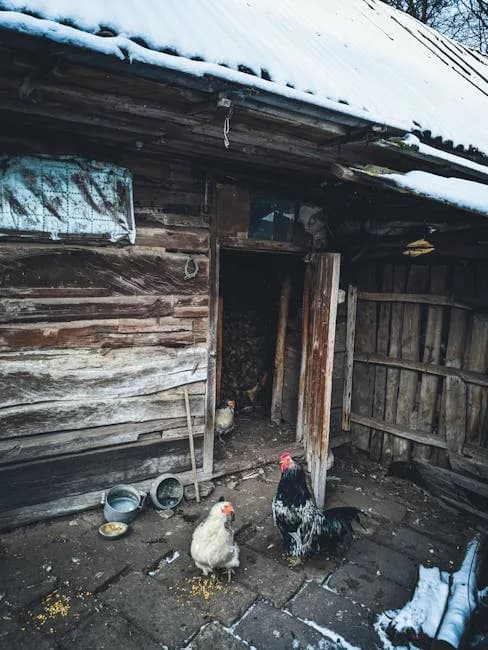
Indiana winters are the biggest challenge for backyard chicken keepers. Temperatures regularly dip into the teens and single digits, with occasional below-zero stretches. Here's how to keep your flock healthy from November through March.
Insulate the Coop, Not the Chickens
A well-built coop with solid walls, a tight roof, and proper ventilation is more important than any heat source. Chickens generate their own body heat, and a dry, draft-free coop with good litter will keep them comfortable down to well below freezing.
Ventilation matters more than insulation. Moisture from droppings and breathing causes frostbite faster than cold air alone. Make sure your coop has vents or windows near the roofline that stay open year-round. You want airflow above the birds while blocking drafts at roost level.
Use the deep litter method: layer 6 to 12 inches of pine shavings or straw on the coop floor and add fresh material on top throughout winter. The decomposing litter generates mild heat and reduces the need for frequent cleanouts. Read more in our chicken coop bedding guide.
Prevent Frostbite
Frostbite on combs and wattles is a real concern during Indiana's coldest stretches. Breeds with rose combs (like Wyandottes) are naturally resistant. For birds with large single combs, apply a thin layer of petroleum jelly on combs and wattles before extreme cold nights.
Wide, flat roosts (2x4 lumber with the wide side up) let chickens cover their feet with their body feathers while sleeping, preventing frostbitten toes.
Keep Water From Freezing
Frozen waterers are a daily battle in Indiana winters. A heated waterer base is worth every penny. Alternatively, swap out waterers with fresh warm water two to three times daily. Dehydration in winter is a bigger risk than most people realize.
Summer Heat Management
Indiana's summers bring heat indexes above 100°F with high humidity, especially in southern Indiana near Evansville. Chickens can't sweat and are more vulnerable to heat stress than cold.
Signs of Heat Stress
Watch for panting, wings held away from the body, lethargy, reduced egg production, and pale combs. If a hen is lying on her side and unresponsive, she needs immediate cooling.
Cooling Strategies
- •Shade is essential. If your run doesn't have natural shade, add tarps, shade cloth, or plant tall annuals nearby.
- •Fresh, cool water available at all times. Add ice to waterers during heat waves. Place multiple water stations so no bird has to compete.
- •Frozen treats: watermelon, frozen berries, and ice blocks with vegetables frozen inside give chickens something cool to peck at.
- •Ventilation: Open coop windows and doors during summer. Consider a small fan for air circulation.
- •Avoid handling chickens during the hottest part of the day.
- •Electrolytes: Add poultry electrolytes to water during heat waves to help birds recover from stress.
For a deeper look, check our summer chicken care guide.
Common Predators in Indiana
Indiana's mix of farmland, forests, and suburban development means your flock will face a variety of predators. Knowing what's out there helps you build the right defenses.
Most Common Threats
- •Raccoons: Found statewide and persistent. They can open simple latches, reach through chicken wire, and pull birds through gaps. Use hardware cloth (1/2-inch) instead of chicken wire, and secure all coop doors with raccoon-proof latches.
- •Hawks and owls: Red-tailed hawks, Cooper's hawks, and great horned owls are common throughout Indiana. Covered runs or overhead netting are your best defense. Free-ranging flocks are most vulnerable.
- •Coyotes: Increasingly common in suburban and urban areas across Indiana. They hunt at dawn and dusk. A sturdy, enclosed run and locking chickens in the coop at night are essential.
- •Foxes: Present in both rural and suburban Indiana. They dig under fences, so bury hardware cloth 12 inches deep around your run or add an apron of wire mesh extending outward from the base.
- •Opossums: Common across Indiana. They typically go after eggs and young chicks rather than adult birds but can injure hens. Secure coop openings and collect eggs regularly.
- •Domestic dogs: One of the most common causes of backyard chicken losses. A solid fence around your property and a secure run are the best prevention.
For a full rundown of predator-proofing strategies, read our chicken predator protection guide.
Can You Sell Eggs in Indiana?
Yes, with some rules. Indiana law allows small-scale egg sales with relatively few restrictions if you sell directly from your property.
According to Purdue University's Indiana State Egg Board resources, no license is required if you sell eggs only from the location where they are produced. Customers must pick up the eggs from the same property where the chickens are kept.
If you want to sell at farmers' markets or other locations off your property, you'll need to follow Indiana's egg labeling requirements under IC 16-42-11. This includes proper labeling with your name, address, and egg grade. Check with the Indiana State Egg Board (administered through Purdue University's Department of Animal Sciences) for current requirements.
Your city's chicken-keeping ordinance may also have its own rules about commercial egg sales. Several Indiana cities explicitly limit chicken keeping to personal use only. Always check both state and local rules before selling.
FAQ
How many chickens can I have in Indiana?
It depends entirely on your city or county. Indianapolis allows up to 12 adult fowl, South Bend and Evansville allow 6 hens, Bloomington allows 5 hens, and some cities like Fort Wayne don't currently allow backyard chickens at all. Check your local municipal code or zoning office for your specific location.
Do I need a permit to keep chickens in Indiana?
Most Indiana cities that allow backyard chickens require a permit. Bloomington, South Bend, and Evansville all require permits. Indianapolis does not require a specific chicken permit. Requirements vary by city, so check with your local animal control or code enforcement office.
Are roosters allowed in Indiana?
Most Indiana cities that permit backyard chickens ban roosters. Indianapolis is an exception, allowing one rooster that must be kept in a coop from dusk to dawn. Bloomington, South Bend, and Evansville all prohibit roosters. Rural areas with agricultural zoning typically have fewer restrictions.
What's the best time of year to start a flock in Indiana?
Late spring (April through May) is ideal. Temperatures are mild enough for young chicks to transition outdoors after their brooding period, and you'll have the entire summer for them to grow before their first Indiana winter. Chicks started in April will typically begin laying by September or October.
How cold is too cold for chickens in Indiana?
Most cold-hardy breeds handle Indiana's winters fine, even in single-digit temperatures, as long as their coop is dry, draft-free, and well-ventilated. The bigger danger is moisture and frostbite, not temperature alone. A properly managed coop with the deep litter method and good ventilation will keep standard breeds comfortable through Indiana's worst cold spells.
Ready to start your Indiana flock? Check out our beginner's guide to raising backyard chickens for a step-by-step walkthrough of everything you need to get started.
Picking a coop for Indiana? The breed you choose matters, but so does the coop. Our best chicken coops on Amazon roundup covers picks across flock sizes and price ranges, with notes on which models hold up best in different climates.
Raising Chickens in Other States
If you're moving, considering a different state, or just curious how the rules compare, browse our other state guides:
Northeast: Connecticut, Delaware, Maine, Maryland, Massachusetts, New Hampshire, New Jersey, New York, Pennsylvania, Rhode Island, Vermont
Southeast: Alabama, Florida, Georgia, Kentucky, Louisiana, Mississippi, North Carolina, South Carolina, Tennessee, Virginia, West Virginia
Midwest: Illinois, Iowa, Kansas, Michigan, Minnesota, Missouri, Nebraska, North Dakota, Ohio, South Dakota, Wisconsin
South & Southwest: Arizona, Arkansas, New Mexico, Oklahoma, Texas
Mountain & West: Alaska, California, Colorado, Hawaii, Idaho, Montana, Nevada, Oregon, Utah, Washington, Wyoming
Related Guides
Raising Chickens in Alaska: 2026 Laws & Best Breeds
Raising chickens in Alaska: laws for Anchorage, Fairbanks, Juneau, plus extreme cold-hardy breeds and sub-arctic care tips.
State GuidesRaising Chickens in Delaware: 2026 Laws & Best Breeds
Raising chickens in Delaware: laws for Wilmington, Dover, Newark, plus best breeds and tips for the First State's climate.
State GuidesRaising Chickens in Idaho: 2026 Laws & Best Breeds
Raising chickens in Idaho: laws for Boise, Meridian, Nampa, plus cold-hardy breeds and tips for the state's varied climate.
State GuidesRaising Chickens in Kansas: 2026 Laws & Best Breeds
Raising chickens in Kansas: laws for Wichita, Overland Park, Topeka, plus hardy breeds and storm-ready coop tips for the Sunflower State.