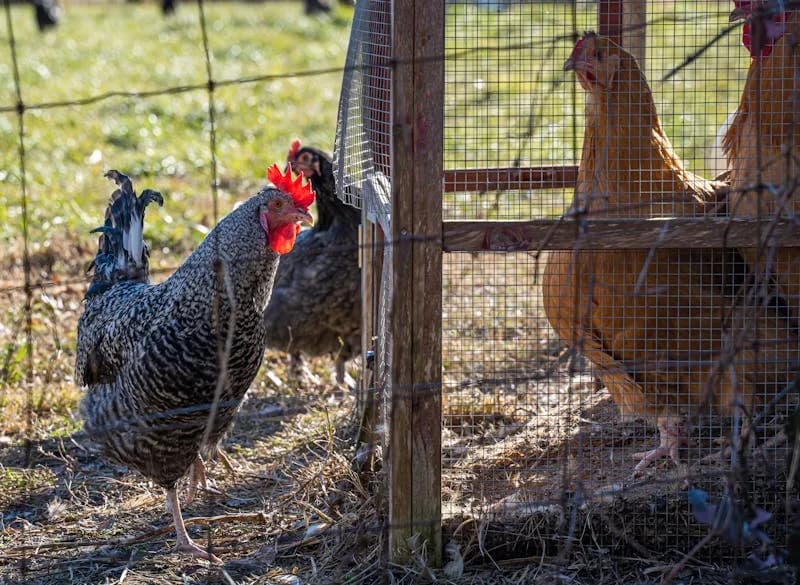
How Long Do Chickens Live? Lifespan by Breed
Most backyard chickens live 5 to 10 years, but it depends on the breed. See average chicken lifespan by breed and how to help your hens live longer.
Researched from university extension, USDA, and veterinary sources. How we research.
Most backyard chickens live 5 to 10 years, and a well cared for hen from a hardy breed can reach 8 to 12. That surprises a lot of new keepers, who assume a chicken is a short-lived animal like a mouse or a hamster. It isn't. A hen you buy as a chick this spring may still be scratching around your yard when your kids are in high school.
The catch is that lifespan varies a lot by breed and by how the bird is kept. A production hybrid bred to lay 300 eggs a year often burns out and dies by age 3 or 4. A heritage dual-purpose hen from the same coop can live twice as long. And a meat bird like the Cornish Cross rarely sees its first birthday, because its body is built to grow fast, not to grow old.
Here is what a realistic lifespan looks like by breed, what chickens usually die from, and the specific things you can do to help your flock live longer.
Quick Answer: Average Chicken Lifespan
| Type of chicken | Typical lifespan | Notes |
|---|---|---|
| Backyard flock (average) | 5 to 10 years | Predation and disease pull the average down |
| Heritage dual-purpose breeds | 8 to 12 years | Best odds of a long life |
| Production hybrid layers | 3 to 5 years | Reproductive problems are common by year 2 or 3 |
| Ornamental and bantam breeds | 5 to 9 years | Silkies and Polish sit in this range |
| Meat birds (Cornish Cross) | Under 1 year | Heart and leg problems if kept past processing age |
| Oldest on record | 16-plus years | A hen named Matilda held a Guinness World Record at 16 |
What You'll Learn
- •How Long Do Chickens Live on Average?
- •Chicken Lifespan by Breed
- •Why Production Hybrids Die Younger
- •Laying Years vs Living Years
- •What Chickens Usually Die From
- •How to Help Your Chickens Live Longer
- •Signs Your Hen Is Getting Old
- •Caring for a Senior Hen
- •Do Roosters Live as Long as Hens?
- •Common Mistakes That Shorten Lifespan
- •Frequently Asked Questions
How Long Do Chickens Live on Average?
If you take a broad backyard flock and average everything together, you land somewhere around 5 to 8 years. But that number is dragged down by two things that have nothing to do with how long a chicken is capable of living: predators and preventable disease. A hen that stays healthy and safe in a good coop often lives well past that average.
The genetic ceiling for a chicken is higher than most people think. Under ideal conditions, with no predators, good food, and no serious illness, a hen from a sturdy breed can reach 10 to 12 years, and a rare individual pushes toward 15 or beyond. A hen named Matilda held a Guinness World Record after reaching 16 years old. Cases near 20 exist but are unusual.
So when someone asks how long chickens live, the honest answer has two parts. The biological potential is 8 to 12 years for most standard breeds. The real-world average is lower, mostly because of things you can control.
Chicken Lifespan by Breed
Breed is the single biggest predictor of how long a chicken will live, because it determines how hard the bird's body works. The rule of thumb: the harder a breed is pushed to lay eggs, the shorter it tends to live. Slow-and-steady heritage breeds win the longevity race.
| Breed | Type | Typical lifespan |
|---|---|---|
| Plymouth Rock | Dual-purpose heritage | 8 to 12 years |
| Buff Orpington | Dual-purpose heritage | 8 to 10 years |
| Sussex | Dual-purpose heritage | 8 to 10 years |
| Wyandotte | Dual-purpose heritage | 6 to 12 years |
| Australorp | Dual-purpose heritage | 6 to 10 years |
| Rhode Island Red | Dual-purpose heritage | 6 to 8 years |
| Brahma | Large dual-purpose | 8 to 10 years |
| Jersey Giant | Large dual-purpose | 6 to 10 years |
| Silkie | Ornamental bantam | 7 to 9 years |
| Polish | Ornamental | 7 to 8 years |
| Easter Egger | Hardy mixed | 8 to 10 years |
| Leghorn | Production layer | 4 to 6 years |
| ISA Brown | Hybrid layer | 3 to 5 years |
| Cinnamon Queen | Hybrid layer | 3 to 5 years |
| Cornish Cross | Meat bird | Under 1 year |
A few patterns are worth pointing out. Heritage dual-purpose breeds, the classic backyard chickens, cluster at the top. They were developed over generations for balance, not for record egg counts, so their bodies hold up. Ornamental breeds like the Silkie live a solid middle-of-the-pack life. Production hybrids and meat birds sit at the bottom, and for very different reasons that are worth understanding before you buy.
If a long-lived flock matters to you, start your breed research with our roundup of the best chicken breeds for beginners, which leans heavily toward hardy, forgiving birds.
Why Production Hybrids Die Younger
Hybrid layers like the ISA Brown, Golden Comet, and Cinnamon Queen are engineered to lay an egg almost every single day in their first year. That is a remarkable feat of breeding, and it is also why they tend to have short lives.
Laying an egg is expensive for a hen's body. Producing a shell alone pulls a large amount of calcium from her system, and forming the yolk and white draws on protein and fat reserves. A hen built to lay 300-plus eggs a year is running her reproductive system flat out with almost no rest. Over time that catches up with her.
The most common results are reproductive disorders: internal laying, egg yolk peritonitis (where yolk material ends up in the abdomen and causes infection), and tumors of the oviduct or ovary. According to the Merck Veterinary Manual, these reproductive-tract problems are a leading cause of death in high-production laying hens, and they often show up around age 2 to 3. That is right when a hybrid's heavy laying starts to slow.
None of this means you should avoid hybrids. They are friendly, affordable, and give you more eggs per bird than anything else, which is exactly why they show up in our list of the best egg-laying breeds. Just go in with clear eyes: you are trading longevity for eggs. If you want a hen who is still part of the family in a decade, choose a heritage breed instead.
Meat birds are the extreme version of the same trade-off. A Cornish Cross is bred to reach butcher weight in six to nine weeks. Kept past that, its heart and legs cannot keep up with its body mass, and most die of heart failure or leg collapse before their first birthday even with careful feeding.
Laying Years vs Living Years
Here is a distinction that trips up a lot of first-time keepers: a hen stops laying well long before she dies. Those are two separate timelines, and confusing them leads to some hard decisions.
A hen lays her best in her first and second years. After that, production drops by roughly 10 to 15 percent each year as she ages, and the eggs she does lay tend to get larger but less frequent. By around age 5 to 7, most hens lay only occasionally, and many stop almost entirely. Yet that same hen may live another three, four, or five years as a healthy, active bird who simply does not lay.
This is the point where backyard keeping and commercial egg production part ways. A commercial operation replaces hens at 18 to 24 months, when their laying rate first dips below what pays. A backyard keeper usually keeps their hens as pets long after the eggs slow down. Neither is wrong, but it helps to decide up front which camp you are in, because it changes how many birds you add each year and what you do with your older hens.
If you are still waiting on those first eggs, our guide on when chickens start laying walks through the normal timeline from chick to point of lay.
What Chickens Usually Die From
Most backyard chickens do not die of old age. They die of something preventable, and knowing the usual culprits is the first step to keeping your flock alive longer.
Predators. This is the number one killer of backyard chickens, and it is not close. Foxes, raccoons, hawks, owls, dogs, weasels, and snakes all take birds, and a single raccoon can wipe out an entire flock in one night through a gap you did not know was there. Our guide on chicken predators and how to protect your flock covers the hardware cloth, locks, and coop design that actually stop them.
Reproductive disease. As covered above, egg yolk peritonitis, internal laying, and reproductive tumors are common in heavy layers, especially hybrids, from age 2 onward.
Respiratory and infectious disease. Marek's disease, infectious bronchitis, and mycoplasma spread quickly through a flock and can be fatal. Many hatcheries offer a Marek's vaccine for day-old chicks, which is worth requesting. See our overview of common chicken diseases for symptoms and prevention.
Internal and external parasites. Worms, mites, and lice drain a bird slowly. A heavy worm load or a bad mite infestation can kill a hen or leave her weak enough that something else finishes the job.
Weather and accidents. Heat stress kills more chickens than cold does, since chickens handle cold far better than heat. Egg binding, sour crop, and injuries round out the list.
Learning to spot trouble early makes a real difference. Our rundown of sick chicken symptoms helps you catch problems while they are still fixable.
How to Help Your Chickens Live Longer
You cannot change a bird's breed after you buy it, but almost everything else about lifespan is in your hands. Here is where your effort pays off most.
Build a genuinely predator-proof coop. This is the biggest single factor. Use half-inch hardware cloth instead of chicken wire, bury or apron it at the base, lock every door and latch with something a raccoon cannot open, and close the birds in at dusk. An automatic coop door closes reliably every night even when you forget, which removes the most common way flocks get raided.
Feed the right diet. Give laying hens a complete layer feed with the calcium they need, and keep treats to no more than about 10 percent of their intake. Too many scraps and scratch grains lead to obesity and fatty liver, both of which shorten life. Our complete feeding guide breaks down what a balanced diet looks like at each age. Offer crushed oyster shell on the side and clean water at all times. A poultry vitamin and electrolyte supplement helps birds recover from heat, molt, or illness.
Keep the coop clean and dry. Damp bedding breeds respiratory disease and gives mites a home. Clean regularly, provide good ventilation without drafts, and give the flock a dry spot for a dust bath, which is how chickens control mites and lice on their own.
Stay on top of parasites. Check under wings and around the vent for mites and lice every few weeks, and deworm as needed based on your climate and flock history.
Do not overcrowd. Crowded birds stress each other, spread disease faster, and pick on the weak. Follow sensible space guidelines from the start; our piece on how many chickens a beginner should start with helps you size the flock to your setup.
Choose a hardy breed if longevity is the goal. If you want birds that stick around, weight your flock toward heritage dual-purpose breeds rather than production hybrids.
Signs Your Hen Is Getting Old
Aging in chickens is gradual, and the signs are easy to miss if you are not looking. A hen who is simply getting old, rather than getting sick, tends to show a slow drift in these directions:
- •Laying slows down or stops, and eggs may get larger with thinner or rougher shells
- •She moves a little slower and spends more time resting, sunbathing, or dust bathing
- •Her comb and wattles may fade slightly and feel less firm
- •Molts take longer, and feather regrowth is slower and sometimes less glossy
- •She settles lower in the pecking order as younger, pushier birds move up
- •She may prefer a lower roost or need a ramp to get up to her usual spot
The tricky part is telling normal aging from illness, because some of these overlap with sickness. The difference is usually pace. Old age creeps in over months. Illness tends to hit over days, often with extra signs like a hunched posture, closed eyes, a pale comb, or a bird standing apart from the flock. When in doubt, treat it as illness and check our sick chicken symptoms guide, since acting fast is what saves birds.
Caring for a Senior Hen
An older hen who has stopped laying still deserves a good life, and a few small adjustments keep her comfortable in her retirement years.
Make the coop easier to get around. Lower a roost bar or add a gentle ramp so a stiff older bird does not have to jump down onto hard ground, which is easy on aging joints. Keep her feed and water within easy reach so she is not competing hard with faster birds for a spot at the feeder.
Watch her weight and her rear end. Older hens, especially former heavy layers, are prone to reproductive tumors and internal laying, so a swollen abdomen that feels like a water balloon is worth a vet visit. Keeping the vent area clean matters too; our chicken vent health guide covers what to look for.
In winter, give her a little extra shelter from wind and damp, since older birds handle cold less well than they did in their prime. Our winter chicken care guide has the full cold-weather routine. And keep an eye on flock dynamics: an old hen at the bottom of the pecking order sometimes needs a protected feeding spot so she is not chased off her food.
Plenty of keepers find their retired hens become the calmest, friendliest birds in the flock, following you around the yard long after they have laid their last egg.
Do Roosters Live as Long as Hens?
Roosters generally live as long as hens of the same breed, and often a bit longer, because they never carry the reproductive-tract risks that shorten so many hens' lives. A heritage-breed rooster can easily reach 8 to 12 years.
The offsetting factor is risk. A good rooster puts himself between the flock and danger, so he is more likely to be taken by a predator or hurt in a fight. Roosters kept in a well-protected coop tend to enjoy the same long lifespan as their hens, sometimes longer. If you are still deciding whether to keep a male at all, our guide on whether you need a rooster weighs the pros and cons.
Common Mistakes That Shorten Lifespan
Even keepers with the best intentions cut their birds' lives short with a handful of avoidable habits:
- •Trusting chicken wire. It keeps chickens in but does almost nothing to keep predators out. Raccoons reach through it and dogs tear it open. Use hardware cloth.
- •Forgetting to close the coop at night. One missed dusk lockup is all a predator needs. An automatic door removes the human error.
- •Overfeeding treats and scratch. A flock living on kitchen scraps and cracked corn gets fat and nutrient-deficient. Keep treats under 10 percent of the diet.
- •Skipping parasite checks. Mites and worms do their damage quietly. By the time a bird looks sick, the load is often heavy.
- •Adding new birds without quarantine. New chickens can carry disease into a healthy flock. Isolate newcomers for two to four weeks before mixing.
- •Ignoring heat. Chickens die from heat far more readily than from cold. Provide shade, cool water, and airflow in summer.
- •Expecting hybrids to live like heritage birds. Buying a production hybrid and being blindsided when she declines at age 3 is common. Match your expectations to the breed.
Avoid these and you have already done most of the work of giving your flock a long, healthy run. For a full picture of what raising a flock actually costs over its lifetime, see our breakdown of how much it costs to raise chickens.
Frequently Asked Questions
How long do backyard chickens live on average?
Most backyard chickens live 5 to 10 years, with hardy heritage breeds reaching 8 to 12 under good care. The real-world average is often pulled lower by predators and preventable disease rather than by the birds simply running out of years.
Which chicken breed lives the longest?
Heritage dual-purpose breeds live longest. Plymouth Rocks, Orpingtons, Sussex, Wyandottes, and Brahmas commonly reach 8 to 12 years. They were bred for balance rather than record egg production, so their bodies hold up over time.
Why do some chickens only live 2 or 3 years?
Short lives are most common in production hybrid layers like ISA Browns and Golden Comets. Laying an egg nearly every day strains the reproductive system, and problems like egg yolk peritonitis and reproductive tumors often appear by age 2 or 3.
How long do chickens lay eggs?
Hens lay best in their first two years, then production drops about 10 to 15 percent per year. Most hens lay only occasionally by age 5 to 7 and largely stop after that, though they can live several more years without laying.
What is the oldest a chicken has lived?
A hen named Matilda held a Guinness World Record after reaching 16 years old. A few chickens have been reported living close to 20, but those cases are rare. Most birds do not approach these numbers because of predation and disease.
Do chickens die of old age?
They can, but most backyard chickens do not. The leading causes of death are predators, reproductive disease, and infectious illness, all of which usually strike well before a bird would have died of old age.
How can I help my chickens live longer?
Build a predator-proof coop with hardware cloth and a reliable nightly lockup, feed a balanced layer diet with limited treats, keep the coop clean and dry, stay ahead of mites and worms, avoid overcrowding, and choose a hardy heritage breed if longevity is your goal.
Do roosters live longer than hens?
Roosters often live as long as or slightly longer than hens of the same breed, since they avoid the reproductive-tract problems that shorten many hens' lives. Their main risk is injury or predation from defending the flock.
Sources
- •Merck Veterinary Manual, Poultry health and reproductive disorders
- •The Livestock Conservancy, Heritage chicken breeds
- •Penn State Extension, Small and backyard poultry
- •Guinness World Records, Oldest chicken
Related Guides
Rooster vs Hen: How to Tell the Difference
How to tell a rooster from a hen: comb and wattle size, hackle and saddle feathers, crowing, spurs, and behavior, plus the age each clue appears.
Beginner GuidesDuck Eggs vs Chicken Eggs: Taste, Nutrition, Baking
How duck eggs compare to chicken eggs on size, taste, nutrition, and baking, plus whether raising ducks for eggs is right for your backyard.
Beginner GuidesCan Chickens Fly? How High, How Far, and Which Breeds
Chickens can fly, just not far: seconds, not minutes, and a 4-foot fence is nothing to a Leghorn. Which breeds fly, how high, and how to keep them home.
Beginner GuidesChicken Coop Plans: 8 Free Extension Designs (2026)
Eight free chicken coop plans from extension and USDA archives, each opened and checked: sizes, hen counts, materials lists, and what to update on the old ones.