Can Chickens Fly? How High, How Far, and Which Breeds
Chickens can fly, just not far: seconds, not minutes, and a 4-foot fence is nothing to a Leghorn. Which breeds fly, how high, and how to keep them home.
Researched from university extension, USDA, and veterinary sources. How we research.
Yes, chickens can fly. Not well, not far, and not for long, but a chicken that wants to be on the other side of a 4-foot fence will be there by the time you turn around. The honest answer is that a chicken is a bird built for a short, loud burst of flight to a low branch, and everything about how much flying yours do comes down to breed, weight, age, and how badly they want what is over the fence.
This guide covers what a chicken's flight actually is, the record, which breeds fly and which barely leave the ground, how high a fence has to be, and the one clipping trick extension services recommend when a bird will not stay home.
Quick Answer
| Question | Answer |
|---|---|
| Can chickens fly? | Yes, in short bursts of a few seconds |
| How far? | Usually 20 to 50 feet; the record is over 300 feet in 13 seconds |
| How high? | Light breeds clear 4 feet easily and some clear 6; heavy breeds struggle with 3 |
| Which breeds fly best? | Leghorns, Anconas, Hamburgs, Easter Eggers, and most bantams |
| Which barely fly? | Orpingtons, Brahmas, Cochins, Jersey Giants, and Silkies, which cannot fly at all |
| Do roosters fly? | Less than hens; they are heavier |
| How do you stop it? | A covered run, a 6-foot fence, or clipping the primary feathers on one wing |
What You'll Learn
- •What chicken flight actually is
- •How far and how high a chicken can fly
- •Why chickens can't fly like other birds
- •Which breeds fly and which don't
- •Do roosters fly?
- •Why chickens fly: escape, roosting, and the grass over there
- •How to keep chickens from flying the fence
- •Frequently asked questions
What Chicken Flight Actually Is
Watch a hen leave the ground and you see the whole story. A hard run, two or three deep wingbeats, a few seconds of flapping, level or slightly climbing flight, and a landing that looks more like a controlled fall. That is a chicken flying. It is the same flight its ancestor makes: domestic chickens descend from the red junglefowl of Southeast Asia, a bird that lives on the forest floor and flies only to escape a predator or to reach a roost in the trees at dusk.
Chickens keep both habits. Every one of them will fly up to a roost bar at night if it can, which is why extension guides put roosts about 2 feet off the floor for standard breeds and a foot for Silkies. And every one of them can put on a burst of flight when a dog appears. The Livestock Conservancy's description of the Leghorn says it plainly: the breed is "capable of considerable flight and often roost[s] in trees if given the opportunity."
What chickens do not do is soar, glide any distance, or gain real height. There is no sustained flight in a chicken. There are seconds of it.
How Far and How High a Chicken Can Fly
Distance. A typical backyard hen flies 20 to 50 feet in one go, usually at head height or lower, and lands because she is out of breath rather than because she arrived. Lighter birds go farther. The world record, as listed by Guinness World Records and reported widely, is a flight of 13 seconds covering just over 300 feet. That record is extraordinary for a chicken and unremarkable for any wild bird, which tells you the scale.
Height. A chicken gains height the way it gains distance: briefly, with effort, and better when it is light. The practical numbers, from the breeds we keep and the fences they clear:
- •Light breeds such as Leghorns clear a 4-foot fence without effort, and some clear 6 feet. Given a tree, they will roost in it.
- •Medium breeds such as Plymouth Rocks and Australorps get over 4 feet when motivated and rarely bother with 6.
- •Heavy breeds such as Orpingtons and Brahmas struggle to top 3 feet as adults and usually do not try.
- •Bantams fly like light breeds, often better, because they weigh so little.
- •Young birds fly best. A 12-week-old pullet of a heavy breed can clear a fence her mother could not.
A chicken also uses stepping stones. A 6-foot fence with a 3-foot compost bin beside it is a 3-foot fence.
Why Chickens Can't Fly Like Other Birds
Two reasons, one ancestral and one that we caused.
The junglefowl was never a long-distance flyer. Its wings are short and rounded, built for a fast vertical escape and a short hop to a branch, not for covering ground. A chicken's flight muscles are the white breast meat: fast-twitch fibers that fire hard for a few seconds and then run out of oxygen, which is exactly why a chicken's flight ends when it does.
Then people spent a few thousand years selecting for eggs and meat. As BBC Wildlife Magazine put it in a piece USA Today picked up, modern breeding favors "fat thighs and large breast muscles," and every ounce of that goes on a bird with the same short wings. A commercial meat bird cannot fly at all. A heavy dual-purpose hen can barely manage it. A Leghorn, bred for eggs and kept lean, still can, which is why the layer breeds are the escape artists.
Silkies are a special case: their feathers lack the tiny hooks that lock a normal feather into an airfoil, so the wing cannot hold air. A Silkie cannot fly no matter how light it is.
Which Breeds Fly and Which Don't
| Flight ability | Breeds | What it means for your fence |
|---|---|---|
| Strong flyers | Leghorn, Ancona, Minorca, Hamburg, Lakenvelder, Easter Egger and Ameraucana types, most bantams, game breeds | 6-foot fence or a covered run; expect tree roosting |
| Moderate | Plymouth Rock, Rhode Island Red, Australorp, Wyandotte, Sussex, Welsummer | A 5-foot fence holds most adults; young birds and the occasional adventurer get over 4 |
| Weak | Orpington, Brahma, Cochin, Jersey Giant, Marans, Faverolles | A 4-foot fence holds adults; 3 feet holds many |
| Cannot fly | Silkie, and Silkie crosses such as the Sizzle | Any fence holds them, and so does any predator |
The pattern is weight. The Livestock Conservancy lists the Leghorn hen at 4.5 pounds and the Orpington at 8, and that difference is the difference between a bird that roosts in your neighbor's oak and one that needs a ramp to reach a 2-foot roost. Our Leghorn guide and Buff Orpington guide cover the two ends of the range.
Do Roosters Fly?
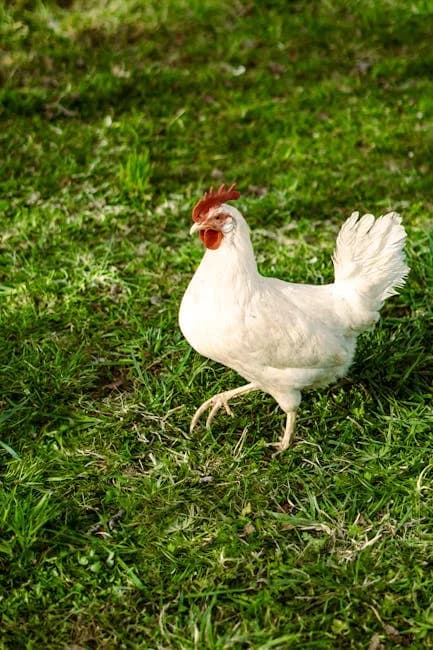
Less than hens of the same breed. A rooster carries a pound or two more than his hens on the same wings, plus a tail that adds drag, so he clears less fence and tries less often. He will still fly up to a roost, onto a fence post to crow, or at a predator, and a bantam rooster flies as well as anything in the yard. If your rooster is the one going over the fence, he is usually following hens that went first.
Why Chickens Fly: Escape, Roosting, and the Grass Over There
Chickens fly for three reasons, and knowing which one is at work tells you how to stop it.
- •To escape. A hawk shadow, a dog, a child running at the flock. This is the flight they are built for, and it is a good thing; a hen that can flap into a tree survives the fox. Keep it by not clipping every bird if you free-range where predators are a problem.
- •To roost. Every evening, up to the highest safe perch they can reach. A hen that sleeps on the coop roof or in a tree is not escaping; she is roosting, and the fix is a better roost inside and a closed pop door at dusk. An automatic door handles the timing.
- •To get to something. The garden, the neighbor's feeder, the compost heap, the rooster on the other side. This is the one that gets birds killed on roads and gets you a call from next door, and it is the one fencing and clipping are for.
How to Keep Chickens From Flying the Fence
In order of what to try:
Give them a reason to stay. A bored flock in a bare run looks for the fence. Space, shade, a dust bath, a hanging cabbage, and something to scratch through keep most birds home. Our run fencing guide covers the run itself.
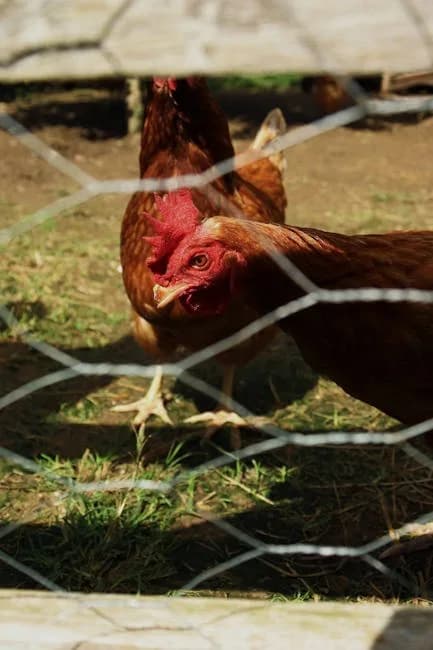
Raise or cover the fence. Six feet holds nearly every adult of a heavy or medium breed. For Leghorns, bantams, and determined individuals, a run with netting or wire over the top is the only fence that always works, and it also stops the hawk. Clear the launch pads: nothing to hop onto within 3 feet of the fence line.
Clip one wing. The method every extension service teaches is the same: spread one wing and cut the ten long primary flight feathers about halfway down, on one wing only. Poultry Extension's guidance is that clipping the primaries on one wing "makes it very difficult for the birds to fly," because the bird can no longer beat evenly. It does not hurt when done past the blood quill, it lasts until the next molt, and it takes two minutes. Our step-by-step wing clipping guide shows which feathers, which tools, and how to hold the bird.
Do not clip both wings. A bird with both wings clipped flies lower but balanced, and some fly better than they did with one. One wing is the point.
Accept the exceptions. A few birds fly regardless. Clipped Leghorns walk up a fence with their wings for balance. The answer for a repeat escaper is a covered run, or a heavier breed next time.
Frequently Asked Questions
Can chickens fly?
Yes, for a few seconds at a time. A backyard hen flies 20 to 50 feet, usually low, and lands when her breast muscles run out. Light breeds fly farther and higher than heavy ones, and Silkies cannot fly at all.
How high can a chicken fly?
Enough to clear a 4-foot fence for most light and medium breeds, and 6 feet for a lean Leghorn or a bantam. Heavy breeds like Orpingtons rarely top 3 feet as adults. Any object near the fence adds its height to the bird's.
How far can a chicken fly?
Tens of feet in a normal burst. The longest recorded chicken flight, per Guinness World Records, lasted 13 seconds and covered just over 300 feet.
Why can't chickens fly like other birds?
Short, rounded wings inherited from the junglefowl, flight muscles that fire hard but tire in seconds, and centuries of breeding for meat and eggs that added weight without adding wing. Silkies have the extra problem of feathers that cannot hold air.
Can roosters fly?
Yes, but less than hens, because they are heavier and carry a big tail. A rooster flies up to roost and at threats; he rarely leads the escape.
Will clipping a chicken's wings stop it flying?
Usually. Clipping the primary feathers on one wing, the method extension services recommend, unbalances the bird so it cannot gain height. It grows back at the next molt. A few determined birds still climb a fence; those need a covered run.
Do chickens fly over a 6-foot fence?
Leghorns, bantams, and some Easter Eggers can. Heavy and medium breeds almost never do unless something sits beside the fence to launch from. If a 6-foot fence is not holding a bird, clip one wing or cover the run.
Can chickens fly up to roost?
Yes, and they should. Flying or hopping to a roost is normal behavior and good exercise. Put the roost about 2 feet up for standard breeds and 1 foot for Silkies, and give them a ramp if the coop floor is slick.
A chicken's flight is a short, loud sprint through the air, and the only time it matters is when the sprint ends on the wrong side of a fence. Pick heavier breeds if containment is the priority, cover the run if you keep flyers, and clip one wing on the individual that will not take the hint. For the rest of the containment picture, see our free-range chickens guide.
Sources:
- •Poultry Extension (eXtension). Wing Clipping. https://poultry.extension.org/articles/poultry-behavior/wing-clipping/
- •The Livestock Conservancy. Leghorn Chicken breed profile (flight and roosting behavior, weights). https://livestockconservancy.org/leghorn-chicken/
- •Guinness World Records. Longest poultry flight. https://www.guinnessworldrecords.com/world-records/70785-longest-poultry-flight
- •USA Today, December 14, 2024. Can chickens fly? (citing BBC Wildlife Magazine on selective breeding). https://www.usatoday.com/story/life/pets/2024/12/14/can-chicken-fly/76768652007/
- •Oregon State University Extension. Living on the Land: Backyard Chicken Coop Design, EC 1644 (roost heights). https://extension.oregonstate.edu/catalog/ec-1644-living-land-backyard-chicken-coop-design
Related Guides
How Much Money Can You Make Selling Eggs? Real 2026 Math
Real profit numbers for selling backyard eggs: revenue and costs at 6 to 50 hens, 2026 prices by sales channel, and what actually eats your margin.
Beginner GuidesRooster vs Hen: How to Tell the Difference
How to tell a rooster from a hen: comb and wattle size, hackle and saddle feathers, crowing, spurs, and behavior, plus the age each clue appears.
Beginner GuidesDuck Eggs vs Chicken Eggs: Taste, Nutrition, Baking
How duck eggs compare to chicken eggs on size, taste, nutrition, and baking, plus whether raising ducks for eggs is right for your backyard.
Beginner GuidesChicken Coop Plans: 8 Free Extension Designs (2026)
Eight free chicken coop plans from extension and USDA archives, each opened and checked: sizes, hen counts, materials lists, and what to update on the old ones.