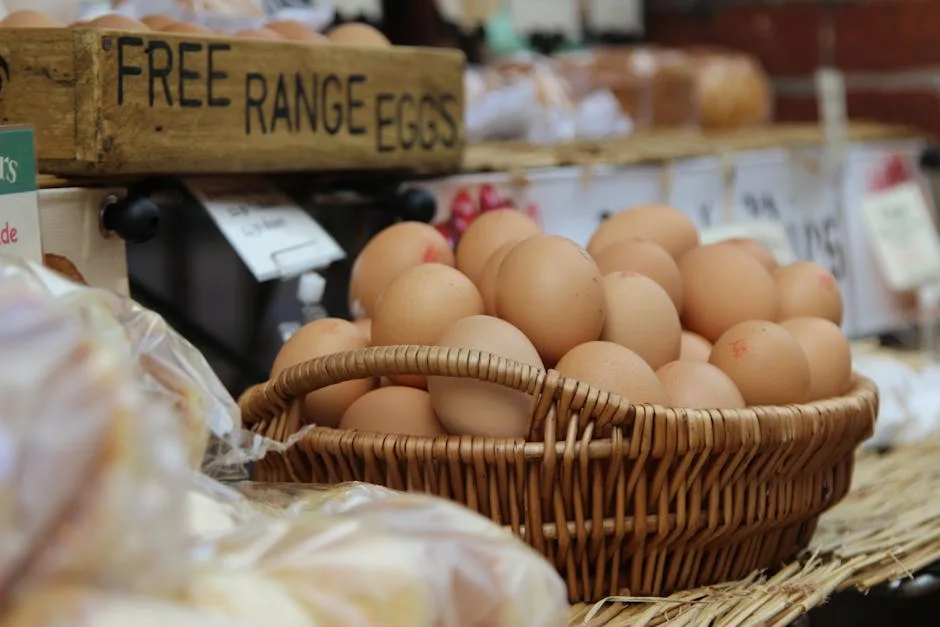
How Much Money Can You Make Selling Eggs? Real 2026 Math
Real profit numbers for selling backyard eggs: revenue and costs at 6 to 50 hens, 2026 prices by sales channel, and what actually eats your margin.
Researched from university extension, USDA, and veterinary sources. How we research.
How Much Money Can You Make Selling Eggs? Real 2026 Math
A 12-hen backyard flock selling every spare dozen at $5 clears about $600 to $700 a year after feed and cartons. That is the honest answer. It will not replace a paycheck, but it covers the feed bill, pays for the flock's upkeep, and at 25 hens or more it turns into real side income.
This article walks through the actual math: what eggs sell for in 2026, what your costs look like per dozen, worked profit numbers at four flock sizes, and the handful of decisions that separate a flock that pays for itself from one that quietly loses money.
What You'll Learn
- •Quick answer: profit by flock size
- •What eggs actually sell for in 2026
- •Your real cost per dozen
- •Worked example: a 12-hen flock
- •Scaling up: 25 and 50 hens
- •The five things that eat your margin
- •How to actually improve your numbers
- •When egg money becomes taxable income
- •Frequently Asked Questions
Quick Answer: Profit by Flock Size
| Flock size | Dozens/year to sell | Revenue at $5/dozen | Feed + carton cost | Profit/year |
|---|---|---|---|---|
| 6 hens (family keeps 2 doz/week) | ~25 | $125 | ~$60 | ~$65 |
| 12 hens | ~145 | $725 | ~$310 | ~$415 |
| 25 hens | ~415 | $2,075 | ~$830 | ~$1,245 |
| 50 hens | ~870 | $4,350 | ~$1,700 | ~$2,650 |
These numbers assume good layers in their first two laying years, your family eating two dozen a week, and every spare dozen actually selling. We will get into each assumption below, because the gap between this table and reality is where most people get surprised.
One thing the table leaves out on purpose: your time and your startup costs. A coop, run, feeders, and the birds themselves can run $500 to $2,000 before the first egg shows up. If you are starting a flock purely to make money, read our cost of raising chickens breakdown first. The profit math works much better when you already wanted chickens anyway.
What Eggs Actually Sell For in 2026
Backyard egg prices vary more by sales channel than by region. Here is what sellers are actually getting:
| Channel | Typical price/dozen | Notes |
|---|---|---|
| Neighbors and coworkers | $4 - $6 | Easiest channel. Zero marketing, repeat buyers. |
| Farm stand / roadside cooler | $5 - $7 | Honor-box setups work in most rural areas. |
| Farmers market | $6 - $9 | Best prices, but booth fees of $10 - $40/market eat the premium. |
| Local restaurants and bakeries | $4 - $6 wholesale | Volume buyers, but most states require a handler license. See how to sell eggs legally. |
Two pricing notes worth knowing. First, grocery prices set your ceiling in buyers' minds. When store eggs spike, your $6/dozen looks like a bargain; when they fall, $6 feels expensive even though your eggs are fresher and better. Second, colored eggs sell. A carton mixing blue, green, and dark brown eggs from breeds like Easter Eggers and Marans routinely brings $1 to $2 more per dozen than plain white. Our best egg laying breeds guide covers which birds give you both volume and variety.
Your Real Cost per Dozen
Feed is the big one, and it scales directly with flock size:
- •A laying hen eats roughly 1.5 pounds of feed per week, more in winter
- •Layer feed runs $18 - $24 per 50 lb bag in 2026
- •That works out to $0.65 - $0.85 in feed per hen per week
A good production breed lays around 5 eggs a week at peak. So feed cost per dozen lands around $1.60 - $2.10 if your hens are young and laying well. Add cartons (about $0.35 each new, less in bulk, free if customers return them) and incidentals like oyster shell and grit, and your all-in cost per dozen is realistically $2.00 - $2.50.
That is the number to hold onto: at $5/dozen you keep roughly half. At $3/dozen, the price a lot of new sellers nervously start at, you keep almost nothing once you count cartons, and you are subsidizing your customers' breakfast.
If you let hens free-range part of the day, feed consumption drops 10 to 20 percent in the green months. It will not make you rich, but across a 25-hen flock it is a couple hundred dollars a year.
Worked Example: A 12-Hen Flock
Twelve hens is the sweet spot for a serious backyard setup, so let's run the full year honestly.
Production. Twelve good layers in their first two years average about 250 eggs each per year: 3,000 eggs, or 250 dozen. Your family eats two dozen a week (104 dozen), leaving about 145 dozen to sell.
Revenue. At $5/dozen to neighbors and a small honor-box stand: $725.
Costs.
| Item | Annual cost |
|---|---|
| Feed (12 hens x ~78 lb/year at $0.42/lb) | ~$390 (less ~$45 if free-ranging) |
| Cartons (145, half returned by customers) | ~$25 |
| Oyster shell, grit, bedding share | ~$60 |
| Total | ~$430 |
Profit: roughly $295 to $415 a year depending on free-ranging and how disciplined your carton returns are. Notice that your family's 104 dozen also stopped showing up on your grocery bill, which at store prices is another $300 to $500 of value the profit line does not show.
That is the honest picture for a 12-hen flock: it pays its own way, feeds your family, and leaves beer money. The people clearing four figures are running bigger flocks, which brings us to scale.
Scaling Up: 25 and 50 Hens
At 25 hens you cross from "hobby that pays for itself" into "small side business," and a few things change:
- •You need reliable demand. 8 dozen surplus a week outgrows your street. This is where a farmers market booth or a restaurant account becomes necessary rather than optional.
- •Permits start to matter. Most states require an egg handler or candling license for market and wholesale sales. Rules and thresholds vary a lot by state; check our state-by-state chicken guides and your state's department of agriculture.
- •Feed buying changes. At 50 hens you are going through a 50 lb bag every few days. Buying pallet quantities or from a local mill knocks 15 to 25 percent off feed cost, which is the single biggest lever on your margin.
At 50 hens, with market pricing of $6/dozen on most of your volume, revenue approaches $5,000 and profit lands in the $2,500 to $3,000 range, before counting your time, booth fees, and gas. Past that point you are running a small farm enterprise, and the planning numbers in Penn State Extension's small-scale egg production budget are worth an evening of your time.
The Five Things That Eat Your Margin
- •Old hens. Production drops roughly 15 to 20 percent each year after the first laying year. A flock that is mostly 4-year-olds eats like layers and produces like decoration. Plan replacements every 2 to 3 years.
- •Winter. Without supplemental light, most breeds drop to a trickle from November through February while eating more feed than ever. Your annual averages already include this, but your December customers will not understand it. Manage expectations or add coop lighting.
- •Underpricing. $3/dozen feels neighborly and loses money. Price at $5 minimum in 2026. The customers you lose at $5 were not covering your costs anyway.
- •Buying cartons new, every time. $0.35 a carton on every dozen is 7 percent of your revenue. Train customers to return them; most happily will.
- •Predator losses. Losing 3 hens to a raccoon is not just sad, it is about $190 of annual revenue gone plus the replacement cost of started pullets. Run a predator-proof setup before scaling the flock.
How to Actually Improve Your Numbers
Pick production breeds with carton appeal. ISA Browns and Australorps for volume, two or three Easter Eggers or Marans for the colored eggs that justify premium pricing.
Sell the dozen, market the flock. A small laminated card in each carton with your flock's name and a photo turns one-time buyers into standing weekly orders. Standing orders are the difference between selling 145 dozen and composting 30 of them.
Buy feed smarter. A local mill or feed co-op beats tractor-supply pricing at any volume above a dozen hens. Storage just takes a pair of galvanized cans with tight lids. A hanging feeder that limits spill also matters more than people think; rats and spillage can quietly take 10 percent of your feed budget.
Equip the egg room cheaply. You need a scale that reads in grams if your state requires sizing, clean egg cartons in bulk, and a dedicated fridge if you are selling at any real volume. That is the whole list. Our guide to the best egg cartons for selling eggs breaks down which carton type keeps your per-dozen cost lowest. Skip the fancy washing equipment; in most states unwashed eggs with intact bloom store better and are legal for direct sales.
Keep records from dozen one. Eggs sold, feed bought, birds lost. Ten minutes a month. It tells you your real cost per dozen, and you will need it anyway if the operation grows into tax territory.
When Egg Money Becomes Taxable Income
Short version: egg income is technically taxable from the first dozen, but what changes with scale is whether you can deduct anything. The IRS draws a line between a hobby (income is reportable, expenses are not deductible) and a farm business run for profit (file Schedule F, deduct feed, birds, coop depreciation, even mileage).
For a 12-hen flock selling $700 of eggs, hobby treatment is typical. At 50 hens with a market booth and records showing a profit motive, Schedule F treatment can genuinely help you. The full rules, including the nine-factor profit-motive test and what surviving an audit takes, are in our guide to whether chickens are a tax write-off, and the permit side is covered in how to sell eggs legally.
Frequently Asked Questions
Is selling eggs actually profitable?
Yes, modestly, if you price at $5/dozen or more and your flock is young. A 12-hen backyard flock typically clears $300 to $700 a year after feed and cartons. Profit scales roughly linearly with flock size once you have reliable demand: figure $50 to $60 of annual profit per productive hen at direct-sale prices.
How much should I sell my eggs for in 2026?
$5 to $6 per dozen direct from home, $6 to $9 at farmers markets, $4 to $6 wholesale to restaurants. Below $4 you are likely losing money once feed and cartons are counted. Mixed-color cartons command $1 to $2 more.
How many chickens do I need to make $1,000 a year selling eggs?
About 20 to 25 productive hens, assuming your family keeps two dozen a week and the rest sells at $5/dozen. You will need demand for roughly 8 dozen a week, which usually means a farm stand or market booth rather than just neighbors.
Can I make a full-time living selling eggs?
Not at backyard scale. A living wage requires hundreds of hens, commercial licensing, refrigerated storage, and wholesale accounts, at which point you are running a farm. Backyard egg selling is a hobby that pays for itself plus real side income at 25+ hens.
Do I need a license to sell eggs from home?
For direct-to-consumer sales from your home, most states require no license, though some require a simple registration. Farmers markets and restaurant sales usually do require an egg handler permit. Rules vary widely by state; see our legal guide to selling eggs.
Do I have to report egg money on my taxes?
Technically yes, all income is reportable. In practice the important question is hobby versus business: hobby income is reported without deductions, while a flock run for profit files Schedule F and deducts feed, birds, and equipment. Our chicken tax write-off guide covers where that line sits.
What egg breeds make the most money?
ISA Browns, Golden Comets, and other production hybrids lay the most dozens per dollar of feed. Easter Eggers, Marans, and Welsummers lay fewer eggs but their blue, green, and chocolate eggs raise the price of every carton they appear in. The profitable answer is a mix: mostly production hybrids, a few colorful layers.
Is it cheaper to raise chickens or buy eggs?
If you count startup costs, store eggs are cheaper for the first year or two. Once the coop is paid off, a small flock produces eggs at $2.00 to $2.50 per dozen in feed costs, below the store price of comparable pasture-raised eggs. Our full cost breakdown runs the numbers.
Why are my egg sales slow in winter?
Because your hens' production drops 50 to 80 percent without supplemental light from November through February, right when demand stays steady. Either add 14 hours of total light in the coop to keep production up, or warn standing customers about the seasonal gap before they find another supplier.
Should I wash eggs before selling them?
In most states, no, for direct sales. Unwashed eggs keep their natural protective bloom and store longer. Some states require washing and refrigeration for market or wholesale sales. Check your state's rules before you set up a washing routine you do not need.
Sources:
- •Penn State Extension, Small-Scale Egg Production (Organic and Conventional) enterprise budgets. https://extension.psu.edu/
- •University of Minnesota Extension, Raising Chickens for Eggs. https://extension.umn.edu/
- •USDA Agricultural Marketing Service, Egg Markets Overview (weekly retail and wholesale price reporting). https://www.ams.usda.gov/
- •IRS Publication 225, Farmer's Tax Guide. https://www.irs.gov/publications/p225
Related Guides
How Many Eggs Does a Chicken Lay a Day? (Real Numbers)
A hen lays at most one egg a day, and most backyard hens lay 4 to 6 a week. Why one is the limit, what a good hen lays per year, and why counts drop.
Beginner GuidesDuck Eggs vs Chicken Eggs: Taste, Nutrition, Baking
How duck eggs compare to chicken eggs on size, taste, nutrition, and baking, plus whether raising ducks for eggs is right for your backyard.
Beginner GuidesCan Chickens Fly? How High, How Far, and Which Breeds
Chickens can fly, just not far: seconds, not minutes, and a 4-foot fence is nothing to a Leghorn. Which breeds fly, how high, and how to keep them home.
Beginner GuidesWhen Do Chickens Start Laying Eggs? Age & Signs
Most hens lay their first egg around 18 to 22 weeks old. Learn the signs a pullet is ready, what delays laying, and how to know eggs are coming.