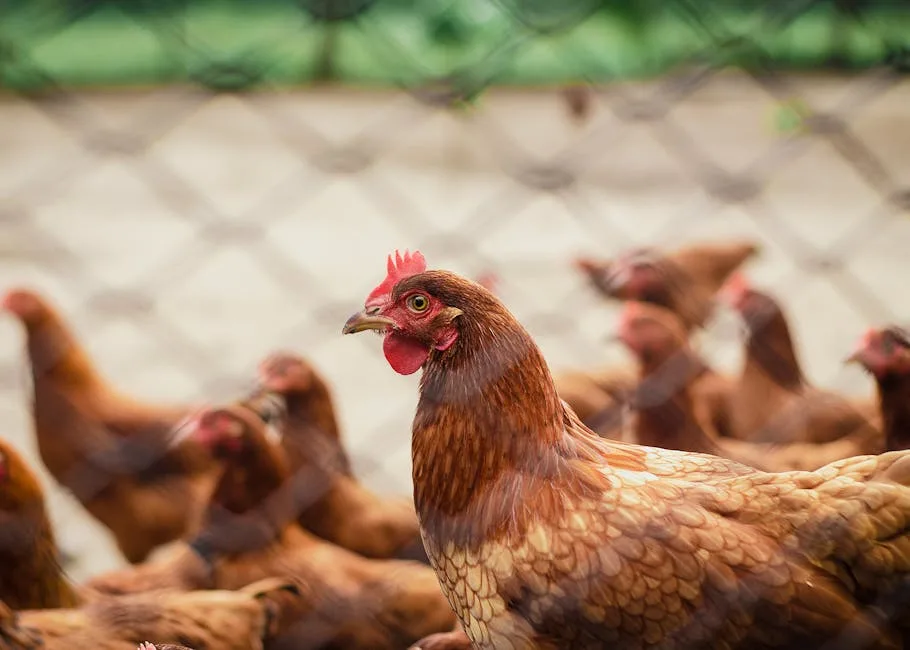
Are Chickens a Tax Write-Off? IRS Rules for 2026
Can you write off chickens on your taxes? IRS hobby-vs-farm rules, Schedule F deductions, and when a backyard flock qualifies as a business.
Researched from university extension, USDA, and veterinary sources. How we research.
Are Chickens a Tax Write-Off? IRS Rules for 2026
The short answer: chickens can be a tax write-off if you run them as a business, not as a hobby. That single distinction (hobby vs business) determines whether you can deduct your feed, your coop, your incubators, and the rest of your flock expenses, or whether they're personal expenses with no tax benefit.
This guide walks through exactly how the IRS draws that line, what you can deduct if you're on the business side, and the realistic steps to convert a backyard hobby flock into a tax-deductible small farm operation.
Disclaimer: This article is for educational purposes only. It is not tax advice. Consult a CPA or tax professional for guidance on your specific situation.
What You'll Learn
- •Quick answer: hobby vs business
- •The 9 IRS factors that determine business status
- •What backyard chicken expenses can you deduct?
- •Schedule F vs Schedule C: which to file
- •Section 179 and depreciation for chicken keepers
- •4 real-world scenarios with numbers
- •7 steps to qualify your flock as a business
- •Common mistakes that get audited
- •State agricultural exemptions vs federal tax
- •Frequently Asked Questions
Quick Answer: Hobby vs Business
| Situation | Tax treatment |
|---|---|
| Hobby flock (a few hens for family eggs, no sales) | No deductions. Personal expense. |
| Hobby flock with some sales (occasional egg sales to neighbors, no profit intent) | Must report the income. No deductions allowed for tax years 2018-2025. |
| Business flock (regular sales, profit intent, businesslike records) | Full deductions on Schedule F. Feed, coop, equipment, fencing, vet, utilities, mileage. |
| Business flock at a loss (early years, building toward profit) | Loss can offset other income. IRS scrutinizes if losses continue past year 5. |
The IRS doesn't care if you have 4 hens or 40. It cares about intent and execution. A 4-hen operation run as a small business with documented sales, records, and a business plan can qualify. A 40-hen operation with no sales records and no profit intent doesn't.
The 9 IRS Factors That Determine Business Status
The IRS uses 9 factors from Treasury Regulation 1.183-2 to decide whether an activity is a business or a hobby. There's no single test; they look at the totality of circumstances. The 9 factors:
1. Do you conduct the activity in a businesslike manner? Separate financial records, business plan, systematic expense tracking. Shoebox receipts are a red flag.
2. Do you have expertise (or consult experts)? Have you taken poultry courses, talked to your state agricultural extension office, or read serious poultry industry publications? The IRS wants to see you're treating this seriously.
3. How much time and effort do you devote to it? A few hens checked on for 10 minutes a day looks different from hours daily managing breeding programs and farmers market sales.
4. Do you depend on income from the activity? If egg or bird sales are a meaningful part of your household income, that supports business status. If you give away all your eggs, that's hobby territory.
5. Have you made a profit in at least 3 of the last 5 years? This is the safe-harbor presumption under IRC Section 183(d). Three profit years out of five and the IRS presumes you're a business. This isn't an absolute rule, but it creates a favorable position.
6. Do you have losses typical of a startup phase? New farms often lose money in years 1-3. The IRS accepts this if you can show a trajectory toward profitability.
7. Have you made changes to improve profitability? If you lost money last year, did you adjust? Adding hens, finding new markets, reducing feed costs. Adapting your operation is strong evidence of business intent.
8. Do you have personal pleasure or recreation motives? This is where most backyard keepers get tripped up. If you have 4 hens named after your favorite TV characters and you've never sold a single egg, the IRS sees a hobby. Enjoyment doesn't disqualify you, but it can't be the primary motivation.
9. Is there an expectation of asset appreciation? If your property value increases because you've built farm infrastructure (coop, barn, fencing), that supports business intent.
The IRS weighs all 9 together. You don't need to check every box. The more factors that point toward "business," the stronger your position.

What Backyard Chicken Expenses Can You Deduct?
If your flock qualifies as a business, here's the deduction-eligible list. All amounts are typical ranges for context.
Direct expenses (fully deductible)
| Category | Typical annual cost | Notes |
|---|---|---|
| Feed | $400 to $1,200 | Biggest ongoing cost. Keep receipts for every bag. |
| Chicks and hatching eggs | $50 to $300 | The cost of acquiring birds. |
| Bedding (pine shavings, straw) | $80 to $200 | Pine, hemp, sand, etc. |
| Vet care and medications | $50 to $300 | Vet visits, dewormer, mite treatment, supplements. |
| Supplies | $100 to $400 | Feeders, waterers, egg cartons, cleaning supplies. |
| Egg cartons and labels | $30 to $150 | If you sell eggs. |
| Processing supplies | $50 to $200 | Shrink bags, knives, etc. for meat birds. |
Capital expenses (depreciable or Section 179)
| Category | Typical cost | Tax treatment |
|---|---|---|
| Coop (purchased or built) | $200 to $2,000 | Depreciate over 7 to 20 years OR Section 179 |
| Fencing | $200 to $1,500 | Depreciate or Section 179 |
| Incubators | $100 to $500 | Section 179 typically |
| Brooders and heat plates | $50 to $200 | Section 179 typically |
| Automatic coop doors | $80 to $300 | Section 179 typically |
Other deductions
- •Utilities: Portion of electricity used by heated waterer, coop lights, etc. Calculate based on actual use.
- •Vehicle expenses: Mileage or actual cost for trips to feed store, farmers market, vet. Standard mileage rate is 67 cents per mile in 2026.
- •Education: Poultry courses, workshops, books, conferences, subscriptions.
- •Insurance: Farm liability insurance if you carry it.
- •Marketing: Signs, website, farmers market booth fees, business cards.
- •Home office: A portion of home expenses if you genuinely manage your farm business from a dedicated home office. Complex rules; consult a CPA.
- •Professional fees: CPA, bookkeeping software, legal advice for your operation.
What you can't deduct
- •Birds kept purely as pets (no business deductions for non-producing birds)
- •The retail value of eggs you consume yourself (you can deduct the production cost only, not the market price)
- •Hobby flock expenses (2018-2025; this may change after 2025)
- •Personal vehicle use unrelated to the operation
Schedule F vs Schedule C: Which to File
If you qualify as a farm business, you'll typically file Schedule F (Profit or Loss From Farming). This is the standard form for agricultural operations. Report all farm income (egg sales, bird sales, breeding stock) and deduct all farm expenses. Net loss can offset other income on your 1040.
Some poultry operations file Schedule C instead, particularly:
- •Online chick or egg sellers running it like an e-commerce business
- •Poultry breeders selling to other backyard keepers as a side business
- •Operations that look more like a small business than a traditional farm
The tax treatment is similar but Schedule F has some farming-specific advantages:
- •Income averaging (Schedule J) for high-income years
- •Crop insurance deduction
- •Some farm-specific depreciation rules
- •Different estimated tax payment dates
Your CPA can help you pick the right form. For most backyard keepers selling eggs or meat, Schedule F is correct.
Self-employment tax (the catch)
If your farm business shows a profit, you owe self-employment tax (15.3%) on the net earnings. This covers Social Security and Medicare. You can deduct half of the SE tax on your 1040.
If your operation consistently shows losses, SE tax isn't an issue, but watch out for the hobby loss rules. The IRS gets suspicious when activities show losses year after year and the owner seems perfectly content about it.
Section 179 and Depreciation for Chicken Keepers
This is where the real tax benefits live. Most backyard keepers don't realize how powerful Section 179 is for farm equipment.
What is Section 179?
A provision that lets you deduct the full cost of qualifying equipment in the year you buy it, instead of depreciating it over 5 to 20 years. For chicken keepers, this typically covers:
- •Coops (if used in farm business)
- •Fencing
- •Incubators
- •Brooders
- •Automatic coop doors
- •Other farm equipment
The 2026 Section 179 limit is approximately $1,250,000 (way more than any backyard keeper needs). You can deduct the full cost of qualifying equipment up to that limit, as long as your business uses it more than 50% for farm purposes.
Worked example
You build a $1,500 chicken coop and a $400 incubator in year 1 of your farm business. You also spend $300 on a heated waterer base, $200 on feeders/waterers, and $600 on hardware cloth fencing.
| Item | Cost | Depreciation method |
|---|---|---|
| Coop | $1,500 | Section 179: $1,500 deducted in year 1 |
| Incubator | $400 | Section 179: $400 deducted in year 1 |
| Heated waterer | $300 | Section 179: $300 deducted in year 1 |
| Feeders/waterers | $200 | Section 179: $200 deducted in year 1 |
| Fencing | $600 | Section 179: $600 deducted in year 1 |
| Total capital deductions year 1 | $3,000 |
That's $3,000 in deductions in year 1 against your farm income (or other income if your farm operates at a loss). At a 22% marginal tax rate, that's $660 in actual tax savings.
When standard depreciation might be better
Section 179 has restrictions:
- •Can't exceed your total business income (you can't create a loss with it alone, though you can with regular depreciation)
- •Has annual phase-out at much higher dollar amounts
- •Some property doesn't qualify
For most backyard farm businesses with $3,000 to $10,000 in equipment, Section 179 is the simplest and best option.
4 Real-World Scenarios With Numbers
Concrete examples are clearer than rules.
Scenario 1: Sarah's 4 hobby hens
Sarah has 4 hens in her suburban backyard. She collects eggs for her family and gives extras to her neighbor.
| Annual expenses | $600 (feed, supplies, coop amortization) |
| Egg sales | $0 |
| Tax treatment | Hobby; no deductions |
| Tax savings | $0 |
This is a hobby. No sales, no profit intent, no business deductions allowed.
Scenario 2: Mike's 30-hen farmers market business
Mike has 30 hens and sells eggs at the local farmers market every Saturday from May to October.
| Annual income | $4,200 (egg sales, ~$3.50/dozen) |
| Annual expenses | $3,200 (feed, supplies, market fees, mileage) |
| Net profit | $1,000 |
| Tax treatment | Schedule F farm business |
| Self-employment tax | $141 (15.3% × $1,000 × 92.35%) |
| Income tax saved on expense deduction | ~$700 (22% × $3,200) |
| Net tax impact | Saves ~$559 vs hobby treatment |
Mike's flock is solidly business. Detailed records, regular sales, market presence, profit motive.
Scenario 3: Jessica's startup-phase flock
Jessica has 12 hens and sells eggs to coworkers and through a neighborhood Facebook group. Year 2 of operation.
| Annual income | $1,500 (egg sales) |
| Annual expenses | $1,800 (feed, bedding, supplies, coop depreciation) |
| Net loss | $300 |
| Tax treatment | Schedule F (startup losses defensible) |
| Tax savings from loss deduction | $66 (22% × $300) |
| Plus deduction of expenses against any other income | $396 (22% × $1,800) |
Defensible business at a small startup loss. Jessica should focus on getting to profitability by year 3-4 to stay safely on the business side.
Scenario 4: Tom's serious 100-hen operation
Tom has 100 laying hens and processes 200 meat birds annually. He sells at farmers markets and to local restaurants.
| Annual income | $15,000 (eggs + meat birds + breeding stock) |
| Annual expenses | $11,000 (feed, processing, fuel, packaging, equipment depreciation) |
| Net profit | $4,000 |
| Tax treatment | Schedule F, definite farm business |
| Self-employment tax | $565 |
| Income tax on profit (22% bracket) | $880 |
| Estimated quarterly payments needed | Yes |
Tom is running a serious small farm. He should be paying estimated quarterly taxes and may benefit from Section 179 in equipment-heavy years.
7 Steps to Qualify Your Flock as a Business
If you want your operation to qualify for tax deductions, follow this checklist.
1. Keep careful records. Every expense, every sale, with receipts. Use a spreadsheet, accounting software (Wave is free; QuickBooks Self-Employed is $15/mo), or even a dedicated notebook. The IRS wants organized records.
2. Open a separate bank account. Mixing personal and farm finances is a red flag. A basic checking account designated for the poultry operation makes a real difference.
3. Sell something regularly. You need income to show profit intent. Sell eggs at the farmers market, through a co-op, on Facebook Marketplace, or to neighbors. Hatching eggs and chicks count too. The key is documented, regular sales.
4. Write a simple business plan. One page is enough: what you're doing, your goals, your path to profitability. Saves you in an audit.
5. Get an EIN. A free Employer Identification Number from the IRS (apply at irs.gov in 5 minutes) gives your operation an official business identity separate from your SSN. Some banks require it to open a business account.
6. Check local requirements. Some states require an egg handler permit, candling, or grading to sell. Complying supports business status.
7. Aim for the 3-of-5 profit rule. Structure your operation so it can realistically show a profit in at least 3 of every 5 tax years. This might mean keeping a larger flock, finding premium markets (specialty eggs, pasture-raised, organic), or adding revenue streams (selling chicks, breeding stock, eggs for hatching).
Common Mistakes That Get Audited
Real reasons backyard chicken businesses get IRS scrutiny:
1. Losing money every year for 5+ years. Triggers the hobby loss rules audit. Either show a path to profitability or restructure.
2. Mixing personal and business expenses. Buying chicken feed and groceries on the same receipt and trying to deduct part of it. Always pay for farm expenses from the farm account.
3. Vague mileage logs. Don't claim "approximately 2,000 miles" without documentation. Use a mileage tracking app or notebook with date, purpose, and odometer.
4. Deducting personal property. That nice riding lawnmower you also use for personal yard work isn't fully deductible. Pro-rate based on actual use.
5. No sales records. Saying "I sold about $2,000 worth of eggs" without invoices or Square deposits won't survive an audit.
6. Treating cute hobby hens as business assets. Hens named after your kids that have never produced eggs for sale aren't deductible.
7. Claiming the home office deduction without meeting requirements. The space must be exclusively and regularly used for business. A kitchen table doesn't count.
State Agricultural Exemptions vs Federal Tax
Federal tax (what we've covered above) is separate from state-level agricultural benefits. Most states offer some combination of:
- •Property tax exemptions or reductions for land used agriculturally
- •Sales tax exemptions on farm supplies (feed, equipment)
- •Income tax breaks for farm income
The rules vary wildly. Some examples:
- •Texas: Agricultural exemption requires land used primarily for agriculture and applying for ag valuation with your county appraisal district. No specific minimum flock size, but you need genuine agricultural use.
- •California: Agricultural land classification requires commercial agricultural use. A few backyard hens typically don't qualify.
- •Oregon: Farm-use property tax assessment requires at least $3,000 in gross farm income (or $500 on less than 5 acres with a soil conservation plan).
- •New York: Agricultural assessment requires at least $10,000 in gross sales (or $50,000 in assessed value of agricultural land).
- •Florida: "Greenbelt" agricultural classification requires good-faith commercial agricultural use; flock size and acreage aren't strictly defined.
Check with your state's department of agriculture or county assessor. Many of our state guides cover state-specific rules for chicken-keeping; the ones on agricultural exemptions vary too widely to list comprehensively.
A note on the "buy a few chickens to write off your property" myth
Social media periodically claims you can "write off your entire property" by getting a few chickens and calling it a farm. This is misleading at best and tax fraud at worst.
Agricultural property tax exemptions exist, but they have real requirements: minimum income thresholds, minimum acreage in production, commercial sales, and county assessor approval. You can't put 3 chickens in your suburban backyard and claim your property as a farm. County assessors and the IRS both know the difference, and the audit penalty is significant.
If agricultural property tax benefits matter to you, work with a CPA who understands your state's rules. Don't rely on TikTok tax advice.
Frequently Asked Questions
Can I write off chickens on my taxes if I have a backyard flock?
Only if you run the flock as a business (Schedule F farm), not as a hobby. Business status requires regular sales, businesslike records, profit intent, and meeting the IRS's 9-factor test. A hobby flock kept purely for family eggs cannot be deducted under current tax law (2018-2025).
How many chickens do I need to qualify as a farm?
There is no federal minimum flock size. The IRS evaluates business intent, not bird count. In practice, smaller operations (4-12 hens) face more scrutiny than larger ones (25+ hens), but the deciding factor is sales records, profit motive, and businesslike operation, not flock size.
Are chickens considered livestock for tax purposes?
Yes. The IRS classifies chickens as livestock under Publication 225 (Farmer's Tax Guide). Raising chickens for eggs, meat, or breeding stock qualifies as farming for federal tax purposes.
Can I deduct the cost of my chicken coop?
Yes, if your flock is a business. The coop is a capital asset that can either be depreciated over 10 to 20 years OR fully expensed in the year of purchase using Section 179. For most backyard farms, Section 179 is the simpler choice.
Can I deduct chicken feed on my taxes?
Yes, if you operate as a farm business. Feed is a direct, ongoing expense fully deductible on Schedule F. Keep receipts. For a hobby flock, feed is a personal expense and not deductible.
What's the difference between Schedule F and Schedule C for chicken keepers?
Schedule F is the standard for farm operations including poultry. Schedule C is for non-farm small businesses. For most backyard chicken businesses (selling eggs, meat, or breeding stock), Schedule F is correct and offers some farming-specific advantages like income averaging and crop insurance treatment.
Do I need an LLC to deduct chicken expenses?
No. Sole proprietors can deduct farm business expenses on Schedule F without forming any business entity. An LLC can offer liability protection and may simplify some bookkeeping, but it isn't required for tax deductions.
Does selling eggs at a farmers market count as a business?
Yes, if you do it regularly with profit intent and keep records. One-off sales don't qualify, but consistent weekly or monthly market sales with records and a clear business approach do.
How long can a chicken business operate at a loss before the IRS challenges it?
The IRS uses a 3-of-5 year safe harbor: if your activity shows a profit in 3 of the last 5 tax years, it's presumed to be a business. Continuous losses for 4+ years without showing improvement triggers hobby loss scrutiny. New farms get some grace period, but you need to demonstrate path to profitability.
Are chicken-related home office deductions legitimate?
Yes, but with strict rules. The space must be used exclusively and regularly for the farm business (where you do record-keeping, marketing, ordering supplies). A dedicated home office room qualifies; the kitchen table where you also eat dinner does not.
Can I write off my mileage to the feed store?
Yes. Use the standard mileage rate (67 cents per mile in 2026) or actual vehicle expenses. Keep a mileage log with date, destination, purpose, and miles for each trip. Apps like MileIQ ($60/year) automate this.
The Bottom Line
If you're running a legitimate small farm business with documented sales, businesslike records, and profit intent, then yes: your chickens are a tax write-off. Feed, supplies, coop, fencing, mileage, education, even a portion of utilities are deductible on Schedule F. With Section 179, capital equipment can typically be fully deducted in the year of purchase.
If you have a few hens in the backyard for family eggs and fun, you're running a hobby, and hobby expenses aren't deductible under current tax law.
The good news: turning a hobby flock into a small farm business is easier than most people realize. Scale up modestly, start selling eggs consistently, keep good records, and treat it like the small business it is. The tax benefits can be meaningful, especially in early years when you're investing in coop and equipment.
For a deeper look at the hobby-vs-business distinction (which determines everything else), see our chickens: hobby vs business IRS guide. If you're trying to scale up sales as part of qualifying as a business, our how to sell eggs legally article covers state permits, labeling, pricing, and tax records. And if you want to know what those sales can realistically earn, our how much money can you make selling eggs breakdown runs the profit math at four flock sizes.
For help getting your flock set up or scaled, see our complete beginner's guide to raising backyard chickens and our breakdown of how much it costs to raise chickens. If you're scaling up specifically for egg sales, our raising chickens for eggs guide covers maximizing production and finding markets.
Sources:
- •IRS Publication 225, Farmer's Tax Guide (2026 edition). https://www.irs.gov/publications/p225
- •IRS Publication 529, Miscellaneous Deductions. https://www.irs.gov/publications/p529
- •IRS Publication 463, Travel, Gift, and Car Expenses. https://www.irs.gov/publications/p463
- •IRC Section 183, Activities Not Engaged In For Profit. https://www.irs.gov/
- •IRC Section 179, Election to Expense Certain Depreciable Business Assets.
- •Treasury Regulation 1.183-2, Activity Not Engaged In For Profit Defined.
- •USDA Economic Research Service, Farm Sector Income & Finances. https://www.ers.usda.gov/
- •r/BackYardChickens and r/tax subreddit threads on farm tax deductions for small flocks.
Related Guides
Chickens: Hobby or Business? IRS Rules Explained (2026)
How the IRS decides if your chicken flock is a hobby or business. The 9-factor test, profit motive evidence, and how to qualify for Schedule F deductions.
Beginner GuidesRooster vs Hen: How to Tell the Difference
How to tell a rooster from a hen: comb and wattle size, hackle and saddle feathers, crowing, spurs, and behavior, plus the age each clue appears.
Beginner GuidesDuck Eggs vs Chicken Eggs: Taste, Nutrition, Baking
How duck eggs compare to chicken eggs on size, taste, nutrition, and baking, plus whether raising ducks for eggs is right for your backyard.
Beginner GuidesCan Chickens Fly? How High, How Far, and Which Breeds
Chickens can fly, just not far: seconds, not minutes, and a 4-foot fence is nothing to a Leghorn. Which breeds fly, how high, and how to keep them home.