How to Candle Eggs: A Day-by-Day Hatching Guide
Learn how to candle chicken eggs step by step. What to look for on day 7, 14, and 18, how to spot a quitter, and the gear you need. Beginner friendly.
Researched from university extension, USDA, and veterinary sources. How we research.
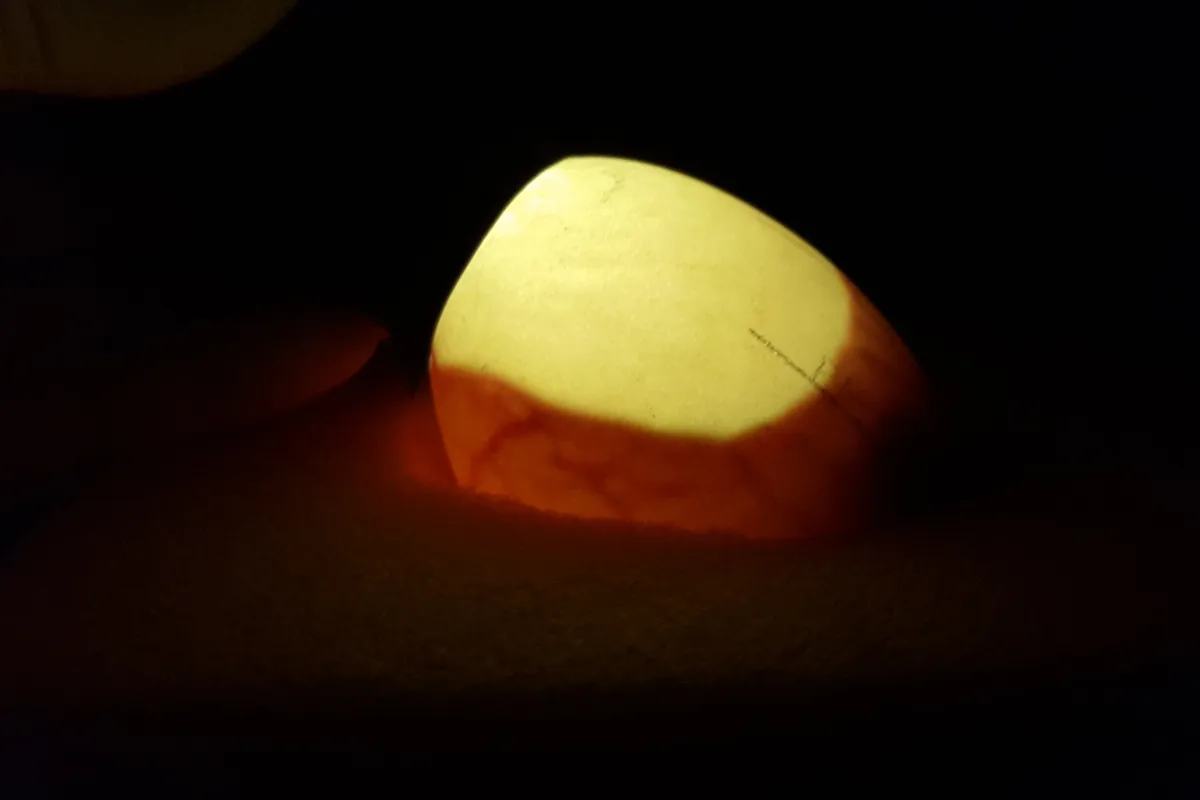
Candling is how you see what is happening inside an egg without cracking it open. You shine a bright light through the shell, and the light reveals whether an embryo is growing, whether the egg is clear and infertile, or whether development stopped partway through. It takes about ten seconds per egg once you get the hang of it, and it is the single best way to avoid babysitting eggs that were never going to hatch.
This guide walks you through exactly what to look for, day by day, plus how to read brown and blue eggs that are harder to see through.
Affiliate Disclosure: This article contains affiliate links to Amazon. If you buy something through these links, we earn a small commission at no extra cost to you. We only recommend products we genuinely think are worth your money. Full disclosure.
What You'll Learn
- •What Candling Is and Why It Matters
- •What You Need to Candle Eggs
- •When to Candle: The Schedule
- •How to Candle an Egg, Step by Step
- •What You See on Day 7
- •What You See on Day 14
- •Day 18: The Final Check
- •How to Spot a Quitter or Infertile Egg
- •Candling Brown and Blue Eggs
- •Common Candling Mistakes
- •Frequently Asked Questions
What Candling Is and Why It Matters
The name comes from the old practice of holding an egg up to a candle flame. The idea is the same today, just with a safer light source. A strong beam passes through the shell and the white, and the contents either glow evenly (no development) or show a dark mass with branching blood vessels (a growing embryo).
There are three good reasons to candle:
- •You stop wasting incubator space. A clear egg on day 14 is never going to hatch. Pulling it frees room and removes a rotting-egg risk.
- •You catch a bad egg before it explodes. A dead embryo can turn into a bacteria bomb. If one bursts inside the incubator, it can contaminate the healthy eggs around it. Candling lets you remove the suspect before that happens.
- •You learn what good development looks like. After one hatch, you will read an egg in seconds. That skill pays off every batch after.
You do not have to candle to hatch chicks. A broody hen never candles a thing. But if you are running an incubator, it is a cheap, low-risk habit that saves you headaches.
What You Need to Candle Eggs
You need three things: a bright, focused light, a dark room, and clean hands.
For the light, a phone flashlight works in a pinch on white eggs, but it struggles with anything darker. A dedicated LED egg candler is inexpensive and makes a real difference, especially on brown shells. Look for a cool-running LED (not an old incandescent bulb that heats the egg) with a rubber tip that seals against the shell so stray light does not blind you.
If you do not have an incubator yet, that is the bigger purchase to get right first. Our guide to the best chicken egg incubators compares models by flock size and budget, and several mid-range units include a candling light built into the lid.
That is genuinely all the gear you need. Skip anything fancier until you have a few hatches behind you.
When to Candle: The Schedule
Less is more. Every time you open the incubator you drop the temperature and humidity, so candle on a schedule rather than out of curiosity.
- •Day 7: Your first real look. By now a fertile egg shows clear veining.
- •Day 10: Optional recheck for any eggs that looked uncertain on day 7.
- •Day 14: Confirm growth and pull obvious clears or quitters.
- •Day 18: A quick final glance right before lockdown, when you stop turning and raise humidity.
Do not candle after day 18. The chick is in position to hatch, and handling the egg now does more harm than good. Some keepers skip the day 18 check entirely for that reason, and that is a fair call.
How to Candle an Egg, Step by Step
- •Wait for nightfall, or find a closet. You want the room as dark as possible. The darker the room, the more you see inside the egg.
- •Wash and dry your hands. Eggs have a protective coating, and dirty hands transfer bacteria through the porous shell.
- •Cup the egg, large end up. The air cell sits at the fat end, so that is where you hold the light.
- •Press the light to the shell. Hold the beam against the large end and tilt the egg slowly. Give your eyes a second to adjust.
- •Work fast. Ten to fifteen seconds per egg is plenty. You are not running a medical exam, just checking for veins and movement.
- •Mark the doubtful ones. A pencil X on an uncertain egg lets you recheck it later without confusing it with the rest.
Return eggs to the incubator promptly and close the lid. If you are candling a full tray, take a few out at a time rather than leaving the whole batch cooling on the counter.
What You See on Day 7
This is the fun one. In a developing egg you will see a network of thin red blood vessels spreading out like the branches of a tree, usually with a darker spot near the center. That spot is the embryo. Tilt the egg gently and you may catch it wobble or drift, which is a great sign.
An infertile egg, or one where development never started, looks clear and bright. The yolk shows as a faint shadow that moves freely when you tilt it, with no veins at all. Keepers call these "clears."
If an egg looks borderline, do not pull it. Mark it and wait until day 10 or 14. Early embryos are easy to miss, and there is no penalty for giving a maybe a few more days.
What You See on Day 14
By two weeks, a healthy embryo fills more of the egg. Instead of delicate veins over a bright background, you will see a large dark mass taking up most of the shell, with a clear air cell at the fat end. You often cannot make out fine detail anymore because the chick is simply too big, and that is exactly what you want. Movement is common, and seeing a kick or shift is a good sign.
This is the candling where decisions get easy. Eggs that are still clear are not going to hatch. Eggs with a "blood ring," which is a dark circle of blood pooled against the shell with no veins attached, are quitters: the embryo started and then died. Both can come out.
Day 18: The Final Check
The day 18 candling is quick and optional. You are looking for one thing: a large dark chick filling the egg with a defined air cell at the top. The chick should occupy roughly two thirds of the shell, with the air cell taking up the rest.
After this check, you go into lockdown. Stop turning the eggs, bump the humidity up, and resist the urge to open the incubator again. For the full lockdown and hatch-day routine, see our complete chicken egg hatching guide.
How to Spot a Quitter or Infertile Egg
Three patterns tell you an egg is done:
- •A true clear. Bright and even with a free-floating yolk shadow and no veins, even on day 14. It was never fertile, or development never began.
- •A blood ring. A thin red circle floating inside the shell, detached from any vein network. The embryo died early and the blood pulled away from the body.
- •A dark, smelly egg that sloshes. If an egg has a foul smell or you hear liquid moving inside, remove it carefully. This is the kind that can burst.
When in doubt, the smell test settles most arguments. A good egg smells like nothing. A rotten one is unmistakable.
Candling Brown and Blue Eggs
Dark brown eggs, like those from a Marans or Welsummer, and blue or green eggs from an Easter Egger are harder to read because less light gets through the shell. A weak flashlight will not cut it here. This is exactly where a bright LED candler earns its keep.
A few tricks help:
- •Go fully dark. Even a sliver of room light washes out a dark shell.
- •Find the thinnest spot. Rotate the egg until the light punches through best, often just off-center from the air cell.
- •Be patient on timing. With dark eggs, you may not see clear veining until day 8 or 9 rather than day 7. Give them an extra day or two before judging.
Speckled and heavily pigmented shells are the toughest. Sometimes the honest answer is that you simply wait for hatch day rather than risk pulling a viable egg.
Common Candling Mistakes
- •Candling too early. Before day 5 or 6, there is rarely anything to see. You just stress the egg and yourself.
- •Candling too often. Every open lid is a temperature and humidity dip. Stick to the schedule.
- •Pulling eggs too soon. A borderline egg on day 7 deserves a recheck, not the trash. When unsure, wait.
- •Using a hot light. An old incandescent bulb can warm the egg. Stick to a cool LED.
- •Candling during lockdown. After day 18, leave them be. The hatch is close, and handling does more harm than good.
Candling is a skill, and your first batch is your training run. By your second or third hatch, you will glance at an egg and just know.
Frequently Asked Questions
When can you first see veins when candling eggs?
In white and light brown eggs, fertile development usually shows as a spider-web of veins by day 7. In dark brown or blue eggs, give it until day 8 or 9, since less light passes through the shell.
Can you candle eggs with a phone flashlight?
Yes, on white or pale eggs in a dark room. A phone light struggles with brown, blue, or speckled shells, where a bright LED candler works far better.
Will candling hurt the developing chick?
No, when done correctly. A quick ten-second look with a cool LED light is safe. Problems come from handling eggs too often, using a hot bulb, or candling after day 18 during lockdown.
What is a blood ring in an egg?
A blood ring is a red circle of blood inside the shell that has pulled away from the embryo. It means development started and then stopped. These eggs will not hatch and should be removed.
How often should you candle eggs during incubation?
Two or three times total: day 7, day 14, and an optional quick check on day 18. Candling more than that cools the eggs unnecessarily.
Do I need to candle eggs at all?
No. Plenty of people hatch without candling, and broody hens never do. Candling just lets you remove eggs that will not hatch and catch a rotten one before it bursts.
Once your chicks hatch, our raising chicks week by week guide covers brooder setup, heat, and the first eight weeks. To get the incubation basics right from day one, start with the 21-day hatching guide.
Sources:
- •Mississippi State University Extension Service. Candling eggs and embryo development. http://extension.msstate.edu/
- •University of Florida IFAS Extension. 4-H Embryology and incubating eggs. https://edis.ifas.ufl.edu/
- •Penn State Extension. Poultry incubation and hatching. https://extension.psu.edu/animals/poultry
- •University of Kentucky Cooperative Extension. Incubating eggs at home. https://poultry.extension.org/
Product prices and availability are accurate as of the date shown and are subject to change. Any price and availability information displayed on Amazon at the time of purchase will apply to the purchase of this product.
Related Guides
How Many Eggs Does a Chicken Lay a Day? (Real Numbers)
A hen lays at most one egg a day, and most backyard hens lay 4 to 6 a week. Why one is the limit, what a good hen lays per year, and why counts drop.
Beginner GuidesHow to Hatch Chicken Eggs: Complete 21-Day Incubation Guide
Hatch chicken eggs at home with this day-by-day incubation guide. Covers temperature, humidity, turning, candling, and what to do on hatch day.
Beginner GuidesRaising Chickens for Eggs: From Hatching to Your First Egg
Everything you need to raise chickens for eggs: breeds, incubation, brooding, and getting the most production from your laying flock.
Beginner GuidesDuck Eggs vs Chicken Eggs: Taste, Nutrition, Baking
How duck eggs compare to chicken eggs on size, taste, nutrition, and baking, plus whether raising ducks for eggs is right for your backyard.