Duck Eggs vs Chicken Eggs: Taste, Nutrition, Baking
How duck eggs compare to chicken eggs on size, taste, nutrition, and baking, plus whether raising ducks for eggs is right for your backyard.
Researched from university extension, USDA, and veterinary sources. How we research.
Duck Eggs vs Chicken Eggs: Taste, Nutrition, Baking
Sooner or later, every backyard chicken keeper runs into duck eggs. Maybe a neighbor with a few Khaki Campbells drops off half a dozen, or you spot a carton at the farmers market for twice the price of chicken eggs and wonder if they are worth it. The short version: duck eggs are bigger, richer, and higher in fat and protein than chicken eggs, and a lot of bakers swear by them. They are not better or worse, just different, and once you know how they behave you can decide whether to buy them or start keeping a few ducks yourself.
I have cooked with both for years. Here is an honest breakdown of how they compare, what changes in the kitchen, and what it actually takes to raise ducks for their eggs.
Quick Answer
| Duck egg | Chicken egg (large) | |
|---|---|---|
| Average weight | 65 to 90 g | 50 to 55 g |
| Yolk-to-white ratio | Larger yolk | Smaller yolk |
| Flavor | Richer, creamier | Milder |
| Fat and protein | Higher | Lower |
| Shell | Thicker, tougher | Thinner |
| Shelf life | Slightly longer | Standard |
| Best for | Baking, custards, frying | Everyday cooking |
| Typical price | $6 to $12 a dozen | $3 to $6 a dozen |
Duck eggs run about 30 percent larger than a large chicken egg, with a bigger yolk and more fat. That extra fat and protein is exactly why they shine in cakes, pastries, and custards. For scrambling and everyday breakfasts, most people cannot tell a big difference beyond size, though duck eggs cook up a touch firmer.
What You'll Learn
- •How duck eggs and chicken eggs compare on size, shell, and color
- •The real taste and texture differences
- •A side-by-side nutrition breakdown
- •Why bakers pay extra for duck eggs, with a substitution ratio
- •How to cook and store them safely
- •What egg allergies mean for switching between the two
- •Whether raising ducks for eggs makes sense for your setup
- •Common mistakes people make with duck eggs
Size, Shell, and Color
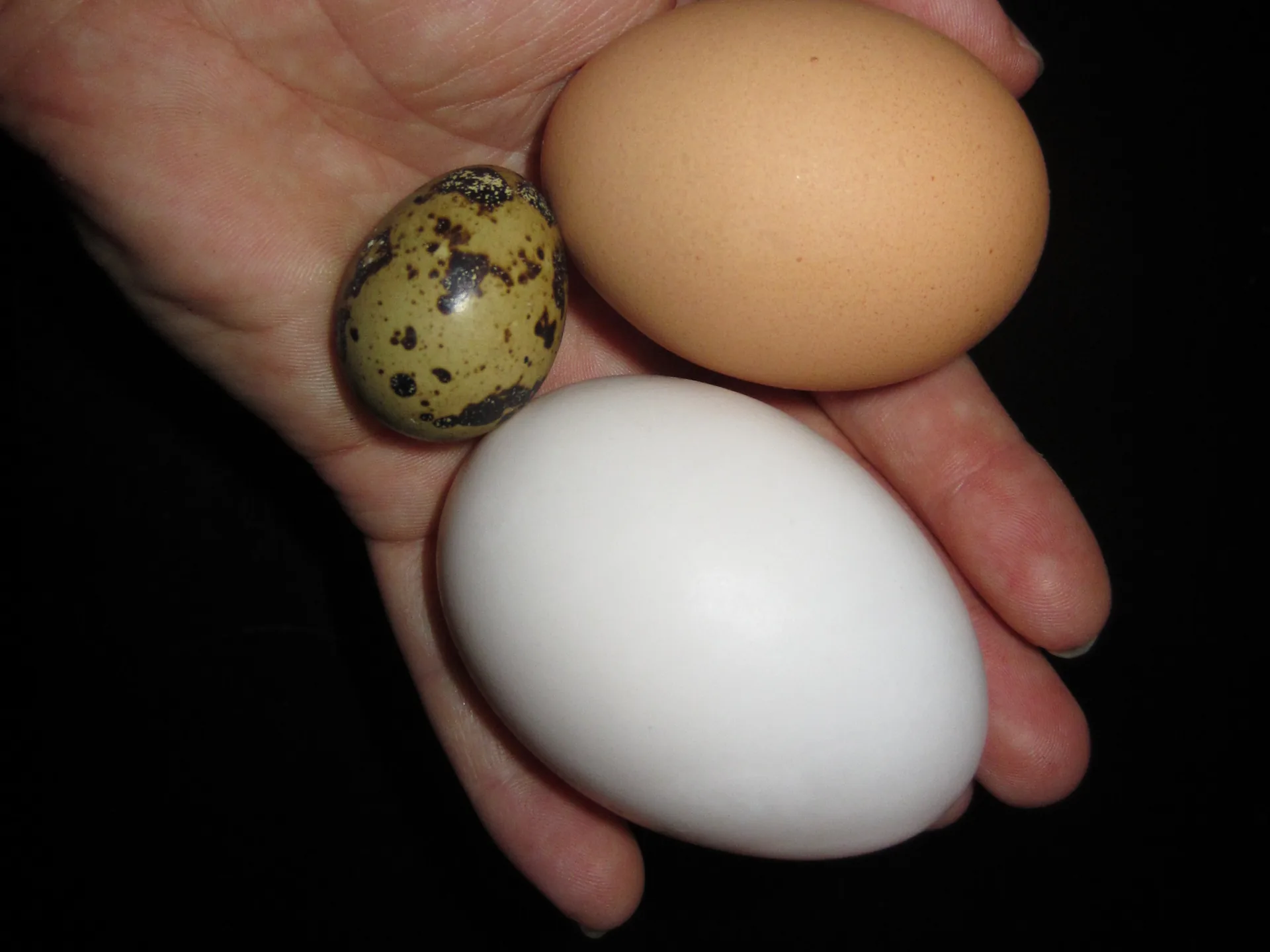
The first thing you notice is size. A duck egg typically weighs 65 to 90 grams, while a large chicken egg sits around 50 to 55 grams. Hold one in each hand and the duck egg feels noticeably heavier and rounder. The hero photo at the top of this page shows the gap: the big white egg is the duck egg, the brown one is a chicken egg, and the tiny speckled one is a quail egg for scale.
Duck eggshells are thicker and tougher than chicken shells. That is good news for storage and shipping, but it does mean you crack them with a bit more authority. A gentle tap that opens a chicken egg will often just dent a duck egg.
Shell color depends on the breed, same as with chickens. Most duck eggs are white or pale cream, but Khaki Campbells and some others lay eggs with a greenish or blue-gray tint, and Cayugas famously lay eggs that can look nearly black early in the season before fading to gray. If you love the blue and green eggs from breeds like Easter Eggers, you can read more in our best egg-laying breeds guide.
The other visible difference is inside. Duck eggs have a proportionally larger yolk. A chicken egg is roughly one-third yolk by weight, while a duck egg leans higher, which is part of what makes them so rich.
Taste and Texture
People expect duck eggs to taste wildly different. They do not, at least not in the way most first-timers imagine. A fresh duck egg from a duck on a normal diet tastes like a richer, creamier chicken egg. The bigger yolk and higher fat give it a fuller mouthfeel, and the flavor is a little more pronounced.
Where duck eggs really diverge is texture when cooked. The whites contain more protein, so they set firmer and can turn slightly rubbery if you overcook them. Scramble a duck egg over high heat for too long and it tightens up fast. Low and slow is the move. The yolks, on the other hand, stay luxuriously creamy and make an outstanding fried egg with a jammy center.
One honest caveat: if a duck forages heavily on fish, snails, or strong-flavored feed, the eggs can pick up a slightly gamier note. This is uncommon with backyard ducks on standard feed, but it is why some people who tried duck eggs once and disliked them were probably eating eggs from a duck with an unusual diet. Feed drives flavor in both species, which is one reason we care so much about what backyard poultry eat.
Nutrition Compared
Because duck eggs are bigger, a single duck egg delivers more of almost everything than a single chicken egg. Here is a per-egg comparison using USDA figures, with a duck egg at about 70 grams and a large chicken egg at about 50 grams.
| Per egg | Duck egg (~70 g) | Chicken egg, large (~50 g) |
|---|---|---|
| Calories | ~130 | ~72 |
| Protein | ~9 g | ~6.3 g |
| Fat | ~9.6 g | ~4.8 g |
| Cholesterol | ~619 mg | ~186 mg |
| Vitamin B12 | ~3.8 mcg | ~0.5 mcg |
| Iron | ~2.7 mg | ~0.9 mg |
| Folate | higher | lower |
Duck eggs are especially high in vitamin B12, iron, and the fat-soluble vitamins A and D, and they carry more omega-3 fatty acids than a typical chicken egg. Part of that is simply the larger yolk, since the yolk is where most of the vitamins and minerals live.
The number that jumps out is cholesterol. A duck egg carries roughly three times the cholesterol of a large chicken egg. It is worth some context here: current dietary guidance from health authorities no longer sets a hard daily cholesterol cap, because dietary cholesterol has less effect on blood cholesterol for most people than saturated fat and overall diet do. Still, if your doctor has you watching cholesterol closely, duck eggs pack more of it per egg, and that is a conversation to have with them rather than with a chicken blog. This is general information, not medical advice.
For a healthy person, both eggs are an excellent source of complete protein, choline, and B vitamins. Duck eggs just come in a bigger, richer package.
Baking With Duck Eggs
This is where duck eggs earn their reputation. Bakers pay a premium for them because the higher fat and protein content changes how batters and doughs behave.
More albumen protein in the white means more structure and lift, so cakes and sponges rise higher and hold their shape. More fat in the yolk means more moisture and a richer crumb. The result is baked goods that come out taller, fluffier, and more tender. Custards, quiches, and lemon curd set beautifully and taste noticeably richer. Pasta dough made with duck eggs is silkier and a deeper yellow.
For substitution, the simplest rule is that one duck egg roughly replaces one large chicken egg in most recipes, and it will make the result a little richer. If you want to match volume precisely in a fussy recipe, use two duck eggs for every three large chicken eggs, or just weigh your eggs. Because duck eggs run larger, an extra one in a delicate recipe can throw off the liquid balance, so weighing is the safest approach for things like macarons or angel food cake.
One tip from experience: whip duck egg whites a little less than you think you need to. They stiffen fast because of the extra protein, and over-whipped duck whites go dry and grainy.
Cooking and Frying Duck Eggs
Everyday cooking with duck eggs is easy once you adjust for two things: they are bigger, and the whites set firmer.
- •Fried: Cook over medium to medium-low heat. The creamy yolk is the reward here, so pull them while the yolk is still soft.
- •Scrambled: Go low and slow and take them off the heat while they still look slightly underdone. Residual heat finishes them and keeps the whites tender.
- •Boiled: Duck eggs need about a minute or two longer than chicken eggs because of their size. Start with 8 to 9 minutes for a firm yolk and adjust. The tougher shell can make peeling easier once you get the knack.
- •Baked or poached: Both work well, and the firm white holds a poached egg together nicely.
The thicker shell means you crack them with a firmer tap. Crack on a flat surface rather than the edge of a bowl to avoid driving shell fragments into that big yolk.
Egg Allergies: An Important Note
You will sometimes read that people allergic to chicken eggs can safely eat duck eggs. Be careful with that claim.
Duck and chicken eggs share several of the same allergenic proteins, so cross-reactivity is common. That said, the specific proteins are not identical, and there are documented cases of people who react to one and tolerate the other, in both directions. The problem is that this is unpredictable from person to person. Someone with a chicken egg allergy might tolerate duck eggs, might react just as strongly, or might react even more.
If you or someone in your household has an egg allergy, do not treat duck eggs as a safe swap on your own. That is a decision for an allergist, who can test and advise properly. Egg allergy reactions can be serious. This article is general information and not a substitute for medical guidance.
Shelf Life and Storage
Duck eggs keep slightly longer than chicken eggs, thanks to that thicker shell and, if unwashed, an intact bloom (the natural coating that seals the pores). In practical terms the storage rules are the same as for chicken eggs.
In the United States, commercial eggs are washed and must be refrigerated. Backyard eggs of either kind that still have their bloom can sit on the counter for a week or two, but refrigeration is safer and extends freshness to several weeks. Once you wash an egg, refrigerate it. Ducks tend to lay in damp, dirtier spots than hens, so backyard duck eggs often need a gentle cleaning, and a cleaned egg belongs in the fridge.
Food safety is the same for both. Cook eggs thoroughly for anyone pregnant, very young, elderly, or immune-compromised, and do not eat cracked or leaking eggs. Salmonella risk applies to duck and chicken eggs alike, so the old advice about raw eggs holds for both.
Price and Availability
Duck eggs cost more, usually $6 to $12 a dozen at farmers markets, Asian grocery stores, and specialty shops, compared with $3 to $6 for chicken eggs. You will rarely find them in a mainstream supermarket.
The price gap comes down to scale, not to ducks being poor layers. There is no giant industrial duck-egg supply chain the way there is for chicken eggs, so nearly all duck eggs come from small farms selling in small batches. The top laying duck breeds actually match or beat the best laying hens for annual output, which surprises people. If you are already selling backyard chicken eggs, duck eggs can command a premium at the same market. Our guides on how much you can make selling eggs and selling eggs legally apply to duck eggs too, since egg-sale rules in most states cover all poultry eggs, not just chicken.
Should You Raise Ducks for Eggs?
If you love duck eggs and have room, keeping a few ducks is very doable, and in some ways easier than chickens. Here is the honest picture.
The good:
- •Strong layers. Khaki Campbells lay 250 to 340 eggs a year, and Welsh Harlequins and Indian Runners are close behind. That rivals a Leghorn or Rhode Island Red.
- •Better winter production. Ducks are far less affected by short winter days than hens. Many keep laying through the cold months when chickens shut down. They also shrug off cold and wet weather that stresses chickens.
- •Hardy and healthy. Ducks are more disease resistant than chickens as a rule and are tough foragers that gobble up slugs, snails, and mosquito larvae.
- •They lay early. Ducks almost always lay in the early morning, usually before you let them out, so eggs stay in one predictable place.
The trade-offs:
- •Water and mess. Ducks do not need a pond, but they must have water deep enough to dunk their whole bill and keep their eyes and nostrils clean. They splash constantly and turn a run muddy in a hurry. Plan on more frequent bedding changes.
- •No high roosts or nest boxes needed. Ducks sleep and lay on the ground, so their housing is simpler, but it must be predator-proof at ground level.
- •They can be loud. Female ducks quack, and some breeds are chatty. If noise ordinances or neighbors are a concern, check before you commit.
- •They eat a bit more and need niacin-rich feed, so growing ducklings often need a supplement or waterfowl feed rather than plain chick starter.
If you are torn between the two species, our full chickens vs ducks comparison walks through housing, temperament, meat, and cost in detail. Plenty of keepers end up with a mixed flock and get the best of both. If your main goal is eggs from hens, start with our guide to raising chickens for eggs and the breed-by-breed egg-laying breakdown.
Common Mistakes
- •Overcooking the whites. The number one duck-egg regret. Their extra protein sets firm and turns rubbery fast. Cook gentler than you would a chicken egg.
- •Assuming they are allergy-safe. Covered above, but worth repeating. Never swap duck for chicken eggs to dodge an egg allergy without an allergist's guidance.
- •Cracking them too gently. The tough shell fools people into a soft tap, then a harder one that shatters shell into the yolk. One firm crack on a flat surface.
- •Expecting them everywhere. They are a specialty product. Line up a farmer or market source rather than hoping the supermarket carries them.
- •Feeding ducklings plain chick starter long-term. Growing ducks need more niacin than chicks. Use waterfowl feed or supplement, or you can see leg problems.
Frequently Asked Questions
Are duck eggs healthier than chicken eggs? They are more nutrient-dense per egg, with more protein, B12, iron, and omega-3s, but also more fat and much more cholesterol. Neither is strictly healthier. For most healthy people both are an excellent food. If you watch cholesterol, note that duck eggs carry about three times as much per egg.
Do duck eggs taste fishy? Not normally. A duck egg from a duck on standard feed tastes like a richer chicken egg. A gamey or fishy note usually means the duck was eating a lot of fish, snails, or strong-flavored feed, which is uncommon in backyard flocks.
Can I substitute duck eggs for chicken eggs in baking? Yes, and many bakers prefer them. Use one duck egg per large chicken egg for a richer result, or two duck eggs for every three chicken eggs to match volume more precisely. Weigh your eggs for delicate recipes.
Why are duck eggs so expensive? There is no large-scale duck-egg industry, so nearly all of them come from small farms in small batches. The price reflects scale, not quality. Good laying-duck breeds actually match the best laying hens for output.
How long do duck eggs last? Slightly longer than chicken eggs because of the thicker shell and intact bloom. Refrigerated, they keep several weeks. Follow the same food-safety rules you would for chicken eggs, and refrigerate any egg you have washed.
Do you need a pond to keep ducks for eggs? No. Ducks need water deep enough to submerge their whole bill and rinse their eyes and nostrils, plus enough to bathe in, but a kiddie pool or a large tub works. They do splash a lot, so plan for a muddier run.
Which duck breeds lay the most eggs? Khaki Campbells top the list at 250 to 340 eggs a year, followed by Welsh Harlequins and Indian Runners. Pekins lay well and double as a meat bird.
Are duck eggs safe to eat raw? Treat them like chicken eggs: raw or undercooked eggs of either kind carry a salmonella risk. Cook them thoroughly, especially for anyone pregnant, very young, elderly, or immune-compromised.
Sources
- •USDA FoodData Central, Egg, duck, whole, fresh, raw and Egg, chicken, whole, raw, fresh: https://fdc.nal.usda.gov/
- •Penn State Extension, Small-Scale Egg Production (poultry egg quality and handling): https://extension.psu.edu/small-scale-egg-production-organic-and-conventional
- •University of Kentucky Extension, Raising Ducks (waterfowl feeding, niacin, and laying): https://afs.ca.uky.edu/poultry/raising-ducks
- •Merck Veterinary Manual, Nutrition of Waterfowl and egg-safety guidance: https://www.merckvetmanual.com/poultry
Related Guides
How Many Eggs Does a Chicken Lay a Day? (Real Numbers)
A hen lays at most one egg a day, and most backyard hens lay 4 to 6 a week. Why one is the limit, what a good hen lays per year, and why counts drop.
Beginner GuidesWhen Do Chickens Start Laying Eggs? Age & Signs
Most hens lay their first egg around 18 to 22 weeks old. Learn the signs a pullet is ready, what delays laying, and how to know eggs are coming.
Beginner GuidesHow Much Money Can You Make Selling Eggs? Real 2026 Math
Real profit numbers for selling backyard eggs: revenue and costs at 6 to 50 hens, 2026 prices by sales channel, and what actually eats your margin.
Beginner GuidesHow to Candle Eggs: A Day-by-Day Hatching Guide
Learn how to candle chicken eggs step by step. What to look for on day 7, 14, and 18, how to spot a quitter, and the gear you need. Beginner friendly.