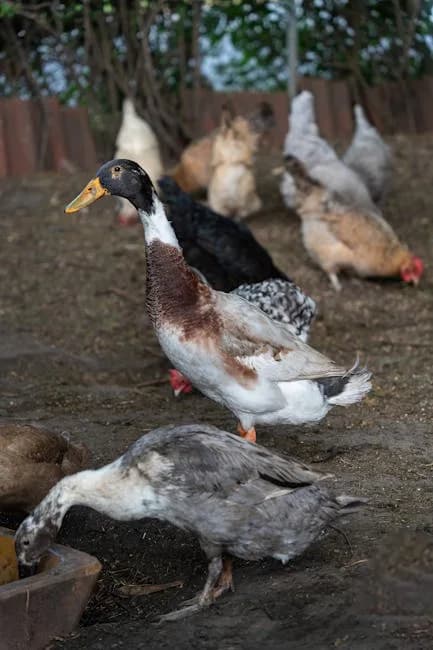
Chickens vs Ducks: Which Should You Raise?
A honest side-by-side comparison of raising backyard chickens versus ducks. Covers eggs, meat, temperament, noise, housing, and more.
Researched from university extension, USDA, and veterinary sources. How we research.
Chickens vs Ducks: Which Should You Raise?
This is one of those debates that pops up constantly in backyard poultry forums, and both sides have strong opinions. Chicken people think duck people are weird. Duck people think chicken people are missing out. And then there's a sizable group that keeps both and wonders what all the fuss is about.
The truth is, both chickens and ducks make great backyard poultry. But they're different animals with different needs, different strengths, and different quirks. Which one is right for you depends on what you're looking for.
Let's break it down category by category so you can make an informed decision. Or, you know, just end up getting both like most people eventually do.
Egg Production
This is usually the main reason people get backyard poultry, so let's start here.
Chickens: A good laying breed like a Rhode Island Red or Leghorn will give you 250 to 320 eggs per year during peak production. Chicken eggs come in a range of sizes (medium to jumbo depending on breed and age) and colors (white, brown, blue, green). Production drops noticeably in winter without supplemental lighting, and most breeds slow down significantly after year 2 or 3.
Ducks: Top laying duck breeds like Khaki Campbells and Welsh Harlequins lay 250 to 340 eggs per year, which actually matches or exceeds the best chicken breeds. Duck eggs are about 30% larger than chicken eggs, with bigger yolks and richer flavor. They're prized by bakers because the higher fat content makes pastries and cakes fluffy.
One big advantage ducks have: they're much less affected by seasonal light changes. Ducks will often keep laying through winter when chickens shut down entirely. Khaki Campbells are especially reliable year-round layers.
Winner: It's a tie, honestly. Chickens win on egg versatility (more size and color options), but ducks win on egg size, richness, and winter production. If you're baking a lot, duck eggs are incredible. For a full breakdown of how the two eggs stack up in the kitchen, see our duck eggs vs chicken eggs guide.

Egg Taste and Cooking
This deserves its own section because people always ask about it.
Duck eggs taste richer and slightly more "eggy" than chicken eggs. The yolks are larger proportionally, deeper in color, and creamier. Scrambled duck eggs are noticeably richer. Fried duck eggs have huge, gorgeous yolks.
Some people find duck eggs too rich for everyday eating and prefer chicken eggs for breakfast. Others love them and never go back. It's genuinely a personal preference thing.
For baking, duck eggs are objectively better. The extra fat and protein create better structure and lift. If you make a lot of cakes, quiches, or pasta, duck eggs will level up your results.
One practical note: duck eggs have thicker shells than chicken eggs, which means they last longer in the fridge (up to 6 weeks). The downside is they're a bit harder to crack cleanly.
Meat Quality
Chickens: Chicken meat is what everyone's used to. Lean white meat, mild flavor, versatile in the kitchen. If you're raising dedicated meat breeds like Cornish Cross, you can go from chick to freezer in 6 to 8 weeks. That's hard to beat for efficiency. (Check out our Raising Chickens for Meat guide for the full breakdown.)
Ducks: Duck meat is darker, richer, and fattier than chicken. It's closer to red meat in flavor and texture. Pekin ducks are the most popular meat breed and reach processing weight (5 to 7 pounds) in about 7 to 8 weeks, which is comparable to Cornish Cross chickens.
Duck is considered a delicacy in many cuisines and sells for significantly more per pound than chicken if you're looking to sell at farmers markets.
Winner: Chickens win for everyday, familiar meat. Ducks win if you want something special and rich. It depends on your taste preferences and what your family actually likes to eat.
Temperament and Personality
Chickens: Chicken personalities vary wildly by breed. Buff Orpingtons are calm and cuddly. Leghorns are flighty and nervous. Most chickens fall somewhere in between. They can be trained to come when called (mostly because they associate you with treats) but they're not what anyone would call affectionate. They tolerate you.
The pecking order is real in chicken flocks. There can be bullying, feather-picking, and occasionally blood drawn when establishing or reshuffling the hierarchy. Some hens are just plain mean to others.
Ducks: Ducks are generally calmer, friendlier, and more social than chickens. They tend to stick together as a group rather than forming strict hierarchies. Bullying happens less frequently in duck flocks. Many duck keepers describe their birds as genuinely personable and entertaining.
Ducks are also hilarious. They waddle. They quack at everything. They splash water everywhere and look absurdly pleased about it. There's a reason duck videos do well on social media.
On the flip side, ducks are harder to herd or manage than chickens. Chickens will put themselves to bed in the coop at dusk. Ducks might decide they'd rather sleep by the pond and you'll be out there at 10 PM trying to convince a group of stubborn waterfowl to go inside. This is a common complaint on r/BackyardDucks.
Winner: Ducks, for most people. They're friendlier, less aggressive with each other, and more entertaining. But chickens are easier to manage.
Noise
This matters a lot if you have neighbors.
Chickens: Hens are relatively quiet most of the time. The exception is the "egg song," which is a loud, proud announcement that a hen has just laid an egg (or is about to). It lasts a few minutes and can be surprisingly loud. Other than that, hens mostly make soft clucking sounds. Roosters, of course, are a different story. They crow. A lot. Starting at 4 AM.
Ducks: Female ducks (hens) are loud. Like, really loud. A duck quack carries further than a chicken cluck, and they quack at everything. A stranger walking by. A leaf falling. Nothing at all. If you're in a suburban neighborhood with close houses, duck noise can be a problem.
Male ducks (drakes), ironically, are very quiet. They make a soft, raspy sound that's barely audible. So if noise is a concern, an all-drake flock is actually quieter than an all-hen chicken flock. But drakes without hens can develop behavioral issues, so that's not usually recommended.
Winner: Chickens. Hens are much quieter than female ducks. If noise is a dealbreaker, chickens are the safer choice.

Housing Requirements
Chickens: Chickens need a coop with roosts, nesting boxes, and good ventilation. Standard recommendation is 4 square feet per bird inside the coop and 10 square feet per bird in the run. They roost on bars at night and need nesting boxes for laying. Our How to Build a Chicken Coop guide covers the details.
Ducks: Ducks don't roost. They sleep on the ground, so they don't need roosting bars. They need slightly more floor space (4 to 6 square feet per bird) because they're broader and sleep in a pile. Nesting boxes should be on the ground level, not elevated.
Duck housing needs to be well-ventilated because ducks produce a lot more moisture than chickens. Their water habits alone create a humidity challenge that can cause respiratory issues if the housing isn't properly aired out.
The water question: Ducks need water deep enough to submerge their heads. They use it to clean their nostrils and eyes, and they need it for proper eating (they dip their bills back and forth between food and water). A kiddie pool or similar water source makes ducks much happier, but it's not strictly required. What IS required is a water container deep enough for head dunking.
That said, ducks will make a mess of any water source. They splash it everywhere, turn the ground around it into mud, and generally create a swamp. This is probably the number one complaint from duck owners. Managing duck water and the resulting mud is an ongoing battle.
Winner: Chickens. Simpler housing needs and no water management headaches.
The Mess Factor
Let's be honest about this.
Chickens: Chickens are reasonably tidy as far as livestock goes. They poop a lot (especially at night on the roost), but it's relatively dry and easy to manage with regular bedding changes or a droppings board. They scratch around in their run and can make it bare, but they don't create mud pits.
Ducks: Ducks are messy. Objectively, significantly messier than chickens. Their droppings are wetter and more frequent. They splash water everywhere, creating mud. Their bedding gets soaked faster and needs changing more often. If you have a yard you care about, ducks will destroy the area around their water source in no time.
The upside to duck mess is that their droppings are excellent fertilizer and don't need to be composted as long as chicken manure (which is "hot" and can burn plants if applied fresh). Duck manure can go straight on the garden.
Winner: Chickens, by a mile. Ducks are lovable slobs.
Cold and Heat Tolerance
Chickens: Most chicken breeds handle cold weather reasonably well as long as they have a dry, draft-free coop. Large-combed breeds (like Leghorns) can get frostbite on their combs in extreme cold. Heat is actually harder on chickens than cold. Temperatures above 90°F stress most breeds, and heat stroke is a real risk.
Ducks: Ducks are cold-weather champions. Their waterproof feathers and thick down provide incredible insulation. Most duck breeds handle below-zero temperatures without batting an eye, as long as they have shelter from wind and access to unfrozen water. The University of Minnesota Extension notes that ducks are among the most cold-hardy domestic poultry.
In heat, ducks need access to water to cool off (they can't sweat and have limited ability to pant). As long as they have a pool or water to wade in and shade available, they handle heat well. Without water access in hot weather, they'll struggle more than chickens.
Winner: Ducks for cold tolerance (and it's not close). For heat tolerance, it depends on whether water is available. In dry, hot climates without a water source, chickens actually manage better.
Pest Control
Chickens: Chickens are great at eating bugs. They'll scratch through mulch, leaf litter, and garden beds hunting for insects, grubs, and worms. They're particularly good at controlling ticks and garden pests. The downside is they'll also scratch up your garden in the process.
Ducks: Ducks are slug and snail destroying machines. If you have a slug problem, ducks will solve it. They also eat mosquito larvae from standing water, which is a nice bonus. Ducks are generally gentler on garden plants than chickens because they don't scratch. They waddle through and eat pests without tearing everything up.
The Oregon State University Extension specifically recommends ducks for integrated pest management in gardens because of their effectiveness at slug control and their low impact on plants.
Winner: Ducks for slug/snail control and garden-friendly pest management. Chickens for general tick and insect control.
Predator Vulnerability
Chickens: Chickens are vulnerable to a long list of predators: hawks, foxes, raccoons, weasels, coyotes, snakes (for eggs and chicks), and more. They roost at night, which makes them sitting targets if the coop isn't secure. On the plus side, chickens will put themselves in the coop at dusk, making lockup easy.
Ducks: Ducks face the same predators but have a harder time getting to safety because they can't fly (most domestic breeds) and they're slower on land. At night, getting them into shelter can be a chore. Ducks are also more vulnerable to dogs, which tend to see waddling ducks as irresistible chase targets.
Winner: Chickens. They're better at self-preservation and easier to lock up safely at night.
Lifespan and Long-Term Production
Chickens: Chickens live 5 to 10 years on average. Egg production peaks in years 1 to 2 and declines steadily after that. By year 4 or 5, most hens are laying less than half their peak output.
Ducks: Ducks live 8 to 12 years on average, and some breeds maintain better egg production into their later years than chickens do. Khaki Campbells can maintain decent production through year 4 or 5, while comparable chicken breeds have slowed significantly by then.
Winner: Ducks. Longer lifespan and better sustained production.
Cost Comparison
Ducks and chickens are roughly similar in terms of ongoing costs. Ducks eat slightly more than chickens (about 6 to 8 ounces of feed per day vs. 4 to 6 ounces for chickens), so feed costs are marginally higher.
The biggest cost difference is housing setup. If you provide ducks with a pool or pond, there's the cost of the pool plus ongoing water usage and the occasional need to deal with mud and drainage.
Chick and duckling prices are comparable at $3 to $8 each for common breeds.
A starter kit for chicks or ducklings covers the basics for either species and runs $30 to $60.
Winner: Chickens, slightly, due to lower feed consumption and simpler housing.
Can You Keep Both?
Yes! Lots of people keep chickens and ducks together, and it works fine with a few considerations:
- •Housing: You can house them in the same coop as long as there are ground-level nesting areas for ducks and elevated roosts for chickens. The coop needs extra ventilation because ducks add a lot of moisture.
- •Feed: Adult chickens and ducks can eat the same layer feed. Do NOT use medicated chick starter for ducklings. The medication (amprolium) is formulated for chicks, and ducks eat more per body weight, which can lead to toxicity.
- •Water: Ducks need deeper water than chickens. Set up a duck water station separate from chicken waterers, or use a design that allows head-dunking without flooding the coop.
- •Free-ranging: They coexist well on pasture. Ducks tend to stick together in their own group and chickens do the same.
If you're interested in starting with one and adding the other later, get chickens first. They're easier to learn on, and adding ducks later is simpler than the reverse.
The Bottom Line
Neither chickens nor ducks are universally "better." It really comes down to your situation and priorities:
Choose chickens if: You want simplicity, quieter birds, cleaner setup, and a straightforward egg-collecting experience. Chickens are the proven gateway bird for a reason.
Choose ducks if: You want friendlier birds, richer eggs, better cold tolerance, superior garden pest control, and you don't mind dealing with water mess.
Choose both if: You have the space and want the best of both worlds. They complement each other well.
For more help getting started with chickens, check out our Complete Beginner's Guide to Raising Backyard Chickens. And if you're still figuring out what breeds to start with, our 10 Best Chicken Breeds for Beginners is a great next step.
Sources:
- •University of Minnesota Extension. "Raising Ducks in Small Flocks." https://extension.umn.edu/
- •Oregon State University Extension. "Ducks for Pest Control in Gardens." https://extension.oregonstate.edu/
- •Metzer Farms. Duck breed comparison charts. https://www.metzerfarms.com/
- •r/BackYardChickens and r/duck. Various threads comparing chicken and duck ownership. https://www.reddit.com/r/BackYardChickens/
Product prices and availability are accurate as of the date shown and are subject to change. Any price and availability information displayed on Amazon at the time of purchase will apply to the purchase of this product.
Related Guides
Cuckoo Marans: Complete Breed Guide
Cuckoo Marans lay dark brown eggs and are the easiest Marans to find and sex. Guide to egg color, barred looks, temperament, care, and Cuckoo vs Black Copper.
BreedsAraucana Chicken Breed Guide: Blue Eggs, Tufts, Care
Araucana chicken breed guide: rumpless bodies, ear tufts, true blue eggs, the lethal tuft gene, care, and how they differ from Ameraucanas.
BreedsCrested Chicken Breeds: Types, Care, and Crest Facts
Crested chicken breeds like Polish and Silkie wear feathery pom-poms. Learn the types, why they grow crests, and how to keep them healthy.
BreedsAyam Cemani Breed Guide: The All-Black Chicken (2026)
Ayam Cemani explained: the Indonesian breed that is black to the bone, the gene behind it, cream eggs, weights, temperament, prices, and what is myth.