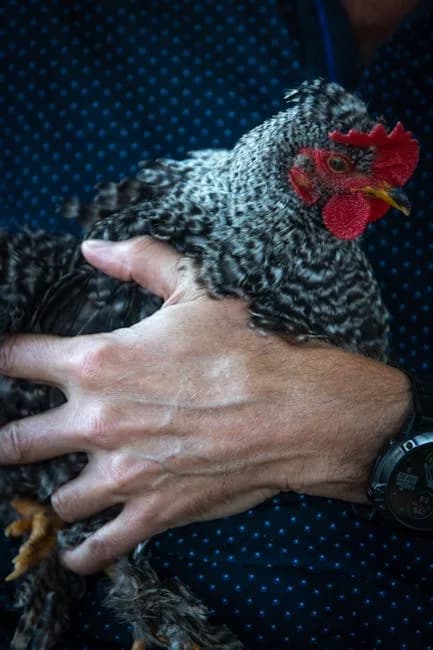
How to Clip a Chicken's Wings: Step-by-Step
How to clip a chicken's wings safely in minutes: which wing, which feathers to cut, the tools you need, and how to keep birds from flying the fence.
Researched from university extension, USDA, and veterinary sources. How we research.
Clipping a chicken's wings sounds scarier than it is. You are not cutting into the bird, you are trimming the long flight feathers on one wing the same way you would trim a fingernail, and it takes about two minutes once you know which feathers to cut. Done right, it throws the bird off balance just enough that it can't get the lift to clear a fence, while leaving it able to flap, flutter down from a roost, and get away from a startled dog. This guide walks through exactly which feathers to cut, how far, how to hold the bird, and the one thing (blood feathers) you have to watch for.
Affiliate Disclosure: This article contains affiliate links to Amazon. If you buy something through these links, we earn a small commission at no extra cost to you. We only recommend products we genuinely think are worth your money. Full disclosure.
Wing Clipping at a Glance
| Question | Short answer |
|---|---|
| Does it hurt? | No, not when done right. Flight feathers have no nerves or blood in the part you cut. |
| One wing or two? | One wing only. The imbalance is what keeps the bird from flying. |
| Which feathers? | The 10 long primary flight feathers at the outer end of the wing. |
| How far down? | About halfway, leaving the shorter covert feathers that lie over the base. |
| What do I need? | Sharp poultry shears or scissors, styptic powder, a towel, and a helper if you can get one. |
| How often? | After each molt, when the cut feathers get replaced. Usually once a year. |
| What to avoid? | Blood feathers: new feathers still growing in with a dark, blood-filled shaft. |
What You'll Learn
- •What Wing Clipping Actually Does
- •Should You Clip Your Chicken's Wings?
- •One Wing or Both?
- •Understanding Chicken Wing Anatomy
- •What You'll Need
- •How to Clip a Chicken's Wings, Step by Step
- •How to Catch and Hold a Chicken
- •Blood Feathers: The One Thing to Watch For
- •When to Clip and How Often
- •Does It Hurt? Is It Humane?
- •Alternatives to Clipping Wings
- •Common Mistakes
- •Frequently Asked Questions
What Wing Clipping Actually Does
A chicken flies by beating both wings evenly and using the long feathers at the wingtips to grab air and push it down (see can chickens fly for how far and how high each breed manages). Those long feathers, the primaries, do most of the lifting. When you shorten the primaries on one wing, you take away the surface area on that side. The bird now pushes hard with one full wing and weakly with the trimmed one, so instead of rising straight up it slews sideways and drops back down. It can still flap and flutter, it just can't generate the clean, balanced lift it needs to clear a four or five foot fence.
That is the whole trick. You are not grounding the bird or disabling it. A clipped chicken can still hop onto a low roost, glide down from a height, and beat its wings to escape a predator on the ground. What it loses is the ability to launch itself up and over a barrier from a standing start. For most backyard keepers that is exactly the problem they are trying to solve: the one hen who keeps landing in the neighbor's tomatoes.
It is also completely reversible. The clipped feathers are dead structures, like hair, and they get replaced at the next molt when the bird drops and regrows its whole set of feathers. If you decide you never want to clip again, you simply stop, and the bird flies normally once the fresh primaries grow in.
Should You Clip Your Chicken's Wings?
Clipping is not automatic. Plenty of flocks never need it. Whether it makes sense for you comes down to your birds, your fencing, and your neighbors.
Good reasons to clip:
- •A specific bird keeps flying over the fence or run wall and getting into gardens, the road, or a neighbor's yard.
- •You free-range in a yard with a fence the birds can clear, and you want them to stay put. See our free-range guide for the bigger picture on containment.
- •Lightweight, flighty breeds like Leghorns, Anconas, Fayoumis, or most bantams are treating your five foot fence like a suggestion.
- •Birds are roosting somewhere unsafe (a tree, a fence line, the top of the run) where predators can reach them at night.
Reasons to skip it:
- •Your run is fully enclosed with a roof or aviary netting overhead. If they physically can't get out, clipping is pointless.
- •You keep heavy breeds like Orpingtons, Brahmas, Wyandottes, or Jersey Giants. These birds barely get off the ground and rarely need clipping at all.
- •Your birds need to fly up to escape predators because they free-range in open areas with ground threats. A clipped bird is a slightly easier target for a fox or loose dog, so weigh containment against escape.
- •You show your birds. Clipped wings are a disqualification at poultry shows, and the feathers won't be full again until the next molt.
If you are on the fence, start with the least invasive fix (a taller barrier or a covered run) and only clip if the bird keeps beating it.
One Wing or Both?
Clip one wing only. This trips up a lot of first-timers who assume that if trimming one wing helps, trimming both must help more. The opposite is true.
If you clip both wings evenly, the bird stays balanced. It has less feather on each side, but the two sides still match, so a determined flyer can compensate and still get airborne, just with more effort. Clipping a single wing creates lopsided lift on purpose. When the bird tries to take off, one side pushes and the other doesn't, and it corkscrews back to the ground after a foot or two. The imbalance is the entire mechanism.
It does not matter whether you pick the left wing or the right, as long as you only do one. Some keepers clip the same side on every bird just so it is easy to remember who has been done and who hasn't.
Understanding Chicken Wing Anatomy
You only need to recognize a few feather groups to clip safely. Extend a wing fully and you will see them layered from the leading edge back.
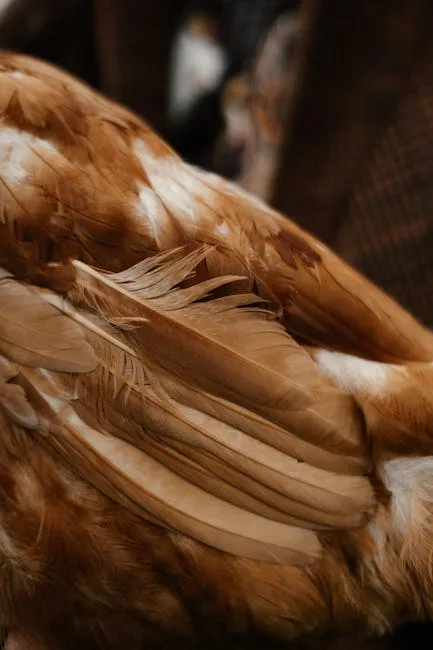
- •Primary flight feathers (primaries). The ten long, stiff feathers at the outer end of the wing, closest to the wingtip. These are the ones you cut. When the wing is folded, they often tuck slightly behind the shorter feathers, which is why you fan the wing open to find them.
- •Secondary flight feathers (secondaries). The next set in, running along the middle of the wing toward the body. Leave these alone. Cutting into the secondaries takes away too much lift and can leave the bird nearly flightless and unable to flutter to safety.
- •Covert feathers. The shorter feathers that lie over the base of the primaries and secondaries like shingles. They mark your stopping line. You trim the primaries down to roughly where the coverts end, so the coverts hide the cut edges and the wing still looks tidy when folded.
- •The axial feather. A single shorter feather that sits at the joint between the primaries and secondaries. It is a handy landmark: everything toward the wingtip from it is a primary.
The part of each primary you cut is the shaft, or quill, above where it emerges from the skin. In a fully grown feather that upper shaft is dry and hollow, with no nerve and no blood, exactly like the free end of your fingernail. That is why a proper clip doesn't hurt. The only exception is a feather that is still growing, which we cover below.
What You'll Need
You do not need much, and you probably have most of it already.
- •Sharp scissors or poultry shears. A clean, sharp cut is safer and less stressful than sawing at feathers with dull kitchen scissors. Sturdy poultry shears or heavy-duty scissors both work well. Dull blades crush and split the shaft instead of slicing it.
- •Styptic powder or cornstarch. Your safety net in case you accidentally nick a blood feather. A pinch stops the bleeding fast. Keep styptic powder in your kit; plain cornstarch or flour from the pantry works in a pinch.
- •A towel. Wrapping the bird "burrito style" pins the wings and calms most chickens down, making the whole job easier for both of you.
- •A helper. Not required, but one person holding the bird while the other trims is far easier than doing it solo. If you keep birds with kids around, this is a nice two-person job.
- •Good light. You need to see the shaft of each feather clearly to spot any blood feathers before you cut.
A basic first aid kit on hand covers you for the rare nicked feather and for any other small mishaps around the flock.
How to Clip a Chicken's Wings, Step by Step
Work when the birds are calm. Late in the day, or after dark off the roost, chickens are docile and easy to handle. Move slowly and talk quietly.
- •Gather your tools and catch the bird. Have your shears, styptic powder, and towel within reach before you pick anyone up. Catch the chicken (see the next section) and get it settled against your body.
- •Restrain the bird securely. Hold it firmly with both wings folded closed against its sides, either tucked under your arm like a football or wrapped in a towel with just one wing free to work on. A calm, well-held bird barely struggles.
- •Extend one wing fully. Gently take the leading edge of one wing and stretch it all the way open so the feathers fan out. You will see the ten long primaries at the outer end and the shorter coverts layered over their base.
- •Find the primaries and check for blood feathers. Look at the shaft of each long primary. A mature feather has a thin, pale, hollow shaft. A blood feather has a fat, dark, pinkish or blue-gray shaft full of blood. Skip any blood feathers entirely and cut around them (more on this below).
- •Cut the primaries about halfway down. Trim across the ten primaries in a straight line, taking off roughly the lower half of each and stopping at about the level where the covert feathers end. Cutting to the coverts keeps the trimmed edges hidden and avoids the secondaries. Never cut below the coverts into the meat of the wing.
- •Release and test. Let the bird go and watch it. A good clip usually shows up right away: the bird flaps, lifts a foot or so, tips to one side, and settles back down. If it still clears low obstacles, you can take the primaries down a little more, or clip a few of the secondaries nearest the tip on the same wing. Start conservative; you can always trim more, but you can't put feather back.
The whole thing takes a couple of minutes per bird once you have the routine. Your first bird will feel slow and fiddly. By the third one you'll wonder what you were nervous about.
How to Catch and Hold a Chicken
Half the battle with wing clipping is simply controlling the bird. A thrashing chicken is stressful for everyone and more likely to lead to a mistake.
The easiest time to catch a chicken is at night, lifting it straight off the roost when it is sleepy and won't run. During the day, corner the bird calmly rather than chasing it around the yard, which only winds everyone up. Some keepers use a long-handled poultry net to catch flighty birds without a rodeo.
Once you have the bird, the two reliable holds are:
- •The football hold. Tuck the chicken under one arm with its head pointing behind you and its body along your forearm. Your hand supports the chest and legs from below, and your arm keeps both wings pinned. Your other hand is free to open a wing and cut.
- •The towel wrap. Lay the bird on a towel and fold the fabric snugly around its body, leaving the head out to breathe and one wing accessible. This works great for solo clipping and for calming a nervous bird.
Keep a firm but gentle grip. Chickens settle fast when they feel secure and panic when they feel like they are falling, so support the body well. If you have a helper, one person holds and steadies while the other extends the wing and trims. Learning to catch and restrain birds confidently pays off for health checks, dust-bath parasite checks, and every other hands-on task, so it is a good skill to build early.
Blood Feathers: The One Thing to Watch For
This is the single safety rule that matters, so it gets its own section. Before you cut any feather, check whether it is a blood feather.
A blood feather, also called a pin feather, is a new feather that is still growing. While it grows, it has a blood supply running up the shaft to feed it. The shaft looks fat and dark, often pinkish, reddish, or bluish-gray, compared to the thin, dry, translucent shaft of a finished feather. If you cut a blood feather, it bleeds like a small open pipe, because you have cut into a living, blood-filled structure. It hurts the bird and can bleed surprisingly a lot.
You avoid this by looking at every long feather before you cut and skipping any that are still growing in. Simply cut around a blood feather, leaving it full length, and trim the mature ones on either side. This is also the main reason not to clip a bird in the middle of a heavy molt, when lots of new feathers are coming in at once.
If you do nick one, don't panic. Pinch a little styptic powder or cornstarch onto the cut end and apply gentle pressure for a minute or two. That stops almost all feather bleeds. For a stubborn one, you can pull the damaged blood feather straight out from the base with pliers (it is the base, still in the skin, that keeps bleeding) and press a clean cloth on the follicle until it clots. Keep the bird separate and calm until you are sure the bleeding has stopped, since other chickens will peck at blood.
When to Clip and How Often
Timing matters more for convenience than for the bird.
Age. Wait until a young bird is mostly feathered out and actually flying or attempting to clear barriers before you bother clipping. There is no reason to clip a chick. Most keepers clip when a growing bird starts testing the fence, usually somewhere around 12 to 20 weeks depending on breed.
Avoid molt. Do not clip during a heavy molt, when the wing is full of blood feathers. Wait until the new flight feathers have finished growing and the shafts have dried out and gone hard.
How often. A clip lasts until the bird molts and replaces those feathers, which for adult hens is typically once a year, usually in fall. After the molt the fresh primaries grow in at full length and flight comes back, so you re-clip the new feathers once they have matured. Get in the habit of checking your fence-jumpers each fall after the molt finishes and reclipping as needed. Roosters and some breeds molt on their own schedules, so go by the feathers, not the calendar.
Does It Hurt? Is It Humane?
Clipping flight feathers correctly does not hurt the chicken. The part you cut is dead tissue with no nerves and no blood supply, the same as trimming the white tip of your own fingernail or getting a haircut. Birds show no sign of pain from a proper clip and go right back to scratching and foraging.
It only causes pain if you do it wrong: cutting into a blood feather, or cutting so far down that you reach the skin and flesh of the wing. Both are avoidable by checking for blood feathers and stopping at the covert line. Cutting the feathers, not the wing, is the whole game.
There is a real welfare trade-off worth naming, though. A clipped bird can't fly up to escape a ground predator as easily, and it can't reach a high roost. If your birds free-range in open country with foxes, hawks that hunt on the ground, or loose dogs around, that lost escape route is a genuine cost. Weigh it against the risk you are solving. For a bird that keeps flying into a busy road, clipping is clearly the safer call. For a bird in a well-fenced yard that just occasionally hops out, a taller barrier might serve everyone better. Clipping is a management tool, not a default, so use it where it actually reduces risk.
Alternatives to Clipping Wings
Clipping is not the only way to keep birds where they belong, and sometimes another fix is better.
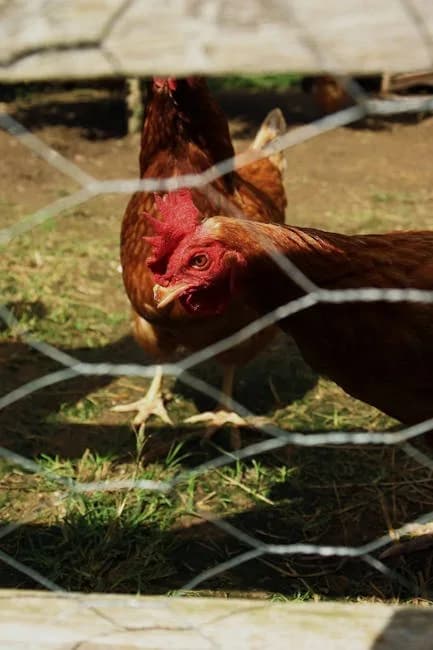
- •Cover the run. The most bulletproof fix is a roof or aviary netting over the top of the run. If the birds physically cannot get out, you never touch a feather. Overhead netting also keeps hawks and climbing predators out. Our roundup of run fencing and netting covers the materials.
- •Raise the fence. A determined light breed can clear four feet easily, but many birds are stopped by a six foot fence, especially with nothing next to it to launch from. Keep feeders, stumps, and coop roofs away from the fence line so birds can't use them as a staging step.
- •Add a top angle or netting strip. Angling the top of the fence inward, or running a strip of netting along the top, discourages birds that make it to the top edge.
- •Choose heavier breeds. If containment is a constant battle, your next birds could be heavy dual-purpose breeds that barely fly. Orpingtons, Brahmas, Wyandottes, and similar birds rarely clear a low fence. Flighty Mediterranean breeds and bantams are the usual escape artists.
- •Meet their needs inside the fence. Birds often bust out because they are crowded, bored, or short on forage. Enough space, dust-bathing spots, and things to peck cut down on the urge to go over the wall. Our beginner's guide covers giving a flock enough room to stay content.
Many keepers combine approaches: a covered run for nighttime and bad-weather containment, plus a quick wing clip on the one or two birds that treat the yard fence as optional during free-range time.
Common Mistakes
- •Clipping both wings. Even trimming keeps the bird balanced and still able to fly. Clip one wing only so the lift is lopsided.
- •Cutting a blood feather. Always check each feather's shaft first and skip the fat, dark, growing ones. Keep styptic powder ready just in case.
- •Cutting too far down. Stopping past the covert line risks the secondaries and, worse, the skin and flesh. Take off about the lower half of the primaries and no more.
- •Clipping during a molt. The wing is full of blood feathers then. Wait until the fresh feathers have finished growing and hardened.
- •Using dull scissors. Dull blades crush and split the shaft. Sharp poultry shears make a clean, safe cut.
- •Clipping show birds. Trimmed flight feathers are a show disqualification and won't grow back until the next molt.
- •Assuming it's permanent. It isn't. Birds regrow full flight feathers at the next molt, so mark your calendar to check and reclip.
- •Skipping restraint. A poorly held, thrashing bird is how mistakes happen. Wrap it in a towel or use a firm football hold before you pick up the shears.
Frequently Asked Questions
Does clipping a chicken's wings hurt?
No, not when it is done correctly. The long flight feathers you cut are dead tissue with no nerves or blood supply in the part you trim, just like the free end of a fingernail. Birds feel nothing and go straight back to normal. It only hurts if you cut into a blood feather that is still growing, or cut so low that you reach the skin, both of which you avoid by checking each feather and stopping at the covert line.
Do I clip one wing or both?
One wing only. Clipping a single wing throws the bird off balance so it can't generate even lift and can't get airborne. Clipping both wings evenly leaves the bird balanced and often still able to fly with a bit more effort. It doesn't matter whether you choose the left or right wing.
How many feathers do I cut and how far down?
Trim the ten long primary flight feathers at the outer end of the wing, taking off roughly the lower half of each one. Cut in a straight line down to about where the shorter covert feathers end, so the coverts hide the cut edges. Leave the secondary feathers closer to the body alone. If the bird can still fly after a test flap, take a little more, but start conservative.
How often do I need to reclip?
Until the bird molts and grows new feathers, which for most adult hens is once a year, usually in fall. When the fresh primaries grow back in at full length, flight returns and you reclip the new mature feathers. Check your known fence-jumpers each fall after the molt finishes.
Will clipped wings keep my chicken from flying completely?
Not completely, and that is by design. A clipped bird can still flap, flutter down from a height, and beat its wings to escape a ground threat. What it loses is the balanced lift needed to launch up and over a fence from a standing start. Very light, athletic birds may still manage short hops, in which case you can trim a bit more or add overhead netting.
What is a blood feather and why does it matter?
A blood feather, or pin feather, is a new feather still growing in, with a blood supply running up a fat, dark shaft. If you cut one it bleeds and hurts the bird. Always look at each feather before cutting and skip any with a plump, dark, pinkish or bluish shaft. This is also why you avoid clipping during a heavy molt, when many blood feathers are present.
At what age can I clip a chicken's wings?
Wait until the bird is mostly feathered out and actually flying or clearing barriers, usually somewhere around 12 to 20 weeks depending on breed. There is no reason to clip a chick. Let the flight feathers finish growing and harden before you trim them.
Is wing clipping bad for the chicken or against any rules?
For a pet or backyard flock it is a routine, humane management practice when done properly. The main downside is that a clipped bird can't fly up to escape predators as easily, so it is less ideal for birds that free-range in open, predator-heavy areas. Clipped wings also disqualify a bird from poultry shows. Check your local chicken-keeping rules, though wing clipping itself is rarely regulated.
My chicken still flies after clipping. What did I do wrong?
Usually one of three things: you clipped both wings so the bird stayed balanced, you didn't take enough length off the primaries, or you have a very light, flighty breed that can hop short distances even one-winged. Reclip a single wing, take the primaries down a bit further (and a couple of the tip-end secondaries if needed), and if it still gets out, cover the run with netting instead.
Wing clipping is one of those flock chores that feels intimidating until the first time you do it, then becomes a two-minute job you barely think about. Remember the essentials: one wing only, the ten long primaries, cut about halfway to the coverts, skip any blood feathers, and keep styptic powder handy. Do that and you'll keep your birds on the right side of the fence without hurting them or grounding them for good. If containment is a recurring headache, pair a clip with a covered, well-fenced run so your flock stays safe and your neighbors stay happy.
Sources:
- •University of Kentucky Cooperative Extension. Small and Backyard Flocks. https://poultry.extension.org/
- •Merck Veterinary Manual. Routine Management of Backyard Poultry. https://www.merckvetmanual.com/poultry
- •Penn State Extension. Poultry Resources. https://extension.psu.edu/animals/poultry
- •Mississippi State University Extension. Backyard Flocks. http://extension.msstate.edu/
Related Guides
Spring Chicken Care: 10-Step Checklist
Get your backyard chickens ready for spring with this 10-step care checklist. Covers coop cleaning, parasite checks, feeding tips, and adding new chicks.
Beginner GuidesRooster vs Hen: How to Tell the Difference
How to tell a rooster from a hen: comb and wattle size, hackle and saddle feathers, crowing, spurs, and behavior, plus the age each clue appears.
Beginner GuidesDuck Eggs vs Chicken Eggs: Taste, Nutrition, Baking
How duck eggs compare to chicken eggs on size, taste, nutrition, and baking, plus whether raising ducks for eggs is right for your backyard.
Beginner GuidesCan Chickens Fly? How High, How Far, and Which Breeds
Chickens can fly, just not far: seconds, not minutes, and a 4-foot fence is nothing to a Leghorn. Which breeds fly, how high, and how to keep them home.