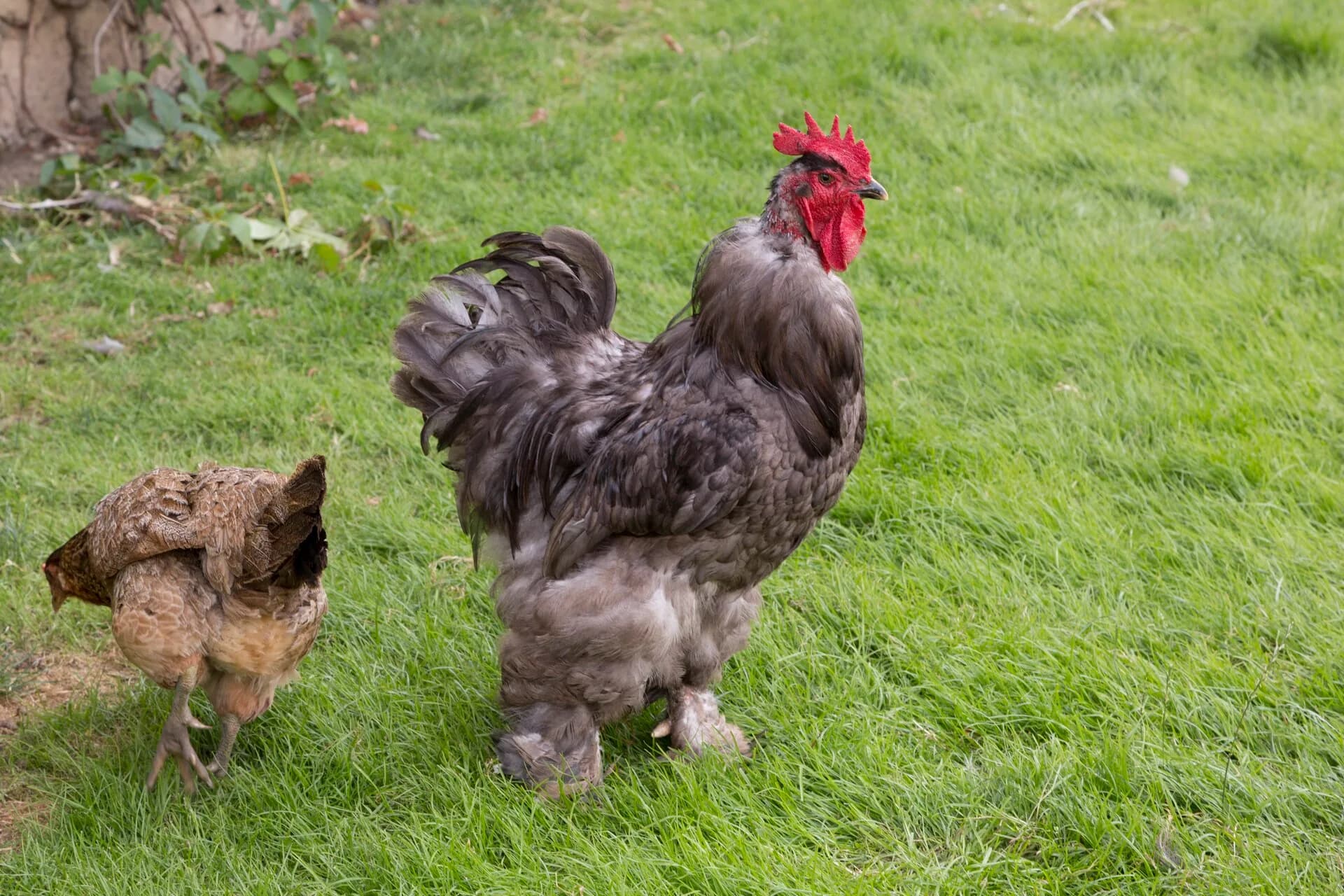
Chicken Molting: What's Normal and What's Not
Chickens molt and drop feathers every fall and stop laying for weeks. Learn the molt timeline, how to help, and the warning signs of a real problem.
Researched from university extension, USDA, and veterinary sources. How we research.
If you walk out to the coop one fall morning and it looks like a pillow fight broke out overnight, take a breath. Feathers scattered across the run, a hen with a bald patch on her neck, and the egg basket suddenly empty are almost always signs of a molt, not a disaster.
The short version: molting is the normal, once-a-year process where a chicken sheds old worn feathers and grows a fresh set. Most hens go through their first big molt around 16 to 18 months old, in the fall, and it takes roughly 8 to 12 weeks to finish. During that stretch they usually stop laying, because the protein that would go into eggs goes into feathers instead. A molting bird that is eating, drinking, and acting normal is fine. The trick is telling a healthy molt apart from feather loss caused by mites, bullying, or illness, and that's where a lot of new keepers get worried for no reason, or miss a real problem.
Here's what a normal molt looks like, when to expect it, how to help your flock through it, and the warning signs that mean something else is going on.
What You'll Learn
- •What Is Molting and Why Do Chickens Do It?
- •When Do Chickens Molt?
- •What a Normal Molt Looks Like
- •Hard Molt vs Soft Molt
- •Do Chickens Stop Laying During a Molt?
- •How Long Does a Molt Last?
- •Pin Feathers: Handle With Care
- •How to Help a Molting Chicken
- •Feather Loss That Isn't a Molt
- •Common Molting Mistakes
- •When to Worry
- •Frequently Asked Questions
What Is Molting and Why Do Chickens Do It?
Molting is a chicken shedding its old feathers and growing new ones. Feathers take a beating over a year of scratching, dust bathing, roosting, and weather. They fade, fray, and break, and they lose their insulating power. A molt is the bird's built-in reset: out with the worn coat, in with a clean, tight set of plumage that will keep it warm through winter.
The main trigger is shortening daylight. As late summer slides into fall and the days get noticeably shorter, a hen's body reads the signal that the laying season is winding down and it's time to rebuild feathers before the cold. That's why molting season lines up with autumn for most backyard flocks in the Northern Hemisphere.
Feathers are about 80 to 85 percent protein, made mostly of a tough structural protein called keratin. Growing a whole new set is a serious metabolic project. A hen only has so much protein and energy to spend, so her body makes a choice: feathers now, eggs later. That single fact explains almost everything about molting, including why laying stops and why extra protein helps.
When Do Chickens Molt?
Chickens go through a few different molts in their lives, and knowing which one you're looking at clears up a lot of confusion.
Juvenile molts. Chicks don't grow their adult feathers all at once. They swap fluffy down for juvenile feathers, then juvenile feathers for their first adult plumage over the first few months. These early molts are gradual and usually go unnoticed. Our raising chicks week by week guide covers what's normal as a chick feathers out.
The first adult molt. This is the big one people mean when they say "molting." It typically hits at 16 to 18 months of age, during the bird's first fall after a full laying season. A pullet hatched in spring will usually lay right through her first winter without a real molt, then take her first adult molt the following autumn.
Annual molts after that. Once a hen has had her first adult molt, she'll molt roughly once a year, almost always in late summer or fall, for the rest of her life.
| Molt type | When it happens | What you'll see |
|---|---|---|
| Juvenile molts | First few months of life | Gradual feather changes, easy to miss |
| First adult molt | ~16 to 18 months, first fall | Noticeable feather loss, laying stops |
| Annual molt | Once a year, late summer to fall | Feather drop and regrowth over 8 to 12 weeks |
A few things can push a molt outside the usual fall window. A sudden shock to the system, like running out of water for a day, a predator scare, a big feed change, or an illness, can trigger a "stress molt" at any time of year. Broody hens also lose feathers, but that's a different story we'll get to below. And birds kept under artificial light to extend laying sometimes molt on their own unpredictable schedule.
What a Normal Molt Looks Like
A healthy molt usually follows a predictable order. Feathers drop and regrow from front to back:
- •Head and neck first. The classic first sign is a hen who suddenly looks scruffy around the head and neck, sometimes almost bald there, while the rest of her looks normal.
- •Body next. The breast, back, and saddle feathers go, which is when you'll find the most feathers piling up in the coop.
- •Wings and tail last. Flight and tail feathers are the final to drop and the slowest to grow back.
Along with the bare patches, expect the comb and wattles to go a bit pale and dull, the bird to act a little quieter or more withdrawn, and egg laying to slow or stop. Some hens seem downright grumpy during a molt, and they often don't want to be picked up, which makes sense once you understand pin feathers.
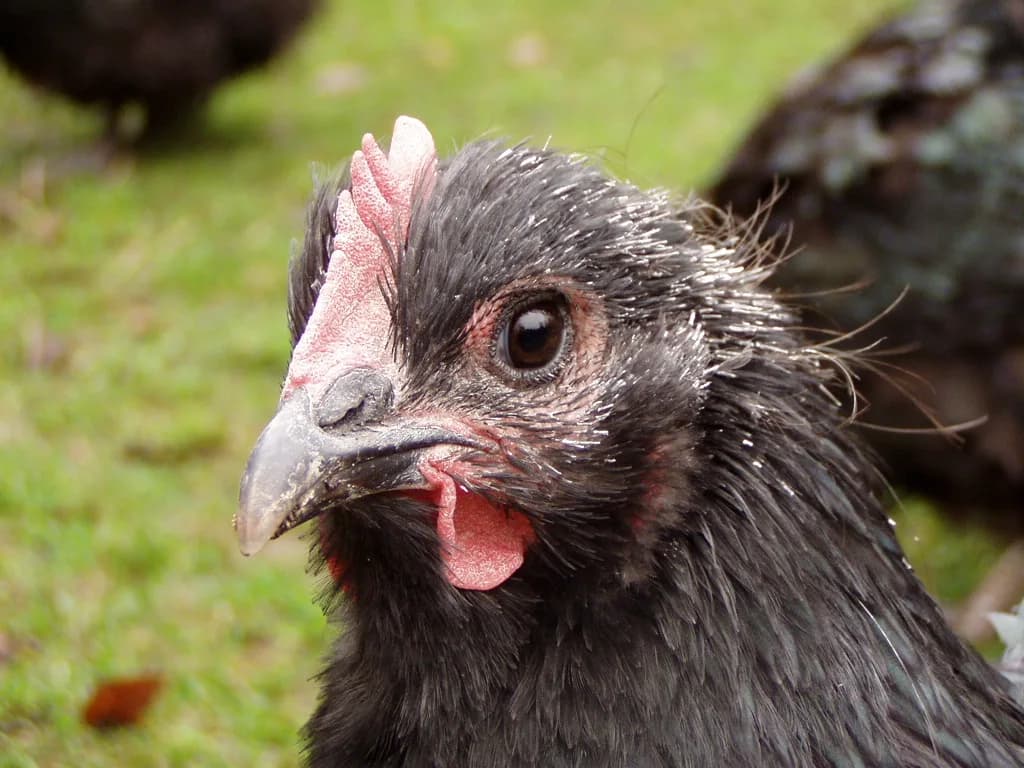
What you should not see in a plain molt is bleeding skin, scabs, crawling insects, or a bird that's genuinely sick: not eating, standing hunched, or losing weight. Feather loss with those signs points somewhere other than a normal molt.
Hard Molt vs Soft Molt
Not all molts look the same, and the difference is mostly about speed.
A hard molt is fast and dramatic. The bird drops a lot of feathers in a short window and can look shockingly rough, sometimes with big bare patches of skin showing. It's alarming to watch, but a hard molt often gets the job done quicker, and the bird feathers back out faster once new growth kicks in.
A soft molt is slow and subtle. The bird sheds a few feathers at a time over a longer stretch, and you might barely notice beyond a little extra fluff in the run and a dip in eggs. Some hens soft molt so gently that keepers don't realize it happened until laying picks back up.
| Hard molt | Soft molt | |
|---|---|---|
| Speed | Fast, feathers drop in a rush | Slow, a few feathers at a time |
| Appearance | Big bald patches, looks rough | Barely noticeable thinning |
| Duration | Often shorter overall | Can drag out longer |
| Common in | Some individuals and breeds | Others, and often younger birds |
Neither type is better or worse for the bird's health. Genetics and the individual play a big role, and you may have one hen who goes nearly bald while her flockmate barely changes. High-production breeds bred for laying, like Leghorns, tend to molt fast and get back to laying quickly, which is one reason they land on so many best egg-laying breeds lists.
Do Chickens Stop Laying During a Molt?
Usually, yes. Most hens stop laying entirely during a molt, or drop to the occasional egg. This is completely normal and it's not a sign anything is wrong. Remember the protein math: a hen can build feathers or make eggs, not both at full tilt. Her body prioritizes the new coat she needs for winter survival.
How long the laying break lasts depends on the bird. A fast, hard molter might be back to laying within a few weeks of finishing. A slow molter can stay off eggs for a couple of months. Older hens tend to molt longer and take more time to resume than young ones.
There's a rough rule of thumb keepers pass around: the best layers often molt late and fast, taking a short break, while poorer layers molt early and slow, taking a long break. It's not a hard rule, but if you have a hen who quits laying in August and takes forever to molt, she may simply not be your strongest producer.
Once the new feathers are in and daylight starts lengthening again toward late winter, laying picks back up on its own. You don't need to force it. If you want to understand the other reasons a hen might quit laying, our egg problems troubleshooting guide sorts molt from the actual problems.
How Long Does a Molt Last?
For most chickens, a full molt runs about 8 to 12 weeks from the first dropped feather to a complete new coat. Faster birds wrap up in 6 weeks or so, and slower molters, especially older hens, can stretch to 12 to 16 weeks.
Several things affect the timeline:
- •Age. Younger birds molt faster; older hens molt slower and longer.
- •Breed and individual genetics. Some birds are simply quick about it.
- •Nutrition. A protein-poor diet slows feather regrowth. Good feed speeds it.
- •Overall health. A bird fighting parasites or illness molts slower and rougher.
- •Timing. A molt that starts late may drag into cold weather, which is hard on a half-feathered bird.
The regrowth itself is the slow part. Once feathers start dropping, the bare skin is quickly replaced by pin feathers, but those take weeks to unfurl into full feathers. Patience is the main ingredient. There's no safe way to rush a molt, and you wouldn't want to, since the whole point is a healthy new coat before winter.
Pin Feathers: Handle With Care
The new feathers pushing up through the skin are called pin feathers, or blood feathers, and they look like little quills or spikes, sometimes with a waxy sheath. They earn the "blood feather" name honestly: each new pin feather has a blood supply running up the shaft while it grows. Mature feathers don't, which is why plucking an old feather doesn't bleed but breaking a fresh pin feather does.
This is why molting birds get touchy and often don't want to be held. Those pins are genuinely tender, and bumping a bunch of them is uncomfortable. A broken pin feather can bleed more than you'd expect from something so small.
A few practical rules while pins are coming in:
- •Handle molting birds as little as possible, and gently when you must.
- •Skip baths, wing clipping, and any rough handling until the coat is back.
- •Watch for feather picking. Flockmates are drawn to the little blood-rich pins and may peck at them, which can draw blood and start a bad habit.
- •If a pin feather does bleed, apply gentle pressure with a clean cloth or a bit of cornstarch or styptic powder until it stops.
How to Help a Molting Chicken
You can't speed up a molt, but you can make it easier and support fast, healthy feather regrowth. Since feathers are mostly protein, the single most useful thing you can do is raise the protein in the flock's diet during the molt.
- •Bump up the protein. Standard layer feed sits around 16 percent protein. During a molt, switching to an 18 to 20 percent feed, often sold as a "feather fixer" or a game bird or all-flock ration, gives birds the building blocks for new feathers. A bag of high-protein feather-fixer poultry feed is the easy way to do this without mixing your own.
- •Add protein-rich treats in moderation. Dried mealworms, scrambled or hard-boiled eggs, black oil sunflower seeds, and cooked fish or meat scraps all give a protein boost. Keep treats to about 10 percent of the total diet so you don't unbalance their nutrition. Our feeding guide explains the right balance.
- •Keep water clean and available. Feather growth and overall recovery depend on good hydration. In warm early-fall weather, a round of poultry electrolytes and probiotics in the water supports birds that are already under some metabolic stress.
- •Lower the stress. A calm flock molts more smoothly. Avoid introducing new birds, rehoming, or big changes during a heavy molt. Make sure there's enough space and enough feeder and waterer room so no one gets bullied off the food.
- •Mind the temperature. A hard molt during a cold snap leaves a bird short on insulation right when it needs it most. Make sure the coop is draft-free and dry. Our guides on fall chicken care and keeping chickens warm in winter cover this in more detail.
Affiliate Disclosure: This article contains affiliate links to Amazon. If you buy something through these links, we earn a small commission at no extra cost to you. We only recommend products we genuinely think are worth your money. Full disclosure.
One thing to skip: don't cut back on food to "save money" while hens aren't laying. That's exactly backward. A molting bird needs more nutrition, not less, even though your egg return is temporarily zero. Trimming the grocery bill by underfeeding just drags out the molt and leaves birds run down going into winter. If you're curious how these seasonal costs add up, our cost of raising chickens breakdown puts real numbers to it.
Feather Loss That Isn't a Molt
This is the part that matters most, because a few problems look like molting at first glance but need action, not patience. Here's how to tell a normal molt from something else.
The tells of a normal molt: it happens in fall, feathers come out cleanly, you can see new pin feathers coming in on the bare spots, and the bird is otherwise eating, drinking, and acting like itself. When the feather loss doesn't fit that picture, look closer.
| Cause | How it differs from a molt | What to do |
|---|---|---|
| Mites or lice | Feather loss around the vent and tail base, itchy birds, tiny bugs or eggs on shafts, often no new pin feathers | Inspect at night, treat the birds and coop. See our mite treatment guide |
| Feather picking or bullying | Broken feather shafts, bare backs or vents, sometimes bloody, targeted birds low in the pecking order | Add space, reduce boredom, check protein, separate a bully |
| Rooster wear | Bald patch on a hen's back or behind the head from mating, only on favorite hens | Use a hen saddle, reduce rooster-to-hen ratio |
| Broody hen | Hen plucks her own breast bare to warm eggs and sits in the nest all day | Normal for a broody. See our broody hen guide |
| Stress molt | Sudden feather drop after a scare, water outage, or feed change, out of season | Fix the stressor, support with protein and calm |
| Illness or vent gleet | Feather loss with sick signs: lethargy, weight loss, pale comb, messy vent | Treat as illness. See sick chicken symptoms |
The single most useful check is looking at the bare skin. In a real molt, you'll see clean new pin feathers pushing up. In parasite or picking problems, you'll often see irritated skin, broken feather stubs, scabs, or actual bugs, and no fresh growth. Parasites are the most commonly missed culprit, so if a bird looks "molty" but you don't see pin feathers, part the feathers around the vent and check for crawlers at night when mites are active.
If the whole flock looks ragged in fall and everyone's healthy and eating, it's a molt. If one bird is losing feathers in one spot while acting sick, or you find bugs, that's a problem to chase down. Our common chicken diseases guide helps if the feather loss comes with other symptoms.
Common Molting Mistakes
- •Panicking and treating a normal molt. Dosing a healthy molting flock with dewormer or mite spray "just in case" is stress they don't need. Confirm the cause first.
- •Cutting back feed while eggs are down. Molting birds need more protein, not less. Underfeeding drags the molt out.
- •Bathing or clipping birds mid-molt. Tender pin feathers make this a bad time for handling. Wait until the coat is back.
- •Ignoring pin-feather picking. Flockmates pecking at bloody pins can escalate into a real feather-picking habit. Break it up early.
- •Mistaking mites or bullying for a molt. The most common miss. No pin feathers plus irritated skin means look for another cause.
- •Expecting a fast fix. There's no product that speeds a molt. Good feed and time are the whole toolkit.
- •Adding stress at the worst time. Introducing new birds or making big changes during a heavy molt makes everything harder on the flock.
When to Worry
A normal molt needs support, not intervention. Step in and look closer if you see:
- •Feather loss with sick behavior: a bird that's lethargic, hunched, not eating or drinking, or losing weight. Molting alone doesn't make a bird act sick.
- •Bare skin that's red, scabbed, or bleeding, rather than showing clean new pin feathers.
- •Visible parasites, or feather loss focused around the vent and tail base with itching.
- •Feather loss in just one spot on one bird while the rest of the flock is fully feathered, especially with broken shafts.
- •A molt way out of season paired with other symptoms, which can signal stress or illness rather than a routine molt.
- •No regrowth after months. If bare patches aren't filling in with new feathers over a normal molt window, something is holding the bird back.
Any of those is worth a hands-on check and, if you're unsure, a conversation with a poultry-savvy vet. A healthy bird in a normal fall molt, though, just needs good food, clean water, a low-stress coop, and a few weeks to grow its new coat. Come winter, she'll be the best-dressed bird in the run and back to filling the egg basket.
Frequently Asked Questions
How long does it take a chicken to molt?
Most chickens finish a molt in about 8 to 12 weeks from the first dropped feather to a full new coat. Fast molters can wrap up in around 6 weeks, while older or slower birds may take 12 to 16 weeks. Good protein in the diet and low stress help feathers grow back faster.
Why has my chicken stopped laying eggs during the molt?
Feathers are roughly 80 percent protein, and a hen's body can't build a whole new set of feathers and keep making eggs at the same time. During a molt she redirects protein and energy to feather regrowth, so laying slows or stops. It picks back up on its own once the new feathers are in, usually as daylight lengthens in late winter.
What should I feed a molting chicken?
Raise the protein. Switch from standard 16 percent layer feed to an 18 to 20 percent feather-fixer, all-flock, or game bird ration during the molt, and add protein-rich treats like dried mealworms, scrambled eggs, or sunflower seeds in moderation. Keep treats to about 10 percent of the diet and make sure clean water is always available.
At what age do chickens have their first molt?
The first full adult molt usually happens at 16 to 18 months old, during the bird's first fall after a season of laying. Chicks go through gradual juvenile molts in their first few months, but those are minor. A spring-hatched pullet typically lays through her first winter and molts for real the next autumn.
Do chickens molt every year?
Yes. After the first adult molt, healthy hens molt about once a year, almost always in late summer or fall as the days shorten. The severity varies from year to year and bird to bird, with some going nearly bald and others barely thinning.
How do I tell molting apart from mites or feather picking?
Look at the bare skin. A real molt shows clean new pin feathers pushing up, happens in fall, and the bird acts normal. Mites cause itching and feather loss around the vent and tail with tiny bugs on the shafts, and feather picking leaves broken feather stubs and irritated or bloody skin, often with no new growth. No pin feathers plus irritated skin means look for another cause.
Should I put a sweater on a molting chicken?
It's usually unnecessary and can do more harm than good. Chicken sweaters can rub tender pin feathers, trap moisture, and snag on things. A better plan is a dry, draft-free coop and extra protein so the bird regrows feathers quickly. Focus on shelter and nutrition rather than clothing.
Can stress cause a chicken to molt?
Yes. A sudden shock like running out of water, a predator scare, a big feed change, or an illness can trigger a "stress molt" outside the normal fall season. If a bird drops feathers out of season, look for a recent stressor, fix it, and support the bird with good protein and a calm environment.
Sources:
- •University of Kentucky Cooperative Extension. Small Flock Poultry Resources. https://poultry.extension.org/
- •Merck Veterinary Manual. Molting in Poultry. https://www.merckvetmanual.com/poultry
- •Penn State Extension. Backyard Poultry Care. https://extension.psu.edu/animals/poultry
- •University of Florida IFAS Extension. Molting of Laying Hens. https://edis.ifas.ufl.edu/
Related Guides
Chicken Vent Health: Pasty Butt, Prolapse, Egg Binding
Pasty butt, vent gleet, prolapse, and egg binding: how to spot each chicken vent problem, treat it safely at home, and know when to call a vet.
HealthCommon Chicken Diseases: Symptoms, Treatment, Prevention
The most common backyard chicken diseases explained: symptoms, treatment, and prevention for Marek's, coccidiosis, respiratory illness, and more.
HealthLash Egg in Chickens: What It Means and What to Do
A lash egg isn't really an egg. It's a sign of salpingitis, a serious oviduct infection. Here's what causes it, what to do, and your hen's odds.
HealthBest Chicken Dewormer: Treat and Prevent Worms (2026)
The best chicken dewormers, when to treat, egg withdrawal times, and a year-round prevention routine that keeps your flock parasite-free.