Chicken Vent Health: Pasty Butt, Prolapse, Egg Binding
Pasty butt, vent gleet, prolapse, and egg binding: how to spot each chicken vent problem, treat it safely at home, and know when to call a vet.
Researched from university extension, USDA, and veterinary sources. How we research.
The vent is the one part of a chicken most keepers never look at until something goes wrong. It is the single opening a bird uses to pass droppings, lay eggs, and mate, and when it stops working right, trouble shows up fast. A chick can die from a blocked vent in a day. A hen with an egg stuck inside her can be gone by morning. The good news is that most vent problems are easy to catch if you know what a healthy vent looks like and what the early warning signs are. This guide covers the four you are most likely to meet: pasty butt in chicks, vent gleet, prolapse, and egg binding.
Get in the habit of a quick vent check whenever you handle a bird. On heavily feathered breeds the fluff hides a lot, so you often have to part the feathers to see what is really going on back there.
Quick Answer: The Four Vent Problems at a Glance
| Problem | Who gets it | Hallmark sign | How urgent |
|---|---|---|---|
| Pasty butt | Chicks, first 2 weeks | Droppings caked over the vent | Same day, can be fatal in chicks |
| Vent gleet | Laying hens | White, cheesy discharge and foul smell | Days, treat before it spreads |
| Prolapsed vent | Laying hens | Red or pink tissue bulging out of the vent | Emergency, minutes to hours |
| Egg binding | Laying hens | Straining, penguin stance, no egg | Emergency, hours |
Two of these, prolapse and egg binding, are true emergencies where hours matter. The other two give you a little more time, but none of them fix themselves. Below is what each one looks like, how to treat it at home, and the point where you stop and call a vet.
What You'll Learn
- •The Vent: What Healthy Looks Like
- •Pasty Butt in Chicks
- •Vent Gleet
- •Prolapsed Vent
- •Egg Binding
- •Vent Pecking and Flystrike
- •When to Call a Vet
- •How to Prevent Vent Problems
- •Common Mistakes Keepers Make
- •Frequently Asked Questions
The Vent: What Healthy Looks Like
The vent is the external opening of the cloaca, the chamber where the digestive, urinary, and reproductive tracts all meet before waste and eggs leave the body. A healthy vent is clean, with feathers that are dry and unmatted. The skin around it looks pale pink to a slightly deeper pink, and it should be free of crust, discharge, and stuck droppings.
When a hen lays, you will sometimes see the vent briefly evert, meaning the inner pink tissue turns outward to deliver the egg without ever touching the outside of the feathers. That is normal and it pulls right back in within a second or two. Tissue that stays out, tissue that is bleeding, or a vent packed with droppings is not normal.
A quick weekly look tells you a lot. On clean-vented breeds you can see the area at a glance. On fluffy-bottomed breeds like Silkies and Cochins you need to part the feathers, because a problem can hide under all that down until it is serious. If you are working through a bird that seems off in general, our sick chicken symptoms guide covers the head-to-tail check that includes the vent.
Pasty Butt in Chicks
Pasty butt, also called pasted vent, is the vent problem you meet first, usually in the opening days after chicks hatch or arrive in the mail. Droppings cake onto the down around the vent, dry into a hard plug, and seal the opening shut. Because a chick cannot pass anything past that plug, waste backs up and the chick can die within a day if it is not cleared.
What causes it. Stress is the root of most cases. Chilling or overheating in the brooder, the stress of shipping, and abrupt diet changes all upset a chick's gut and produce loose, sticky droppings. A brooder that runs too hot or too cold is the most common trigger, which is why getting the temperature right matters so much. Our brooder setup guide and the week-by-week chick guide walk through the target temperatures.
How to treat it. Check every chick's vent daily for the first two weeks. When you find a plug:
- •Hold a warm, damp paper towel or cloth against the vent for a minute or two to soften the crust. Do not pull dry droppings off, because you can tear the skin and even pull out part of the vent.
- •Once softened, gently wipe or work the mess away. For stubborn plugs, hold the chick's bottom under a slow stream of warm water.
- •Pat the area dry so the chick does not chill. A dab of petroleum jelly or a light dusting of cornstarch on the clean vent helps keep the next dropping from sticking.
- •Return the chick to a properly warmed brooder and watch it. Repeat the check the next day.
How to prevent it. Keep the brooder at about 95°F the first week and drop it roughly 5°F each week after. Offer plain chick starter, skip sugary or fatty treats in the early days, and add a poultry electrolyte and vitamin supplement to the water for the first few days, especially for shipped chicks. A little probiotic powder or a crumb of plain scrambled egg supports a settled gut. Most flocks outgrow the risk by three weeks of age.
Vent Gleet
Vent gleet is a fungal infection of the vent and cloaca, usually an overgrowth of Candida yeast. It shows up in laying hens as a white or yellowish, cheesy discharge around the vent, often with a sour, foul smell. The vent skin looks reddened and inflamed, the feathers below it get matted and stained, and over time those feathers can fall out. Affected hens sometimes go off their feed and slow down on laying.
What causes it. Yeast is always present in small amounts, but it takes over when conditions favor it: damp bedding, moldy or spoiled feed, a diet heavy in sugars or scratch, stress, or a recent course of antibiotics that wiped out the good gut bacteria. Wet, dirty coop conditions are the usual backdrop.
How to treat it. Vent gleet is stubborn, so plan on a week or two of care:
- •Clean the vent area gently with warm water and trim away heavily soiled feathers so you can see and treat the skin.
- •Apply an over-the-counter antifungal cream made for yeast, the same miconazole or clotrimazole creams sold for human use, to the vent skin twice a day.
- •Add a probiotic to rebuild gut flora, and offer plain unsweetened yogurt in small amounts. Our roundup of chicken probiotics and electrolytes covers products that work.
- •Some keepers add a splash of apple cider vinegar to the drinking water, about one tablespoon per gallon, in a plastic or ceramic waterer rather than metal. This is a mild support, not a cure on its own.
- •Pull moldy feed, dry out the coop, and fix the wet spot that started it. Fresh, dry bedding is half the treatment.
Vent gleet can pass between birds during mating, so keep a rooster with a case away from your hens until it clears. If the discharge does not improve within a couple of weeks, or the hen goes downhill, have a vet check for an underlying problem, since a run-down bird is more prone to yeast.
Prolapsed Vent
A prolapse, sometimes called a blowout, is when the inner tissue of the vent or the lower oviduct pushes out and stays out. You will see a mass of moist red or pink tissue bulging from the vent, occasionally with an egg still attached. It is a true emergency for two reasons: the exposed tissue dries and dies quickly, and the rest of the flock will peck at the red tissue, which can kill the hen fast.
What causes it. Straining is the common thread. Hens that start laying too young, hens laying oversized or double-yolk eggs, overweight birds, and hens low on calcium all strain hard enough to push tissue out. A difficult egg binding can end in a prolapse. Older hens with worn muscle tone are also prone.
How to treat it. Move fast and work gently:
- •Separate the hen immediately, away from the flock, in a dim, quiet crate. Darkness lowers the drive to lay and buys you time. Other birds pecking the tissue is the biggest danger, so isolation comes first.
- •Clean the tissue with warm water or saline and check it over for damage.
- •Bring the swelling down before you push it back. Chilled honey or plain granulated sugar applied to the tissue draws out fluid, and a witch hazel or plain hemorrhoid cream works the same way. Cool, clean, and coated, the tissue shrinks enough to handle.
- •With a gloved, lubricated finger, ease the tissue back inside gently. Apply a water-based lubricant or plain antibiotic ointment.
- •Keep her isolated in the dark, offer water with electrolytes, and cut back on high-energy feed for a few days to slow laying while she heals.
A first prolapse caught early often recovers. Prolapses that keep coming back, or tissue that has dried, torn, or turned dark, carry a poor outlook, and a vet visit is the humane next step. Keep a clean setup on hand for jobs like this: our chicken first aid kit guide lists gloves, lubricant, and antiseptic worth stocking before you need them.
Egg Binding
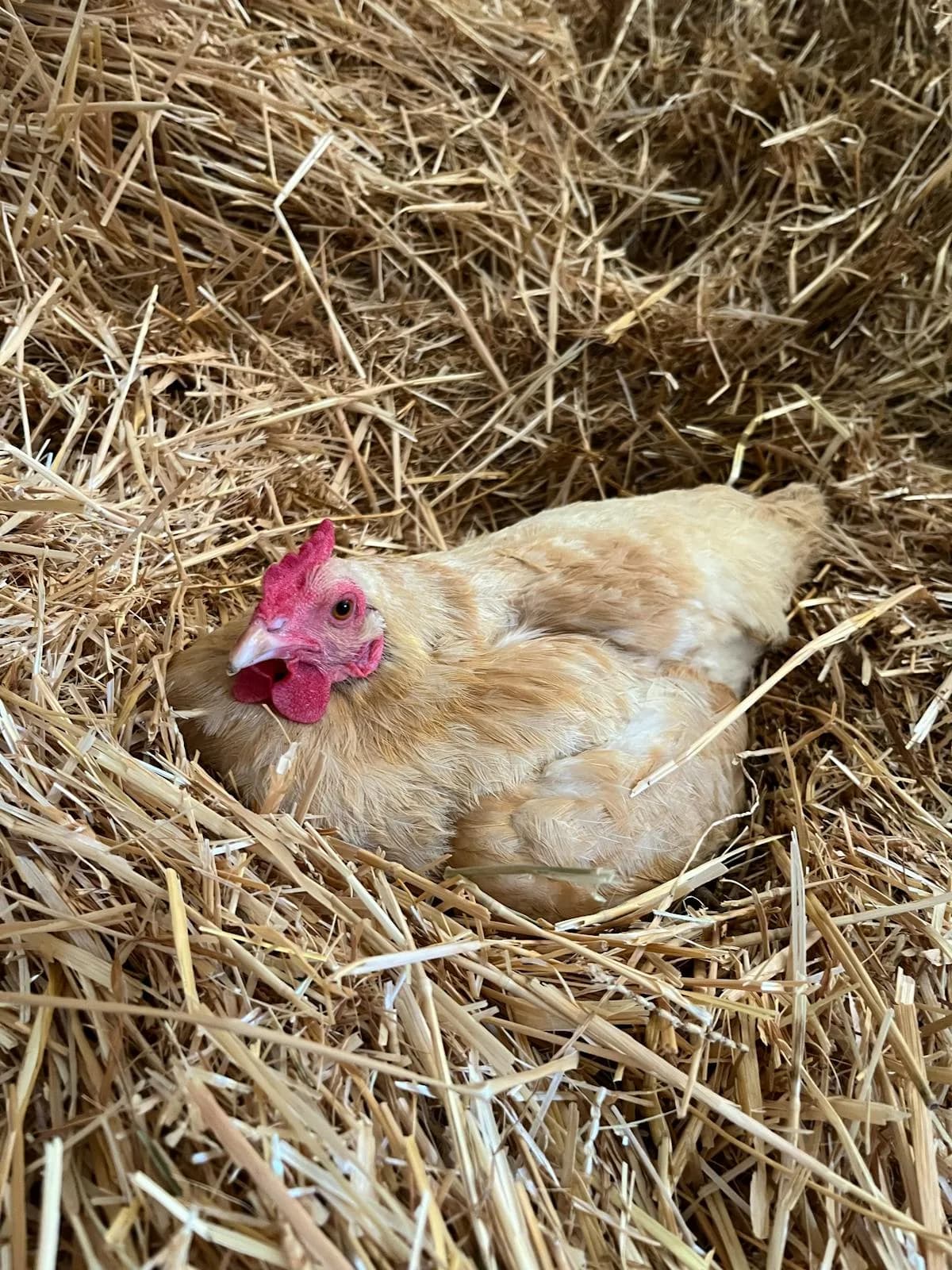
An egg-bound hen has an egg stuck in her oviduct that she cannot pass. It is one of the fastest-moving reproductive emergencies, and a bound hen can die within a day or two if the egg is not delivered. The classic picture is a hen who is straining and pumping her tail, standing in a wide penguin stance, sitting fluffed on the floor of the coop, and not producing an egg. She often stops eating, and you may feel a firm egg-shaped lump low in her abdomen near the vent.
What causes it. Low calcium is the leading cause, because a hen needs calcium not just for the shell but for the muscle contractions that push the egg out. Dehydration, an oversized or misshapen egg, hens that are too young or too old, obesity, cold weather, and a sudden increase in artificial light that pushes heavy laying all raise the risk.
How to treat it. The goal is to relax her and help the egg move:
- •Set her up somewhere warm, dim, and humid. A dog crate in a quiet room works.
- •Give a warm soak. Stand her lower half in a tub of comfortably warm water for 15 to 20 minutes, which relaxes the muscles and hydrates the vent. Dry her gently afterward so she does not chill.
- •Give calcium. A crushed calcium tablet, calcium citrate, or a liquid poultry calcium supplement helps her muscles contract. This alone resolves many mild cases.
- •Lubricate the vent with a water-based lubricant and let her rest in the warm, dark crate. Many hens pass the egg within a few hours of a soak and a calcium dose.
- •Do not break the egg inside her. Shell fragments cut the oviduct and cause fatal infection. If manual help is needed, that is a job for a vet.
If the egg has not passed within a day, or she is getting weaker, get to a vet. They can give calcium by injection, use oxytocin to prompt contractions, or extract the egg safely. Egg binding overlaps with other laying problems, so it is worth reading our egg problems troubleshooting guide alongside this one.
Vent Pecking and Flystrike
Two secondary problems ride along with the ones above, and both can turn deadly.
Vent pecking happens because chickens are drawn to the color red. A prolapsed or bleeding vent, or even the bright everted tissue of a hen mid-lay in a crowded coop, invites pecking that can escalate into cannibalism. Once blood is drawn, the whole flock may join in. Prevent it by giving birds enough space, keeping nest boxes dim, and pulling any injured or prolapsed bird out immediately. Our nesting box guide covers box placement and privacy that cut down on pecking.
Flystrike, or myiasis, is a warm-weather emergency where flies lay eggs on a soiled, wet, or wounded vent and maggots hatch into the skin within a day. It is most common on birds with chronic vent mess, diarrhea, or an untreated prolapse. Check soiled birds daily in summer. If you find maggots, this is an emergency: clean and clip the area, remove every maggot you can, and get veterinary help, because the damage and infection move quickly.
When to Call a Vet
Home care handles many vent problems, but some situations need a professional. Call a vet or an avian-savvy exotics clinic when:
- •An egg-bound hen has not passed the egg within about 24 hours, or she is weakening.
- •A prolapse will not stay in, keeps recurring, or the tissue is torn, dried, or dark.
- •There is heavy bleeding from the vent.
- •You find maggots or flystrike.
- •A vent problem comes with whole-body illness: lethargy, a swollen abdomen, labored breathing, or a bird that stops eating and drinking.
A swollen, water-balloon abdomen with penguin-like walking can signal internal laying or egg yolk peritonitis rather than a simple binding, and those need veterinary diagnosis. When a vent problem is part of a bigger picture of sickness, our common chicken diseases guide helps you sort out what else might be going on.
How to Prevent Vent Problems
Most vent trouble traces back to a handful of management basics. Get these right and you will rarely deal with the emergencies above.
- •Feed the right calcium. Laying hens need a complete layer feed plus free-choice crushed oyster shell on the side. Calcium prevents both egg binding and the straining that leads to prolapse. Our feeding guide breaks down a laying diet.
- •Keep birds at a healthy weight. Overweight hens are far more prone to binding and prolapse. Go easy on scratch, corn, and rich treats.
- •Never let water run dry. Dehydration is a direct cause of egg binding. Clean, fresh water at all times is one of the cheapest forms of prevention.
- •Do not rush pullets into laying. Adding artificial light to push young or out-of-season hens into heavy production strains birds that are not ready. Let pullets reach lay on their own schedule.
- •Keep the coop dry and clean. Damp bedding and moldy feed drive vent gleet and pasty conditions. Ventilation and dry litter matter more than any supplement.
- •Do vent checks. A weekly look, and a closer parting of the feathers on fluffy breeds, catches problems while they are still easy to fix.
Common Mistakes Keepers Make
Pulling a dry pasty plug off a chick. The skin comes with it. Always soften with warm water first.
Breaking an egg inside a bound hen to get it out. The shards lacerate the oviduct and cause infection that kills more birds than the binding would have. Soak, add calcium, and let the vet handle extraction if it comes to that.
Leaving a prolapsed hen in with the flock. Even a few minutes of pecking at exposed tissue can be fatal. Isolation is the first move, not the last.
Treating the symptom and ignoring the cause. Cleaning a gleet-fouled vent while leaving wet bedding and moldy feed in place means it comes right back. Fix the coop, not just the bird.
Skipping the oyster shell because the bag says complete feed. Individual hens vary in how much calcium they pull from feed. Free-choice oyster shell lets each bird top up what she needs, and it costs very little.
Watching your birds daily is what makes all of this work. A keeper who knows what a normal vent looks like spots the abnormal one early, and early is the whole game with vent problems.
Frequently Asked Questions
What does a healthy chicken vent look like?
Clean and dry, with unmatted feathers around it and pale-to-medium pink skin that is free of crust, discharge, or stuck droppings. During laying, the inner pink tissue briefly turns outward to pass the egg and pulls right back in. Tissue that stays out, bleeds, or is packed with droppings is a problem.
How do I treat pasty butt in a chick?
Soften the dried droppings with a warm, damp cloth or a slow stream of warm water, then gently work the plug away. Never pull a dry plug, since it tears the skin. Dry the chick, dab on a little petroleum jelly, and return it to a properly warmed brooder. Fix the brooder temperature and add electrolytes to prevent it recurring.
Is vent gleet contagious?
It can pass between birds during mating, so keep an affected rooster away from hens until it clears. It is not the kind of illness that sweeps a whole flock through the air, but the damp, moldy conditions that cause it affect every bird in the coop, so you often see more than one case at once. Clean up the coop as part of treatment.
How long can a hen be egg bound before it is fatal?
It varies, but a bound hen can go downhill within 24 to 48 hours, and some decline faster. Treat it as an emergency the moment you spot the signs. Start warm soaks and calcium right away, and if the egg has not passed within about a day, get to a vet.
Can a chicken recover from a prolapsed vent?
Often yes, if you catch it early, keep the tissue clean and moist, reduce the swelling, and ease it back inside while keeping her isolated and in the dark. First-time prolapses caught quickly have a good chance. Prolapses that keep returning, or tissue that has dried or torn, carry a poor outlook and usually need a vet.
Should I give an egg-bound hen calcium, and how?
Yes, calcium is one of the most effective home treatments because a hen needs it to contract the muscles that push the egg out. Give a crushed calcium tablet, calcium citrate, or a liquid poultry calcium supplement directly, or crushed into a small bit of food. Pair it with a warm soak and a dark, quiet rest.
How do I stop hens from pecking a prolapsed or bleeding vent?
Remove the injured bird from the flock immediately and keep her isolated until she heals, because chickens are drawn to red tissue and blood and will peck until it becomes fatal. Keep her space dim, and only reintroduce her once the vent looks normal. Roomier housing and shadier nest boxes lower pecking risk across the flock.
Which breeds are most prone to vent problems?
Heavy layers and hens bred for very high egg output, along with overweight birds and those pushed to lay too young, face the most binding and prolapse. Fluffy-vented breeds like Silkies and Cochins are not more prone to reproductive issues, but their down hides pasty vents and gleet, so problems get spotted later. Choosing steady, moderate layers and feeding good calcium keeps risk low.
None of these problems are common in a well-fed, well-housed flock, and every one of them is easier to handle early. Learn what a healthy vent looks like, do a quick check when you handle your birds, keep calcium and clean water in front of your hens, and you will spend far more time collecting eggs than nursing vents. Keep our sick chicken symptoms guide bookmarked as your day-to-day companion to this one.
Sources:
- •Merck Veterinary Manual. Poultry, cloaca and reproductive disorders. https://www.merckvetmanual.com/poultry
- •Poultry Extension (eXtension). Reproductive and egg-laying problems. https://poultry.extension.org/
- •University of Florida IFAS Extension. Backyard flock health. https://edis.ifas.ufl.edu/
- •Mississippi State University Extension. Poultry health. http://extension.msstate.edu/
Related Guides
Lash Egg in Chickens: What It Means and What to Do
A lash egg isn't really an egg. It's a sign of salpingitis, a serious oviduct infection. Here's what causes it, what to do, and your hen's odds.
HealthChicken Egg Problems: 10 Common Issues and How to Fix Them
Soft shells, weird shapes, no eggs at all? Here are 10 common chicken egg problems, what causes them, and exactly how to fix each one.
HealthChicken Molting: What's Normal and What's Not
Chickens molt and drop feathers every fall and stop laying for weeks. Learn the molt timeline, how to help, and the warning signs of a real problem.
HealthCommon Chicken Diseases: Symptoms, Treatment, Prevention
The most common backyard chicken diseases explained: symptoms, treatment, and prevention for Marek's, coccidiosis, respiratory illness, and more.