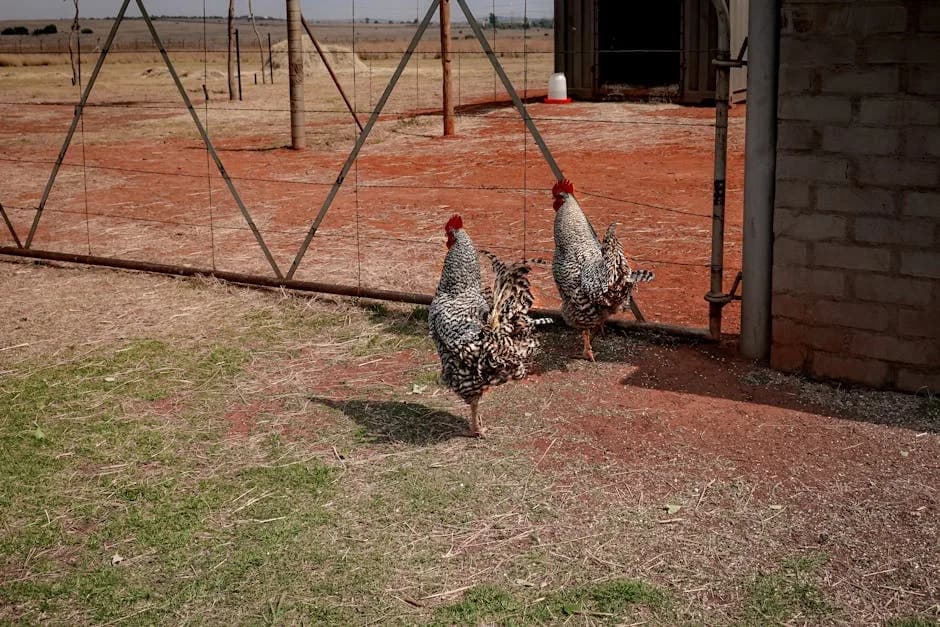
Cornish Cross Breed Guide: Meat, Growth, Care
Cornish Cross is the dominant meat chicken in the US. Growth rate, processing weight, feeding, common health issues, and how to raise them right.
Researched from university extension, USDA, and veterinary sources. How we research.
If you've ever bought a whole chicken at the grocery store, it was almost certainly a Cornish Cross. This bird is the workhorse of the modern meat industry: bred for explosive growth, efficient feed conversion, and a mild flavor that fits any cuisine. It's also the most common backyard meat bird for the same reasons. You can raise a flock of 25 chicks to processing weight in 6 to 8 weeks, fill your freezer with a year's worth of chicken, and start over.
This guide covers what makes Cornish Cross different from heritage breeds, the realistic management you'll do over their short lives, and the trade-offs of choosing this breed over slower-growing alternatives.
What You'll Learn
- •What Is a Cornish Cross?
- •Growth Rate and Processing Weight
- •Appearance
- •Feeding a Cornish Cross Flock
- •Common Health Issues
- •Housing Requirements
- •Cornish Cross vs Heritage Meat Breeds
- •Where to Buy Cornish Cross Chicks
- •Frequently Asked Questions
What Is a Cornish Cross?
Cornish Cross is not a breed in the traditional sense. It's a proprietary commercial hybrid, typically a cross between a Cornish father and a White Plymouth Rock mother (sometimes labeled "Cornish X" or "Cornish Rock"). The cross was developed in the mid-20th century by what became the modern poultry industry to produce a bird that reaches market weight twice as fast as any heritage breed.
The genetics are owned and refined by a handful of breeding companies (Aviagen and Cobb-Vantress are the two major ones). Hatcheries like Hoover's Hatchery, Murray McMurray, and Meyer Hatchery sell Cornish Cross chicks to backyard keepers under their own labels, but the underlying genetics trace back to commercial breeding programs.
Two things define Cornish Cross:
- •Explosive growth. They reach 5 to 7 pounds dressed weight in 6 to 8 weeks. A heritage meat breed takes 16 to 20 weeks for the same size.
- •Feed-to-meat efficiency. Cornish Cross converts feed to body weight at roughly 2:1, the best ratio in poultry. Heritage breeds run 3:1 to 4:1.
The trade-off is that they're built for processing, not longevity. Past 10 weeks of age, they tend to develop leg problems, heart issues, and other health complications because their bodies grow faster than their organs and skeletons can support.
Growth Rate and Processing Weight
The standard Cornish Cross timeline:
| Age | Weight | Stage |
|---|---|---|
| Day 1 (hatch) | 2 to 3 oz | Brooder |
| Week 1 | 6 to 8 oz | Brooder, 95°F heat |
| Week 2 | 12 to 16 oz | Brooder, 90°F heat |
| Week 3 | 1.5 to 2 lb | Transitioning out of brooder |
| Week 4 | 2.5 to 3 lb | Tractor or coop, full feed |
| Week 5 | 3.5 to 4.5 lb | Full feed, watch for leg issues |
| Week 6 | 4.5 to 5.5 lb | Processing window opens |
| Week 7 | 5.5 to 6.5 lb | Standard processing window |
| Week 8 | 6.5 to 8 lb | Latest typical processing |
Most backyard keepers process between weeks 6 and 8. Going much past 8 weeks risks the bird outgrowing its frame: leg deformities, sudden death from heart failure, and significant feed waste as the body's growth slows.
Hens grow slightly slower than roosters. If you order straight-run (mixed sex), expect a 1 pound average difference at processing time.
Appearance
Cornish Cross are uniform looking by design. The standard backyard Cornish Cross:
- •All white feathers. Easier to dress cleanly with no dark pinfeathers.
- •Yellow legs and skin. US consumer preference for yellow skin drove this trait.
- •Broad, deep breast. Bred for the high-value breast meat cut.
- •Stocky build. Short legs proportionally to body.
- •Pink or red comb and wattles. Smaller than heritage breeds.
By week 6, they look almost cartoonishly heavy: wide chest, broad back, short legs. This is normal and means they're growing on schedule.
Feeding a Cornish Cross Flock
Cornish Cross eat constantly. Feeding strategy matters more than for any other backyard chicken.
Weeks 1 to 3: 24-hour access to high-protein chick starter (22 to 24% protein). They're growing skeleton and muscle simultaneously and need the protein.
Weeks 4 to 6: Switch to a grower/broiler feed (20 to 22% protein). Some keepers do 12-hour feed schedules at this stage (feed available only during daytime). This slows growth slightly, reduces leg problems, and saves money. The trade-off is birds reach processing weight a few days later.
Weeks 7 to 8: Some keepers reduce protein to 18 to 20% in the final week to "finish" the bird (this is more relevant for commercial operations than backyard).
Total feed per bird to processing: 15 to 20 lb of feed for a 5 to 6 lb dressed bird. At $20 to $25 per 50 lb bag, that's about $6 to $10 of feed per chicken.
Water: Constant access, multiple stations. Cornish Cross drink twice as much as heritage chickens per pound of body weight.
For feeder recommendations sized for fast-growing flocks, see our best chicken feeders and waterers guide.
Common Health Issues
The downside of explosive growth.
Leg problems
The most common issue. Birds whose body weight outpaces their skeletal development develop:
- •Splayed leg
- •Slipped tendons
- •Outright lameness
Prevention: 12-hour feed schedule starting week 3, encouraging movement (don't just keep them in a small brooder), and processing on time rather than holding too long.
Sudden death (heart failure / ascites)
Cornish Cross hearts struggle to keep up with their body weight. A small percentage die suddenly between weeks 5 and 8 from heart failure or fluid buildup in the abdominal cavity (ascites). Loss rate is typically 3 to 8 percent of the flock.
Prevention: Avoid heat stress (very important in summer), keep ventilation strong, don't overcrowd.
Footpad dermatitis
Cornish Cross spend more time sitting than active chickens. Wet bedding under their resting spot causes foot pad burns and infection.
Prevention: Dry bedding (deep pine shavings are standard), clean bedding weekly, sand or mesh flooring under brooder lamps.
Heat stress
Cornish Cross handle heat much worse than heritage breeds. Above 85°F, you'll see panting and reduced eating. Above 95°F, mortality risk climbs sharply.
Prevention: Process in cooler months when possible, provide deep shade, multiple cool water stations, and frozen water bottles in the run on hot days. See our summer chicken care guide for general heat management.
Housing Requirements
Cornish Cross don't need fancy housing because their lives are short. The minimums:
- •Brooder weeks 1-3: 0.5 sq ft per chick, heat lamp or brooder plate at 95°F dropping 5°F per week
- •Grow-out weeks 4-8: 2 to 4 sq ft per bird in a chicken tractor, coop, or small barn
- •No need for nesting boxes (they won't lay before processing)
- •Low roost bars (12 inches or less) if you offer them at all; many keepers skip roosts entirely since the birds prefer to sit
- •Hardware cloth on all openings (predators are the same threat as for any chickens)
A common setup: a mobile chicken tractor moved daily across grass. The birds get fresh ground, fertilize as they go, and predators don't find them in the same place twice.
For permanent housing, the lower-cost under-$100 starter coop is enough for 4 to 6 Cornish Cross birds since they don't need much complexity.
Cornish Cross vs Heritage Meat Breeds
The honest comparison:
| Cornish Cross | Freedom Ranger / Red Ranger | Heritage (Plymouth Rock, Jersey Giant) | |
|---|---|---|---|
| Processing age | 6-8 weeks | 9-11 weeks | 16-20+ weeks |
| Processing weight | 5-7 lb | 5-6 lb | 4-6 lb |
| Feed per bird | 15-20 lb | 20-25 lb | 30-45 lb |
| Cost per bird | $6-10 | $10-15 | $20-35 |
| Health issues | Leg, heart, heat | Few | Few |
| Foraging ability | Poor (mostly sit) | Good | Excellent |
| Meat flavor | Mild, neutral | Slightly richer | Distinct, "chicken-y" |
| Best for | Maximum efficiency, freezer fill | Middle ground | Dual-purpose, ethical/heritage values |
Pick Cornish Cross if you want the most chicken per dollar of feed, the fastest turnaround, and the standard grocery-store flavor profile.
Pick Freedom Rangers if you want a more natural-looking bird that actually forages, with only a modest cost increase. They're the middle ground most homesteaders settle on.
Pick heritage breeds if you want dual-purpose birds (eggs AND meat from the same flock), don't mind paying more per pound, or have ethical objections to commercial hybrid genetics. See our Jersey Giant breed guide or Delaware breed guide for two solid heritage options.
For the full meat-bird workflow including processing, see our raising chickens for meat guide.
Where to Buy Cornish Cross Chicks
Cornish Cross are available from nearly every US hatchery in batches of 25 or more. Common sources:
- •Local feed stores (Tractor Supply, Rural King, family-owned). Spring stocking, typically March to May. $3 to $5 per chick.
- •Major hatcheries (Murray McMurray, Meyer, Hoover's, Cackle, Welp). Order online for next-day shipping. $2.50 to $4 per chick at quantity. Most have minimum 15-25 chick orders for live shipping.
- •NPIP-certified breeders (Pullorum-Typhoid clean). Slightly more expensive but better disease screening; worth it for first-time keepers.
Most hatcheries offer straight-run (mixed sex), pullets (females only, slightly cheaper), or cockerels (males only, grow slightly faster). For backyard meat purposes, straight-run is fine.
Ordering tip: Order 10 percent more than you actually want, to account for shipping loss and the typical 3 to 8 percent mortality during grow-out. If you want 20 birds in the freezer, order 22 to 25 chicks.
Frequently Asked Questions
How long does it take to raise a Cornish Cross to processing weight?
6 to 8 weeks. By week 6 most birds reach 4.5 to 5.5 lb live weight (about 3.5 to 4.5 lb dressed). By week 8 they hit 6.5 to 8 lb live weight (5 to 6 lb dressed). Going much past week 8 risks health complications.
Can Cornish Cross live longer than 8 weeks?
Yes, but with significant risk. Past 10 weeks, leg problems, heart failure, and ascites become increasingly likely. Some keepers keep one or two as pets and report 1 to 2 year lifespans with careful feeding (heavily restricted), but most birds bred to live past 12 weeks develop noticeable health issues.
Do Cornish Cross lay eggs?
Hens technically can lay if kept past 20 weeks, but they rarely do because they typically don't survive that long without active management. They're not bred for egg production. If you want a dual-purpose bird, look at heritage breeds like Plymouth Rock or Jersey Giant.
What do Cornish Cross taste like?
Standard chicken flavor. Mild, neutral, slightly softer texture than heritage chicken. This is the flavor profile most Americans grew up with because Cornish Cross is what grocery stores sell. Heritage breeds taste more "chickeny" with denser meat and stronger flavor.
Is Cornish Cross more humane than store-bought chicken?
This is debated. Cornish Cross genetics are the same regardless of how they're raised, so the inherent health issues (leg problems, sudden death) happen on both commercial farms and backyards. But you control housing, feed quality, time outside, and processing method, all of which can be done significantly more humanely than a commercial broiler operation.
How much does it cost to raise a Cornish Cross?
Roughly $10 to $15 per bird in feed and chick cost, processing yourself. For a 25-bird flock: $250 to $375 total to fill your freezer with 125 to 150 lb of dressed chicken (so about $2 to $3 per pound, vs $4 to $7 at the grocery store). Add $50 to $200 in equipment costs (feeder, waterer, processing tools) if you don't have them already.
Are Cornish Cross hard to raise?
Easier than heritage chickens in some ways (short timeline, no laying complexity) and harder in others (they're sensitive to heat, develop leg problems, eat constantly). For first-time meat bird keepers, they're typically the right choice because the short timeline forgives early mistakes. By the time issues compound, the birds are at processing weight.
Can I free-range Cornish Cross?
Yes, but they won't take full advantage. Cornish Cross prefer sitting near the feeder over foraging. They'll spread out into a pasture if forced to, but they're not efficient foragers like Freedom Rangers or heritage breeds. A mobile chicken tractor that gives them fresh ground every day or two is the best of both worlds.
For most backyard keepers wanting to fill a freezer fast, Cornish Cross is the right answer. They reach processing weight in 6 to 8 weeks at about $10 per bird in feed, with mild grocery-store flavor and minimal management complexity. If you want a more natural-looking and longer-lived bird, Freedom Rangers are the standard alternative at a modest cost premium.
For the full meat-bird workflow including processing equipment and timeline, see our raising chickens for meat guide. For housing options at meat-bird scale, see our best mobile chicken coops and best chicken coops under $500 roundups.
Sources:
- •Cobb-Vantress. Broiler Management Guide. https://www.cobb-vantress.com/
- •USDA Agricultural Marketing Service. Broiler chicken grading. https://www.ams.usda.gov/grades-standards/poultry
- •The American Poultry Association. Standard of Perfection (reference). http://www.amerpoultryassn.com/
- •University of Kentucky Cooperative Extension. Small Flock Poultry resources. https://poultry.extension.org/
- •The Livestock Conservancy. Heritage breed conservation. https://livestockconservancy.org/
Related Guides
Araucana Chicken Breed Guide: Blue Eggs, Tufts, Care
Araucana chicken breed guide: rumpless bodies, ear tufts, true blue eggs, the lethal tuft gene, care, and how they differ from Ameraucanas.
BreedsChocolate Orpington Breed Guide: Genetics, Eggs, Care
Chocolate Orpingtons explained: the sex-linked chocolate gene, why hens show it and roosters carry it, 120 to 150 tinted eggs a year, care, and where to buy.
BreedsLavender Orpington Breed Guide: Eggs, Color, Care
Lavender Orpingtons are calm, cold-hardy hens that breed true to color and lay 150-250 brown eggs a year. Full guide to looks, eggs, care, and cost.
BreedsNaked Neck Chicken (Turken) Breed Guide: Eggs & Care
Naked Neck chickens, or Turkens, are hardy dual-purpose birds with bare necks. Full breed guide: eggs, temperament, heat tolerance, size, and care.