Lavender Orpington Breed Guide: Eggs, Color, Care
Lavender Orpingtons are calm, cold-hardy hens that breed true to color and lay 150-250 brown eggs a year. Full guide to looks, eggs, care, and cost.
Researched from university extension, USDA, and veterinary sources. How we research.
If you want the friendly, lap-sitting personality of a Buff Orpington wrapped in a soft, dusty grey-blue coat, the Lavender Orpington is the bird people fall in love with at first sight. That pale lilac plumage is unusual enough that neighbors will stop to ask what breed you have, and the answer is a chicken that acts exactly like a regular Orpington: calm, cuddly, cold-hardy, and happy to follow you around the yard.
There's one thing that sets Lavenders apart from most other blue-toned chickens, and it's a big selling point: they breed true. Hatch a nest of eggs from two Lavender parents and every single chick comes out lavender. That is not true of the more common Blue Orpington, and it's the main reason breeders and backyard keepers pay a premium for this color. This guide covers what Lavender Orpingtons look like, how the color genetics actually work, how many eggs to expect, and what to watch for before you bring some home.
Quick Answer
| Trait | Lavender Orpington |
|---|---|
| Type | Dual-purpose color variety of the Orpington |
| Egg color | Light brown to tinted |
| Eggs per year | 150 to 250 |
| Egg size | Large |
| Starts laying | 5 to 6 months |
| Hen weight | 6 to 8 lbs |
| Rooster weight | 8 to 10 lbs |
| Temperament | Docile, friendly, calm |
| Broody? | Often |
| Cold hardy? | Yes, very |
| Heat tolerant? | No, needs shade |
| Breeds true to color? | Yes (recessive lavender gene) |
| Lifespan | 8 to 10 years |
| APA recognized color? | No (Buff, Black, White, and Blue are) |
| Best for | Beginners who want a calm, good-looking flock |
What You'll Learn
- •What Is a Lavender Orpington?
- •The Lavender Gene: Why It Breeds True
- •What Do Lavender Orpingtons Look Like?
- •How Many Eggs Do Lavender Orpingtons Lay?
- •Temperament and Personality
- •Are Lavender Orpingtons Good for Beginners?
- •Housing and Space Requirements
- •Feeding Lavender Orpingtons
- •Common Health Issues
- •Lavender vs Buff, Blue, and Other Orpingtons
- •Where to Buy Lavender Orpingtons and What They Cost
- •Frequently Asked Questions
What Is a Lavender Orpington?
A Lavender Orpington is not a separate breed. It's a color variety of the Orpington, the same big, fluffy, dual-purpose English breed that gave us the wildly popular Buff Orpington. Everything that makes an Orpington an Orpington still applies here: the broad, rounded body, the loose feathering, the gentle personality, and the reputation as one of the best beginner chickens you can own. The only real difference is the coat, a soft, even grey with a lilac cast that breeders and show folks call "self-blue."
The Orpington breed itself dates to the late 1800s, when William Cook developed it in Orpington, Kent, England, as a bird that could lay well and still dress out nicely for the table. The lavender color came along much later. It was carried into Orpingtons from other breeds over the last several decades and refined by hobby breeders, mostly in the last 20 to 30 years, into the birds you see for sale today.
Here's the part worth knowing before you shop: in the United States, the American Poultry Association recognizes Orpingtons in Buff, Black, White, and Blue. Lavender is not currently an APA-recognized Orpington color, so you won't find it judged as an Orpington variety at an APA show. That has zero effect on how the bird behaves in your backyard, and it hasn't slowed demand one bit. Lavender is one of the most sought-after backyard chicken colors going right now.
The Lavender Gene: Why It Breeds True
This is the section that separates a good buying decision from a frustrating one, so stick with me. "Blue" chickens come in two completely different genetic flavors, and they behave nothing alike when you hatch chicks.
Blue Orpingtons carry the blue gene, which is incompletely dominant. When you breed two blue birds together, you don't get all blue chicks. You get roughly 25% black, 50% blue, and 25% splash (a pale, mottled white-blue). That 1-2-1 spread means a Blue Orpington pen throws three different looks out of the same eggs, and you can never get a whole hatch of matched blue birds no matter how carefully you pair them.
Lavender Orpingtons carry the lavender gene, which is recessive. A bird has to inherit two copies to show the color. The upside is huge: breed two lavenders together and every chick is lavender. It breeds true, generation after generation. That predictability is exactly why Lavender chicks and hatching eggs cost more than most other colors. You're paying for a nest that comes out uniform.
There's a catch that honest breeders will tell you about. The lavender gene is linked to a feather-quality problem. Birds that are heavily line-bred for lavender color can develop weak, ragged, or shredded-looking feathers over time, sometimes called fret marks. Good breeders manage this by outcrossing their lavender line back to a solid Black Orpington every few generations to bring feather strength back in, then breeding the lavender back out. If you buy from someone who has never crossed out and just bred lavender-to-lavender for years, you may end up with birds that look a little rough. Ask any breeder how they maintain feather quality. A good one will have an answer ready.
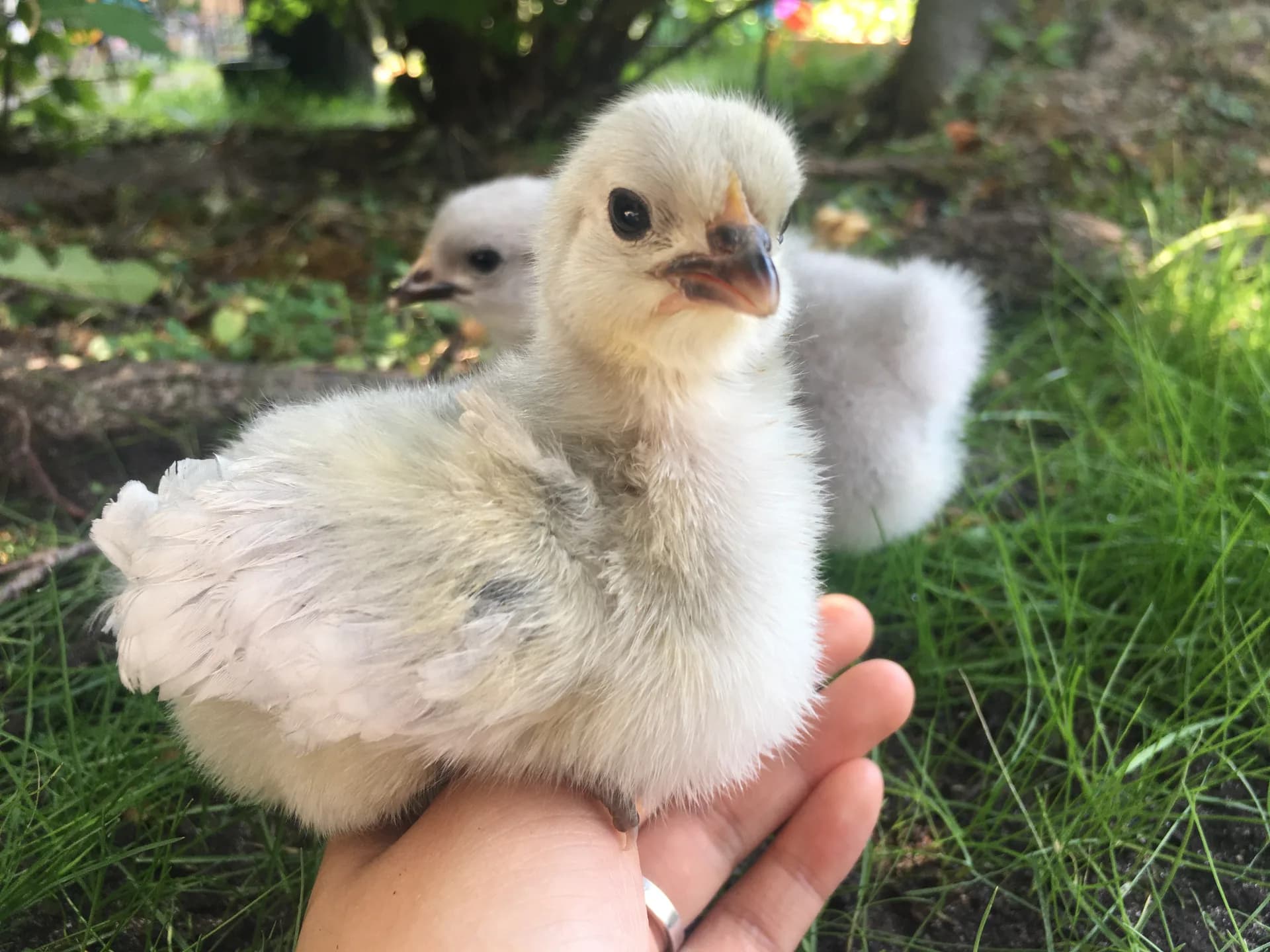
One more note for chick shoppers: Lavender Orpington chicks hatch a smoky silver-grey, not the golden fuzz of a Buff. If a "Lavender" chick looks pure black, it isn't lavender, it's likely a black split (a bird carrying one copy of the gene) or a mislabeled bird.
What Do Lavender Orpingtons Look Like?
Lavender Orpingtons have the same big, round, heavily feathered build as any Orpington. The plumage is loose and abundant, which makes them look even larger and rounder than they weigh. Picture a soft grey cloud with legs.
Hens:
- •Weight: 6 to 8 pounds
- •Even, dusty lavender-grey feathers with a faint lilac sheen in good light
- •Single comb, medium sized, bright red
- •Slate to pinkish-white legs and feet, clean (no feathering on the legs)
- •Reddish-bay eyes
- •Short tail carried at a low angle
Roosters:
- •Weight: 8 to 10 pounds
- •The same lavender base, often with slightly darker or more lustrous hackle and saddle feathers
- •Larger comb and wattles than the hens
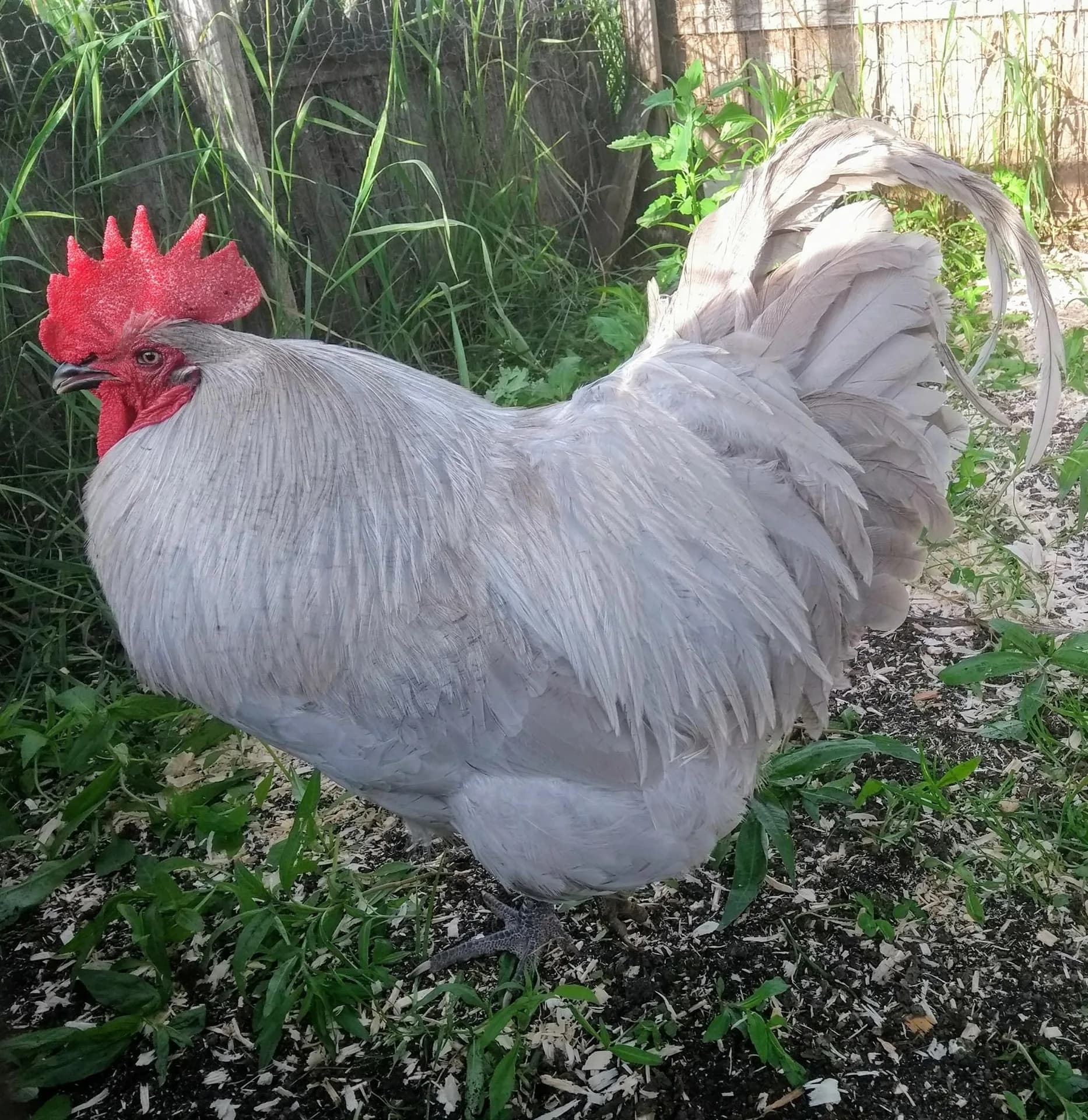
The color reads differently depending on the light. On an overcast day it can look almost dove grey, while direct sun brings out the lilac tone people buy them for. Hatchery Lavender Orpingtons tend to be smaller and less fluffy than heritage or breeder stock, the same pattern you see with Buff Orpingtons. If you want the classic oversized, powder-puff Orpington shape in lavender, you'll need to find a breeder working with quality lines, not a big-box hatchery.
How Many Eggs Do Lavender Orpingtons Lay?
Lavender Orpingtons are respectable layers, though color-focused lines sometimes trade a little productivity for looks. Here's the realistic range:
- •Eggs per year: 150 to 250 (roughly 3 to 5 per week)
- •Egg color: Light brown to tinted
- •Egg size: Large
- •Start laying: Around 5 to 6 months of age
Where a given bird lands in that range depends a lot on her breeding. Lavender lines selected mainly for show color and heavy fluff often sit at the lower end, closer to 150 to 180. Utility-minded lines and hatchery birds bred more for production can push 220 to 250. If steady eggs matter more to you than a perfect show coat, ask the seller what their hens actually lay before you buy.
Like all Orpingtons, Lavenders are prone to broodiness. A broody hen stops laying and settles onto a nest for three weeks or more, and some go broody several times a season. That instinct cuts into your annual egg count, but it's a gift if you want to hatch your own chicks, because Orpingtons are famously good, patient mothers. If you'd rather keep the eggs coming, you'll need to break broody hens, and our guide to hatching eggs covers the flip side if you decide to let one sit. For pure numbers, a dedicated production bird from our best egg-laying breeds roundup will out-lay a Lavender Orpington, but you give up the looks and the lap-chicken personality.
Temperament and Personality
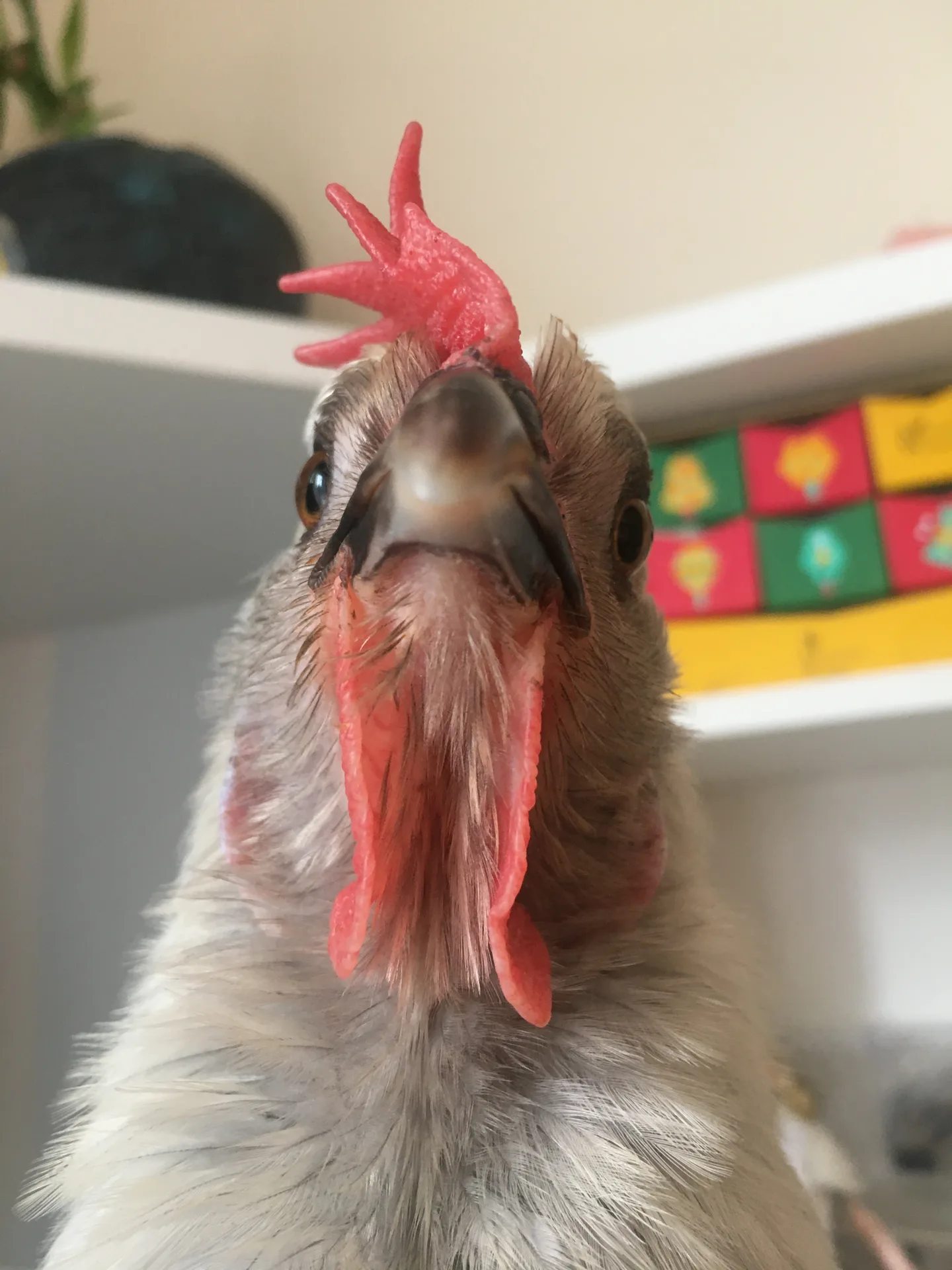
This is where Orpingtons of every color earn their reputation, and Lavenders are no exception. They are among the calmest, friendliest chickens you can keep. Most tolerate handling well, plenty of them will settle into your lap, and they tend to greet you at the run gate rather than bolt from you.
Here's what their personality is really like:
- •Calm and steady: They don't spook easily and they adjust to changes in routine without drama.
- •Friendly with people: Most enjoy attention, and they're gentle enough for kids to carry around the yard.
- •Gentle with flockmates: They rarely start fights, which makes them easy to add to a mixed flock.
- •Quiet: Not silent, but far quieter than a Leghorn or a flighty layer.
- •Poor at standing up for themselves: Their soft nature means pushier breeds can bully them off the feeder.
That last trait matters when you plan a mixed flock. Lavender Orpingtons pair beautifully with other easygoing breeds like Plymouth Rocks, Australorps, Cochins, and Silkies. Put them in with assertive birds like Rhode Island Reds or Easter Eggers and you'll want to watch feeders and waterers for bullying, and add extra feeding stations so the gentle birds aren't crowded out. Their sweet disposition also makes them one of the better choices for a family flock where children will be doing the handling.
Are Lavender Orpingtons Good for Beginners?
Yes. Everything that lands Orpingtons on nearly every best breeds for beginners list applies to Lavenders too. They forgive first-timer mistakes, they're calm to handle, and they don't need anything exotic to thrive.
Pros for beginners:
- •Friendly and easy to catch and hold
- •Very cold-hardy thanks to that thick plumage
- •Steady, usable egg production without high-strung behavior
- •Heavy body and poor flying ability, so a low fence keeps them home
- •Quiet enough for most suburban yards
- •Dual-purpose (eggs and meat)
Potential challenges for beginners:
- •Broodiness can catch a new keeper off guard
- •They wilt in extreme heat and need shade and cool water
- •All that fluff hides mites and lice, so you have to part the feathers to check
- •Their gentle nature means they can get picked on in a rough flock
- •The color premium makes them a pricier way to start than a hatchery Buff
If you're still working out how many chickens to start with, three or four Lavender hens make a lovely, manageable little flock. New to the whole thing? Our beginner's guide to raising backyard chickens walks through the basics from day one.
Housing and Space Requirements
Lavender Orpingtons are big birds, so give them room. Cramming heavy, fluffy chickens into a tight coop invites pecking, dirty feathers, and health problems.
Minimum space guidelines:
- •Coop: 4 to 5 square feet per bird (more is always better)
- •Run: 10 square feet per bird minimum
- •Roost: 10 to 12 inches of roost space per bird
- •Nesting boxes: One box per 3 to 4 hens
Because they're heavy and clumsy in the air, Lavenders don't need tall fencing. A 4-foot fence holds most of them, which makes setup easier and cheaper. If you're building or shopping for housing, our best chicken coops roundup covers options across flock sizes, and the how to build a chicken coop guide walks through a DIY route.
Ventilation is the detail people get wrong with this breed. Dense, loose feathers trap moisture against the skin when a coop is damp and stuffy, which leads to frostbitten combs in winter and respiratory trouble year-round. Build in good airflow up high, above the roost, so damp air escapes without blowing a draft directly on the birds. Pair that with dry bedding, and you've solved most Orpington coop problems before they start. Our coop bedding comparison breaks down pine shavings versus straw versus sand.
That heavy feathering makes Lavenders excellent in the cold. They shrug off freezing temperatures as long as the coop stays dry and draft-free, so they're a strong pick for northern keepers. Our winter care guide covers the details. Heat is the real weakness. Above roughly 90°F they struggle, so plan for shade, cool water, and frozen treats in summer. The summer care guide has a full heat-wave checklist.
Feeding Lavender Orpingtons
Lavender Orpingtons don't need a special diet, but they do share the Orpington habit of eating well and putting on weight, so portioning matters more than picking some fancy feed.
Basic feeding guidelines:
- •Layers (18+ weeks): 16% protein layer feed, offered free-choice
- •Growing birds (8 to 18 weeks): Grower feed at 14 to 16% protein
- •Chicks (0 to 8 weeks): Starter feed at 18 to 20% protein
Supplement with:
- •Oyster shell, offered free-choice, for strong eggshells
- •Grit, if they don't range on dirt and gravel
- •Treats in moderation: mealworms, leafy greens, a little scratch
The most common feeding mistake with any Orpington is overdoing scratch and treats. Those are calorie-dense, and a heavy, laid-back bird packs on fat fast. Keep treats to no more than 10% of the daily diet. An overweight hen lays fewer eggs and runs a higher risk of reproductive problems. Letting them forage helps a lot, since active birds burn off what they eat. For the full breakdown, see our complete feeding guide.
Common Health Issues
Lavender Orpingtons are hardy, long-lived birds, with a typical lifespan of 8 to 10 years. Most of their health concerns come from their body type and feathering rather than the lavender color itself, with one exception.
Obesity. The number one issue with any Orpington. Overweight hens lay less, are more prone to egg binding, and don't live as long. Watch the treats and keep them moving.
Hidden external parasites. Thick, loose feathers are a perfect hideout for mites and lice, and you won't spot an infestation the way you would on a sleek bird. Part the feathers around the vent and under the wings every couple of weeks and treat with a poultry-safe product if you find anything.
Bumblefoot. Heavy breeds land hard off the roost and are more prone to this foot-pad infection, which usually starts from a small cut. Keep bedding clean and dry, keep roosts a reasonable height, and check feet monthly.
Heat stress. These birds do poorly in extreme heat. Watch for panting, spread wings, and lethargy on hot days, and get shade, cool water, and electrolytes to them fast.
Feather quality from the lavender gene. This is the one that's specific to the color. Because the lavender gene is linked to weaker feather structure, poorly bred Lavenders can look ragged or shredded. It isn't a disease and it won't hurt the bird's health, but it's worth knowing so you buy from a breeder who outcrosses to maintain feather strength.
For anything beyond routine care, the Merck Veterinary Manual's poultry section (linked in Sources) is a reliable reference, and a vet who sees birds is worth finding before you actually need one.
Lavender vs Buff, Blue, and Other Orpingtons
All Orpingtons share the same shape and temperament, so choosing a color really comes down to looks, price, and what you get when you hatch chicks.
| Comparison | How they differ |
|---|---|
| Lavender vs Buff | Same friendly bird. Buff is the golden classic, far cheaper, and easy to find at hatcheries. Lavender costs more and turns more heads. Both breed true to color. |
| Lavender vs Blue | The big one. Lavender breeds true (all lavender chicks). Blue does not, throwing black, blue, and splash from the same nest. Choose Lavender if you want a matched flock. |
| Lavender vs Black | Black is the original Orpington color, hardy and feather-strong. Breeders often cross Lavender back to Black to fix feather quality, so the two are closely tied. |
| Lavender vs Cochin | Both are big and docile. Cochins have feathered legs and lay fewer eggs (around 150 a year). Orpingtons have clean legs and lay more. |
Buff Orpington vs Lavender Orpington is the question most shoppers are really asking. If budget is your first concern, a Buff Orpington gives you the identical personality for a fraction of the price. If you want a bird that stops visitors in their tracks and you don't mind paying for it, the Lavender is worth the splurge. Neither one out-performs the other on eggs or friendliness in any way that matters day to day.
Where to Buy Lavender Orpingtons and What They Cost
Lavender is a premium color, so expect to pay more than you would for a common breed, and expect to hunt a little harder for good stock.
Breeders. This is the best source for quality Lavender Orpingtons. A breeder who outcrosses to maintain feather quality will sell you healthier, better-looking birds than a color-only operation. Expect roughly $15 to $30 or more per chick, and higher for started or show-quality birds. Ask about their feather-quality program and whether their line breeds true.
Hatcheries. A growing number of hatcheries now carry Lavender Orpingtons. Chicks typically run about $8 to $20 each with minimum-order requirements. Hatchery birds are usually healthy and productive but smaller and less fluffy than breeder stock.
Hatching eggs. If you have an incubator or a broody hen, hatching eggs are an option, though shipped eggs have low and unpredictable hatch rates. Expect to pay a premium and to accept that not every egg will hatch. New to incubation? Start with our hatching eggs guide.
Started pullets. Some breeders sell point-of-lay pullets at 16 to 20 weeks. They cost the most upfront, often $40 or more, but they skip the brooder stage and start laying within weeks. If you do go the chick route instead, our week-by-week chick guide covers the first two months.
A quick word on cost over the bird's life: the higher purchase price is a one-time thing. Feed, bedding, and housing cost the same for a Lavender as they do for any other Orpington, so the color premium works out to a small share of what you'll spend keeping the bird over its 8-to-10-year life.
Setting up your first flock? The coop matters as much as the bird. Our best chicken coops on Amazon roundup covers current picks across flock sizes and budgets, from small starter coops to walk-in models.
Frequently Asked Questions
Do Lavender Orpingtons breed true?
Yes. The lavender color is a recessive gene, so a bird must carry two copies to show it. When you breed two Lavender Orpingtons together, every chick hatches lavender. This is the main reason they cost more than Blue Orpingtons, which do not breed true and instead produce a mix of black, blue, and splash chicks from the same nest.
What is the difference between a Lavender and a Blue Orpington?
They come from two different genes. Lavender is recessive and breeds true, so lavender parents always produce lavender chicks. Blue is incompletely dominant, so blue parents produce roughly 25% black, 50% blue, and 25% splash. Lavender is an even, dusty grey with a lilac cast, while blue is a slate color with darker feather lacing.
How many eggs do Lavender Orpingtons lay?
Expect about 150 to 250 large, light brown eggs per year, or 3 to 5 a week. Lines bred mainly for show color tend to lay on the lower end, while utility and hatchery lines lay more. Broodiness reduces the annual total, since a broody hen stops laying while she sits.
Are Lavender Orpingtons good with kids?
They're one of the best breeds for families. Lavender Orpingtons are calm, gentle, and tolerant of handling, and many enjoy being held. Their docile nature means they rarely peck or chase, so children can help with them safely.
Are Lavender Orpingtons cold-hardy?
Very. Their thick, dense plumage insulates them well, and they handle freezing temperatures without trouble as long as the coop stays dry and draft-free. Their single combs can be prone to frostbite in extreme cold, so good ventilation and dry bedding matter more than added heat.
Why are Lavender Orpingtons so expensive?
Two reasons. First, they breed true, so a whole hatch comes out matched lavender, which is in high demand. Second, maintaining good feather quality takes extra work, because the lavender gene is linked to weaker feathering and responsible breeders periodically outcross to Black Orpingtons to correct it. That breeding effort and steady demand keep prices high.
Is a Lavender Orpington a recognized breed?
Lavender is a color variety of the Orpington, not a separate breed. In the United States, the American Poultry Association recognizes Orpingtons in Buff, Black, White, and Blue, but not Lavender, so it isn't shown as an APA Orpington variety. That has no effect on how the bird behaves as a backyard chicken.
What do Lavender Orpington chicks look like?
Lavender chicks hatch a smoky silver-grey down, not the golden fuzz of a Buff Orpington. If a chick sold as lavender looks solid black, it is probably a black split (carrying only one copy of the gene) rather than a true lavender bird.
Do Lavender Orpingtons go broody?
Often. Like all Orpingtons, Lavender hens have a strong broody instinct and make excellent, attentive mothers. That's a bonus if you want to hatch chicks, but it interrupts egg laying. If you don't want chicks, you'll need to break broody hens by cooling them off and removing them from the nest.
Ready to build your flock? Start with our complete beginner's guide to raising backyard chickens for everything you need to get going.
Sources:
- •The Livestock Conservancy. Orpington chicken breed information. https://livestockconservancy.org/heritage-breeds/heritage-breeds-list/
- •United Orpington Club. Breed and color information. https://unitedorpingtonclub.com/
- •The American Poultry Association. Standard of Perfection (recognized varieties reference). http://www.amerpoultryassn.com/
- •University of Kentucky Cooperative Extension. Small and Backyard Flocks poultry resources. https://poultry.extension.org/
- •Merck Veterinary Manual. Poultry health reference. https://www.merckvetmanual.com/poultry
Related Guides
Chocolate Orpington Breed Guide: Genetics, Eggs, Care
Chocolate Orpingtons explained: the sex-linked chocolate gene, why hens show it and roosters carry it, 120 to 150 tinted eggs a year, care, and where to buy.
BreedsSapphire Gem Chicken Breed Guide: Eggs, Care, Color
Sapphire Gem chickens lay 260-290 brown eggs a year and show off blue-grey plumage. Full breed guide: temperament, size, sexing, care, and where to buy.
BreedsBuff Orpington Breed Guide: Eggs, Care, Temperament
Buff Orpingtons lay 200-280 brown eggs yearly and make the friendliest backyard chickens. Get the full breed profile with care tips, pros, and cons.
BreedsAraucana Chicken Breed Guide: Blue Eggs, Tufts, Care
Araucana chicken breed guide: rumpless bodies, ear tufts, true blue eggs, the lethal tuft gene, care, and how they differ from Ameraucanas.