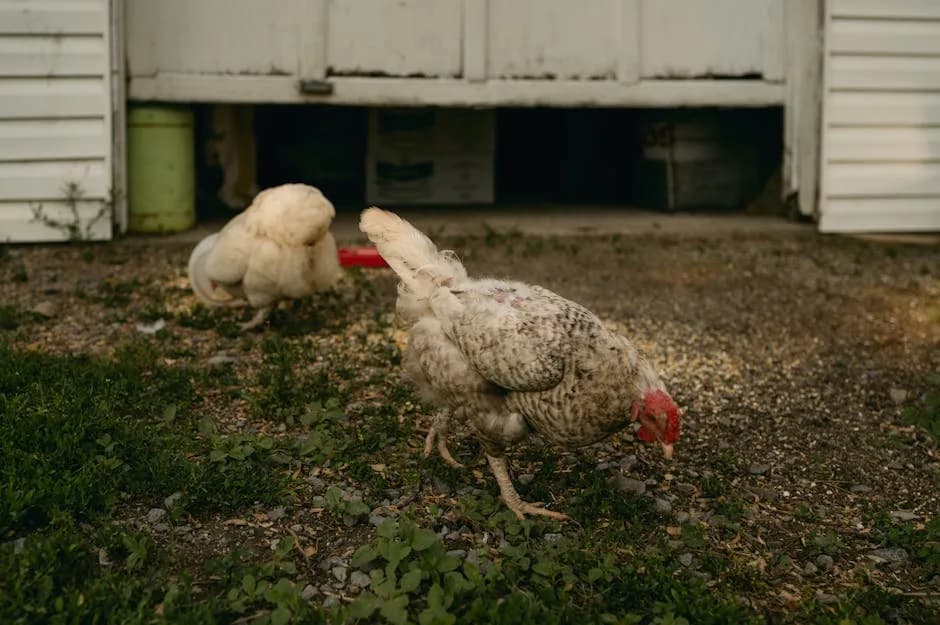
Best Chicken Tractors and Mobile Coops (2026 Reviews)
Seven chicken tractors and mobile coops checked in stock in 2026, from a $135 wheeled starter to the Omlet Eglu Cube, plus wheel kits for the coop you own.
Researched from university extension, USDA, and veterinary sources. How we research.
Affiliate Disclosure: This article contains affiliate links to Amazon. If you buy something through these links, we earn a small commission at no extra cost to you. We only recommend products we genuinely think are worth your money. Full disclosure.
A stationary coop turns the same patch of yard into bare dirt within a month. Move the coop every few days and the flock spreads its droppings as fertilizer, eats fresh bugs and grass, and never wears out one spot. That is the whole case for a chicken tractor, the old farm name for a coop you move. This guide covers the tractors and mobile coops worth buying at every price, the four designs and when each makes sense, and the practical side of dragging a coop around a yard week after week.
Every product here was checked against its Amazon listing on September 5, 2026 for price, dimensions, and stock. Prices move, so read the numbers as "about."
What You'll Learn
- •Why a chicken tractor (vs a stationary coop)
- •Four types of mobile coops
- •Best overall: Aivituvin 85-inch
- •Best for bigger flocks: Aivituvin 68-inch with large wheels
- •Best low-profile tractor: GUTINNEEN iron frame
- •Best budget tractor: Aivituvin 82-inch
- •Best plastic mobile coops: Formex and Omlet
- •Turn the coop you have into a tractor
- •Sizing for rotational grazing
- •How often to move it
- •FAQ
Why a Chicken Tractor (vs a Stationary Coop)
A mobile coop solves three problems that catch up with every stationary backyard flock:
- •Bare dirt under the run. Chickens scratch until the grass dies. A fixed run is a mud pit within weeks.
- •Parasite buildup in the soil. Worm eggs survive two to three weeks in soil before they become infective, so a fixed run cycles the flock through the same parasites over and over. Our chicken dewormer guide covers why rotation matters.
- •Wasted forage. Fresh grass and bugs are free feed. A fixed run offers nothing new after the first week.
The fix is moving the coop every 3 to 7 days. The worn patch grows back in a few weeks, the worm load stays low without treatment, and the flock gets new ground to work.
The catch is that you have to move it, which rules out a 300-pound building. Tractors are lighter, smaller, or wheeled on purpose, and that means smaller sleeping space per bird than a fixed coop. Keep that trade in mind when you read a listing's capacity number.
Four Types of Mobile Coops
| Type | Weight | Best for | What it costs in 2026 |
|---|---|---|---|
| Wheeled wooden coop | 60 to 150 lb | Suburban yards, 2 to 5 hens | $110 to $470 |
| Low-profile tractor | 100 to 150 lb | Wide, stable, hard to tip | $310 |
| Plastic coop | 44 to 125 lb | No rot, hose-clean, insulated (Omlet) | $550 to $1,400 |
| A-frame tractor | 30 to 60 lb | 2 to 4 hens, DIY builders | Mostly built, not bought |
Wheeled wooden coops are the most popular option because they look like a coop and roll. Low-profile tractors trade headroom for a wide, stable footprint. Plastic coops cost more and last longest. A-frame tractors are the classic homestead design, but Amazon does not sell a proper one; the A-frames listed there are rabbit-hutch size. If you want an A-frame, build it; our coop building guide covers the basics, and the free coop plans guide has a skid-mounted range shelter and a cattle-panel hut from the extension archives.
Best Overall: Aivituvin 85-Inch Mobile Coop
Check Price on AmazonThat listing is currently unavailable, so this opens an Amazon search for it.About $310.
The most popular wheeled coop on Amazon, and the one we point most people to. It is 85.6 inches long, 40.6 wide, and 48.2 tall, with a powder-coated steel frame under the fir panels, which is what keeps a coop this size square after a season of being rolled around. The house sits above the run, with a sliding door and ramp between them, a three-section nesting box, two perches, and a pull-out tray that comes out from either end. A removable waterproof cover goes over the roof.
Aivituvin says 4 to 6 chickens. The footprint is about 24 square feet and the house is the upper level, so 3 to 4 standard hens is the honest number for a coop that gets moved rather than parked.
What we like:
- •Steel frame under the wood; the panels are not doing the structural work
- •Real wheels and a size one person can roll on flat grass
- •Three-section nesting box with a steel pen underneath to keep predators off the eggs
- •Tray pulls from front or back
- •Removable rain cover over the roof
What could be better:
- •Fir panels; seal them and expect 5 to 7 years
- •Around 120 pounds assembled, so slopes and rough ground are a two-person job
- •Run mesh needs hardware cloth low on the walls in raccoon country
- •The automatic door in the photos is not included
Best for: Three or four hens in a suburban yard with reasonably flat grass. The default pick for rotational grazing.
Best for Bigger Flocks: Aivituvin 68-Inch with Large Wheels
Check Price on Amazon$469.99 as of Oct 11
Most wheeled coops are long and narrow. This one is 68 inches long but 54 wide, with 8.1-inch wheels and reinforced metal legs, and Aivituvin puts the living area at 21.1 square feet. It has four divided nesting boxes, four perches, two pull-out metal trays, four doors, and iron reinforcement at 26 points in the frame. The listing says 8 to 10 chickens; by floor space it is a 5-hen coop, 6 if they are out on grass all day, which is the point of a tractor.
The same design sells under the GUTINNEEN name at the same price, so buy whichever listing is in stock. If you really do need housing for 8 to 12 birds on wheels, the honest option is a 190-inch double coop at about $500: two sleeping houses and six laying compartments on one 198-pound frame, which takes two adults about 80 minutes to assemble and two adults to move.
What we like:
- •Big wheels that roll over lumpy grass instead of digging in
- •Four nesting boxes and four perches, the most of any wheeled coop here
- •Two trays instead of one
- •Wide stance; it does not tip when you turn it
What could be better:
- •"8 to 10 chickens" is a run number; plan on 5 or 6
- •$470 is walk-in-run money if you do not need the wheels
- •Fir, same sealing and lifespan caveats
Best for: Five or six hens on rotation, or a keeper who wants nesting and roosting room to spare for four.
Best Low-Profile Tractor: GUTINNEEN Iron Frame
Check Price on Amazon$329.99 as of Oct 11
This is the closest thing on Amazon to a classic tractor shape: 76.7 inches long, 53.8 wide, and only 36.8 tall, with a metal frame all the way around, two oversized wheels, a metal-reinforced base, and a six-section nesting box with metal-edged boxes so they do not sag. The house has a sloped asphalt roof; the run is metal mesh under a tarp. GUTINNEEN puts the living area at 19 square feet and the capacity at 6 to 8 chickens. Call it 4, or 5 on pasture.
What we like:
- •Low and wide, so it stays put in wind and does not rock when rolled
- •Six nesting compartments for a coop this size
- •Metal frame, base, and box edges, the three places wooden tractors fail first
What could be better:
- •36.8 inches tall means everything is done bending over
- •Sold under several brand names; only the specs above were checked
- •Tarp roof over the run, not a hard roof
Best for: Windy sites, sloped yards, and keepers who want a tractor that behaves like a tractor rather than a rolling hutch.
Best Budget Tractor: Aivituvin 82-Inch
Check Price on Amazon$174.99 as of Oct 11
The cheapest way to start rotating that is not a rabbit hutch. It is 82.4 inches long, 25.8 wide, and 44.1 tall, with two heavy-duty wheels and a pull handle, two locking nesting sections, an asphalt roof over the house and a galvanized panel over the run, five access doors, and extra-large sliding trays. Aivituvin says assembly takes about 45 minutes and that it holds 4 to 6 hens. At 26 inches wide, it holds 2, or 3 that spend the day outside.
If weight matters more than price, the PetsCosset 77-inch at about $110 is 55 pounds with clear panels over the run, and it is the easiest coop here for one person to move.
What we like:
- •Two wheels and a handle at $135
- •Five doors and big trays, so cleaning does not mean reaching inside
- •Both nesting sections lock
- •Expandable: remove a side panel and bolt on a second unit
What could be better:
- •Two hens, whatever the box says
- •Narrow and tall, so it tips more easily than the wide tractors on rough ground
- •Thin fir; seal it and treat it as a three to five year coop
Best for: Two hens and a small yard, or a first tractor to find out whether rotation suits you.

Best Plastic Mobile Coops: Formex and Omlet
Plastic coops cost two to ten times what a wooden tractor costs. They also never rot, hose clean in minutes, and in Omlet's case are insulated. Three tiers.
SnapLock Formex Large: Made in the USA, No Tools
Check Price on Amazon$824.99 as of Oct 11
Impact-resistant polyethylene panels that snap together without tools, four nesting spots with removable dividers, three 36-inch roosts, a pull-out litter tray, and adjustable vents, made in the USA. It weighs about 65 pounds and has no wheels; you drag it, which works better on rough ground than small wheels do. Hatching Time says 4 to 6 chickens or up to 12 bantams. Four is comfortable. The Formex Standard for 4 hens is about $550 and 36 pounds, with an insulated double wall.
Omlet Eglu Go: Insulated and Light
Check Price on Amazon$599.00 as of Oct 11
Omlet has sold plastic coops for twenty years and the Go is the starter: twin-wall insulated, 44 pounds, plastic roosting bars, a nesting area you fill with straw, and a rear door for eggs. Omlet rates it for 3 large hens or 4 bantams, and unlike most makers that number is about right. It is the lightest real coop on this page, and the one to buy if you move the coop alone and your winters are cold.
Omlet Eglu Cube: The Premium Tractor
Check Price on Amazon$1,399.00 as of Oct 11
The Cube is the coop that made "chicken tractor" a suburban word. Twin-wall insulated plastic, raised on legs, cleaned by pulling the whole floor tray, weatherproof enough that Omlet describes it as cool in summer and warm in winter without any lining. The Amazon listing is the coop alone: the run, the wheels, and the handles are add-ons, and the three boxes take a few hours to build. Omlet rates the Cube for up to 10 hens; treat that like every other maker's number and plan on 6 to 8 with a run. It is expensive, and it is also the only coop here that owners hand down.
Best for: Formex if you want American-made and simple. Eglu Go for 3 hens in a cold climate. Eglu Cube if the budget is there and you want the coop to outlast the flock several times over.
Turn the Coop You Have Into a Tractor
If you already own a wooden coop with a rectangular frame, a wheel kit is cheaper than a new tractor and solves the real problem, which is lifting.
The TOPOWN wheels kit, about $149, bolts to the coop with two bolts per side and uses a foot-pedal lever to lift the coop onto solid rubber tires; step on the lower pedal to raise it, the middle pedal to set it down. TOPOWN says it fits coops up to 7 feet long, and one kit can move between coops.
The Belinova kit, about $170, is a six-piece system: two rear step-to-lock wheel lifts, two front corner brackets, a center support under the floor, and a T-handle with two front wheels for steering. It is the one to pick for a heavier coop or a yard with turns.
Both need a coop with a proper frame to bolt to. A flat-pack hutch with 1/2-inch panels will not take the load; measure your frame members before ordering.
Sizing for Rotational Grazing
Tractors run smaller than fixed coops because you are moving them. The rules of thumb:
- •4 square feet per bird in the sleeping house, the same as a fixed coop. Apply it to the house, not the whole footprint.
- •Run space matters less because the ground under it is fresh every few days.
- •The whole thing must fit through your gates and between your beds.
For 2 hens: any of the narrow $110 to $135 coops works. For 3 or 4 hens: the Aivituvin 85-inch or the Formex. For 5 or 6 hens: the Aivituvin 68-inch with large wheels, or the Eglu Cube. For more than 8: a wheeled coop stops being the right tool. Split the yard into three or four paddocks and rotate the flock through them from a fixed walk-in coop instead.
How Often to Move It
The realistic schedule:
- •Daily for two or three hens with a lot of lawn. Best for the grass and for parasite control.
- •Every 2 to 3 days for most suburban setups. The standard answer.
- •Weekly if the yard is big enough that one spot survives a week.
- •Whenever the ground says so. Trampled grass and a droppings pile mean you waited too long.
For a typical four-hen flock on suburban grass, plan on a move every 3 to 4 days from spring through fall, and less often in winter when nothing is growing back anyway.
Frequently Asked Questions
What is the best chicken tractor?
For most yards, the Aivituvin 85-inch at about $310: a steel-framed wheeled coop that holds 3 or 4 hens and rolls. For 5 or 6 hens, the Aivituvin 68-inch with large wheels at $470. For a coop that never rots, the Formex Large at $825 or the Omlet Eglu Cube at $1,399.
Are chicken tractors worth it?
Yes, if you have the space to rotate. No bare dirt, a lower parasite load, and free forage outweigh the chore of moving it. On a small lot you would only be shifting the coop to a slightly less trampled spot, so tractors earn their keep on a quarter acre or more.
How heavy is a chicken tractor?
The lightest real coops here are the PetsCosset 77-inch and the Omlet Eglu Go at 44 to 55 pounds. Wheeled wooden coops run 100 to 150 pounds assembled. The Eglu Cube is about 125 pounds and the double coop is nearly 200. If you will move it alone, stay under 100 pounds or buy real wheels, not casters.
Do mobile coops protect against predators?
Less than a fixed coop. They are built light, the mesh is thinner, and you cannot bury a hardware-cloth apron around something that moves. Shut the birds in the house at night, add hardware cloth low on the run walls, and in rural or wooded areas run an electric net around the grazing area. See our predator protection guide and best electric fence for chickens.
How do I move a chicken tractor with chickens in it?
Don't, if you can help it. Let the flock out or into a temporary pen, move the coop, then call them back with scratch. Most flocks find the new spot within an hour. If the birds have to ride, move slowly and only a few feet at a time.
What surface works best?
Flat grass. Wheeled coops handle small bumps and gentle slopes and struggle on rocks, roots, and ruts. The low-profile GUTINNEEN and the wheel-less Formex handle rough ground better than tall, narrow coops on small wheels.
Can you keep chickens in a mobile coop full-time?
Yes, as long as you keep moving it. That is the point: it is their permanent home, it just travels. Most rotational-grazing flocks live in tractors year-round.
Do chicken tractors work in winter?
With care. Uninsulated plastic and thin fir both get cold; line the house with foam board or park the coop against a windbreak for the season. The Omlet coops are insulated and handle winter as they are. Below zero, park the tractor in a sheltered spot and resume moving it in spring.
For most suburban keepers, the Aivituvin 85-inch at about $310 is the chicken tractor to buy: steel frame, real wheels, room for 3 or 4 hens. For five or six, the Aivituvin 68-inch with large wheels at $470. For a coop that will still be in service in fifteen years, the Formex Large or the Omlet Eglu Cube. And if you already own a coop, a $149 wheel kit turns it into a tractor for less than any of them.
For the broader coop roundup, see our best chicken coops on Amazon. For fixed coops at the larger-flock end, see the best walk-in chicken coops guide.
Sources:
- •University of Kentucky Cooperative Extension. Small Flock Poultry housing. https://poultry.extension.org/
- •University of Missouri Extension. Small flock housing recommendations. https://extension.missouri.edu/publications/g8351
- •Penn State Extension. Poultry housing and equipment. https://extension.psu.edu/animals/poultry
- •Product dimensions, weights, capacities, and prices: Amazon product listings, checked September 5, 2026.
Product prices and availability are accurate as of the date shown and are subject to change. Any price and availability information displayed on Amazon at the time of purchase will apply to the purchase of this product.
Related Guides
Best Chicken Saddles and Hen Aprons (2026 Reviews)
Top chicken saddles and hen aprons to protect bare-backed hens from rooster treading and feather pecking. Honest picks, sizing, and fit.
Gear ReviewsBest Chicken Coop Fans for Ventilation (2026 Reviews)
The best chicken coop fans for summer heat and winter moisture: solar exhaust fans, shutter fans, and quiet inline fans compared, with real prices.
Gear ReviewsBest Chicken Coop Bedding and Litter (2026 Reviews)
The best chicken coop bedding for 2026. Pine shavings, hemp, aspen, and odor-control litter compared, with pros, cons, and pricing for every flock and budget.
Gear ReviewsChicken Coops for Sale: 2026 Buyer's Guide
How to buy the right chicken coop: prefab, walk-in, and mobile types compared, plus sizing, pricing, predator-proofing, and where to buy.