Light Sussex Chicken: Eggs, Color, Size, Care
Light Sussex chickens are white birds with a black necklace that lay 230-250 brown eggs a year. Full guide to looks, history, sex-linking, size, and care.
Researched from university extension, USDA, and veterinary sources. How we research.
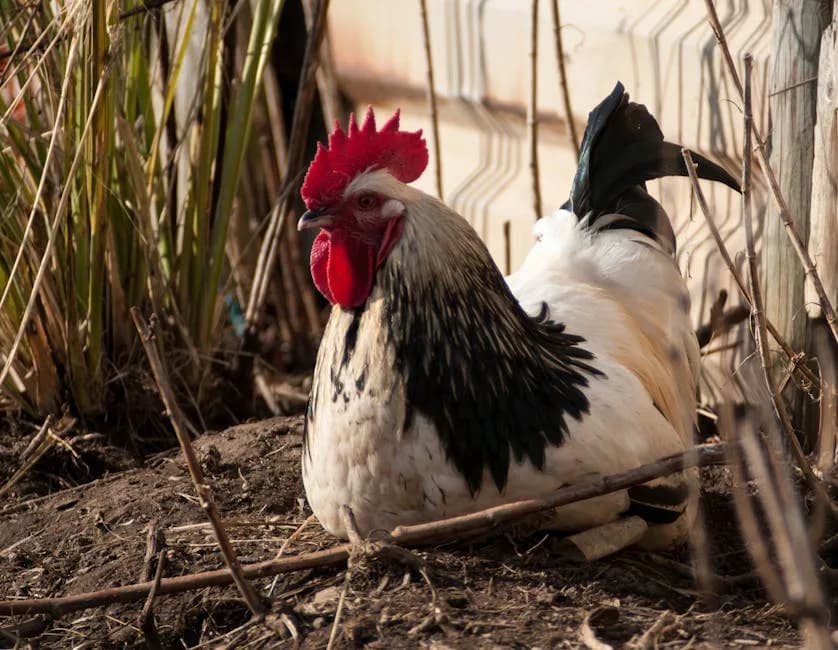
The Light Sussex is the white-bodied variety of the Sussex breed, marked by a black "necklace" of hackle feathers and a black tail. It's the variety that fed Britain for the better part of a century, and it earns its keep today too: a good Light Sussex hen lays 230-250 large, light brown eggs a year, dresses out at a respectable 7 pounds, and stays calm and friendly the whole time. If you want the classic English utility bird, the one that does eggs and meat without any drama, this is it.
What You'll Learn
- •Light Sussex Overview
- •What Is a Light Sussex?
- •How to Identify a Light Sussex
- •History: England's Utility Bird
- •Size and Growth Rate
- •Temperament
- •How Many Eggs Do Light Sussex Lay?
- •Light Sussex and Sex-Linked Crosses
- •Light Sussex vs Speckled, White, and Coronation
- •Are Light Sussex Good for Beginners?
- •Housing and Care
- •Health Issues to Watch For
- •Where to Buy and What They Cost
- •Frequently Asked Questions
Light Sussex Overview
| Trait | Details |
|---|---|
| Variety of | Sussex (Columbian color pattern) |
| Size | Roosters: 9 lbs, Hens: 7 lbs |
| Eggs | 230-250 per year, large, light brown to tinted |
| Egg color | Cream to light brown |
| Temperament | Calm, curious, friendly |
| Cold hardy | Very good |
| Heat tolerant | Moderate |
| Broody | Occasional (less than Speckled Sussex) |
| Beginner friendly | Excellent |
| Lifespan | 6-8 years |
| Conservation status | Recovering (Sussex breed) |
The Light Sussex sits at the productive end of the Sussex family. Compared to the flashier Speckled Sussex, the Light lays a bit more, goes broody a bit less, and grows into a slightly meatier carcass. That combination is exactly why commercial poultry farms leaned on it for decades.
What Is a Light Sussex?
"Light Sussex" is not a separate breed. It's one color variety of the Sussex, and the color pattern it wears is called Columbian: a mostly white bird with black markings restricted to the hackle (neck), tail, and wing tips. The rest of the plumage is clean white.
For a full rundown of the breed as a whole, including every variety and the general history, see our Sussex chicken breed guide. This article zooms in on the Light variety specifically, because it behaves differently enough from the Speckled that it deserves its own treatment. Light Sussex lay more eggs, brood less, and were bred for a different job.
The Columbian pattern is more than a look. The Light Sussex carries the silver gene (the factor that makes the body white rather than gold or red), and that single fact is the reason this bird became one of the most important chickens in commercial history. More on that below.
How to Identify a Light Sussex
A well-marked Light Sussex is easy to pick out of a mixed flock:
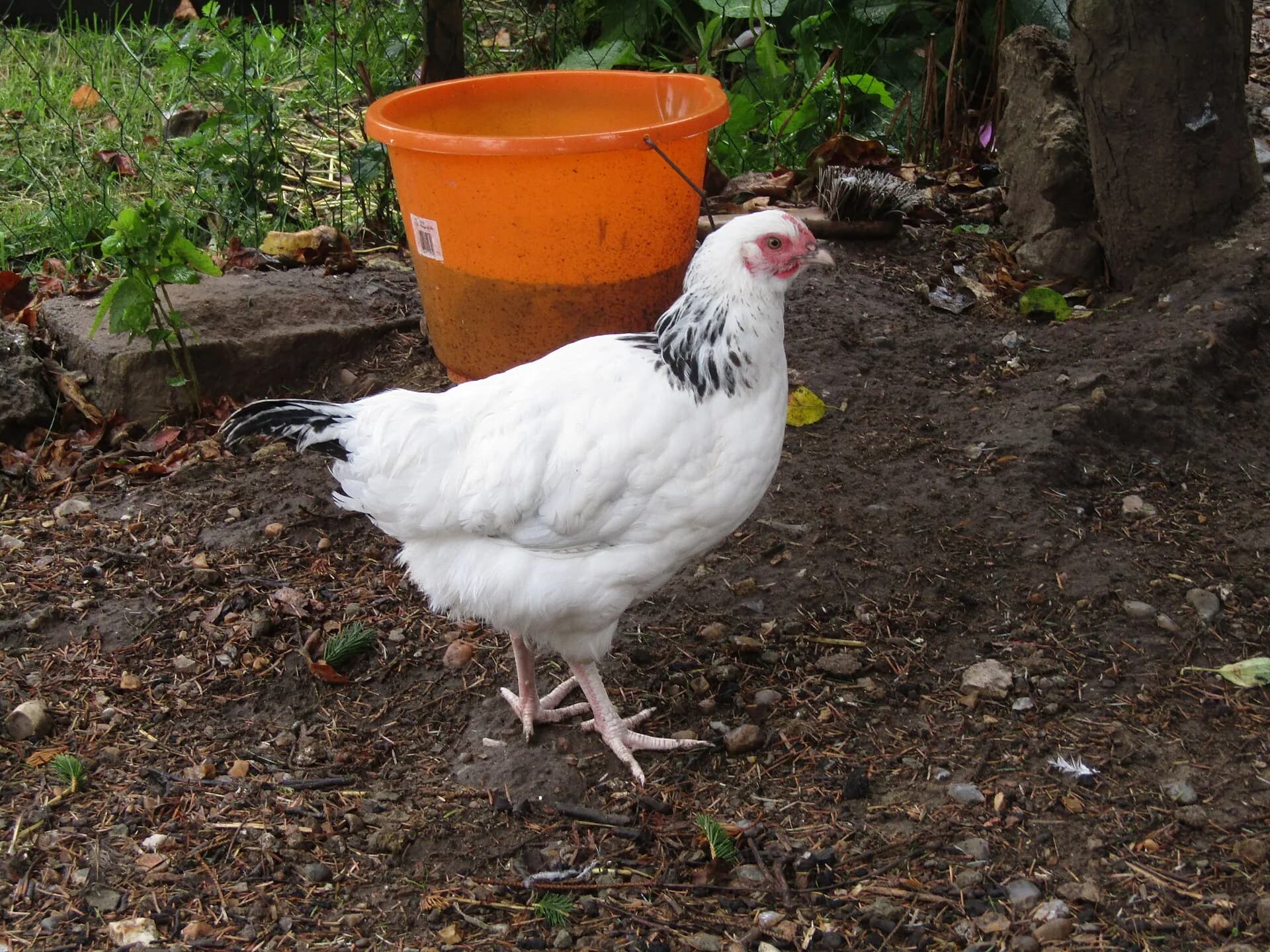
- •Body: clean white, no black flecking or "peppering" through the back and breast. Peppering is the most common flaw hatchery birds show.
- •Hackle (neck): each white feather has a black center with a white edge, creating a striped "necklace" around the neck. This is the signature Columbian marking.
- •Tail: black main tail feathers, often with a green sheen in good light. Roosters carry black sickle feathers.
- •Wings: black on the primary flight feathers, mostly hidden when the wing is folded.
- •Skin and legs: white skin (a table-bird trait the English prized) and clean, unfeathered white legs.
- •Comb: single, medium, upright, bright red. Five points is the show standard.
- •Eyes: reddish-bay. Beak is horn-colored.
The overall body is the classic Sussex shape: broad, deep, and rectangular with a flat back, a wide breast, and a confident upright stance. If a bird is slim, has feathered legs, or shows heavy black splashing across the body, it isn't a properly bred Light Sussex.
History: England's Utility Bird
The Sussex breed traces back to the county of Sussex in southern England, where farmers raised heavy table fowl for the London markets for generations. The breed was formalized in the 1800s and recognized by the Poultry Club of Great Britain in 1903.
Of all the varieties, the Light Sussex became the commercial workhorse. Its white skin and plump, broad breast produced exactly the kind of carcass British consumers wanted, and its steady laying meant a farm could sell both eggs and meat from the same flock. Through the first half of the 20th century, the Light Sussex was one of the two or three most farmed chickens in Britain, alongside the Rhode Island Red and the White Leghorn.
Then the Light Sussex did something even more important. Because the hens carry the silver gene, breeders discovered they could cross a Light Sussex hen with a gold-feathered rooster and tell the chicks apart by color the moment they hatched. That trick, explained in the next section, made the Light Sussex a foundation bird for the sex-linked hybrids that still dominate egg farming today.
Industrial hybrids eventually pushed the pure Light Sussex out of commercial barns, and numbers dropped. The Livestock Conservancy lists the Sussex as "recovering," meaning the backyard movement has pulled it back from real scarcity but it still needs keepers to stay healthy. Choosing a Light Sussex for your flock is a small act of breed conservation.
Size and Growth Rate
Light Sussex are a solidly heavy breed. American Poultry Association standard weights are:
- •Roosters: 9 lbs
- •Hens: 7 lbs
- •Cockerels: 7.5 lbs
- •Pullets: 6 lbs
That puts them right alongside the Plymouth Rock and a touch smaller than the Buff Orpington. They reach full size around 20 weeks, which is faster than heavily feathered breeds like Brahmas or Cochins but slower than a purpose-bred meat hybrid.
Because the Light Sussex was selected as a table bird, it puts on breast meat more efficiently than most heritage layers. A cockerel grown out to 16-20 weeks makes a genuinely good roasting bird, which is not something you can say about a Leghorn.
Temperament
Light Sussex share the friendly, inquisitive personality the whole breed is known for:
- •Curious to a fault. They investigate everything: new buckets, garden tools, your shoelaces. They'll follow you around the run hoping you brought snacks.
- •Calm and easy to handle. They tolerate being picked up and are not flighty. This makes them a favorite for families and for anyone who wants approachable birds.
- •Active foragers. Give them yard access and they'll spend the day scratching for bugs and greens, which trims your feed bill. See our free-ranging guide for how to do it safely.
- •Steady in mixed flocks. They hold their place in the pecking order without bullying. They mix well with other calm breeds, so introductions tend to go smoothly. Our guide on introducing new chickens covers the process.
- •Well-mannered roosters. Light Sussex cockerels are generally protective without being human-aggressive, which is worth knowing if you're weighing whether to keep a rooster.
They do "talk" a lot, so they're not the quietest breed, but they're not screamers either. For most suburban lots they sit comfortably in the middle on noise.
How Many Eggs Do Light Sussex Lay?
Egg production is where the Light Sussex pulls ahead of its cousins:
- •230-250 eggs per year from a good laying strain (roughly 4-5 per week)
- •Large eggs, cream to light brown in color
- •Start laying at 16-20 weeks, on the early side for a heavy breed
- •Reliable winter layers that keep going when daylight drops, thanks to their hardiness
- •Only occasionally broody, much less than the Speckled Sussex
Those numbers put the Light Sussex among the better dual-purpose layers, in the same tier as the Australorp and Rhode Island Red and ahead of most heritage breeds. They won't quite match a production Leghorn's 280-plus, but a Leghorn gives you nothing for the table and none of the personality.
Keep in mind that "production strain" matters. A Light Sussex from a hatchery selected for laying will hit the top of that range, while show-bred birds selected for perfect markings may lay closer to 180-200. If eggs are your priority, ask the hatchery or breeder what their birds are bred for. Our best egg-laying breeds guide has more on choosing productive stock, and if you run into laying trouble, the egg problems troubleshooting guide walks through common causes.
Light Sussex and Sex-Linked Crosses
This is the Light Sussex party trick, and it's genuinely useful if you ever hatch your own chicks.
Feather color in chickens is controlled partly by genes carried on the sex chromosomes. The Light Sussex hen carries silver (the gene that keeps her body white). A gold or red rooster carries gold. When you cross a Light Sussex hen with a gold-based rooster such as a Rhode Island Red, the chicks can be sexed by their down color the day they hatch:
- •Pullets (females) hatch out buff, gold, or reddish.
- •Cockerels (males) hatch out pale, silvery, or white.
This is called a gold-silver sex link, and it means you can separate future layers from future roosters without waiting weeks to guess. Commercial hatcheries built entire hybrid lines on this exact cross, and you can do a small-scale version of it in your own backyard with a Light Sussex hen and a red rooster.
If you want to try it, our guides on how to hatch chicken eggs and raising chickens for meat cover the incubation and grow-out side. The sexable cockerels make tidy table birds, and the pullets go straight into your laying flock.
Light Sussex vs Speckled, White, and Coronation
The Sussex comes in several color varieties, and they are not interchangeable. Here's how the Light stacks up against the ones you're most likely to see:
| Variety | Color | Eggs/Year | Broody? | Best For |
|---|---|---|---|---|
| Light Sussex | White body, black necklace and tail | 230-250 | Occasional | Eggs, meat, sex-link crosses |
| Speckled Sussex | Mahogany with white-tipped speckles | 180-220 | Often | Beauty, foraging, personality |
| Coronation Sussex | White body, soft lavender necklace and tail | 200-240 | Occasional | Rare, ornamental, gentle |
| White Sussex | Solid white all over | 200-240 | Occasional | Uncommon, clean carcass |
The two you'll actually have to choose between are Light and Speckled. Pick the Light if you want maximum eggs, fewer broody breaks, a slightly meatier bird, and the sex-link option. Pick the Speckled if you want the gorgeous, ever-changing plumage and don't mind a few more broody spells. The Coronation is essentially a Light Sussex with lavender swapped in for the black, and it's beautiful but hard to find and usually pricier.
Are Light Sussex Good for Beginners?
Yes. The Light Sussex is one of the easiest heavy breeds to start with.
Pros:
- •Strong, reliable egg production without special handling
- •Calm, friendly, and simple to catch and hold
- •Cold hardy and steady through winter laying
- •Active foragers that offset some feed cost
- •Dual-purpose value if you ever want table birds
- •Widely available from hatcheries at a fair price
- •The sex-link trick gives you a fun, practical breeding project
Challenges:
- •Their curiosity gets them into gardens and flower beds, so fence off anything precious
- •White plumage shows dirt and mud more than darker breeds
- •Moderate heat tolerance means they need shade above 90°F
- •Show-bred lines may lay noticeably fewer eggs than production lines, so buy with your goal in mind
If this is your first flock, start with our beginner's guide to raising backyard chickens and our advice on how many chickens to start with. The Light Sussex also earns a spot on our list of the best chicken breeds for beginners and among the top dual-purpose breeds.
Housing and Care
Light Sussex are low-maintenance and need nothing unusual.
Space
- •4 square feet per bird inside the coop is the minimum; more is better for a heavy, active breed
- •8-10 square feet per bird in the run
- •They thrive with room to forage, so lean toward the larger end if you can
Fencing
Light Sussex can hop a low fence but rarely fly far. A 4-foot fence contains most of them; go to 5-6 feet if you have determined jumpers or nearby predators. For predator planning, see our guide on protecting your flock.
Feeding
A standard 16% layer feed covers laying hens. Growing birds and any you're raising for meat do better on a higher-protein grower feed until they mature. Because they forage so actively, free-range Light Sussex supplement a good share of their own diet with bugs and greens. Our complete feeding guide breaks down protein needs by age. A quality layer feed like Purina Layena crumbles keeps production steady through the year.
Nesting and bedding
One nest box for every 3-4 hens is plenty. Pine shavings, straw, or sand all work fine, and since Light Sussex have clean legs you don't have to worry about moisture trapping in foot feathers. If you're setting up boxes, our best nesting boxes roundup covers solid options.
Climate
Their dense feathering and moderate single comb handle cold well, though that comb can catch frostbite in extreme cold. A dab of petroleum jelly on the comb during hard freezes helps, as covered in our winter care guide. In summer, give shade and cool water once temperatures climb, per our summer care guide, and prep the coop each autumn with the fall care checklist.
Whatever housing you choose, size it for a heavy breed. Our best chicken coops roundup covers picks across flock sizes.
Health Issues to Watch For
Light Sussex are hardy birds without breed-specific weaknesses, but the usual poultry issues still apply:
- •Parasites: mites, lice, and worms affect any flock. Regular checks catch them early. Our sick chicken symptoms guide covers the warning signs.
- •Frostbite: the single comb is the one vulnerable spot in deep cold. Ventilation without draft and a little petroleum jelly go a long way.
- •Weight gain in confinement: these are foragers at heart. Penned in a small run with unlimited feed, they can get overweight, which hurts laying. Give them room to move.
- •Mud and soiling: white plumage stains, and a persistently dirty, damp vent area can signal a health problem worth a closer look. It also just makes dirty eggs, so keep the run well-drained.
None of these are unique to the Light Sussex, and a clean, dry, well-ventilated coop prevents most of them.
Where to Buy and What They Cost
Light Sussex are widely available in the US, which is part of their appeal:
- •Hatchery chicks: commonly $4-$7 each as day-old chicks, with straight-run (unsexed) usually cheaper than sexed pullets.
- •Show or heritage lines: breeders selecting for correct Columbian markings charge more, sometimes $10-$25 per chick or started bird, but you get better type.
- •Started pullets: point-of-lay pullets run $25-$45 depending on region and demand.
When you buy, decide up front whether you want production birds (maximum eggs) or exhibition birds (perfect markings), because the two are bred toward different goals and it affects both price and laying. Ask the seller directly. A reputable hatchery or breeder will tell you what their stock is selected for.
If you're keeping Light Sussex partly for eggs to sell, read up first on how to sell eggs legally, since the rules vary by state.
Frequently Asked Questions
How many eggs does a Light Sussex lay per year?
A good Light Sussex hen lays 230-250 large, light brown eggs per year, roughly 4-5 a week. Production-bred strains hit the top of that range, while show-bred birds selected for markings may lay closer to 180-200. They start around 16-20 weeks and keep laying reliably through winter better than most breeds.
What color eggs do Light Sussex lay?
Light Sussex lay eggs that range from cream to light brown, sometimes described as "tinted." The exact shade varies bird to bird, but they are never dark brown like a Marans or blue like an Easter Egger. The eggs are large and consistent, which makes them easy to sell or use.
What is the difference between Light Sussex and Speckled Sussex?
Both are the same breed in different color varieties. Light Sussex are white with a black necklace and tail, lay more eggs (230-250 vs 180-220), and go broody less often. Speckled Sussex are mahogany with white-tipped speckles that increase with each molt, lay a bit less, and brood more. The Light is the better producer; the Speckled is the showstopper.
Are Light Sussex chickens broody?
Light Sussex go broody only occasionally, much less than the Speckled Sussex. That makes them a more consistent laying choice. When one does go broody she's usually a good, steady mother, so a rare broody hen can be handy if you want to hatch chicks naturally.
Can you sex Light Sussex chicks at hatch?
Not pure Light Sussex chicks by themselves. But if you cross a Light Sussex hen with a gold or red rooster like a Rhode Island Red, the chicks become a gold-silver sex link: pullets hatch buff or reddish and cockerels hatch pale or silvery. This lets you tell males from females the day they hatch.
Are Light Sussex good for meat?
Yes. The Light Sussex was bred as England's premier table bird, with a broad breast and white skin. At 7-9 pounds with good breast meat, they make a genuinely good roasting bird, especially cockerels grown out to 16-20 weeks. They take longer than a commercial meat hybrid but also lay eggs, which makes them a practical homestead choice.
Are Light Sussex cold hardy?
Very. Their dense feathering insulates well and they keep laying through winter when many breeds slow down. The one weak point is the single comb, which can get frostbite in extreme cold. Good ventilation without drafts and a little petroleum jelly on the comb during hard freezes protects them.
How big do Light Sussex chickens get?
Standard-weight Light Sussex roosters reach about 9 pounds and hens about 7 pounds, putting them in the heavy breed category alongside Plymouth Rocks. They have a broad, deep, rectangular body and reach full size around 20 weeks, faster than heavily feathered breeds like Brahmas.
The Light Sussex is one of those breeds that quietly does everything you actually need: a full egg basket, a good bird for the table if you want one, a calm temperament, and a genuinely useful breeding trick built into its genes. It doesn't demand much and it gives back a lot. If you want the classic English utility hen, the Light Sussex belongs on your shortlist.
Browse all our breed guides, compare it against the whole Sussex breed, or see how it ranks among the best breeds for beginners.
Sources:
- •The Livestock Conservancy. Sussex breed page. https://livestockconservancy.org/heritage-breeds/heritage-breeds-list/sussex-chicken/
- •The American Poultry Association. Standard of Perfection (breed standards reference). https://www.amerpoultryassn.com/
- •University of Kentucky, College of Agriculture. Poultry Extension, small flock resources. https://poultry.extension.org/
- •Mississippi State University Extension. Sex-linked crosses and backyard poultry breeds. http://extension.msstate.edu/
Related Guides
Buff Brahma Chicken: Size, Eggs, Color, and Care
The Buff Brahma is a gentle giant in golden feathers. Learn its size, egg laying, buff coloring, cold hardiness, and how to care for feathered feet.
BreedsSussex Chicken: Complete Breed Guide (Eggs, Size, Care)
Complete Sussex chicken breed guide. Covers 200-250 eggs/year, 3 popular varieties, calm temperament, dual-purpose traits, and care tips for beginners.
BreedsLavender Orpington Breed Guide: Eggs, Color, Care
Lavender Orpingtons are calm, cold-hardy hens that breed true to color and lay 150-250 brown eggs a year. Full guide to looks, eggs, care, and cost.
BreedsCinnamon Queen Chicken: Eggs, Color Sexing, Care
Cinnamon Queens lay 250-320 brown eggs a year and can be sexed by color at hatch. Full breed guide: looks, temperament, lifespan, and care.