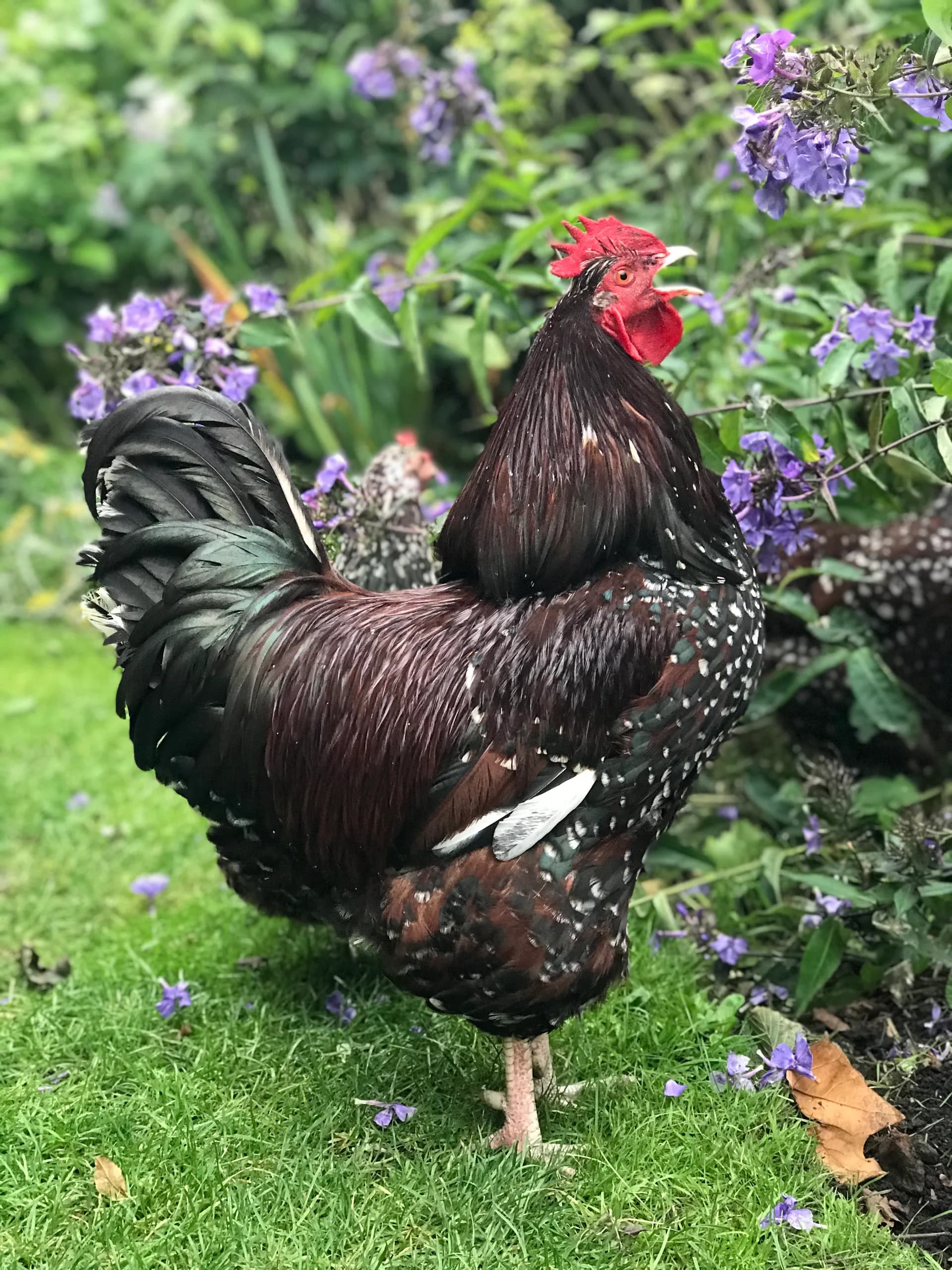
Speckled Sussex Chicken: Complete Breed Guide
Speckled Sussex chicken breed guide: 200-250 light brown eggs a year, friendly dual-purpose temperament, gorgeous mahogany speckled plumage, and care tips.
Researched from university extension, USDA, and veterinary sources. How we research.
The Speckled Sussex is one of the friendliest backyard chickens you can keep, and its plumage only gets prettier with age. These mahogany-red birds are dotted with white spots over a band of iridescent green-black, and they pick up more speckles after every molt. They lay 200-250 large, light brown eggs a year, weigh 7-9 lbs, and they're so calm that many keepers describe them as lap chickens. If you want a gentle, productive heritage bird that turns heads, the Speckled Sussex earns its spot in the flock.
What You'll Learn
- •Speckled Sussex Overview
- •History and Origin
- •What Does a Speckled Sussex Look Like?
- •Why the Speckling Increases With Age
- •Speckled Sussex Egg Color and Production
- •Speckled Sussex Temperament
- •Broodiness and Mothering
- •Are Speckled Sussex Good for Beginners?
- •Speckled Sussex as a Dual-Purpose Bird
- •Housing and Care Requirements
- •Health Issues to Watch For
- •Speckled Sussex vs Light Sussex
- •Frequently Asked Questions
Speckled Sussex Overview
| Trait | Details |
|---|---|
| Size | Roosters: 9 lbs, Hens: 7 lbs |
| Eggs | 200-250 per year, large, light brown to tinted |
| Temperament | Calm, friendly, curious, great with kids |
| Cold Hardy | Very good |
| Heat Tolerant | Moderate |
| Broody | Moderately to strongly broody |
| Beginner Friendly | Excellent |
| Lifespan | 6-8 years |
The Speckled Sussex is the oldest of the Sussex color varieties, and it's the one most backyard keepers fall for. It does a little of everything: steady eggs, a meaty frame, a sweet personality, and looks that genuinely improve as the bird ages. For a one-breed flock that keeps the family happy, it's a hard one to top.
History and Origin
The Sussex is one of the oldest chicken breeds in England, with roots tracing back nearly 2,000 years to the county of Sussex in southern England. For centuries these birds were the backbone of the region's table-bird trade, fattened for the London markets long before industrial poultry farming existed.
The Speckled Sussex is widely considered the original and oldest of the Sussex varieties. The lighter, cleaner-feathered Light Sussex came later and took over the commercial meat market, but the speckled bird was the old farmyard chicken that came first. When poultry breeders organized the Sussex in the 1800s, the speckled pattern was already a fixture on English farms.
The breed crossed the Atlantic and the American Poultry Association admitted Sussex varieties to its Standard of Perfection in 1914. The Speckled Sussex faded for decades as factory farming favored faster commercial hybrids, and The Livestock Conservancy still tracks the Sussex as a heritage breed worth conserving. Backyard keepers brought it back, drawn to exactly the traits big farms didn't care about: personality, hardiness, and that one-of-a-kind plumage.
What Does a Speckled Sussex Look Like?
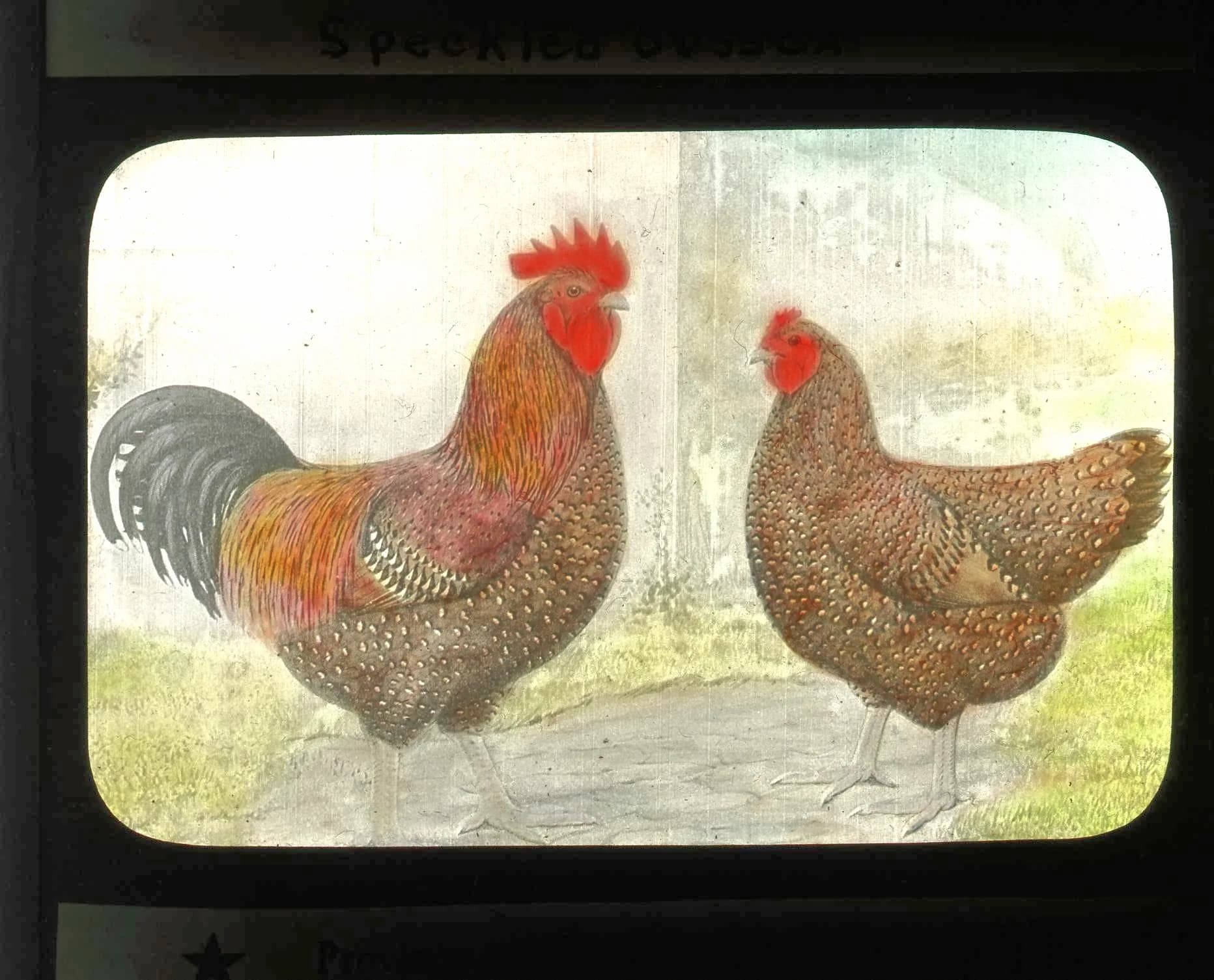
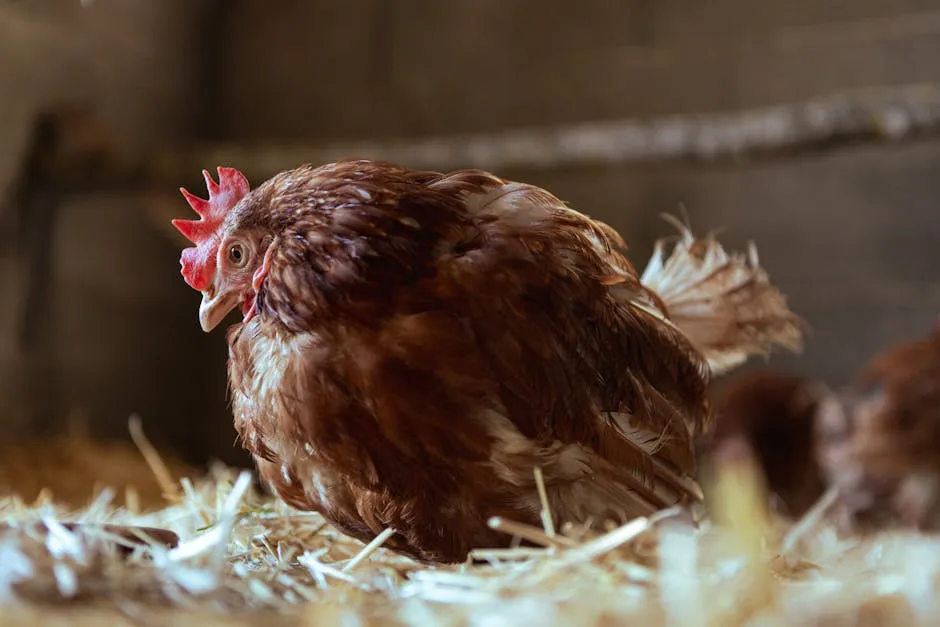
This is a striking bird. The base color is a deep mahogany red, and each feather ends in a white tip separated from the body color by a narrow band of iridescent greenish-black. The result reads as a rich, glossy bird flecked all over with white spots, almost like it's been dusted with snow.
Other physical traits to know:
- •Single comb that's bright red and upright, along with red wattles and red earlobes.
- •White skin under the feathers, a leftover from its days as a premium English table bird.
- •Clean (unfeathered) legs that are a pinkish-white, with four toes per foot.
- •Reddish bay eyes and a broad, rectangular body built low and solid.
Roosters are showstoppers, with darker mahogany bodies, golden-orange hackles, and long iridescent black tail feathers. Hens are a softer chestnut-brown with heavier speckling across the breast and back. Both sexes carry the same speckled theme, just at different intensities.
One practical bonus of all that speckling: it works as camouflage. A Speckled Sussex foraging under trees or in dappled light is genuinely hard for a hawk to pick out, which is a real advantage for a free-range flock.
Why the Speckling Increases With Age
Here's the trait that surprises new owners: a Speckled Sussex doesn't look the same from year to year. The white speckling gets more pronounced with every molt. A pullet in her first year may show fairly modest spotting, but after each annual molt she grows in more white-tipped feathers, so an older hen is noticeably more speckled than a young one.
This means the breed essentially gets prettier as it ages, which is the opposite of most chickens. It also means you shouldn't judge a young Speckled Sussex too harshly on plumage. Give the bird a couple of molts and the full mosaic effect comes in. If you want to understand what a molt does to your birds, our fall care guide covers the seasonal feather drop and how to support birds through it.
Speckled Sussex Egg Color and Production
Speckled Sussex are reliable layers. Expect about 200-250 large eggs per year, which works out to roughly 4-5 eggs per week from a hen in her prime. The eggs are light brown to a soft pinkish-tan, sometimes described as tinted or cream. They aren't dark like a Marans egg, but they're a pleasant, warm color in the carton.
A few things to know about their laying:
- •They start around 5-6 months old. Some pullets begin a little later, especially if they mature into the shorter days of fall.
- •They're decent winter layers. Sussex hens tend to keep producing through cold weather better than many breeds, partly thanks to their hardiness. Egg numbers still dip in the darkest months without supplemental light.
- •Production is steady, not record-breaking. They won't out-lay a production hybrid or a Leghorn, but they lay dependably for years and hold up better as they age than high-output commercial birds.
If you want to hatch your own, Speckled Sussex eggs do well in an incubator, and the hens themselves often volunteer for the job (more on that below). Our incubation guide walks through the full 21-day process if you'd rather hatch artificially.
Speckled Sussex Temperament
This is where the breed wins people over. Speckled Sussex are among the calmest, most people-oriented chickens you can own. They're curious to the point of being underfoot, and they'll often follow you around the yard to see what you're doing.
Here's what to expect:
- •Genuinely friendly. Many Speckled Sussex will hop into your lap or eat from your hand once they trust you. They're a favorite breed for families with kids for exactly this reason.
- •Curious and busy. They love to investigate, and they're enthusiastic foragers that will happily clear your yard of bugs and weed seeds.
- •Talkative but not loud. They chatter and "talk" to their keepers, but they're not as noisy as breeds like the Welsummer. Hens announce eggs, but day to day they're moderate.
- •Low on the pecking order. Their gentle nature has a downside: in a mixed flock, more assertive breeds can bully them. Make sure there's enough space and feeder access so timid birds aren't pushed off.
- •Not flighty. They tolerate confinement well and don't panic easily, though like any active forager they're happiest with room to roam.
Broodiness and Mothering
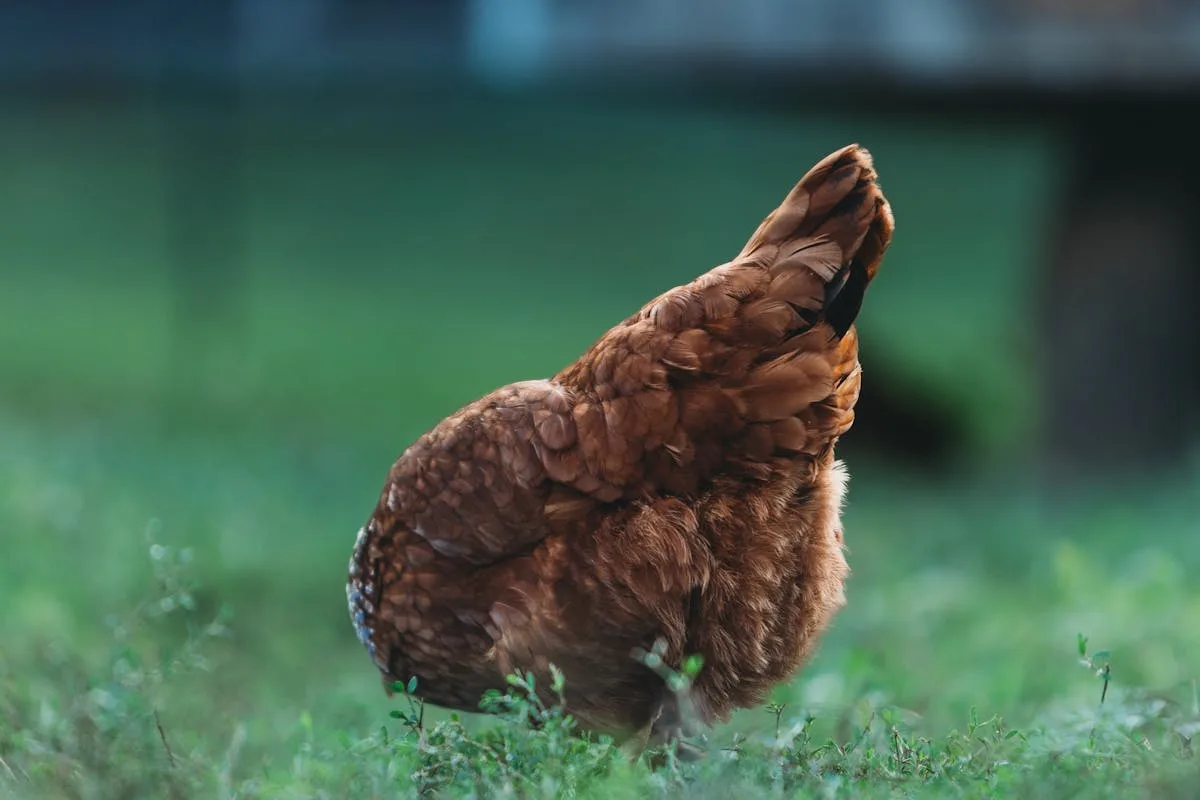
Speckled Sussex hens have a strong tendency to go broody, more so than the commercial Light Sussex. A broody hen stops laying and sits tight on a clutch of eggs, determined to hatch them. If you want non-stop eggs, this can be mildly annoying, but if you want to raise chicks naturally, it's a gift.
When they do set, Speckled Sussex make excellent, attentive mothers. They'll hatch their own eggs or happily foster eggs from breeds that never go broody, like Welsummers or Australorps. A reliable broody hen saves you the cost and fuss of running an incubator and brooder.
If you don't want chicks, you'll occasionally need to break a broody hen by removing her from the nest and limiting access to the nest box until the hormones pass. It's a normal part of keeping this breed.
Are Speckled Sussex Good for Beginners?
Yes. The Speckled Sussex is one of the best breeds a first-time chicken keeper can choose. Here's why:
- •They're forgiving and gentle, which makes daily handling and health checks easy.
- •They're hardy in both cold and moderate heat, so they tolerate beginner mistakes in coop setup.
- •They lay well without needing special care or high-protein show diets.
- •They're great with children, turning the flock into a family project instead of a chore.
- •They forage efficiently, trimming your feed bill if you let them range.
The only real watch-outs are their broodiness (plan for the occasional egg-laying pause) and their low rank in mixed flocks (give shy birds space). Neither is a dealbreaker. If you're brand new to all of this, start with our beginner's guide to raising backyard chickens and add a few Speckled Sussex to your first order.
Speckled Sussex as a Dual-Purpose Bird
The Sussex was bred as a table bird first, and the Speckled Sussex keeps that heritage. Roosters dress out around 9 lbs and hens around 7 lbs, with the white skin and broad breast that made the breed a classic English roasting chicken.
That said, most backyard keepers raise them for eggs and companionship, not meat. They grow more slowly than a Cornish Cross and won't match a meat hybrid for feed efficiency. As a heritage dual-purpose bird, the realistic plan is hens for eggs and surplus cockerels for the occasional home-raised roast. If pure meat production is your goal, a dedicated meat breed will be faster and cheaper.
Housing and Care Requirements
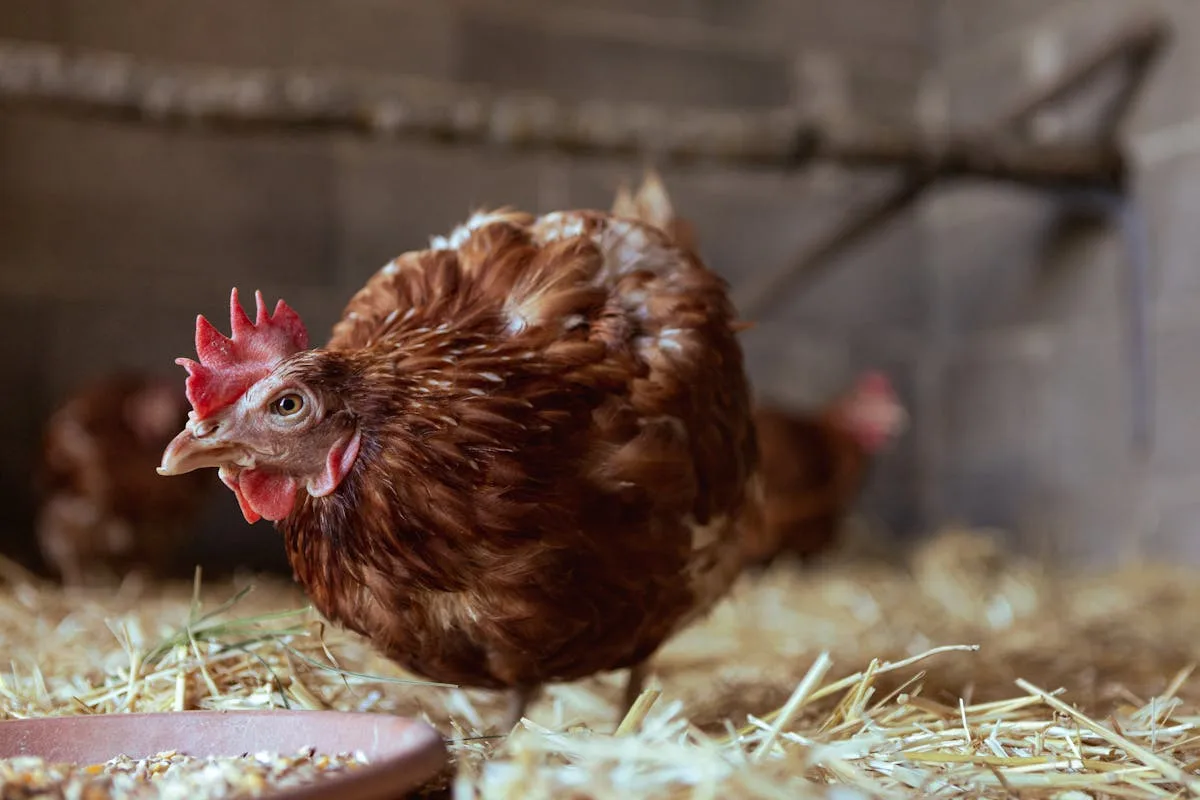
Speckled Sussex are easy keepers with no exotic needs, but a few basics keep them healthy and laying.
Coop Space
Give each bird at least 4 square feet of indoor coop space and 8-10 square feet in the run. They're a medium-large breed, so don't crowd them. Cramped birds get stressed and pick at each other, and shy Sussex are usually the first to suffer. If you're building from scratch, our coop building guide covers plans and materials.
Roosting and Nesting
Provide sturdy roosts 2-3 feet off the ground with 8-10 inches of perch space per bird. One nest box per 3-4 hens is plenty. Keep bedding clean and dry; pine shavings are a solid default, and our bedding comparison breaks down the options.
Feeding
A standard 16% layer feed covers their needs once they're laying. Offer oyster shell free-choice for shell strength and keep grit available for foragers. They'll round out their own diet with bugs and greens if allowed to range. See our feeding guide for the full breakdown by life stage.
Climate
Speckled Sussex handle cold well thanks to dense feathering and a stocky build, and they keep foraging in winter when other breeds sulk indoors. Their single comb is the weak point: it can frostbite in bitter cold, so keep the coop dry and draft-free, and dab petroleum jelly on combs during hard freezes. In heat, they need shade and constant fresh water; our summer care guide covers keeping a flock cool above 90°F.
Health Issues to Watch For
Speckled Sussex are tough, healthy birds with few breed-specific problems, but keep an eye on the usual flock health basics:
- •External parasites. Mites and lice find any chicken. Check under wings and around the vent regularly, especially in free-range birds near wild birds.
- •Internal parasites. Active foragers pick up more worms than confined birds. A fecal check once or twice a year catches problems early.
- •Frostbite. That tall single comb is vulnerable in extreme cold. Dry coops and a little petroleum jelly during cold snaps help.
- •Obesity in confinement. Sussex love to eat and can put on weight if they're confined with unlimited treats, which hurts laying. Keep treats to about 10% of the diet.
If a bird looks off, our guide to sick chicken symptoms helps you tell a minor issue from an emergency. And because Speckled Sussex are friendly, predators that get into the run find them easy targets, so review our predator protection guide before you let them range.
Speckled Sussex vs Light Sussex
The two most common Sussex varieties get compared constantly. They share the same body type and temperament but differ in looks and a few practical traits:
| Trait | Speckled Sussex | Light Sussex |
|---|---|---|
| Plumage | Mahogany red flecked with white over green-black | White body with black neck and tail (Columbian) |
| Speckling with age | Increases every molt | Stays the same |
| Eggs/Year | 200-250 | 200-250 |
| Camouflage | Excellent (blends into cover) | Poor (white stands out) |
| Broodiness | Moderate to strong | Less broody |
| Commercial history | Old farmyard variety | Favored commercial meat bird |
| Best for | Family flocks, free-ranging, natural hatching | Cleaner look, slightly more eggs in some lines |
If you're free-ranging where hawks are a worry, or you want a hen that'll hatch her own chicks, the Speckled Sussex is the better pick. If you prefer a tidy white-and-black bird, the Light Sussex is your variety. Both are wonderful with people.
Frequently Asked Questions
What color eggs does a Speckled Sussex lay?
Speckled Sussex lay large eggs in a light brown to soft tan color, sometimes described as tinted or cream. The shade is consistent year-round and a touch lighter than a Rhode Island Red egg. A healthy hen produces about 200-250 eggs annually, or 4-5 per week in her prime.
Are Speckled Sussex chickens friendly?
Very. Speckled Sussex are one of the most people-friendly breeds, often following their keepers around the yard and tolerating handling well. Many become lap chickens and eat from your hand. Their gentle nature makes them a top choice for families with children, though it also means they rank low in mixed-flock pecking orders.
Do Speckled Sussex get more speckled as they age?
Yes. Speckled Sussex grow more white-tipped feathers with each annual molt, so an older hen is noticeably more speckled than a young pullet. The breed actually looks better as it ages, which is unusual for chickens. Don't judge a young bird's plumage too early; the full mosaic comes in after a couple of molts.
Do Speckled Sussex hens go broody?
Often, yes. Speckled Sussex have a stronger broody instinct than the commercial Light Sussex, and they make excellent, attentive mothers. That's great if you want to hatch chicks naturally, but it means occasional pauses in egg laying. If you don't want chicks, you'll sometimes need to break a broody hen by keeping her off the nest.
How big do Speckled Sussex chickens get?
Roosters weigh about 9 lbs and hens about 7 lbs, making them a medium-large dual-purpose breed. They have a broad, rectangular body and white skin, traits left over from their history as an English table bird. They're solid and hardy without being giants like a Brahma or Jersey Giant.
Are Speckled Sussex cold hardy?
Yes, they handle cold well thanks to dense feathering and a stocky build, and they keep foraging through winter when other breeds stay inside. Their single comb is the main frostbite risk, so keep the coop dry and draft-free and apply a little petroleum jelly to combs during hard freezes.
How many years do Speckled Sussex lay eggs?
A Speckled Sussex lays most heavily in her first two to three years, then production gradually tapers. As a heritage breed, she'll keep laying at a reduced rate for several more years and typically lives 6-8 years. They hold up better with age than commercial hybrids, which often burn out fast.
Can Speckled Sussex live with other breeds?
Yes, they mix well, but their gentle temperament puts them low in the pecking order. Pair them with other calm breeds like Orpingtons, Australorps, or Plymouth Rocks rather than aggressive birds. Provide enough space, multiple feeders, and several waterers so timid Sussex aren't pushed off resources.
Looking for the right coop? Whatever breed you settle on, the housing matters as much as the bird. Our best chicken coops on Amazon roundup covers current top picks across flock sizes and budgets, from starter coops to walk-in models for larger flocks. New to all of this? Start with our beginner's guide to raising backyard chickens for everything you need to set up your first flock.
Sources:
- •The Livestock Conservancy. Sussex Chicken breed profile. https://livestockconservancy.org/heritage-breeds/heritage-breeds-list/sussex-chicken/
- •The American Poultry Association. Standard of Perfection (recognized breeds reference). http://www.amerpoultryassn.com/
- •University of Kentucky Cooperative Extension. Small and Backyard Flocks resources. https://poultry.extension.org/
- •Mississippi State University Extension. Backyard poultry breed selection. http://extension.msstate.edu/
Related Guides
Sussex Chicken: Complete Breed Guide (Eggs, Size, Care)
Complete Sussex chicken breed guide. Covers 200-250 eggs/year, 3 popular varieties, calm temperament, dual-purpose traits, and care tips for beginners.
BreedsCuckoo Marans: Complete Breed Guide
Cuckoo Marans lay dark brown eggs and are the easiest Marans to find and sex. Guide to egg color, barred looks, temperament, care, and Cuckoo vs Black Copper.
BreedsAraucana Chicken Breed Guide: Blue Eggs, Tufts, Care
Araucana chicken breed guide: rumpless bodies, ear tufts, true blue eggs, the lethal tuft gene, care, and how they differ from Ameraucanas.
BreedsAyam Cemani Breed Guide: The All-Black Chicken (2026)
Ayam Cemani explained: the Indonesian breed that is black to the bone, the gene behind it, cream eggs, weights, temperament, prices, and what is myth.