Chantecler Chicken Breed Guide: Canada's Winter Hen
The Chantecler is Canada's first chicken breed: a cushion-combed, cold-hardy dual-purpose bird built to lay through brutal Quebec winters.
Researched from university extension, USDA, and veterinary sources. How we research.
The Chantecler is the first chicken breed developed in Canada, bred by a monk who wanted a bird tough enough to lay eggs through a Quebec winter. It has a tiny cushion comb and small wattles that shrug off frostbite, dense insulating feathers, and a broad dual-purpose body. Hens lay around 200 large brown eggs a year and keep laying in cold weather when other breeds quit. If you keep chickens somewhere the thermometer drops below zero and you want a calm, hardy, self-reliant bird that earns its keep in both eggs and meat, the Chantecler is one of the best cold-climate breeds you can own. The catch is finding one, because it is still uncommon on both sides of the border.
What You'll Learn
- •Chantecler Chicken Overview
- •History and Origin of the Chantecler
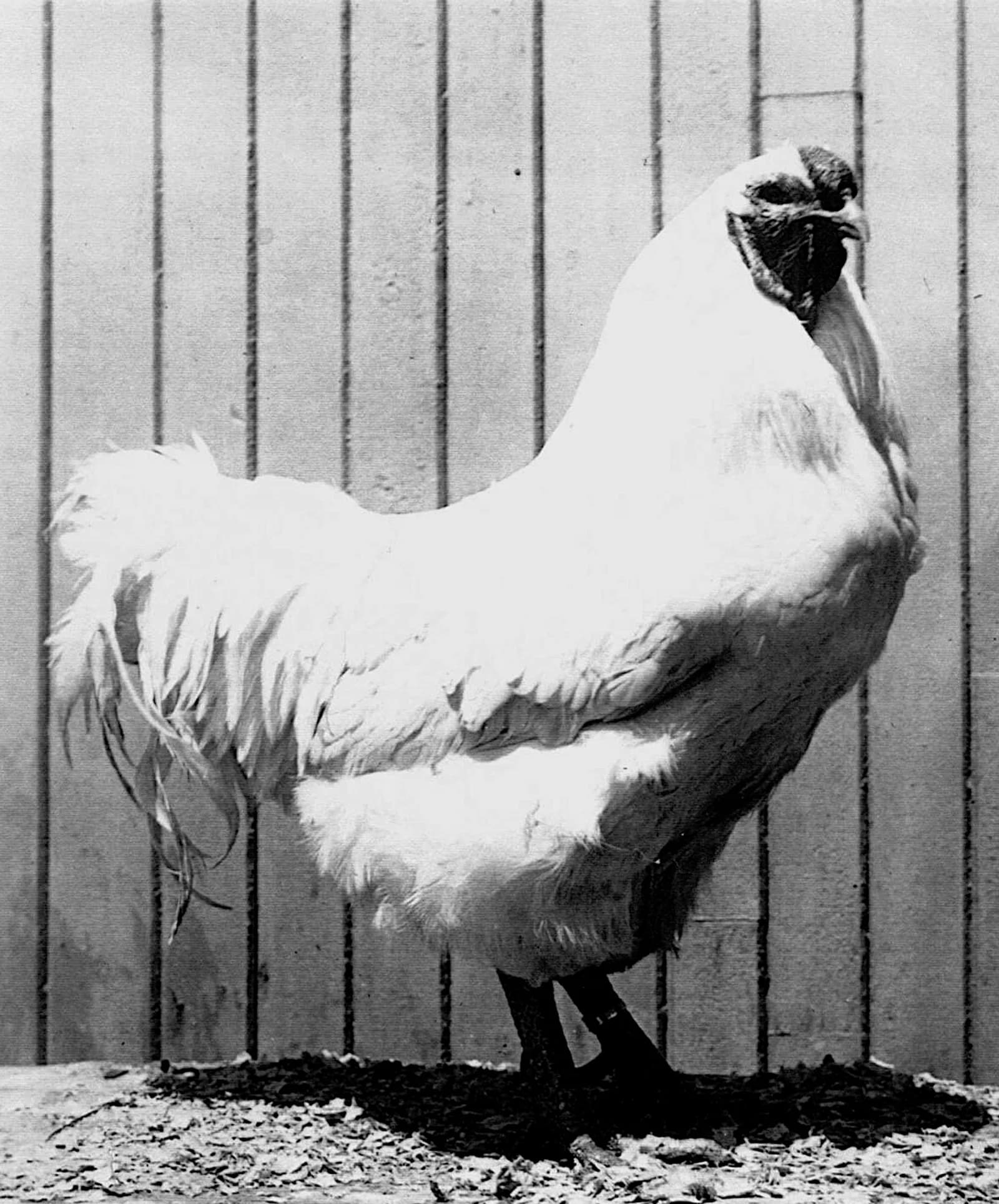
- •What Do Chantecler Chickens Look Like?
- •The Cushion Comb and Cold Weather
- •White vs Partridge Chantecler
- •How Big Do Chantecler Chickens Get?
- •Chantecler Chicken Temperament
- •How Many Eggs Do Chantecler Chickens Lay?
- •Are Chantecler Chickens Cold Hardy?
- •Are Chantecler Chickens Good for Beginners?
- •Housing and Space Requirements
- •Feeding Your Chantecler Chickens
- •Health Issues to Watch For
- •Where to Buy Chantecler Chickens
- •Frequently Asked Questions
Chantecler Chicken Overview
| Trait | Details |
|---|---|
| Origin | Canada (Oka, Quebec; developed 1908 to 1918) |
| Also called | Poule Chantecler |
| Varieties | White (APA 1921), Partridge (APA 1935), plus bantam |
| Size | Roosters: 8.5 to 9 lbs, Hens: 6.5 lbs |
| Egg Production | About 200 large brown eggs/year |
| Egg Color | Brown |
| Comb | Cushion comb (very frostbite resistant) |
| Temperament | Calm, docile, independent, active forager |
| Cold Hardy | Yes, exceptionally (bred for it) |
| Heat Tolerant | Poor (heavy feathering) |
| Broody | Sometimes; fair to good mothers |
| Beginner Friendly | Yes, if you can find stock and give space |
| Conservation Status | Listed by The Livestock Conservancy; recovering |
History and Origin of the Chantecler
Every other chicken in a North American backyard traces to somewhere else. The Rhode Island Red and Plymouth Rock are American, the Brahma and Cochin came out of Asia, the Leghorn is Italian. Around 1907 a Trappist monk named Brother Wilfrid Chatelain, working at the Abbey of Notre-Dame-du-Lac in Oka, Quebec, looked at the flocks in his care and realized Canada had never produced a chicken of its own. Worse, most of the imported breeds struggled through the long Quebec winter. He decided to build a bird that would not.
Brother Wilfrid started crossing in 1908. His goal was a hardy, white-feathered, dual-purpose fowl with a comb small enough to survive hard frost. To get there he blended a mix of established breeds: Dark Cornish, White Leghorn, Rhode Island Red, White Wyandotte, and White Plymouth Rock. The Cornish contributed a broad, meaty frame, the Leghorn brought laying ability, and the Wyandotte and Rock added cold hardiness and a rose-combed foundation that he refined down into the breed's signature cushion comb. After roughly a decade of selection he had a stable, all-white bird, which he introduced publicly in 1918. The American Poultry Association admitted the White Chantecler to its Standard of Perfection in 1921.
A second strain came out of western Canada. Dr. J.E. Wilkinson of Alberta wanted the same hardiness in a darker, better-camouflaged bird for the prairies, so he developed the Partridge Chantecler using Partridge Wyandotte, Partridge Cochin, Rose Comb Brown Leghorn, and Dark Cornish stock. It reached the APA Standard in 1935. Both varieties share the same purpose and the same cold-defying comb, just in different feather colors.
The breed nearly vanished. As industrial hybrids took over egg and meat production in the mid-1900s, the Chantecler faded, and when the Oka monastery closed its poultry program the founding flock scattered. By the 1970s the breed was thought to be gone or nearly so, until scattered flocks turned up and dedicated keepers pulled it back from the edge. In 1999 the government of Quebec recognized the Chantecler as a heritage breed of the province under its heritage animal law, alongside the Canadian Horse and the Canadienne cow. Today The Livestock Conservancy tracks it on its Conservation Priority List. It is recovering, but every backyard flock still helps hold the line for Canada's founding chicken.
What Do Chantecler Chickens Look Like?
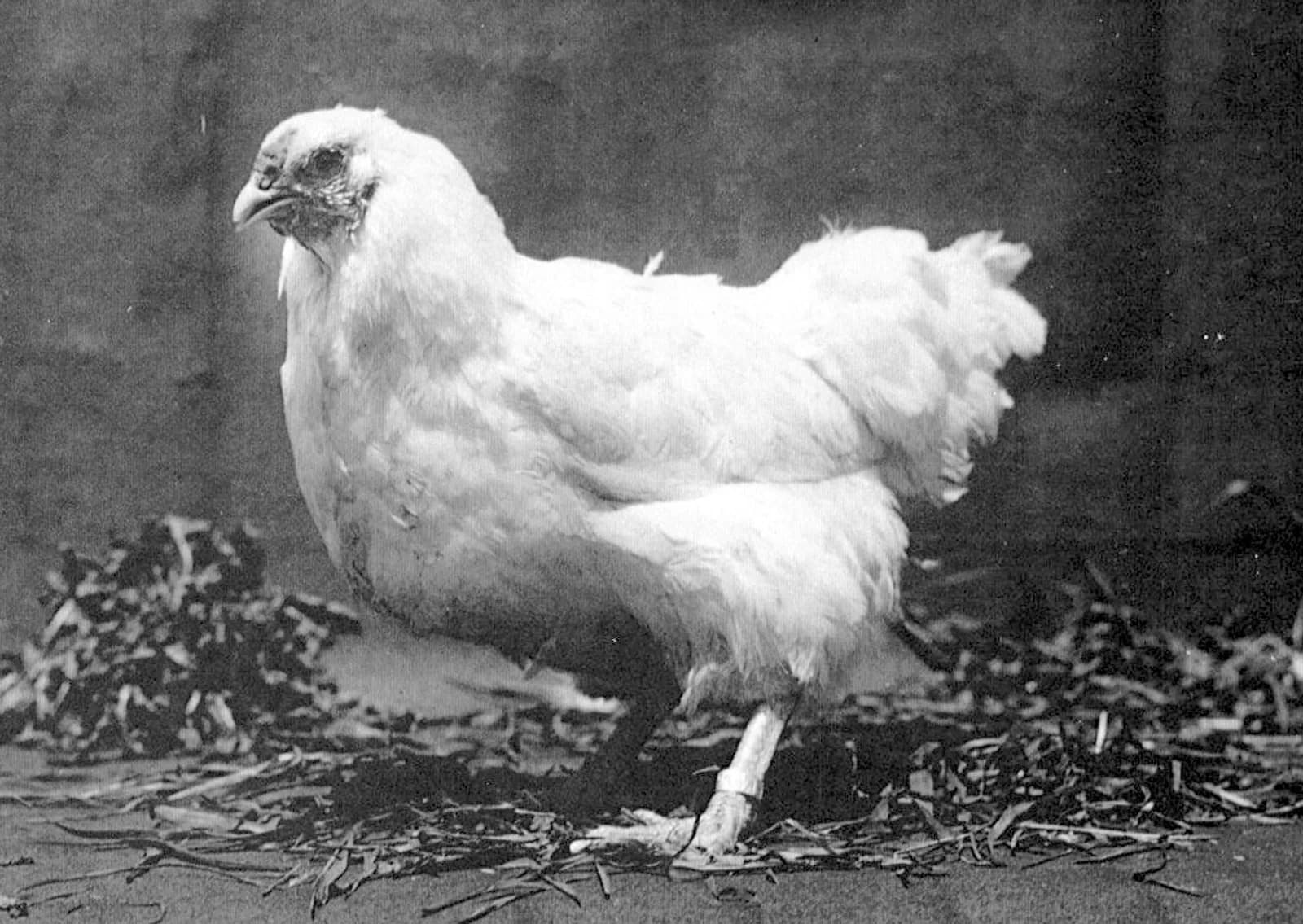
The Chantecler is built like a bird that expects bad weather. It has a broad, deep, well-rounded body carried on medium-length yellow legs, with abundant, fluffy plumage that traps a thick layer of warm air against the skin. The feathering is loose and full without being as extreme as a Cochin's, and the overall shape is compact and solid rather than tall or leggy.
The two features that set a Chantecler apart from almost every other breed are up on the head. First is the cushion comb: a very small, low, tight comb that sits close to the skull with almost no points or spikes rising off it. Second are the wattles, which are unusually short and small. Both traits are deliberate, and both exist for one reason, which is surviving deep cold without losing tissue to frostbite. The earlobes are small and red, the beak is short and yellow, and the eyes are a reddish bay.
Color depends on the variety. The White Chantecler is solid white from head to tail with bright yellow skin and legs, which is the classic version most people picture. The Partridge Chantecler wears the detailed partridge pattern instead: hens show fine black penciling over a reddish-brown ground, while roosters carry the darker, showier partridge coloring with rich hackle and saddle feathers. A bantam Chantecler also exists for keepers who want the breed in a smaller package.
The Cushion Comb and Cold Weather
If you only remember one thing about this breed, make it the comb. On most chickens the comb is a tall, blood-rich crest of tissue standing straight up off the head. That works fine in mild climates, but in hard frost it is the first thing to freeze. Single-combed roosters in cold barns routinely lose the tips of their combs and wattles to frostbite, which is painful and can turn into infection.
Brother Wilfrid designed the Chantecler around that problem. A cushion comb is barely there: small, smooth, flat against the skull, with very little exposed surface area and no thin points to freeze. Pair that with the breed's stubby wattles and you have a head that holds up in weather that would damage a Leghorn or a Wyandotte. It is the same principle behind the pea comb on the American Buckeye, another breed bred for cold, and the low rose comb on the Dominique. Among all of them, the Chantecler's cushion comb is about as frost-proof as a comb gets.
The practical upshot for you as a keeper: a Chantecler flock gives you far less to worry about in winter. You still owe them a dry, draft-free, well-ventilated coop, and you still watch the roosters on the coldest nights, but frostbite that would sideline other birds mostly passes this breed by.
White vs Partridge Chantecler
Both APA-recognized varieties are the same breed underneath, so the choice comes down to looks and a couple of practical points.
| Factor | White Chantecler | Partridge Chantecler |
|---|---|---|
| Plumage | Solid white | Partridge (penciled brown and black) |
| Developed | Oka, Quebec (Brother Wilfrid) | Alberta (Dr. J.E. Wilkinson) |
| APA recognition | 1921 | 1935 |
| Camouflage | Low (stands out to hawks) | High (blends into brush and leaves) |
| Availability | More common | Harder to find |
The White is the original and the easier of the two to track down. Its one small drawback is visibility: a solid white bird stands out against grass and snow, which makes it easier for aerial predators like hawks to spot. The Partridge was bred partly to fix that, with earth-toned feathering that hides a foraging hen in brush and leaf litter. If you free range in open country with a lot of hawk pressure, the Partridge has a real edge. If you mostly want the breed and want it sooner, the White is the pragmatic pick.
How Big Do Chantecler Chickens Get?
The Chantecler is a genuine dual-purpose bird, heavy enough to put meat on the table and productive enough to fill an egg basket. Standard weights run:
| Bird | Weight |
|---|---|
| Rooster (cock) | 8.5 to 9 lbs |
| Hen | 6.5 lbs |
| Cockerel (under 1 yr) | 7.5 to 8 lbs |
| Pullet (under 1 yr) | 5.5 lbs |
That puts a Chantecler in the same weight class as a Plymouth Rock or Wyandotte, a bit smaller than a Brahma or Jersey Giant but plenty substantial. The broad Cornish influence in the White variety shows up as a well-fleshed breast, so extra cockerels from a straight-run hatch make a respectable meat crop. Like most heritage birds, they grow slower than a commercial Cornish Cross meat hybrid, reaching table size closer to 16 to 20 weeks rather than 8, but the payoff is firmer, better-flavored meat and birds that can breed and forage on their own. For more on that balance, see our guide to dual-purpose chicken breeds.
Chantecler Chicken Temperament
Chanteclers are calm and gentle, but they are not lap chickens. The best word for the breed is independent. These are active, confident birds that would rather be out working a yard for bugs and seeds than sitting in your arms. Handled often while young, they tame down and become easy to manage, and they rarely turn flighty or aggressive. Left alone in a small pen with nothing to do, though, they get bored and restless, and bored chickens of any breed start picking at each other.
Roosters tend to be steady and watchful rather than mean, and a good Chantecler cock will keep an eye on his hens without turning human-aggressive, though as with any breed you should handle cockerels regularly and cull for temperament if one crosses the line. Within a mixed flock, Chanteclers hold their own without being bullies. They are a solid choice if you want a mellow, low-drama bird, as long as you understand that mellow here means self-possessed, not cuddly. If a friendly lap bird is the priority, a Buff Orpington or Silkie fits that role better.
How Many Eggs Do Chantecler Chickens Lay?
A Chantecler hen lays roughly 200 large brown eggs a year, which works out to about 3 to 4 a week at her peak. That is respectable rather than record-setting: a production Leghorn or ISA Brown will out-lay her over a calendar year. Where the Chantecler earns its reputation is timing. This breed keeps laying through cold weather when many others slow down or stop, so your winter egg basket stays fuller than it would with a fair-weather layer.
The eggs are large and brown, and the hens start laying somewhere around 6 to 8 months, a little later than fast-maturing hybrids, which is normal for a hardy heritage breed. Production holds up well for several years before tapering, and because the birds are genuinely dual-purpose you can breed your own replacements rather than buying new stock every couple of seasons. If steady winter eggs are your main goal, pair a few Chanteclers with our roundup of the best egg-laying breeds to compare where they fit.
As for broodiness, Chanteclers land in the middle. Some hens go broody and make attentive, capable mothers, but the breed is not as reliably broody as a Silkie or Cochin. If hatching your own chicks matters to you, plan on keeping an incubator as backup. Our egg hatching guide covers the process from setting eggs to brooding chicks.
Are Chantecler Chickens Cold Hardy?
Yes, and it is the whole reason the breed exists. The Chantecler was purpose-built for one of the harshest poultry climates in the settled world, and it handles deep cold as well as any chicken you can keep. Given a dry, draft-free coop with good overhead ventilation, a Chantecler flock stays comfortable and productive at temperatures that push most breeds indoors. The combination of the frost-resistant cushion comb, tiny wattles, dense insulating plumage, and a compact heat-conserving body is exactly what you want when winter settles in for months.
A few things still matter even with a breed this tough. Ventilation is not optional: moisture from droppings and breath needs a way out, because damp cold causes frostbite faster than dry cold, and a sealed-up coop traps humidity. Keep bedding dry, keep water from freezing, and make sure roosts are wide enough for birds to sit flat-footed with their feathers covering their toes. Our guides on keeping chickens warm in winter and general winter chicken care walk through the setup, and if you decide you need supplemental heat, do it safely with the picks in our heat lamps and coop heaters guide.
The flip side is heat. All that insulation that serves the breed so well in January works against it in a hot, humid July. Chanteclers are not a great fit for the deep South or desert Southwest without real effort to keep them cool: deep shade, constant cool water, and good airflow. In a cold or temperate climate, though, this is one of the most weather-proof chickens going.
Are Chantecler Chickens Good for Beginners?
For the right beginner, yes. The Chantecler is hardy, calm, disease-resistant, dual-purpose, and about as low-maintenance as a chicken gets in a cold climate. It does not need coddling, it forages much of its own food when given room, and it will not turn your coop into a frostbite ward every winter. Those are all things a first-time keeper wants.
The honest caveats are two. First, availability: this is not a bird you will find in a bin at the farm store in April, so a beginner has to be willing to order chicks or hatching eggs ahead of time from a specialty source. Second, space: Chanteclers do best with room to range and get restless in tight confinement, so they suit a keeper with a decent-sized run or a yard to free range, not a cramped setup. If you have the space and the patience to source the birds, a Chantecler is a forgiving, rewarding starter breed. If you want something you can buy locally this weekend, browse our best chicken breeds for beginners for easier-to-find options.
Housing and Space Requirements
Give a Chantecler standard coop space at minimum, which means about 4 square feet per bird inside the coop and 8 to 10 square feet per bird in the run. Because this breed is active and dislikes being cooped up, err on the generous side. A flock with room to move, scratch, and forage stays healthier and calmer than one packed into the minimum. Our guide to how big your chicken coop should be breaks the numbers down by flock size.
The coop itself should be dry, predator-proof, and well ventilated up high where moist air can escape without blowing directly across the roosts. Sturdy, wide roosting bars let the birds cover their feet with their feathers in cold weather. Because Chanteclers carry some weight, keep roosts at a moderate height and put soft bedding underneath to cushion the drop and protect their footpads. A secure run matters too, especially for the eye-catching White variety: solid fencing and overhead netting keep hawks and ground predators out, and our guide to protecting your flock from predators covers the weak points to close off.
If you have the land, let them range. A Chantecler that spends its days foraging is a happier, thriftier bird, and this breed's active, self-reliant nature is exactly what makes free ranging work.
Feeding Your Chantecler Chickens
Feeding a Chantecler is straightforward. Laying hens do well on a quality layer feed running 16 to 18 percent protein, with a separate dish of crushed oyster shell so each bird can top up the calcium she needs for strong shells, plus grit if they do not range on open ground. Growing chicks and cockerels want a higher-protein starter and grower feed to build frame and muscle, which matters more with a meaty dual-purpose breed than with a light layer. Fresh, unfrozen water in front of them at all times is the single most important input, especially in winter when a heated waterer earns its keep.
As active foragers, Chanteclers offset a real share of their feed bill with bugs, greens, and seeds when given range, which is one of the quiet economies of a hardy heritage breed. Treats and kitchen scraps are fine in moderation, but keep them to roughly 10 percent of the diet so they do not dilute the balanced ration. One breed-specific note: because Chanteclers are heavy-bodied and can be prone to putting on fat if they are overfed and under-exercised in confinement, watch their condition and lean on range and activity rather than extra scratch grain. Our full chicken feeding guide covers rations, treats, and the foods to avoid.
Health Issues to Watch For
The Chantecler is a genuinely hardy breed with no major inherited health problems, which is one of the rewards of a bird bred for survival rather than the show bench. Most of what you watch for is the ordinary poultry care that applies to any flock.
Frostbite. The breed's whole design minimizes this risk, but it is not zero. On the coldest, dampest nights keep an eye on roosters, whose slightly larger head furnishings are the most exposed part of an otherwise frost-proof bird. Dry, ventilated housing does most of the work.
External parasites. Mites and lice find any flock. Check under wings and around the vent regularly, especially on heavily feathered birds where pests hide, and treat promptly. Our guide to the best chicken mite treatments covers the options.
Internal worms. Foraging birds pick up worms from the ground. Watch for weight loss, pale combs, or messy droppings, and deworm when needed using the approaches in our chicken dewormer guide.
Weight gain. A heavy dual-purpose bird kept in tight quarters and fed too much scratch can get overweight, which cuts laying and stresses the legs. Range and portion control keep condition in check.
Bumblefoot. Birds that jump from high roosts onto hard ground can bruise a footpad and pick up this bacterial infection. Moderate roost heights and soft bedding underneath prevent most cases. For the full list of warning signs across common ailments, keep our guide to sick chicken symptoms handy.
Where to Buy Chantecler Chickens
Sourcing is the hardest part of keeping this breed. Chanteclers are uncommon, so plan to order rather than expect to find them locally, and start looking well before the spring hatching season sells out.
Specialty hatcheries. A handful of hatcheries carry White Chantecler chicks, with Partridge harder to find. Availability shifts year to year, so get on waitlists early. Expect heritage-breed pricing, generally higher per chick than common breeds, and minimum orders of several chicks so the birds ship warm.
Breeders. For birds closest to the standard and for the Partridge variety, a dedicated breeder is your best bet. The Livestock Conservancy's breeder directory is a good starting point in the United States, and because the breed is Canadian, provincial poultry clubs and heritage-breed associations in Canada, especially in Quebec and the Prairie provinces, are often the shortest path to good stock.
Hatching eggs. If you run an incubator or have a broody hen, fertile Chantecler eggs turn up from breeders and are a cheaper way to start, though hatch rates on shipped eggs are always a gamble. Our hatching guide covers the process.
Confirm the type. Whatever the source, verify the birds have the true cushion comb and small wattles, and confirm which variety you are getting. Mislabeled birds and single-combed crosses do circulate, so buy from someone who knows the breed.
Getting set up? Whatever cold-climate breed you land on, the coop matters as much as the bird. Our best chicken coops on Amazon roundup covers current picks across flock sizes and budgets, from small starter coops to walk-in models built to hold heat.
Frequently Asked Questions
Where do Chantecler chickens come from?
The Chantecler is the first chicken breed developed in Canada. It was created by Brother Wilfrid Chatelain, a Trappist monk at the Abbey of Notre-Dame-du-Lac in Oka, Quebec, who began crossing breeds in 1908 to produce a hardy, dual-purpose bird that could handle Canadian winters. The White variety was recognized by the American Poultry Association in 1921, and a Partridge variety developed in Alberta followed in 1935.
How many eggs do Chantecler chickens lay per year?
A Chantecler hen lays about 200 large brown eggs a year, roughly 3 to 4 a week at her peak. She will not out-produce a Leghorn over a full year, but she keeps laying through cold weather when many breeds slow down, so your winter egg supply stays steadier.
What is a cushion comb and why does it matter?
A cushion comb is a very small, low, smooth comb that sits close to the skull with almost no points. It matters because a tall single comb freezes easily in hard cold, while a cushion comb has little exposed tissue to lose to frostbite. Paired with the Chantecler's small wattles, it lets the breed keep its head furnishings intact through winters that would damage other chickens.
What is the difference between White and Partridge Chantecler?
They are the same breed in different colors. The White Chantecler is solid white and was the original, developed in Quebec and recognized in 1921. The Partridge Chantecler wears brown-and-black penciled feathering, was developed in Alberta, and was recognized in 1935. The Partridge blends into brush better, which helps against hawks, while the White is generally easier to find.
Are Chantecler chickens cold hardy?
Very. The breed was purpose-built for harsh Canadian winters and is one of the most cold-hardy chickens you can keep. Its frost-resistant cushion comb, tiny wattles, dense feathering, and compact body all help it stay comfortable and keep laying in deep cold, as long as the coop is dry and well ventilated. The trade-off is poor heat tolerance in hot, humid climates.
Are Chantecler chickens friendly and good for beginners?
They are calm and gentle but independent rather than cuddly. Handled young, they tame well and are easy to manage, and their hardiness and low-maintenance nature make them a good beginner breed for a cold climate. The main hurdles for a beginner are finding stock, since they are uncommon, and giving them enough space, since they dislike tight confinement.
Are Chantecler chickens rare?
Yes, though less so than they were. The breed nearly disappeared by the 1970s and was pulled back by dedicated keepers. Quebec recognized it as a heritage breed in 1999, and The Livestock Conservancy still tracks it as a breed that needs support. You will almost always need to order chicks or eggs from a specialty hatchery or breeder rather than buy them locally.
Are Chantecler chickens good for meat?
Yes. The Chantecler is a true dual-purpose bird with a broad, well-fleshed body, and roosters reach 8.5 to 9 pounds. Extra cockerels from a straight-run hatch make a solid meat crop, though like all heritage birds they grow slower than a Cornish Cross hybrid, reaching table size closer to 16 to 20 weeks. The payoff is firmer, better-flavored meat from birds that can also breed and forage on their own.
The Chantecler is a bird with a mission built into it: keep a household in eggs and meat through a winter that would stop most chickens cold. More than a century after a Quebec monk set out to give Canada its own chicken, it still does that job as well as any breed going, provided you can track one down and give it room to work. If cold-weather hardiness and self-reliance top your list, the Chantecler belongs on your short list. To see how it stacks up against other tough, productive birds, browse our best chicken breeds for beginners guide.
Sources:
- •The Livestock Conservancy. Chantecler Chicken breed page. https://livestockconservancy.org/heritage-breeds/heritage-breeds-list/chantecler-chicken/
- •Oklahoma State University, Department of Animal and Food Sciences. Breeds of Livestock, Poultry. http://breeds.okstate.edu/poultry/
- •American Poultry Association. The American Standard of Perfection (breed recognition dates). https://amerpoultryassn.com/
- •Poultry Extension (Cooperative Extension System). Small and backyard flocks resources. https://poultry.extension.org/
Image credits: White Chantecler rooster and hen photographed in 1926 at the Abbaye Notre-Dame-du-Lac, Oka, Quebec, where the breed was developed. Both images public domain, via Wikimedia Commons.
Related Guides
Bielefelder Chicken Breed Guide: The Auto-Sexing Hen
A big, gentle German dual-purpose breed whose chicks can be sexed at hatch by color. Calm, cold-hardy, and a steady layer of large brown eggs.
BreedsDominique Chicken Breed Guide: America's Oldest Hen
Dominique chickens are America's oldest breed: rose-combed, barred, cold-hardy layers. Learn their eggs, size, temperament, and Barred Rock differences.
BreedsCuckoo Marans: Complete Breed Guide
Cuckoo Marans lay dark brown eggs and are the easiest Marans to find and sex. Guide to egg color, barred looks, temperament, care, and Cuckoo vs Black Copper.
BreedsAraucana Chicken Breed Guide: Blue Eggs, Tufts, Care
Araucana chicken breed guide: rumpless bodies, ear tufts, true blue eggs, the lethal tuft gene, care, and how they differ from Ameraucanas.