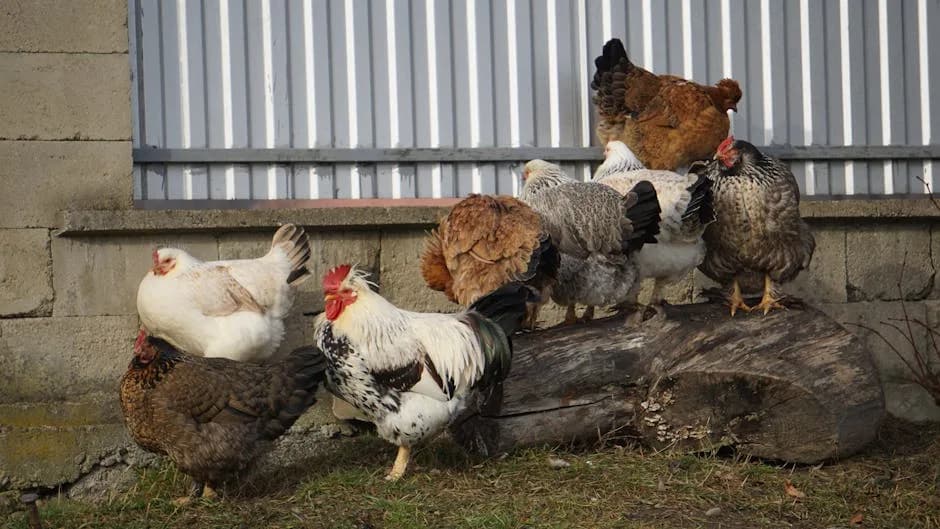
Dual-Purpose Chicken Breeds: 10 Best for Eggs & Meat
Dual-purpose chicken breeds give you steady eggs and a meaty carcass from one flock. Compare the 10 best breeds by egg count, weight, and temperament.
Researched from university extension, USDA, and veterinary sources. How we research.
If you want one flock that fills the egg basket and still puts a decent roast on the table, you want dual-purpose chickens. These are the breeds our grandparents kept: sturdy birds that lay a respectable number of eggs and grow heavy enough to be worth processing once they stop earning their keep.
Below you'll find the 10 best dual-purpose chicken breeds, with real numbers on egg production and mature weight, plus notes on temperament and climate tolerance so you can match a breed to your setup. Most of these are heritage breeds that have done both jobs well for over a century.
Quick Answer
A dual-purpose breed lays around 180 to 280 eggs a year and reaches a mature weight heavy enough to dress out for the table, usually 6 to 10 pounds for a cockerel. Here are the standouts:
| Breed | Eggs/Year | Hen Weight | Rooster Weight | Egg Color |
|---|---|---|---|---|
| Plymouth Rock | 200-280 | 7.5 lb | 9.5 lb | Brown |
| Rhode Island Red | 250-300 | 6.5 lb | 8.5 lb | Brown |
| Sussex | 240-260 | 7 lb | 9 lb | Cream/Brown |
| Wyandotte | 180-220 | 6.5 lb | 8.5 lb | Brown |
| Orpington | 180-200 | 8 lb | 10 lb | Brown |
| Australorp | 250-300 | 6.5 lb | 8.5 lb | Brown |
| New Hampshire Red | 200-240 | 6.5 lb | 8.5 lb | Brown |
| Delaware | 200-280 | 6.5 lb | 8.5 lb | Brown |
| Jersey Giant | 150-200 | 10 lb | 13 lb | Brown |
| Brahma | 150-200 | 9.5 lb | 12 lb | Brown |
What You'll Learn
- •What Does "Dual-Purpose" Actually Mean?
- •Why Choose a Dual-Purpose Breed?
- •The 10 Best Dual-Purpose Chicken Breeds
- •Dual-Purpose vs Specialized Breeds
- •How to Choose the Right Dual-Purpose Breed
- •Feeding and Raising Dual-Purpose Birds
- •Frequently Asked Questions
What Does "Dual-Purpose" Actually Mean?
A dual-purpose chicken is a breed kept for both eggs and meat rather than being specialized for one job. Commercial laying hybrids like the White Leghorn are built to convert feed into eggs and stay light. Commercial meat birds like the Cornish Cross are built to pack on muscle in eight weeks and not much else. Dual-purpose breeds sit in the middle: they lay well enough to justify the feed bill and carry enough breast and thigh meat to be worth dressing out.
In practical terms, that means a hen who gives you 200-plus eggs in her first couple of years, plus the option to harvest extra cockerels and spent hens for the freezer. It also means a bird with a slower, more natural growth rate than a Cornish Cross, which is healthier for the animal and produces firmer, more flavorful meat.
Most dual-purpose breeds are heritage breeds, meaning they were standardized before the mid-20th century, breed true from one generation to the next, and can mate and brood naturally. That last point matters: a true dual-purpose flock can replace itself. You can hatch your own replacements instead of buying chicks every spring. Our guide on whether you need a rooster covers what that takes, and for a dual-purpose breed that also lets you tell those replacement chicks apart by sex at hatch, see the auto-sexing Bielefelder.
Why Choose a Dual-Purpose Breed?
There are a few solid reasons these old breeds are having a comeback among backyard keepers.
- •One flock, two jobs. You don't need separate layer and broiler setups. The same birds give eggs and meat, which simplifies your feed, housing, and chore routine.
- •Self-sufficiency. Because they brood and breed naturally, a dual-purpose flock can sustain itself. Let a broody hen hatch a clutch and you've raised next year's layers and this fall's roasters for the cost of feed.
- •Longevity and hardiness. These birds were bred for farm life before climate-controlled barns existed. Most are cold-hardy, forage well, and stay productive for 4 to 6 years rather than burning out in two.
- •Calm temperaments. Heritage dual-purpose breeds tend to be docile and good with kids, which matters in a backyard flock. They're a long way from the flighty Leghorn.
- •Flavor. A slow-grown heritage cockerel processed at 14 to 20 weeks has firmer, richer meat than a supermarket bird. It's not the same product, and a lot of people prefer it.
The trade-off is honest: you won't match a production layer on eggs or a Cornish Cross on feed-to-meat efficiency. Dual-purpose birds eat more per egg and grow slower per pound of meat. What you get in return is a flexible, resilient flock that does both jobs respectably.
The 10 Best Dual-Purpose Chicken Breeds
1. Plymouth Rock
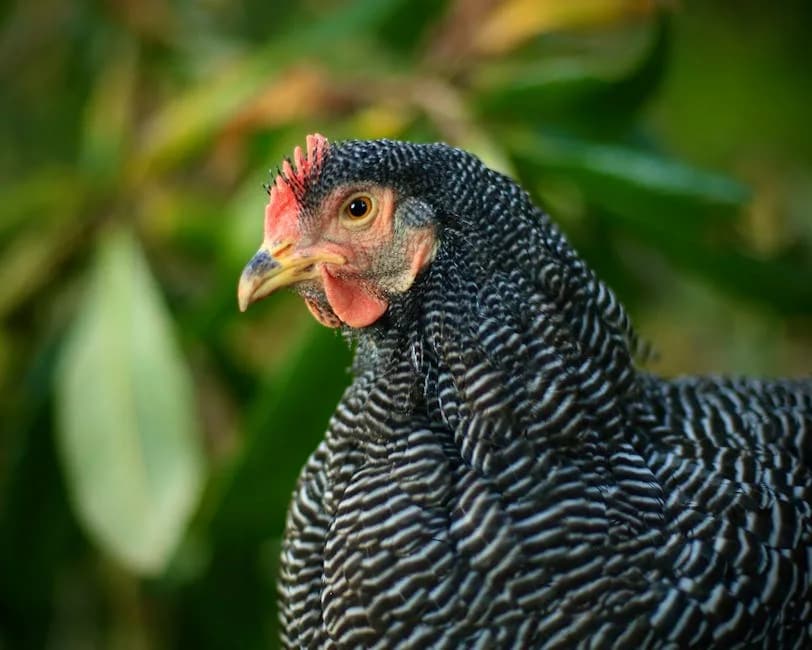
The Plymouth Rock, especially the Barred Rock variety, is the breed most people picture when they think "dual-purpose." Developed in New England in the 1800s, it became the backbone of American farm flocks for good reason. Hens lay 200 to 280 large brown eggs a year and keep going through cold weather better than most. Roosters dress out around 9.5 pounds.
They're friendly, curious, and tolerant of confinement or free range. If you want one breed that does everything competently and asks for nothing fancy, start here. See our full Plymouth Rock breed guide for details. For the rose-combed heritage bird the Barred Rock was partly bred from, look at the Dominique, America's oldest breed.
Best for: First-time keepers who want a reliable all-arounder.
2. Rhode Island Red
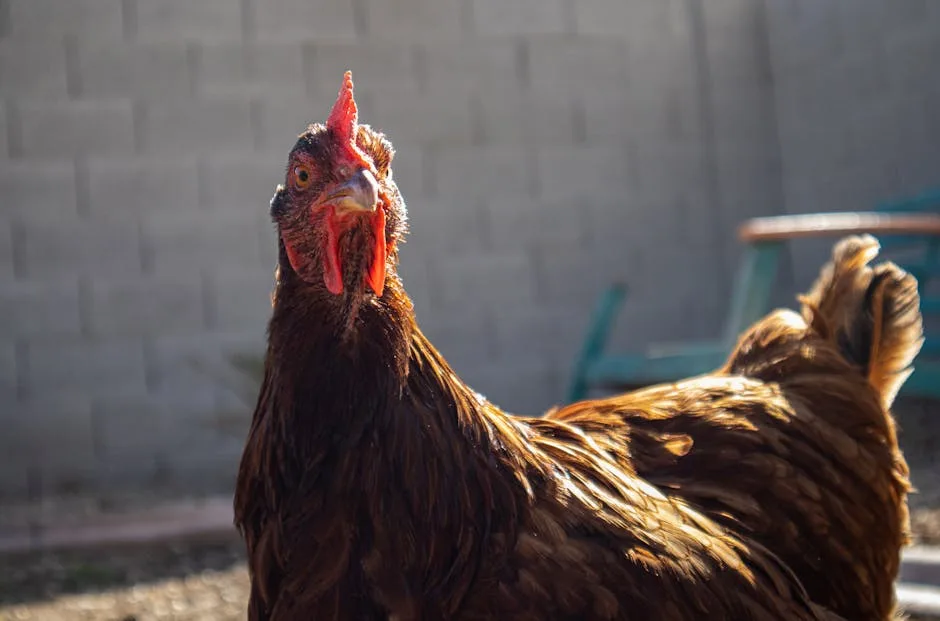
The Rhode Island Red is arguably the best egg layer on this list while still carrying enough size to be useful for meat. Heritage strains lay 250 to 300 brown eggs a year, and the hens hold up well through their third and fourth seasons. Roosters reach about 8.5 pounds.
Reds are hardy, heat- and cold-tolerant, and excellent foragers. Roosters can be assertive, so handle them young if you want them calm. The breed is so productive it became a foundation for many modern laying hybrids. Read more in our Rhode Island Red breed guide.
Best for: Keepers who prioritize eggs but still want a meaty bird.
3. Sussex
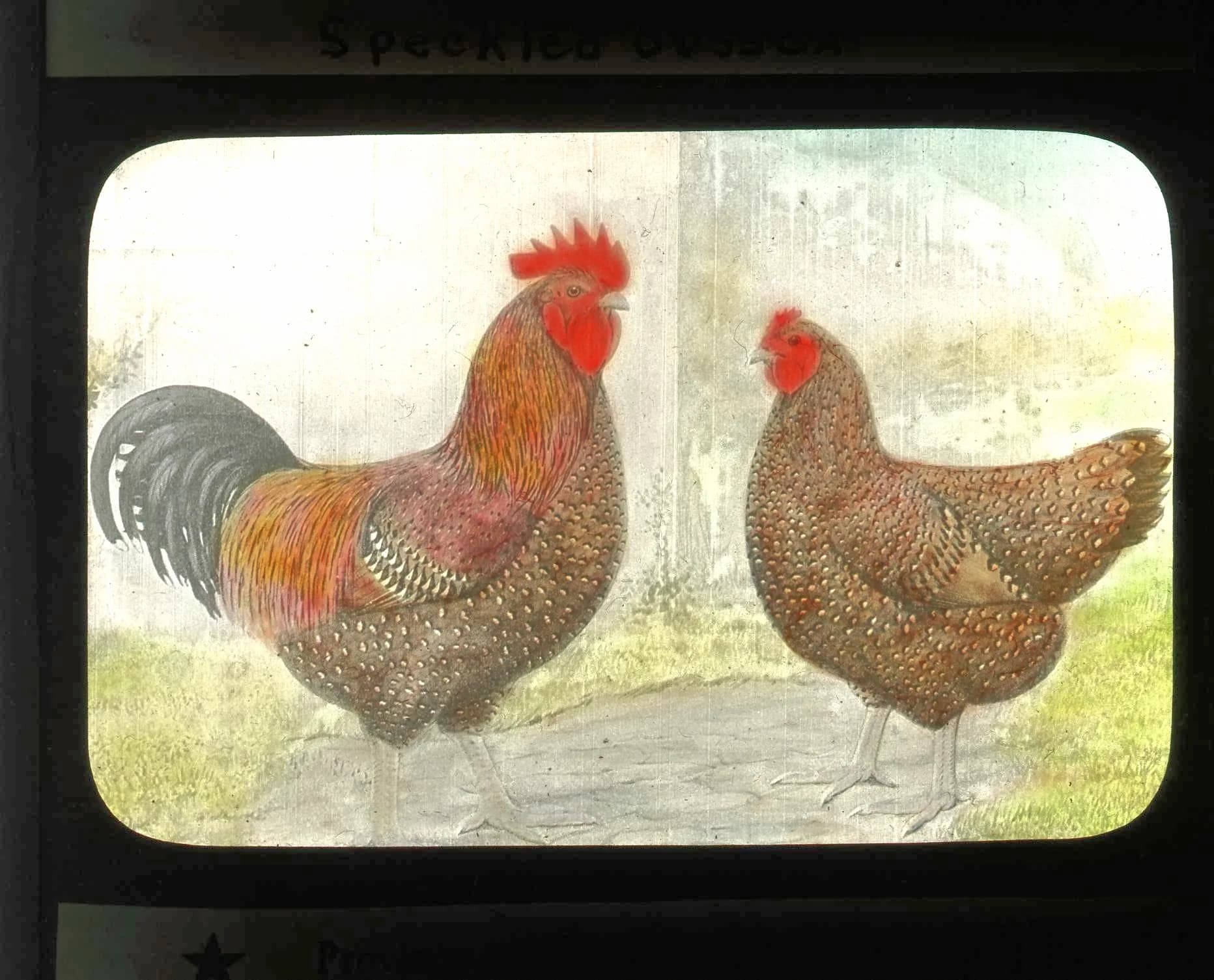
The Sussex is an old English breed that does both jobs about as evenly as any breed can. Hens lay 240 to 260 cream to light-brown eggs a year, and the birds carry a broad, deep body that dresses out cleanly. Roosters reach around 9 pounds.
Sussex are calm, curious to the point of being nosy, and outstanding foragers, which keeps the feed bill down on pasture. The Speckled Sussex is the prettiest variety and just as productive. We cover both in our Sussex breed guide and the dedicated Speckled Sussex guide.
Best for: Free-range flocks where foraging ability matters.
4. Wyandotte
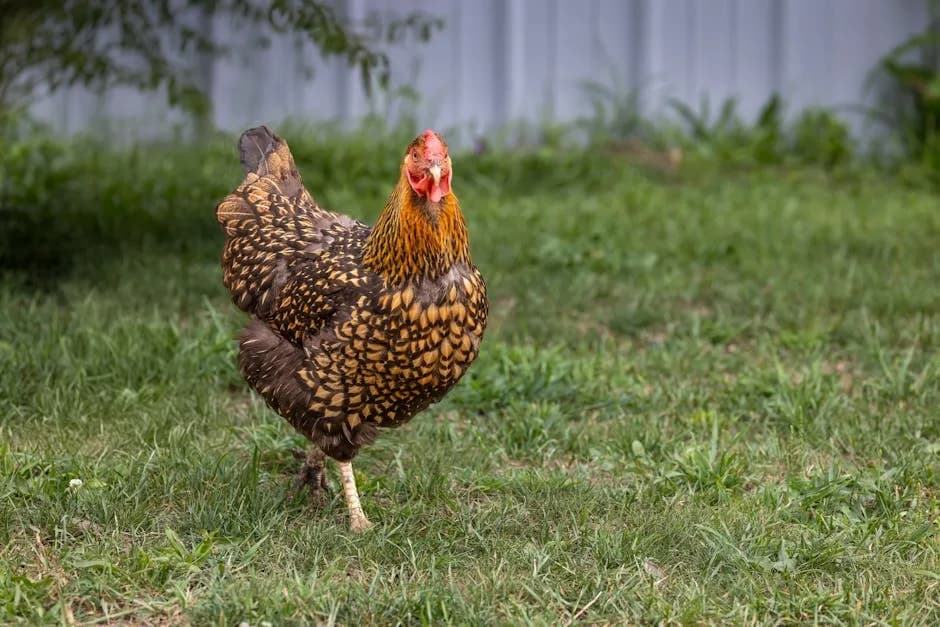
The Wyandotte is the cold-climate specialist of the dual-purpose world. Its dense plumage and tight rose comb resist frostbite, and hens keep laying 180 to 220 brown eggs a year when other breeds shut down for winter. Roosters dress out around 8.5 pounds on a round, blocky frame.
They come in showy lacing patterns, the Golden Laced and Silver Laced being the most common, but the working qualities are identical across varieties. Wyandottes can be a touch bossy in a mixed flock but are generally calm with people. See the full Wyandotte breed guide. For another cold-hardy, pea-combed alternative, the American Buckeye fills the same niche and is an even keener forager.
Best for: Northern keepers who want winter eggs and a meaty carcass.
5. Orpington
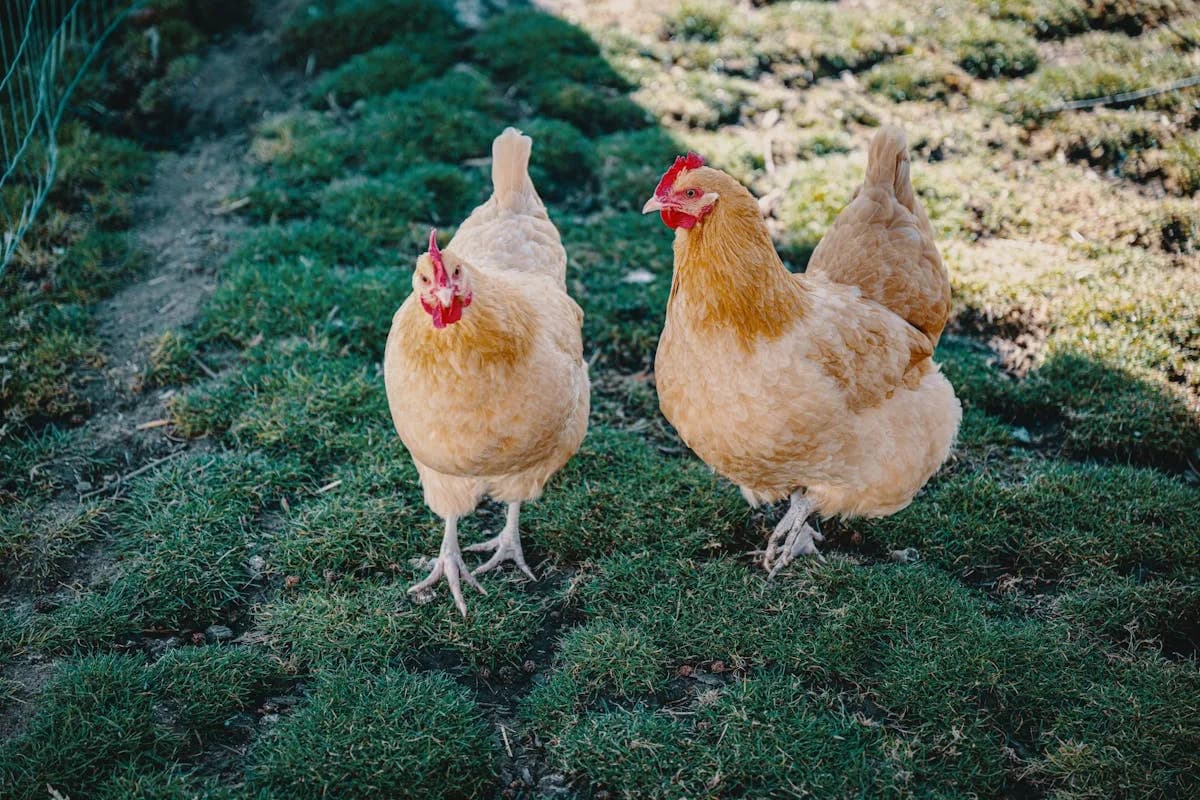
The Orpington, usually the Buff variety, is the gentle giant of backyard flocks. It's a fluffy, heavy bird: roosters reach 10 pounds, and the loose feathering makes them look even bigger. Hens lay 180 to 200 brown eggs a year and go broody readily, which makes them excellent mothers if you want to hatch your own.
Orpingtons are famously docile and great with children, but the heavy feathering means they need shade in hot climates. The meat is generous and the temperament is unbeatable. Our Buff Orpington breed guide has the full picture.
Best for: Families and anyone who wants a broody hen to raise chicks naturally.
6. Australorp
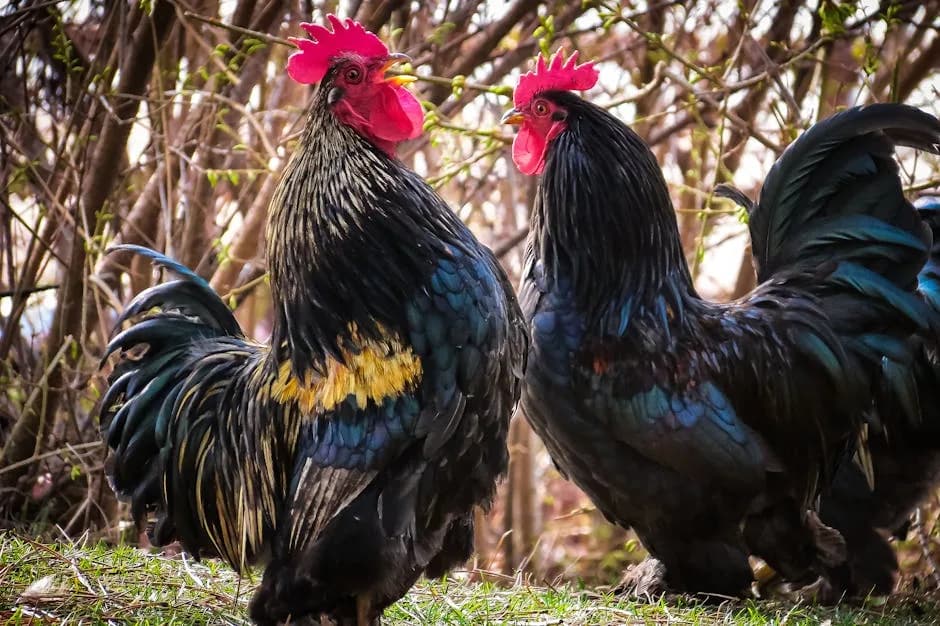
The Australorp is an Australian refinement of the Orpington bred for laying, and it shows: hens commonly lay 250 to 300 brown eggs a year, with the breed holding a historical record for sustained production. Roosters reach about 8.5 pounds, so you still get a worthwhile meat bird.
They're calm, quiet, and adapt well to both confinement and free range. The glossy black plumage has a green sheen in sunlight. If you want the egg numbers of a Rhode Island Red with a softer temperament, this is your bird. See the Australorp breed guide.
Best for: Maximum eggs from a heritage dual-purpose breed.
7. New Hampshire Red
The New Hampshire Red was developed from Rhode Island Red stock in the early 1900s, selected for faster growth and earlier maturity. That makes it a slightly better meat bird than its parent while still laying 200 to 240 brown eggs a year. Roosters reach about 8.5 pounds and feather out quickly, so cockerels are ready to process sooner.
They're competitive at the feeder and tolerate cold well. For a homesteader who wants extra meat from the same flock, the faster growth rate is the selling point.
Best for: Keepers who want quicker-growing meat birds without losing egg output.
8. Delaware
The Delaware nearly went extinct after commercial Cornish crosses took over the broiler industry, but it's a genuinely excellent dual-purpose bird that's worth conserving. Hens lay 200 to 280 large brown eggs a year, and the white-bodied birds dress out clean with a broad breast. Roosters reach about 8.5 pounds and grow fast.
Delawares are calm, cold-hardy, and good foragers. They're on the Livestock Conservancy's watch list, so keeping them helps preserve the breed. Our Delaware breed guide covers their history and care.
Best for: Keepers who want a fast-growing heritage meat bird and steady eggs.
9. Jersey Giant
The Jersey Giant is the largest purebred chicken in the United States. Roosters can top 13 pounds and hens reach 10, so this is the breed to choose if meat is your priority. The trade-off is patience: Jersey Giants grow slowly and don't reach full size until 8 or 9 months, so they're not feed-efficient broilers.
Hens still lay 150 to 200 extra-large brown eggs a year, and their size makes them good winter layers. They're gentle, mellow birds despite their bulk. See the Jersey Giant breed guide before you commit to feeding one out.
Best for: Keepers who want the heaviest possible heritage roaster.
10. Brahma
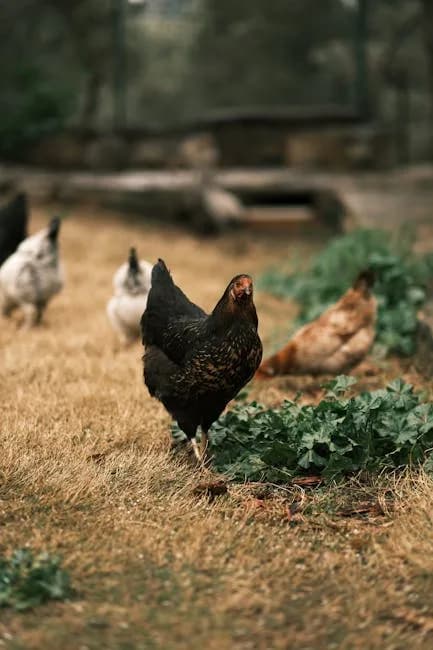
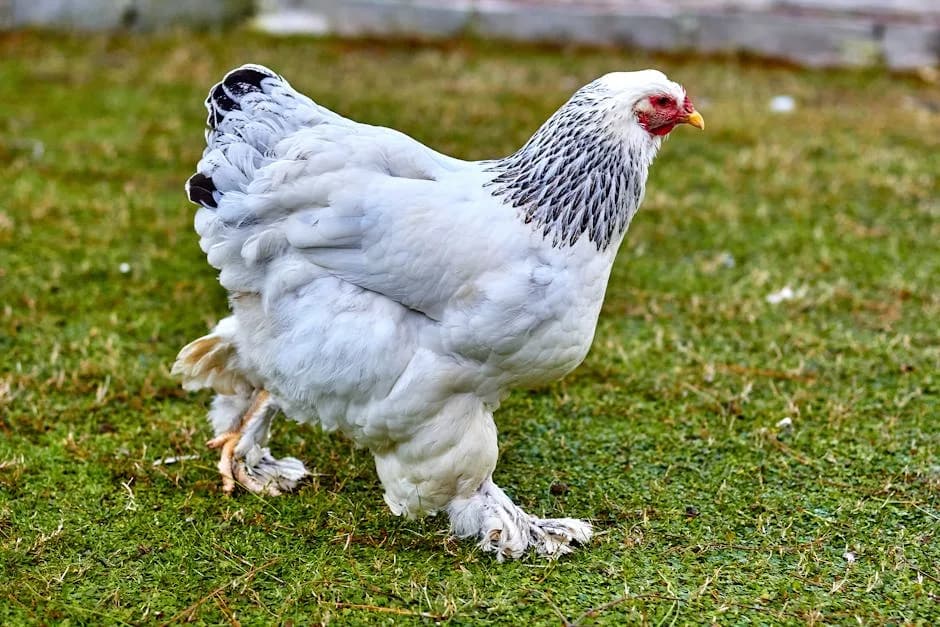
The Brahma is another heavyweight, with roosters reaching 12 pounds under a coat of dense, feathered-leg plumage. Like the Jersey Giant, it grows slowly but rewards you with a large carcass and 150 to 200 brown eggs a year. Crucially, Brahmas lay best in late fall and winter, filling the gap when most breeds quit.
That feathering makes them exceptionally cold-hardy but means they need dry footing to avoid mud-caked feet. They're famously gentle and easy to handle. Our Brahma breed guide has the details.
Best for: Cold-climate keepers who want winter eggs and a big meat bird.
Dual-Purpose vs Specialized Breeds
It helps to see where dual-purpose birds fall against the specialists, because the gaps are real and worth understanding before you choose.
| Trait | Production Layer (Leghorn) | Dual-Purpose (Plymouth Rock) | Meat Bird (Cornish Cross) |
|---|---|---|---|
| Eggs per year | 280-320 | 200-280 | 0 (processed young) |
| Time to butcher weight | n/a | 14-20 weeks | 6-8 weeks |
| Mature rooster weight | 5-6 lb | 8.5-10 lb | 10+ lb at 8 weeks |
| Feed efficiency | High (eggs) | Moderate | High (meat) |
| Broody / self-replacing | Rarely | Often | No |
| Lifespan as a layer | 2-3 years | 4-6 years | n/a |
A Leghorn will out-lay any bird on the list and eat less doing it. A Cornish Cross will reach the table in two months. What neither can do is both. If you're set on maximum eggs, our roundup of the best egg-laying breeds is the better starting point. If meat is the whole goal, see raising chickens for meat. Dual-purpose breeds win when you want flexibility and a flock that can sustain itself rather than peak performance in one category.
How to Choose the Right Dual-Purpose Breed
The "best" dual-purpose breed depends on what you weight most heavily. Work through these questions:
- •Eggs or meat first? If eggs lead, lean toward Australorp, Rhode Island Red, or Delaware. If meat leads and you have patience, pick Jersey Giant or Brahma. For an even split, Plymouth Rock, Sussex, and Wyandotte are hard to beat.
- •What's your climate? Cold regions favor the heavily feathered birds: Wyandotte, Brahma, Orpington, and Plymouth Rock, along with the Chantecler, a Canadian breed built for hard winters. Hot climates favor lighter, tighter-feathered birds like Rhode Island Red and Sussex, and you'll want to provide shade for the fluffy breeds.
- •Do you want to hatch your own? Choose breeds that go broody, like Orpington, Brahma, and Sussex. Production-focused breeds like Australorp brood less reliably.
- •How fast do you need meat? New Hampshire Red and Delaware feather and grow faster than the giants. If you don't want to feed a bird for nine months, skip the Jersey Giant.
- •Temperament with kids? Orpington, Brahma, Plymouth Rock, and Australorp are the calmest. Rhode Island Red roosters can be pushy.
There's no rule that says you have to pick just one. Many keepers run a mixed dual-purpose flock for variety in egg color, looks, and laying seasons. If you go that route, our guide on whether you can mix chicken breeds covers how to do it without trouble. For a first flock, our best breeds for beginners overlaps heavily with this list.
Feeding and Raising Dual-Purpose Birds
Dual-purpose breeds are forgiving, but a few things change when you're raising birds for both eggs and meat.
Feed by purpose, not just age. Layers need a 16 percent protein layer feed with added calcium once they start laying. Cockerels you intend to process do better on a higher-protein grower or finisher ration (18 to 20 percent) to build muscle, and they should not get layer feed because the excess calcium is hard on non-laying birds' kidneys. If you're feeding a mixed group, run an all-flock or grower feed and offer oyster shell on the side so the layers self-regulate calcium. Our complete feeding guide breaks down the ration math.
Let them forage. One of the biggest advantages of these breeds is that they earn part of their keep on pasture. Good foragers like Sussex, Plymouth Rock, and Delaware can cut your feed costs noticeably during the growing season while producing richer-colored yolks.
Plan your processing timeline. Heritage cockerels are usually processed between 14 and 20 weeks, when they've put on size but before the meat toughens. The faster-growing breeds hit a good weight sooner. The giants take longer. Decide before you order chicks how you'll separate, raise, and process the cockerels.
Give them room to grow. Heavy breeds need more space than light layers, both in the coop and the run, to stay clean and avoid bullying. Crowding stresses birds and depresses both egg laying and growth rate.
Expect a longer productive life. Where a commercial hybrid burns out in two laying seasons, a well-kept Plymouth Rock or Orpington will lay usefully for four years or more, then still make a worthwhile stewing hen. That long arc is the whole point of a dual-purpose flock.
Frequently Asked Questions
What is the best dual-purpose chicken breed?
For most backyard keepers, the Plymouth Rock is the best all-around dual-purpose breed. It lays 200 to 280 eggs a year, dresses out around 9.5 pounds for a rooster, tolerates cold, and has a calm temperament. If you want more eggs, the Australorp and Rhode Island Red edge it out; if you want more meat, the Jersey Giant and Brahma are larger.
How many eggs do dual-purpose chickens lay?
Most dual-purpose breeds lay between 180 and 300 eggs per year, depending on the breed and strain. Egg-leaning breeds like the Australorp and Rhode Island Red reach 250 to 300, while heavy meat-leaning breeds like the Jersey Giant and Brahma lay closer to 150 to 200. Production is highest in the first two laying years.
Are dual-purpose chickens good for meat?
Yes, though they grow slower and less efficiently than commercial Cornish Cross broilers. A dual-purpose cockerel is typically processed at 14 to 20 weeks and yields firmer, more flavorful meat than a supermarket bird. The giants like the Jersey Giant and Brahma produce the largest carcasses but take the longest to grow out.
What is the difference between dual-purpose and meat chickens?
Meat chickens like the Cornish Cross are bred to reach butcher weight in 6 to 8 weeks and don't lay eggs in any useful way. Dual-purpose chickens lay a full season of eggs and grow to a usable meat weight more slowly, over several months. Dual-purpose breeds can also reproduce naturally, while commercial meat hybrids generally cannot.
Which dual-purpose breed lays the most eggs?
The Australorp is the top egg layer among dual-purpose breeds, regularly laying 250 to 300 brown eggs a year, with the breed holding a historical laying record. The Rhode Island Red is a close second at 250 to 300. Both still reach a useful meat weight of around 8.5 pounds for roosters.
Are dual-purpose chickens cold-hardy?
Most are. Heavily feathered breeds like the Wyandotte, Brahma, Orpington, and Plymouth Rock handle cold winters well and several keep laying through the cold months. Rose-combed breeds like the Wyandotte are especially resistant to frostbite. See our guide on keeping chickens warm in winter for cold-weather care.
Can I keep a dual-purpose flock that replaces itself?
Yes, that's one of the main advantages. Because these are heritage breeds that breed true and go broody, you can keep a rooster, let a broody hen hatch a clutch, and raise your own replacement layers and meat cockerels each year. Orpingtons, Brahmas, and Sussex are among the most reliable broodies.
How long do dual-purpose hens stay productive?
Dual-purpose hens typically lay usefully for 4 to 6 years, far longer than commercial hybrids that burn out in 2 to 3. Production drops about 10 to 15 percent each year after the first. Once a hen stops laying economically, her size makes her worthwhile as a stewing hen.
Dual-purpose breeds are the reason backyard flocks made sense for centuries before anyone optimized a chicken for a single job. Pick a breed or two that fits your climate and your priorities, give them room and decent feed, and one flock will keep your egg basket full and your freezer stocked. If you're still planning, start with how many chickens a beginner should start with.
Sources:
- •The Livestock Conservancy. Heritage chicken breeds and conservation priority list. https://livestockconservancy.org/heritage-breeds/heritage-breeds-list/
- •University of Kentucky Cooperative Extension. Small and Backyard Flocks resources. https://poultry.extension.org/
- •Oklahoma State University. Breeds of Livestock, Poultry breeds directory. https://breeds.okstate.edu/poultry/
- •The American Poultry Association. Standard of Perfection (breed weights reference). http://www.amerpoultryassn.com/
Related Guides
Best Egg Laying Chickens: 11 Breeds Ranked by Eggs Per Year
The best egg laying chickens ranked by yearly output from registry and hatchery figures: ISA Brown, Leghorn, sex links, Rhode Island Red, Australorp, and more.
BreedsLight Brahma Chicken: Size, Eggs, Color, and Care
The Light Brahma is the original gentle giant: a huge white, feather-footed bird that lays through winter. Learn its size, eggs, color, and care.
BreedsBuff Brahma Chicken: Size, Eggs, Color, and Care
The Buff Brahma is a gentle giant in golden feathers. Learn its size, egg laying, buff coloring, cold hardiness, and how to care for feathered feet.
BreedsAraucana Chicken Breed Guide: Blue Eggs, Tufts, Care
Araucana chicken breed guide: rumpless bodies, ear tufts, true blue eggs, the lethal tuft gene, care, and how they differ from Ameraucanas.