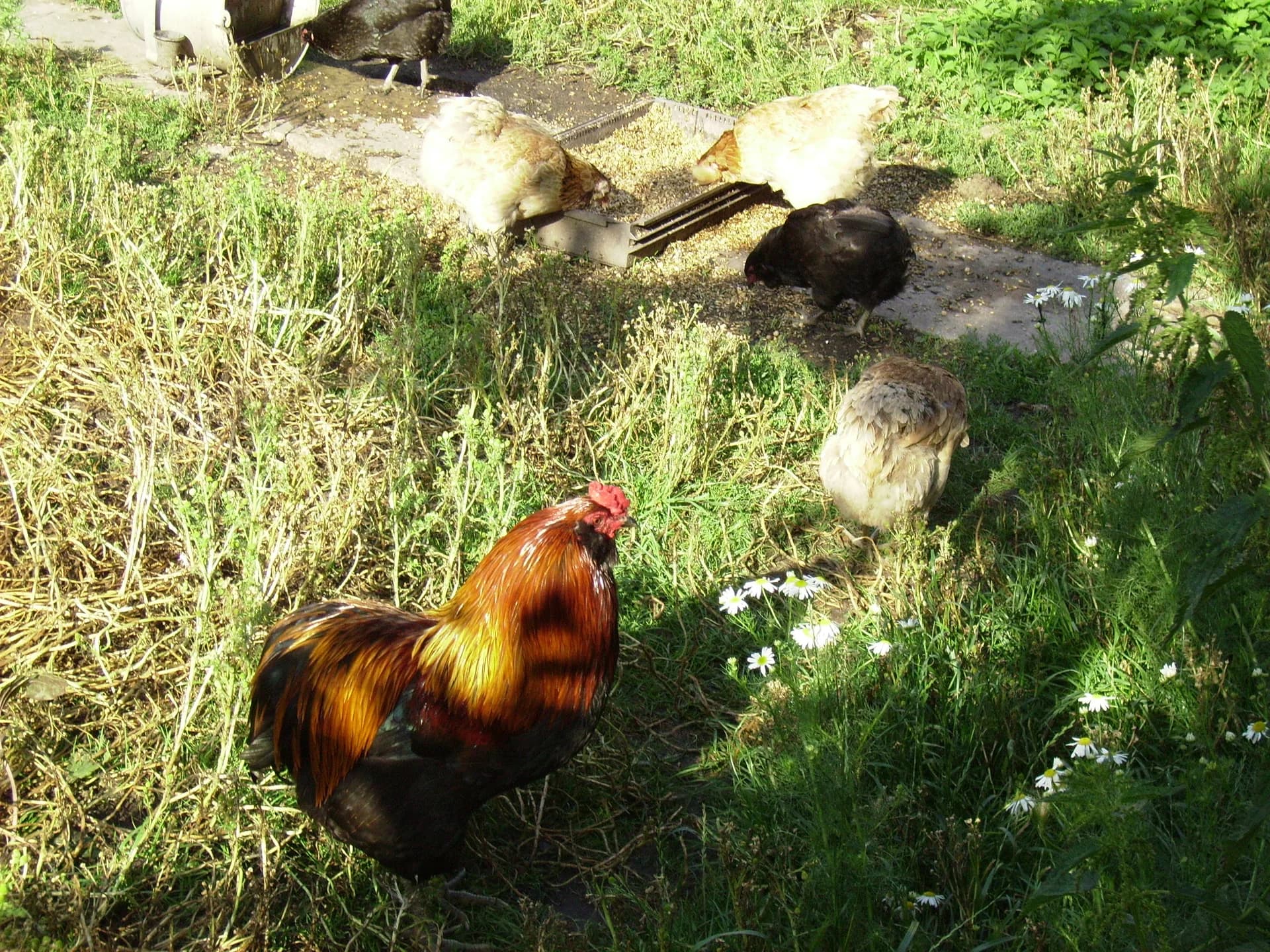
Araucana Chicken Breed Guide: Blue Eggs, Tufts, Care
Araucana chicken breed guide: rumpless bodies, ear tufts, true blue eggs, the lethal tuft gene, care, and how they differ from Ameraucanas.
Researched from university extension, USDA, and veterinary sources. How we research.
The Araucana is the original blue egg chicken, the South American breed that every other blue and green egg layer traces back to. It's also one of the strangest looking birds you can keep: no tail, and little feathered tufts sprouting from near the ears. Those tufts come with a genetic catch that makes Araucanas hard to hatch and rare in most backyards. If you've been trying to sort out the difference between an Araucana, an Ameraucana, and an Easter Egger, this guide clears it up and covers everything else you need to know before you bring one home.
What You'll Learn
- •Araucana Chicken Overview
- •Araucana vs Ameraucana vs Easter Egger
- •History and Origin
- •What Do Araucana Chickens Look Like?
- •The Ear Tufts and the Lethal Gene
- •American vs British and Australian Araucanas
- •How Many Eggs Do Araucanas Lay?
- •Araucana Temperament
- •Are Araucanas Good for Beginners?
- •Housing and Care Requirements
- •Where to Buy Araucanas
- •Health Issues to Watch For
- •Frequently Asked Questions
Araucana Chicken Overview
| Trait | Details |
|---|---|
| Size | Roosters: about 5 lbs, Hens: about 4 lbs |
| Eggs | 150-200 per year, blue, medium |
| Temperament | Active, alert, friendly, good foragers |
| Cold Hardy | Good (pea comb resists frostbite) |
| Heat Tolerant | Good |
| Broody | Can go broody, decent mothers |
| Beginner Friendly | As pets yes, for breeding no |
| Lifespan | 7-8 years, sometimes longer |
The Araucana is a smaller, active bird with two features nothing else combines: it lays true blue eggs and it has no tail. Add the ear tufts and you have a chicken that looks like no other in the run. It's also uncommon, and there's a genetic reason for that, which we get into below.
Araucana vs Ameraucana vs Easter Egger
This is the single most confused topic in backyard chickens, and the names are almost identical on purpose. Here's the plain version:
Araucana
- •The original blue egg breed, from South America
- •Rumpless (no tail) and has ear tufts (not muffs or a beard)
- •Lays blue eggs
- •Carries a lethal gene tied to the tufts, so it's hard to breed and rare
- •APA-recognized in five large fowl colors
Ameraucana
- •An American breed developed in the 1970s from Araucanas
- •Has a tail, plus muffs and a beard (fluffy cheeks, not ear tufts)
- •Lays blue eggs and breeds true, without the Araucana's lethal gene problem
- •More common than the Araucana, though still a breeder bird
- •See our full Ameraucana breed guide and our Araucana vs Ameraucana vs Easter Egger breakdown
Easter Egger
- •Not a breed. It's a catch-all for any mixed chicken that carries the blue egg gene
- •Can lay blue, green, pink, or tan eggs; no two birds look alike
- •What most feed stores and big hatcheries actually sell when the tag says "Araucana" or "Ameraucana"
- •Cheap ($3-5 a chick), hardy, and friendly; just not purebred anything
- •See the Easter Egger breed guide
The short version: the Araucana is rumpless with ear tufts, the Ameraucana has a tail with muffs and a beard, and the Easter Egger is a mutt that happens to lay a colored egg. If you bought a "blue egg chicken" from a farm store and it has a tail and lays green eggs, you have an Easter Egger. That's not a downgrade. Easter Eggers are some of the best backyard birds going. They just aren't Araucanas.
History and Origin
The Araucana comes from Chile, developed over centuries by the Mapuche people of the Araucanía region, which is where the breed gets its name. It was bred from two older landrace types the Mapuche kept: the Collonca, a rumpless hen that laid blue eggs, and the Quetro, a tailed bird that carried the ear tufts. Combine the two and you get the modern Araucana: rumpless, tufted, and blue-egg laying all in one bird.
The breed reached the wider world in the early 1900s. A Spanish poultry professor, Salvador Castelló, encountered the birds in Chile and presented them at the 1914 World Poultry Congress, which is when the blue egg trait caught international attention. Geneticists took interest quickly, since a blue egg was unlike anything in European or American flocks.
That blue egg gene is the Araucana's real legacy. Every blue and green egg layer in the United States, including the Ameraucana, the Cream Legbar, the Olive Egger, and every backyard Easter Egger, carries a gene that traces back to these South American birds. The American Poultry Association recognized the Araucana in 1976. It remains uncommon, and the Livestock Conservancy tracks it as a breed worth conserving.
What Do Araucana Chickens Look Like?
An Araucana is easy to pick out once you know the two big tells:
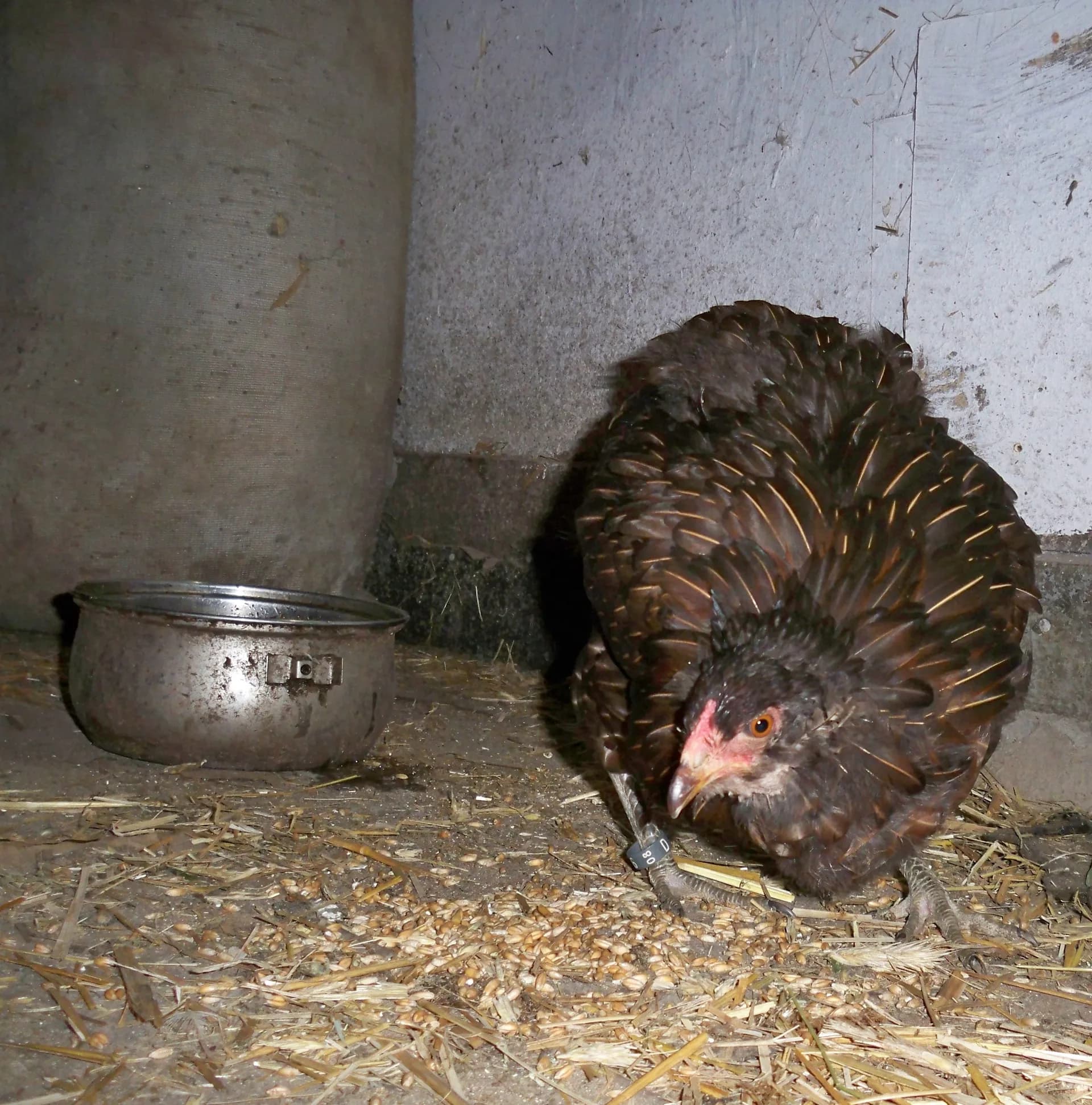
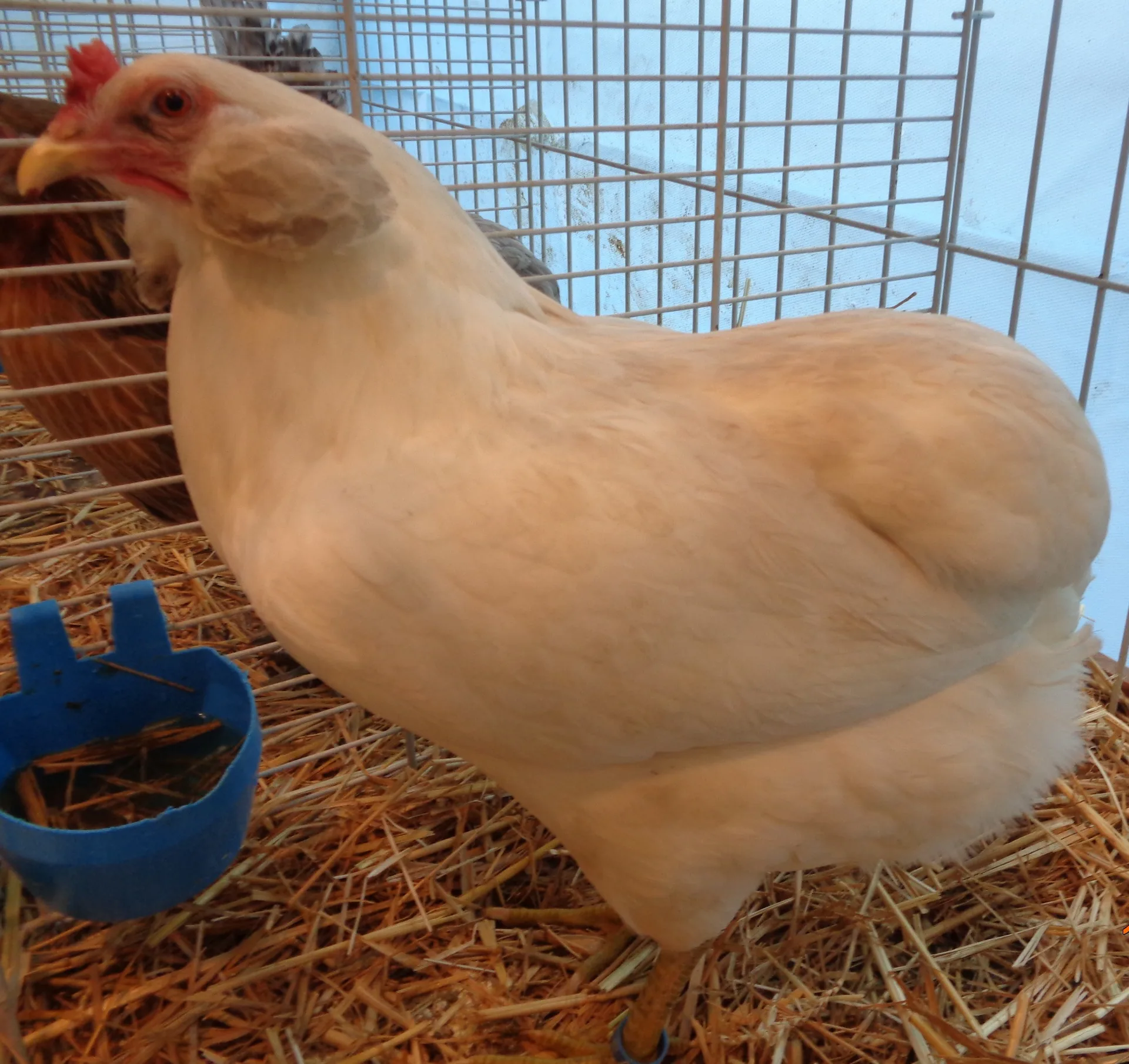
- •Rumpless body. Araucanas have no tail and no tailbone. From the side the back slopes down to a rounded rear with nothing sticking out. It gives them a compact, almost duck-tailed silhouette that reads as odd until you get used to it.
- •Ear tufts. Small clusters of feathers grow from a fleshy bump (called a peduncle) near each ear. Tufts are often uneven. Many birds have one big tuft and one small one, and some have only a single tuft. This is different from the muffs and beard on an Ameraucana, which are soft feathers on the whole face.
- •Pea comb. A small, low comb that sits close to the head. Very little exposed tissue means very little frostbite risk in winter.
- •Clean legs. No feathering on the shanks, unlike a Brahma or Cochin.
- •Smaller frame. Roosters run around 5 pounds and hens around 4, so this is a lighter bird than most dual-purpose breeds.
Because the tailbone is gone, rumpless birds also lack the oil (preen) gland that most chickens use to waterproof their feathers. In heavy rain an Araucana can look a little more bedraggled than a tailed bird, though it dries out fine in a dry, well-ventilated coop.
The Ear Tufts and the Lethal Gene
Here's why Araucanas are rare and expensive, and why serious keepers treat them as a project bird rather than a starter flock.
The ear tuft trait is controlled by a single dominant gene, but that gene carries a lethal side effect. A chick that inherits two copies (one from each parent) almost always dies inside the shell before hatching, usually near the end of incubation. So when you breed a tufted rooster to a tufted hen, the results come out roughly like this:
- •25% inherit two copies and die in the shell
- •50% inherit one copy and hatch with tufts
- •25% inherit no copies and hatch clean-faced (no tufts)
That means a full quarter of a tufted-to-tufted hatch never makes it out, and of the chicks that do hatch, only about two thirds have tufts. Add the Araucana's naturally lower fertility (more on that below) and you can see why a good tufted bird costs real money.
Experienced breeders work around this by pairing a tufted bird with a clean-faced one. That cross produces no dead-in-shell chicks and about half tufted, half clean, which is a far healthier hatch even though you give up some tufted offspring. Clean-faced Araucanas are still purebred and still lay blue eggs. They just can't be shown as large fowl in the United States, where tufts are part of the standard.
If you plan to hatch your own, this is a breed where incubation technique matters. A steady incubator and careful egg candling to track development pay off, since you'll be watching a hatch that already has the odds stacked against it. Our guide to hatching eggs covers the fundamentals, and a reliable machine from our best egg incubators roundup removes one big variable. A brooder heat plate keeps the chicks that do hatch warm and steady.
American vs British and Australian Araucanas
This trips up buyers who read across websites from different countries, so it's worth spelling out. "Araucana" does not mean the same bird everywhere.
- •American Araucana (APA): rumpless and tufted, clean-faced allowed for breeding but tufts required for show. This is the bird described in most of this guide.
- •British Araucana: has a tail, a crest and muffs, and slate or willow legs. It looks closer to what an American would picture as a crested, bearded bird, and lavender is a hugely popular color in the UK.
- •Australian Araucana: also tailed and crested, with its own standard again.
None of these are wrong. Each country's poultry association wrote its own standard, and the breed developed along different lines after it left South America. Just know that a photo of a fluffy, tailed, lavender "Araucana" from a British site is a different animal from the rumpless, tufted American bird, even though they share a name and both lay blue eggs. When you shop, match the description to what your country's breeders actually produce.
How Many Eggs Do Araucanas Lay?
Araucanas are laid back layers, not egg machines. Here's the honest picture:
- •150-200 eggs per year (about 3 a week)
- •Medium-sized, blue eggs that hold their color well
- •Start laying around 5-6 months
- •Will go broody and often make attentive mothers
You keep an Araucana for the color and the novelty, not for volume. They won't come close to a Leghorn at 280 plus or an Australorp at 250. If steady numbers matter more than a specific breed, our best egg-laying breeds roundup ranks the heavy producers.
The blue comes from a pigment called oocyanin that soaks into the shell as it forms, so the color goes all the way through. Crack an Araucana egg and the inside of the shell is blue too, unlike a Marans dark brown egg, where the pigment is a coating on the surface. Researchers have traced the blue egg trait to a gene that an ancient retrovirus switched on in these South American birds long ago, which is a fun thing to think about while you're collecting breakfast.
Put a few Araucanas or their descendants next to brown layers like a Rhode Island Red or Plymouth Rock and a dark-egg Marans, and your basket fills up with blue, brown, and speckled shades that photograph beautifully.

Araucana Temperament
Araucanas are active, curious birds with a personality that fits their looks. What most keepers report:
- •Alert and watchful. They notice everything and are quick to sound off at a hawk or a stray cat, which makes them decent lookouts in a mixed flock.
- •Friendly but busy. Most Araucanas are pleasant with people without being lap chickens. They would rather be foraging than sitting in your arms.
- •Strong foragers. Turn them out and they'll cover ground hunting bugs and greens, so they do well in a free-range setup.
- •Can be flighty. A lighter bird that startles easily can also fly better than a heavy breed, so they clear low fences without much effort.
- •Broody streak. Unlike Ameraucanas, Araucanas keep a fair bit of their landrace mothering instinct and will sit a clutch.
Handle them often from chick age and they settle down nicely. Bantam Araucanas, which are common, tend to be even calmer and make good pets for smaller yards.
Are Araucanas Good for Beginners?
It depends on what you want from them.
As backyard pets and layers, yes. A tufted or clean-faced Araucana hen is hardy, forages well, handles cold and heat, and lays a striking blue egg. If you can find birds and don't mind paying more, they're a rewarding addition to a flock.
As a breeding project, no. The lethal tuft gene, the lower fertility, and the fussy hatches make purebred Araucana breeding a job for someone who already knows their way around an incubator. New keepers who jump straight into hatching tufted-to-tufted pairs get discouraged fast by dead-in-shell chicks.
Pros:
- •True blue eggs from a purebred bird
- •Hardy in most climates, with a frostbite-resistant pea comb
- •Excellent foragers that earn their keep on range
- •A genuine conversation piece in the run
Challenges:
- •Hard to find, and true birds cost more ($15-40 a chick is common)
- •Feed store "Araucanas" are almost always Easter Eggers
- •Breeding is genuinely difficult
- •Moderate egg numbers
If you mainly want blue and green eggs without the hassle, start with Easter Eggers or a purebred Ameraucana, and add Araucanas later once you have some experience. New to chickens entirely? Start with our beginner's guide and our piece on how many chickens to start with.
Housing and Care Requirements
Day to day, an Araucana needs the same care as any small, active breed.
Space
- •4 square feet per bird inside the coop
- •8-10 square feet per bird in the run, more if you can manage it
- •These are active birds that get bored in tight quarters
Fencing
Araucanas are light and can fly. Plan on a 5-6 foot fence or a covered run, or clip one wing to keep them home. They're far more likely to hop a barrier than a heavy breed like a Brahma.
Coop setup
Standard coop rules apply. Good ventilation matters even more for a rumpless bird, since the missing oil gland means you want their environment dry so feathers stay in good shape. Any of the usual bedding options work fine. If you're shopping for housing, our best chicken coops on Amazon roundup covers picks by flock size.
Feeding
A standard 16% layer feed once they're laying, plus grit and free foraging. They have no special dietary needs. Our complete feeding guide has the full breakdown.
Climate
The pea comb makes Araucanas solid in cold weather, and they handle heat well too thanks to their smaller size. In hard winters keep the coop dry and draft-free, as our winter care guide explains, and in very hot regions use the cooling steps from our summer care guide.
Where to Buy Araucanas
Sourcing is the hard part with this breed. Be careful where you shop:
Breeders (the only reliable route to true Araucanas):
- •Look for members of a national Araucana club or breeders who describe their birds as rumpless and tufted
- •Expect $15-40 per chick, more for show-quality tufted stock, and be ready for a waitlist
- •Ask whether the birds are tufted or clean-faced, and whether they're rumpless, so you know exactly what you're getting
- •Hatching eggs are cheaper but come with the low hatch rates covered above
Hatcheries:
- •A few reputable hatcheries list true Araucanas, but many sell Easter Eggers under the name
- •If the listing says "may lay blue, green, or pink" or shows tailed birds with beards, that's an Easter Egger or an Ameraucana, not an Araucana
Feed stores:
- •Farm store "Araucanas" are almost always Easter Eggers. Great birds, wrong label.
Our guide on where to buy chickens walks through vetting any source. If a blue egg is all you're after and the breed name matters less, save yourself the trouble and buy Easter Eggers locally.
Health Issues to Watch For
Setting aside the breeding genetics, adult Araucanas are hardy and low-maintenance.
Fertility in breeding birds. Rumplessness reduces mating success, because the lack of a tail plus dense fluff around the vent makes contact less reliable. Breeders often trim the vent feathers on both birds to improve fertility. This only matters if you're hatching your own; it has nothing to do with keeping hens for eggs.
The tuft gene. Covered above. It's a hatching problem, not a health problem in living adults. Tufted birds that hatch and grow are as healthy as any chicken.
Standard flock concerns still apply: external parasites like mites and lice, internal worms, and respiratory bugs. Regular checks and a clean, dry coop head off most trouble. Our sick chicken symptoms guide covers the warning signs, and the egg problems guide handles laying hiccups.
Cold and comb. The pea comb rarely gives frostbite trouble, so Araucanas are one of the easier breeds to overwinter in cold country.
Building a colorful egg basket? Araucanas anchor the blue end, but you'll want range across the carton. Pair them with dark-egg Marans, a reliable brown layer like a Plymouth Rock, and green-laying Easter Eggers. Browse all our breed guides to plan your flock.
Frequently Asked Questions
What color eggs do Araucana chickens lay?
True Araucanas lay blue eggs, and the color runs all the way through the shell. The shade ranges from a soft sky blue to a deeper turquoise. If your bird lays green or olive eggs, it carries the blue gene mixed with a brown overlay, which means it's an Easter Egger rather than a purebred Araucana.
Why don't Araucanas have tails?
Araucanas are rumpless, meaning they're born without the last few tail vertebrae and the tail feathers those bones support. It's a natural genetic trait inherited from the Collonca, one of the two South American landrace birds the breed was built from. Rumplessness is a defining feature of the American Araucana, not a defect.
What is the difference between an Araucana and an Ameraucana?
An Araucana is rumpless (no tail) with ear tufts, and it carries a lethal gene that makes breeding hard. An Ameraucana has a normal tail plus muffs and a beard, and it was developed in the United States from Araucanas specifically to keep the blue egg while dropping the lethal gene. Ameraucanas are easier to breed and more widely available.
Are Araucana chickens rare?
Yes. The lethal tuft gene and the breed's lower fertility keep numbers down, and the Livestock Conservancy tracks the Araucana as a breed worth conserving. Most "Araucanas" sold at feed stores are actually Easter Eggers, so true rumpless, tufted birds are genuinely uncommon and usually come from dedicated breeders.
How much do Araucana chickens cost?
True Araucanas from breeders often run $15-40 per chick, and show-quality tufted birds can cost more. Hatching eggs are cheaper per egg but hatch at low rates because of the lethal gene. By comparison, Easter Eggers sold as "Araucanas" at feed stores cost about $3-5 a chick.
Are Araucana chickens friendly?
Most Araucanas are friendly but active. They enjoy human company without being cuddly and would rather forage than be held. Handle them often as chicks and they grow into calm, sociable birds. Bantam Araucanas tend to be especially gentle and do well as pets.
Can you eat Araucana eggs?
Yes. Araucana eggs taste exactly like any other chicken egg. The blue color is only in the shell and has no effect on the flavor or nutrition inside. The novelty is entirely visual, which is what makes a mixed basket of blue, brown, and green eggs so much fun.
Do Araucana chickens go broody?
More than many modern breeds. Araucanas kept a good share of the mothering instinct from their landrace roots, so hens will often sit a clutch and raise chicks well. That's handy if you want a hen to hatch eggs for you, though it does interrupt laying while she's broody. Our broody hen guide explains how to manage it.
The Araucana is a breed with a real story behind it: the source of every blue egg in the hobby, wrapped up in a rumpless, tufted bird that's as tricky to breed as it is fun to own. Keep a couple of hens for the eggs and the looks, and leave the tufted-to-tufted breeding to the folks with the incubator skills to handle it.
Sources:
- •The Livestock Conservancy. Heritage breed conservation and breed list. https://livestockconservancy.org/
- •Oklahoma State University, Department of Animal and Food Sciences. Breeds of Livestock, Poultry. http://breeds.okstate.edu/poultry/
- •The American Poultry Association. Standard of Perfection (reference). http://www.amerpoultryassn.com/
- •Poultry Extension (Cooperative Extension System). Small and backyard flocks. https://poultry.extension.org/
Related Guides
Cream Legbar Breed Guide: Blue Eggs, Autosexing, Care
Cream Legbars lay sky-blue eggs and are one of the few autosexing breeds. Egg color, temperament, history, and how they compare to other blue-egg layers.
BreedsChocolate Orpington Breed Guide: Genetics, Eggs, Care
Chocolate Orpingtons explained: the sex-linked chocolate gene, why hens show it and roosters carry it, 120 to 150 tinted eggs a year, care, and where to buy.
BreedsLavender Orpington Breed Guide: Eggs, Color, Care
Lavender Orpingtons are calm, cold-hardy hens that breed true to color and lay 150-250 brown eggs a year. Full guide to looks, eggs, care, and cost.
BreedsNaked Neck Chicken (Turken) Breed Guide: Eggs & Care
Naked Neck chickens, or Turkens, are hardy dual-purpose birds with bare necks. Full breed guide: eggs, temperament, heat tolerance, size, and care.