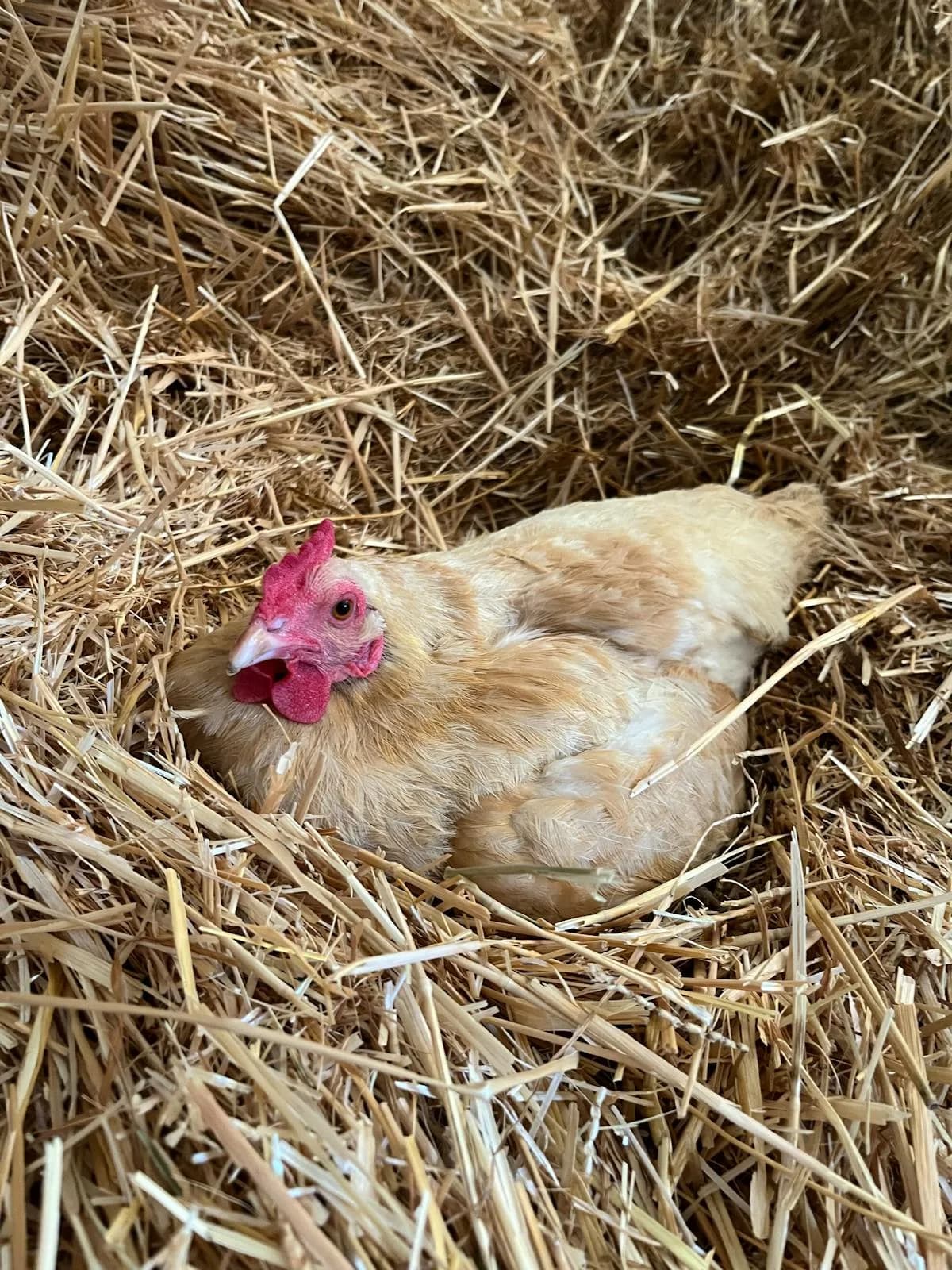
Chocolate Orpington Breed Guide: Genetics, Eggs, Care
Chocolate Orpingtons explained: the sex-linked chocolate gene, why hens show it and roosters carry it, 120 to 150 tinted eggs a year, care, and where to buy.
Researched from university extension, USDA, and veterinary sources. How we research.
The Chocolate Orpington is the newest color in one of the oldest backyard breeds, and it comes with a genetics story that most other chicken colors lack: the chocolate gene is sex-linked and recessive, so a hen shows it with one copy while a rooster needs two, and a black rooster can carry it invisibly for generations. That one fact explains why Chocolate Orpingtons cost what they do, why breeders talk about "split" cockerels, and why a chocolate hen crossed to a black rooster gives you black daughters.
This guide covers where the color came from, how it inherits, what the birds lay, what they weigh, and how to keep them, with the genetics from the paper that first described the gene and the breed facts from The Livestock Conservancy and Oklahoma State University's breed reference.
Quick Answer
A Chocolate Orpington is a standard Orpington in a dark chocolate-brown coat: the same 8-pound hen and 10-pound cock by the American standard, the same calm temperament, the same cold hardiness, and the same broodiness. The color comes from a sex-linked recessive gene first described in Black Orpington bantams in 1996. Chocolate hens carry one copy, chocolate roosters two, and the color is not recognized by the American Poultry Association for showing. Expect 120 to 150 lightly tinted eggs a year from a large-fowl Chocolate, specialty-breeder prices, and a bird that fades a little in strong sun.
What You'll Learn
- •Chocolate Orpingtons at a glance
- •What is a Chocolate Orpington?
- •The chocolate gene and how it inherits
- •What do Chocolate Orpingtons look like?
- •How many eggs do Chocolate Orpingtons lay?
- •Temperament
- •Care, housing, and feeding
- •Chocolate vs Buff, Lavender, and Black Orpingtons
- •Where to buy Chocolate Orpingtons and what they cost
- •Frequently asked questions
Chocolate Orpingtons at a Glance
| Breed | Orpington, developed by William Cook in Orpington, Kent, England, from 1886 |
| Color variety | Chocolate; not recognized by the APA (Orpington is recognized in Buff, Black, White, and Blue) |
| APA standard weight (breed) | Cock 10 lb, hen 8 lb; cockerel 8.5, pullet 7 |
| Eggs per year | About 120 to 150, large fowl; Buffs lay more |
| Egg color | Light brown, often described as lightly tinted |
| Temperament | Calm, friendly, easily handled |
| Broodiness | Frequent |
| Cold | Excellent |
| Heat | Needs shade; heavy feathering |
| Genetics | Sex-linked recessive chocolate gene, symbol choc |
| Sizes | Bantam (the original) and large fowl |
What Is a Chocolate Orpington?
The Orpington itself is a Victorian creation. William Cook, a coachman in the Kent town of Orpington, set out in the 1880s to breed a practical dual-purpose chicken at a moment when English fanciers cared more about novelty than eggs. The Conservancy's history credits his skill as a breeder rather than his marketing: he built a heavy, soft-feathered bird that grew fast, laid well, and dressed out cleanly, and it reached America by 1891. The American Poultry Association admitted the Buff in 1902, the Black and White in 1905, and the Blue in 1923, and the breed came off the Conservancy's conservation priority list in 2016 because backyard keepers had brought it back.
Chocolate is not one of those four. It is a color created by moving a single mutation into the breed, and by the account of the British breeders who worked with it, it began in bantams and was crossed up into large fowl later. The large-fowl birds sold in the United States as "English Chocolate Orpingtons" descend from that work. Under the color, everything is Orpington: the broad back, the low stance, the loose feathering that makes the bird look bigger than it is, the single comb, white skin, and the brown egg.
The Chocolate Gene and How It Inherits
Everything unusual about this variety comes from one gene, and the paper that described it is short enough to summarize.
In 1996, W. C. Carefoot reported in British Poultry Science that a mating between Black Orpington bantams had produced, alongside the expected black chicks, a single female whose black was replaced by dark chocolate. He mated her to a black male and followed the color through the next generations and backcrosses, and the pattern showed that chocolate is caused by a recessive gene on the sex chromosome. He gave it the symbol choc.
Chicken sex chromosomes run opposite to ours. A rooster carries two Z chromosomes and a hen carries one Z and one W. A gene on Z therefore behaves differently in the two sexes:
- •A hen needs only one copy to be chocolate, because she has only one Z. There is no such thing as a hen that carries chocolate without showing it.
- •A rooster needs two copies to be chocolate. With one copy he is black, and he passes chocolate to half his offspring without ever showing it. Breeders call him a split or a carrier.
That produces a set of crosses every Chocolate Orpington breeder knows:
| Cross | Result |
|---|---|
| Chocolate rooster x chocolate hen | All chicks chocolate |
| Chocolate rooster x black hen | All daughters chocolate; all sons black carriers |
| Black rooster x chocolate hen | All daughters black; all sons black carriers |
| Black carrier rooster x chocolate hen | Half the daughters chocolate; half the sons chocolate |
| Black carrier rooster x black hen | Half the daughters chocolate; sons black, half carrying |
Two things follow. Chocolate breeds true when both parents are chocolate. And the chocolate-rooster-over-black-hen cross is a sex-link: every chocolate chick is a pullet and every black chick is a cockerel, which is why the gene interests breeders of hard-to-sex breeds. The APA has not accepted chocolate in any chicken breed, though it recognizes it in several duck breeds.
Chocolate is a dilution of black pigment, which is why the color exists only on birds that would otherwise be black and why a Chocolate Orpington's undercolor and legs match the pattern of a Black.
What Do Chocolate Orpingtons Look Like?
An Orpington in every line, colored a deep, even brown. Good birds are a rich dark chocolate from head to tail with the same tone in the undercolor; poorer ones go lighter or show a rusty cast. The comb, wattles, and face are red, the eyes dark, the legs and feet slate to dark, and the skin white, as on a Black Orpington. Chicks hatch a dark grayish-brown rather than black.
Two traits the British breeders note: the color fades in strong summer sun, so a chocolate hen may look lighter in August than in March, and Chocolate Orpingtons feather out slowly as chicks, even slower than Blacks, which is thought to travel with the gene. A slow-feathering chick needs the brooder heat a week or two longer.
Size is the breed's. Oklahoma State gives the American standard as 10 pounds for a cock and 8 for a hen, and the Conservancy puts market weight at 7 to 8.5 pounds. Bantam Chocolates, where the color began, weigh a fraction of that.
How Many Eggs Do Chocolate Orpingtons Lay?
Fewer than a Buff. The breeders selling large-fowl Chocolates in the United States put them at 120 to 150 eggs a year, against 200 to 280 for a good Buff Orpington. The eggs are light brown, lightly tinted rather than the deeper brown of a Buff's, and large. The gap is what you would expect from a color bred for looks from a small founding population: selection went into the coat, not the egg.
Like every Orpington, they go broody readily and make attentive mothers, which costs a few weeks of laying a year and saves you an incubator if you want to hatch. Our broody hen guide covers both sides of that.
Temperament
Orpington temperament, which is the reason most people keep the breed at all. The Conservancy describes it as a calm, friendly disposition, and Chocolates are no exception: slow-moving, tolerant of handling, good with children, and low enough in energy that they seldom fly a fence. They sit in the middle of a mixed flock's pecking order and do fine with other gentle breeds. Roosters are generally mild. See our Buff Orpington guide for the full personality profile; it applies.
Care, Housing, and Feeding
Nothing about the color changes the care.
- •Space. Four square feet inside and ten in the run per bird, and a wide roost no more than 2 feet up; a heavy bird jumping down from a high roost is how Orpingtons get bumblefoot.
- •Cold. Excellent. Oklahoma State notes the soft, heavy feathering lets Orpingtons endure cold better than most breeds, and the small single comb frostbites less than a Leghorn's. See insulating the coop for the setup.
- •Heat. The weak point. Shade, cool water, and airflow above about 85°F.
- •Feed. Standard 16 percent layer feed, and watch the treats; Orpingtons get fat, and a fat hen lays less and goes broody more.
- •Sun. If show color matters, shade the run in summer.
- •Chicks. Keep the brooder warm a week or two longer than for a fast-feathering breed.
Chocolate vs Buff, Lavender, and Black Orpingtons
| Chocolate | Buff | Lavender | Black | |
|---|---|---|---|---|
| APA recognized | No | Yes, 1902 | No | Yes, 1905 |
| Genetics | Sex-linked recessive; hens show one copy | Standard color | Autosomal recessive; both sexes need two copies | Standard color |
| Breeds true | Yes, chocolate x chocolate | Yes | Yes | Yes |
| Eggs per year | 120 to 150 | 200 to 280 | 150 to 250 | 150 to 200 |
| Availability | Specialty breeders | Every hatchery | Many hatcheries | Most hatcheries |
| Price | Highest | Lowest | Middle | Low |
The Lavender Orpington is the useful comparison. Both are recent, unrecognized colors that breed true, but lavender is an ordinary recessive, so a lavender hen and a lavender rooster each carry two copies and carriers of either sex look normal. Chocolate's sex-linkage means there are no hidden carrier hens, only carrier roosters, and that the first cross into a black line gives chocolate daughters immediately.
Where to Buy Chocolate Orpingtons and What They Cost
Large-fowl Chocolate Orpingtons come from specialty breeders rather than the big hatcheries, often sold as hatching eggs or straight-run chicks in small numbers each spring. Expect to pay several times the price of a Buff chick, to wait for a hatch, and to take roosters with the pullets. Bantam Chocolates come from bantam breeders and poultry shows.
What to ask a breeder: whether the line is large fowl or bantam, whether the chicks are from chocolate-to-chocolate matings (all chocolate) or from a carrier rooster (some black), and how the adults' color holds through summer. Our where to buy chickens guide covers the general checklist, and the Marek's vaccination question applies here as anywhere.
Frequently Asked Questions
Are Chocolate Orpingtons a recognized breed?
They are a recognized breed in an unrecognized color. The Orpington is an APA standard breed in Buff, Black, White, and Blue. Chocolate is not accepted for showing in any chicken breed in the United States.
Do Chocolate Orpingtons breed true?
Yes, when both parents are chocolate. A chocolate rooster over a chocolate hen gives all chocolate chicks. Any cross involving a black bird follows the sex-linked table above.
Why are my chocolate hen's chicks black?
Because the father was black and did not carry chocolate. A black rooster over a chocolate hen gives black daughters and black sons that carry the gene. Breed those sons back to chocolate hens and half the chicks are chocolate.
Can a hen carry chocolate without showing it?
No. A hen has one Z chromosome, so one copy of the gene is enough to color her. Only roosters carry it hidden.
How many eggs does a Chocolate Orpington lay?
About 120 to 150 large, lightly tinted eggs a year from large-fowl lines, fewer than a Buff Orpington. Broodiness reduces the count further.
Do Chocolate Orpingtons fade?
Yes, in strong sun over a summer. The color darkens again with the next molt. Show birds are kept shaded.
Are Chocolate Orpingtons good for beginners?
Yes, for the same reasons any Orpington is: calm, cold-hardy, easy to handle, and not inclined to fly. The differences are price, availability, and a lower egg count than the Buff.
A Chocolate Orpington is a Buff Orpington's temperament in a coat that took a geneticist to explain. Buy it for the color and the calm, expect a modest egg basket, keep it shaded in July, and if you breed it, learn the sex-link table first; it is the most useful thing about the bird.
Sources:
- •Carefoot, W. C. (1996). Chocolate: a sex-linked recessive plumage colour mutant of the domestic fowl. British Poultry Science, 37(4), 867-868. https://pubmed.ncbi.nlm.nih.gov/8894230/
- •The Livestock Conservancy. Orpington Chicken (history, APA admission dates, weights, temperament, 2016 graduation). https://livestockconservancy.org/about-us/conservation-successes/orpington-chicken/
- •Oklahoma State University, Department of Animal and Food Sciences. Breeds of Livestock: Orpington Chickens (standard weights, varieties). https://breeds.okstate.edu/poultry/chickens/orpington-chickens
- •Poultry Keeper (UK). Chocolate Orpingtons (breeder account of the color's history, feathering, and crosses). https://poultrykeeper.com/chicken-breeds/chocolate-orpington/
- •Carolina Rare Chicks. English Chocolate Orpingtons (large-fowl egg production figures). https://www.carolinararechicks.net/chocolate-orpington
Related Guides
Lavender Orpington Breed Guide: Eggs, Color, Care
Lavender Orpingtons are calm, cold-hardy hens that breed true to color and lay 150-250 brown eggs a year. Full guide to looks, eggs, care, and cost.
BreedsOlive Egger Breed Guide: Eggs, Care, and Genetics
Olive Eggers lay olive-green eggs from a Marans + blue-egg-layer cross. Egg color, care, temperament, and what to expect from this designer hybrid.
BreedsBuff Orpington Breed Guide: Eggs, Care, Temperament
Buff Orpingtons lay 200-280 brown eggs yearly and make the friendliest backyard chickens. Get the full breed profile with care tips, pros, and cons.
BreedsAraucana Chicken Breed Guide: Blue Eggs, Tufts, Care
Araucana chicken breed guide: rumpless bodies, ear tufts, true blue eggs, the lethal tuft gene, care, and how they differ from Ameraucanas.