Golden Laced Wyandotte: Complete Breed Guide
Golden Laced Wyandotte guide: eggs, size, temperament, cold hardiness, gold lacing genetics, chick care, and hatchery vs show stock compared.
Researched from university extension, USDA, and veterinary sources. How we research.
The Golden Laced Wyandotte is what you get when you take the bird that founded the Wyandotte family and swap its silver-white feathers for gold. Every body feather carries a warm gold to reddish-bay center wrapped in a crisp black border, so the bird glows in low afternoon light in a way the silver version never quite manages. Underneath the paint job is the same genuinely useful farm hen: rose-combed, cold-hardy, dual-purpose, laying around 200 light brown eggs a year, and calm enough to keep no drama in a mixed flock. Here is everything you actually get when you add a few to your coop.
Golden Laced Wyandotte at a Glance
| Trait | Detail |
|---|---|
| Origin | United States, Wisconsin, around 1880 |
| APA recognition | 1888 |
| Class | American, soft feather heavy |
| Hen weight | 6 to 6.5 pounds |
| Rooster weight | 8.5 to 9 pounds |
| Bantam weight | Roughly 1.5 to 2 pounds |
| Eggs per year | 180 to 220 |
| Egg color | Light brown to cream, sometimes pink-tinted |
| Egg size | Medium to large |
| Point of lay | 18 to 22 weeks |
| Comb | Rose |
| Skin and legs | Yellow, clean (no feathering) |
| Cold hardy | Excellent |
| Heat tolerant | Fair, needs shade and water management |
| Broodiness | Moderate |
| Temperament | Calm, confident, mid-flock |
| Lifespan | 6 to 10 years |
| Conservation status | Not at risk, widely available |
What You'll Learn
- •Where the Golden Laced Wyandotte Came From
- •What a Golden Laced Wyandotte Looks Like
- •Why the Gold Version Exists: The Genetics
- •Size, Weight, and the Bantam Version
- •Egg Production: How Many and What Color
- •Temperament in a Real Mixed Flock
- •Cold Hardiness and Winter Care
- •Heat: The Breed's Weak Spot
- •Raising Golden Laced Wyandotte Chicks
- •Golden Laced vs Silver Laced vs Blue Laced Red
- •Hatchery Stock vs Breeder Stock
- •Health Issues Worth Watching
- •Common Mistakes
- •Frequently Asked Questions
Where the Golden Laced Wyandotte Came From
The gold variety is younger than the silver, and its paper trail is cleaner. Most accounts credit Joseph McKeen of Omro, Wisconsin, who set out around 1880 to make a gold version of the Silver Laced Wyandotte that already existed. He crossed Silver Laced Wyandotte hens with a large gold-based male that local breeders called a Winnebago fowl, itself a cross carrying Gold Spangled Hamburg and Partridge Cochin blood. The Hamburg side brought the rose comb and the laying drive, the Cochin side brought the body mass and the pattern genes, and the Silver Laced hens brought the Wyandotte shape.
The American Poultry Association admitted the Golden Laced Wyandotte to the Standard of Perfection in 1888, five years after the Silver Laced went in. From there it spread fast, because a warm-colored version of an already popular farm hen sold itself. It reached Britain and Europe within a decade and has never been rare since.
Like the rest of the family, the name honors the Wyandot people of the Great Lakes region. The breeding goal was the same one that drove every early Wyandotte: a hen who kept laying through a hard northern winter and still dressed out as a decent table bird. The gold variety hit that mark and carries no conservation listing today. You can order chicks from almost any hatchery in the country, usually at the same price as the silver.
What a Golden Laced Wyandotte Looks Like
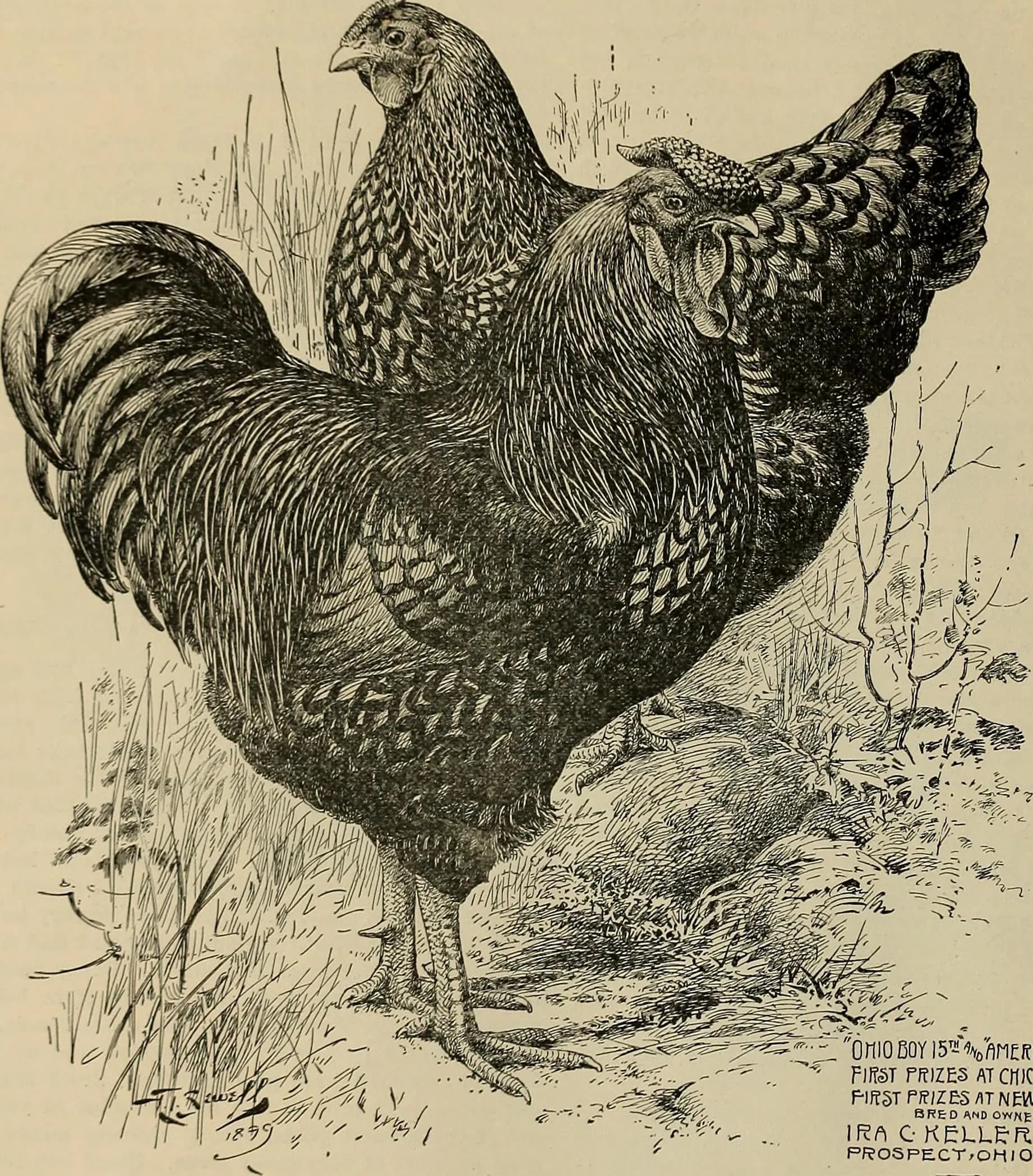
Start with the silhouette, because it is pure Wyandotte and identical to every other color in the family. The bird is built in curves. The back is short and broad, the breast is deep and rounded, and the tail carries at a high angle over a body that looks almost like an apple from the side. Put one next to a Rhode Island Red and the Red reads as a rectangle while the Wyandotte reads as a circle.
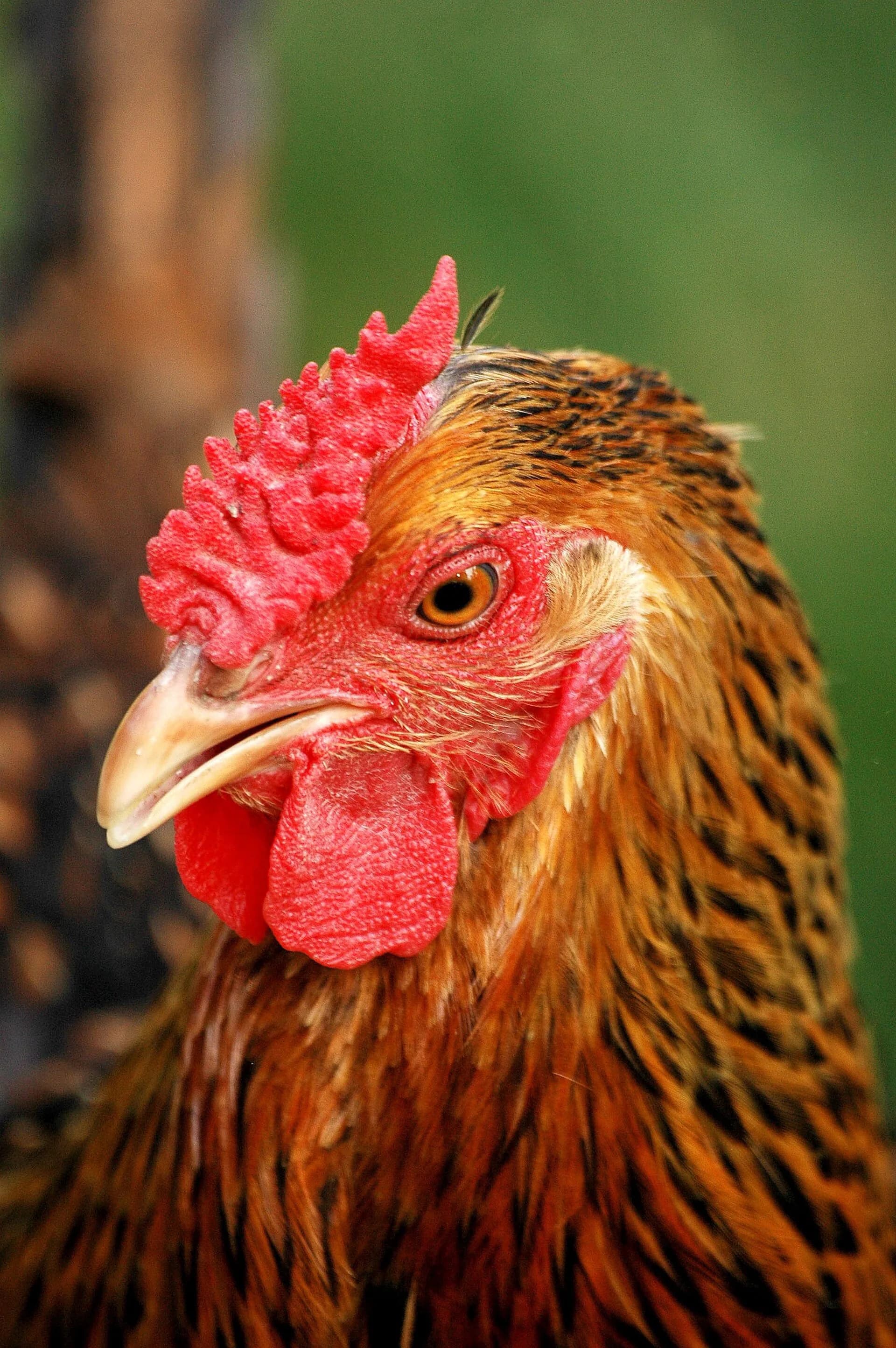
The color. This is where the gold earns its name. Each body feather has a golden bay center, ranging from bright straw gold to a deep reddish mahogany depending on the strain, bounded by a solid black ring of even width. On a good bird the black border closes all the way around the feather without breaking, and the lacing on the breast, back, and thighs matches in width. Roosters carry black striping down the center of the hackle and saddle feathers rather than full lacing, and the tail is solid black with a green sheen. The gold on a cock's neck and shoulders is usually brighter and more orange than the hen's warmer body color.
The head. A low, flat rose comb sits close to the skull and ends in a short spike that follows the line of the neck instead of pointing up. Wattles are medium and rounded, earlobes are red, and the eyes are a reddish bay that reads as amber in bright light. There is almost no exposed comb surface to freeze, which is most of the reason this breed shrugs off cold.
Legs and skin. Clean yellow legs, four toes, yellow skin, and no feathering on the shanks. That last point separates a Wyandotte from a Brahma or Cochin at a glance and makes the bird a little easier to keep clean in a muddy run.
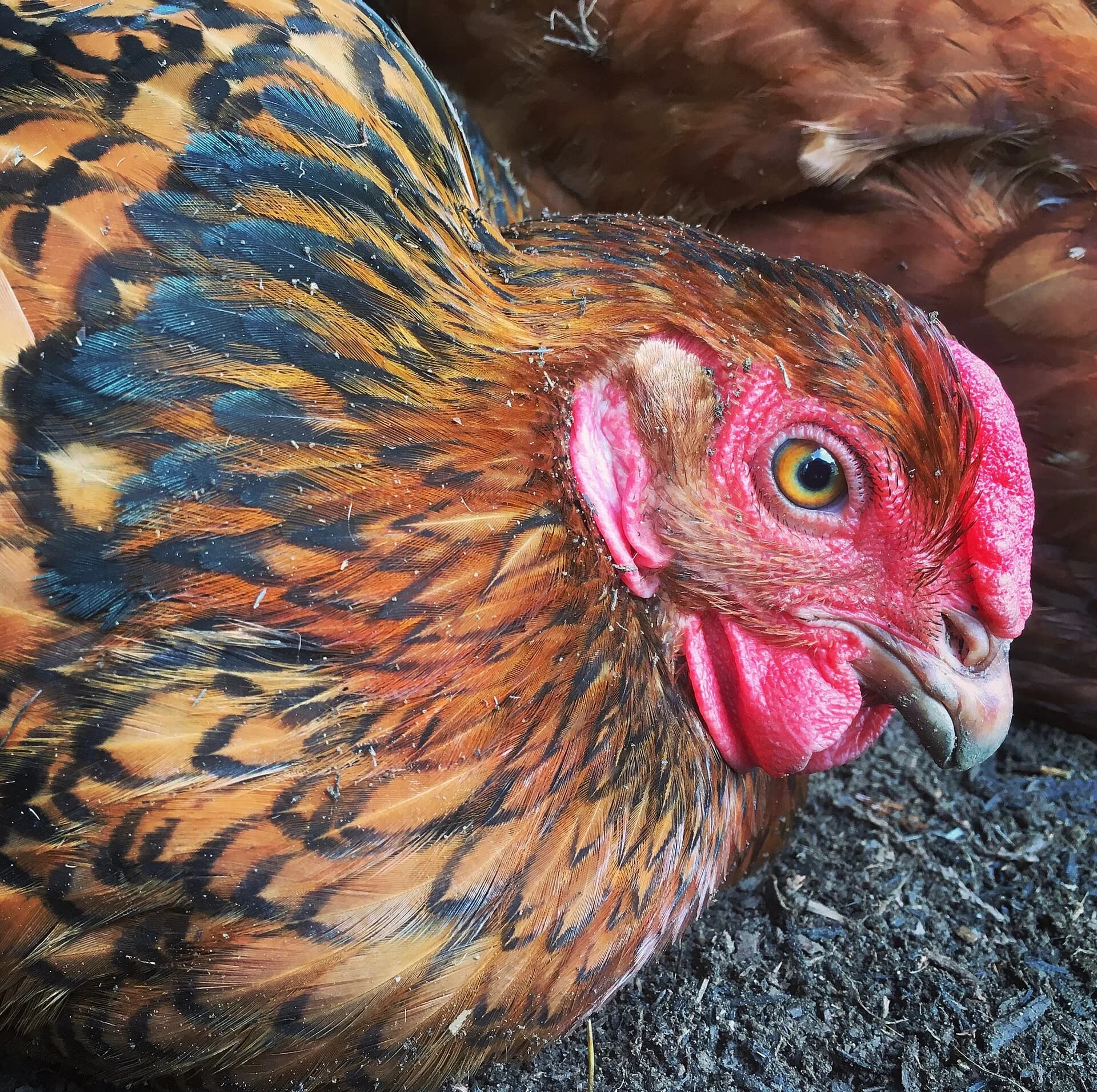
One practical bonus of the gold coloring: it hides dirt far better than white does. A silver bird after a rainy week in a clay run looks grubby, while a gold bird looks about the same as always. If your yard turns to mud in winter, the gold variety photographs better and looks tidier with less fuss.
Why the Gold Version Exists: The Genetics
The gold and silver Wyandottes are the same bird wearing two different ground colors, and understanding the single gene that separates them explains a lot about what you can and cannot expect when you breed them.
Lacing itself takes at least four genes working together, and gold and silver share all but one of them:
- •Gold or Silver sets the ground color. Silver (S) strips out the red and gold pigment and leaves the feather centers white. The gold version carries the wild-type gold allele (s+) instead, which lets the warm pigment stay. This gene sits on the Z chromosome, which makes it sex-linked.
- •Pattern gene (Pg) pushes black pigment out toward the edge of each feather rather than letting it spread across the whole surface.
- •Melanotic (Ml) increases black pigment overall and sharpens the border.
- •Columbian (Co) restricts the black away from the feather center, keeping it clean.
Because the silver gene is dominant over gold, crossing a silver bird with a gold one does not give you a blend. It gives you offspring that lean silver while carrying gold hidden underneath. That sex-linked behavior is also why some breeders can sort certain crosses by chick color, though a pure Golden Laced to Golden Laced mating is not auto-sexing on its own.
The practical takeaways are the same as they are for the silver. Lacing quality is genetic, not nutritional. If a pullet feathers in with muddy, broken lacing or heavy black peppering in the gold centers, no feed change will fix it. She will lay perfectly well and look fine from across the yard, but she will never win a show and she will pass the fault to her chicks. And the same rose comb quirk applies: the rose comb allele carries a linked mutation that lowers sperm motility in cocks that inherit two copies, so an older Golden Laced rooster can show reduced fertility. In a normal backyard ratio of one cock to eight or ten hens nobody notices, but if you are hatching seriously and fertility drops off an aging male, swapping in a younger cock usually solves it.
Size, Weight, and the Bantam Version
Standard Golden Laced Wyandotte hens run 6 to 6.5 pounds and cocks 8.5 to 9 pounds, which puts them squarely in the heavy dual-purpose class next to Plymouth Rocks and Sussex. Pullets and cockerels come in about a pound lighter than mature birds.
They are heavy enough that fencing is easy. A 4-foot run fence holds a mature Wyandotte in most yards, and they are not motivated fliers. The weight matters for roost design too: use a wide flat roost rather than a narrow round dowel, and keep it under about 3 feet off the bedding so a 6-pound hen is not landing hard every morning. Our coop sizing guide has the full space math, but plan on 4 square feet of coop floor and 10 square feet of run per bird for a breed this size.
There is a true bantam Golden Laced Wyandotte as well, running roughly 1.5 to 2 pounds. It keeps the same round shape and the same easygoing attitude in a quarter of the body, and it lays small cream eggs at maybe two thirds the rate of the standard bird. If space is your real limit, our bantam chickens guide is a smarter starting point than trying to shrink a standard flock.
Egg Production: How Many and What Color
Expect 180 to 220 eggs a year from a healthy Golden Laced Wyandotte pullet, which works out to roughly four a week. Hatchery production lines sometimes push past 240 in the first year, while exhibition lines often fall to around 150 because show breeders select for feather and type over laying.
The eggs are light brown to cream, and some hens lay with a distinctly pink cast. Size starts small and settles into medium-large by about 30 weeks. First eggs usually arrive between 18 and 22 weeks, a little later than a Leghorn but earlier than most heavy heritage breeds.
The winter performance is the real selling point. Wyandottes hold their lay further into short days than most heritage breeds, and a first-year pullet who started laying in late summer will often produce through her first winter without supplemental light. Second-year hens slow down more, and a hard molt stops any hen for six to ten weeks regardless of breed. If you want the highest total output from a mixed flock, pair the Wyandottes with birds from our best egg laying breeds roundup and let the Wyandottes carry the cold months.
Broodiness is moderate. Roughly one hen in five will go broody in a given season, more often in spring and early summer. That is a feature if you want to hatch and a nuisance if you do not. They sit reliably and make good mothers, better than a Leghorn and far less obsessive than a Silkie. Our broody hen guide covers both breaking a broody and setting her on fertile eggs.
Temperament in a Real Mixed Flock
Calm and self-possessed is the honest summary, and it is identical to the silver variety because coat color has nothing to do with disposition. Golden Laced Wyandottes are not lap chickens by default. Keepers who expect Orpington-level cuddling usually come away a little let down. They tolerate handling, they will take treats from your hand, and they will trail you around the yard, but most would rather stand near you than sit on you. Birds handled daily from the brooder do turn friendly, so a lot of the variation people report comes down to how much time went in early.
In the pecking order they land in the middle to upper middle. A Wyandotte hen will not start a fight, but she will finish one, and she does not get shoved off the feeder. That makes them good company for assertive breeds like Rhode Island Reds and slightly risky company for genuinely timid birds like Polish or Silkies, who can get crowded out at the trough. Two feeding stations solves most of it.
Roosters are generally steady, though this varies more than hen temperament and rides heavily on individual bloodlines. Hatchery cockerels have a mixed reputation. If a calm rooster matters to you, buy from a breeder who can speak to the sire's disposition, and read our guide on whether you need a rooster before you commit.
They handle confinement better than most active breeds. A Wyandotte in a covered run does not pick up the boredom vices a Leghorn or an Easter Egger might. They still enjoy range, but they will not punish you for a smaller run. Add a dust bath and a couple of things to perch on and they stay content. When adding them to an existing flock, use the slow method in our guide on introducing new chickens. Wyandottes integrate more easily than most because they neither bully nor panic.
Cold Hardiness and Winter Care
This is the breed's headline trait and it is fully earned. Three things stack up.
The rose comb. A large single comb is a thin, poorly insulated flag that freezes at the tips. The Wyandotte's rose comb sits flat and low with almost no exposed surface. Frostbite is uncommon even well below zero, and when it happens it is usually the rear spike.
Dense plumage. Wyandottes carry a thick undercoat of fluff beneath a tight outer feather layer, closer to a Cochin than to a Leghorn. That traps a deep layer of warm air against the body.
Body mass. A 6-pound bird has a better surface-area-to-volume ratio than a 4-pound bird, so it loses heat more slowly.
None of that means you can skip winter management. Moisture, not cold air, is what actually causes frostbite and respiratory trouble. Keep the coop dry and ventilated at the ridge, above roost height, so damp air escapes without a draft blowing across the birds. Skip the heat lamp: a healthy Wyandotte does not need one, and coop heaters are a leading cause of barn fires. Our winter chicken care guide and the deeper piece on keeping chickens warm in winter cover ventilation math, water management, and what actually helps.
Do check feet and wattles during hard freezes. Wattles hang lower than the comb and can dip into water, and a wet wattle at 10°F is the most common frostbite site on a rose-combed bird. A nipple waterer or a deep narrow font keeps wattles dry.
Heat: The Breed's Weak Spot
Everything that makes a Wyandotte good at 0°F works against it at 95°F. Dense fluff plus a heavy body plus a small comb means less surface area to shed heat, and the comb and wattles are a chicken's main radiator.
In the humid Southeast and the low desert, Wyandottes are a compromise breed rather than an obvious pick. They can be kept there, but they need more from you: deep shade over the run by mid-morning, cool water refreshed at least twice a day, good air movement through the coop, and no midday handling. Learn the difference between normal cooling, which looks like panting with the wings held out from the body, and heat stress, which looks like panting with a pale comb and a staggering, listless bird that needs cool water and shade right now.
Frozen water bottles in the run and a shallow pan of cool water for standing in both help. The summer chicken care guide has the full protocol. If you live somewhere with 100-degree summers and mild winters, a Leghorn or another lighter Mediterranean breed will simply be happier than a Wyandotte.
Raising Golden Laced Wyandotte Chicks
Golden Laced Wyandotte chicks hatch as a warm chipmunk pattern: brownish to reddish-buff down with darker back stripes and often a smudge over the head, quite different from the dark, near-black down of a silver chick. They are sturdy, active, and no harder to raise than any other heavy breed.
Brooding is standard. Start at 90 to 95°F under the heat source and drop 5°F a week until you match the outside temperature. A heat plate is safer and easier to manage than a lamp for a breed this cold-tolerant. Our brooder setup guide and the week-by-week chick guide walk the full timeline, and a brooder heat plate costs about the price of two bags of feed while removing the fire risk entirely.
Feed 20 to 22% starter for the first 8 weeks, then step down to a 16 to 18% grower until point of lay. Do not put a growing Wyandotte on layer feed early. The calcium load is hard on kidneys in birds that are not yet laying. Our feeding guide covers the ratios.
They feather in slowly. Heavy breeds grow feathers later than production hybrids, and Wyandottes are no exception. Expect them to look scruffy and half-naked around weeks 3 to 5. That is normal and not a nutrition problem.
Lacing takes time to show. Juvenile feathers often look smudgy and dull, and the gold can come in more brown than gold at first. Real pattern quality is not readable until after the first adult molt at 16 to 20 weeks, and it sharpens again in the second year. Do not cull a pullet on pattern before she is fully feathered.
Sexing. Golden Laced Wyandottes are not reliably auto-sexing, so day-old down tells you little. The earliest honest signal is comb development. By 4 to 6 weeks a cockerel's rose comb is noticeably wider and pinker than a pullet's. By 8 to 10 weeks the difference in leg thickness and stance is obvious, and pointed hackle feathers show by about 12 weeks. If you need guaranteed hens, buy sexed pullets and accept the roughly 90 to 95% hatchery accuracy rate.
Golden Laced vs Silver Laced vs Blue Laced Red
These three account for nearly all laced Wyandotte searches, and they are the same bird in different paint.
| Golden Laced | Silver Laced | Blue Laced Red | |
|---|---|---|---|
| Feather center | Gold to reddish bay | Silvery white | Deep red to mahogany |
| Lacing color | Black | Black | Blue-gray |
| APA recognized | 1888 | 1883 | No |
| Genetics | Gold (s+) | Silver (S) | Gold plus blue dilution (Bl) |
| Breeds true | Yes | Yes | No |
| Availability | Everywhere | Everywhere | Specialty breeders |
| Typical price | Standard chick price | Standard chick price | Often 2 to 4 times higher |
Silver Laced is the original and genetically the same pattern with the gold gene swapped for silver. It looks cleaner and more formal, shows dirt faster, and behaves identically. Purely a color preference. Our full Silver Laced Wyandotte guide covers it in the same depth.
Blue Laced Red is the interesting one. It is a gold-based bird carrying the blue dilution gene, which softens what would be black lacing into slate blue. Blue is incompletely dominant and does not breed true. Cross two Blue Laced Red birds and you get roughly 50% blue laced red, 25% black laced red, and 25% splash laced red, and only the blue ones are the color people paid for. That instability, plus the fact that the APA has never admitted the variety, is why Blue Laced Red chicks cost multiples of Golden Laced and why quality varies wildly between sellers.
There are also White, Black, Buff, Partridge, Silver Penciled, and Columbian Wyandottes, all recognized and all the same bird underneath. The parent Wyandotte breed guide runs through the full variety list and how they compare.
Hatchery Stock vs Breeder Stock
This gap matters more for Wyandottes than for most breeds, because it is visible in the feathers.
Hatchery Golden Laced Wyandottes are bred for volume and laying. They tend to be narrower through the body, lighter by a pound or so, and noticeably less crisp in the lacing, with black peppering in the gold centers and uneven border width on the breast. They lay better, often 220 or more in the first year. Chicks cost a few dollars each and ship almost anywhere. For a backyard egg flock this is the right choice and there is nothing wrong with it.
Breeder or exhibition stock comes from people selecting on the APA standard. The birds are heavier, rounder, with cleaner lacing, richer gold, and better type. They usually lay less, sometimes a lot less, and cost several times more. Chicks are typically sold straight run from a waiting list rather than sexed and shipped on demand.
Buy hatchery if you want eggs and a pretty flock. Buy from a breeder if you plan to show, if you want to sell hatching eggs, or if you specifically want the classic apple-shaped Wyandotte body and deep even gold that hatchery stock has drifted away from. Ask any breeder for photos of the parent stock at 12 months, not chick photos.
Health Issues Worth Watching
Golden Laced Wyandottes are hardy birds without breed-specific defects, but their build creates three things to keep an eye on.
External parasites. That dense undercoat is excellent habitat for lice and northern fowl mites, and an infestation hides longer on a Wyandotte than on a tight-feathered bird. Check the vent and under the wings monthly by parting the fluff down to the skin and looking for clusters of pale eggs at the feather bases. Keep a dry dust bath available year round and know your mite treatment options before you need them.
Weight and roost injuries. Heavy hens can bruise footpads jumping down from high roosts, which opens the door to bumblefoot. Keep roosts low and wide, add a landing step if your coop is tall, and check the bottoms of the feet if you see a limp.
Obesity. Wyandottes are calm birds with good appetites and they will get fat on unlimited treats, especially scratch grains in winter. Overweight hens lay less and run a higher risk of reproductive problems. Keep treats under 10% of daily intake and let complete feed do the work.
Beyond that, the usual flock rules apply: quarantine new birds for 30 days, watch for the early warning signs in our sick chicken symptoms guide, and keep a basic first aid kit stocked before you need it. Vaccinate for Marek's at the hatchery if you can, since Wyandottes have no special resistance to it.
Common Mistakes
Buying for the catalog photo. The birds in hatchery photos are usually the best specimens the company has ever produced. Assume your chicks will have softer lacing and less even gold than the picture.
Expecting a lap chicken. They are calm, not affectionate. If you want a hen who wants to be held, add a Buff Orpington or two.
Putting them in a hot climate without a plan. Cold hardiness and heat tolerance trade off against each other, and this breed lands hard on the cold side.
Culling pullets on juvenile feathering. Lacing at 10 weeks tells you very little, and early gold often looks muddy brown. Wait for the adult molt.
Adding a heat lamp in winter. They do not need it, they lose their cold acclimation when they get it, and lamps start coop fires. Ventilate instead.
Using narrow round roosts. A 6-pound hen needs a flat 2x4 laid wide side up so she can cover her feet when she settles.
Frequently Asked Questions
Are Golden Laced Wyandottes good for beginners?
Yes, they are one of the better first-flock choices. They are hardy, disease-resistant, calm enough not to cause trouble, and tolerant of the small mistakes new keepers make. The main caveat is climate: if your summers routinely run above 95°F, start with a lighter breed instead. Our best chicken breeds for beginners guide compares the full shortlist.
How many eggs does a Golden Laced Wyandotte lay?
Roughly 180 to 220 light brown eggs per year, about four a week. Hatchery production lines can top 240 in the first year, while exhibition-bred birds often lay closer to 150. Output drops about 15 to 20% each year after the second.
What color eggs do Golden Laced Wyandottes lay?
Light brown to cream, and some hens add a faint pink cast. They do not lay dark chocolate eggs like a Marans or blue eggs like an Easter Egger. If egg color variety is the goal, mix a Wyandotte with a couple of colored-egg breeds.
Are Golden Laced and Silver Laced Wyandottes the same breed?
Yes. They are the same breed in two color varieties, identical in size, laying, temperament, and hardiness. The only difference is the ground color of the feathers: gold to reddish-bay in the golden, silvery white in the silver. Pick whichever you like looking at.
At what age do Golden Laced Wyandottes start laying?
Most pullets begin between 18 and 22 weeks. Birds that reach point of lay in late fall sometimes wait until the days lengthen in January or February, which is normal and not a problem.
Do Golden Laced Wyandottes go broody?
Sometimes. Roughly one hen in five will go broody in a season, usually in spring or early summer. They sit reliably and make good mothers, which is handy if you want to hatch and mildly annoying if you do not.
Can Golden Laced Wyandottes handle cold winters?
Very well. The flat rose comb has almost no exposed surface to freeze and the dense underfluff insulates deeply. Keepers run them through subzero Midwest and Northern Plains winters without supplemental heat. Dry, well-ventilated housing matters far more than the temperature.
How long do Golden Laced Wyandottes live?
Six to ten years is typical with good care, and individual hens sometimes pass twelve. Useful laying life is shorter, generally three to four productive years, so decide early whether your extra hens retire in the flock or move on.
The Golden Laced Wyandotte gives you everything the silver version does, wrapped in a warmer coat that hides mud and glows in evening light: four eggs a week, a body that shrugs off a Midwest January, a temperament that keeps the peace in a mixed flock, and enough size that surplus cockerels are worth processing. The two real limits are heat, where the dense feathering works against them, and lacing quality, where hatchery stock will never match the catalog. Neither matters much if what you want is a hardy, good-looking, productive backyard hen. For the full family of Wyandotte colors see our Wyandotte breed guide, compare it head to head with the Silver Laced Wyandotte, and for other heavy birds that pull double duty browse dual-purpose chicken breeds.
Sources:
- •Oklahoma State University, Department of Animal and Food Sciences. Breeds of Livestock, Poultry: Wyandotte. http://breeds.okstate.edu/poultry/
- •The Livestock Conservancy. Chicken breed and heritage poultry resources. https://livestockconservancy.org/
- •Poultry Extension (Cooperative Extension System). Small and backyard flocks: breed selection, brooding, and cold weather management. https://poultry.extension.org/
- •Merck Veterinary Manual. Poultry: external parasites, bumblefoot, and heat stress. https://www.merckvetmanual.com/poultry
Image credits: Golden Laced Wyandotte hen (green background) by Ospr3yy, Free Art License; Golden Laced Wyandotte hen close-up by Inohae, CC BY 4.0; 1899 Golden Laced Wyandotte plate from "Original American Productions: Standard Bred Wyandottes," public domain. All via Wikimedia Commons. </content> </invoke>
Related Guides
Blue Laced Red Wyandotte: Complete Breed Guide
Blue Laced Red Wyandotte guide: eggs, size, temperament, cold hardiness, the blue gene that splits chicks into blue, black, and splash, plus buying tips.
BreedsSilver Laced Wyandotte: Complete Breed Guide
Silver Laced Wyandotte guide: eggs, size, temperament, cold hardiness, lacing genetics, chick care, and hatchery vs show stock compared.
BreedsWyandotte Chicken: Complete Breed Guide (Colors, Eggs, Care)
Your complete guide to Wyandotte chickens. Covers 9 color varieties, egg production, temperament, care tips, and why they're a top backyard breed.
BreedsCuckoo Marans: Complete Breed Guide
Cuckoo Marans lay dark brown eggs and are the easiest Marans to find and sex. Guide to egg color, barred looks, temperament, care, and Cuckoo vs Black Copper.