Frizzle Chicken Guide: Curls, Care & Eggs
Frizzle chicken guide: the curly-feather gene, frazzle breeding risks, eggs by base breed, cold-weather care, and whether they suit beginners.
Researched from university extension, USDA, and veterinary sources. How we research.
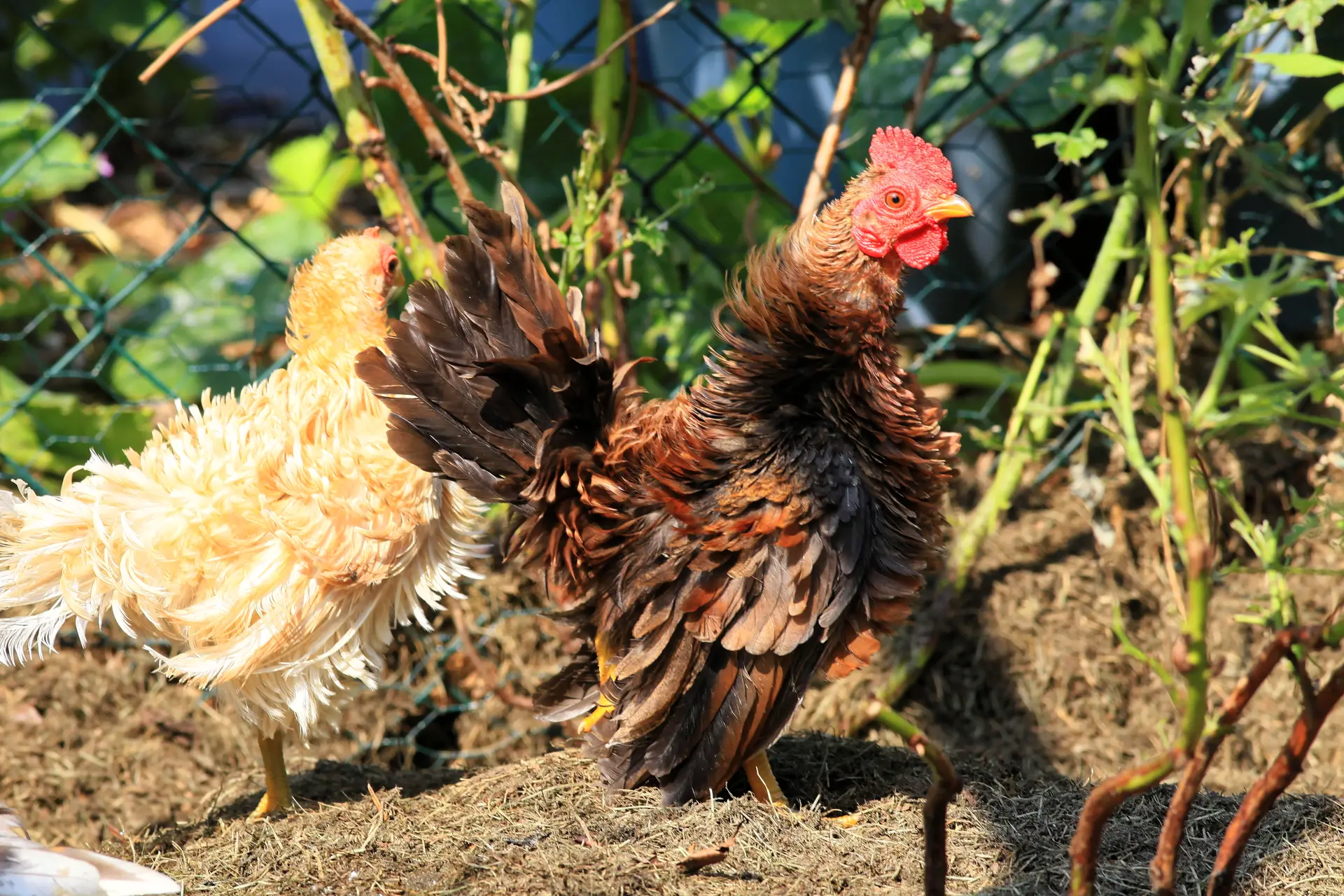
A frizzle chicken is any chicken whose feathers curl outward and up toward its head instead of lying flat, giving the bird a permanently windblown look. Here's the part that surprises most people: "frizzle" usually describes a feather type, not a single breed. The curls come from one gene that can show up in Cochins, Polish, Plymouth Rocks, Pekins, and more. They're friendly and make wonderful pets, but those curly feathers don't insulate or shed water the way normal feathers do, so they need a little extra care. This guide covers the genetics, the breeding pitfall every owner must understand, egg production, and how to keep them happy.
What You'll Learn
- •Frizzle Chicken Overview
- •What Exactly Is a Frizzle Chicken?
- •Is the Frizzle a Breed or a Feather Type?
- •The Frizzle Gene Explained
- •Frazzle: Why You Never Breed Frizzle to Frizzle
- •What Breeds Come in Frizzle?
- •What Do Frizzle Chickens Look Like?
- •Frizzle Chicken Temperament
- •How Many Eggs Do Frizzle Chickens Lay?
- •Cold, Wet, and Flight: The Care Challenges
- •Housing and Care Requirements
- •Are Frizzle Chickens Good for Beginners?
- •Health Issues to Watch For
- •Frequently Asked Questions
Frizzle Chicken Overview
| Trait | Details |
|---|---|
| What it is | A feather type (curled feathers) found in many breeds |
| Size | Varies by base breed: bantams 1.5-2 lbs, large fowl 6-8 lbs |
| Eggs | Depends on base breed, roughly 100-180 per year |
| Temperament | Calm, friendly, docile, good with kids |
| Cold Hardy | Poor (curls don't trap heat or shed water) |
| Heat Tolerant | Moderate to good |
| Broody | Common, especially in Cochin and Pekin lines |
| Beginner Friendly | Moderate (pet-easy, but needs weather protection) |
| Lifespan | 6-8 years |
A frizzle is not one bird with one set of stats. A frizzled Cochin is a fluffy 8-pound dual-purpose hen, while a frizzled Serama is a palm-sized ornamental bantam. What they share is the curl, and the care needs that come with it.
What Exactly Is a Frizzle Chicken?
On a normal chicken, each feather lies flat against the body, overlapping like roof shingles to trap a layer of warm air and shed rain. On a frizzle, the feather shaft (the rachis) curls so the whole feather bends outward and curves back toward the bird's head. The result looks like the chicken stuck its beak in a light socket.
This curling is caused by a single gene, and that gene can be carried by birds of almost any breed. So when someone says "I have a frizzle," they really mean "I have a chicken with the frizzle gene." The underlying bird might be a Cochin, a Polish, a Plymouth Rock, or a Pekin bantam. The curls are the costume; the breed underneath is the actor.
That distinction matters for buyers. Two frizzles can look alike in a photo but behave differently, lay different numbers of eggs, and need different amounts of space, all depending on the base breed. Always ask a breeder what breed is under the curls.
Is the Frizzle a Breed or a Feather Type?
This is where the answer depends on which country you're standing in.
In the United Kingdom, the Poultry Club of Great Britain recognizes the Frizzle as a distinct breed, with its own standard, in both large fowl and bantam sizes. Several European and Australian standards follow a similar approach.
In the United States, the American Poultry Association does not list "Frizzle" as a standalone breed. Instead, frizzling is treated as a feather characteristic. A frizzled Cochin is shown and judged as a Cochin, just one with curled plumage. The American Bantam Association takes a comparable view for bantams.
For a backyard keeper, the takeaway is simple: in the US, frizzle is a feather type that rides along with a recognized breed. You'll often see hatcheries sell "frizzle Cochins" or "frizzle Polish" rather than just "frizzles," which is the more accurate way to describe them. If you plan to show your birds, check your local poultry club's standard before you buy, because the rules differ.
The Frizzle Gene Explained
The curl comes from a mutation in a gene called KRT75, which produces a structural protein (an alpha-keratin) in the feather shaft. The mutation creates a defective rachis that bends instead of staying straight. Researchers identified this in a study published in PLOS Genetics, confirming a single small deletion in the gene as the cause.
The frizzle gene is autosomal and incomplete dominant. Two pieces of jargon, but both matter:
- •Autosomal means it's not linked to sex, so roosters and hens carry and pass it the same way.
- •Incomplete dominant means one copy of the gene gives you the normal, attractive frizzle, while two copies produce a much more extreme and harmful version (more on that next).
Geneticists usually write the frizzle gene as F and the normal smooth gene as f. A bird with one copy of each (Ff) is a proper frizzle. A bird with two normal copies (ff) is smooth-feathered. A bird with two frizzle copies (FF) is the problem case.
Because frizzle is incomplete dominant, you cannot have a "purebred frizzle" line the way you'd have a purebred Australorp. The desirable curl always comes from a single dose of the gene, and a single dose can never breed true on its own.
Frazzle: Why You Never Breed Frizzle to Frizzle
This is the single most important thing to understand before you breed frizzles, so read it twice.
When a bird inherits two copies of the frizzle gene (FF), it becomes what keepers call a frazzle, also written "frazzled" or sometimes "extreme frizzle." The feathers curl so tightly that the shafts turn brittle and snap off. Frazzles often end up with bald patches, sparse and broken plumage, and in some cases enlarged hearts, weak immune function, and digestive trouble. They struggle to stay warm and they live harder lives. Breeding deliberately for frazzles is widely considered inhumane.
Here's the math, using a simple Punnett square. Cross two frizzles (Ff x Ff) and the average outcome is:
| Offspring | Genotype | Result |
|---|---|---|
| 25% | FF | Frazzle (avoid) |
| 50% | Ff | Frizzle (desirable) |
| 25% | ff | Smooth-feathered |
So a frizzle-to-frizzle pairing produces, on average, one in four chicks with the harmful double dose. That is why responsible breeders never do it.
The correct cross is frizzle to smooth (Ff x ff). That pairing produces roughly:
| Offspring | Genotype | Result |
|---|---|---|
| 50% | Ff | Frizzle |
| 50% | ff | Smooth-feathered |
You get about half curly chicks and half smooth, and zero frazzles. The smooth siblings, by the way, are perfectly healthy birds that carry one normal gene each, and they're exactly what you want to breed back to your next frizzle. Many breeders keep smooth-feathered "carriers" specifically as breeding partners. A smooth chick from frizzle parents is a feature, not a failure.
What Breeds Come in Frizzle?
Because the gene can hitch a ride on many breeds, you'll find frizzled versions of a long list of chickens. The most common in backyards:
- •Cochin. Probably the most popular frizzle. The Cochin is already a fluffy, round, mellow bird, and the curls turn it into a walking pom-pom. Frizzled Cochins are gentle, broody, and great with kids. See our Cochin breed guide.
- •Pekin (the bantam, not the duck). Small, friendly, and very common as a frizzled pet bantam in the UK and beyond.
- •Polish. A frizzled Polish adds curly body feathers to that wild crest. Double the drama, double the care.
- •Plymouth Rock. A larger, more practical frizzle that still lays a decent number of eggs. See the Plymouth Rock guide.
- •Japanese Bantam and Serama. Tiny ornamental show birds. The Serama frizzle is about as small as a chicken gets.
- •Orpington and other heavy breeds. Less common, but they exist.
There's also a famous cross worth knowing: the Sizzle. A Sizzle is a Silkie crossed with a frizzle, so you get silkie-style fluff plus curled feathers. They look like tiny, animated cotton balls and have a devoted following among pet keepers. Because they combine two ornamental feather types, Sizzles need the same gentle, weather-protected care as both parents.
What Do Frizzle Chickens Look Like?
The defining feature is obvious, but a few details are worth knowing:
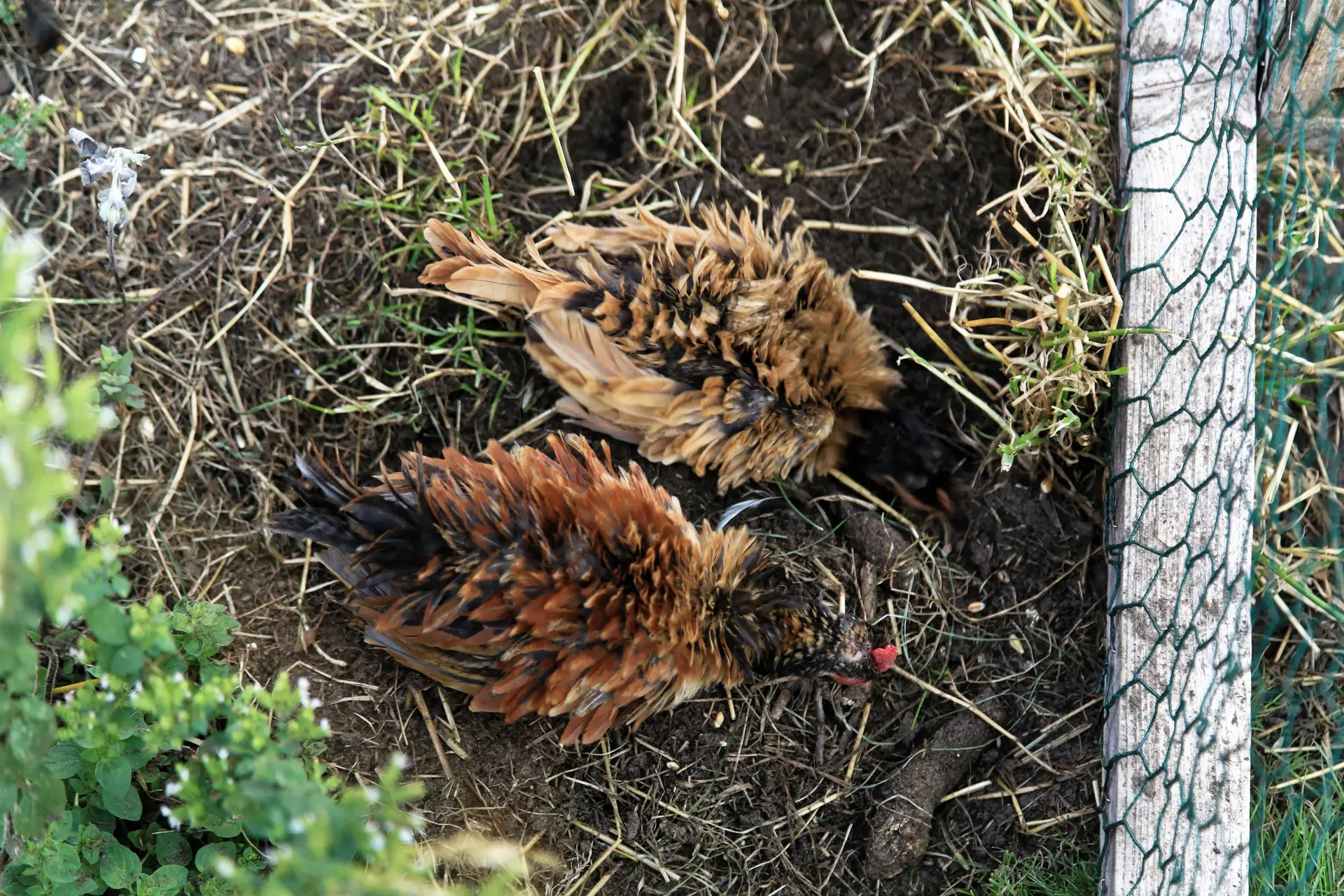
- •Outward, upward curl. Every contour feather bends away from the body and arcs toward the head. A good show frizzle has even, consistent curling across the whole body.
- •Curl tightness varies. Young birds and birds in fresh feather show the tightest, neatest curls. After a hard molt or rough weather, feathers can look ragged until they grow back in.
- •The base breed shows through. A frizzled Cochin keeps the Cochin's feathered feet and round body. A frizzled Polish keeps the crest. The curl is layered on top of the breed's normal shape, size, and color.
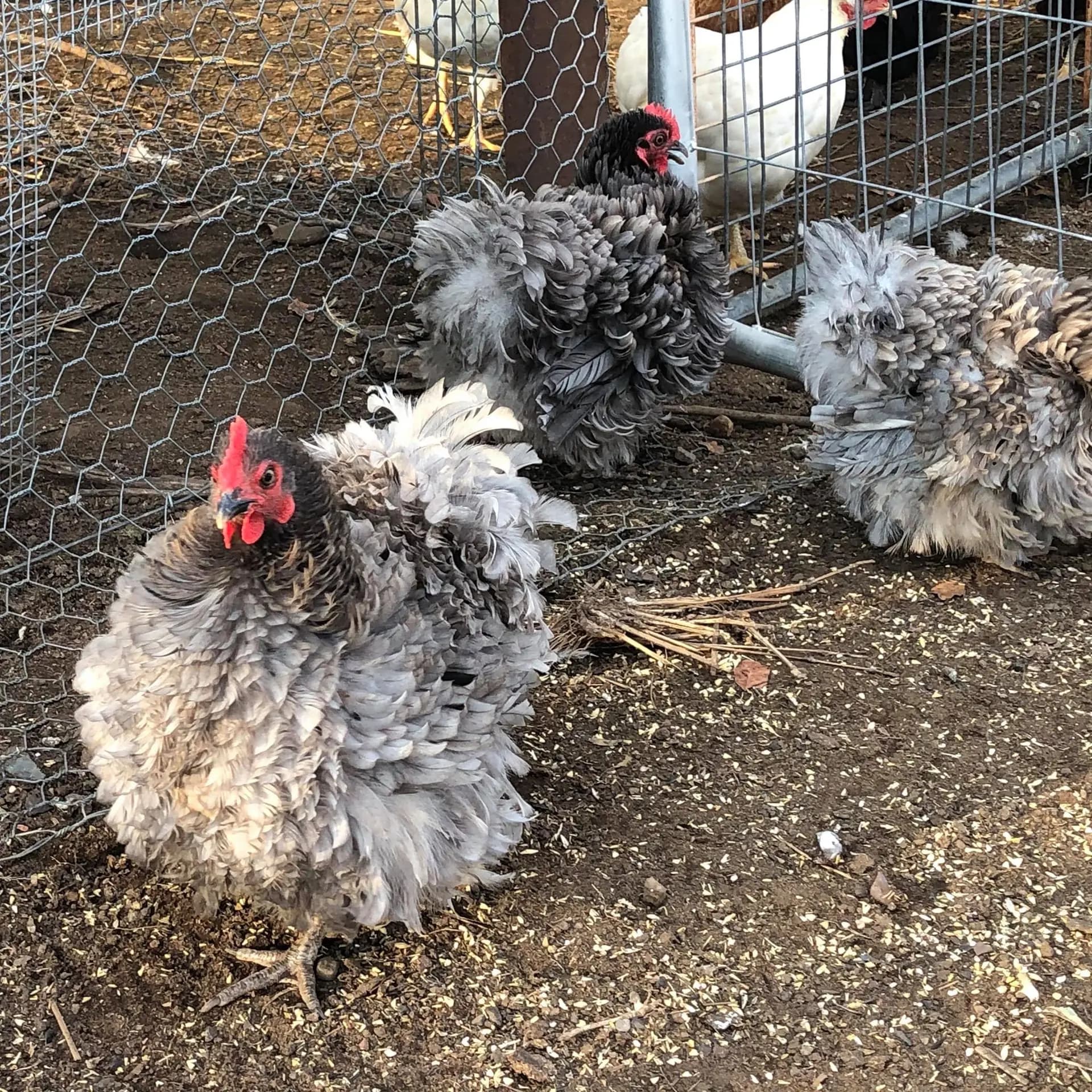
- •Color follows the breed. Frizzles come in every color their base breed comes in: black, blue, buff, splash, white, laced, and more.
Frizzle Chicken Temperament
Most frizzles are sweethearts. The breeds frizzling shows up in most often (Cochins, Pekins, Polish, Silkies) are already known for calm, docile, people-friendly personalities, and the frizzle versions keep those traits. They tend to be:
- •Gentle and tame. Many frizzles enjoy being held and will happily sit on a lap. They're a frequent first choice for families with young children.
- •Low in the pecking order. Because they can't fly well and their odd feathers attract curiosity, frizzles often land near the bottom of a mixed flock. Watch for bullying and feather-picking from more assertive breeds.
- •Quiet and homebody-ish. They're not big rangers or escape artists, and they're content to potter around the run.
The flip side of all that sweetness is vulnerability. A docile bird that can't fly is an easy target, both for flockmates and for predators. Plan their setup with that in mind.
How Many Eggs Do Frizzle Chickens Lay?
There's no single answer, because egg production follows the base breed, not the curl. The frizzle gene affects feathers, not the reproductive system. As a rough guide:
| Base breed | Eggs per year | Egg color |
|---|---|---|
| Frizzled Cochin | 150-180 | Brown |
| Frizzled Plymouth Rock | 180-200 | Brown |
| Frizzled Polish | 150-200 | White |
| Frizzled Pekin (bantam) | 100-150 | Cream/tinted |
| Frizzled Serama (bantam) | 100-160 (small eggs) | Cream |
A few realities to set expectations:
- •Bantam frizzles lay small eggs. Charming, but you'll need two or three to equal one large supermarket egg.
- •Broodiness cuts into totals. Cochin and Pekin frizzles go broody readily, and a broody hen stops laying while she sits. That's wonderful if you want a natural incubator and frustrating if you want a steady egg supply.
- •Frizzles are pets first. Nobody keeps frizzles for production. If eggs are your main goal, see our best egg-laying breeds guide instead. Keep frizzles because they're delightful, and treat the eggs as a bonus.
Cold, Wet, and Flight: The Care Challenges
Those gorgeous curls come with three practical downsides. None are dealbreakers, but you have to plan around them.
1. Poor insulation. Normal feathers trap a layer of warm air against the body. Frizzled feathers stand away from the skin, so they trap far less heat. A frizzle in winter loses warmth faster than a smooth-feathered bird of the same breed. This is the single biggest care difference.
2. They don't shed water well. Flat feathers act like a raincoat. Curled feathers let rain soak straight through to the skin. A wet frizzle in cold weather chills fast, which is genuinely dangerous. Keeping them dry is just as important as keeping them warm.
3. Limited flight. The curled feathers don't form proper flight surfaces, so most frizzles can barely get off the ground. The upside is they won't fly over fences. The downside is they can't escape a predator or a bully by flapping up to a high perch, and they need low, easy-to-reach roosts and ramps.
The good news: frizzles often handle heat reasonably well, since the open, airy feathering doesn't trap warmth in summer. Standard summer care, shade, and cool water are usually enough.
Housing and Care Requirements
Keep Them Dry and Draft-Free
A dry coop is non-negotiable. Make sure the roof doesn't leak, bedding stays dry, and the run has a covered, rain-sheltered section where frizzles can wait out wet weather. Good ventilation without direct drafts is the goal: you want moisture to escape, but you don't want cold air blowing across roosting birds.
Winter Warmth
In cold climates, frizzles need more help than the average chicken. Our full winter care guide and the keeping chickens warm in winter article cover the details, but the frizzle-specific priorities are:
- •A snug, dry, draft-free coop with deep dry bedding
- •A covered run so they're never forced out into rain or snow
- •Low roosts (some frizzles roost better on flat boards than thin bars, so their feathered or short feet stay covered)
- •Extra vigilance on the coldest, wettest nights
Resist the urge to add a heat lamp casually; they're a serious fire risk in coops. If supplemental heat is genuinely necessary, use a safe radiant panel.
Low Roosts and Ramps
Because they can't fly, give frizzles low roosts and gentle ramps up to nest boxes and into the coop. A frizzle forced to jump down from a high perch can injure itself.
Waterers and Feed
Standard feeders and waterers work fine. Use a layer feed at around 16% protein for laying-age hens, and growing feed for chicks. See the complete feeding guide for the full picture, and keep treats under about 10% of the diet.
Gentle Flockmates
Frizzles do best with other calm breeds: Silkies, Cochins, Polish, and Orpingtons. Avoid housing them with assertive, flighty, or aggressive breeds that will pick at the unusual feathers.
Are Frizzle Chickens Good for Beginners?
Yes, with one honest caveat.
As pets, frizzles are close to ideal for a beginner. They're tame, quiet, easy to handle, and they tolerate confinement well. Kids adore them. If your goal is a friendly backyard flock and a few eggs, a frizzled Cochin or Pekin is a lovely starter bird.
The caveat is climate and breeding. If you live somewhere cold and wet, you'll work harder to keep frizzles comfortable than you would with a hardy breed like a Plymouth Rock or Australorp. And if you ever want to hatch your own, you must understand the frizzle-to-frizzle frazzle risk before you set eggs. A keeper who buys point-of-lay frizzle pullets and provides a dry, sheltered setup will do just fine. A keeper who buys two frizzles and breeds them blindly will produce suffering chicks.
For more starter-friendly options to mix into the flock, see our best chicken breeds for beginners and the broader bantam chickens guide, since so many frizzles are bantams.
Health Issues to Watch For
Frazzle and Feather Brittleness
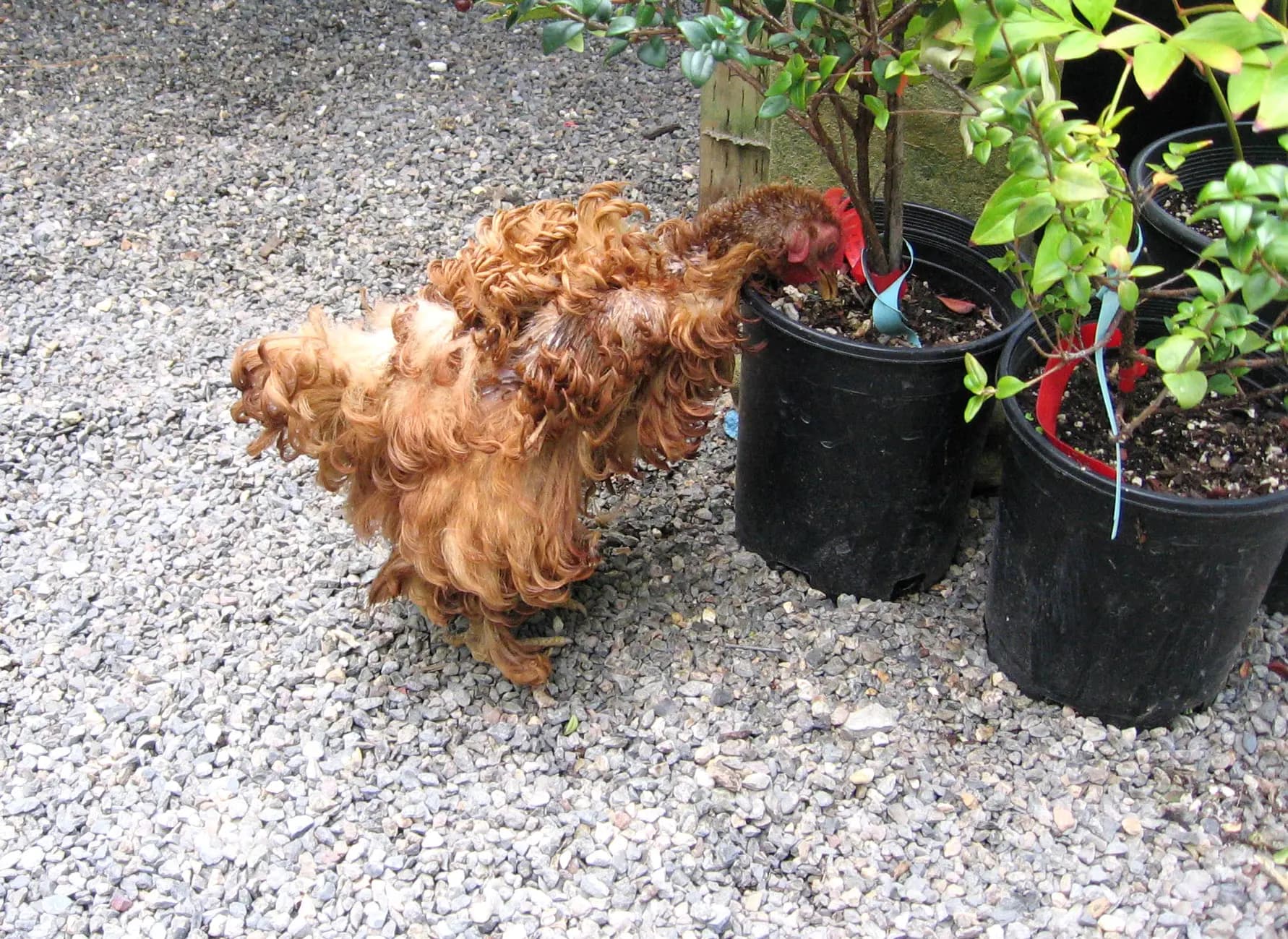
The big one. Any frizzle that inherited two copies of the gene (a frazzle) will have brittle, breaking feathers and may have heart and immune problems. You can't fix the genetics, but you can avoid producing frazzles by never crossing frizzle to frizzle. If you bought a bird with very sparse, broken plumage and bald patches, ask the seller about its parentage.
Cold Stress and Chilling
Because of the insulation problem, frizzles are more prone to cold stress. Watch for hunched posture, shivering, and reluctance to leave the coop in winter. A frizzle that gets wet and cold can decline quickly, so act fast: dry the bird, warm it gradually, and get it into a sheltered space.
Bullying and Feather Damage
Curly feathers invite curious pecking. Persistent feather-picking can draw blood and cause stress. If a frizzle is being targeted, separate the aggressor or move the frizzle to a calmer group.
Standard Chicken Ailments
Frizzles get the same mites, lice, and respiratory issues as any chicken. The curled feathers can make it slightly harder to spot external parasites, so part the plumage and check the skin during routine health checks. Their egg-laying troubles are no different from their base breed; see our egg problems troubleshooting guide if something looks off.
Looking for the right coop? A dry, draft-free, predator-proof coop matters even more for frizzles than for a hardy breed. Our best chicken coops on Amazon roundup covers current top picks across flock sizes, from compact bantam-friendly coops to walk-in models.
Frequently Asked Questions
What is a frizzle chicken?
A frizzle chicken is a chicken whose feathers curl outward and up toward its head instead of lying flat. The curl is caused by a single gene that can appear in many breeds, so "frizzle" usually describes a feather type rather than one specific breed. Common frizzled breeds include Cochin, Polish, Pekin, and Plymouth Rock.
Is frizzle a breed?
It depends on the country. In the United Kingdom, the Poultry Club of Great Britain recognizes the Frizzle as its own breed. In the United States, the American Poultry Association treats frizzling as a feather characteristic, so a frizzled Cochin is shown and judged as a Cochin. Either way, the curl is produced by one gene that rides along with a recognized breed.
Can you breed two frizzle chickens together?
You shouldn't. Crossing frizzle to frizzle produces, on average, 25% chicks with two copies of the gene. Those double-copy birds are called frazzles, and they have brittle, breaking feathers and serious health problems. The correct cross is frizzle to a smooth-feathered bird, which gives about half frizzle and half smooth chicks and no frazzles.
What is a frazzle chicken?
A frazzle is a chicken that inherited two copies of the frizzle gene. Its feathers curl so tightly that the shafts turn brittle and snap off, leaving bald patches and sparse plumage. Frazzles can also have heart and immune issues. Breeding deliberately for frazzles is considered inhumane, which is why responsible breeders never pair two frizzles.
How many eggs do frizzle chickens lay?
It depends on the base breed, because the frizzle gene affects feathers, not laying. A frizzled Cochin lays roughly 150-180 brown eggs a year, a frizzled Plymouth Rock around 180-200, and bantam frizzles like Pekins or Seramas lay 100-160 small eggs. Frizzles are kept as pets first, so treat the eggs as a bonus.
Are frizzle chickens cold hardy?
No, they're below average for cold. Curled feathers stand away from the body and trap far less warm air than flat feathers, and they don't shed rain well. In cold or wet climates, frizzles need a dry, draft-free coop, a covered run so they're never forced out into the weather, and extra attention on the coldest nights.
Can frizzle chickens fly?
Barely. The curled feathers don't form proper flight surfaces, so most frizzles can only flutter a short distance off the ground. That means they won't escape over fences, but it also means they can't flap up to a high perch to avoid predators or bullies. Give them low roosts and gentle ramps.
What is a sizzle chicken?
A Sizzle is a cross between a Silkie and a frizzle, combining silkie-style fluff with curled feathers. The result looks like a small, animated cotton ball, and Sizzles are popular as gentle pets. Because they carry two ornamental feather types, they need the same dry, weather-protected, gentle care as both parent types.
Frizzles are some of the most charming birds you can keep. They won't anchor your egg production, and they need a dry coop and protection from the cold, but in return you get a sweet, comical, lap-friendly chicken that every visitor will want to hold. Learn the frazzle rule, keep them dry, give them gentle flockmates, and you'll have years of curly-feathered entertainment.
For more breed options, explore our breed guides or start your flock with our best breeds for beginners.
Sources:
- •Ng, C.S., et al. "The Chicken Frizzle Feather Is Due to an alpha-Keratin (KRT75) Mutation That Causes a Defective Rachis." PLOS Genetics, 2012. https://journals.plos.org/plosgenetics/article?id=10.1371/journal.pgen.1002748
- •Poultry Club of Great Britain. Breed standards and classification. https://www.poultryclub.org/
- •University of Kentucky Cooperative Extension. Small and Backyard Flocks poultry resources. https://poultry.extension.org/
- •Merck Veterinary Manual. Management of Backyard Poultry. https://www.merckvetmanual.com/poultry/backyard-poultry/management-of-backyard-poultry
Related Guides
Light Brahma Chicken: Size, Eggs, Color, and Care
The Light Brahma is the original gentle giant: a huge white, feather-footed bird that lays through winter. Learn its size, eggs, color, and care.
BreedsBuff Brahma Chicken: Size, Eggs, Color, and Care
The Buff Brahma is a gentle giant in golden feathers. Learn its size, egg laying, buff coloring, cold hardiness, and how to care for feathered feet.
BreedsAraucana Chicken Breed Guide: Blue Eggs, Tufts, Care
Araucana chicken breed guide: rumpless bodies, ear tufts, true blue eggs, the lethal tuft gene, care, and how they differ from Ameraucanas.
BreedsChocolate Orpington Breed Guide: Genetics, Eggs, Care
Chocolate Orpingtons explained: the sex-linked chocolate gene, why hens show it and roosters carry it, 120 to 150 tinted eggs a year, care, and where to buy.