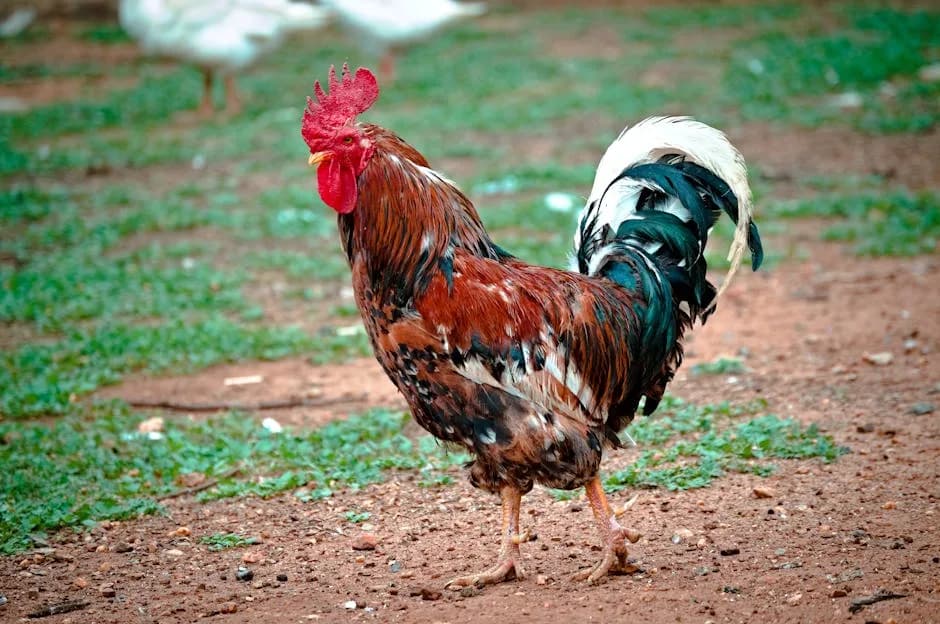
How to Care for a Rooster: A Complete Guide
How to care for a rooster: feeding, spur trimming, comb frostbite, hen ratios, taming, and health. A practical guide for backyard chicken keepers.
Researched from university extension, USDA, and veterinary sources. How we research.
Caring for a rooster is a lot like caring for a hen, with a few important differences. He eats the same feed, sleeps in the same coop, and needs the same protection from predators and weather. Where rooster care splits off is in the details: watching the hen-to-rooster ratio so your hens don't get worn down, keeping his big comb from freezing, trimming spurs before they curl into his own leg, and building a relationship with a bird that has the hormones and hardware to challenge you. Get those pieces right and a rooster is one of the easiest, most rewarding members of the flock.
Affiliate Disclosure: This article contains affiliate links to Amazon. If you buy something through these links, we earn a small commission at no extra cost to you. We only recommend products we genuinely think are worth your money. Full disclosure.
If you're still deciding whether to keep one at all, start with our guide on whether you need a rooster. This article assumes you already have one, or you're committed to getting one, and you want to keep him healthy and manageable.
Rooster Care at a Glance
| Need | What to do |
|---|---|
| Feed | All-flock or grower feed, not layer feed. Offer oyster shell separately for the hens. |
| Water | Clean, unfrozen, always available. Same as hens. |
| Space | 4 sq ft per bird in the coop, 8 to 10 sq ft in the run, plus 10 to 12 inches of roost bar. |
| Hen ratio | 1 rooster per 8 to 12 hens to prevent over-mating. |
| Spurs | Check every few months. Trim or file when they get long or sharp. |
| Comb | Coat with petroleum jelly in hard freezes to prevent frostbite. |
| Handling | Calm, confident, daily. Start young for the friendliest bird. |
| Health | Watch for spur wounds, bumblefoot, and fighting injuries. |
What You'll Learn
- •What Makes Rooster Care Different
- •Feeding a Rooster
- •Housing and Space
- •Getting the Hen-to-Rooster Ratio Right
- •Rooster Spur Care
- •Comb and Wattle Care
- •Handling and Taming Your Rooster
- •Understanding Rooster Behavior
- •Managing Crowing
- •Common Rooster Health Issues
- •Introducing a Rooster to Your Flock
- •Seasonal Care
- •Common Mistakes
- •Frequently Asked Questions
What Makes Rooster Care Different
A rooster is a full-grown chicken with a job. He watches the sky, settles hen squabbles, finds food for the flock, and fertilizes eggs. All of that runs on the same basic care any chicken needs: good feed, clean water, dry shelter, and safety from predators.
The differences come from three things. First, roosters carry more weight and bigger appendages, so their combs, wattles, and feet take more of a beating from cold and hard surfaces. Second, they don't lay eggs, which changes what they should eat. Third, they're driven by testosterone, which shapes how they treat your hens, how they act around you, and how much noise they make. Once you understand those three factors, rooster care mostly takes care of itself.
Feeding a Rooster
Here's the single most important feeding rule: a rooster should not eat layer feed as his main diet. Layer feed is loaded with calcium (around 4 percent) to help hens build eggshells. Roosters don't lay eggs, so all that extra calcium has nowhere to go. Over months and years it stresses their kidneys and can lead to gout and other problems.
The clean solution in a mixed flock is an all-flock or flock-raiser feed (usually 16 to 18 percent protein) with a separate dish of oyster shell on the side. The hens eat the oyster shell when their bodies need calcium, and the rooster ignores it. This setup keeps everybody on the right diet without you having to feed birds separately. You can find all-flock feed on Amazon or at any farm store.
A few more feeding notes for roosters:
- •Grit. If your rooster eats anything other than commercial crumble or pellets (grass, scratch, kitchen scraps), he needs access to insoluble grit to grind it down. Free-range birds usually find their own, but confined birds need a dish.
- •Treats. The same treat rules apply to roosters as hens. Keep treats to about 10 percent of the diet so the balanced feed does its job. A rooster who fills up on scratch grain gets a protein and vitamin shortfall.
- •Feeder access. A dominant rooster often lets hens eat first (that's tidbitting, more on that below), but a low-ranking rooster in a big flock can get pushed off the feeder. Use enough feeder space so everyone eats.
- •Water. Nothing special here, but it matters just as much. A rooster works hard in the heat and dehydrates fast. Keep water clean and, in winter, unfrozen.
For the full breakdown of what belongs in the feed dish, see our complete chicken feeding guide.
Housing and Space
A rooster uses the same coop as your hens, with a little extra elbow room. Crowding is one of the fastest ways to turn a calm rooster into a stressed, scrappy one.
Aim for these minimums, which are slightly more generous than a hens-only flock:
- •Coop floor: at least 4 square feet per bird. Large breeds like Brahmas and Jersey Giants want more.
- •Run: 8 to 10 square feet per bird. More is always better, and a bored, cooped-up rooster is more likely to pick fights.
- •Roost: 10 to 12 inches of roost bar per bird. Roosters like to perch a bit higher than the hens and will often claim the top spot. Use a flat 2x4 with the wide side up so big feet can sit flat, which also helps prevent frostbite because feathers can cover the toes.
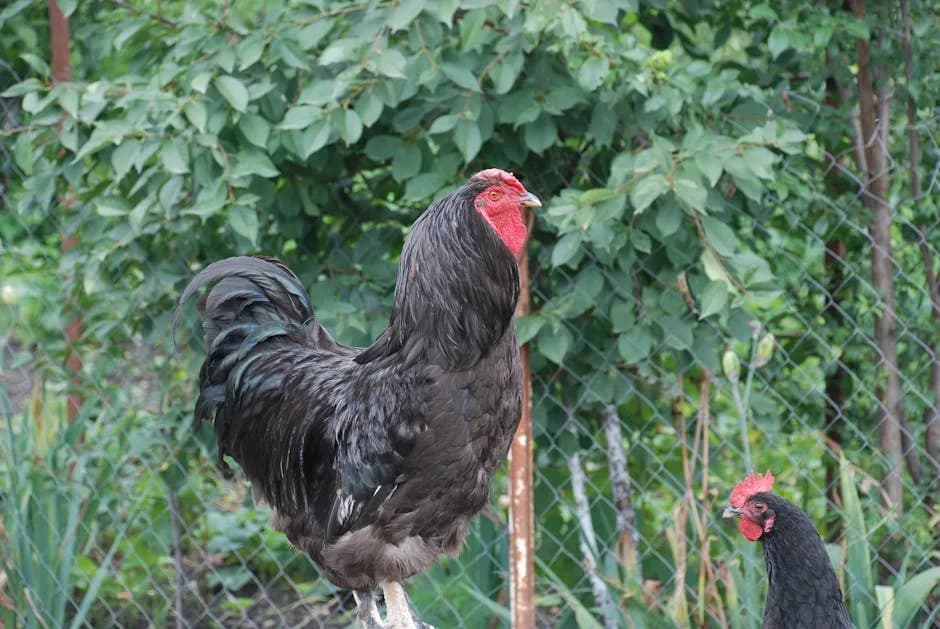
If you keep more than one rooster, give them room to spread out. Two roosters crammed into a small run will fight far more than the same two birds with space to hold separate territories. Ventilation matters too: good airflow up high keeps the coop dry, which protects those big combs from frostbite in winter. For the full setup, our guide on how big your coop should be walks through the numbers.
Getting the Hen-to-Rooster Ratio Right
This is where rooster care becomes hen care. A rooster mates with his hens, and if he doesn't have enough of them, he'll over-mate the ones he has. The result is bare backs, broken feathers, scratched skin, and stressed hens. In bad cases the rooster's claws and spurs open wounds that get infected.
The standard guideline is 1 rooster per 8 to 12 hens. With fewer hens than that, a single vigorous rooster can wear his favorites down. Young roosters in spring are especially driven, so a ratio that felt fine in winter can suddenly look rough in April.
Watch the hens, not just the rooster. Signs your ratio is off or your rooster is too rough:
- •Bald patches on the backs and behind the heads of certain hens
- •Broken or missing feathers, especially on the "saddle" area just before the tail
- •Hens hiding, flinching, or running when the rooster approaches
- •Scratches or scabs on the skin
If you see this, you have three options: add more hens, remove the rooster, or protect the hens in the meantime with hen saddles (also called chicken aprons). These are simple fabric covers that snap over the wings and shield a hen's back from claws while her feathers regrow. A set of hen saddles is cheap insurance if you have one or two favorite hens getting the worst of it. Keeping a rooster's spurs and nails trimmed also cuts down on the damage.
Rooster Spur Care
Spurs are the sharp, bony spikes on the back of a rooster's legs. They keep growing throughout his life, and left alone they can curl around until they grow back into his leg, or get so long and sharp that they injure hens during mating and you during handling. Checking and maintaining spurs is one of the few care tasks that's genuinely rooster-only.
Check the spurs every few months. You have a few ways to keep them in line:
- •Filing. For mild upkeep, run a file or a rotary tool (like a Dremel) across the tip to blunt the sharp point. This is low risk because you're only touching the hard outer sheath.
- •Trimming. For long spurs, trim the tip with a dog nail clipper or a small saw. Like a nail, a spur has a living quick inside with a blood supply. Only take off the outer portion, well away from the base, and stop if you get close to the quick.
- •The twist method. Experienced keepers sometimes twist off the hard outer sheath to expose the softer spur underneath, but this bleeds and hurts if done wrong. If you're new to it, stick with filing and light trimming.
Keep styptic powder or cornstarch on hand before you start in case you nick the quick and it bleeds. A dab stops the bleeding fast. You can pick up styptic powder wherever poultry or pet supplies are sold. Work when the rooster is calm, ideally at night off the roost when chickens are docile, and have a helper hold him if you can. Wrapping him in a towel to keep the wings pinned makes the whole job easier and safer for both of you.
Comb and Wattle Care
A rooster's comb and wattles are usually bigger than a hen's, which makes them the first thing to freeze in cold weather. Frostbite shows up as black or gray tips on the comb points, and in bad cases the tissue dies and falls off. It's painful and can get infected.
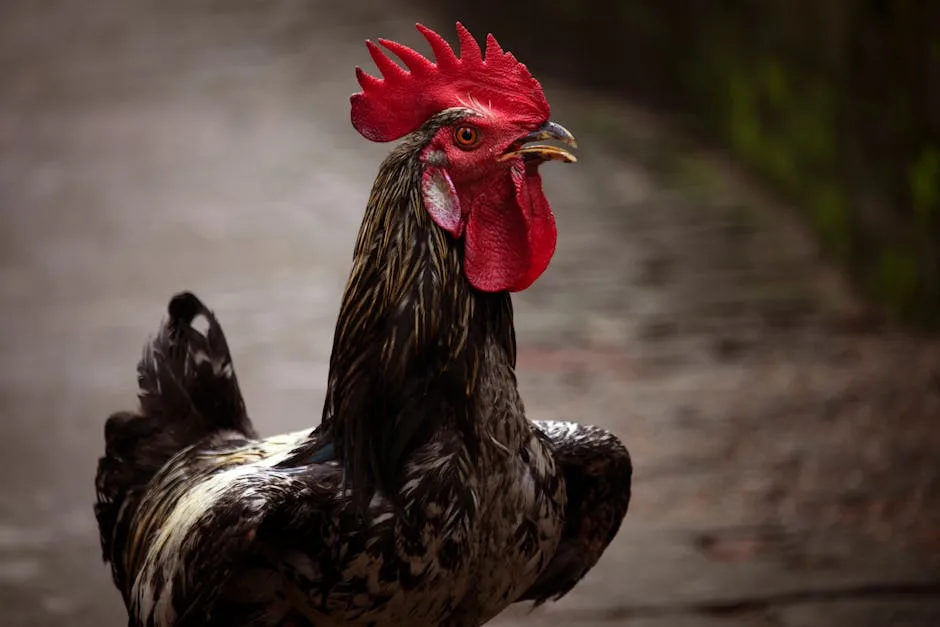
Two things drive comb frostbite: cold and moisture. You can't do much about the cold, but you can control the moisture:
- •Ventilate the coop. Damp, humid coop air is what freezes on a comb overnight. Good high ventilation lets moisture escape while keeping the birds out of a direct draft.
- •Coat the comb. Before a hard freeze, rub a thin layer of petroleum jelly on the comb and wattles. It adds a small buffer against the cold. Reapply every day or two during a cold snap.
- •Pick frost-hardy breeds. If you live somewhere brutal, breeds with small pea or rose combs (like Wyandottes or Chanteclers) handle cold far better than big single-combed breeds.
For the full winter routine, see how to keep chickens warm in winter. Do not heat the coop to fight frostbite; the humidity and fire risk cause more problems than they solve. Keep the coop dry and well ventilated instead.
Handling and Taming Your Rooster
A friendly rooster is mostly made, not born. The way you handle him from a young age sets the tone for his whole life. The goal is a bird that respects you and stays calm around people, not one that's terrified and not one that thinks he's your equal.
A few principles work across almost every rooster:
- •Be calm and confident. Move deliberately. Don't chase, flap, or squeal. Chickens read jerky, panicked movement as either prey behavior or a challenge.
- •Handle him regularly. Pick him up, tuck him under your arm, and hold him until he settles. Doing this often, especially while he's young, teaches him that people are safe and in charge.
- •Don't turn him into a pet that has no boundaries. Hand-feeding a cockerel constantly and letting him peck at you can backfire. When his hormones kick in around 5 to 8 months, a rooster who sees you as a flockmate may start treating you like a rival.
- •Establish that you're the top bird. If he postures at you, don't back away. Walk calmly toward him so he moves first. Picking him up in front of the hens reinforces your rank.
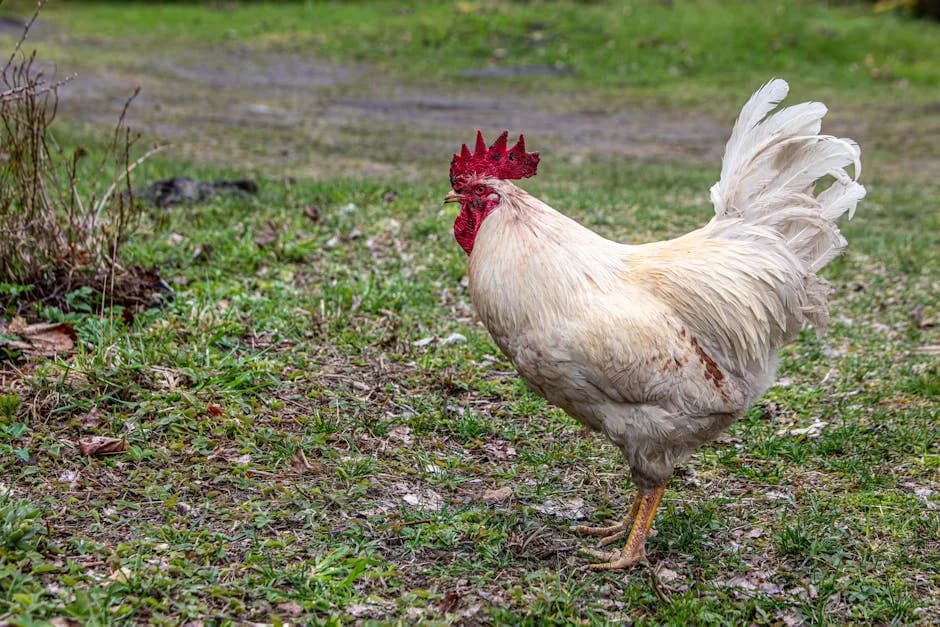
If a rooster does turn aggressive despite your best efforts, some birds simply have the wrong temperament and no training fixes them. Safety comes first, especially around children. Our rooster overview covers handling aggression and knowing when to rehome in more detail.
Understanding Rooster Behavior
A lot of "problem" rooster behavior is just normal rooster behavior that people misread. Knowing what he's doing helps you care for him and keep the peace.
- •Tidbitting. He finds food, makes a fast "tuk-tuk-tuk" call, and drops it for the hens. This is courtship and flock leadership. A rooster who tidbits well is doing his job.
- •The wing drop. He drops one wing and does a little side-step dance around a hen. It's a courtship display that comes before mating. Harmless, and a sign of a confident bird.
- •Alarm calls. Roosters have different calls for aerial threats (a hawk) and ground threats (a dog or fox). When he sounds off and the hens freeze or run for cover, he's protecting them. Don't punish it.
- •Mating. He grabs the back of a hen's neck and mounts briefly. It looks rough but is normal. It only becomes a welfare problem when the ratio is off and one hen takes too much of it.
- •Standing guard. A rooster often eats last and perches where he can watch. That's not him being lazy; that's him on duty.
The more you recognize these behaviors, the easier it is to tell normal from a real problem, like a rooster who charges people or one who's stopped eating.
Managing Crowing
Crowing is not something you can train out of a rooster. It's hardwired, and researchers have shown its timing is set by his internal clock (see chicken sounds and what they mean). He'll crow at dawn, at dusk, at passing cars, at other roosters, and sometimes for no reason you can see. What you can do is manage it and stay on the right side of your neighbors.
- •Delay the dawn crow. A rooster crows when light hits his eyes. A darker, well-ventilated coop with small or covered windows keeps him quiet a bit longer in the morning. Letting him out later helps too.
- •Reduce triggers. Roosters answer each other. If a neighbor's rooster sets yours off, there's not much to do, but reducing sight lines to other birds can help.
- •Crow collars exist, but go in with eyes open. A no-crow collar is a velcro band that limits airflow to soften the crow. It doesn't silence him, some keepers find them stressful for the bird, and they need careful fitting. Consider it a last resort, not a first step. You can research no-crow collars if you're weighing the option.
- •Check the law first. Many towns and HOAs ban roosters over crowing. Before you invest in managing the noise, confirm you're even allowed to keep him. Our backyard chicken laws overview is a starting point, and the state guides get more specific.
Common Rooster Health Issues
Roosters get all the same illnesses hens do, so watch for the general signs of a sick chicken: hunched posture, closed eyes, pale comb, no appetite, or labored breathing. A few problems show up more often in roosters because of how they live.
- •Spur and fighting wounds. Combat between roosters, or a bad landing, can gash a comb or leg. Clean minor wounds with saline, dab with a poultry-safe antiseptic, and keep flies off. Deep wounds need a vet.
- •Bumblefoot. Heavier roosters landing on hard roosts are prone to bumblefoot, a swollen foot infection that starts as a dark scab on the pad. Use flat, splinter-free roosts and soft landing surfaces to prevent it, and treat early.
- •Leg and foot stress. Big breeds carry a lot of weight. Keep roosts at a moderate height and give soft bedding underneath to cushion the jump down.
- •Respiratory illness. Roosters aren't more prone to it, but because they crow, a change in the sound of the crow (raspy, weak, or gurgly) can be an early clue that something's wrong in the airway. Take it seriously.
- •Parasites. Mites and lice hit roosters just like hens. A dust bath helps the flock manage them naturally, and you should check under the wings and around the vent regularly.
Keep a basic first aid kit stocked so you can handle minor injuries before they turn into infections.
Introducing a Rooster to Your Flock
Adding a rooster to a flock of hens who've never had one, or slotting a new rooster in alongside an existing one, takes the same patience as any flock introduction.
For a rooster joining hens:
- •Quarantine first. Keep any new bird separate for two to four weeks to make sure he's healthy and parasite-free before he touches your flock.
- •Use a see-but-don't-touch phase. House him where the hens can see him through wire for a week or so. This lets everyone get used to each other without contact.
- •Expect some early chaos. When he moves in, there'll be chasing and mating attempts as he establishes himself. Give it a few days. Step in only if a hen is getting genuinely injured.
For a second rooster, the job is harder. Two mature males will usually fight. It works best when you have plenty of hens (8 to 12 per rooster), lots of space, and ideally roosters that grew up together. Even then, be ready to separate them if the fighting draws blood.
Seasonal Care
Rooster care shifts a little with the calendar.
Winter. Combs and wattles are the weak point. Keep the coop dry and ventilated, coat big combs with petroleum jelly before hard freezes, and make sure water never freezes solid. Full details in our winter care guide.
Spring. Testosterone and daylight both climb, so this is when roosters get most driven. Watch the hens for over-mating damage and add saddles if needed. It's also peak fertility, which matters if you plan to hatch eggs.
Summer. Heat is the enemy. A working rooster overheats fast, so provide shade, cool water, and good airflow. Our summer care guide covers keeping the whole flock cool. Fertility can dip in extreme heat, which is normal and bounces back when it cools.
Fall. Molt season. Roosters molt like hens, dropping and regrowing feathers, and they can look ragged and act subdued for a few weeks. Bump up protein slightly during the molt to support feather regrowth.
Common Mistakes
- •Feeding layer feed to a rooster long term. The excess calcium is hard on his kidneys. Switch to all-flock feed with oyster shell on the side.
- •Ignoring the hen-to-rooster ratio. Too few hens means over-mated, injured hens. Aim for 8 to 12 hens per rooster.
- •Never checking spurs. Overgrown spurs curl into the leg and injure hens. Check every few months.
- •Making a cockerel too tame too young. A rooster with no boundaries often turns pushy or aggressive at maturity. Be friendly but stay the top bird.
- •Heating the coop for comb frostbite. Heat adds humidity and fire risk. Dry, ventilated air prevents frostbite far better.
- •Keeping two roosters in a small space. Crowding turns normal jostling into serious fights. Give them room or keep one.
- •Getting a rooster before checking the law. Many areas ban them. Confirm you're allowed before you bond with the bird.
Frequently Asked Questions
Can roosters eat layer feed?
They can eat a little without harm, but they should not live on it. Layer feed's high calcium content (around 4 percent) is meant for hens building eggshells and can stress a rooster's kidneys over time. In a mixed flock, feed an all-flock or flock-raiser feed and offer oyster shell in a separate dish so the hens can top up their calcium and the rooster can skip it.
How many hens does one rooster need?
Plan on 8 to 12 hens per rooster. Fewer than that and a vigorous rooster can over-mate his hens, causing feather loss and skin injuries. With a very small flock of 4 to 6 hens, one rooster is the maximum, and some keepers find it's still too much attention on too few birds.
Do I need to trim my rooster's spurs?
Not always, but you should check them every few months. If a spur gets long enough to curl toward his leg, or sharp enough to injure hens and you, trim or file it back. File the tip for light upkeep, or trim the outer portion with a dog nail clipper, staying well clear of the living quick inside. Keep styptic powder handy in case of bleeding.
How do I stop my rooster from being aggressive toward me?
Handle him calmly and confidently, don't run from him, and make him move away from you rather than the other way around. Picking him up in front of the hens reinforces that you outrank him. Start young for the best results. Some roosters have a temperament that no training fixes, and for those, rehoming is the safe choice, especially around children.
Will keeping a rooster make my hens lay more eggs?
No. Hens lay based on daylight, nutrition, and genetics, not on whether a rooster is present. A rooster only fertilizes eggs; he doesn't increase how many are laid. Some keepers feel a calm rooster reduces flock stress slightly, but there's no real production boost.
How cold is too cold for a rooster?
Most standard breeds handle freezing temperatures fine as long as the coop is dry and draft-free. The real risk is comb and wattle frostbite on big single-combed roosters. Keep the coop well ventilated to shed moisture, coat large combs with petroleum jelly before hard freezes, and choose small-combed breeds if you live somewhere with harsh winters.
Can two roosters live together?
Sometimes. It works best with plenty of hens (8 to 12 per rooster), lots of space so they can hold separate territories, and roosters that were raised together from chicks. Two unfamiliar adult roosters put together will usually fight, so be ready to separate them if it draws blood.
At what age do roosters start crowing and mating?
Most roosters begin practicing their crow around 12 to 16 weeks, and it develops into a full crow over the following weeks. Mating behavior and the surge in hormones usually show up between 5 and 8 months of age, which is also when any aggression tends to appear. Handling him well before that point pays off.
A rooster isn't hard to keep once you know the handful of things that make him different from a hen: the right feed, enough hens, tidy spurs, a frost-safe comb, and a calm, confident owner who stays the top bird. Do those and you'll have a healthy flock leader who earns his keep watching the sky and running the yard. If you're still building your flock, our guide on how many chickens a beginner should start with helps you plan the whole setup.
Sources:
- •University of Kentucky Cooperative Extension. Small Flock Poultry. https://poultry.extension.org/
- •Penn State Extension. Backyard Poultry Resources. https://extension.psu.edu/animals/poultry
- •Merck Veterinary Manual. Poultry Health and Management. https://www.merckvetmanual.com/poultry
- •Mississippi State University Extension. Backyard Flocks. http://extension.msstate.edu/
Related Guides
Fall Chicken Care: 12 Steps to Prepare Your Flock for Winter
Complete fall chicken care checklist with 12 steps. Covers molting, coop prep, predator-proofing, feeding changes, and getting ready for cold weather.
Beginner GuidesSummer Chicken Care: How to Keep Your Flock Cool and Healthy
10 proven ways to keep chickens cool in summer heat. Covers water tips, shade, ventilation, frozen treats, and signs of heat stress to watch for.
Beginner GuidesDo You Need a Rooster? Pros, Cons, and What to Expect
Wondering if you need a rooster for your backyard chickens? Here are 7 pros and 6 cons to help you decide, plus tips on rooster-to-hen ratio.
Beginner GuidesSpring Chicken Care: 10-Step Checklist
Get your backyard chickens ready for spring with this 10-step care checklist. Covers coop cleaning, parasite checks, feeding tips, and adding new chicks.