Best Chicken Saddles and Hen Aprons (2026 Reviews)
Top chicken saddles and hen aprons to protect bare-backed hens from rooster treading and feather pecking. Honest picks, sizing, and fit.
Researched from university extension, USDA, and veterinary sources. How we research.
If you've got a hen with a bald back and a rooster who won't leave her alone, a chicken saddle is the quickest way to cover that bare skin and stop the problem from getting worse. A saddle (also called a hen apron, hen saver, or mating saddle) is a simple fabric shield that sits over a hen's back and shoulders, held on by two elastic loops that go around the base of her wings.
Our top pick: DOWN UNDER OUTDOORS Chicken Saddle. Heavy canvas, shoulder coverage, adjustable straps, and the most field-tested design on this list. Around $15.
Best value for a flock: OIUXIMT 6-Pack Chicken Saddles. Six saddles for about $24, so you can cover every hen a busy rooster is treading. About $4 per bird.
A saddle is a bandage, not a cure. It protects the skin while feathers regrow, but it won't fix an overeager rooster or a flock that's picking out of boredom. Below are the saddles worth buying, plus how to size one, how to get a hen used to wearing it, and how to fix the thing that bared her back in the first place.
Quick Answer: Best Chicken Saddles and Hen Aprons
| Need | Pick | Price |
|---|---|---|
| Best overall | DOWN UNDER OUTDOORS Canvas | ~$15 |
| Cover a whole flock | OIUXIMT 6-Pack | ~$24 |
| Rough or spurred rooster | MYWSN Mating Saddle | ~$27 |
| Hot climates (breathable) | DOWN UNDER OUTDOORS Mesh | ~$15 |
| Free range in wet weather | Zaruatu Waterproof 6-Pack | ~$13 |
| Protect just one hen | MYWSN Single Saddle | ~$10 |
What You'll Learn
- •How We Picked
- •Why Hens Lose Their Back Feathers
- •Types of Chicken Saddles (and Which to Choose)
- •Best Chicken Saddles and Hen Aprons
- •How to Size and Fit a Chicken Saddle
- •How to Put a Saddle on a Hen
- •Fix the Root Cause, Not Just the Symptom
- •What a Saddle Costs
- •Common Saddle Mistakes
- •Frequently Asked Questions
How We Picked
We keep chickens, including the occasional rooster who gets too enthusiastic in spring, so this list comes from real use and from what the wider community reports, not a quick spec scan. We weighed three things: fit and strap security (a saddle that slides to one side is useless and can even be dangerous), fabric that stands up to claws and weather, and a design that covers the shoulders, which is where most treading damage starts.
We also confirmed every product link below points to the exact item described and is currently in stock. Saddle listings on Amazon turn over fast, with the same photo sold under a dozen brand names, so we checked each one through Amazon's product data before recommending it. Where a popular listing had a weak track record or thin stitching, we left it off.
No paid placements and no free units in exchange for ranking. These are the saddles we'd put on our own birds.
Why Hens Lose Their Back Feathers
Before you buy a saddle, make sure you know what stripped the feathers, because the fix is different for each cause.
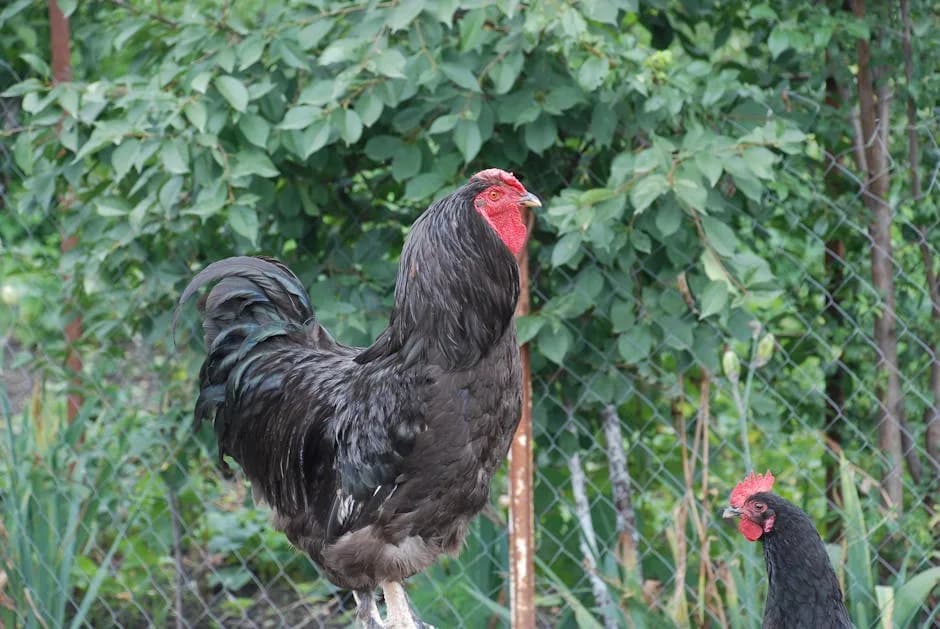
Rooster treading. This is the most common reason. When a rooster mates, he grips the hen's shoulders with his claws and holds the feathers at the back of her neck with his beak. His feet slip on her smooth back feathers, so he paddles to keep his balance, and over many matings that wears the feathers off her back and shoulders. A favorite hen, or a low-ranking hen who submits more readily, takes the brunt of it. Once the skin is bare, a rooster's claws and spurs can scratch and cut it.
Feather pecking from other hens. Hens peck each other for a long list of reasons: overcrowding, boredom, too much light, not enough protein, or simple pecking-order bullying. Bare or bleeding skin draws even more pecking, and the behavior spreads through a flock by imitation. Left alone it can turn into cannibalism, which is far harder to stop than to prevent.
Molting. Every fall, chickens drop and regrow feathers. Molt usually starts at the head and neck and moves down the body in a fairly even pattern, and you'll see pin feathers (new quills in a waxy sheath) coming in. A saddle does not help a molting bird and can rub against tender new pin feathers, so leave molters alone.
Mites and lice. External parasites chew feathers and irritate skin, and the damage often shows up around the vent rather than the back. Part the feathers at the vent and under the wings and look for tiny moving specks or clusters of eggs at the feather base before you blame the rooster. If you find them, treat the whole flock. Our chicken mite treatment guide walks through what works.
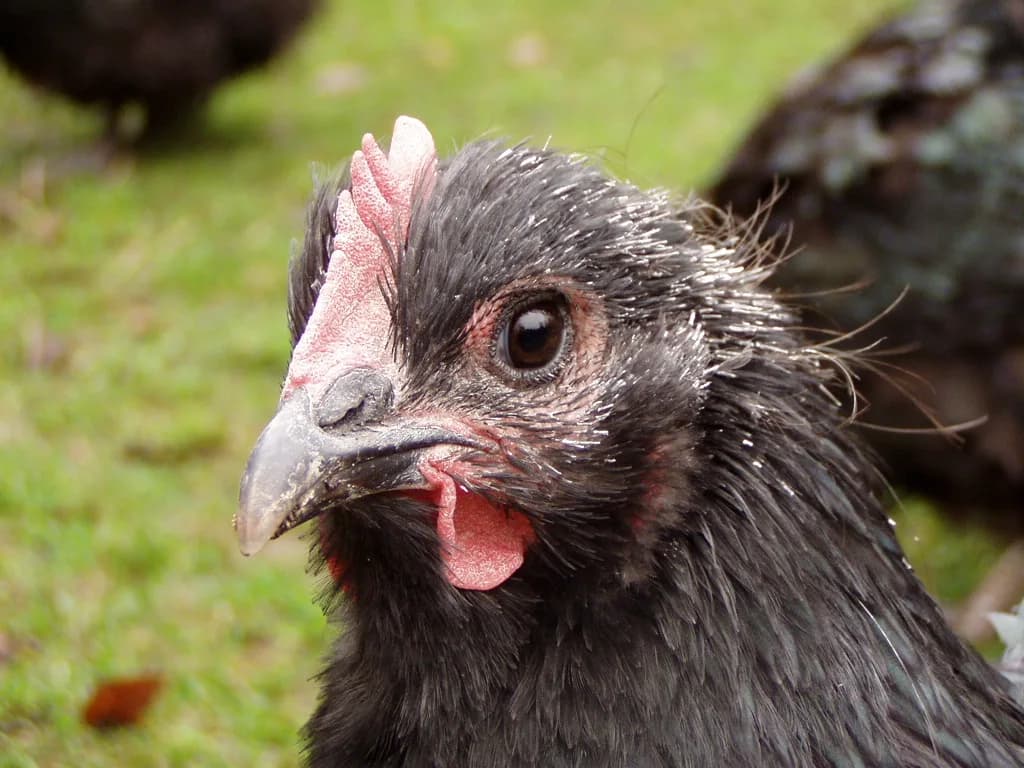
A saddle is the right tool for the first two problems: it covers the back and shoulders so skin can heal and feathers can regrow without a rooster's claws or a flockmate's beak reaching them. For molt and mites, it's the wrong tool. When you're not sure, check for parasites first, note the time of year, and look at whether a rooster is in the flock at all.
Types of Chicken Saddles (and Which to Choose)
Saddles look similar in the photos, but the fabric and construction make a real difference in how long one lasts and how well it protects.
Single-layer cotton or poly aprons are light and cheap. They're a good starting point for mild feather loss, for skittish hens who might panic in something heavier, and for hot weather. They wear out faster under a rough rooster.
Double-layer canvas or denim saddles are the workhorses. The sturdier duck cloth shrugs off claws and keeps its shape instead of flopping to one side. If a rooster is actively treading, this is the category you want.
Mesh and breathable saddles trade some durability for airflow. In a hot, humid summer a solid canvas saddle holds heat against a hen's back, so a mesh panel keeps her cooler while still covering the skin.
Waterproof or coated saddles shed rain and mud, which matters for a free-range flock that's out in the weather all day. The coating adds a little stiffness, so check the fit.
Saddles with shoulder or wing protectors add fabric over the fronts of the wings, right where a rooster braces his feet. If your hen's damage is on her shoulders and wing tops rather than just her lower back, pay the extra for the wider cut.
For most keepers with one problem hen and a single rooster, a double-layer canvas saddle that covers the shoulders is the sweet spot. Step up to mesh if you're in a hot climate, or to a multi-pack if the rooster is treading several birds.
Best Chicken Saddles and Hen Aprons
Saddles at a Glance
| Saddle | Style | Count | Shoulder coverage | Price | Best For |
|---|---|---|---|---|---|
| DOWN UNDER OUTDOORS Canvas | Double-layer canvas | 1 | Yes | ~$15 | Best overall |
| OIUXIMT 6-Pack | Canvas | 6 | Yes | ~$24 | Whole flock |
| MYWSN Mating Saddle | Heavy duck | 1 | Yes | ~$27 | Rough roosters |
| DOWN UNDER OUTDOORS Mesh | Mesh panel | 1 | Yes | ~$15 | Hot climates |
| Zaruatu Waterproof | Coated | 6 | Partial | ~$13 | Wet free range |
| MYWSN Single | Canvas | 1 | Partial | ~$10 | One hen, tight budget |
1. DOWN UNDER OUTDOORS Chicken Saddle: Best Overall
DOWN UNDER OUTDOORS Chicken Saddle Hen Apron. Around $15
This is the saddle that comes up again and again in backyard flock groups, and it has earned the reputation. It's cut to cover the shoulders as well as the back, made of a sturdy canvas that holds its shape, and sized for medium to large standard hens, which covers most backyard breeds from Rhode Island Reds to Orpingtons.
Why it works: The shoulder coverage protects the exact spot a rooster's feet land, and the fabric is heavy enough to blunt claws without being so stiff it chafes. The elastic wing loops are adjustable, so you can snug the fit to a particular hen instead of hoping one size works. It's machine washable, which you'll appreciate after it spends a few weeks outdoors.
One thing to know: It runs toward the larger side, so a small or bantam hen may swim in it. Measure your bird first (see the sizing section below), and if you keep smaller breeds, look for a bantam-specific apron instead.
2. OIUXIMT 6-Pack Chicken Saddles: Best Value for a Flock
OIUXIMT 6 PCS Chicken Saddle for Hens. Around $24 for six
When one rooster is treading several hens, buying saddles one at a time gets expensive fast. This set of six works out to about $4 a saddle, with adjustable straps and a back-and-shoulder cut similar to the single canvas picks. The different colors also make it easy to tell at a glance which hen is wearing which, handy when you're tracking who's healing.
Why it works: Six saddles cover a realistic small flock for the price of one premium single, and having spares means you can swap a soiled saddle for a clean one on wash day instead of leaving a hen uncovered. The fit and fabric are good for routine treading protection.
One thing to know: Budget multi-packs vary more in stitching than a single premium saddle, so check each one's seams and straps when it arrives and set aside any with loose elastic for light duty only.
3. MYWSN Chicken Hen Mating Saddle: Best for Rough Roosters
MYWSN Chicken Hen Mating Saddle. Around $27
If you've got a big, vigorous rooster or one whose spurs have already cut a hen, you want the heaviest fabric you can get. This mating saddle uses a thicker duck-style cloth and a reinforced cut that resists a determined rooster's claws better than the thin single-layer aprons.
Why it works: Heavier material and a structured shape mean it stays put and keeps protecting even under daily treading, which is when cheaper saddles stretch out and slide. The extra coverage gives a scratched or healing back real protection from further damage.
One thing to know: It's the priciest saddle here, and the heavier fabric holds more heat, so it's less ideal for a hot climate. Pair it with trimming the rooster's spurs and nails so you're treating the cause as well as the symptom. Our guide to caring for a rooster covers how to do that safely.
4. DOWN UNDER OUTDOORS Gray Mesh Saddle: Best for Hot Climates
DOWN UNDER OUTDOORS Gray Mesh Chicken Saddle. Around $15
Same trusted brand and shoulder-covering cut as our top pick, but with a breathable mesh panel. In a Southern summer, a solid canvas saddle traps heat against a hen's bare back right when she's already struggling to stay cool, and this version lets air through while still shielding the skin.
Why it works: You get the fit and strap quality of the canvas model with far better airflow, so a bare-backed hen doesn't overheat under her own protection. It's the saddle to reach for from late spring through early fall in warm regions.
One thing to know: Mesh is a little less claw-proof than double canvas, so for a rough, spurred rooster in hot weather you're choosing between coverage and coolness. In that case, protect the hen with the heavier saddle and give her plenty of shade and cool water instead.
5. Zaruatu Waterproof 6-Pack: Best for Wet Free Range
Zaruatu 6 Pcs Waterproof Chicken Saddle. Around $13 for six
A free-range flock is out in the rain, the dew, and the mud all day, and an untreated cotton saddle stays damp against the skin. These coated saddles shed water, so the fabric dries faster and doesn't sit soggy on a hen's back. At about $2 a saddle, they're the cheapest way to cover several birds.
Why it works: The water-resistant coating is genuinely useful for birds that don't come in out of the weather, and six to a pack means full-flock coverage for the price of a sandwich. Good for routine protection in a damp climate.
One thing to know: The coating makes the fabric a bit stiffer and the coverage is more basic than the premium picks, so fit matters more here. Check that each saddle sits flat and the straps hold before you trust it on an active bird.
6. MYWSN Single Saddle: Best Budget Pick
MYWSN Chicken Saddle (Single). Around $10
If you've got exactly one hen with a bare patch and don't want a six-pack, this single canvas saddle does the basic job for about ten dollars. It covers the back, has adjustable wing straps, and washes up fine.
Why it works: It's the lowest-cost way to get a real canvas saddle onto one hen today. For a single problem bird in a mild situation, it's all you need.
One thing to know: The coverage is more basic than the top pick, with less fabric over the shoulders, so for serious treading damage spend up to the full-coverage canvas or the heavy mating saddle.
How to Size and Fit a Chicken Saddle
Fit is the whole game with saddles. Get it right and the hen forgets she's wearing it. Get it wrong and the saddle either slides off uselessly or chafes her raw.
Most saddles are sold in a single "medium to large" size that fits standard laying breeds: Rhode Island Reds, Plymouth Rocks, Australorps, Sex Links, Orpingtons, and the like. For the right fit:
- •Measure the back. From the base of the neck to the base of the tail should roughly match the saddle's length so it covers the shoulders without riding up onto the tail.
- •Match the breed size. Bantams need bantam-specific aprons, and very large breeds like Brahmas and Jersey Giants may need an extra-large. A standard saddle on a bantam will hang to one side and do nothing.
- •Check the strap tension. The elastic wing loops should hold the saddle flat without digging in. You should be able to slip a finger under each loop.
A saddle that's too loose or made of floppy fabric slides to one side and is worthless. One that's too tight can chafe, rub off the very feathers you're trying to protect, and in the worst case injure a wing. When in doubt, size up slightly and snug the straps rather than forcing a small saddle onto a big hen.
How to Put a Saddle on a Hen
Putting a saddle on is a two-minute job once you've done it once. Here's the routine that goes smoothly:
- •Do it at dusk. Catch the hen on the roost at night or in the evening when she's calm. A sleepy hen struggles far less than one you're chasing around the run.
- •Lay the saddle on her back with the straps toward her wings and the wider end over her shoulders.
- •Loop one wing at a time. Gently fold a wing and slip the base of it through the elastic loop, then do the other side. You don't usually need to unsnap anything.
- •Check it sits flat and centered, covering the bare skin, with both loops seated at the base of the wings and nothing twisted.
Expect some drama the first day. Hens often freeze, walk backward, or try to shake the saddle off at first. Almost all of them settle within a day or two and go back to normal scratching and dust bathing. Leave the saddle on around the clock while she stays with the flock, and keep it on until the skin heals and the feathers start to regrow.
Fix the Root Cause, Not Just the Symptom
A saddle buys the skin time to heal, but if you don't fix what bared it, you'll be replacing saddles forever. Work through these:
Check your rooster ratio. Extension guidance generally puts the ratio around one rooster for every 8 to 12 hens. Too many roosters means fighting and overbred hens; too few means the males fixate on a couple of favorites and tread them bald. If you have more roosters than your hens can comfortably carry, rehome some. Our guide on whether you need a rooster covers the math.
Trim the rooster's spurs and nails. Rounding off sharp spurs and claws dramatically cuts the skin damage from treading. The rooster care guide shows how.
Raise the protein. Feather growth is almost all protein, and a diet short on protein or on the amino acid methionine pushes birds to pick feathers. During heavy feather loss or a molt, a feed with higher protein, or a protein-rich snack, helps. See our guide to chicken treats and feed for good options.
Cut boredom and crowding. Overcrowding, too much light, and nothing to do all drive feather pecking. More space, a few things to peck at, and dimmer coop lighting all help. Mississippi State and Maryland extensions both list crowding, bright light, and low protein as leading triggers.
Rule out parasites. As above, lift the saddle weekly and check the skin for mites and lice, which love the warm, covered spot under a saddle. Treat the flock if you find them.
What a Saddle Costs
Saddles are one of the cheapest fixes in chicken keeping, which is part of why they're worth having on hand before you need one.
| Situation | What to buy | Realistic cost |
|---|---|---|
| One problem hen | Single canvas saddle | ~$10 to $15 |
| A rooster treading several hens | 6-pack | ~$13 to $24 |
| Rough or spurred rooster | Heavy mating saddle | ~$27 |
| Hot-climate flock | Mesh saddle(s) | ~$15 each |
For most keepers, a single quality saddle or one multi-pack covers the problem for a season. Saddles aren't year-round clothing: hens grow fresh feathers during the fall molt, and you won't need the saddle through winter. Wash them, store them, and pull them back out when spring mating ramps up again.
If a rooster has already broken the skin, treat the wound before the saddle goes on. A poultry-safe wound spray like Vetericyn Plus Poultry Wound Care (around $24) cleans a scratch without stinging, and keeping a stocked first aid kit means you're not scrambling when you find a bleeding back at dusk.
Common Saddle Mistakes
Treating a molt like a treading problem. If feather loss shows up in fall, starts at the head and neck, and there's no rooster, it's almost certainly a molt. A saddle won't help and will irritate new pin feathers. Our molting guide explains the difference.
Leaving a saddle on a wet or filthy bird. A soaked or manure-caked saddle traps moisture and bacteria against the skin. Swap it for a clean one on wash day, which is exactly why a multi-pack is handy.
Ignoring the skin underneath. Mites and lice thrive in the warm, hidden space under a saddle. Lift it weekly and look at the skin. A saddle that hides a growing parasite problem does more harm than good.
Forcing a saddle that doesn't fit. A standard saddle on a bantam, or a tight saddle on a big Brahma, either slides off or chafes. Measure first and match the size to the bird.
Thinking the saddle is the whole fix. The saddle protects the skin, but the rooster is still treading, the flock is still crowded, or the feed is still short on protein. Use the saddle to buy time, then fix the cause.
If you're newer to all this, our beginner's guide to raising backyard chickens and our free-range flock guide cover flock dynamics that head off a lot of feather problems before they start.
Frequently Asked Questions
What is a chicken saddle for?
A chicken saddle, also called a hen apron, is a fabric cover that protects a hen's back and shoulders. It's used most often to shield a hen from a rooster's claws during mating, and to cover bare skin so feathers can regrow without other hens pecking at it. It protects the skin while you fix the underlying cause.
How do I know if my hen needs a saddle?
Look at where and when she's losing feathers. Bare patches on the back and shoulders, especially on a hen in a flock with a rooster, usually mean treading damage, and a saddle helps. Feather loss that starts at the head and neck in fall is a molt, and loss around the vent often means mites. Rule out molt and parasites first.
How do I put a saddle on a chicken?
Catch her on the roost at dusk when she's calm, lay the saddle over her back with the straps toward her wings, then gently loop the base of each wing through the elastic straps one at a time. Make sure it sits flat and centered over the bare skin. Most hens act strange for a day, then ignore it.
Will my hen leave the saddle on?
Yes, once she adjusts. Hens often freeze or walk backward the first day, but nearly all of them settle within a day or two if the saddle fits. A saddle that keeps coming off is usually too loose or the wrong size for the bird.
Can chickens wear saddles all the time?
Leave it on around the clock while the hen is with the flock and the skin is healing, but saddles aren't permanent clothing. Take them off once the feathers regrow, and skip them during the fall molt and winter. Wash and store them for the next breeding season.
What size chicken saddle do I need?
Match the saddle to the breed. Most saddles fit standard laying hens like Rhode Island Reds, Australorps, and Orpingtons. Bantams need a bantam-size apron, and very large breeds like Brahmas or Jersey Giants may need an extra-large. The saddle should cover from the shoulders to the base of the tail without riding up.
How many hens should I have per rooster?
A common guideline is about 8 to 12 hens per rooster. With too few hens, a rooster overmates his favorites and wears their backs bald, which is a frequent reason keepers reach for saddles. With too many roosters, you get fighting and widespread overbreeding. Adjust for breed, the rooster's age, and your space.
Do saddles stop feather pecking by other hens?
They help by covering the bare skin that invites pecking, but they don't address why the flock is pecking. Overcrowding, boredom, bright light, and low-protein feed all drive feather pecking and cannibalism. Use the saddle to protect the skin while you add space, enrichment, and protein to stop the behavior.
Sources:
- •Mississippi State University Extension. Feather Pecking and Cannibalism: The Backyard Flock. https://extension.msstate.edu/publications/feather-pecking-and-cannibalism-the-backyard-flock
- •Poultry Extension (eXtension). Feather Pecking and Cannibalism in Small and Backyard Poultry Flocks. https://poultry.extension.org/articles/poultry-behavior/feather-pecking-and-cannibalism-in-small-and-backyard-poultry-flocks/
- •University of Maryland Extension. Feather Pecking and Cannibalism. https://extension.umd.edu/resource/feather-pecking-and-cannibalism
- •Damerow, Gail. Mating Saddles Protect Hens from Rooster Treading. https://gaildamerow.com/mating-saddles-protect-hens-from-rooster-treading/
Product prices and availability are accurate as of the date shown and are subject to change. Any price and availability information displayed on Amazon at the time of purchase will apply to the purchase of this product.
Related Guides
Best Chicken Coop Fans for Ventilation (2026 Reviews)
The best chicken coop fans for summer heat and winter moisture: solar exhaust fans, shutter fans, and quiet inline fans compared, with real prices.
Gear ReviewsBest Chicken Coop Bedding and Litter (2026 Reviews)
The best chicken coop bedding for 2026. Pine shavings, hemp, aspen, and odor-control litter compared, with pros, cons, and pricing for every flock and budget.
Gear ReviewsBest Chicken Feeders and Waterers (2026 Reviews)
Top-rated chicken feeders and waterers for backyard flocks. Hanging, treadle, and nipple styles compared, with pros, cons, and pricing for every budget.
Gear ReviewsBest Chicken Tractors and Mobile Coops (2026 Reviews)
Seven chicken tractors and mobile coops checked in stock in 2026, from a $135 wheeled starter to the Omlet Eglu Cube, plus wheel kits for the coop you own.