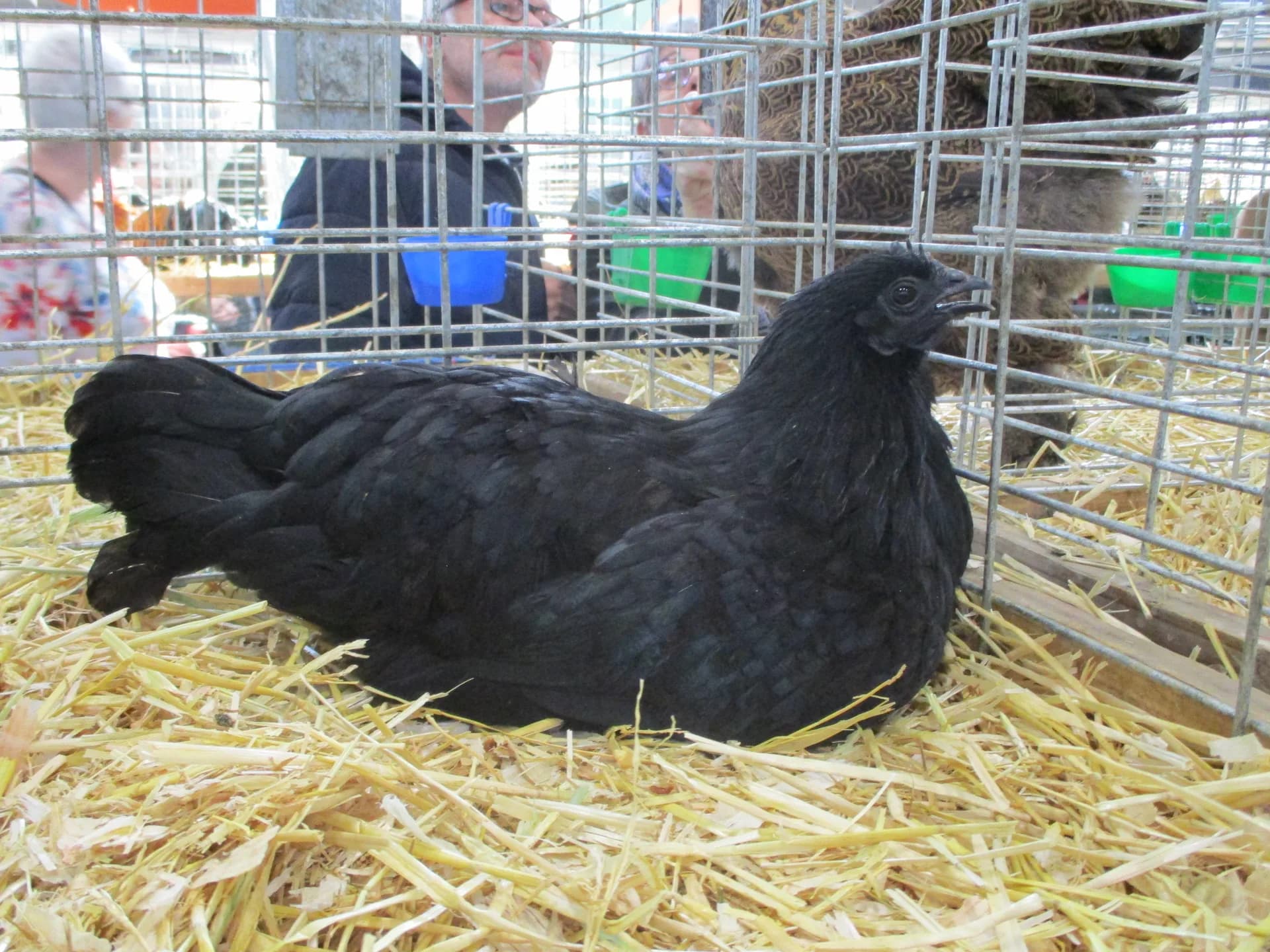
Zombie Chicken: What It Is and Where It Comes From
The zombie chicken is an Ayam Cemani x White Leghorn hybrid with a dark face and pale feathers. What it is, how it lays, and where to find one.
Researched from university extension, USDA, and veterinary sources. How we research.
You scroll past a hatchery listing and stop cold. A white hen stares back with a face, beak, and legs the color of charcoal, like something stitched together for a horror movie. The name underneath says it all: zombie chicken. It looks unsettling, and that is exactly the point. But here is the part the spooky photos leave out: a zombie chicken is not undead, it is not a rare ancient breed, and it is not even a single, fixed bird. It is a modern hybrid with a clever marketing name and some genuinely interesting genetics behind it.
This guide explains what a zombie chicken actually is, where the look comes from, how the birds behave, how well they lay, and what to expect if you decide to add a few to your flock.
What You'll Learn
- •Zombie Chicken at a Glance
- •What Is a Zombie Chicken?
- •Where the "Zombie" Look Comes From
- •The Parent Stock: Ayam Cemani and White Leghorn
- •What a Zombie Chicken Looks Like
- •Temperament and Personality
- •Egg Laying: How Many and What Color
- •Hardiness, Health, and Care
- •Is a Zombie Chicken a Real Breed?
- •Zombie Chicken vs. Other Dark Birds
- •Where to Buy and What to Expect
- •Is a Zombie Chicken Right for You?
- •Frequently Asked Questions
Zombie Chicken at a Glance
| Trait | Detail |
|---|---|
| Type | F1 hybrid, not a recognized breed |
| Parent stock | Ayam Cemani rooster x White Leghorn hen |
| Look | Dark face, beak, comb, wattles, legs, and skin; pale feathers flecked with black or gray |
| Egg production | About 270 to 300 per year |
| Egg color and size | White to lightly tinted, medium to large |
| Temperament | Active, friendly, curious, strong foragers |
| Size | Hens around 4.5 lb, roosters around 6.5 lb |
| Broodiness | Rarely goes broody |
| Climate | Adapts to most climates |
| Where to buy | Specialty hatcheries (My Pet Chicken, Meyer, Cackle) |
What Is a Zombie Chicken?
A zombie chicken is a hybrid, a first-generation cross between two very different parents: an Ayam Cemani rooster, the famous all-black chicken from Indonesia, and a White Leghorn hen, the breed behind most of the white eggs in your grocery store. The result is a bird with the dark skin and features of the Cemani but the pale feathers and heavy egg output of the Leghorn.
"Zombie chicken" is a trade name, not a breed name. Several hatcheries sell birds under that label, and the marketing leans hard into the eerie contrast between a ghostly white body and a face that looks like it belongs on something out of a graveyard. The birds are real and the cross is real, but the name is a sales hook, the same way "Easter Egger" describes a type of bird rather than a standardized breed. If you want the closest standardized comparison, see our guide to the Easter Egger, another popular hybrid sold under a catchy name rather than a formal breed standard.
Because it is a hybrid, the zombie chicken does not have an official breed standard, a fixed appearance, or recognition from poultry organizations. What you get depends a lot on which hatchery produced the bird and exactly how the cross was made. More on that below.
Where the "Zombie" Look Comes From
The dark, undead appearance is not paint, dye, or disease. It comes from a genetic trait called fibromelanosis, sometimes shortened to "fibro."
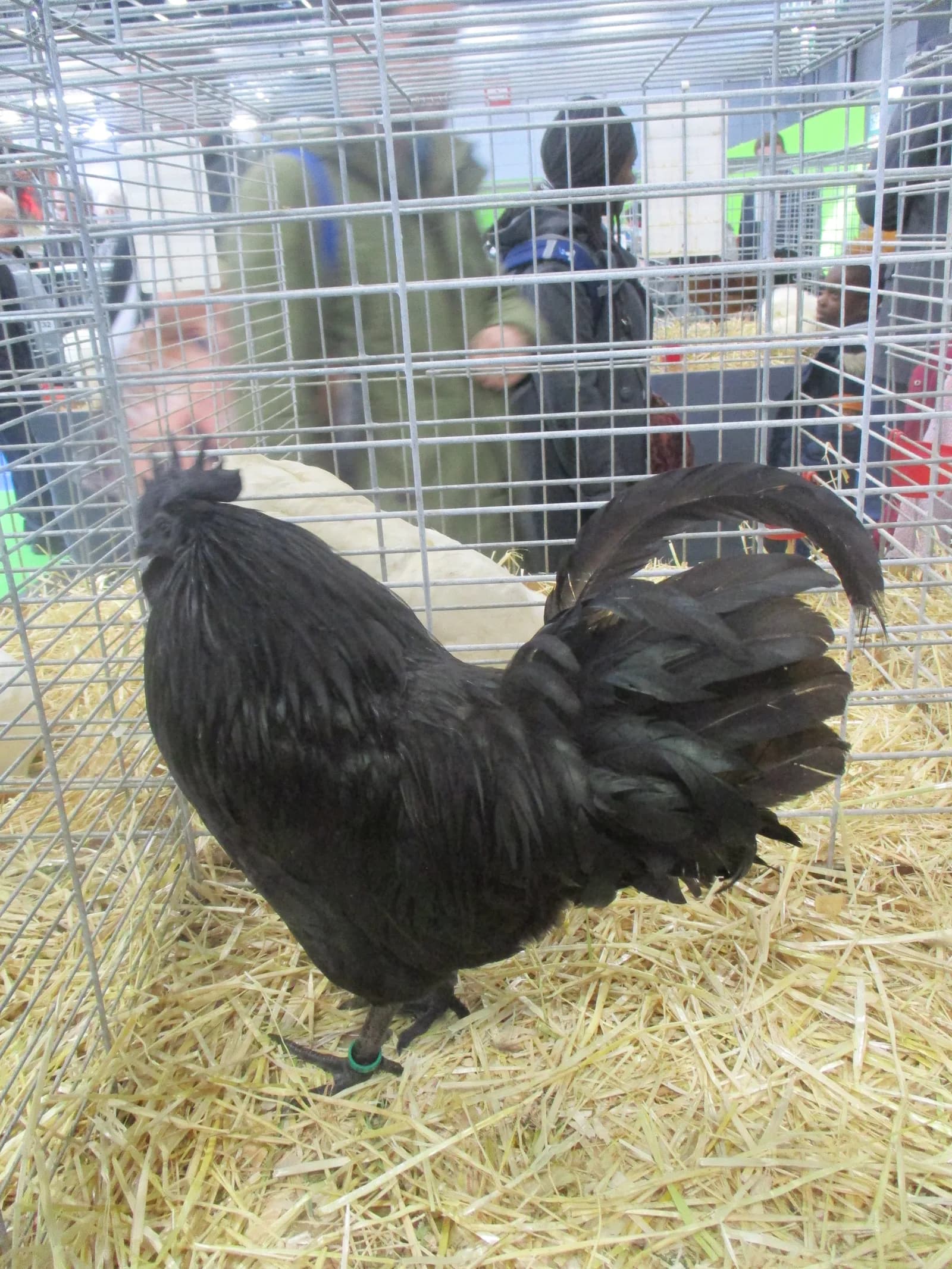
Fibromelanosis is a mutation that causes a bird to produce far more of the dark pigment melanin than a normal chicken does, and to deposit it where you would never normally see it. In a fully fibro bird like the Ayam Cemani, the skin, comb, wattles, beak, legs, and even the connective tissue, muscle, and bones carry a black or blue-black tint. The blood is still red and the bird is perfectly healthy, but visually the effect is dramatic.
When breeders cross a fibro rooster with a non-fibro hen, the chicks inherit one copy of the trait. Fibromelanosis shows up even with a single copy, so the offspring still develop dark skin and dark facial features. At the same time, the White Leghorn passes on dominant white feathering, which masks most of the dark feather color and leaves the bird mostly pale. Put those two inheritances together and you get the signature zombie look: a white or near-white bird wearing a charcoal mask, with dark legs and a dark comb.
That mix of genes is also why no two zombie chickens look exactly alike. Feather color can range from clean white to white heavily speckled with black or gray, and the depth of the dark pigment on the face and legs varies from bird to bird. The genetics are doing something a little different in every chick.
The Parent Stock: Ayam Cemani and White Leghorn
To understand a zombie chicken, it helps to know the two birds behind it.
Ayam Cemani. This is the all-black chicken from the island of Java in Indonesia, and it is the most extreme fibromelanosis breed in the world. A true Cemani is black from beak to toes, inside and out, and it carries a reputation for being rare and expensive. Cemani are alert, active, and reasonably friendly, but they are modest layers, producing only a small number of cream-tinted eggs and often pausing for long stretches. The Cemani contributes the dark pigment and the exotic look to the cross.
White Leghorn. The Leghorn is the workhorse of the egg industry, a lightweight Mediterranean breed prized for laying 280 or more large white eggs a year on very little feed. Leghorns are energetic, flighty, and famously efficient. They rarely go broody, which suits commercial production. The Leghorn contributes the heavy laying, the hardiness, and the white feathering that turns an all-black cross into a mostly white bird. Our Leghorn breed guide covers that parent in full.
Breeders almost always use a Cemani rooster over Leghorn hens rather than the reverse, partly because Cemani roosters are easier to come by than large numbers of Cemani hens, and partly because it is an efficient way to stamp the fibro look onto a productive laying line. The result keeps the best of both: the Cemani's striking color and the Leghorn's egg basket.
What a Zombie Chicken Looks Like
The classic zombie chicken is a medium-sized bird with pale plumage and dark hardware. Expect to see:
- •A dark face and head. The comb, wattles, beak, and the skin around the eyes range from slate gray to near black.
- •Pale, speckled feathers. Most birds are white or off-white, frequently marked with irregular black or gray spots and patches rather than a solid clean white.
- •Dark legs and feet. The shanks and toes carry the same charcoal pigment as the face.
- •Dark skin under the feathers. Part the plumage and the skin reads gray to black, a clear sign of the fibro gene at work.
Size is moderate. Hens run around 4.5 pounds and roosters around 6.5 pounds, in line with the lightweight Leghorn side of the family. These are not big dual-purpose birds; they are built more like layers.
Appearance does vary by source. Some hatcheries select for the nearly white body with a dark mask, which gives the cleanest "zombie" contrast. Others, such as Cackle Hatchery's "Crazy Cackle Zombie Chicken," run a different fibro project that produces birds which are largely black rather than white, with unpredictable combs, irregular feathering, and even varying numbers of toes. No two of those look identical. If a specific look matters to you, ask the hatchery exactly what their cross produces before you order.
Temperament and Personality
For a bird with such a menacing name, the zombie chicken is a friendly, easygoing flock member. Most keepers describe them as docile, curious, and people-oriented. They enjoy following you around the run, investigating anything new, and mingling with the rest of the flock rather than hanging off by themselves.
They do carry the Leghorn's active streak. Expect birds that forage hard, cover a lot of ground, and stay busy. That energy makes them excellent free-range foragers but also means they appreciate space. They are not a slow, lap-sitting breed like a fluffy Silkie, though they tame down nicely with regular handling.
Roosters from the cross are generally reported as even-tempered. As with any breed, individual personality varies, and a rooster's manners depend a great deal on how he is raised and handled. Because the birds mix well with others, they slot into a mixed-breed flock without much fuss. If you are planning a flock with several breeds together, our guide on whether you can mix chicken breeds walks through how to do it smoothly.
Egg Laying: How Many and What Color
This is where the Leghorn side earns its keep. Zombie chickens are strong layers, producing roughly 270 to 300 eggs per year, which works out to about five or six eggs per week from a hen in her prime. The eggs are medium to large and range from white to lightly tinted.
That puts a zombie chicken right near the top tier of backyard layers, well above the Ayam Cemani parent and competitive with dedicated production breeds. If steady egg output is high on your list, these birds deliver far more than their novelty looks would suggest. For comparison across the field, see our roundup of the best egg-laying breeds.
A few practical notes on laying:
- •Early start. Like Leghorns, these hybrids tend to begin laying on the earlier side, often around five to six months of age.
- •Rarely broody. They almost never go broody, so they will keep laying rather than stopping to sit on eggs. That is great for egg production but means they will not hatch a clutch for you.
- •Feed quality matters. Heavy layers need a complete layer ration with enough calcium for strong shells. Our feeding guide covers what to put in the feeder to keep production steady.
Hardiness, Health, and Care
Zombie chickens are hardy, low-fuss birds. The hybrid vigor that comes from crossing two unrelated lines tends to produce healthy, resilient chicks, and keepers report birds that adapt well to both hot and cold climates. They carry no special health problems tied to the fibro gene; the dark pigment is cosmetic and does not affect the bird's wellbeing.
Care is the same as for any active laying breed:
- •Housing. Give them secure, well-ventilated shelter and room to move. As lighter, more flighty birds, they can fly better than heavy breeds, so a covered run or adequate fencing keeps them home and safe.
- •Cold weather. The dark comb and wattles are still subject to frostbite in hard winters, same as any single-combed bird. Keep the coop dry and draft-free. Our winter care guide explains how to manage cold without overheating the coop.
- •Predator protection. Active foragers spend a lot of time on the move, which is good for pest control but exposes them to hawks and ground predators. See protecting your flock from predators.
- •Raising chicks. If you buy day-old chicks, you will need a brooder setup with a heat source, clean bedding, and chick starter. Our brooder setup guide and week-by-week chick guide walk through the first weeks.
In short, if you can keep a Leghorn happy, you can keep a zombie chicken happy.
Is a Zombie Chicken a Real Breed?
Not in the formal sense. A zombie chicken is a hybrid, and it is not recognized by the American Poultry Association or any other standards body. There is no breed club, no show standard, and no official description that every zombie chicken must match.
The most important practical consequence of that is this: zombie chickens do not breed true. Because they are a first-generation (F1) cross, mating two zombie chickens together will not reliably produce more zombie chickens. The genes for fibromelanosis and dominant white feathering reshuffle in the next generation, so the chicks come out as an unpredictable mix, some dark, some light, some neither. If you want consistent zombie chickens, you have to keep going back to the original cross of a Cemani rooster over Leghorn hens.
This is normal for hybrids. The same is true of Olive Eggers and most other "designer" backyard birds. It is not a flaw, just something to understand before you plan any breeding. If your goal is a flock of birds whose offspring look like the parents, choose a standardized heritage breed instead. Our best breeds for beginners guide leans toward dependable, true-breeding options.
Zombie Chicken vs. Other Dark Birds
The zombie chicken is one of several birds people search for when they want something dark and dramatic. Here is how it compares.
| Bird | What it is | Feathers | Egg laying |
|---|---|---|---|
| Zombie chicken | Ayam Cemani x White Leghorn hybrid | Pale, often speckled, dark face and legs | High, about 270 to 300 per year |
| Ayam Cemani | Standardized Indonesian fibro breed | All black, inside and out | Low, a handful per month |
| Svart Hona | Swedish all-black fibro breed | All black | Low to moderate |
| Kadaknath | Indian all-black fibro breed | Mostly black | Low to moderate |
| Black Silkie | Fibro bantam with fluffy plumage | Soft, black, fur-like | Low, frequently broody |
The thing that sets the zombie chicken apart is the combination you cannot get from the purebred fibro breeds: a striking dark-skinned bird that also fills the egg basket. The all-black heritage breeds look incredible but lay sparingly. The zombie chicken trades the all-over black for a productive layer with a memorable face. For most backyard keepers, that is a better everyday trade.
Where to Buy and What to Expect
Zombie chickens are sold by specialty hatcheries rather than feed stores. My Pet Chicken, Meyer Hatchery, and Cackle Hatchery have all offered them, usually as day-old chicks ordered in spring and shipped to your door. Because the cross relies on Ayam Cemani stock, which is not cheap, expect to pay more per chick than you would for a standard production breed, though far less than a purebred Cemani.
A few things to keep in mind when ordering:
- •Confirm the cross. Ask whether the hatchery's "zombie chicken" is the white-bodied Cemani x Leghorn type or a different fibro project like Cackle's mostly black "Crazy Cackle" version. They look very different.
- •Expect variation. Even within one hatchery's line, chicks will vary in feather color and the depth of dark pigment. That is the nature of the cross.
- •Sexing. If you live somewhere with rooster restrictions, check whether the hatchery offers sexed pullets. Hybrid crosses are sometimes sold straight run, meaning you may get roosters. Check your local rules first; our backyard chicken laws overview is a good starting point.
- •Minimums and shipping. Chicks ship best in groups for warmth, so most hatcheries set a minimum order. Order early, since novelty birds sell out fast.
If you are brand new to ordering and raising chicks, read our beginner's guide to raising backyard chickens before you place an order so the brooder is ready when the box arrives.
Is a Zombie Chicken Right for You?
A zombie chicken is a great pick if you want a conversation-starter bird that still earns its place in the flock. You get the eerie, head-turning looks of an exotic fibro breed paired with the practical egg output of a Leghorn, all in a friendly, hardy, low-maintenance package. For keepers who love a flock with personality and variety, they are hard to beat.
They are a weaker fit if you want to breed birds that look like their parents, if you are after a calm lap chicken, or if you prefer the all-over black drama of a true Ayam Cemani. In those cases a standardized breed will serve you better.
For most backyard flocks, though, a couple of zombie chickens add color, character, and a steady supply of eggs, with none of the fragility the spooky name might suggest. They are proof that the strangest-looking bird in the run can also be one of the most useful.
Frequently Asked Questions
What is a zombie chicken?
A zombie chicken is a hybrid bird, a first-generation cross between an Ayam Cemani rooster and a White Leghorn hen. It inherits the Cemani's dark, fibromelanosis-driven skin and facial features along with the Leghorn's pale feathers and heavy egg laying. The name is a hatchery trade name, not an official breed.
Why does a zombie chicken look the way it does?
The dark face, legs, and skin come from a genetic trait called fibromelanosis, which causes the bird to deposit extra dark pigment in its skin and tissues. The White Leghorn parent adds dominant white feathering. Together they create a mostly pale bird with a charcoal mask and dark legs, the look that earned the "zombie" name.
Are zombie chickens a real breed?
No. Zombie chickens are hybrids and are not recognized by the American Poultry Association or any standards body. There is no official breed standard, so appearance varies, and the birds do not breed true. To produce more, breeders repeat the original Ayam Cemani over Leghorn cross.
How many eggs do zombie chickens lay?
Quite a lot. Thanks to their Leghorn parentage, zombie chickens typically lay about 270 to 300 eggs per year, roughly five or six per week, in medium to large sizes. The eggs are white to lightly tinted. That makes them strong layers despite their novelty looks.
Are zombie chickens friendly?
Yes. Most keepers describe them as docile, curious, and people-oriented, happy to follow you around and mingle with the flock. They are active foragers with a Leghorn-style energy, so they like space, but they tame down well with regular handling.
Is the black meat of a zombie chicken safe to eat?
The dark pigment from fibromelanosis is just melanin and is harmless. Purebred Ayam Cemani are known for black meat and bones. A zombie chicken, being part Leghorn, carries the trait in a milder form. These birds are kept primarily as layers and pets, but where the dark coloring appears it poses no safety concern.
Do zombie chickens breed true?
No. Because they are a first-generation hybrid, breeding two zombie chickens together produces an unpredictable mix of chicks rather than copies of the parents. The fibromelanosis and white feathering genes reshuffle each generation. Consistent zombie chickens come only from repeating the original Cemani x Leghorn cross.
Where can I buy a zombie chicken?
Specialty hatcheries such as My Pet Chicken, Meyer Hatchery, and Cackle Hatchery have offered zombie chickens as day-old chicks, usually in spring. Expect to pay more than for a standard breed, confirm exactly which cross the hatchery sells, and order early because novelty birds sell out quickly.
A zombie chicken is one of those birds that looks like a trick and turns out to be a treat: an exotic-looking layer that combines the drama of the Ayam Cemani with the everyday usefulness of a Leghorn. Understand that it is a hybrid rather than a fixed breed, set your expectations for some natural variation, and you will have a hardy, friendly, productive bird that draws a double-take from every visitor. If you are still deciding what to put in your coop, our best chicken breeds for beginners guide can help you build a flock with the right mix of looks and laying.
Sources:
- •Dorshorst, B., et al. "A Complex Genomic Rearrangement Involving the Endothelin 3 Locus Causes Dermal Hyperpigmentation in the Chicken." PLoS Genetics, 2011. https://journals.plos.org/plosgenetics/
- •The Livestock Conservancy. Chicken breed information and conservation. https://livestockconservancy.org/
- •Oklahoma State University Department of Animal and Food Sciences. Breeds of Livestock, poultry breeds. https://breeds.okstate.edu/poultry/
- •University of Kentucky Cooperative Extension. Small and backyard poultry resources. https://afs.ca.uky.edu/poultry
Related Guides
Cuckoo Marans: Complete Breed Guide
Cuckoo Marans lay dark brown eggs and are the easiest Marans to find and sex. Guide to egg color, barred looks, temperament, care, and Cuckoo vs Black Copper.
BreedsAraucana Chicken Breed Guide: Blue Eggs, Tufts, Care
Araucana chicken breed guide: rumpless bodies, ear tufts, true blue eggs, the lethal tuft gene, care, and how they differ from Ameraucanas.
BreedsCrested Chicken Breeds: Types, Care, and Crest Facts
Crested chicken breeds like Polish and Silkie wear feathery pom-poms. Learn the types, why they grow crests, and how to keep them healthy.
BreedsAyam Cemani Breed Guide: The All-Black Chicken (2026)
Ayam Cemani explained: the Indonesian breed that is black to the bone, the gene behind it, cream eggs, weights, temperament, prices, and what is myth.