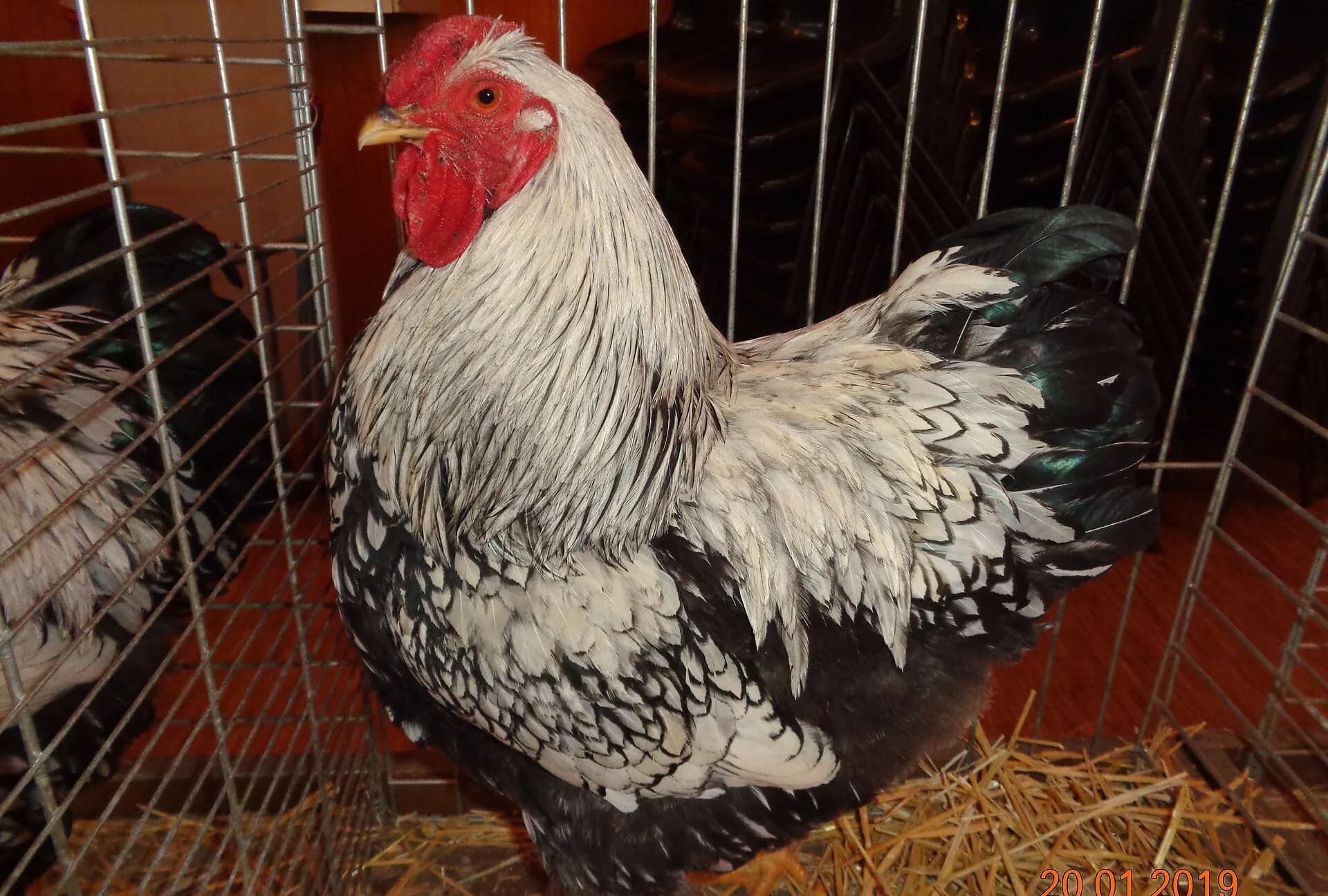
Breeding Wyandotte Chickens: A Complete Guide
How to breed Wyandotte chickens: picking breeder stock, lacing genetics, pen setup, hatching eggs, and raising quality silver, gold, and blue laced chicks.
Researched from university extension, USDA, and veterinary sources. How we research.
Breeding Wyandotte chickens is where keeping this breed gets genuinely fun. You start with a round, cold-hardy farm hen that most people buy just to fill a coop, and you turn it into a project: sharper lacing, better shape, birds that actually look like the picture in the standard instead of a muddy hatchery approximation. The good news is that Wyandottes are forgiving to breed. They are hardy, they hatch well, and the hens make decent mothers. The catch is that their signature laced feathers are one of the harder color patterns to keep crisp, so a little planning goes a long way. Here is how to do it right, from picking your first breeders to grading the chicks in the fall.
Breeding Wyandottes at a Glance
| Breeding question | Short answer |
|---|---|
| Best breeding ratio | 1 rooster to 5 to 8 hens (large fowl) |
| Best breeding age | Second-year hens give the best fertility and vigor |
| Eggs turn fertile | About 2 to 3 days after the rooster is penned |
| Store hatching eggs | Pointy end down, 55 to 65°F, up to 7 days |
| Incubation | 21 days at 99.5°F, 45 to 55% humidity |
| Select for, in order | Body type, then rose comb, then lacing |
| Silver vs gold | One sex-linked gene (Silver is dominant) |
| Blue laced ratio | Blue x blue gives 1 splash: 2 blue: 1 black laced |
What You'll Learn
- •Why Breed Wyandottes on Purpose
- •Start With the Right Stock
- •Type First, Then Color
- •The Genetics of Wyandotte Lacing
- •Silver, Gold, and the Sex-Linked Color Trick
- •Breeding Blue Laced Red Wyandottes
- •Setting Up the Breeding Pen
- •Choosing Your Breeders and What to Cull
- •Collecting and Storing Hatching Eggs
- •Incubating, Hatching, and Raising the Chicks
- •Line Breeding Without Wrecking Your Flock
- •A Simple Breeding-Season Calendar
- •Common Wyandotte Breeding Mistakes
- •Frequently Asked Questions
Why Breed Wyandottes on Purpose
Anyone can put a rooster with some hens and get chicks. Breeding is different. It means you have a goal, and every bird you keep or pass on moves you toward that goal or away from it.
Most backyard keepers breed Wyandottes for one of three reasons. The first is preservation: keeping the breed true to type so the round, dual-purpose farm hen that people fell for in the 1880s still exists in fifty years. The second is improvement: taking your own flock and tightening the shape, the lacing, and the comb over a few generations. The third is simple utility: hatching replacement layers from your best hens instead of buying chicks every spring, which pays for itself fast once you have a rooster you like.
Whatever your reason, the Wyandotte rewards the effort because it starts from a strong base. It is cold-hardy, calm, lays 180 to 220 light brown eggs a year, and comes in enough color varieties to keep the hobby interesting. If you are still deciding whether this is your breed, the Wyandotte breed guide covers temperament, egg output, and care in depth. This guide assumes you are already sold and want to make more of them, well.
Start With the Right Stock
The single biggest decision you will make happens before you hatch a single egg: where your breeders come from. You cannot select your way out of bad genetics, and no amount of good feed fixes a bird that was never bred toward the standard.
There are two broad sources, and they serve different goals.
Hatchery stock is what you get from the big mail-order companies. These birds are healthy, vigorous, and cheap, and they lay well. What they usually are not is show-correct. Decades of breeding for volume and layability have softened the type. Hatchery Silver and Golden Laced Wyandottes often carry smudgy lacing, combs that are too tall or spike upward, and bodies that are longer and flatter than the round Wyandotte ideal. If your goal is farm layers, hatchery stock is fine and you can still improve it over generations. If your goal is exhibition, you will spend years just undoing what hatchery breeding built in.
Breeder stock comes from someone who exhibits or works to the standard. These birds cost more, often 20 to 60 dollars a chick or considerably more for proven adults, and you usually have to get on a waiting list. In return you get correct type, tighter lacing, and a starting point that is already most of the way to where you want to be. Look for breeders through the Wyandotte Breeders of America, local poultry clubs, and APA-sanctioned shows.
The practical middle path most people take: buy the best breeder stock you can afford for the traits that are hardest to fix (type and comb), and improve the rest through selection. One good breeder-quality rooster over a pen of decent hens will lift a whole flock in a single generation.
Type First, Then Color
Here is the rule every serious poultry breeder repeats, and beginners ignore at their peril: breed for type first, color second.
Type means the body shape. The Wyandotte is defined as a bird made of curves, a series of smooth arcs with no sharp angles, deep and round through the body, with a short back and a well-rounded breast. When people say a bird "has type," they mean it reads as unmistakably Wyandotte in silhouette from across the yard. Color is the paint job on top of that frame.
Why does the order matter? Because type is polygenic, slow to fix, and easy to lose, while color problems can often be cleaned up in a generation or two once the shape is right. If you chase gorgeous lacing on birds with poor bodies, you end up with pretty feathers on the wrong chicken and no easy way back. If you fix the frame first, you can always improve the lacing on a good body later.
So when you pick up a candidate breeder, judge it in this order:
- •Body type and size. Round, deep, short-backed, correct weight for the variety. Hens run 6 to 6.5 pounds, roosters 8.5 to 9 pounds.
- •Rose comb. Low, firm, following the head, ending in a spike that curves down to follow the neckline, not upward.
- •Color and lacing. Even ground color, black lacing that fully rings each feather without breaking up or bleeding through the center.
Get those first two right across your flock and the color work becomes a pleasure instead of a fight.
The Genetics of Wyandotte Lacing
Laced feathers are the reason people fall for Wyandottes, and they are also the reason breeding them well takes patience. Single lacing (one clean black ring around each feather) is not made by a single "lacing gene." It is a cooperative act by several genes that have to line up, which is exactly why it drifts out of tune so easily.
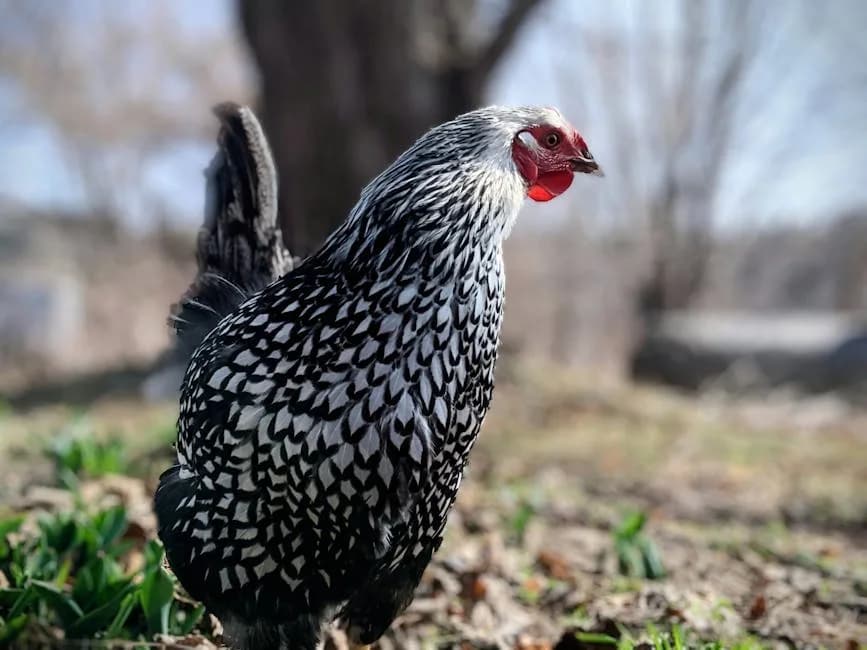
At a practical level, the pattern depends on three things working together on the right base color: a pattern gene that pushes black pigment to the edge of the feather, a melanizing factor that supplies enough black to draw the ring, and a restrictor that keeps the black from flooding the center. Get the balance right and you get a crisp ring on a clean ground. Tip the balance one way and the lacing gets thin, broken, or disappears at the feather tip. Tip it the other way and black bleeds into the center, giving you smudgy or double-laced-looking feathers.
You do not need to memorize gene symbols to breed good Wyandottes, but you do need to accept two things this genetics implies:
- •Lacing degrades faster than it improves. Because so many factors have to stay balanced, careless breeding pulls the pattern apart quickly. Every generation, cull the birds with the worst lacing before they breed.
- •Pullets and cockerels often show the pattern differently. The same genetic setup can produce show-correct hens and slightly off males, or vice versa. Serious exhibitors sometimes keep two separate lines, a "pullet line" and a "cockerel line," a practice called double mating, to get top birds of both sexes. Most backyard breeders do not need to go that far. Single mating from well-laced parents keeps a farm flock looking sharp for years.
If you want to compare how the pattern reads across varieties, the Silver Laced and Golden Laced guides show the same lacing on different ground colors.
Silver, Gold, and the Sex-Linked Color Trick
The difference between a Silver Laced and a Golden Laced Wyandotte comes down to one gene: the base color is either silver (a white ground) or gold (a warm bay ground). Silver is dominant over gold, and here is the useful part, it is sex-linked, carried on the male sex chromosome.
That single fact gives breeders a neat tool. Because of how sex-linkage works in chickens, the two crosses do not behave the same:
- •Golden Laced rooster over Silver Laced hens produces chicks you can often sex at hatch by down color. The pullets come out gold-toned and the cockerels come out silver-toned. This is the same principle hatcheries use to make sex-link layers.
- •Silver Laced rooster over Golden Laced hens does the opposite: all the chicks look silver, but the males secretly carry gold and will pass it on.
Two cautions. First, mixing silver and gold lines muddies the ground color, so if you care about clean exhibition color, keep your silver and gold flocks separate and breed like to like. The sex-link cross is a production trick, not a way to improve either variety. Second, down-color sexing is a helpful clue, not a guarantee, so confirm sex as the birds feather out rather than betting the farm on hatch-day guesses.
For a pure breeding program, the simple version is: silver to silver, gold to gold, and select for even ground color and clean lacing in both.
Breeding Blue Laced Red Wyandottes
The Blue Laced Red Wyandotte is the variety that trips people up, and it is worth its own section because the color does not breed true. The bird has a rich red-mahogany body with blue lacing instead of black, and that blue comes from a single incompletely dominant gene. Incompletely dominant means one copy gives you blue, but the gene does not hide its alternatives, so a blue-to-blue mating splits three ways.
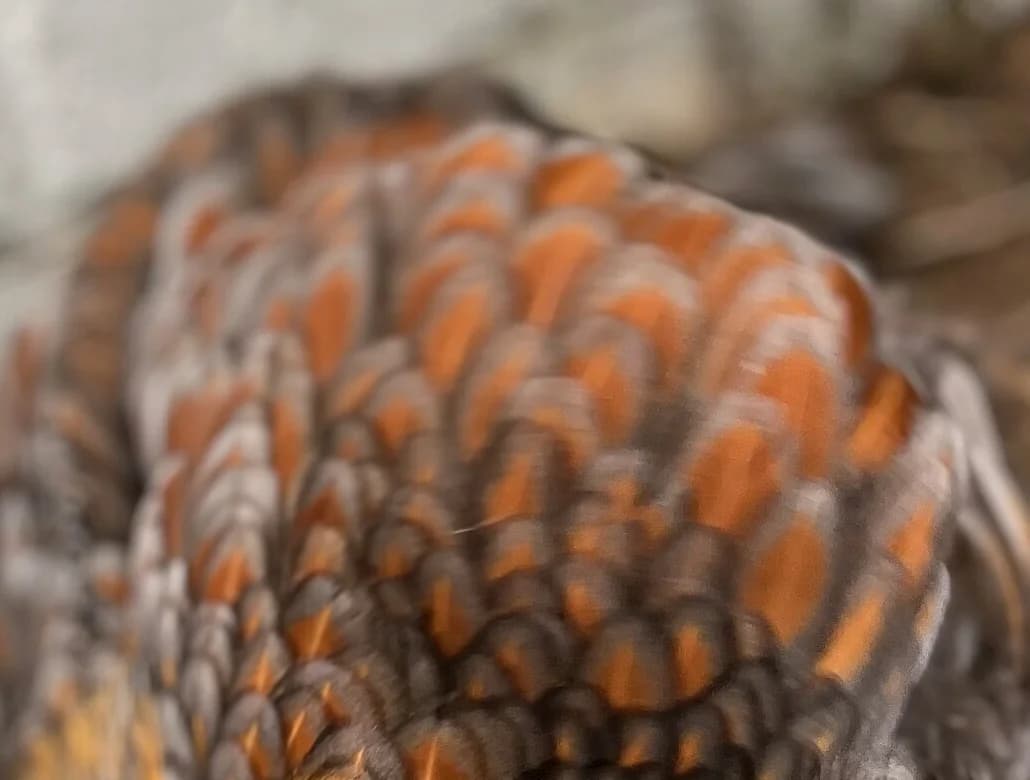
Breed a Blue Laced Red to another Blue Laced Red and, on average, you get:
| Offspring | Share | What it looks like |
|---|---|---|
| Blue laced red | About 50% | The classic soft blue lacing |
| Splash laced red | About 25% | Pale, washed-out lacing (often sold as "splash") |
| Black laced red | About 25% | Black lacing instead of blue (sometimes called "gold laced red") |
So even in a perfect blue-to-blue pen, only half the chicks come out blue laced. That surprises a lot of first-time buyers who assumed every chick would match the parents.
There is a shortcut worth knowing. Because black-laced (no blue gene) crossed with splash-laced (two blue genes) gives 100% blue-laced chicks, some breeders keep a splash rooster and black-laced hens, or the reverse, specifically to hatch a full pen of blue-laced birds. If you want to breed this variety seriously, the Blue Laced Red Wyandotte guide walks through the varieties and what to expect from each pairing.
Setting Up the Breeding Pen
Once you know what you are breeding toward, you need a way to control who mates with whom. A breeding pen is just a group you have chosen on purpose, separated from the rest of the flock so you know the parentage of every egg.
Ratio. For large fowl Wyandottes, one rooster to five to eight hens gives good fertility without the rooster wearing the hens out. Wyandotte bantams tolerate a slightly tighter ratio. If you run too many hens per rooster, fertility on the far edges of the flock drops. Run too few and favorite hens get over-mated, losing back and neck feathers.
Pen size and lead time. Give the group space and set the pen up two to three weeks before you plan to save eggs. It takes only about two to three days for a hen's eggs to turn fertile after the rooster is introduced, but you want the group settled, the pecking order sorted, and the rooster confident before you start collecting. If a hen was recently with a different rooster, wait a full three weeks to be sure the previous male's sperm has cleared before you trust the parentage.
Condition the birds. Breeders lay and fertilize best when they are in good flesh but not fat, with a quality feed and extra protein in late winter as you ramp up. A breeder ration or a layer feed bumped with a little more protein works well. Add oyster shell free-choice so hens have the calcium for strong shells.
Rose comb and fertility. One quirk specific to rose-combed breeds like the Wyandotte: roosters that carry two copies of the rose comb gene have historically shown reduced sperm motility and slightly lower fertility than single-copy or single-combed males. It is not a dealbreaker, plenty of pure rose-combed flocks reproduce fine, but if fertility in a pen is stubbornly low despite everything else being right, an old rooster with tired sperm and this genetic factor stacking together can be the reason. Using a young, vigorous male usually solves it. Our rooster care guide covers keeping a breeding male in shape.
If you are still weighing whether you even want a rooster on the property, do you need a rooster lays out the trade-offs. For breeding, the answer is simply yes.
Choosing Your Breeders and What to Cull
Selection is the whole game. Every bird you allow to breed passes its faults along, so the fastest way to improve a flock is to be strict about who gets to reproduce.
Walk your grow-outs and adults with the standard in mind and set aside anything with a disqualifying or serious fault. Common Wyandotte faults to breed away from:
- •Comb faults: a comb that is too high, hollow in the center, spikes upward instead of following the neck, or has side sprigs.
- •Wrong type: a long, flat back, a pinched or shallow body, anything that reads narrow instead of round.
- •Lacing faults: broken, incomplete, or absent lacing, black bleeding into the feather center, uneven ground color, or heavy shafting (a pale stripe down the feather quill).
- •Structural defects: crooked toes, wry tail, split wing, cow hocks, or a crooked breastbone. These are not just cosmetic, they hurt the bird's welfare and its offspring's.
- •Poor vigor: slow growers, birds that are always the last to feather or the first to get sick. Vigor is heritable and worth protecting.
Be honest and be ruthless. In a serious improvement program you might keep only one in five or one in ten birds as breeders. The culls are not wasted: extra cockerels are exactly what makes the Wyandotte a dual-purpose breed, and they fill the freezer. If you would rather not process them yourself, they sell easily as started birds.
One thing to weigh as you select is age. Hens often lay their largest, most fertile, best-hatching eggs in their second year, and a proven older hen with known genetics is worth more in the breeding pen than an untested pullet. Roosters, on the other hand, are usually most fertile young. A common setup pairs a vigorous cockerel with a pen of proven second-year hens.
Collecting and Storing Hatching Eggs
You have the pen set and the birds chosen. Now the eggs need care before they ever reach an incubator, because how you handle them in the first week decides how many hatch.
Work through these habits and hatch rates climb:
- •Collect often. Gather eggs two or three times a day so they do not sit in the nest getting chilled, overheated, or dirty.
- •Choose clean, well-shaped eggs. Set only clean eggs of normal size and shape. Skip anything cracked, thin-shelled, oddly shaped, or extra large. Do not wash hatching eggs, washing removes the protective bloom and pushes bacteria through the shell. Brush off light dirt dry.
- •Store cool and pointy end down. Keep eggs at 55 to 65°F in a spot around 70 to 75% humidity, small end down, tilted or turned once a day so the yolk stays centered. A carton propped at an angle and flipped morning and night works fine.
- •Set them fresh. Fertility and hatchability are best in the first 3 to 5 days and drop off after about 7. A week is a good outside limit for strong hatches. Older eggs still hatch, just at lower rates.
- •Warm before setting. Let cool-stored eggs come up to room temperature for a few hours before you put them in the incubator, which reduces condensation and shocks.
If you see recurring shell or size problems in your hatching eggs, the egg problems troubleshooting guide helps track down the cause before it costs you a hatch.
Incubating, Hatching, and Raising the Chicks
Wyandotte eggs incubate like any standard chicken egg: 21 days, a steady 99.5°F in a forced-air incubator, humidity around 45 to 55% for the first 18 days, then raised to 65 to 75% for the final three days of lockdown. Turn the eggs at least three times a day (an automatic turner earns its keep) until lockdown, then stop turning and leave the incubator shut so the chicks can position and pip.
You have two ways to hatch, and both work with this breed:
- •Incubator. Gives you control, lets you hatch many eggs at once, and keeps parentage tidy. If you are buying a machine, our roundup of the best chicken egg incubators covers reliable models. The full process, step by step, is in how to hatch chicken eggs.
- •Broody hen. Wyandottes go broody at a moderate rate, and a good broody hen will hatch and raise a clutch with almost no work from you. The trade-off is you hatch fewer eggs and you are at the mercy of the hen's timing. The broody hen guide explains how to manage one.
Candling around day 7 to 10 lets you pull the clear (infertile) eggs and any that quit, so you are not incubating duds. How to candle eggs shows what to look for.
Once they hatch, Wyandotte chicks brood like any other: 90 to 95°F under the heat source for the first week, dropped about five degrees a week until they are feathered and off heat. Get the brooder set up before hatch day using the chicken brooder setup guide, and follow their growth with the week-by-week chick guide.
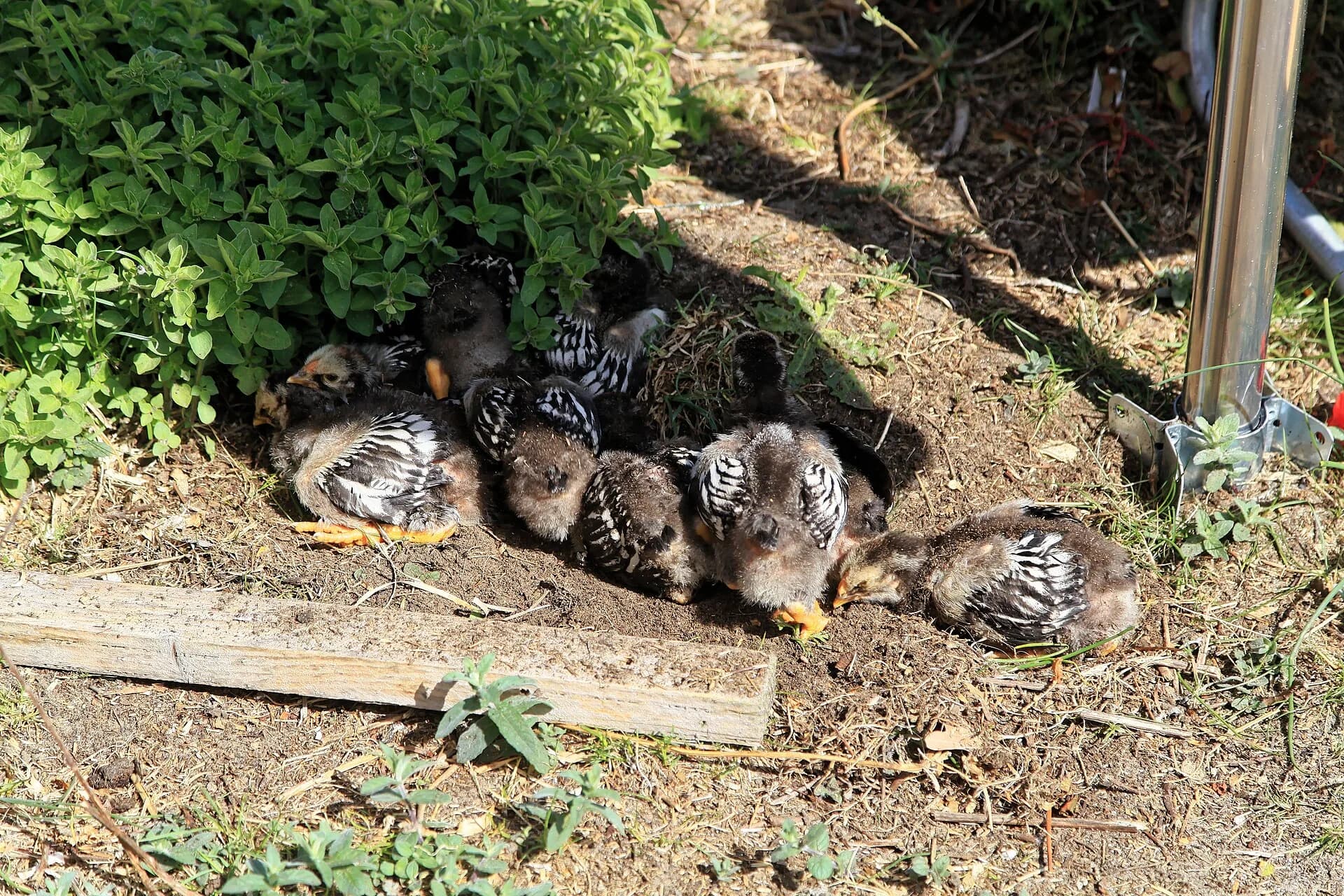
A quiet advantage of laced Wyandottes: chick down often hints at future feather quality. Chicks with clean, well-defined chipmunk-style down markings frequently grow into the better-laced adults, though you should always make the real cut when they feather out at 12 to 20 weeks and the adult pattern shows.
Line Breeding Without Wrecking Your Flock
To hold on to the traits you worked for, you eventually breed related birds together. That is line breeding, and done well it fixes good traits in place. Done carelessly it becomes tight inbreeding, and you lose vigor: smaller birds, weaker hatches, more defects. The goal is to keep the good genes concentrated while keeping enough variety that the flock stays healthy.
The simplest tool for a backyard flock is a rotational or clan system, sometimes called spiral mating. It works like this:
- •Split your breeders into at least three family lines, call them A, B, and C.
- •Each year, breed the hens of each line to a rooster from a different line: A hens to a B rooster, B hens to a C rooster, C hens to an A rooster.
- •Keep the best pullets in their mother's line and raise the next generation of roosters to rotate again.
This keeps the flock closed (no new birds coming in) and true to type, while spreading the mating out enough that you avoid the sharp decline that comes from breeding fathers to daughters year after year. Three lines is the minimum, four or five is safer, and it takes only a modest number of birds to run.
If your flock is small and vigor starts to slip (poor hatches, small size, defects creeping in) the fix is a careful outcross: bring in one good, unrelated bird of the same variety and type from a trusted breeder to refresh the gene pool, then fold its offspring back into your lines. One well-chosen outcross every several years keeps a closed flock healthy.
A Simple Breeding-Season Calendar
Wyandottes breed best in the natural window when days are lengthening. A rough calendar for the Northern Hemisphere:
| Time of year | What to do |
|---|---|
| Midwinter (Jan to Feb) | Choose and pen your breeders. Boost protein. Add light if you want earlier fertility. |
| Early spring (Feb to Mar) | Fertility comes up as days lengthen. Start saving hatching eggs after the pen has settled 2 to 3 weeks. |
| Spring (Mar to May) | Peak hatching season. Incubate or set broodies. Best hatch rates of the year. |
| Summer (Jun to Aug) | Grow out the chicks. Watch heat, since Wyandottes handle cold better than hot weather. |
| Late summer to fall (Aug to Oct) | Grade the grow-outs as they feather. Keep your best, move the rest along. |
| Late fall to early winter | Rest the breeders through molt. Plan next year's pens from what you learned. |
You can hatch outside this window with artificial lighting and a heated space, but spring hatches grow out in good weather and reach point of lay before the following winter, which is why most breeders build their year around it.
Common Wyandotte Breeding Mistakes
- •Chasing color before type. Pretty feathers on a poorly shaped bird is a dead end. Fix the frame first.
- •Breeding hatchery birds and expecting show quality. You can improve hatchery stock, but it takes generations. Start closer to your goal if you can.
- •Mixing silver and gold lines for looks. It muddies both ground colors. Keep varieties separate unless you are deliberately making sex-links.
- •Expecting Blue Laced Reds to breed true. Half your chicks from a blue pen will not be blue laced. Plan for splash and black laced in every hatch.
- •Never culling. A flock where every bird breeds drifts backward fast. Be strict about who reproduces.
- •Tight inbreeding with no plan. Breeding close relatives year after year without a rotation costs you vigor. Run at least three lines.
- •Washing hatching eggs. It strips the bloom and drives bacteria in. Set clean eggs and brush off the rest dry.
- •Setting stale eggs. After about a week, hatch rates fall. Collect often and set fresh.
Frequently Asked Questions
How many hens should I put with one Wyandotte rooster for breeding? For large fowl, one rooster to five to eight hens gives good fertility without over-mating the hens. Bantams tolerate a slightly tighter ratio. If you see bare-backed favorite hens, you have too few hens per rooster or a too-eager male.
How long after adding a rooster are the eggs fertile? About two to three days. To be certain of parentage after switching roosters, though, wait a full three weeks so any previous male's sperm has cleared before you save eggs.
Do Silver Laced and Golden Laced Wyandottes breed true? Yes, if you keep them separate. Silver to silver gives silver, gold to gold gives gold. The base color is a single sex-linked gene, so crossing the two muddies the ground color and is only useful for making sex-link chicks, not for improving either variety.
Why don't my Blue Laced Red Wyandottes all come out blue? Because blue comes from an incompletely dominant gene. A blue-to-blue mating averages 50% blue laced, 25% splash laced, and 25% black laced. To hatch a full pen of blue-laced chicks, cross a splash bird with a black-laced bird instead.
What is the most important thing to select for in Wyandotte breeders? Body type. The round, deep, short-backed Wyandotte shape is the hardest trait to fix and the easiest to lose. Select for type first, then the rose comb, then color and lacing.
Do Wyandotte hens go broody enough to hatch their own chicks? Some do. Wyandottes are moderately broody, so you will get the occasional reliable broody hen who will hatch and raise a clutch. For consistent numbers and controlled parentage, most breeders use an incubator.
At what age can I tell if a Wyandotte chick has good lacing? Down markings give an early hint, but you make the real decision when the adult feathers come in, roughly 12 to 20 weeks. Grade your keepers once the mature lacing pattern is visible.
Can I improve hatchery Wyandottes into show birds? Over time, yes, but it is slow. Hatchery stock is bred for laying, not type, so you will spend several generations correcting shape and comb. If exhibition is the goal, starting with breeder stock saves years.
Sources
- •The Livestock Conservancy, Wyandotte Chicken breed profile (breed history, type, and dual-purpose standards)
- •American Poultry Association, The American Standard of Perfection (official type and color standards for each Wyandotte variety)
- •Mississippi State University Extension, Incubating and Hatching Eggs (egg storage, incubation temperature, humidity, and turning)
- •F. B. Hutt, Genetics of the Fowl (McGraw-Hill) (sex-linked silver and gold inheritance and rose-comb fertility)
Related Guides
Wyandotte Breeders: How to Find & Buy Quality Birds
How to find a reputable Wyandotte breeder, what quality birds cost, which color varieties to ask for, and the questions to ask before you buy.
BreedsBlue Laced Red Wyandotte: Complete Breed Guide
Blue Laced Red Wyandotte guide: eggs, size, temperament, cold hardiness, the blue gene that splits chicks into blue, black, and splash, plus buying tips.
BreedsGolden Laced Wyandotte: Complete Breed Guide
Golden Laced Wyandotte guide: eggs, size, temperament, cold hardiness, gold lacing genetics, chick care, and hatchery vs show stock compared.
BreedsSilver Laced Wyandotte: Complete Breed Guide
Silver Laced Wyandotte guide: eggs, size, temperament, cold hardiness, lacing genetics, chick care, and hatchery vs show stock compared.