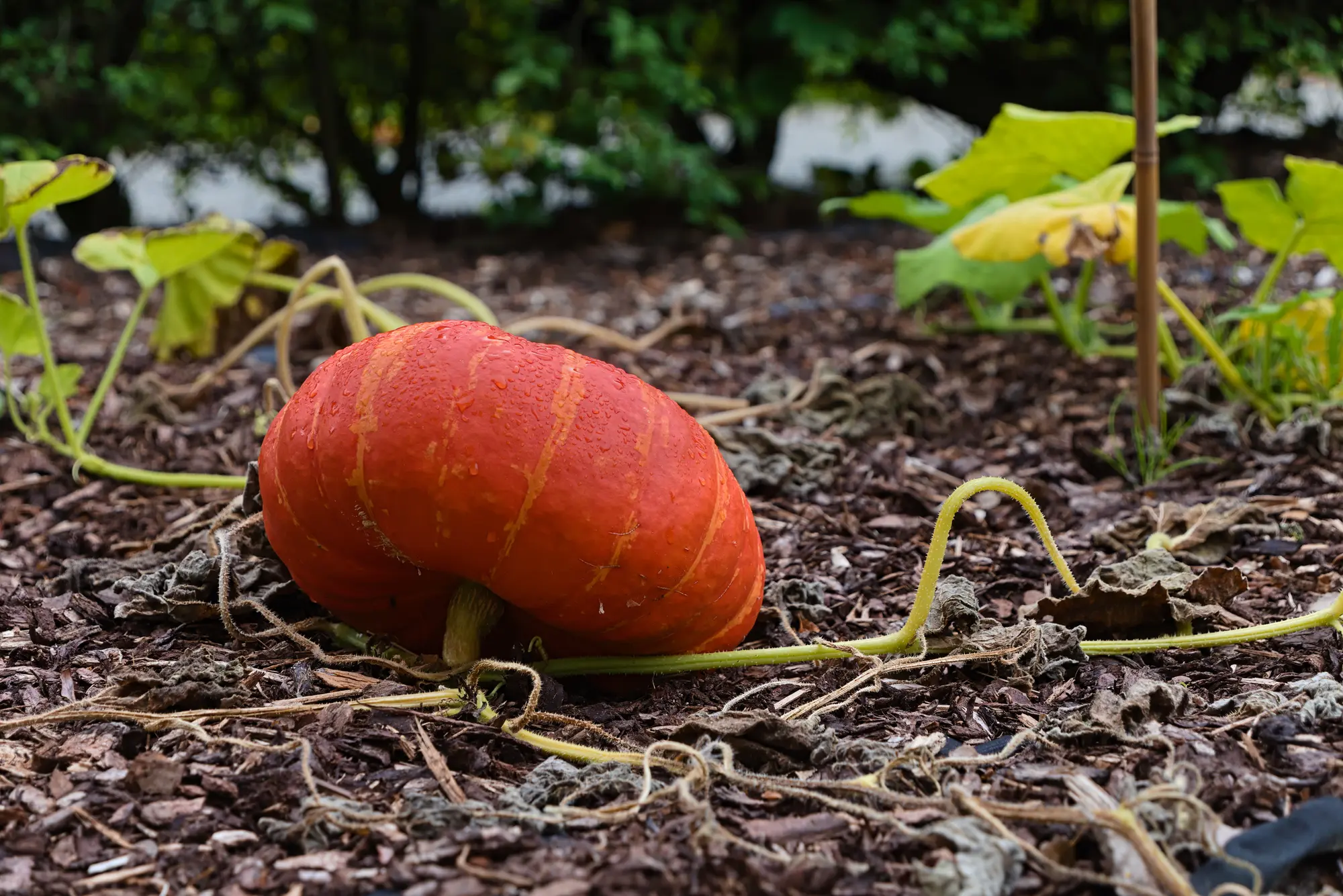
Can Chickens Eat Pumpkin? Seeds, Guts, and the Myth
Chickens can eat pumpkin, seeds and guts included. The truth about the pumpkin-seed dewormer claim, how to feed Halloween leftovers safely, and how much.
Researched from university extension, USDA, and veterinary sources. How we research.
Yes, chickens can eat pumpkin, and nearly all of it is fair game: the orange flesh, the seeds, the wet stringy guts in the middle, and the skin. A pumpkin is one of the easiest fall treats to give a flock, because you can cut it in half, set it in the run, and walk away. The hens do the rest, scooping out the seeds and pecking the flesh down to the shell over a day or two.
This guide covers what pumpkin actually offers a hen, the seed and guts questions, the one claim about pumpkin you should not believe (that the seeds work as a dewormer), how to handle leftover Halloween pumpkins without making your flock sick, and how much is too much.
Is Pumpkin Safe for Chickens?
Yes, every part a hen will eat. Pumpkin is a winter squash in the gourd family, the same family as the watermelon, cucumber, and zucchini that extension guides already list as safe treats. It carries none of the toxins that make a few foods off limits for poultry, like the persin in avocado or the solanine in raw green potato. There is nothing in a plain pumpkin that a chicken cannot handle.
The only real caution with pumpkin is not the pumpkin itself but what happens to it after a week on the porch. A fresh or lightly aged pumpkin is a fine treat. A carved jack-o-lantern that has turned soft and started to mold is not, and we will come back to that.
What Is in Pumpkin
Raw pumpkin is mostly water. USDA figures put 100 grams of raw pumpkin at about 26 calories, roughly 92 percent water, around 6 grams of carbohydrate with under 3 grams of that as sugar, and about half a gram of fiber. That is a very light food: low in sugar, low in calories, and short on the protein and fat a laying hen needs.
What pumpkin does bring is color. The deep orange flesh is high in beta-carotene, the pigment the body turns into vitamin A, and it is one of the better-known dietary sources of it. For a flock, that mostly shows up where you would expect:
- •It is a hydrating, low-sugar treat. Like most gourds, pumpkin is water first. It will not spike a hen the way grapes or raisins can, so it is an easy treat to feel good about in the amount hens will eat.
- •The beta-carotene deepens yolk color. Hens convert some of the carotenoids in orange and leafy feed into richer, oranger yolks. Pumpkin is one of many foods that nudge yolks darker; marigold, corn, and leafy greens do the same.
- •It is still a treat, not a feed. Pumpkin has little protein and almost no calcium, the two things a layer depends on. It rounds out a diet; it does not run one. The layer ration still has to carry the vitamins, minerals, and protein that keep hens laying.
That last point is the whole frame for pumpkin, and for every treat: tasty and harmless in the right amount, a problem only when it crowds out the balanced feed.
Can Chickens Eat Pumpkin Seeds and Guts?
Yes to both, and the guts are the part hens go for first. When you split a pumpkin open, the wet, stringy pulp with the seeds tangled in it is the easiest thing in there for a chicken to eat, and a flock will clean out the middle before they touch the firm flesh. You do not need to scoop the seeds out, separate them, or dry them. Smash the pumpkin, or cut it in half, and let the birds dig in.
The seeds themselves are soft compared to a sunflower or a pumpkin seed sold roasted for people, and a hen's gizzard grinds them without trouble. Chickens that free-range and forage have gizzards built to handle seeds far tougher than these. Keep grit available, as you would with any whole food, so the gizzard has the grit it needs to do that grinding. Our grit and oyster shell guide covers why.
You will sometimes read that you should feed the seeds raw, or crush them, or feed only a certain type. The reason behind that advice is the dewormer claim, and it is worth taking apart on its own.
The Pumpkin Seed Dewormer Myth
This is the one thing about pumpkin you will see repeated everywhere, and it is the one thing worth being careful about: the idea that feeding pumpkin seeds will deworm your flock.
Here is the honest version. Pumpkin seeds do contain a compound that has shown mild anti-parasitic activity in a handful of lab studies, mostly extracts tested on mice rather than raw seeds fed to birds. One chicken trial exists in the research, but there is no solid evidence that feeding whole raw pumpkin seeds reduces the worm load in a real backyard flock. Nobody has established how many seeds, which kind, how often, or whether it does anything measurable at all. The poultry writers who have looked at this closely land in the same place: no proof it works, though it is unlikely to hurt.
So treat pumpkin the way you would treat any treat. It will not clear a worm infestation. If your birds have worms, confirmed by symptoms or a fecal egg count from a vet, they need an actual dewormer at an actual dose, not a bowl of seeds. Our guide to the best chicken dewormers walks through what the research supports and when to deworm. Feed the pumpkin because the flock enjoys it, not because you expect it to do a vet's job.
Pumpkin Skin and Stem
The skin is safe. On a fresh pumpkin it is firm, so hens peck the flesh down to the rind and often leave the shell itself, the way they leave a watermelon's green skin. That is fine. If you want them to eat more of the skin, roast or soften the pumpkin first, or just let a half pumpkin age a few days in the run until the shell goes soft enough to peck through.
Wash the outside before you cut it, especially a store pumpkin or one that sat on a porch. The outside is handled, sits on the ground, and on a decorative pumpkin may carry dust or residue. The hard stem is not something chickens eat; pull it off and compost it.
Raw, Cooked, and Canned Pumpkin
Raw is the usual way to feed it, and the simplest. Chickens are perfectly happy pecking a raw halved pumpkin, and you keep more of the water and vitamins that way.
Cooked pumpkin is fine too, and softer flesh is easier for young or old birds to eat. Plain roasted or boiled pumpkin with nothing added is a good cold-weather treat.
Canned pumpkin is where you have to read the label. Plain 100 percent canned pumpkin, the kind with one ingredient, is safe in small amounts. Canned pumpkin pie filling is not: it is loaded with added sugar and spices like nutmeg and clove that have no place in a chicken's diet. If the can says anything beyond pumpkin, skip it. The same goes for leftover pumpkin pie, bread, or any baked pumpkin treat made for people, which carry sugar, salt, and fat a hen does not need.
Halloween Pumpkins and Jack-o-Lanterns
This is the question that brings most people here in October, so here is the straight answer: a fresh or lightly aged Halloween pumpkin is a great flock treat, and a rotting carved one is not.
Feed it when:
- •It is still firm. An uncarved pumpkin that sat on the step for a couple of weeks, or a jack-o-lantern carved a day or two ago, is fine. Smash it open and the flock will clean it out.
- •It is a decorative pumpkin you never carved. Cut it fresh, wash the outside, and feed it like any pumpkin.
Skip it when:
- •It has started to mold. A carved pumpkin left out for a week in warm weather grows soft and fuzzy fast, and moldy food is on every extension list of things never to feed chickens. Mold toxins can make a flock genuinely sick. If the inside is slimy, black, or furry, it goes in the trash, not the run.
- •It held a candle. Soot, melted wax, and the gunk a tealight leaves behind are not food. Scrape out and discard the blackened, waxy parts, or skip a heavily burned pumpkin altogether.
- •It was painted, glittered, or sprayed. Decorative pumpkins finished with paint, glitter, glue, or a bleach-and-water preservative dip are not safe to feed. A pumpkin you treated to make it last longer on the porch is a decoration, not a treat.
The simple rule: if you would not want to eat what is inside, do not give it to the hens. A pumpkin that is still a pumpkin is a gift. A pumpkin that has become a science experiment is garbage.
Pumpkin as a Fall and Winter Boredom Buster
Beyond the nutrition, a whole pumpkin earns its keep as something to do. Chickens shut in more during short, wet, cold days get bored, and bored hens pick on each other and start feather-pulling. A half pumpkin set in the run gives the flock a project: they peck, scratch, climb on it, and work at it for a day or two instead of at each other.
This is why pumpkin fits the fall and winter calendar so well. It shows up right when flocks are heading into the season of less daylight and less foraging, and a cheap post-Halloween pile of pumpkins turns into weeks of flock entertainment. Scatter the seeds and guts in deep litter or bedding so the birds have to scratch for them, and you get the same enrichment that a forage block or a hung cabbage gives. Our fall chicken care guide and winter chicken care guide cover the rest of keeping a flock busy and healthy through the cold months.
How Much Pumpkin Can Chickens Eat?
Pumpkin is low in sugar and mostly water, so the limit is not really about the pumpkin being harmful; it is about keeping treats in their place. The standard advice holds: treats of all kinds, pumpkin included, should make up no more than about 10 percent of what a flock eats in a day, with the other 90 percent coming from a balanced layer feed that carries the protein and calcium hens need.
In practice that is generous. A half of a medium pumpkin is an easy afternoon treat for six to ten hens, and a whole one will keep a bigger flock busy for a couple of days. You do not need to measure it. Set it out, let them work at it, and watch the droppings and the feed bin: if droppings turn loose and watery or the hens stop cleaning up their regular feed, you are overdoing the treats and should scale back.
The thing to avoid is making pumpkin, or any single food, a daily replacement for feed. A flock that fills up on pumpkin eats less ration, takes in less protein and calcium, and over a few weeks that shows up as thinner shells and fewer eggs. Treat it like dessert: often, but never the meal.
Can Baby Chicks Eat Pumpkin?
In small amounts, after the first couple of weeks, yes. For the first two to three weeks a chick should be on starter feed and little else, because starter is balanced for fast early growth and a chick's whole job is to eat it. After that, a few bits of soft pumpkin flesh or a little cooked pumpkin make a fine first treat: soft, low in sugar, and easy to peck.
Two rules for chicks. First, keep it small, so treats never crowd out the starter that is doing the real work. Second, put chick grit in the brooder from the day you first offer anything other than feed, because a chick needs grit in its gizzard to grind whole foods like seeds and skin. Our brooder setup guide covers getting the early weeks right.
Pumpkin vs Other Fall Treats
Pumpkin sits in a crowd of good autumn and winter treats. Here is how it compares with a few others a flock sees this time of year.
| Treat | Sugar | Best use | Notes |
|---|---|---|---|
| Pumpkin | Low | Boredom buster, yolk color | Flesh, seeds, guts, and skin all safe; feed fresh, not molded |
| Winter squash | Low | Same as pumpkin | Butternut, acorn, and spaghetti squash work exactly like pumpkin |
| Apples | Medium | Quick treat | Flesh fine; skip the seeds in quantity |
| Carrots | Low | Winter crunch | Grate or cook them; chickens peck them slowly raw |
| Broccoli | Low | Hung as a pecking toy | A whole head on a string keeps hens busy |
| Watermelon | Low | Summer, not fall | Great hydration treat when it is hot, not in the cold |
Any of the winter squashes, butternut, acorn, spaghetti, or the small pie pumpkins, can be fed the same way as a jack-o-lantern pumpkin: split it, let them at the seeds and guts, and pull the leftovers before they spoil.
Common Mistakes
- •Feeding a rotting carved pumpkin. The single real risk. Mold makes a flock sick. Firm and fresh is fine; slimy and furry is trash.
- •Expecting the seeds to deworm the flock. They will not. Use a real dewormer when birds actually have worms.
- •Feeding pie filling or baked pumpkin treats. Added sugar and spice, not a chicken food. Plain pumpkin only.
- •Forgetting grit. Hens need grit to grind seeds and skin. Keep it available.
- •Letting pumpkin become the meal. A flock that fills up on treats eats less balanced feed and lays worse. Keep it to about a tenth of the diet.
Frequently Asked Questions
Can chickens eat pumpkin seeds?
Yes. Raw pumpkin seeds and the stringy guts they sit in are safe, and the gizzard grinds them with grit available. Feed them straight from a split pumpkin; there is no need to dry or crush them.
Do pumpkin seeds deworm chickens?
No, not reliably. Pumpkin seeds contain a compound with mild anti-parasite activity in lab tests, but there is no good evidence that feeding whole raw seeds clears worms in a backyard flock. Use an actual dewormer when birds have worms.
Can chickens eat the whole pumpkin, skin and all?
Yes. Flesh, seeds, guts, and skin are all safe. Hens usually peck the flesh and leave the firm shell, which is fine. Softening or aging the pumpkin lets them eat more of the skin.
Can chickens eat carved Halloween pumpkins?
Yes, if it is still firm and fresh. A jack-o-lantern carved a day or two ago is a fine treat. One that has gone soft, moldy, or slimy, held a candle, or been painted should go in the trash instead.
Can chickens eat canned pumpkin?
Plain 100 percent canned pumpkin in small amounts, yes. Canned pumpkin pie filling, no: it is full of sugar and spices chickens should not have. Read the label and feed only plain pumpkin.
Will pumpkin change my egg yolks?
A little. The beta-carotene in the orange flesh is one of several foods that deepen yolk color over time, along with greens, corn, and marigold. It is a mild effect, not an overnight change.
How much pumpkin can I give my chickens?
Keep all treats to about 10 percent of the daily diet. A half pumpkin for six to ten hens is a generous treat. Scale back if droppings turn watery or the flock stops eating its regular feed.
Can baby chicks eat pumpkin?
After the first two to three weeks on starter feed, a few small bits of soft or cooked pumpkin are fine, with chick grit available. Keep it small so chicks still eat their starter.
Bottom Line
Pumpkin is one of the best and cheapest fall treats you can give a flock: flesh, seeds, guts, and skin all safe, low in sugar, and good for keeping bored hens busy through the short days. Split it, set it out, and pull the leftovers before they mold. Feed fresh Halloween pumpkins, not rotting ones, and do not count on the seeds to deworm anything. For the full picture of what belongs in a flock's diet, see what can chickens eat and our complete feeding guide.
Image credits: Pumpkin on the vine photo by Mozzihh (CC BY-SA 4.0), via Wikimedia Commons.
Sources:
- •USDA FoodData Central. Pumpkin, raw. FDC ID 168448 (water, sugar, and calorie figures). https://fdc.nal.usda.gov/food-details/168448/nutrients
- •The Chicken Chick. The Truth About Chickens and Pumpkin Seeds (no evidence pumpkin seeds deworm chickens). https://the-chicken-chick.com/the-truth-about-chickens-pumpkin-seeds/
- •Lead Stories. Fact Check: Raw Pumpkin Seeds NOT Proven As A Dewormer For Chickens. https://leadstories.com/hoax-alert/2019/10/fake-news-raw-pumpkin-seeds-not-proven-as-a-dewormer-for-chickens.html
- •UF/IFAS Extension Holmes County. 10 Foods You Should Never Feed Chickens (moldy food). https://blogs.ifas.ufl.edu/holmesco/?p=28475
Related Guides
Can Chickens Eat Cucumbers? Peels, Seeds, and Bitter Ones
Chickens can eat cucumbers, peel and seeds included. At 95 percent water they are a hot-day treat. What to do with bitter ones, and how much to feed.
Feed & NutritionCan Chickens Eat Oranges? The Citrus Myth and Peels
Chickens can eat oranges. No extension source lists citrus as harmful, and the calcium myth has no evidence behind it. Peels, seeds, other citrus, and how much.
Feed & NutritionCan Chickens Eat Rice? Cooked, Raw, and the Swelling Myth
Chickens can eat rice, cooked or uncooked, and the myth that dry rice swells and hurts birds is false. What rice offers, brown vs white, and how much.
Feed & NutritionCan Chickens Eat Watermelon? Rind, Seeds, and Hot-Day Tips
Chickens can eat watermelon, rind and seeds included. Why extension services suggest freezing it for heat waves, how much to feed, and what to skip.