Can Chickens Eat Cucumbers? Peels, Seeds, and Bitter Ones
Chickens can eat cucumbers, peel and seeds included. At 95 percent water they are a hot-day treat. What to do with bitter ones, and how much to feed.
Researched from university extension, USDA, and veterinary sources. How we research.
Yes, chickens can eat cucumbers, and they can eat all of it: the flesh, the seeds, the peel, and the leaves and vines of the plant. Nothing on a cucumber plant is toxic to poultry. A cucumber is about 95 percent water, which makes it one of the better things to hand a panting flock in July and one of the least nutritious things you can feed the rest of the year. The only cucumber worth a second thought is a bitter one, and even that is a matter of whether the hens will touch it rather than whether it will hurt them.
This guide covers what cucumbers do for a hen, the peel and seed questions, why some cucumbers turn bitter and what that means, how much to feed, chicks, and keeping the flock out of the cucumber patch.
Are Cucumbers Safe for Chickens?
Yes. Cucumbers are not on the University of Florida's extension list of foods never to feed chickens, and they belong to the gourd family with melons and squash, none of which carry a poultry toxin. The seeds are soft and edible, the peel is edible, and cooked or raw makes no difference to safety.
What Is in a Cucumber
USDA figures for raw cucumber with the peel put 100 grams at about 95 percent water, 15 calories, under 2 grams of sugar, half a gram of fiber, and modest potassium and vitamin K. That profile tells you what cucumbers are for:
- •Water. Nothing a flock eats is wetter except celery. On a hot afternoon a cold cucumber half is a drink the hens will chase.
- •Almost no sugar. Less than a fifth of what is in grapes, so cucumbers can be a daily summer treat without tipping the sugar count.
- •Almost no nutrition. A hen gets nothing from a cucumber that her layer feed does not already supply, which is why the amount still matters: a crop full of cucumber is a crop with less room for feed.
Cucumber Peel
Fine, and it carries most of the fiber and the small amount of vitamin K. Wash it. Supermarket cucumbers are often waxed and carry surface residue, and the hens eat the outside. Garden cucumbers just need the dirt rinsed off. If you peel cucumbers for the kitchen, the peelings are a good scrap.
Cucumber Seeds
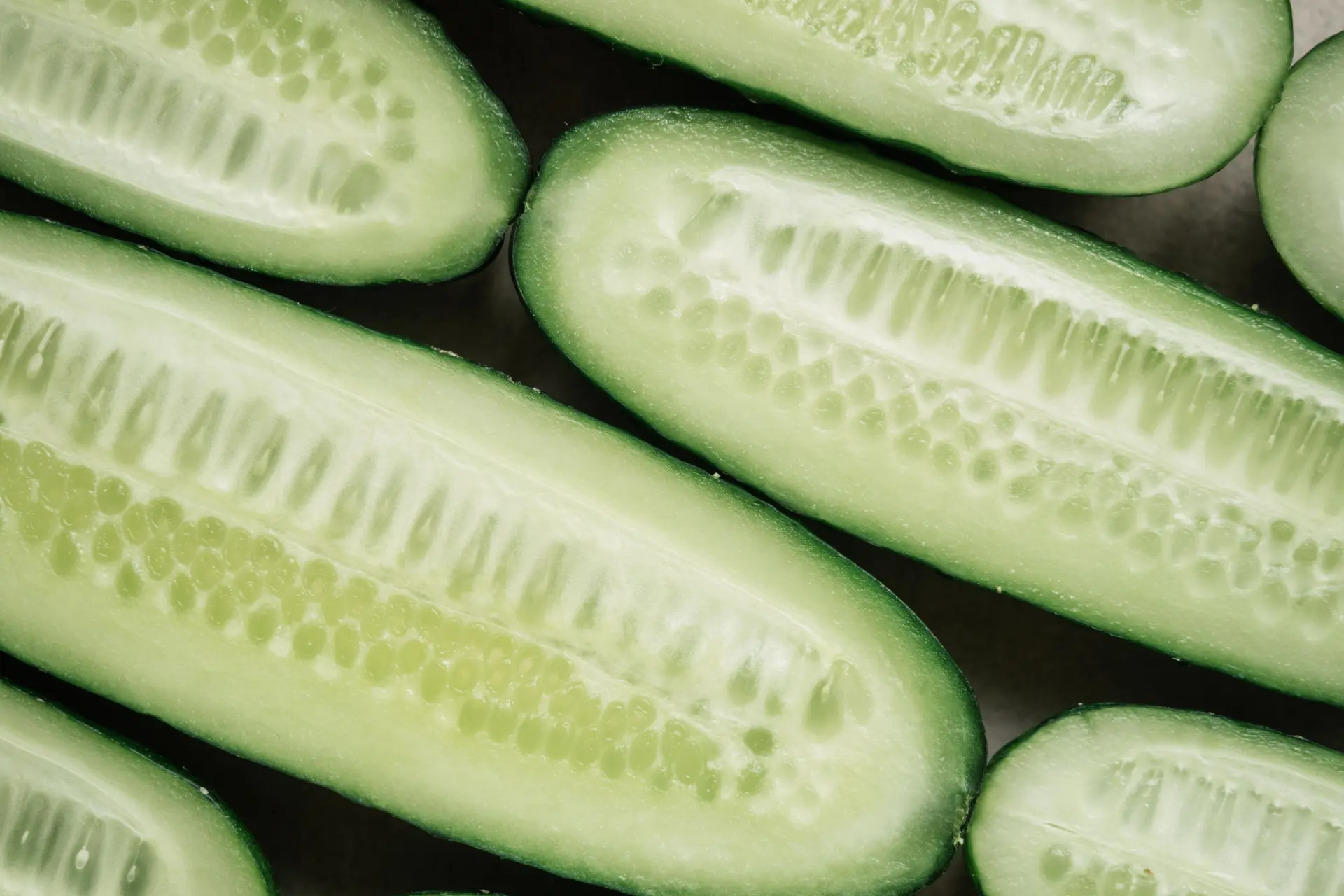
Safe and soft. There is no cyanide compound in a cucumber seed as there is in apple seeds and stone-fruit pits, and the seeds of an overgrown cucumber are still fine, just tougher. The seed cavity of a big cucumber is the part hens go for first.
Bitter Cucumbers
Cucumbers sometimes turn bitter, and the cause is a compound called cucurbitacin. Purdue's consumer horticulture extension explains that most cucumber plants contain it in the foliage and sometimes the fruit, and that bitterness shows up when plants are stressed by low moisture, high temperatures, or poor nutrition. It concentrates at the stem end and in the skin, which is why Purdue's advice for the kitchen is to cut off the stem end and peel; fruits that are bitter all the way through get discarded.
For the flock the rule is simpler. A mildly bitter cucumber from a known seed variety is not dangerous, and most hens will eat it or leave it on taste alone. A cucumber that is intensely bitter is one you would not eat, so compost it rather than making the hens decide. Cucurbitacins in very high doses are what make some wild gourds toxic, and there is no reason to test the threshold on a chicken.
Cucumber Leaves, Vines, and Flowers
Safe. Chickens that get into a cucumber bed eat the leaves and flowers and scratch up the vines, which is a problem for the cucumbers, not the chickens. The leaves carry more cucurbitacin than the fruit and are bitter, so most hens take a few bites and move on. Keep the flock out until the vines are established, and let them in after the last harvest to clean up.
How Much Cucumber Can Chickens Eat?
Half a cucumber per four or five hens is a reasonable afternoon treat, and a whole one per flock of a dozen. In a heat wave you can offer it every day; in cool weather, a couple of times a week, since it is filling and empty. The extension guideline for all treats combined applies: scraps and scratch together should be no more than the flock finishes in about 20 minutes. Cucumber halves take longer than that on purpose, because the pecking is the point.
Too much shows up as watery droppings and hens skipping their feed. Pull the rinds by evening; a cucumber left in the run overnight sours and draws flies.
Cucumbers for Hot Weather
This is where cucumbers earn their keep. The poultry extension guide to managing chickens in extreme summer heat recommends treats that add water without filling the birds up and cutting into their layer ration, and cucumber fits that description better than almost anything else. Chill it, halve it, and put it out in the afternoon shade. Freezing works too: freeze thick rounds on a tray or set chunks into an ice block with water. Pair it with shade, cool water, and moving air, none of which a cucumber replaces. See our summer chicken care guide.
Can Baby Chicks Eat Cucumbers?
After the first couple of weeks on starter feed, a few small chunks of seeded cucumber flesh are a safe first vegetable. Keep it to a taste, because a chick full of cucumber is a chick not eating starter, and have chick grit in the brooder from the first day treats appear. See the brooder setup guide.
Cucumbers vs Other Watery Treats
| Treat | Water | Sugar per 100 g | Notes |
|---|---|---|---|
| Cucumber, with peel | 95 percent | Under 2 g | Least sugar of the group |
| Celery | 95 percent | About 1 g | Chop the strings short |
| Watermelon | 91 percent | About 6 g | Freezes well |
| Lettuce | About 95 percent | Under 1 g | Hang a head in the run |
| Strawberries | 91 percent | About 5 g | Low sugar for a fruit |
Zucchini and summer squash work exactly like cucumbers: halve them, let the flock peck the seed cavity, and pull the shells.
Frequently Asked Questions
Can chickens eat cucumber peels?
Yes. The peel is safe and carries most of the cucumber's fiber. Wash it first, especially on waxed supermarket cucumbers.
Can chickens eat cucumber seeds?
Yes. Cucumber seeds are soft and carry nothing harmful. The seed cavity is usually the first part a hen eats.
Are cucumbers good for chickens?
They are a hydration treat, about 95 percent water with almost no sugar. They add no nutrition a complete feed lacks, so think of them as summer enrichment rather than food.
Can chickens eat bitter cucumbers?
Mildly bitter ones, yes, if the hens will take them. Cucumbers bitter all the way through should be composted; the bitterness is cucurbitacin, which builds up when the plant is stressed.
Can chickens eat cucumber leaves and vines?
Yes, they are not toxic. The leaves are bitter and most hens only nibble them, but a flock in the bed will wreck the plants.
How much cucumber can a chicken eat?
Half a cucumber for four or five hens as an afternoon treat, daily in hot weather and a couple of times a week otherwise. Pull leftovers by evening.
Bottom Line
Cucumbers are safe in every part, mostly water, and the easiest hot-weather treat in the garden. Halve them, chill them, skip the ones that are bitter through, and pull the rinds before they sour. For the full list of what chickens can and cannot eat, see what can chickens eat.
Sources:
- •USDA FoodData Central. Cucumber, with peel, raw (SR Legacy, FDC ID 168409). https://fdc.nal.usda.gov/food-details/168409/nutrients
- •Purdue University Consumer Horticulture. Cucumbers Bitter During Hot, Dry Weather (cucurbitacin, stress triggers, stem end and skin). https://www.purdue.edu/hla/sites/yardandgarden/cucumbers-bitter-during-hot-dry-weather/
- •Poultry Extension (eXtension). Managing Backyard Chickens During Periods of Extreme Summer Temperatures (hydrating treats that do not displace ration). https://poultry.extension.org/articles/poultry-management/managing-backyard-chickens-during-extreme-summer-temperatures/
- •Poultry Extension (eXtension). Feeding Chickens for Egg Production in Small and Backyard Flocks (the 20-minute rule for scraps). https://poultry.extension.org/articles/feeds-and-feeding-of-poultry/feeding-chickens-for-egg-production/
- •UF/IFAS Extension Holmes County. 10 Foods You Should Never Feed Chickens (cucumbers are not on the list). https://blogs.ifas.ufl.edu/holmesco/?p=28475
Related Guides
Can Chickens Eat Carrots? Raw, Cooked, Tops, and Peels
Chickens can eat carrots raw or cooked, tops included. Why raw carrots need grating, what beta-carotene does and does not do for yolks, and how much to feed.
Feed & NutritionCan Chickens Eat Oranges? The Citrus Myth and Peels
Chickens can eat oranges. No extension source lists citrus as harmful, and the calcium myth has no evidence behind it. Peels, seeds, other citrus, and how much.
Feed & NutritionCan Chickens Eat Watermelon? Rind, Seeds, and Hot-Day Tips
Chickens can eat watermelon, rind and seeds included. Why extension services suggest freezing it for heat waves, how much to feed, and what to skip.
Feed & NutritionCan Chickens Eat Bananas? Peels and How Much
Yes, chickens can eat bananas, and the peel is safe too. Here's how much to feed, why sugar is the real limit, and how to serve peels the right way.