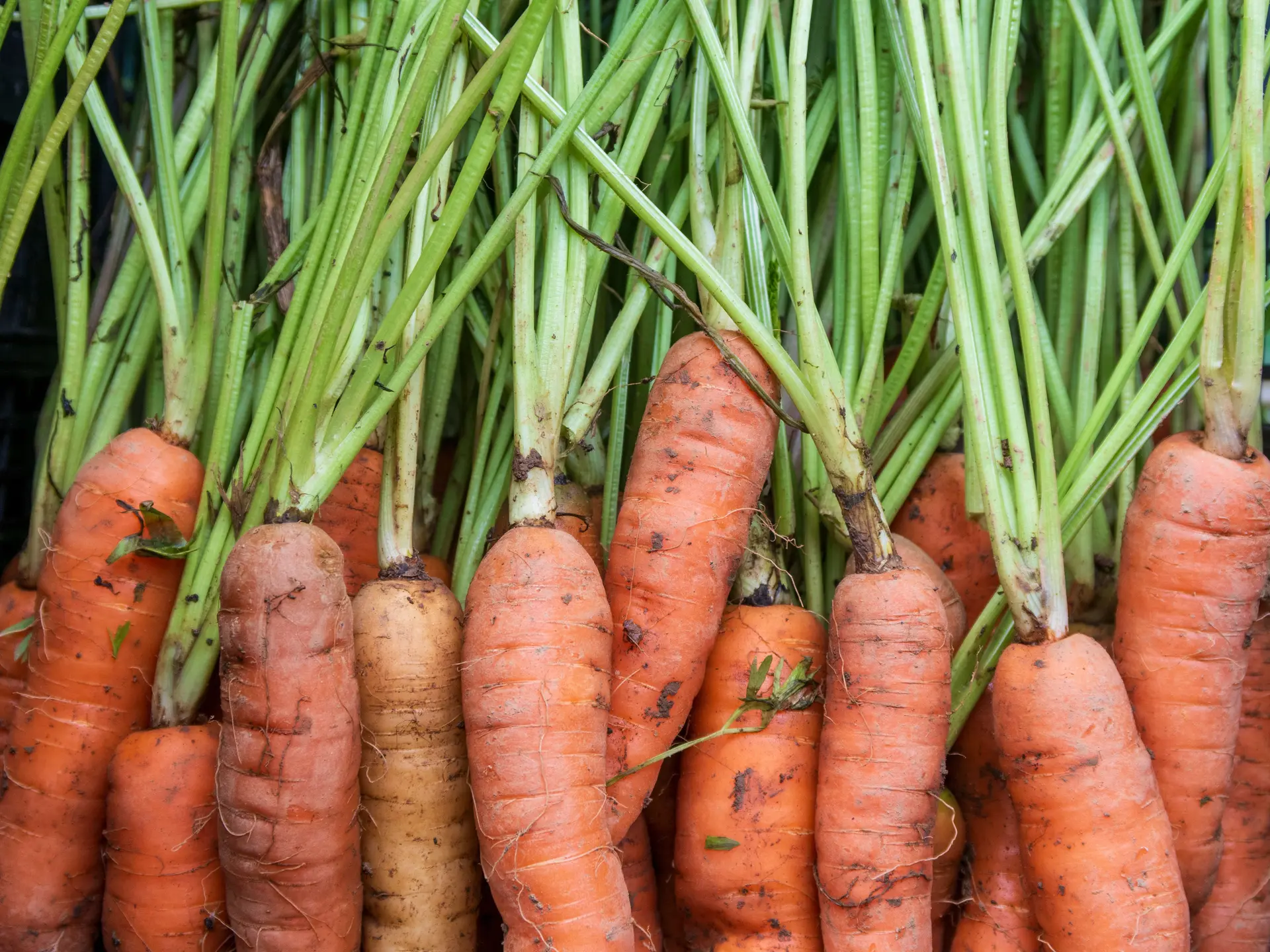
Can Chickens Eat Carrots? Raw, Cooked, Tops, and Peels
Chickens can eat carrots raw or cooked, tops included. Why raw carrots need grating, what beta-carotene does and does not do for yolks, and how much to feed.
Researched from university extension, USDA, and veterinary sources. How we research.
Yes, chickens can eat carrots: the roots raw or cooked, the peels, and the leafy tops. Nothing on a carrot is toxic to poultry. The only practical problem is that a raw carrot is hard, and a hen without teeth cannot get much off a whole one. Grate it, chop it, or cook it and the flock will clear the dish.
This guide covers what carrots offer, the tops and peels, raw versus cooked, whether carrots change yolk color, how much to feed, and chicks.
Are Carrots Safe for Chickens?
Yes, every part. Carrots are not on the University of Florida's extension list of foods never to feed chickens, nor on any other extension list of poultry toxins. The tops are safe, the peel is safe, and cooked carrots are safe as long as they are plain: no butter, salt, or glaze.
What Is in a Carrot
USDA figures for raw carrots put 100 grams at about 88 percent water, nearly 3 grams of fiber, around 5 grams of sugar, a decent amount of potassium, and an enormous amount of beta-carotene, about 8,300 micrograms, which is why carrots are orange. That is more fiber and less sugar than most fruit treats, which makes carrots a better regular vegetable for a flock than grapes or bananas.
Chickens convert beta-carotene to vitamin A, which they need for skin, eyes, and egg production. A complete layer feed already supplies it, so carrots are a bonus rather than a fix, but a hen recovering from illness or coming through a molt does no harm getting extra.
Raw Carrots
Safe, but hard. A hen pecking at a whole raw carrot gets very little for the effort, and a heavy chunk swallowed whole is a choking risk for a small bird. Three ways to make raw carrots work:
- •Grate them. A box grater turns a carrot into a pile of shreds the whole flock can eat. This is the easiest method.
- •Chop them small. Pea-sized pieces for standard hens, smaller for bantams.
- •Hang them. A carrot on a string, like the hanging apple trick, gives a bored flock something to peck at for an hour. They will not eat much, which is the point.
Cooked Carrots
Boiled or steamed carrots are the easiest form for a hen to eat, and leftover plain cooked carrots from dinner are a good use of scraps. Skip anything cooked with salt, butter, honey, or a glaze; too much salt is on the never list, and the sugar is unnecessary. Let them cool first.
Carrot Tops
The leafy greens are safe and chickens like them. Carrot tops are a bitter green and some flocks nibble rather than devour, but there is no reason to throw them away. Chop them roughly so long stems do not tangle in the crop. Only feed tops from unsprayed carrots.
Carrot Peels
Fine, and a good use for peelings. The peel is where a lot of the fiber is. Wash carrots before peeling if the peels are going to the flock, since soil and any spray residue sit on the skin.
Do Carrots Make Yolks More Orange?
Less than people expect. Yolk color comes from xanthophylls, the yellow-orange pigments in corn, alfalfa, marigold, and green leaves, which a hen deposits directly into the yolk. A 2021 Poultry Science study showed hens fed high-xanthophyll orange corn laid darker yolks with more of those pigments in them. Beta-carotene, the pigment in carrots, is a different compound that the hen mostly converts to vitamin A rather than depositing in the yolk. Carrots may nudge yolk color a little; greens, corn, and pasture do the real work.
How Many Carrots Can a Chicken Eat?
A tablespoon or two of grated or chopped carrot per standard hen, several times a week, is a sensible amount. Carrots are low enough in sugar that they can be a regular vegetable rather than an occasional treat, but the extension rule still applies: all scraps and scratch combined should be no more than the flock finishes in about 20 minutes, because too much of anything besides feed pulls egg production down.
Can Baby Chicks Eat Carrots?
After the first couple of weeks on starter feed, finely grated raw carrot or mashed cooked carrot is a good first vegetable. Keep the pieces tiny, keep the amount to a pinch, and put chick grit in the brooder from the first day treats appear. See the brooder setup guide.
Carrots vs Other Vegetable Treats
Carrots are one of the better vegetables to make a habit of, because they carry more fiber and far more beta-carotene than the watery greens and less sugar than fruit. Per 100 grams, from USDA figures:
| Vegetable | Water | Fiber | Notes |
|---|---|---|---|
| Carrots | 88 percent | 2.8 g | Grate or cook; beta-carotene about 8,300 mcg |
| Celery | 95 percent | 1.6 g | Chop the strings short |
| Cabbage | 92 percent | 2.5 g | Hang whole in the run |
| Cooked sweet potato | 76 percent | 3 g | Cooked only; another beta-carotene source |
| Cucumber | 95 percent | Under 1 g | Halve and let them peck |
A Carrot Mash for Molting or Recovering Hens
A molting hen is growing a full set of feathers, which are mostly protein, and she often eats less while she does it. A warm mash of cooked carrot, a scrambled egg, and a little of her regular feed is an easy way to get calories and vitamin A into a bird that is off her food. Keep it small, keep it plain, and serve it once a day for a few days rather than as a new routine. Our molting guide covers the rest of the molt.
Carrots in the Garden
Ranging chickens will not dig up carrots, but they will strip the tops and scratch up seedlings, so keep the flock out of the bed until the roots are established. Bolted carrots that have gone to seed are safe for chickens to work over at the end of the season.
Frequently Asked Questions
Can chickens eat raw carrots?
Yes, but a whole raw carrot is too hard for a hen to eat. Grate it, chop it small, or hang it on a string.
Can chickens eat carrot tops?
Yes. The greens are safe and chickens eat them, though some flocks find them bitter. Chop long stems and only feed unsprayed tops.
Can chickens eat carrot peels?
Yes. Wash the carrot first so soil and residue do not go to the flock with the peel.
Can chickens eat cooked carrots?
Yes, plain and cooled. Skip carrots cooked with salt, butter, or a glaze.
Are carrots good for chickens?
They are one of the better vegetable treats: high in fiber and beta-carotene, low in sugar. They do not replace anything in a complete feed, but they are a healthier regular treat than most fruit.
Do carrots change egg yolk color?
Only a little. Yolk color comes mainly from xanthophylls in corn, greens, and pasture. Carrot beta-carotene is mostly converted to vitamin A instead.
Bottom Line
Carrots are safe in every form. Grate or cook them so hens can actually eat them, feed the tops and peels rather than composting them, and treat carrots as a regular vegetable within the 20-minute limit. For the full safe and unsafe list, see what can chickens eat.
Sources:
- •USDA FoodData Central. Carrots, raw. FDC ID 170393. https://fdc.nal.usda.gov/food-details/170393/nutrients
- •Ortiz D, et al. Biofortified orange corn increases xanthophyll density and yolk pigmentation in egg yolks from laying hens. Poultry Science 2021 (PMC8187250). https://pmc.ncbi.nlm.nih.gov/articles/PMC8187250/
- •Poultry Extension (eXtension). Feeding Chickens for Egg Production in Small and Backyard Flocks (treat limits, grit). https://poultry.extension.org/articles/feeds-and-feeding-of-poultry/feeding-chickens-for-egg-production/
- •UF/IFAS Extension Holmes County. 10 Foods You Should Never Feed Chickens (salt; carrots are not on the list). https://blogs.ifas.ufl.edu/holmesco/?p=28475
Related Guides
Can Chickens Eat Broccoli? Stems, Leaves, Raw or Cooked
Chickens can eat broccoli, raw or cooked, florets to stems. What the goitrogen worry actually amounts to, why a hanging head beats a pile, and how much to feed.
Feed & NutritionCan Chickens Eat Potatoes? Cooked Yes, Green or Raw No
Chickens can eat plain cooked potatoes. Green, sprouted, and raw ones are the problem: solanine, and starch that barely digests. Peels, sweet potatoes, amounts.
Feed & NutritionCan Chickens Eat Rice? Cooked, Raw, and the Swelling Myth
Chickens can eat rice, cooked or uncooked, and the myth that dry rice swells and hurts birds is false. What rice offers, brown vs white, and how much.
Feed & NutritionCan Chickens Eat Cucumbers? Peels, Seeds, and Bitter Ones
Chickens can eat cucumbers, peel and seeds included. At 95 percent water they are a hot-day treat. What to do with bitter ones, and how much to feed.