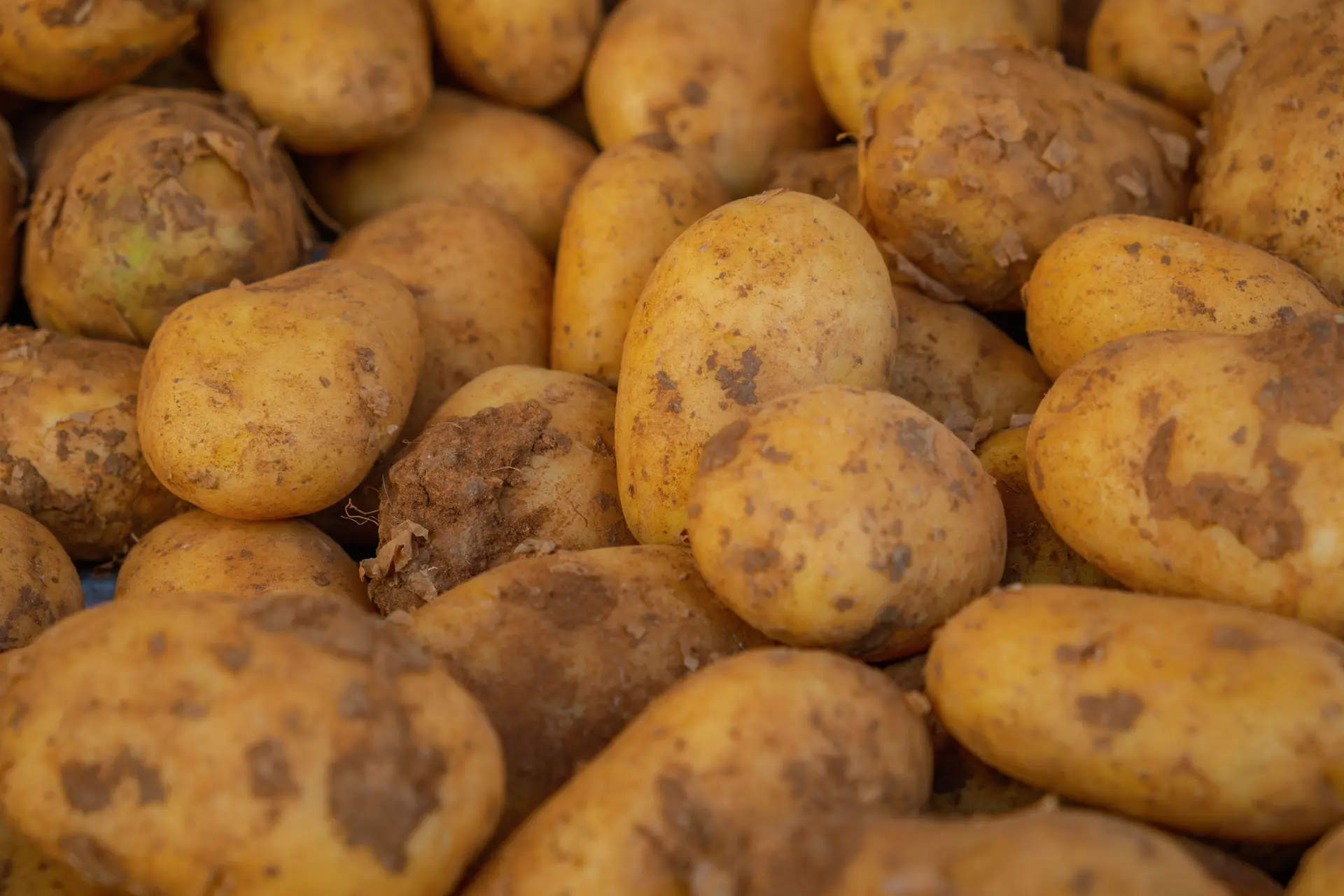
Can Chickens Eat Potatoes? Cooked Yes, Green or Raw No
Chickens can eat plain cooked potatoes. Green, sprouted, and raw ones are the problem: solanine, and starch that barely digests. Peels, sweet potatoes, amounts.
Researched from university extension, USDA, and veterinary sources. How we research.
Chickens can eat potatoes, with two conditions that matter more than they do for almost any other vegetable. First, the potato has to be cooked: raw potato starch is nearly indigestible, and a hen gets almost nothing from it. Second, it cannot be green, sprouted, or spoiled, because those potatoes carry solanine and related glycoalkaloids, the same nightshade toxins that make tomato leaves dangerous. The University of Florida's extension puts green potato peels on its never-feed list for that reason, and in the same breath says plain cooked potatoes are generally safe in moderation.
This guide explains the two rules, what to do about peels, mashed and fried leftovers, sweet potatoes (a different plant entirely), and how much cooked potato a flock should get.
The Solanine Rule
Potatoes are nightshades, and nightshades make glycoalkaloids, chiefly alpha-solanine and alpha-chaconine, as a defense against pests. A USDA review of potato glycoalkaloids in the Journal of Agricultural and Food Chemistry lays out where they concentrate: in the sprouts, the peel, and the flesh just under it, and they rise sharply when a potato is exposed to light and turns green, or when it sprouts, or is damaged. The green color itself is chlorophyll, which is harmless, but it forms under the same conditions that drive glycoalkaloid levels up, which makes it a reliable warning.
Florida's extension describes the effect in chickens as damage to the nervous system along with digestive and cardiac problems, and tells keepers to avoid green potato peels and spoiled potatoes. Two practical points:
- •Cooking does not fix a green potato. Glycoalkaloids are heat-stable, and the USDA review covers their persistence through processing. Boiling a sprouted, green potato does not make it safe. Throw it out.
- •A normal potato is fine. Glycoalkaloid levels in a sound, properly stored potato are low, and that is the potato you are cooking for the flock.
If you grow potatoes, the plant is the bigger hazard than the tuber: leaves, stems, and the small green fruits that potato plants sometimes set all carry glycoalkaloids. Keep the flock out of the potato bed the way you keep them out of the tomato patch.
The Raw Potato Rule
Raw potato is not poisonous in the way a green one is; it is just useless to a hen. Raw potato starch is a resistant starch, meaning it passes through the small intestine largely undigested. A 2022 study on cooked potatoes in the journal Food Chemistry: X notes that raw potato holds a large amount of resistant starch, most of which becomes digestible once the starch gelatinizes, which is what cooking does. Poultry researchers actually use raw potato starch on purpose as a resistant-starch feed ingredient in broiler trials, which tells you how little of it a bird digests.
A hen that eats raw potato is also eating a hard, dense chunk that is a choking risk for a small bird. Cook it.
Cooked Potatoes
Boiled, steamed, baked, or roasted potatoes with nothing on them are a safe, filling treat, and one of the better uses for leftovers in winter when the flock needs calories. USDA figures for raw potato, flesh and skin, put 100 grams at about 79 percent water, 15 grams of starch, 2 grams of protein, 2 grams of fiber, over 400 milligrams of potassium, and a fair amount of vitamin C, which chickens make for themselves and do not need. Cooked, that is mostly digestible starch: energy, not much else.
That is also the reason to keep the amount small. A potato is a bread-like treat, not a green. Hens that fill up on potato eat less layer feed, and the protein and calcium that make eggs come from the feed.
Mashed, Fried, and Leftover Potatoes
- •Plain mashed potatoes: fine, cooled, in small amounts. Made with butter, milk, salt, and gravy: no. Salt is on the never list, and the rest is fat the hen does not need.
- •French fries, chips, tater tots, hash browns: no. Salt, oil, and often onion powder.
- •Baked potato skins from the kitchen: fine if plain and not green.
- •Potato salad, scalloped potatoes, anything with a sauce: no.
Potato Peels
The peel is where glycoalkaloids concentrate, so peels get the strictest version of the rule:
- •Green or sprouted peels: never. This is the item on Florida's list.
- •Peels from sound potatoes, cooked: fine, and a reasonable scrap. USDA figures put raw potato skin at about 2.5 grams of fiber and 2.6 grams of protein per 100 grams, more of both than the flesh.
- •Raw peels: skip them. Indigestible starch, a possible choking hazard, and the part of the potato most likely to carry any glycoalkaloid the tuber has.
If you peel a lot of potatoes, boil the peelings for a few minutes and feed them, sorting out any with a green tinge first.
Sweet Potatoes
A different plant entirely. Sweet potatoes are in the morning glory family, not the nightshades, so there is no solanine and no green-potato problem. The whole plant is safe: the tubers, the skin, and the vines and leaves, which are eaten as a green in much of the world and which ranging chickens will strip.
Cooked sweet potato is one of the better vegetable treats a hen can get. USDA figures for raw sweet potato put 100 grams at 3 grams of fiber and about 8,500 micrograms of beta-carotene, in the same range as carrots. Raw sweet potato is safe but hard, so grate it or cook it; cooked is easier for the hen to use.
How Much Potato Can Chickens Eat?
A tablespoon or two of plain cooked potato per hen, a couple of times a week, is a sensible amount, and a little more in cold weather when extra calories help. The extension guideline for all treats combined applies: scraps and scratch together should be no more than the flock finishes in about 20 minutes. Potato is filling, so err low.
Can Baby Chicks Eat Potatoes?
Not worth it. Potato is nearly all starch, and chicks need the protein in starter feed. If you want to offer a vegetable, grated carrot, chopped strawberry, or cooked sweet potato mash are better first choices. See the brooder setup guide.
Frequently Asked Questions
Can chickens eat raw potatoes?
They should not. Raw potato starch resists digestion, so the hen gets almost nothing, and raw chunks are a choking risk. Cook potatoes before feeding them.
Can chickens eat potato peels or skins?
Cooked peels from sound potatoes, yes. Green or sprouted peels, never; they carry the highest solanine levels and are on the extension never-feed list.
Can chickens eat cooked potatoes?
Yes, plain and cooled. Boiled, baked, or steamed with no salt, butter, or oil, in small amounts.
Can chickens eat mashed potatoes?
Plain mashed potato, yes, a little. Mashed with butter, milk, salt, or gravy, no.
Can chickens eat sweet potatoes?
Yes, and they are a better treat than regular potatoes: no solanine, high in fiber and beta-carotene. Cook or grate them. The vines and leaves are safe too.
What happens if a chicken eats a green potato?
Solanine affects the nervous system and gut. A peck at a green spot is unlikely to hurt a hen; a flock eating a bucket of green peelings can get sick. Remove the potatoes, offer plain feed and water, and call a vet if birds show weakness, drooling, or diarrhea.
Bottom Line
Cooked and plain, potatoes are a safe winter scrap. Raw, they are wasted. Green or sprouted, they are on the never list. Sweet potatoes skip all three problems and are the better vegetable anyway. For the full safe and unsafe list, see what can chickens eat.
Sources:
- •Friedman M. Potato glycoalkaloids and metabolites: roles in the plant and in the diet. Journal of Agricultural and Food Chemistry 2006;54(23):8655-8681 (USDA Agricultural Research Service review). https://pubmed.ncbi.nlm.nih.gov/17090106/
- •UF/IFAS Extension Holmes County. 10 Foods You Should Never Feed Chickens (green potato peels; plain cooked potatoes generally safe in moderation). https://blogs.ifas.ufl.edu/holmesco/?p=28475
- •Retaining a large amount of resistant starch in cooked potato through microwave heating after freeze-drying. Food Chemistry: X 2022 (raw potato resistant starch becomes digestible after gelatinization). https://pmc.ncbi.nlm.nih.gov/articles/PMC9526131/
- •Modulation of the growth performance, amino acid digestibility, and jejunal integrity of broiler chickens by dietary inclusion of resistant starches (raw potato starch as a resistant-starch ingredient). Poultry Science 2025. https://pubmed.ncbi.nlm.nih.gov/41130050/
- •USDA FoodData Central. Potatoes, flesh and skin, raw (FDC ID 170026); Potatoes, raw, skin (170032); Sweet potato, raw (168482). https://fdc.nal.usda.gov/food-details/170026/nutrients
- •Poultry Extension (eXtension). Feeding Chickens for Egg Production in Small and Backyard Flocks (treat limits). https://poultry.extension.org/articles/feeds-and-feeding-of-poultry/feeding-chickens-for-egg-production/
Related Guides
Can Chickens Eat Broccoli? Stems, Leaves, Raw or Cooked
Chickens can eat broccoli, raw or cooked, florets to stems. What the goitrogen worry actually amounts to, why a hanging head beats a pile, and how much to feed.
Feed & NutritionCan Chickens Eat Carrots? Raw, Cooked, Tops, and Peels
Chickens can eat carrots raw or cooked, tops included. Why raw carrots need grating, what beta-carotene does and does not do for yolks, and how much to feed.
Feed & NutritionCan Chickens Eat Rice? Cooked, Raw, and the Swelling Myth
Chickens can eat rice, cooked or uncooked, and the myth that dry rice swells and hurts birds is false. What rice offers, brown vs white, and how much.
Feed & NutritionCan Chickens Eat Apples? Yes, But Core Them First
Chickens can eat apples, skin and all, but the seeds carry amygdalin, which releases cyanide. How much a hen would need to eat, how to feed apples, and cores.