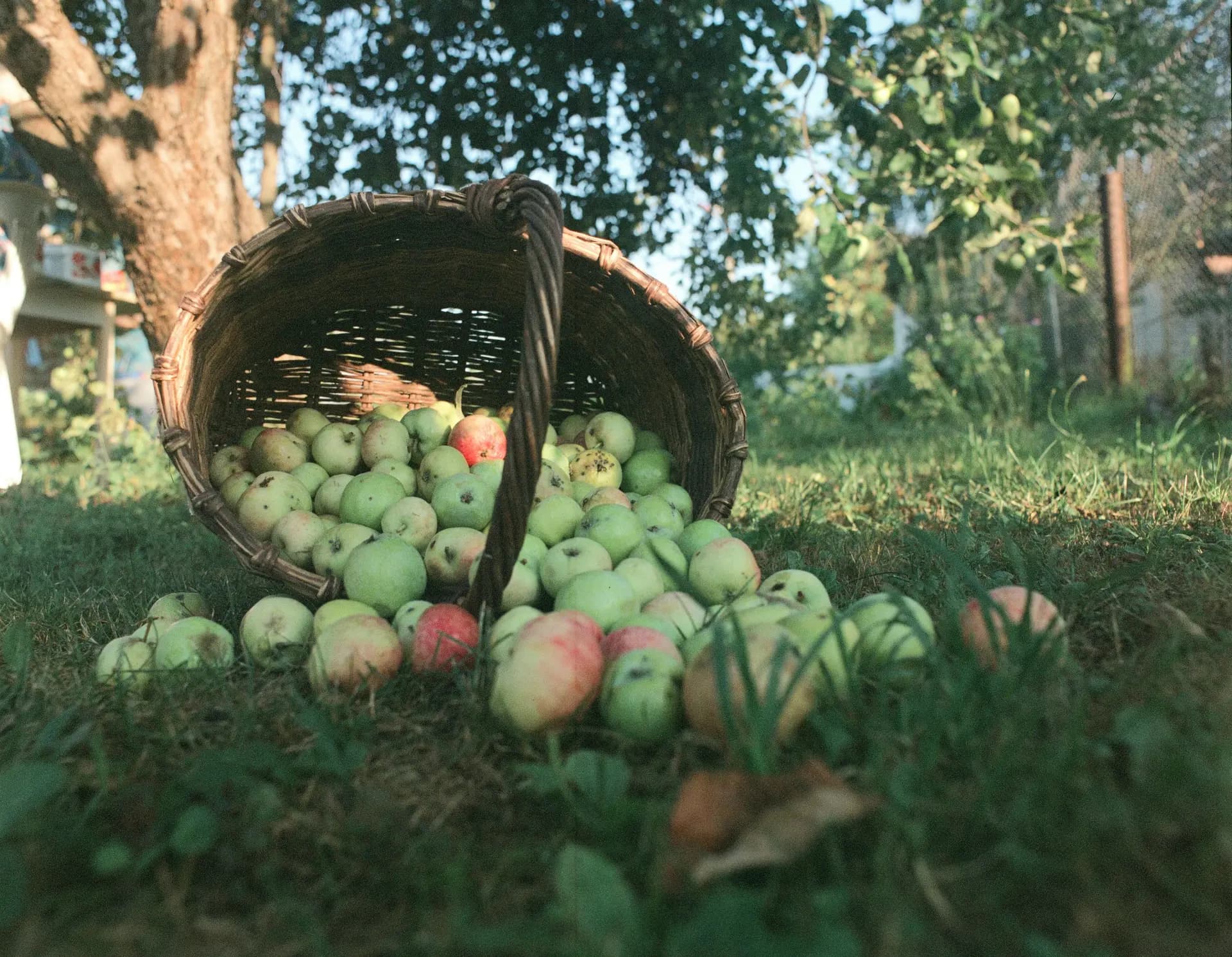
Can Chickens Eat Apples? Yes, But Core Them First
Chickens can eat apples, skin and all, but the seeds carry amygdalin, which releases cyanide. How much a hen would need to eat, how to feed apples, and cores.
Researched from university extension, USDA, and veterinary sources. How we research.
Yes, chickens can eat apples, skin and flesh included, and a cored apple hung on a string is one of the classic boredom-busters for a penned flock. The one thing to remove is the seeds. Apple seeds contain amygdalin, a compound that releases cyanide when the seed is crushed, and it is on the University of Florida's extension list of things never to feed chickens. A hen would need to eat a lot of crushed seeds to be poisoned, and this guide puts a number on that, but coring an apple takes ten seconds and removes the question.
Below: what apples give a hen, the seed math, peels and cores, applesauce and cider pulp, crab apples, chicks, and how many apples a chicken should get.
Are Apples Safe for Chickens?
The flesh and skin, yes. The seeds are the exception, and the stem and the woody core are simply indigestible rather than poisonous. Apples do not appear on extension lists of toxic foods for poultry except for their seeds, and every part of the fruit a person eats is safe for a hen.
What Is in an Apple
USDA figures for raw apple put 100 grams at about 86 percent water, roughly 10 grams of sugar, a couple of grams of fiber with the skin on, and small amounts of potassium and vitamin C. That is less sugar than grapes, more than strawberries, and enough fiber to make apples one of the better fruit treats for a hen's digestion. Like all fruit, apples add nothing a complete layer feed lacks; they are water, a little sugar, and something to do.
The Seed Question
Apple seeds contain amygdalin. When the seed is crushed and the amygdalin meets enzymes in the seed or the gut, it breaks down and releases hydrogen cyanide. Merck's veterinary reference describes cyanide as a fast-acting poison that blocks the cells' ability to use oxygen, which is why the warning is worth taking seriously.
The reassurance is in the dose. A 2015 study in the journal Food Chemistry measured amygdalin in the seeds of fifteen apple varieties and found 1 to 4 milligrams per gram of seed. An apple seed weighs well under a gram, and a typical apple holds five to ten of them. That works out to a few milligrams of amygdalin per apple, only a fraction of which becomes cyanide, and only if the seeds are crushed rather than swallowed whole. A hen that snatches a seed or two from a windfall is not in danger. The concern is a flock working through a bucket of cider pomace or a pile of cores over days, which is the scenario the never lists are written for.
The practical rule: core apples you feed on purpose, and do not worry about the seed a hen finds under the tree.
Apple Peels
Fine, and the skin holds most of the fiber. Wash the apple first. Supermarket apples are waxed and carry pesticide residue, and a hen eating the peel gets both. Peels from apples you have peeled for pie are a good use for the trimmings.
Apple Cores
The flesh on a core is fine; the seeds and the fibrous center are not worth the risk or the indigestible bulk. If you eat apples and want to give the flock the leftovers, bite around the core and toss the seeds. A core with the seeds cut out is fine.
Applesauce, Cider, and Pomace
Plain applesauce with no added sugar is fine in small amounts and is a good way to get a sick or molting hen to take food. Sweetened applesauce is too much sugar.
Cider and juice are sugar water. Skip them.
Cider pomace, the pressed pulp left after making cider, is where apple seeds concentrate, and it ferments fast. Do not put pomace in the run. If you press cider and want to feed the pulp, pick out the seeds, feed it fresh the same day, and remove what the flock does not finish.
Crab Apples
Safe, with the same seed caution. Ranging chickens clean up windfall crab apples every fall, and the small fruit is easy for them to peck apart. Rotting windfalls that have started to ferment are the exception, since fermented fruit is on the never list for the alcohol.
How Many Apples Can a Chicken Eat?
A quarter of a medium apple per standard hen, a few times a week, sits inside the treat allowance. A whole apple hung on a string keeps four or five hens busy for an afternoon and works out to about that amount each. The extension guideline for all treats combined is no more than the flock finishes in about 20 minutes, and a hanging apple stretches that on purpose: the point is the pecking, not the meal.
Signs you are overdoing it are the usual ones: watery droppings, hens skipping feed, and a slow drop in eggs.
Apples vs Other Fruit Treats
Apples sit in the middle of the fruit range on sugar and near the top on fiber, which makes them a reasonable regular treat once the seeds are out. Per 100 grams, from USDA figures:
| Fruit | Water | Sugar | Fiber | Notes |
|---|---|---|---|---|
| Apples | 86 percent | About 10 g | 1 to 2 g | Core out the seeds |
| Strawberries | 91 percent | About 5 g | 2 g | Whole plant safe |
| Grapes | 80 percent | About 16 g | Under 1 g | Halve for small birds |
| Bananas | 75 percent | About 12 g | 2 to 3 g | Peels only chopped |
| Pears | 84 percent | About 10 g | 3 g | Same seed rule as apples |
Windfalls and Rotting Apples
A flock under an apple tree will clean up windfalls, seeds and all, and that is fine in the amounts a ranging bird eats. The line is fermentation. Apples that have sat long enough to go soft, brown, and boozy have started turning their sugar into alcohol, and alcohol and fermented food are on the extension never list. Rake up windfalls every few days in a heavy year, and if the flock gets into a fermenting pile and comes out wobbly, move them to water and shade and keep them off it until it is cleared.
The Hanging-Apple Trick
Core an apple, run a string through it, and hang it at head height in the run. Hens will peck at it for hours, and the swinging keeps the fast birds from finishing it in a minute. It is the cheapest enrichment there is, and in winter, when the run is bare and the flock is bored, it heads off feather pecking. Pull it down when it turns brown and mushy.
Can Baby Chicks Eat Apples?
After the first couple of weeks on starter feed only, finely grated apple is a fine first treat: soft, moist, and easy to peck. No seeds, no peel for very young chicks, and chick grit in the brooder from the first day treats appear. Our brooder setup guide covers the setup.
Frequently Asked Questions
Are apple seeds poisonous to chickens?
They contain amygdalin, which releases cyanide when the seed is crushed. The amount in one apple is small, and a stray seed is not dangerous, but seeds and cores are on extension never-feed lists and should be cut out of apples you feed deliberately.
Can chickens eat apple cores?
The flesh on the core is fine. Cut out the seeds and the fibrous center first, or just toss the core and feed the rest of the apple.
Can chickens eat apple peels?
Yes, and the peel carries most of the fiber. Wash the apple first to remove wax and spray.
Can chickens eat applesauce?
Plain, unsweetened applesauce in small amounts, yes. Sweetened applesauce, juice, and cider are too much sugar.
How much apple can a chicken eat?
About a quarter of a medium apple per standard hen a few times a week. A whole cored apple hung on a string is the classic way to feed a small flock.
Can chickens eat crab apples?
Yes, with the seeds and the same rules. Skip windfalls that have started to ferment.
Bottom Line
Core the apple, and the rest of it is a safe, cheap, and useful treat. Hang it on a string for a bored winter flock, grate it for chicks, and keep cider pomace and fermenting windfalls out of the run. For the full safe and unsafe list, see what can chickens eat.
Sources:
- •USDA FoodData Central. Apples, raw, without skin. FDC ID 171689. https://fdc.nal.usda.gov/food-details/171689/nutrients
- •Bolarinwa IF, Orfila C, Morgan MRA. Determination of amygdalin in apple seeds, fresh apples and processed apple juices. Food Chemistry 2015;170:437-442 (1 to 4 mg amygdalin per gram of seed). https://pubmed.ncbi.nlm.nih.gov/25306368/
- •Merck Veterinary Manual. Cyanide Poisoning in Animals. https://www.merckvetmanual.com/toxicology/cyanide-poisoning/cyanide-poisoning-in-animals
- •UF/IFAS Extension Holmes County. 10 Foods You Should Never Feed Chickens (apple seeds and fruit pits, alcohol and fermented food). https://blogs.ifas.ufl.edu/holmesco/?p=28475
- •Poultry Extension (eXtension). Feeding Chickens for Egg Production in Small and Backyard Flocks (treat limits, grit). https://poultry.extension.org/articles/feeds-and-feeding-of-poultry/feeding-chickens-for-egg-production/
Related Guides
Can Chickens Eat Bell Peppers? Fruit Yes, Plant No
Chickens can eat bell peppers, seeds and all. The plant is a nightshade, so leaves and stems stay off the menu. Hot peppers, colors, how much, and chicks.
Feed & NutritionCan Chickens Eat Celery? Yes, If You Chop the Strings
Chickens can eat celery stalks and leaves, but long celery strings can bind a hen's crop. How to chop it, how much to feed, and the signs of an impacted crop.
Feed & NutritionCan Chickens Eat Grapes? Yes, With Two Cautions
Chickens can eat grapes, seeds and all. The kidney damage grapes cause in dogs is not reported in poultry. How many to feed, choking risk, and raisins.
Feed & NutritionCan Chickens Eat Mushrooms? Store-Bought Yes, Wild No
Chickens can eat store-bought mushrooms raw or cooked. Wild mushrooms are the risk: Merck's poisoning guide, why hens usually ignore them, and what to feed.