Can Chickens Eat Mushrooms? Store-Bought Yes, Wild No
Chickens can eat store-bought mushrooms raw or cooked. Wild mushrooms are the risk: Merck's poisoning guide, why hens usually ignore them, and what to feed.
Researched from university extension, USDA, and veterinary sources. How we research.
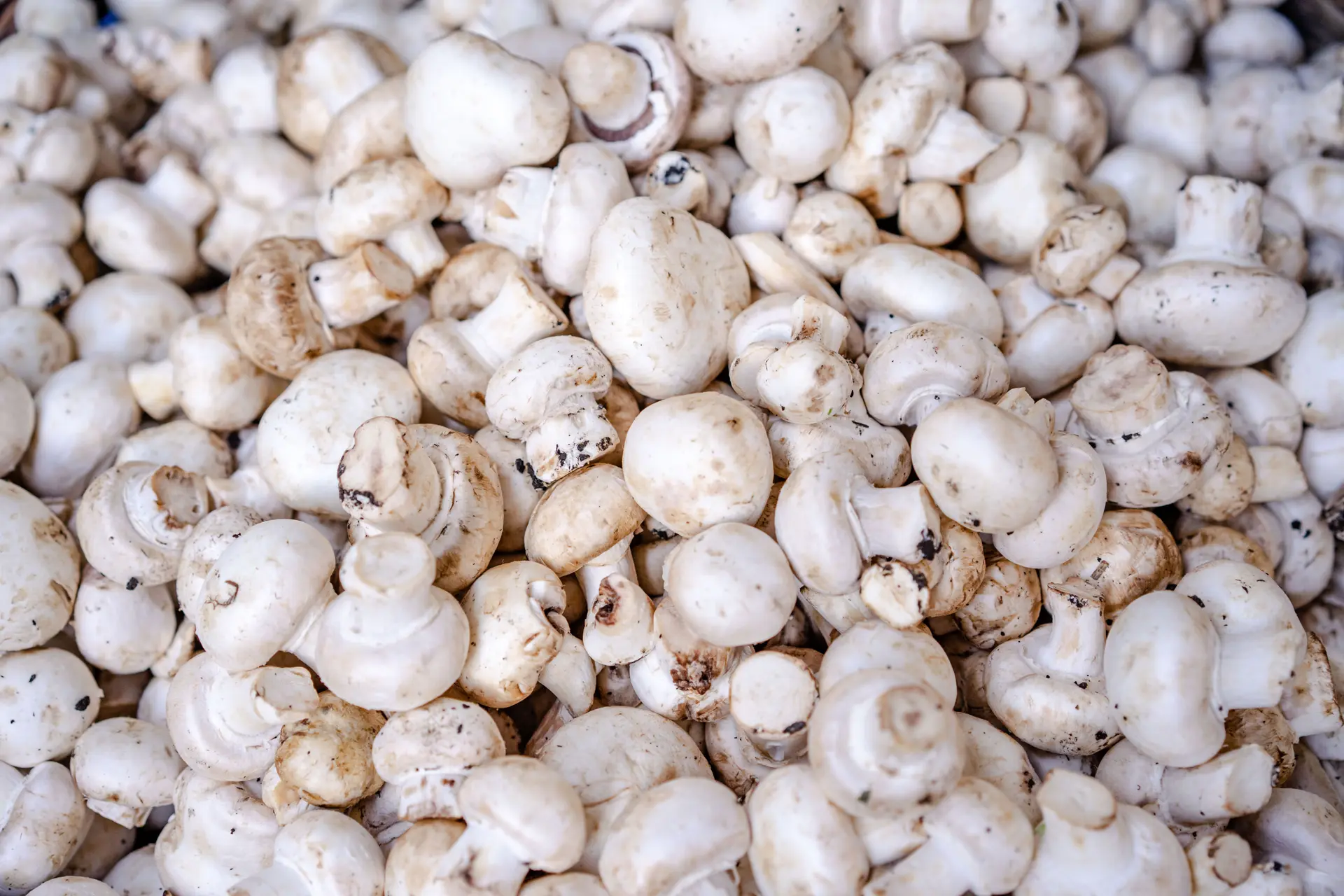
Yes, chickens can eat mushrooms, as long as they are the kind you would buy at a grocery store. White button, cremini, portobello, shiitake, and oyster mushrooms are all safe for chickens raw or cooked, and poultry researchers have fed cultivated mushrooms to laying hens in trials looking for antibiotic alternatives. The problem is the other kind. Wild mushrooms that come up in a damp run after rain can be anything, and a few of them, the Amanita species in particular, destroy the liver of any animal that eats them. Chickens usually leave mushrooms alone, but "usually" is not a rule, so the job is to pull the wild ones and feed only the ones you can name.
This guide covers what cultivated mushrooms offer, raw versus cooked, the wild-mushroom problem and what Merck says about it, what to do about mushrooms in the run, and chicks.
Are Mushrooms Safe for Chickens?
Cultivated ones, yes. Store mushrooms are not on the University of Florida's extension list of foods never to feed chickens, and they are on the other side of the ledger in research: a 2019 review in the journal Animals surveyed the use of medicinal mushrooms in laying hen rations as a way to support production and health without antibiotics. That work uses specific mushrooms at controlled levels, and it is not a reason to feed your flock mushrooms for their health, but it does settle the question of whether cultivated mushrooms are safe for hens to eat. They are.
The safety line is not raw versus cooked or one variety versus another. It is cultivated versus wild.
What Is in a Mushroom
USDA figures for raw white mushrooms put 100 grams at about 92 percent water, 3 grams of protein, a gram of fiber, 2 grams of sugar, and over 300 milligrams of potassium, with essentially no fat. For a vegetable, that is a lot of protein and very little sugar, which makes mushrooms a reasonable scrap: not a substitute for layer feed, but not empty calories either.
Raw vs Cooked Mushrooms
Both are fine. Raw mushrooms are chewy and many hens ignore a whole one, then eat it happily once it is chopped. Cooked mushrooms, plain and cooled, go down more easily. Skip mushrooms cooked with butter, oil, salt, garlic, or onion; the seasoning is the problem, not the mushroom. Mushrooms from a cream sauce or a stir-fry go in the compost.
Store mushrooms also go slimy fast in the fridge. A slightly soft mushroom is fine; a slimy or moldy one is not, because moldy food of any kind is on the never list.
Which Mushrooms
Any cultivated variety sold as food:
- •White button, cremini, portobello. The same species at different ages. Fine.
- •Shiitake, oyster, enoki, king oyster. Fine.
- •Dried mushrooms. Fine rehydrated and chopped; leathery dry.
- •Mushrooms you foraged and identified yourself. Only if you would eat them, and even then it is easier to keep them for your own table.
The Wild Mushroom Problem
Mushrooms that appear in the run, in mulch, under trees, or in the compost pile are the real question, and the honest answer is that nobody can tell you they are safe without identifying them. The Merck Veterinary Manual's overview of mushrooms toxic to animals notes that while many mushrooms are edible and safe, some contain toxins ranging from cyclopeptides to muscarine to psilocybin, plus unknown compounds. The most dangerous group, the Amanita species that include the death cap and the destroying angel, attack the liver and kidneys, and Merck lists that group as life-threatening with a latent period of more than six hours, meaning an animal looks fine for most of a day after eating one.
Merck's guidance is written for dogs, which eat mushrooms because they eat everything. Chickens are more selective and mostly ignore fungi, and reports of chickens poisoned by wild mushrooms are rare. But a bored flock in a bare run pecks at anything new, a chick will sample what it walks past, and there is no way to know which mushrooms came up after last night's rain. Treat every wild mushroom as a maybe and remove it.
Mushrooms Growing in the Chicken Run
They will, especially in wood-chip runs and deep-litter coops after wet weather, because chips and manure are exactly what fungi eat. What to do:
- •Pull them when you see them, cap and stem, and drop them in a bag rather than the compost the flock can reach.
- •Fix the damp. Mushrooms mean the litter is wet. Turn it, add dry material, and improve drainage. Wet litter causes bigger problems than mushrooms, including ammonia and bumblefoot; see our coop bedding guide.
- •Check under trees and along fence lines where the flock ranges. Fall is the peak.
- •Do not spray. Fungicides are worse for the flock than the mushrooms. Removal and dry litter are the fix.
If a Chicken Ate a Wild Mushroom
Most of the time nothing happens, because most wild mushrooms are harmless. If you saw a bird eat a mushroom you cannot identify:
- •Photograph the mushroom and any others nearby, top and underside, before you pull them. A vet or a local mycological society may be able to identify it.
- •Watch the bird for 24 hours. Merck's dangerous categories have latent periods from under three hours to more than six, so signs can come late. Look for lethargy, drooling, diarrhea, weakness, or a bird sitting apart.
- •Call a vet at the first sign, with the photos.
Can Baby Chicks Eat Mushrooms?
Chopped cultivated mushrooms are safe for chicks after the first couple of weeks on starter feed, but there is no strong reason to offer them; chicks get nothing from a mushroom they cannot get from starter. If you do, chop fine and have chick grit available. The wild-mushroom rule matters more for chicks than for hens, because chicks peck at everything and weigh a few ounces. Keep brooders and chick runs mushroom-free. See the brooder setup guide.
Frequently Asked Questions
Can chickens eat raw mushrooms?
Yes, store-bought ones. Chop them; many hens ignore whole raw mushrooms and eat chopped ones readily.
Can chickens eat cooked mushrooms?
Yes, plain and cooled. Not mushrooms cooked with butter, oil, salt, garlic, or onion.
Are wild mushrooms poisonous to chickens?
Some are, and there is no way to tell by looking. Merck lists several toxin groups, with the liver-destroying Amanita species the most dangerous. Pull wild mushrooms from the run and keep the flock away from them.
Do chickens eat mushrooms in the yard?
Usually not; chickens tend to ignore fungi. A bored or curious bird may sample one, which is why removing them is the safe habit.
Are mushrooms good for chickens?
Cultivated mushrooms are a reasonable scrap: about 3 grams of protein per 100 grams, little sugar, and potassium. They do not replace anything in layer feed.
Why are mushrooms growing in my chicken run?
Wet litter and wood chips. Pull the mushrooms, turn and dry the litter, and improve drainage.
Bottom Line
Grocery-store mushrooms are a safe, mildly useful scrap, chopped or cooked plain. Wild mushrooms are an unknown, and the safe habit is to pull every one you find in the run and keep the litter dry so fewer come up. For the full list of what chickens can and cannot eat, see what can chickens eat.
Sources:
- •Merck Veterinary Manual. Overview of Mushrooms Toxic to Animals (toxin groups, Amanita species, latent periods). https://www.merckvetmanual.com/toxicology/poisonous-mushrooms/overview-of-mushrooms-toxic-to-animals
- •Use of Medicinal Mushrooms in Layer Ration. Animals 2019;9(12):1014 (review of cultivated mushrooms fed to laying hens). https://pubmed.ncbi.nlm.nih.gov/31766523/
- •USDA FoodData Central. Mushrooms, white, raw. FDC ID 169251. https://fdc.nal.usda.gov/food-details/169251/nutrients
- •UF/IFAS Extension Holmes County. 10 Foods You Should Never Feed Chickens (moldy food; mushrooms are not on the list). https://blogs.ifas.ufl.edu/holmesco/?p=28475
Related Guides
Can Chickens Eat Apples? Yes, But Core Them First
Chickens can eat apples, skin and all, but the seeds carry amygdalin, which releases cyanide. How much a hen would need to eat, how to feed apples, and cores.
Feed & NutritionCan Chickens Eat Bell Peppers? Fruit Yes, Plant No
Chickens can eat bell peppers, seeds and all. The plant is a nightshade, so leaves and stems stay off the menu. Hot peppers, colors, how much, and chicks.
Feed & NutritionCan Chickens Eat Celery? Yes, If You Chop the Strings
Chickens can eat celery stalks and leaves, but long celery strings can bind a hen's crop. How to chop it, how much to feed, and the signs of an impacted crop.
Feed & NutritionCan Chickens Eat Grapes? Yes, With Two Cautions
Chickens can eat grapes, seeds and all. The kidney damage grapes cause in dogs is not reported in poultry. How many to feed, choking risk, and raisins.