Can Chickens Eat Celery? Yes, If You Chop the Strings
Chickens can eat celery stalks and leaves, but long celery strings can bind a hen's crop. How to chop it, how much to feed, and the signs of an impacted crop.
Researched from university extension, USDA, and veterinary sources. How we research.
Yes, chickens can eat celery: the stalks, the leaves, and the base. Nothing on a celery plant is toxic to poultry. The catch is mechanical. Celery is held together by long, tough strings, and a hen that swallows a strip of stalk whole can end up with those strings tangled in her crop. Cut celery crosswise into short pieces and the problem goes away.
This guide covers what celery offers a hen, the string problem and what crop impaction looks like, leaves versus stalks, cooked celery, how much to feed, and chicks.
Is Celery Safe for Chickens?
Yes. Celery is not on the University of Florida's extension list of foods never to feed chickens, nor on any other extension list of poultry toxins. It is a low-calorie, high-water vegetable, and the only concern is the shape of the pieces, not what is in them.
What Is in Celery
USDA figures for raw celery put 100 grams at about 95 percent water, roughly 1.5 grams of fiber, a little over a gram of sugar, and modest amounts of potassium, vitamin K, and calcium. It is one of the least caloric things you can hand a hen. That makes celery a good hot-weather treat for the water, and a poor one for nutrition, since it supplies almost nothing a complete feed does not. Think of it as a crunchy way to keep a flock busy.
The String Problem
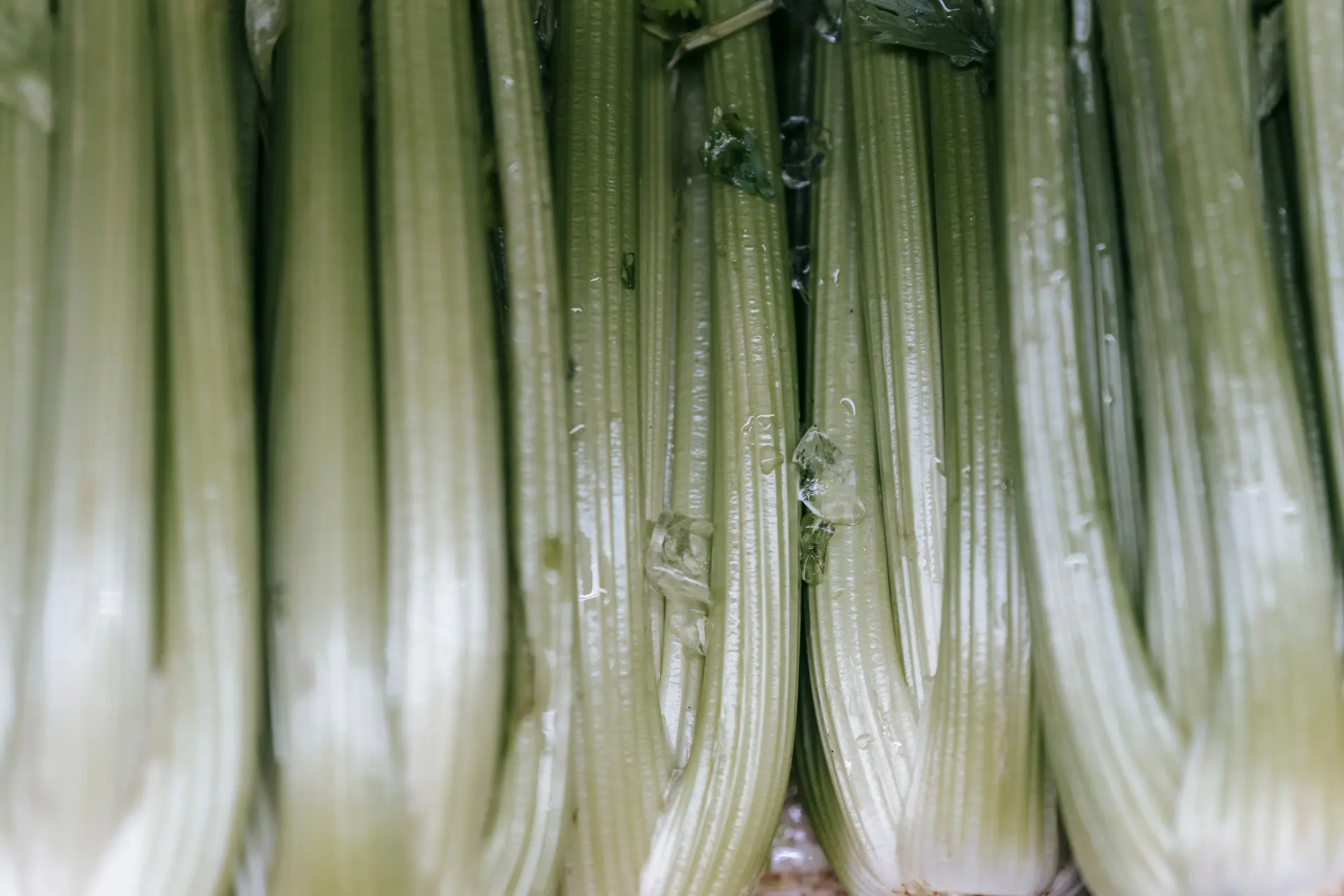
Celery stalks have long vascular strings running their length, the ones that catch in your teeth. Chickens do not chew. A hen pecks off a piece and swallows it, and a two-inch strip of stalk goes down as a two-inch bundle of strings. Most of the time the crop and gizzard handle it. Sometimes the strings ball up with other fiber and the crop cannot empty.
The University of Maryland's extension describes impacted crop as the crop packed with poorly digestible material, and lists long grass, string, feathers, and similar fibrous material as typical causes. Celery strings are the same kind of material. The fix is to cut celery crosswise into pieces no longer than about half an inch, so every string is short. Chopped that way, celery is no more risky than lettuce.
What an impacted crop looks like
Maryland's guide gives the signs: a crop that is still full first thing in the morning, before the bird has eaten, and feels hard, like a golf ball, when you press it. The bird may stretch her neck, act lethargic, and eat less. The guide's first step is to isolate the hen with water and no feed and check again; if the crop has emptied, she had just eaten a big meal, and if it is still hard, she needs attention. Massage and a little olive oil help mild cases; a hard, unmoving crop over more than a day is a vet visit. See our sick chicken symptoms guide for the rest of the checklist.
Celery Leaves
The leaves are safe and are the part most hens prefer. They are soft, a little bitter, and easy to eat, with none of the string problem. When you trim a bunch of celery for the kitchen, the leaves and the tender inner stalks are the best part for the flock. Chop them roughly so nothing is long enough to tangle.
Celery Stalks and Base
Stalks are fine chopped short. The outer stalks are the stringiest, so those are the ones to cut carefully. The base, the solid white heart the stalks grow from, is dense and best chopped small or given to the flock to peck at on its own, like a hanging apple; they will work at it without swallowing large pieces.
Cooked Celery
Cooking softens the strings, which makes cooked celery safer than raw for hens that gulp. Plain steamed or boiled celery is fine. Celery from soup or a stir-fry is not, because of the salt and oil, and salt is on the extension never list.
How Much Celery Can a Chicken Eat?
A small handful of chopped celery per standard hen, a few times a week, is plenty. Because celery is nearly all water, the risk of overfeeding is not sugar but bulk: a hen that fills her crop with celery has less room for feed. The extension guideline applies as always: scraps and scratch together should be no more than the flock finishes in about 20 minutes. Celery takes them a while, so put out less than you think.
Pick up what they leave. Wilted celery on the run floor draws flies and molds, and moldy food is on the never list.
Can Baby Chicks Eat Celery?
Celery is not a great chick treat. It has almost no nutrition, and the strings are a bigger risk in a small crop. If you want to offer it, wait until the chicks are a few weeks old, use only finely chopped leaves, and have chick grit in the brooder. Grated carrot or a chopped strawberry is a better first vegetable; see the brooder setup guide.
Celery vs Other Greens and Vegetables
Celery is the most watery vegetable most flocks see, which is its strength on a hot day and its weakness the rest of the year. Per 100 grams, from USDA figures:
| Vegetable | Water | Fiber | Notes |
|---|---|---|---|
| Celery | 95 percent | 1.6 g | Chop the strings short |
| Carrots | 88 percent | 2.8 g | Grate or cook; high in beta-carotene |
| Lettuce and leafy greens | 95 percent | About 1 g | Hang a head in the run |
| Cabbage | 92 percent | 2.5 g | Hang whole; lasts for days |
| Cucumber | 95 percent | Under 1 g | Halve and let them peck |
For a regular vegetable treat, carrots and cabbage give a hen more for the crop space. For a July afternoon, celery, cucumber, and lettuce are the ones that put water into a panting bird.
Celery for Hot Weather
Because it is almost entirely water, chopped celery is a useful addition to the hot-day rotation alongside frozen watermelon and shallow water pans. Chill it, chop it short, and put it out in the afternoon shade. It will not cool a hen the way water and shade do, but every mouthful is water she would not otherwise drink. Our summer chicken care guide covers the heat-stress side.
Celery in the Garden
Chickens will strip celery leaves and trample young plants. Keep the flock out of the bed until harvest, then let them clean up the trimmings and the base you cut off.
Frequently Asked Questions
Can chickens eat celery leaves?
Yes, and they are the part hens like most. Chop them roughly and feed them fresh.
Can chickens eat celery stalks?
Yes, cut crosswise into pieces about half an inch long so the strings are short. Long strips can tangle in the crop.
Can celery hurt chickens?
Only through its strings. Whole or long pieces can contribute to an impacted crop, which Maryland's extension describes as a hard, full crop that does not empty overnight. Chopped short, celery is safe.
Can chickens eat cooked celery?
Plain cooked celery, yes, and cooking softens the strings. Skip celery cooked with salt or oil.
Is celery good for chickens?
It is safe and hydrating, but nearly all water. Treat it as enrichment on a hot day rather than food.
Can baby chicks eat celery?
Better to wait a few weeks and then offer only finely chopped leaves with chick grit available. Softer vegetables make better first treats.
Bottom Line
Chop it short and celery is a safe, cheap, hydrating treat, leaves first. Left in long pieces it is one of the few vegetables that can cause a real problem, so the knife is the whole rule. For the full safe and unsafe list, see what can chickens eat.
Sources:
- •USDA FoodData Central. Celery, raw. FDC ID 169988. https://fdc.nal.usda.gov/food-details/169988/nutrients
- •University of Maryland Extension. Common Crop Issues in Backyard Chickens, EBR-60 (impacted crop causes and signs). https://extension.umd.edu/resource/common-crop-issues-backyard-chickens-ebr-60
- •Poultry Extension (eXtension). Feeding Chickens for Egg Production in Small and Backyard Flocks (treat limits, grit). https://poultry.extension.org/articles/feeds-and-feeding-of-poultry/feeding-chickens-for-egg-production/
- •UF/IFAS Extension Holmes County. 10 Foods You Should Never Feed Chickens (salt, moldy food; celery is not on the list). https://blogs.ifas.ufl.edu/holmesco/?p=28475
Related Guides
Can Chickens Eat Apples? Yes, But Core Them First
Chickens can eat apples, skin and all, but the seeds carry amygdalin, which releases cyanide. How much a hen would need to eat, how to feed apples, and cores.
Feed & NutritionCan Chickens Eat Bell Peppers? Fruit Yes, Plant No
Chickens can eat bell peppers, seeds and all. The plant is a nightshade, so leaves and stems stay off the menu. Hot peppers, colors, how much, and chicks.
Feed & NutritionCan Chickens Eat Grapes? Yes, With Two Cautions
Chickens can eat grapes, seeds and all. The kidney damage grapes cause in dogs is not reported in poultry. How many to feed, choking risk, and raisins.
Feed & NutritionCan Chickens Eat Mushrooms? Store-Bought Yes, Wild No
Chickens can eat store-bought mushrooms raw or cooked. Wild mushrooms are the risk: Merck's poisoning guide, why hens usually ignore them, and what to feed.