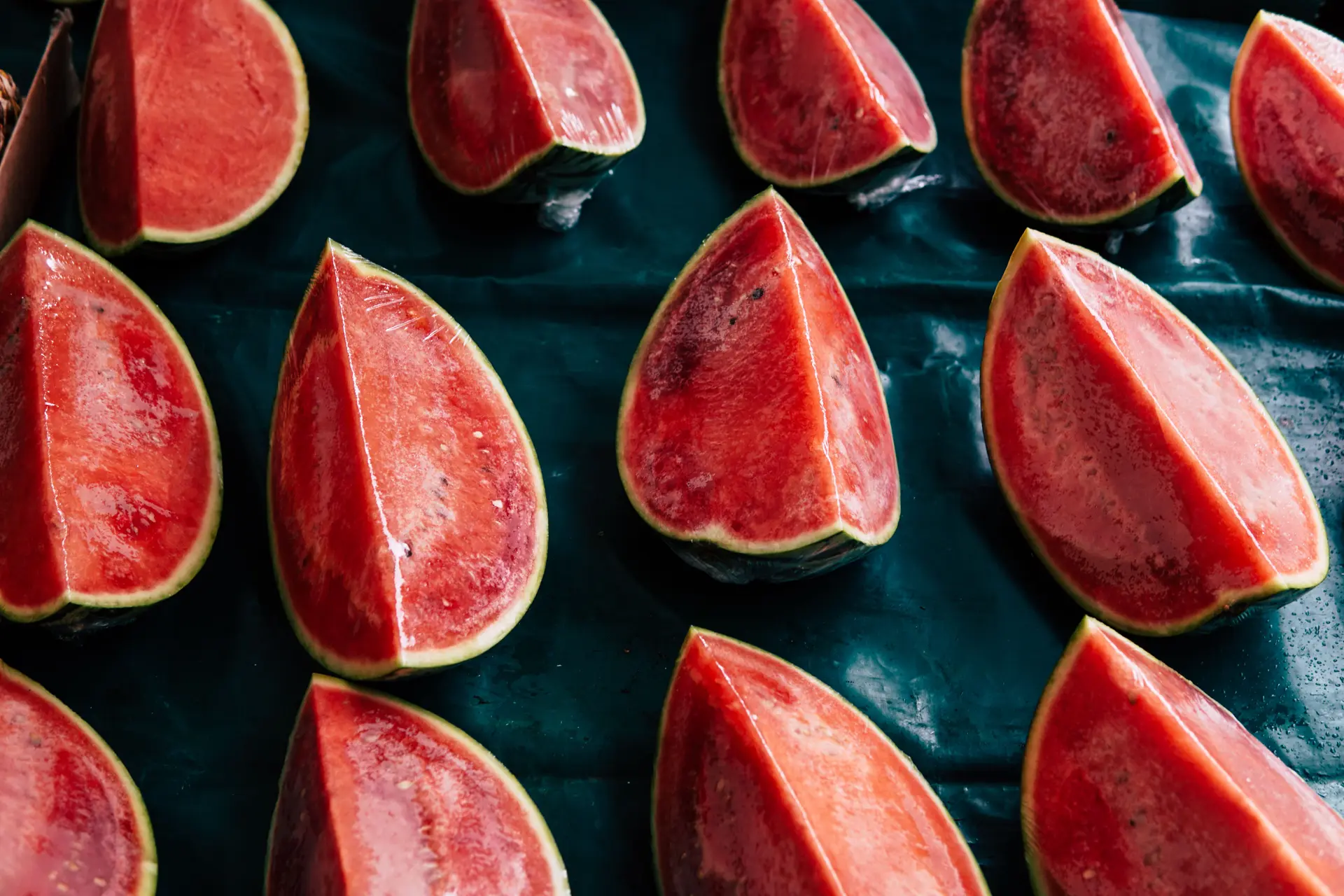
Can Chickens Eat Watermelon? Rind, Seeds, and Hot-Day Tips
Chickens can eat watermelon, rind and seeds included. Why extension services suggest freezing it for heat waves, how much to feed, and what to skip.
Researched from university extension, USDA, and veterinary sources. How we research.
Yes, chickens can eat watermelon, and nothing in it is off limits: the flesh, the seeds, the white rind, and the green skin are all safe. Watermelon is about 91 percent water, which is why it shows up in every extension guide to keeping chickens through a heat wave. A half melon set in the shade on a July afternoon is the easiest way to get water into a flock that is panting too hard to drink.
This guide covers what watermelon does and does not offer a hen, the rind and seed questions, the frozen-melon trick extension services recommend, how much to feed, chicks, and the one real rule, which is not to leave it out to rot.
Is Watermelon Safe for Chickens?
Yes, every part. Watermelon is not on the University of Florida's extension list of foods never to feed chickens, and the plant is in the gourd family, not a toxic one. Poultry extension guidance for extreme summer heat specifically names frozen watermelon as a treat that helps hens stay hydrated.
What Is in Watermelon
USDA figures for raw watermelon put 100 grams at 91.4 percent water, about 6 grams of sugar, almost no fiber, roughly 8 milligrams of vitamin C, a little potassium, and about 300 micrograms of beta-carotene from the red flesh. That is less sugar than grapes or apples and more water than any other common fruit, which is the whole case for it:
- •It is water in a form chickens will chase. A heat-stressed hen drinks less than she should. Watermelon puts water in her whether she is thirsty or not.
- •It is low in sugar for a fruit, so the amount that matters for hydration does not tip the sugar count.
- •It is not food. Almost no protein, no fat, and nothing a layer feed lacks. The extension heat guidance is direct about this: treats in hot weather should aim to hydrate without cutting into how much layer ration a hen eats, since the ration carries her vitamins and minerals.
Watermelon Rind
Safe, and most flocks eat it. The white rind is crunchy and mildly sweet, and hens peck a wedge down to the thin green skin, which they usually leave. The rind has more fiber than the flesh and less sugar. If you want to make a melon last an afternoon, leave the rind on; if you want it gone in ten minutes, cut the flesh into chunks.
Wash the outside first. Melons sit on the ground in the field and are handled in the store, and the rind is what the hens will be eating.
Watermelon Seeds
Safe. Watermelon seeds carry none of the cyanide-releasing compounds found in apple seeds and stone-fruit pits, and a hen's gizzard grinds them like any other seed. Seedless melons are fine too. There is no need to pick seeds out.
Frozen Watermelon for Hot Weather
This is the one place where a fruit treat is more than entertainment. The poultry extension guide to managing backyard chickens in extreme summer temperatures, which Arizona's extension repeats nearly word for word, recommends freezing watermelon or other chopped fruit and vegetables with water into an ice block, because it keeps hens cool and busy without filling them up. Two ways to do it:
- •Freeze a half melon for an hour or two and set it in the shade. Hens peck the cold flesh as it thaws.
- •Freeze chunks in a pan of water overnight to make a melon ice block. It lasts longer than bare fruit and the meltwater is a second drink.
The same guide notes that ice blocks and frozen bottles can go out in the morning if nobody is home during the day. Pair the melon with shade, cool water in the shade, and moving air; the melon helps, but it does not replace any of those. Our summer chicken care guide covers the rest.
How Much Watermelon Can Chickens Eat?
Because watermelon is nearly all water, the risk is not sugar but bulk and mess. A quarter of a small melon for six hens is a generous afternoon treat, and a whole melon is plenty for a flock of a dozen. In a heat wave you can offer it every day. In cool weather, once or twice a week is enough, since a flock full of melon eats less feed and lays accordingly.
Signs of too much are the usual ones: watery droppings, hens skipping their feed, and fewer eggs over a week or two.
Do Not Leave It Out
The only real rule. Watermelon sours fast in the heat, draws flies and wasps within hours, and a rind left in the run overnight molds. Moldy food is on the extension never list. Put the melon out in the afternoon, and pull the rinds and any leftover chunks by evening. In summer that also means one fewer thing drawing rats to the run overnight.
Can Baby Chicks Eat Watermelon?
After the first couple of weeks on starter feed only, a few small chunks of watermelon are a fine first fruit: soft, low in sugar, and mostly water. Take the seeds out for very young chicks and keep chick grit in the brooder from the first day treats appear. Do not overdo it; a chick full of melon is a chick not eating starter. See the brooder setup guide.
Watermelon vs Other Hot-Weather Treats
| Treat | Water | Sugar per 100 g | Notes |
|---|---|---|---|
| Watermelon | 91 percent | About 6 g | Best hydration per bite; freezes well |
| Cucumber | 95 percent | Under 2 g | Even less sugar; halve and let them peck |
| Celery | 95 percent | About 1 g | Chop the strings short |
| Strawberries | 91 percent | About 5 g | Low sugar; freeze whole |
| Grapes | 80 percent | About 16 g | Sweetest of the group; freeze halved, a few per bird |
Cantaloupe and honeydew work the same way as watermelon, rind, seeds, and all, with a little more sugar.
Frequently Asked Questions
Can chickens eat watermelon rind?
Yes. The white rind is safe, has more fiber than the flesh, and most hens eat it down to the green skin. Wash the outside first.
Can chickens eat watermelon seeds?
Yes. They contain nothing harmful and the gizzard grinds them. Seedless melon is fine too.
Is watermelon good for chickens?
It is a hydration treat rather than food: about 91 percent water with little sugar and almost no protein. Extension services recommend it, frozen, for heat waves.
How much watermelon can chickens eat?
A quarter melon for six hens is a generous afternoon treat; a whole melon serves a dozen. Daily in a heat wave is fine, once or twice a week otherwise.
Can baby chicks eat watermelon?
After two weeks or so on starter feed, a few small seedless chunks with chick grit available. Keep it small so they still eat starter.
Can chickens eat cantaloupe or honeydew?
Yes, the same way: flesh, seeds, and rind, pulled out before it sours.
Bottom Line
Watermelon is the best hot-weather treat a flock can have: safe in every part, mostly water, and cheap in July. Freeze it, set it in the shade, and pull the rinds by evening. For the full list of what chickens can and cannot eat, see what can chickens eat.
Sources:
- •Poultry Extension (eXtension). Managing Backyard Chickens During Periods of Extreme Summer Temperatures (frozen watermelon blocks, hydration without displacing ration). https://poultry.extension.org/articles/poultry-management/managing-backyard-chickens-during-extreme-summer-temperatures/
- •University of Arizona Cooperative Extension. Managing chickens in extreme heat. https://extension.arizona.edu/news/managing-chickens-extreme-heat
- •USDA FoodData Central. Watermelon, raw. FDC ID 167765. https://fdc.nal.usda.gov/food-details/167765/nutrients
- •UF/IFAS Extension Holmes County. 10 Foods You Should Never Feed Chickens (moldy food; watermelon is not on the list). https://blogs.ifas.ufl.edu/holmesco/?p=28475
Related Guides
Can Chickens Eat Cucumbers? Peels, Seeds, and Bitter Ones
Chickens can eat cucumbers, peel and seeds included. At 95 percent water they are a hot-day treat. What to do with bitter ones, and how much to feed.
Feed & NutritionCan Chickens Eat Apples? Yes, But Core Them First
Chickens can eat apples, skin and all, but the seeds carry amygdalin, which releases cyanide. How much a hen would need to eat, how to feed apples, and cores.
Feed & NutritionCan Chickens Eat Avocado? No, and Here Is the Evidence
Chickens cannot safely eat avocado. Persin in the skin, pit, leaves, and flesh damages the heart in birds. What Merck and the case reports say, and what to do.
Feed & NutritionCan Chickens Eat Bell Peppers? Fruit Yes, Plant No
Chickens can eat bell peppers, seeds and all. The plant is a nightshade, so leaves and stems stay off the menu. Hot peppers, colors, how much, and chicks.