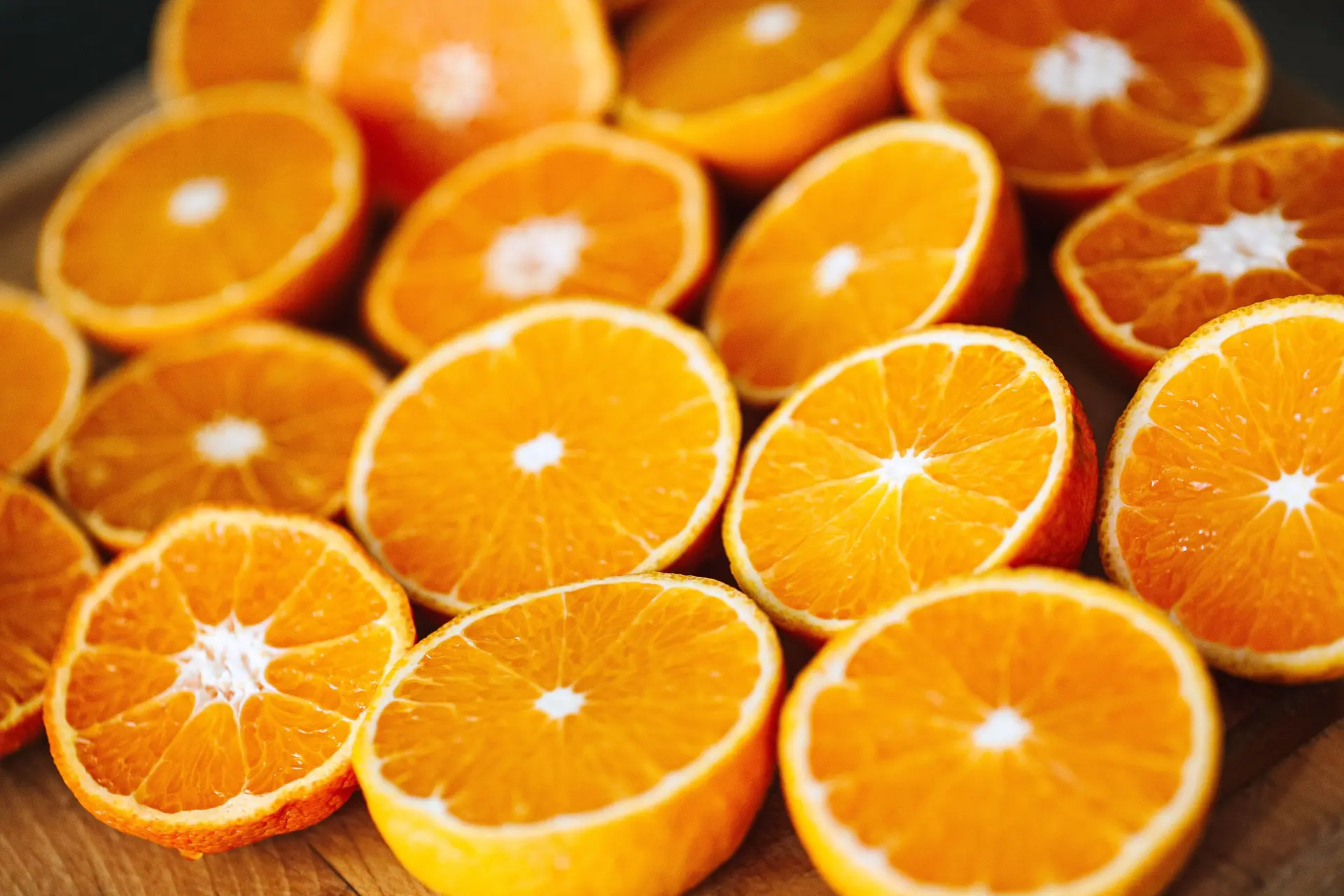
Can Chickens Eat Oranges? The Citrus Myth and Peels
Chickens can eat oranges. No extension source lists citrus as harmful, and the calcium myth has no evidence behind it. Peels, seeds, other citrus, and how much.
Researched from university extension, USDA, and veterinary sources. How we research.
Yes, chickens can eat oranges. This is one of the foods where the internet has decided there is a problem, and the record does not support it. No university extension list of foods harmful to chickens includes citrus, the claim that oranges block calcium and cause thin shells or feather plucking has no study behind it, and the University of Florida, which knows something about both oranges and chickens, leaves citrus off its never-feed list entirely. What is true is simpler: most chickens do not much like oranges, and the few that do should get them in the same small amounts as any sweet fruit.
This guide covers the citrus myth and where it came from, what an orange offers a hen, peels and seeds, other citrus, how much to feed, and chicks.
Are Oranges Safe for Chickens?
Yes. Oranges are not on the University of Florida's extension list of foods never to feed chickens, which covers avocado, chocolate, raw beans, green potatoes, moldy food, salt, onions, alcohol, fruit pits, and caffeine. Citrus is not on the poultry extension service's lists either. An orange has no toxic seed, pit, or foliage, and the acid that gives it its bite is nothing a chicken's digestive system cannot handle.
The Citrus Myth
The usual claims are that citrus interferes with calcium absorption and causes thin-shelled eggs, that it causes feather plucking, or that it drops egg production. We looked for the evidence and could not find it: no extension publication, no veterinary reference, and no published study links oranges to any of those outcomes in chickens. The claims appear to trace to forum posts repeating one another.
What we can say with confidence is this. A hen that eats an orange segment now and then is not at risk from the citrus. A hen that fills up on any fruit, oranges included, eats less layer feed, and it is the missing feed, not the orange, that thins shells. That is the same rule as for every treat on this site.
What Is in an Orange
USDA figures for raw oranges put 100 grams at about 87 percent water, roughly 9 grams of sugar, 2.4 grams of fiber, some calcium and potassium, and a lot of vitamin C. The vitamin C is the reason people eat oranges and it means nothing to a hen: the poultry extension service's nutrition guide notes that poultry make their own vitamin C, so there is no dietary requirement. What is left is a moderately sugary, watery fruit with useful fiber, about on par with apples.
Do Chickens Like Oranges?
Mostly no. A flock offered orange segments beside a handful of grapes will usually empty the grapes and leave the orange. Some birds, and some flocks, take to citrus; many never do. If yours ignore it, there is no reason to keep trying, and no reason to think they are missing anything.
Orange Peels
Safe but pointless. Orange peel is tough, bitter, and full of the aromatic oils that make it smell like an orange, and chickens almost never eat it. A peel tossed in the run gets pecked once and then trampled. If you have a flock that eats peel, small amounts are fine; if you are hoping to get rid of peels, the compost is a better destination.
Orange Seeds
Safe. Orange seeds do not carry the cyanide-releasing compound in apple seeds and stone-fruit pits, and a hen that swallows one passes it.
Mandarins, Lemons, Limes, and Grapefruit
Same family, same answer. Mandarins and clementines are sweeter and softer, and a flock is more likely to eat them than a navel orange. Lemons, limes, and grapefruit are safe but so sour that almost no chicken will touch them, and there is no reason to push. Lemon juice is sometimes added to chicken water as a folk remedy. There is no evidence it does anything useful, and in hot weather the last thing you want is a reason for birds to drink less. Keep the water plain and change it often.
How Much Orange Can Chickens Eat?
For the flock that likes them, a segment or two per standard hen once or twice a week sits inside the treat allowance. The extension guideline for all treats combined is no more than the flock finishes in about 20 minutes, and with oranges the usual problem is the opposite: they do not finish it, and the pieces sit. Pull leftovers by evening before they mold or draw flies.
Can Baby Chicks Eat Oranges?
Not worth it. Chicks need starter feed and, after the first couple of weeks, soft, low-sugar first treats like a halved blueberry. Citrus is acidic and sugary and most chicks ignore it. See the brooder setup guide.
Oranges vs Other Fruit Treats
| Fruit | Water | Sugar per 100 g | Fiber | Notes |
|---|---|---|---|---|
| Oranges | 87 percent | About 9 g | 2.4 g | Safe; most hens ignore them |
| Apples | 86 percent | About 10 g | 1 to 2 g | Core out the seeds |
| Pineapple | 86 percent | About 10 g | 1.4 g | Flesh only |
| Strawberries | 91 percent | About 5 g | 2 g | A flock favorite |
| Watermelon | 91 percent | About 6 g | Under 1 g | Best for heat |
Frequently Asked Questions
Is citrus bad for chickens?
No. No extension or veterinary source lists citrus as harmful to chickens, and the claims about calcium, thin shells, and feather plucking have no study behind them. Feed it in the same small amounts as any fruit, if the flock will eat it at all.
Can chickens eat orange peels?
The peel is not toxic, but it is tough and bitter and chickens almost never eat it. Compost it.
Do chickens like oranges?
Usually not. Most flocks leave oranges for sweeter fruit, though some birds do eat them.
Can chickens eat lemons, limes, or grapefruit?
They are safe but too sour for almost any chicken to bother with. Skip the lemon in the water; there is no evidence it helps.
Can chickens eat mandarins or clementines?
Yes, and being sweeter, they are the citrus a flock is most likely to eat. A segment or two per hen.
Will oranges affect my hens' eggs?
Not the oranges. Too much of any treat displaces layer feed, and that is what thins shells and cuts production.
Bottom Line
Oranges are safe, most chickens do not care for them, and the calcium scare is a forum myth. Offer a segment if you like, compost the peel, and spend the worry on the foods that actually are on the never list. See what can chickens eat for that list.
Sources:
- •USDA FoodData Central. Oranges, raw, all commercial varieties (SR Legacy, FDC ID 169097). https://fdc.nal.usda.gov/food-details/169097/nutrients
- •UF/IFAS Extension Holmes County. 10 Foods You Should Never Feed Chickens (citrus is not on the list). https://blogs.ifas.ufl.edu/holmesco/?p=28475
- •Poultry Extension (eXtension). Basic Poultry Nutrition (poultry synthesize vitamin C; no dietary requirement). https://poultry.extension.org/articles/feeds-and-feeding-of-poultry/basic-poultry-nutrition/
- •Poultry Extension (eXtension). Feeding Chickens for Egg Production in Small and Backyard Flocks (the 20-minute rule for scraps; table scraps and egg production). https://poultry.extension.org/articles/feeds-and-feeding-of-poultry/feeding-chickens-for-egg-production/
Related Guides
Can Chickens Eat Carrots? Raw, Cooked, Tops, and Peels
Chickens can eat carrots raw or cooked, tops included. Why raw carrots need grating, what beta-carotene does and does not do for yolks, and how much to feed.
Feed & NutritionCan Chickens Eat Cucumbers? Peels, Seeds, and Bitter Ones
Chickens can eat cucumbers, peel and seeds included. At 95 percent water they are a hot-day treat. What to do with bitter ones, and how much to feed.
Feed & NutritionCan Chickens Eat Rice? Cooked, Raw, and the Swelling Myth
Chickens can eat rice, cooked or uncooked, and the myth that dry rice swells and hurts birds is false. What rice offers, brown vs white, and how much.
Feed & NutritionCan Chickens Eat Bananas? Peels and How Much
Yes, chickens can eat bananas, and the peel is safe too. Here's how much to feed, why sugar is the real limit, and how to serve peels the right way.