Can Chickens Eat Pineapple? Flesh, Core, Skin, and Canned
Chickens can eat pineapple flesh in small amounts. Why the core and skin are not worth the effort, what bromelain does and does not do, and canned pineapple.
Researched from university extension, USDA, and veterinary sources. How we research.
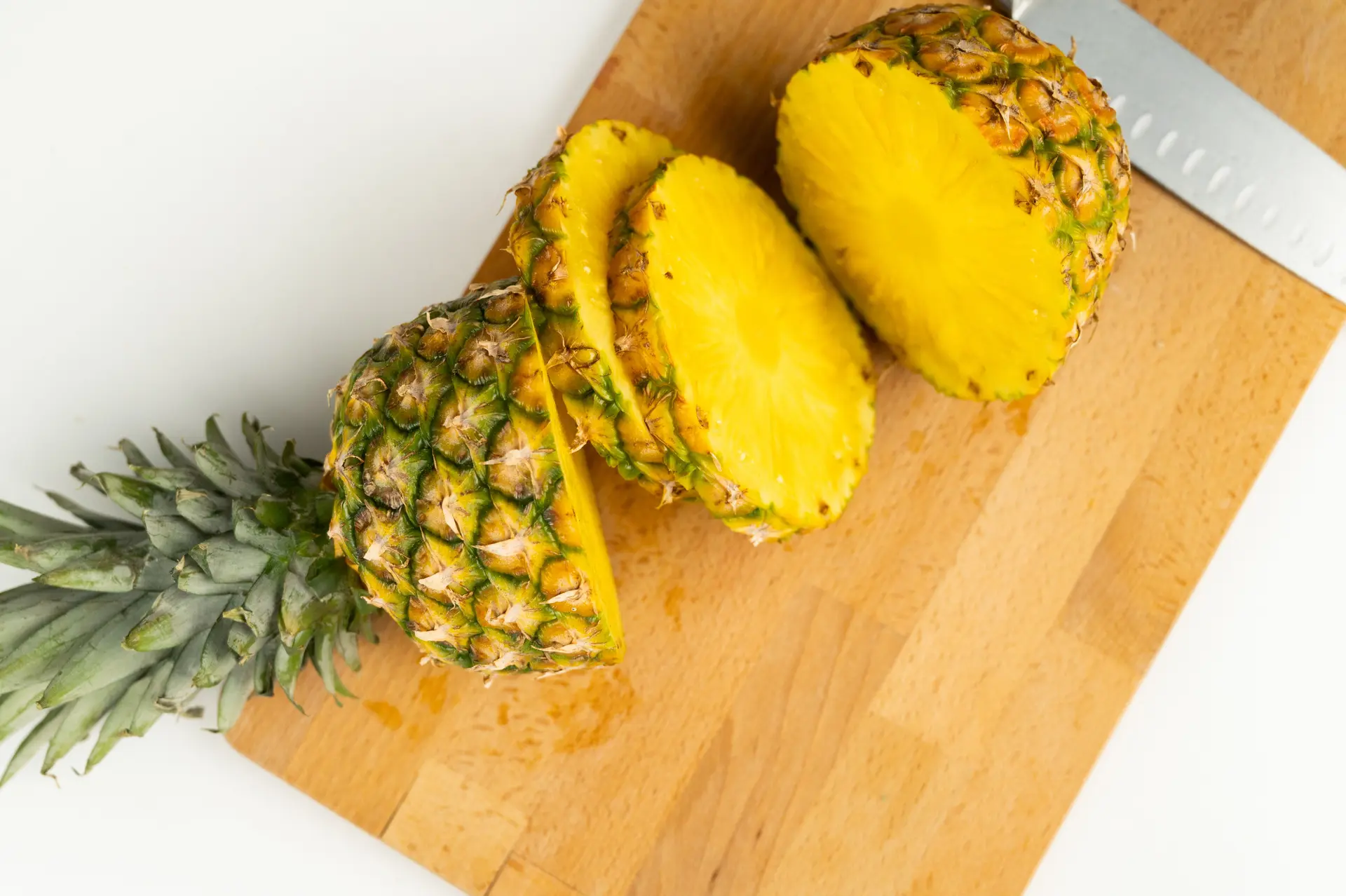
Yes, chickens can eat pineapple, and the ripe flesh is safe in the same small amounts as any other sweet fruit. Nothing on a pineapple is toxic to poultry, including the core, the skin, and the leaves. The reason to trim it anyway is practical: the skin and crown are tough and prickly enough that hens leave them, the core is woody, and pineapple sours and ferments faster than most fruit once it is cut. Feed the flesh, compost the rest, and keep the portions modest, because pineapple is one of the sweeter fruits a flock will see.
This guide covers what pineapple offers a hen, the bromelain question, core and skin, canned and dried pineapple, how much to feed, and chicks.
Is Pineapple Safe for Chickens?
Yes. Pineapple is not on the University of Florida's extension list of foods never to feed chickens, and it has no seeds, pits, or nightshade relatives to worry about. Pineapple is acidic, which bothers some people's mouths and does not bother a chicken, whose crop and gizzard handle far more acidic things every day.
What Is in a Pineapple
USDA figures for raw pineapple put 100 grams at about 86 percent water, roughly 10 grams of sugar, 1.4 grams of fiber, and a good deal of vitamin C, with little protein or fat. Two things follow:
- •It is a sugary fruit. About the same sugar as blueberries and apples, twice that of strawberries, and well below grapes. Treat it like an apple: a few pieces per hen, not a bowl.
- •The vitamin C does nothing for a hen. The poultry extension service's basic nutrition guide notes that poultry can make vitamin C themselves, so no dietary requirement exists. Pineapple's headline nutrient for people is irrelevant to chickens.
Bromelain
Pineapple contains bromelain, a protein-digesting enzyme concentrated in the stem and present in the fruit, which is why raw pineapple tenderizes meat and tingles on the tongue. A 2017 review in the Journal of the Science of Food and Agriculture covers its production and uses; there is no evidence it harms a chicken at the amounts in a few chunks of fruit, and it is destroyed by heat, so cooked and canned pineapple carry none. The tingling that makes some people stop eating fresh pineapple does not appear to bother hens, and most flocks eat ripe pineapple readily.
Pineapple Core, Skin, and Crown
The core is safe but fibrous. Diced fine, hens eat it; left in a chunk, they peck at it and give up. Either way it is harmless.
The skin is safe and, according to a 2024 review of pineapple peel in Chemistry and Biodiversity, holds fiber, sugars, and minerals along with the same bromelain as the fruit. In practice the spines and toughness mean a flock ignores it, and a skin left in the run draws flies and molds. Compost it.
The crown and leaves are tough, saw-edged, and inedible for a hen. Plant the crown or compost it.
Canned, Dried, and Frozen Pineapple
Canned in juice, drained and rinsed, is fine in small amounts and is the soft, easy form for older hens. Canned in syrup is too much sugar; skip it. Dried pineapple is concentrated sugar and usually sweetened, so a piece or two per hen at most. Frozen chunks are excellent in hot weather and make the flesh last longer in the run before it sours.
How Much Pineapple Can Chickens Eat?
A few chunks per standard hen, once or twice a week, is plenty, and halve that for bantams. The extension guideline for all treats combined is no more than the flock finishes in about 20 minutes, and pineapple goes quickly, so the per-bird amount is the limit. Pull whatever is left within a couple of hours, because cut pineapple ferments fast in warm weather and fermented food is on the never list.
Too much shows up as loose droppings, hens ignoring their feed, and fewer eggs over a week or two.
Can Baby Chicks Eat Pineapple?
Pineapple is not a good chick treat: sugary, acidic, and stringy. If you want to offer fruit, a halved blueberry or a bit of chopped strawberry is a better first choice after the first couple of weeks on starter feed. See the brooder setup guide.
Pineapple vs Other Fruit Treats
| Fruit | Water | Sugar per 100 g | Fiber | Notes |
|---|---|---|---|---|
| Pineapple | 86 percent | About 10 g | 1.4 g | Flesh only; ferments fast |
| Oranges | 87 percent | About 9 g | 2.4 g | Safe; many hens ignore them |
| Apples | 86 percent | About 10 g | 1 to 2 g | Core out the seeds |
| Watermelon | 91 percent | About 6 g | Under 1 g | Best for heat |
| Grapes | 80 percent | About 16 g | Under 1 g | Halve for small birds |
Mango and papaya follow the same rules as pineapple: flesh in small amounts, skin and pit to the compost.
Frequently Asked Questions
Can chickens eat pineapple skin?
It is not toxic, but it is tough and prickly and hens leave it. Compost the skin and feed the flesh.
Can chickens eat pineapple core?
Yes. Dice it fine so they can actually eat it; in a chunk it is too woody.
Is pineapple good for chickens?
It is a safe, sugary fruit treat. The vitamin C means nothing to a hen, since poultry make their own, so feed it for the enrichment, a few chunks at a time.
Can chickens eat canned pineapple?
Canned in juice, drained, in small amounts. Not canned in syrup.
Does bromelain hurt chickens?
There is no evidence it does at the amounts in a few chunks of fruit, and cooking or canning destroys it.
How much pineapple can a chicken eat?
A few chunks per hen once or twice a week, pulled before it ferments.
Bottom Line
Pineapple flesh is a safe, sweet treat that most flocks enjoy; the skin, core, and crown are compost. Keep it to a few chunks per hen, skip the syrup, and clear the leftovers before they turn. For the full list of what chickens can and cannot eat, see what can chickens eat.
Sources:
- •USDA FoodData Central. Pineapple, raw, all varieties (SR Legacy, FDC ID 169124). https://fdc.nal.usda.gov/food-details/169124/nutrients
- •Poultry Extension (eXtension). Basic Poultry Nutrition (poultry synthesize vitamin C; no dietary requirement). https://poultry.extension.org/articles/feeds-and-feeding-of-poultry/basic-poultry-nutrition/
- •Bromelain: from production to commercialisation. Journal of the Science of Food and Agriculture 2017. https://pubmed.ncbi.nlm.nih.gov/27790704/
- •Nutritional Composition and Therapeutic Potential of Pineapple Peel. Chemistry and Biodiversity 2024. https://pubmed.ncbi.nlm.nih.gov/38484117/
- •UF/IFAS Extension Holmes County. 10 Foods You Should Never Feed Chickens (fermented food; pineapple is not on the list). https://blogs.ifas.ufl.edu/holmesco/?p=28475
- •Poultry Extension (eXtension). Feeding Chickens for Egg Production in Small and Backyard Flocks (the 20-minute rule for scraps). https://poultry.extension.org/articles/feeds-and-feeding-of-poultry/feeding-chickens-for-egg-production/
Related Guides
Can Chickens Eat Apples? Yes, But Core Them First
Chickens can eat apples, skin and all, but the seeds carry amygdalin, which releases cyanide. How much a hen would need to eat, how to feed apples, and cores.
Feed & NutritionCan Chickens Eat Avocado? No, and Here Is the Evidence
Chickens cannot safely eat avocado. Persin in the skin, pit, leaves, and flesh damages the heart in birds. What Merck and the case reports say, and what to do.
Feed & NutritionCan Chickens Eat Bell Peppers? Fruit Yes, Plant No
Chickens can eat bell peppers, seeds and all. The plant is a nightshade, so leaves and stems stay off the menu. Hot peppers, colors, how much, and chicks.
Feed & NutritionCan Chickens Eat Blackberries? Berries, Leaves, and Canes
Chickens can eat blackberries, the lowest-sugar berry a flock gets. Leaves and canes, purple droppings, frozen and wild berries, and how many to feed.